Kabal Suicide Bombing Kills 14 at Pakistan Peace Rally
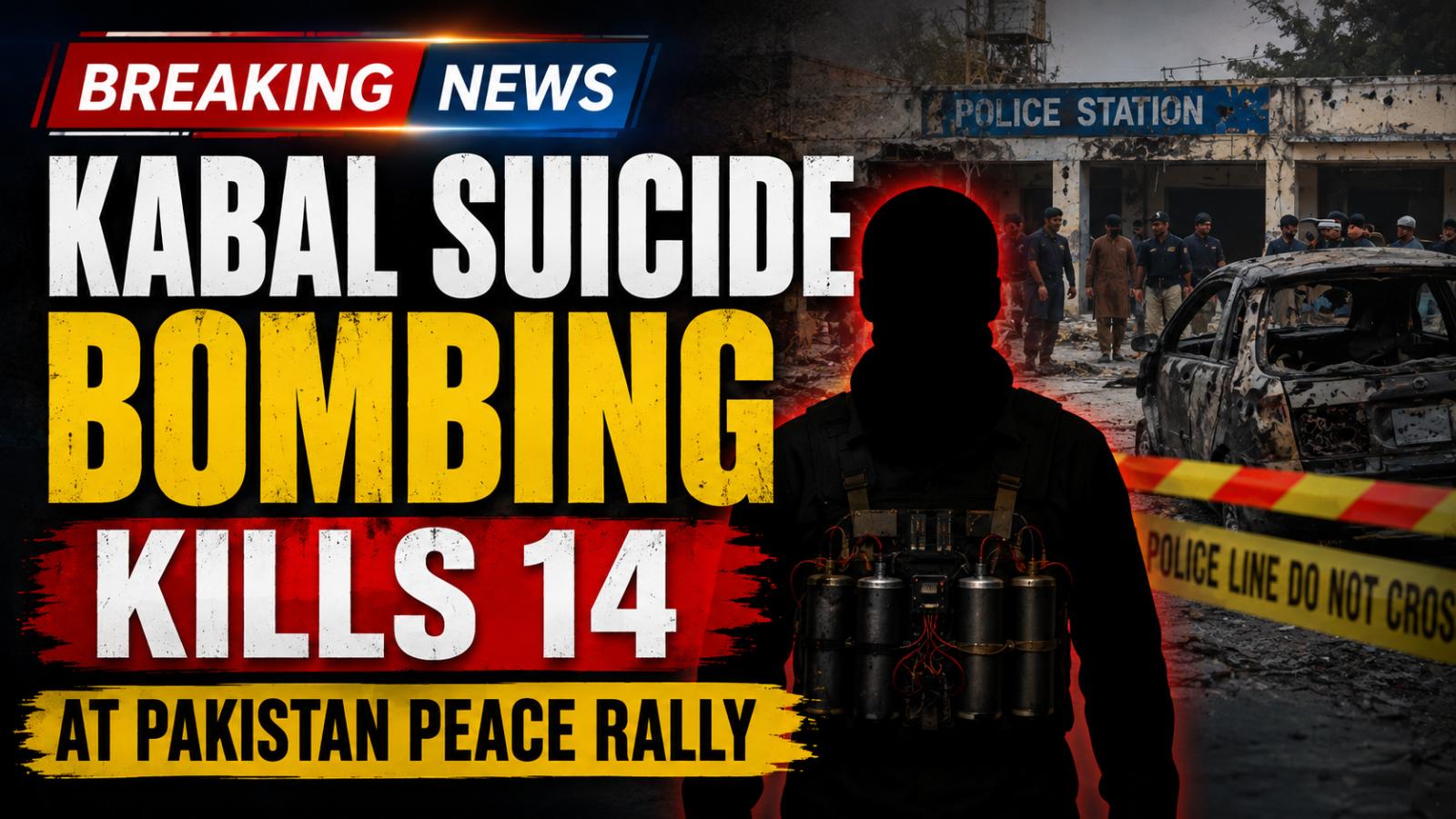
The Kabal suicide bombing killed at least 14 people, including police officers, and wounded more than two dozen at a Swat peace rally. Officials said the attacker targeted residents demanding security and stronger action against militancy in northwestern Pakistan.
Swat Peace Rally Attack
At least 14 people were killed and more than two dozen wounded when a suicide bomber struck an anti-militant peace rally in Kabal, a town in Pakistan’s Swat Valley, on Sunday, August 2. Police and emergency officials said the dead included civilians and police officers who had gathered near the Kabal police station.
Residents were chanting against militancy and calling on the government to restore peace when the explosion occurred. Witnesses said speakers at the gathering had urged authorities to take stronger action against armed groups and protect communities that have endured years of violence.
Police said the attacker detonated explosives near the entrance after officers attempted to stop him. Rescue teams moved the injured to nearby hospitals, while security personnel sealed the area and began collecting evidence. Authorities have warned that casualty figures may change as several victims remain under treatment.
Pakistan Police Deaths
Police officers were among those killed in the Kabal suicide bombing, highlighting the continuing risks faced by security personnel in Khyber Pakhtunkhwa. Provincial rescue officials said the attacker struck a crowded area where both officers and demonstrators had assembled.
Pakistan’s President Asif Ali Zardari, Prime Minister Shehbaz Sharif and Interior Minister Mohsin Naqvi condemned the attack. Government leaders offered condolences to the victims’ families, ordered proper medical care for the wounded and pledged continued action against terrorism.
The bombing drew particular anger because it targeted people publicly demanding an end to militant violence. The rally reflected growing frustration among Swat residents who fear that armed groups are again gaining influence in areas previously devastated by insurgency.
TTP Attack Suspicion
No organisation had formally claimed responsibility in the immediate aftermath of the attack. However, suspicion turned toward Tehrik-e-Taliban Pakistan, commonly known as the Pakistani Taliban or TTP, because of its history of attacks against police, government personnel and civilians in northwestern Pakistan. Officials have not publicly confirmed the group’s involvement, and the investigation remains active.
The United Nations Security Council lists TTP as a sanctioned terrorist organisation associated with Al-Qaida. The group emerged in 2007 as an alliance of militant factions rooted mainly along the Afghanistan–Pakistan border.
Khyber Pakhtunkhwa Blast Investigation
Investigators are examining remains from the blast site, security arrangements around the police station and the attacker’s possible route into Kabal. Authorities are also expected to review whether the bomber acted alone or received logistical support.
Swat was once a major centre of militant activity before Pakistani forces launched operations to regain control. Although security improved for several years, renewed violence and reports of militant movement have led residents to organise repeated peace demonstrations.
The Kabal attack shows that public gatherings and police facilities remain vulnerable despite counterterrorism operations. It may also increase pressure on federal and provincial authorities to improve intelligence sharing, strengthen protection around demonstrations and respond more directly to residents’ security concerns.