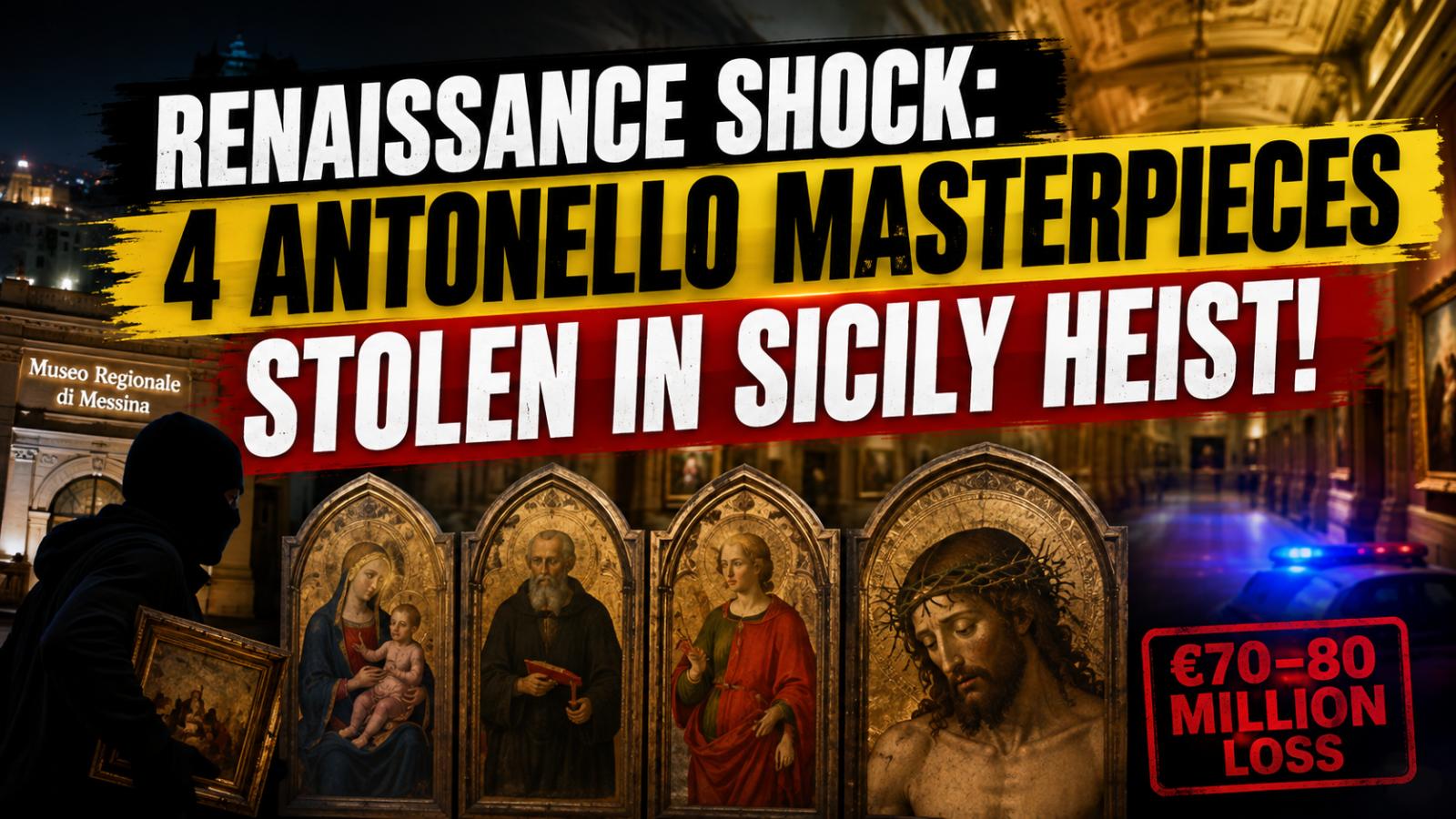
Four Renaissance artworks attributed to Antonello da Messina have been stolen in a daring Sicily museum theft during Ferragosto. The Antonello art heist targeted works of enormous cultural importance, including three surviving panels from the celebrated San Gregorio Polyptych.
Sicily museum theft targets Renaissance treasures
Thieves entered the Museo Regionale di Messina in Sicily late on Saturday, August 15, while much of the city was occupied with Assumption Day celebrations and the traditional La Vara procession.
According to authorities, the intruders overcame museum security and targeted works associated with Antonello da Messina, one of the most important painters of the Italian Renaissance. Four artworks were ultimately taken, with experts estimating their combined value at roughly €70 million to €80 million.
The timing has drawn particular attention because La Vara brings large crowds into central Messina for an elaborate religious procession, potentially giving the thieves an opportunity while attention was focused elsewhere.
San Gregorio art panels among stolen works
Three of the stolen works are panels from the 1473 Polittico di San Gregorio, or San Gregorio Polyptych. The thieves initially removed all five surviving wooden panels but abandoned two outside the museum while escaping.
The altarpiece has exceptional importance to Messina. It was originally created for the city's San Gregorio monastery and survived the devastating 1908 earthquake. Unlike many works associated with Antonello, it had remained in the artist's hometown.
The fourth stolen artwork is a small double-sided devotional panel acquired by the Sicilian regional government from Christie's in 2003. One side depicts the Virgin and Child with a Franciscan figure, while the reverse depicts Christ in Pietà.
Messina heist deals blow to city's cultural heritage
The theft has caused particular anger because Antonello was born in Messina around 1430 and remains closely associated with Sicily's artistic identity.
His paintings are renowned for their precise detail and sophisticated use of oil painting techniques influenced by northern European art. Only a relatively small number of works attributed to him survive, making the disappearance of several pieces from his hometown especially significant.
Earlier this year, Antonello's growing market value attracted fresh attention when the Italian state acquired an Ecce Homo for about $15 million. Local culture official Enzo Caruso told Reuters that the high-profile acquisition may have increased criminal interest in works held in Messina.
Stolen art investigation focuses on possible commission
Police and prosecutors are investigating how the thieves defeated the museum's security arrangements and whether the crime was commissioned.
The extraordinary fame of the artworks could make them extremely difficult to sell openly. Art-crime experts note that instantly recognisable museum pieces can instead circulate through illicit networks or be used as collateral in other criminal activity.
Investigators now face the urgent task of locating the paintings before they are moved, concealed or damaged.
The Antonello da Messina art heist is therefore more than a multimillion-euro museum robbery. The stolen panels survived roughly five and a half centuries and one of the most destructive earthquakes in modern European history, only to disappear from the city whose cultural identity they helped define.
For Messina, recovering them would mean restoring not simply valuable Renaissance art, but a surviving connection to one of Sicily's greatest artists.