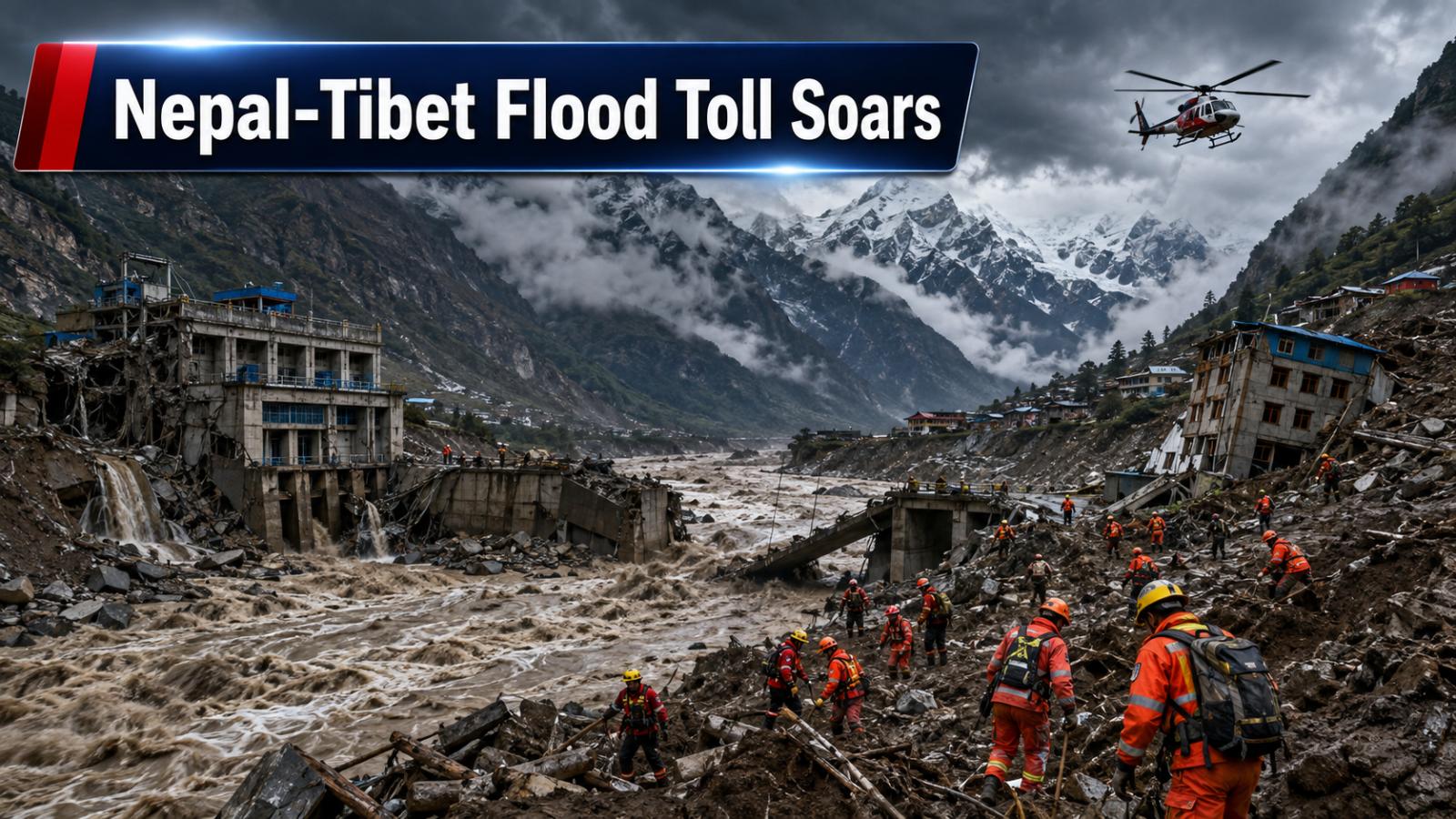
The Nepal Tibet floods have become one of the Himalayan region's deadliest disasters in years, with the latest reports on August 29 putting the combined death toll at more than 630. Thousands remain missing as rescue teams search devastated villages, hydropower sites and transport corridors after a massive glacial collapse.
Glacial Collapse Disaster
The disaster began on August 26 when a catastrophic collapse involving glacier ice, rock and debris in Nepal's Langtang region unleashed a powerful debris flow into river valleys near the China-Nepal border. The US Geological Survey said preliminary analysis indicates that a glacial collapse likely triggered the event, with floodwaters and debris travelling almost 100 kilometres downstream.
Entire settlements, roads, bridges and power infrastructure were struck as mud, boulders and water moved through the Trishuli and Bhote Koshi river systems. Satellite analysis has shown large sections of the mountain landscape and rivers transformed by the debris, while access to several communities remains difficult.
Flood Rescue Operations
Rescue teams from Nepal's army, police and other emergency services continue to search through thick mud and collapsed infrastructure. The latest reporting says more than 3,000 people may still be missing across the affected region, although casualty and missing-person figures remain fluid as authorities reach previously inaccessible areas.
The operation faces another serious threat from newly formed barrier lakes. Authorities have repeatedly moved rescue teams and residents to higher ground when water levels rise behind debris dams. Monitoring teams are watching unstable slopes and lakes for signs of another sudden flood.
Hydropower Tunnel Rescue
Nepal's hydropower sector has suffered extensive damage. More than 100 people were reported trapped inside a tunnel connected to the Upper Trishuli hydropower project in Rasuwa after floodwaters destroyed access routes and buried parts of the site.
The Nepali Army had already rescued around 350 workers and residents from the tunnel area, while teams continued efforts to reach those still believed trapped. Helicopters have been deployed, but damaged tunnel entrances, unstable terrain and poor weather have complicated access.
The destruction of hydropower facilities could also create longer-term economic consequences for Nepal, where hydroelectric power is a key part of the national energy system.
Gyirong Flood Disaster
Across the border in China's Xizang region, authorities reported seven deaths and 554 people missing at Gyirong Port as of early August 29. More than 2,100 rescuers and dozens of geological specialists had been deployed, according to the regional emergency management department.
Chinese teams are also monitoring a barrier lake that could trigger secondary disasters. Roads around Gyirong have been damaged or buried, making the border crossing one of the most difficult areas for rescuers to reach.
Pilgrims and Foreigners Missing
Foreign nationals are among those still unaccounted for. Tourists, workers, trekkers and pilgrims travelling through the Himalayan border region were caught in the sudden disaster. Some were returning from Mount Kailash, an important pilgrimage destination for Hindus and followers of several other faiths.
India has also been affected downstream, with floodwaters carrying debris and victims across connected river systems. International governments and aid agencies have offered assistance, while Nepal has indicated that it particularly needs specialised technical support for tunnel rescue, DNA identification, body preservation and rebuilding damaged infrastructure.
The immediate priority remains finding survivors, but the danger has not passed. Unstable slopes, damaged roads and debris-blocked rivers continue to threaten rescue teams and communities. With casualty figures still changing, authorities are warning that the full scale of the Nepal Tibet floods may take days to establish.