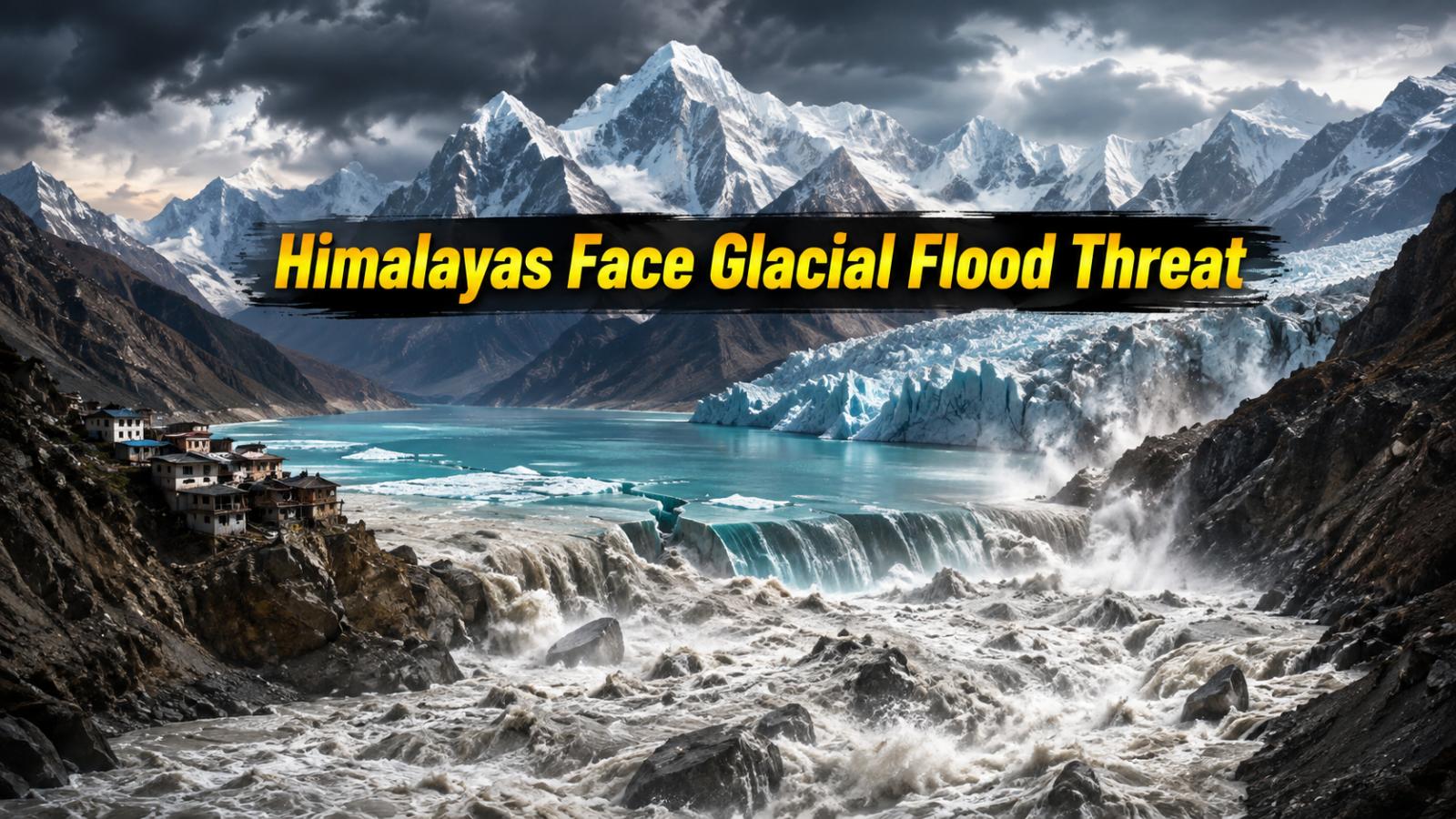
The Himalayas face a growing danger from glacial floods as warming temperatures destabilize glaciers and expand high-altitude lakes. UN officials and Chinese authorities have warned that millions of people across Nepal, China and India could face more destructive events in the years ahead.
Himalayan glacial floods threaten mountain communities
Concerns have intensified following the catastrophic August 26 glacier collapse in Nepal’s Langtang region, which triggered powerful floods across Nepal and Tibet. The disaster sent water, ice, mud and debris rushing through river valleys, destroying settlements, roads and hydropower infrastructure. More than 1,100 deaths had been reported by September 1, while thousands remained missing.
Kanni Wignaraja, a senior United Nations official, has warned that millions of people could remain exposed to similar hazards as warming accelerates across the Himalayan region. Scientists have long cautioned that the Hindu Kush Himalayas are especially vulnerable to climate change, with rising temperatures increasing glacier loss and instability.
Glacial lake risk rises as glaciers melt
A glacial lake forms when meltwater collects near, beneath or behind a glacier. The water may be held in place by ice, rock or loose sediment. As more meltwater accumulates, pressure can weaken those natural barriers and lead to a sudden glacial lake outburst flood.
These events can release huge volumes of water with little warning. In steep Himalayan valleys, the flood can gather rocks, soil and ice as it moves downstream, turning into a destructive debris flow capable of damaging communities far from the original glacier.
Researchers identified at least 47 potentially dangerous glacial lakes across Nepal, India and China in 2020. Updated assessments indicate the number and size of vulnerable lakes are increasing as glaciers retreat.
Nepal flood threat remains after glacier collapse
China’s Ministry of Water Resources has warned that glaciers surrounding the Cuojian River impact crater in Nepal remain unstable and could collapse again. Satellite radar imagery showed the water body inside the crater shrinking to about 83,000 square metres, but officials cautioned that further landslides could block waterways and create another temporary barrier lake.
That possibility means the immediate danger has not fully passed. Additional collapses or landslides could dam rivers, allow water to build up and then trigger another sudden flood if the natural barrier fails.
The August disaster also exposed the vulnerability of Nepal’s hydropower network. Several major projects were damaged, highlighting how glacial hazards can affect not only mountain communities but also national electricity supplies and critical infrastructure.
Climate change increases Himalayan flood danger
Climate scientists say warming driven by greenhouse gas emissions is making fragile high-mountain environments increasingly unstable. The UN Climate Change chief described the recent disaster as a warning of the growing risks facing the Hindu Kush Himalayan region and called for greater investment in climate resilience and faster emissions reductions.
The challenge now goes beyond responding after disasters occur. Better satellite monitoring, early-warning systems, cross-border data sharing and stronger infrastructure planning will be critical as Nepal, India and China confront a future in which Himalayan glacial floods may become more frequent and harder to predict.