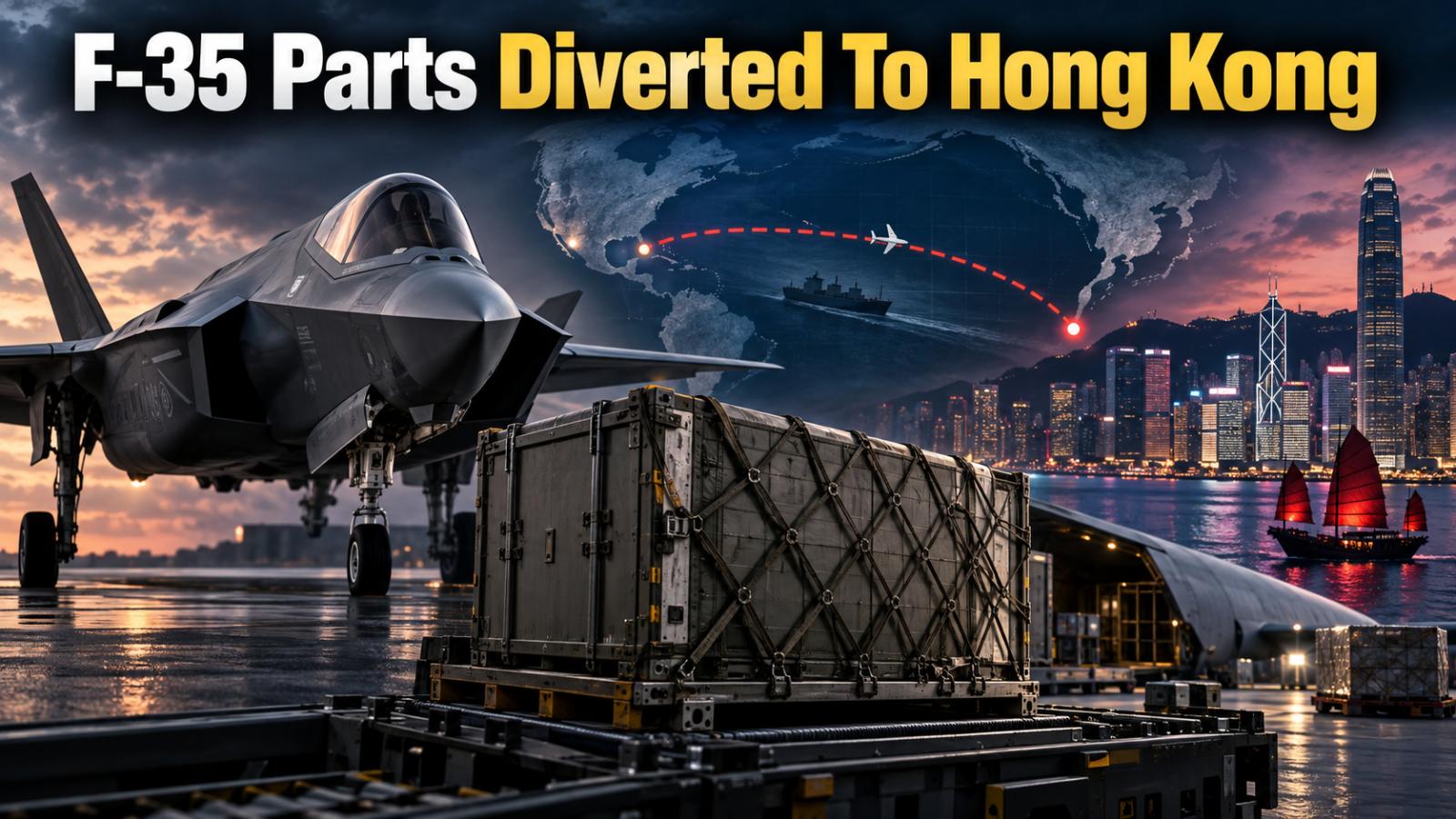
F-35 Parts in Hong Kong Trigger Pentagon Security Probe
Sensitive F-35 parts in Hong Kong have triggered a US security investigation after components traveling from Australia to the United States for repair were unexpectedly diverted. The Pentagon probe involves an F-35 canopy and raises questions about the supply chain, spare parts security and aircraft readiness.
F-35 canopy raises security concerns
The shipment involved unserviceable F-35 Lightning II components that were supposed to travel from Australia to the United States for repair. The F-35 Joint Program Office has acknowledged a shipment issue and said US authorities and industry partners are working to retrieve the equipment and investigate what happened.
Among the components reportedly involved was an F-35 canopy. The cockpit enclosure contributes to the aircraft's low-observable design, making access to its materials and construction potentially sensitive. However, US authorities have not publicly established that Chinese officials or military personnel obtained or examined the equipment.
Pentagon probe examines shipment diversion
The Pentagon probe is focused on determining why the shipment was diverted while crossing the Pacific and establishing who currently controls the components. The exact cause of the rerouting has not been publicly confirmed.
Lockheed Martin manages major elements of the F-35 logistics network and works with international partners to move equipment between operating and repair locations. The incident highlights the security challenges involved when sensitive military components pass through a complex international transportation system.
Supply chain already faced accountability concerns
The F-35 supply chain relies on a shared global pool of components used by the United States and participating international partners. The Department of Defense owns many of these spare parts while contractors manage significant portions of inventory and logistics.
A 2023 Government Accountability Office review found weaknesses in oversight of this system. GAO said one F-35 prime contractor had recorded losses of more than one million spare parts worth over $85 million since May 2018. The term “losses” included parts that were lost, damaged or destroyed, rather than one million components simply disappearing.
Spare parts remain a major challenge
GAO has repeatedly warned that spare parts shortages, repair delays and limited maintenance capacity can reduce aircraft availability. Earlier oversight work found that weaknesses in moving and repairing components had prevented F-35 aircraft from flying as often as required.
The Hong Kong incident adds a security concern to those logistics problems. Investigators must now determine how controlled aircraft equipment was diverted and whether existing shipping safeguards need to change.
Readiness concerns add pressure on F-35 program
F-35 readiness has also become a growing concern. In June 2026, GAO reported that the fleet's mission-capable rate declined from 67% in fiscal year 2021 to 44% in fiscal year 2025, while sustainment costs continued to increase.
The Joint Program Office has introduced a revised sustainment strategy intended to improve spare-parts availability and aircraft readiness. The latest shipment investigation now puts additional attention on whether the global logistics network can protect sensitive technology while supporting an expanding international F-35 fleet.