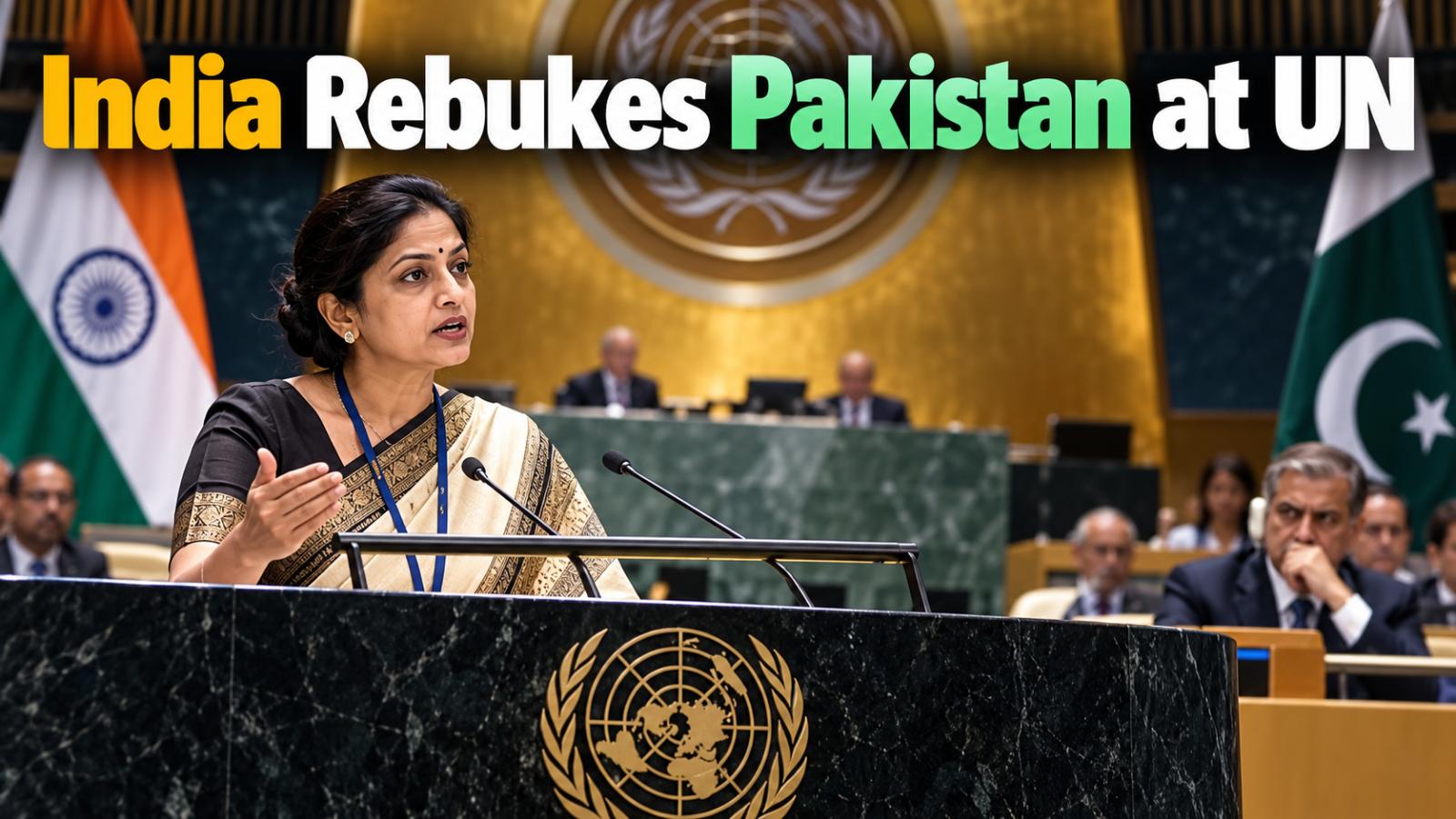
India used its Right of Reply at the 81st UN General Assembly to reject Shehbaz Sharif’s Kashmir remarks and renew accusations over terrorism, minority rights and military influence in Pakistan. First Secretary Petal Gahlot delivered the response after Sharif’s September 25 address.
Kashmir
Gahlot reiterated New Delhi’s position that Jammu and Kashmir is an integral and inalienable part of India. She then pointed to unrest in Pakistan-administered Kashmir, citing Rawalakot while accusing Pakistani authorities of violence and denial of basic rights. Pakistan continues to dispute India’s position on Kashmir and raised the issue again during Sharif’s UNGA address.
Terrorism
India’s response placed terrorism at the centre of the dispute. Gahlot said India would exercise its right to defend itself and warned that continued terrorism attributed by New Delhi to Pakistan would have consequences. She referred to Operation Sindoor, launched in May 2025 after the Pahalgam attack that killed 26 civilians. Pakistan has rejected Indian allegations that it sponsors cross-border terrorism.
Minorities
Gahlot also challenged Sharif’s remarks on religious intolerance. She criticised Pakistan’s blasphemy laws and argued that Islamabad should first address concerns involving its own minorities. Her comments formed part of India’s wider response to Pakistan’s criticism of New Delhi’s human-rights record and were presented as India’s position rather than independently established findings.
Military
India also targeted Pakistan’s political system. Gahlot said the military retained decisive influence and referred to the 27th Constitutional Amendment adopted in November 2025. The amendment reshaped Pakistan’s defence command structure and gave lifelong legal protections to five-star military officers, including Field Marshal Asim Munir. Supporters defended the changes as institutional reform, while critics argued that they further concentrated military power.
Gahlot also invoked Osama bin Laden, who was killed by US forces in Abbottabad in 2011, while questioning Pakistan’s counter-terrorism record. Sharif, in his UNGA speech, raised Kashmir and the Indus Waters Treaty and credited US President Donald Trump with helping prevent further escalation during the 2025 India-Pakistan confrontation. India has rejected claims that a third party mediated the cessation of hostilities.
Rawalakot
Rawalakot has become a recurring reference in India’s criticism of Pakistan after months of unrest in Pakistan-administered Kashmir. Independent reporting documented deadly clashes between protesters and security forces during 2026. Authorities accused protesters of armed attacks, while protest groups accused security forces of repression, leaving sharply disputed accounts of responsibility for the violence.
The latest exchange showed how India-Pakistan tensions continue to spill into multilateral forums. India framed its response around terrorism, sovereignty, minority rights and Pakistan’s political structure, while Pakistan used its UNGA address to raise Kashmir, water-sharing and the 2025 military confrontation. The two governments remain far apart, with each rejecting major elements of the other’s account.