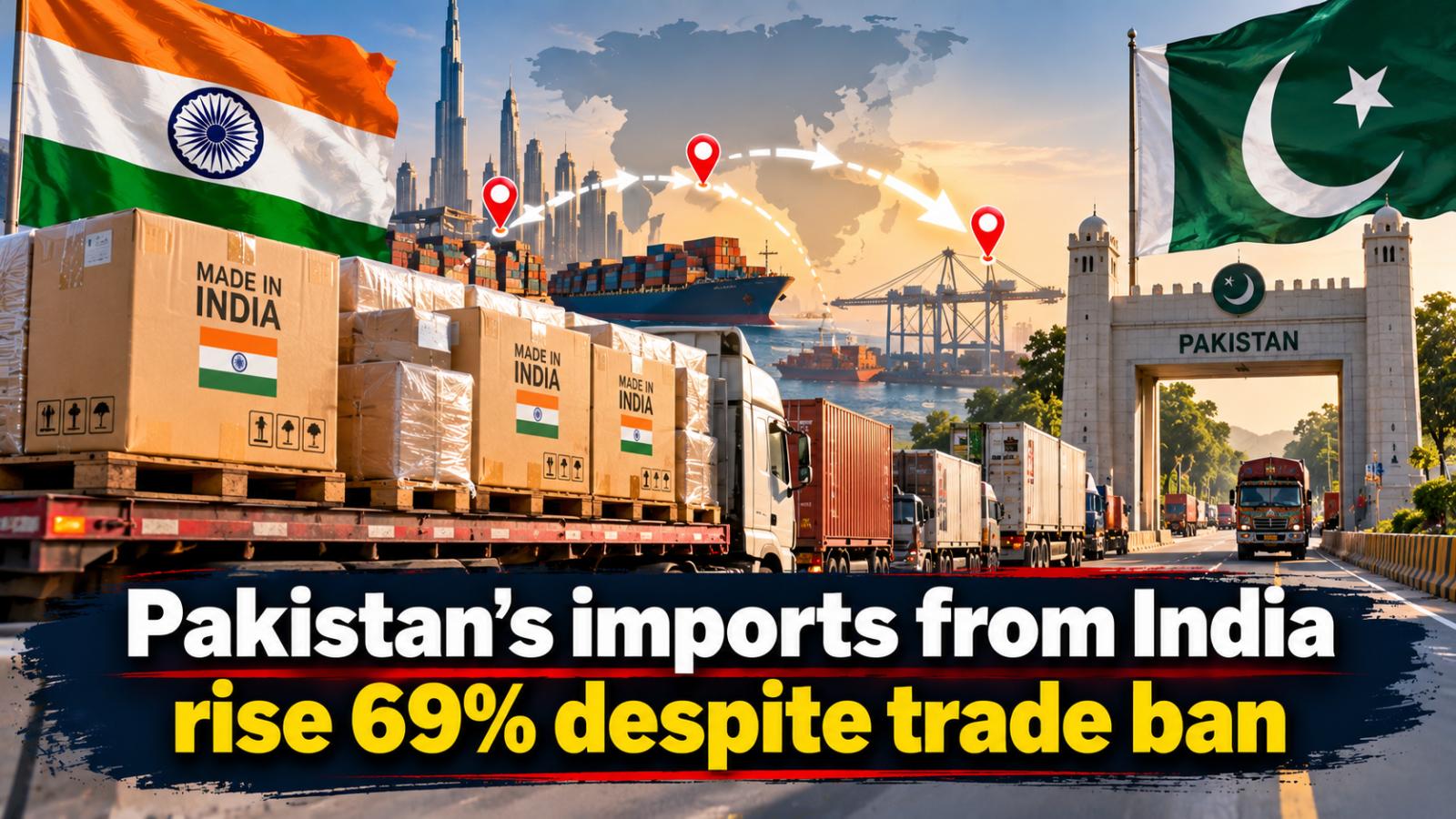
Pakistan's imports from India have jumped nearly 69% despite ongoing trade restrictions between the two neighbouring countries. According to figures attributed to the State Bank of Pakistan, the country imported Indian goods worth $61.74 million during July–September 2026, compared with $36.55 million during the same period last year. The surprising increase has raised questions about how Indian products continue reaching Pakistan when normal bilateral trade remains largely suspended.
Pakistan pharmaceutical imports rise despite India Pakistan trade restrictions
The latest trade figures show that Pakistan continues to depend on certain Indian products despite strained diplomatic relations and restrictions introduced following the April 2025 Pahalgam terror attack.
According to reports citing State Bank of Pakistan data, imports from India increased by approximately 68.9% during the first quarter of Pakistan's 2026–27 financial year. However, Pakistan recorded no exports to India during the same period.
Pharmaceutical products and raw materials remain an important part of Pakistan's imports from India. Indian manufacturers supply active pharmaceutical ingredients, medicines and other essential healthcare products used by Pakistan's pharmaceutical industry.
Although Pakistan introduced broader trade restrictions in 2025, its Ministry of Commerce clarified that therapeutic products regulated by the Drug Regulatory Authority of Pakistan could continue to be imported under existing exemptions.
This distinction helps explain why some Indian goods continue entering Pakistan even while other commercial exchanges remain restricted.
Trade relations between the two countries have deteriorated significantly since 2019, when India withdrew Pakistan's Most-Favoured Nation status following the Pulwama terror attack.
Tensions escalated further in 2025, resulting in additional restrictions and the closure of the Attari-Wagah land trade route.
Indian goods via third countries: UAE Singapore re-export routes
The increase in Pakistan's imports has also drawn attention to possible third-country trading arrangements involving Dubai, Singapore and Colombo.
Trade experts suggest that some Indian products may be shipped to international trading hubs before being re-exported to Pakistan.
Under such arrangements, goods can be stored in bonded warehouses, transferred between shipping companies and sent to their final destination through intermediaries.
The Global Trade Research Initiative has previously highlighted how indirect trading channels can allow commercial activity to continue when direct trade faces restrictions.
However, reports have also raised concerns about possible changes to shipping documents and product labels to conceal the original source of goods.
Simply routing goods through another country does not legally change their country of origin. Any false declaration of origin could violate customs regulations.
Importantly, the latest trade statistics do not establish how much of Pakistan's imports arrived through third countries or whether any shipments violated existing restrictions.
India's May 2025 prohibition specifically targeted imports and transit of Pakistani-origin goods into India, while Pakistan maintained separate restrictions and exemptions governing imports from India.
Despite political tensions, the latest figures highlight Pakistan's continuing demand for Indian pharmaceutical supplies and the importance of regional trade networks.
The 69% increase also raises questions about whether existing trade controls are being implemented consistently and how permitted goods are being recorded.
For now, the reported rise in imports does not signal a return to normal bilateral trade. Instead, it highlights the complicated relationship between political restrictions, essential product demand and international supply chains.