New IRA claims attack and warns of more violence
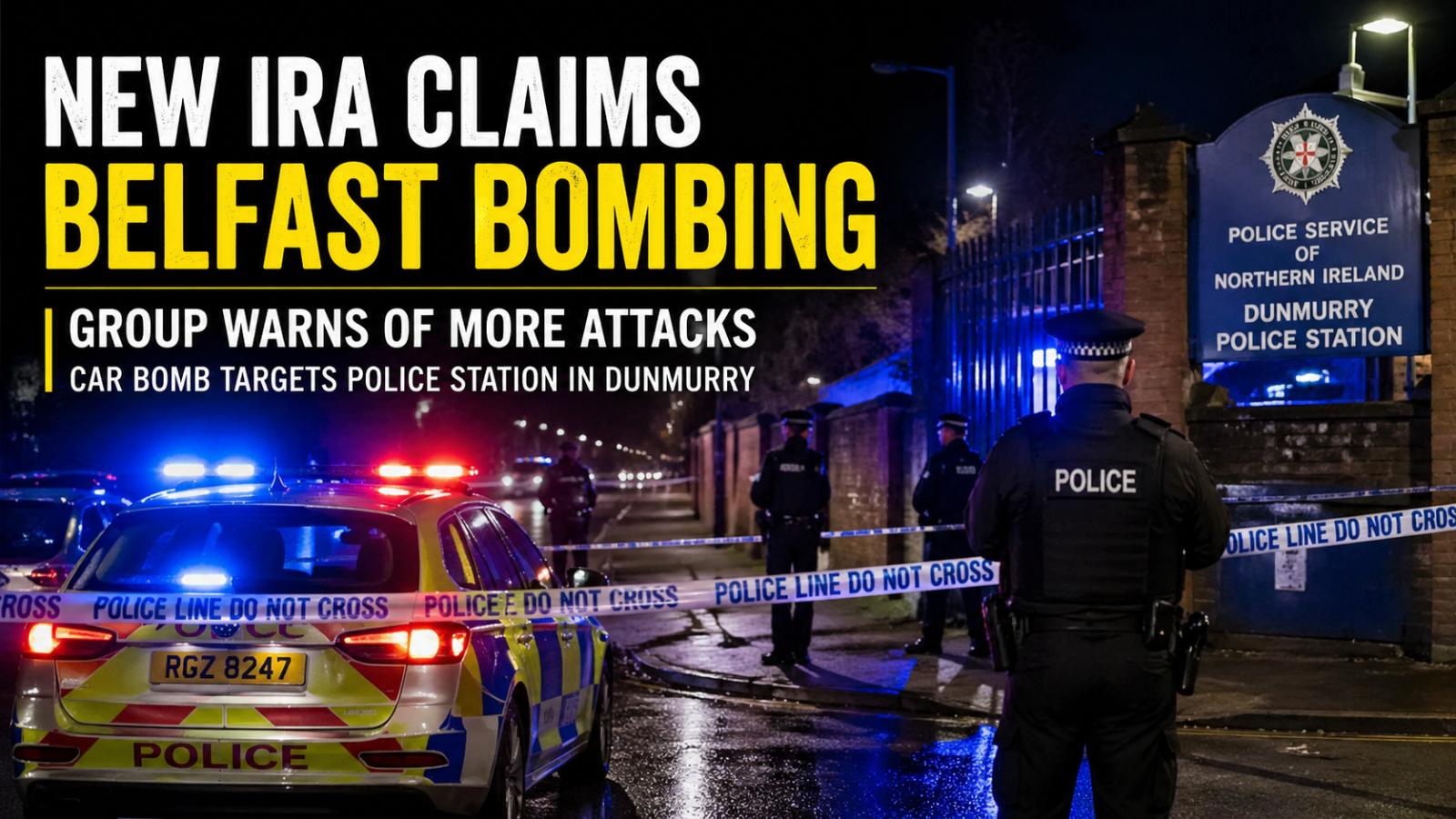
A dissident republican group known as the New IRA has claimed responsibility for a car bomb attack outside a police station in Belfast, escalating security concerns in Northern Ireland. The explosion occurred at approximately 10:50 PM BST on Saturday, April 25, 2026, outside a Police Service of Northern Ireland facility in Dunmurry, prompting authorities to increase patrols amid warnings of further violence. The timing corresponds to 5:50 PM ET in the United States on the same day, providing additional context for U.S.-based readers.
The group stated that the attack was intended to kill officers leaving the station and issued a broader threat against individuals cooperating with law enforcement. A 66-year-old man was arrested under terrorism laws in connection with the incident, according to reports.
Security response intensifies after threats against officers
Following the bombing, police expanded security measures, including increased patrols near officers’ homes. Authorities are treating the incident as part of a broader pattern of militant activity, as the New IRA continues to oppose the 1998 Good Friday Agreement and seeks to end British rule in Northern Ireland.
The latest attack follows a similar attempted car bombing outside another Belfast-area police station just weeks earlier, highlighting ongoing risks to security forces in the region.
Reports raise concerns over alleged international militant links
A 2020 report citing an informant connected to MI5 suggested potential ties between the New IRA, Hezbollah, and Iran’s Islamic Revolutionary Guard Corps. The report noted that individuals linked to the group publicly expressed support following the killing of Iranian General Qassem Soleimani, raising concerns about possible external backing.
Security analysts say such connections, if confirmed, could indicate broader coordination among state and non-state actors aligned against Western interests.
Experts warn of evolving global militant cooperation
Analysts have described the situation as part of a growing pattern in which militant groups share tactics and operational strategies across regions. This evolving model of hybrid warfare, they argue, allows localized groups to adopt methods refined in other conflict zones, complicating traditional counterterrorism efforts.
The New IRA’s continued activity underscores the challenge facing UK security services, as authorities attempt to monitor both domestic threats and potential international influences shaping militant operations.