#africaconflict
JNIM blockade in Mali on April 30 deepens crisis around Bamako
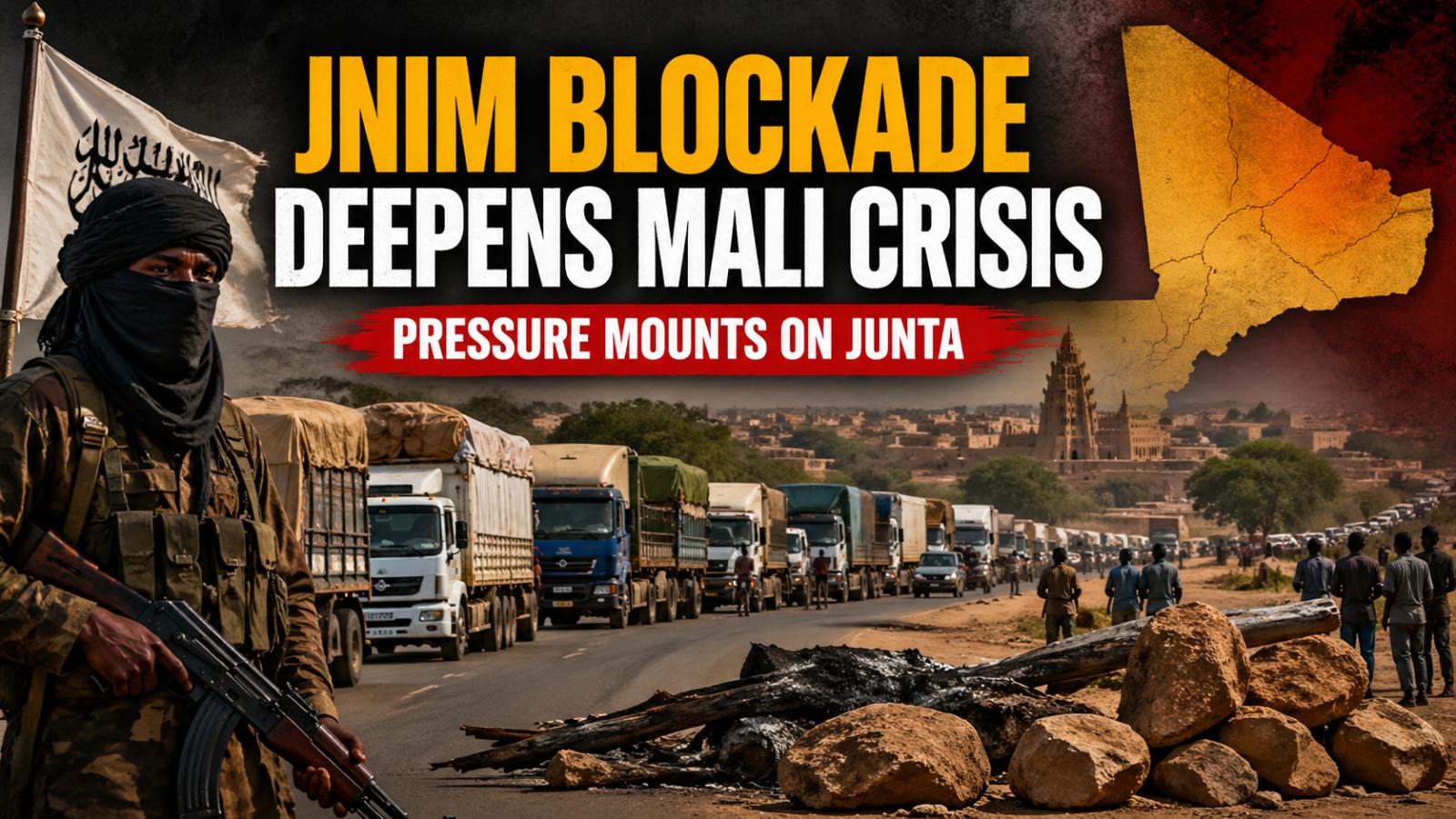
JNIM blockade in mali escalates crisis on April 30 The Mali crisis intensified on April 30 as the jnim blockade tightened around bamako, cutting key supply routes and increasing pressure on the mali junta government. The jihadist group, the Group for the Support of Islam and Muslims, also called for a united front to remove the military leadership, raising fears of deeper instability across the country. JNIM released a statement on Thursday, April 30, urging political parties, security forces, religious leaders, and citizens to unite against the junta. the group called for a “common front” to bring down the government and push for a transition, following recent coordinated attacks with Tuareg fighters. These attacks targeted military positions and led to the death of Mali’s defence minister Sadio Camara. His funeral in Bamako was held under tight security, attended by thousands including junta leader Assimi Goita. At the same time, the blockade around bamako has created a major supply crisis, with roads leading into the capital and nearby Kati effectively shut. Hundreds of trucks and passenger vehicles remain stranded at entry points, with drivers reporting long waits and growing uncertainty. jnim warned of strict action against anyone using these routes, allowing only those inside the city to leave. The impact is severe because Mali depends heavily on road transport for essential goods. As a landlocked country, it relies on routes through neighboring nations for fuel and supplies. key trade corridors linking to ports like abidjan are now disrupted, affecting businesses and daily life. Reports of violence against drivers along these routes have added to fear, though some claims remain unverified. Air traffic into Bamako continues without disruption, but the overall situation remains tense. analysts warn that if the blockade continues, it could worsen the mali economy crisis and create further humanitarian challenges. The developments on April 30 highlight the growing difficulty for authorities in handling both security threats and economic stability in Mali.
JNIM blockade in Mali on April 30 deepens crisis around Bamako
JNIM blockade in mali escalates crisis on April 30 The Mali crisis intensified on April 30 as the jnim blockade tightened around bamako, cutting key supply routes and increasing pressure on the mali junta government. The jihadist group, the Group for the Support of Islam and Muslims, also called for a united front to remove the military leadership, raising fears of deeper instability across the country. JNIM released a statement on Thursday, April 30, urging political parties, security forces, religious leaders, and citizens to unite against the junta. the group called for a “common front” to bring down the government and push for a transition, following recent coordinated attacks with Tuareg fighters. These attacks targeted military positions and led to the death of Mali’s defence minister Sadio Camara. His funeral in Bamako was held under tight security, attended by thousands including junta leader Assimi Goita. At the same time, the blockade around bamako has created a major supply crisis, with roads leading into the capital and nearby Kati effectively shut. Hundreds of trucks and passenger vehicles remain stranded at entry points, with drivers reporting long waits and growing uncertainty. jnim warned of strict action against anyone using these routes, allowing only those inside the city to leave. The impact is severe because Mali depends heavily on road transport for essential goods. As a landlocked country, it relies on routes through neighboring nations for fuel and supplies. key trade corridors linking to ports like abidjan are now disrupted, affecting businesses and daily life. Reports of violence against drivers along these routes have added to fear, though some claims remain unverified. Air traffic into Bamako continues without disruption, but the overall situation remains tense. analysts warn that if the blockade continues, it could worsen the mali economy crisis and create further humanitarian challenges. The developments on April 30 highlight the growing difficulty for authorities in handling both security threats and economic stability in Mali.
What does the UN report say about South Sudan hunger risk? Nearly 8 million face crisis
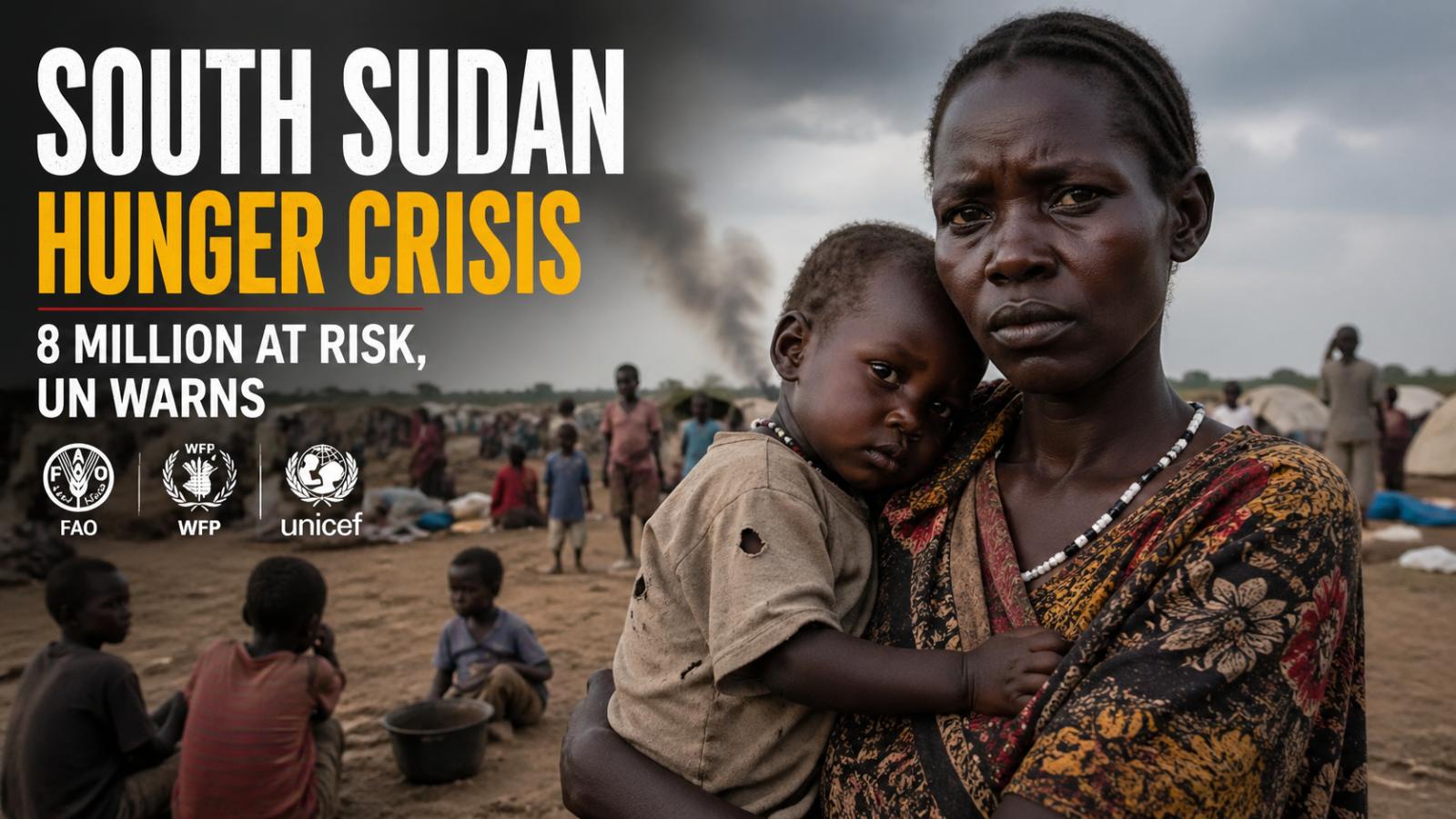
Nearly 8 million face crisis A new report released by the United Nations on Tuesday warns that nearly eight million people in South Sudan are at risk of acute hunger, underscoring a rapidly worsening humanitarian emergency fueled by conflict, displacement, and economic instability. The assessment estimates that 7.8 million people—about 56 percent of the population—are likely to experience severe food insecurity in the coming months, prompting urgent calls for international intervention. Escalating child malnutrition raises alarm among aid agencies The report highlights a sharp increase in child malnutrition, with an additional 100,000 children affected over the past six months. Approximately 2.2 million children between six months and five years are now suffering from acute malnutrition, and an estimated 700,000 face a high risk of death. Agencies including the Food and Agriculture Organization, World Food Programme, and UNICEF warned that damaged health infrastructure, limited supplies, and insufficient funding are restricting access to life-saving nutrition services. Conflict, climate pressures, and economic strain deepen crisis South Sudan’s humanitarian conditions remain closely tied to ongoing ethnic conflict, climate-related disruptions, and spillover effects from violence in neighboring Sudan. The country, which gained independence in 2011, continues to face severe economic challenges and ranks among the poorest nations globally. These overlapping pressures have intensified food shortages and weakened already fragile systems. Rising tensions spark fears of renewed civil war Concerns are growing that South Sudan could return to full-scale civil war, despite a 2018 peace agreement that ended a devastating conflict responsible for nearly 400,000 deaths. Recent clashes between government forces, the South Sudan People’s Defence Forces, and opposition groups have heightened instability. The tensions are linked to a prolonged political rivalry between President Salva Kiir Mayardit and suspended Vice President Riek Machar, who is currently on trial in Juba facing charges including murder and treason, which he denies. Aid agencies warn of irreversible humanitarian consequences Humanitarian organizations stress that without immediate global support, the crisis could reach irreversible levels. Limited funding and supply chain disruptions continue to hamper relief efforts, leaving millions vulnerable. Aid groups are urging swift international action to prevent further deterioration and avert a large-scale humanitarian catastrophe.
What does the UN report say about South Sudan hunger risk? Nearly 8 million face crisis
Nearly 8 million face crisis A new report released by the United Nations on Tuesday warns that nearly eight million people in South Sudan are at risk of acute hunger, underscoring a rapidly worsening humanitarian emergency fueled by conflict, displacement, and economic instability. The assessment estimates that 7.8 million people—about 56 percent of the population—are likely to experience severe food insecurity in the coming months, prompting urgent calls for international intervention. Escalating child malnutrition raises alarm among aid agencies The report highlights a sharp increase in child malnutrition, with an additional 100,000 children affected over the past six months. Approximately 2.2 million children between six months and five years are now suffering from acute malnutrition, and an estimated 700,000 face a high risk of death. Agencies including the Food and Agriculture Organization, World Food Programme, and UNICEF warned that damaged health infrastructure, limited supplies, and insufficient funding are restricting access to life-saving nutrition services. Conflict, climate pressures, and economic strain deepen crisis South Sudan’s humanitarian conditions remain closely tied to ongoing ethnic conflict, climate-related disruptions, and spillover effects from violence in neighboring Sudan. The country, which gained independence in 2011, continues to face severe economic challenges and ranks among the poorest nations globally. These overlapping pressures have intensified food shortages and weakened already fragile systems. Rising tensions spark fears of renewed civil war Concerns are growing that South Sudan could return to full-scale civil war, despite a 2018 peace agreement that ended a devastating conflict responsible for nearly 400,000 deaths. Recent clashes between government forces, the South Sudan People’s Defence Forces, and opposition groups have heightened instability. The tensions are linked to a prolonged political rivalry between President Salva Kiir Mayardit and suspended Vice President Riek Machar, who is currently on trial in Juba facing charges including murder and treason, which he denies. Aid agencies warn of irreversible humanitarian consequences Humanitarian organizations stress that without immediate global support, the crisis could reach irreversible levels. Limited funding and supply chain disruptions continue to hamper relief efforts, leaving millions vulnerable. Aid groups are urging swift international action to prevent further deterioration and avert a large-scale humanitarian catastrophe.