Nearly 8 million face crisis
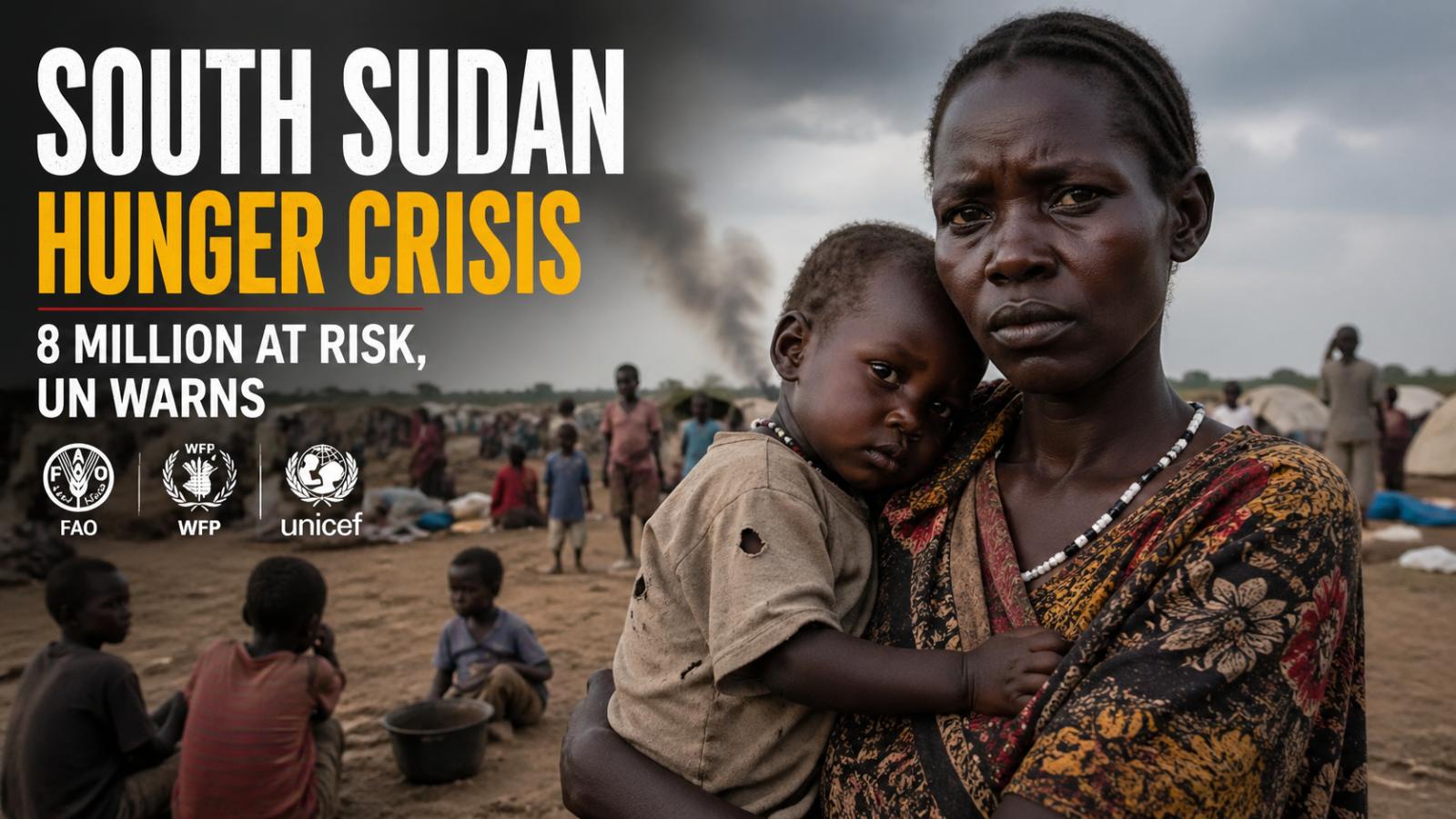
A new report released by the United Nations on Tuesday warns that nearly eight million people in South Sudan are at risk of acute hunger, underscoring a rapidly worsening humanitarian emergency fueled by conflict, displacement, and economic instability. The assessment estimates that 7.8 million people—about 56 percent of the population—are likely to experience severe food insecurity in the coming months, prompting urgent calls for international intervention.
Escalating child malnutrition raises alarm among aid agencies
The report highlights a sharp increase in child malnutrition, with an additional 100,000 children affected over the past six months. Approximately 2.2 million children between six months and five years are now suffering from acute malnutrition, and an estimated 700,000 face a high risk of death. Agencies including the Food and Agriculture Organization, World Food Programme, and UNICEF warned that damaged health infrastructure, limited supplies, and insufficient funding are restricting access to life-saving nutrition services.
Conflict, climate pressures, and economic strain deepen crisis
South Sudan’s humanitarian conditions remain closely tied to ongoing ethnic conflict, climate-related disruptions, and spillover effects from violence in neighboring Sudan. The country, which gained independence in 2011, continues to face severe economic challenges and ranks among the poorest nations globally. These overlapping pressures have intensified food shortages and weakened already fragile systems.
Rising tensions spark fears of renewed civil war
Concerns are growing that South Sudan could return to full-scale civil war, despite a 2018 peace agreement that ended a devastating conflict responsible for nearly 400,000 deaths. Recent clashes between government forces, the South Sudan People’s Defence Forces, and opposition groups have heightened instability. The tensions are linked to a prolonged political rivalry between President Salva Kiir Mayardit and suspended Vice President Riek Machar, who is currently on trial in Juba facing charges including murder and treason, which he denies.
Aid agencies warn of irreversible humanitarian consequences
Humanitarian organizations stress that without immediate global support, the crisis could reach irreversible levels. Limited funding and supply chain disruptions continue to hamper relief efforts, leaving millions vulnerable. Aid groups are urging swift international action to prevent further deterioration and avert a large-scale humanitarian catastrophe.