#unreport
UN meeting turns tense over Gaza report allegations dispute
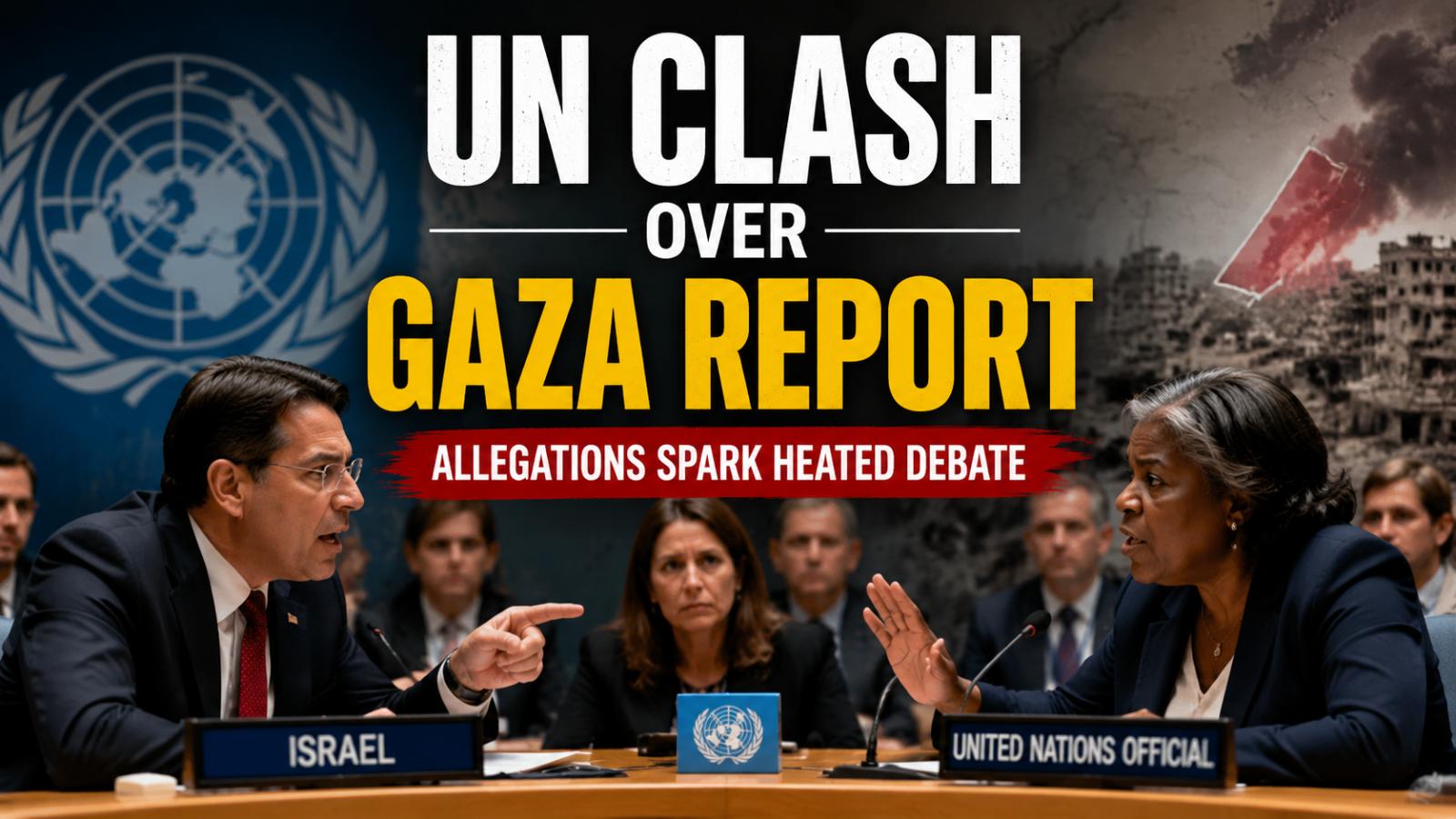
A United Nations discussion intended to review conflict-related sexual violence and child protection issues turned sharply contentious in New York, as disagreements over a Gaza-focused report escalated between Israel’s delegation and senior UN officials. What began as a policy review quickly shifted into a direct diplomatic exchange over credibility, methodology, and political framing of the findings. Dispute over credibility of conflict data The tension intensified when Israel’s representative, Danny Danon, challenged the validity of a UN monitoring report that documented violations affecting children in multiple conflict zones, including Gaza. He argued that the findings reflected institutional bias and selective interpretation of incidents involving Israeli forces and related actors. His remarks prompted immediate pushback from UN officials present in the session. Sharp exchange between diplomats and UN officials UN representative Vanessa Frazier responded by rejecting the criticism of the report’s integrity, stressing that the data was compiled through established verification mechanisms used in conflict monitoring worldwide. She objected to what she described as personal accusations directed at UN personnel, which further escalated the exchange. The discussion momentarily lost procedural focus as both sides defended their positions more forcefully. Findings highlight scale of child impact in conflict zones The report at the center of the debate outlined thousands of grave violations affecting children across active conflict regions during the year. It attributed a significant portion of documented incidents to multiple parties operating in high-intensity zones, while also calling attention to the broader deterioration of child safety in war-affected areas. UN Secretary-General António Guterres has previously expressed concern over rising figures and warned that persistent patterns of violations could trigger stronger international accountability measures. Broader diplomatic divide over accountability frameworks The confrontation reflects a continuing divide between Israel and United Nations institutions regarding how conflict data is collected, interpreted, and publicly presented. Israel has consistently rejected allegations of bias in UN reporting, while UN bodies maintain that standardized monitoring systems are essential for documenting humanitarian conditions in active war zones. The latest exchange underscores how reporting on civilian harm has become a recurring point of friction in international diplomacy, particularly in relation to Gaza.
UN meeting turns tense over Gaza report allegations dispute
A United Nations discussion intended to review conflict-related sexual violence and child protection issues turned sharply contentious in New York, as disagreements over a Gaza-focused report escalated between Israel’s delegation and senior UN officials. What began as a policy review quickly shifted into a direct diplomatic exchange over credibility, methodology, and political framing of the findings. Dispute over credibility of conflict data The tension intensified when Israel’s representative, Danny Danon, challenged the validity of a UN monitoring report that documented violations affecting children in multiple conflict zones, including Gaza. He argued that the findings reflected institutional bias and selective interpretation of incidents involving Israeli forces and related actors. His remarks prompted immediate pushback from UN officials present in the session. Sharp exchange between diplomats and UN officials UN representative Vanessa Frazier responded by rejecting the criticism of the report’s integrity, stressing that the data was compiled through established verification mechanisms used in conflict monitoring worldwide. She objected to what she described as personal accusations directed at UN personnel, which further escalated the exchange. The discussion momentarily lost procedural focus as both sides defended their positions more forcefully. Findings highlight scale of child impact in conflict zones The report at the center of the debate outlined thousands of grave violations affecting children across active conflict regions during the year. It attributed a significant portion of documented incidents to multiple parties operating in high-intensity zones, while also calling attention to the broader deterioration of child safety in war-affected areas. UN Secretary-General António Guterres has previously expressed concern over rising figures and warned that persistent patterns of violations could trigger stronger international accountability measures. Broader diplomatic divide over accountability frameworks The confrontation reflects a continuing divide between Israel and United Nations institutions regarding how conflict data is collected, interpreted, and publicly presented. Israel has consistently rejected allegations of bias in UN reporting, while UN bodies maintain that standardized monitoring systems are essential for documenting humanitarian conditions in active war zones. The latest exchange underscores how reporting on civilian harm has become a recurring point of friction in international diplomacy, particularly in relation to Gaza.
What does the UN report say about South Sudan hunger risk? Nearly 8 million face crisis
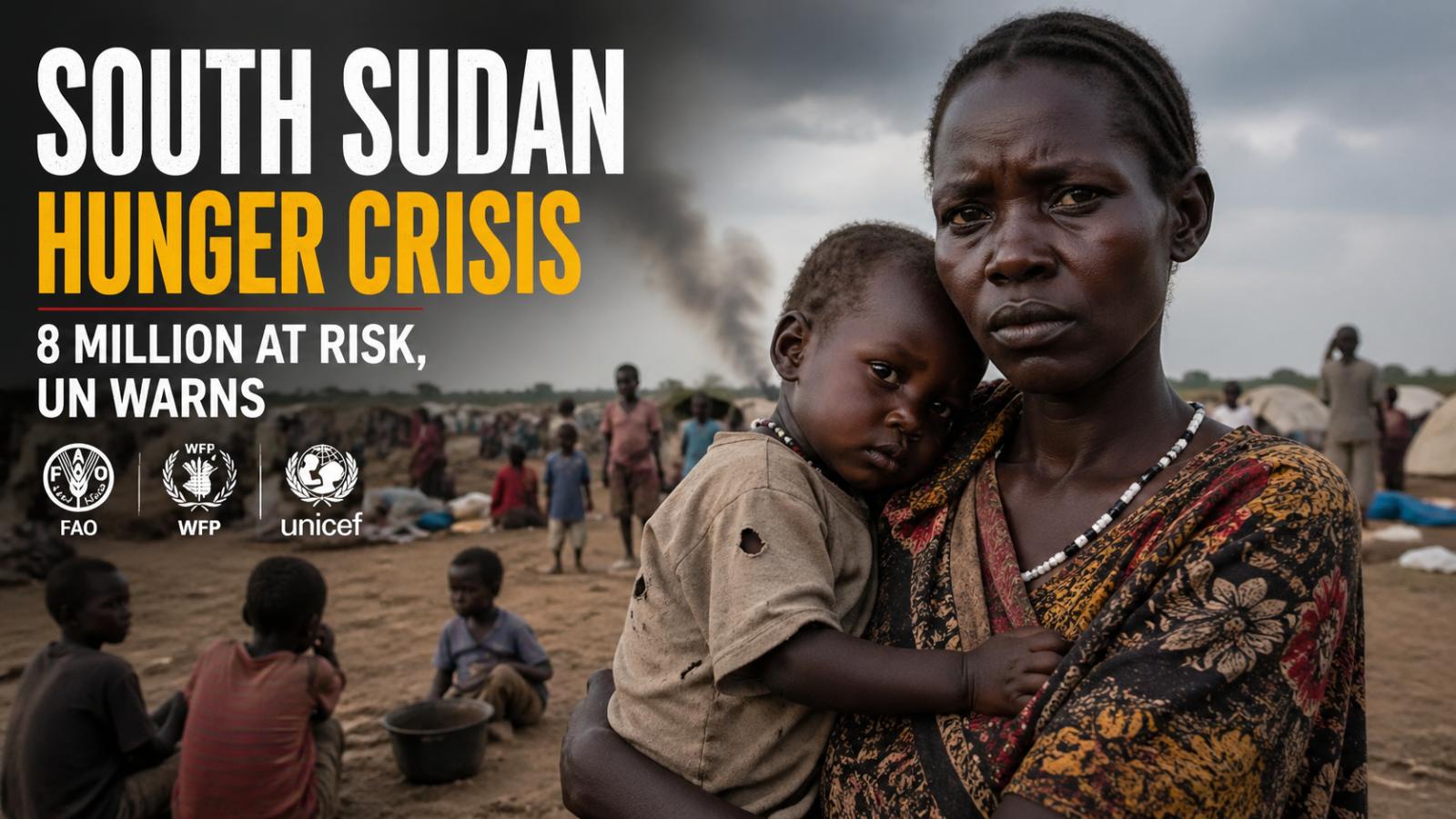
Nearly 8 million face crisis A new report released by the United Nations on Tuesday warns that nearly eight million people in South Sudan are at risk of acute hunger, underscoring a rapidly worsening humanitarian emergency fueled by conflict, displacement, and economic instability. The assessment estimates that 7.8 million people—about 56 percent of the population—are likely to experience severe food insecurity in the coming months, prompting urgent calls for international intervention. Escalating child malnutrition raises alarm among aid agencies The report highlights a sharp increase in child malnutrition, with an additional 100,000 children affected over the past six months. Approximately 2.2 million children between six months and five years are now suffering from acute malnutrition, and an estimated 700,000 face a high risk of death. Agencies including the Food and Agriculture Organization, World Food Programme, and UNICEF warned that damaged health infrastructure, limited supplies, and insufficient funding are restricting access to life-saving nutrition services. Conflict, climate pressures, and economic strain deepen crisis South Sudan’s humanitarian conditions remain closely tied to ongoing ethnic conflict, climate-related disruptions, and spillover effects from violence in neighboring Sudan. The country, which gained independence in 2011, continues to face severe economic challenges and ranks among the poorest nations globally. These overlapping pressures have intensified food shortages and weakened already fragile systems. Rising tensions spark fears of renewed civil war Concerns are growing that South Sudan could return to full-scale civil war, despite a 2018 peace agreement that ended a devastating conflict responsible for nearly 400,000 deaths. Recent clashes between government forces, the South Sudan People’s Defence Forces, and opposition groups have heightened instability. The tensions are linked to a prolonged political rivalry between President Salva Kiir Mayardit and suspended Vice President Riek Machar, who is currently on trial in Juba facing charges including murder and treason, which he denies. Aid agencies warn of irreversible humanitarian consequences Humanitarian organizations stress that without immediate global support, the crisis could reach irreversible levels. Limited funding and supply chain disruptions continue to hamper relief efforts, leaving millions vulnerable. Aid groups are urging swift international action to prevent further deterioration and avert a large-scale humanitarian catastrophe.
What does the UN report say about South Sudan hunger risk? Nearly 8 million face crisis
Nearly 8 million face crisis A new report released by the United Nations on Tuesday warns that nearly eight million people in South Sudan are at risk of acute hunger, underscoring a rapidly worsening humanitarian emergency fueled by conflict, displacement, and economic instability. The assessment estimates that 7.8 million people—about 56 percent of the population—are likely to experience severe food insecurity in the coming months, prompting urgent calls for international intervention. Escalating child malnutrition raises alarm among aid agencies The report highlights a sharp increase in child malnutrition, with an additional 100,000 children affected over the past six months. Approximately 2.2 million children between six months and five years are now suffering from acute malnutrition, and an estimated 700,000 face a high risk of death. Agencies including the Food and Agriculture Organization, World Food Programme, and UNICEF warned that damaged health infrastructure, limited supplies, and insufficient funding are restricting access to life-saving nutrition services. Conflict, climate pressures, and economic strain deepen crisis South Sudan’s humanitarian conditions remain closely tied to ongoing ethnic conflict, climate-related disruptions, and spillover effects from violence in neighboring Sudan. The country, which gained independence in 2011, continues to face severe economic challenges and ranks among the poorest nations globally. These overlapping pressures have intensified food shortages and weakened already fragile systems. Rising tensions spark fears of renewed civil war Concerns are growing that South Sudan could return to full-scale civil war, despite a 2018 peace agreement that ended a devastating conflict responsible for nearly 400,000 deaths. Recent clashes between government forces, the South Sudan People’s Defence Forces, and opposition groups have heightened instability. The tensions are linked to a prolonged political rivalry between President Salva Kiir Mayardit and suspended Vice President Riek Machar, who is currently on trial in Juba facing charges including murder and treason, which he denies. Aid agencies warn of irreversible humanitarian consequences Humanitarian organizations stress that without immediate global support, the crisis could reach irreversible levels. Limited funding and supply chain disruptions continue to hamper relief efforts, leaving millions vulnerable. Aid groups are urging swift international action to prevent further deterioration and avert a large-scale humanitarian catastrophe.
Gaza faces rising disease risk as rat infestation spreads in displacement camps
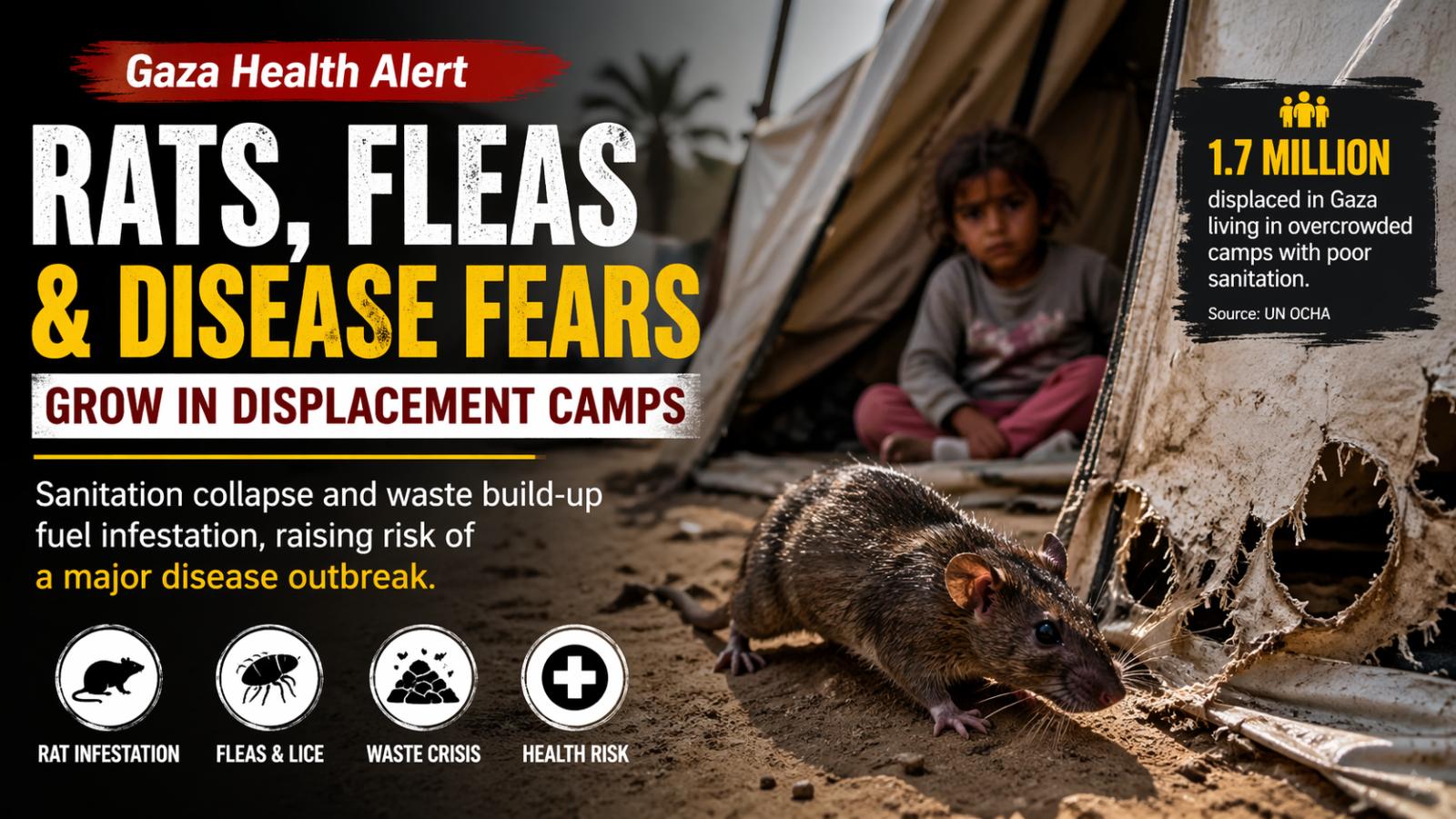
Rising temperatures are intensifying public health concerns in the Gaza Strip, where a widespread infestation of rodents and parasites is compounding already dire living conditions for displaced civilians. Health officials warn that the rapid spread of rats, fleas, and lice could trigger a major disease outbreak in overcrowded camps lacking basic sanitation. In areas such as Khan Yunis and the Al-Mawasi coastal strip, displaced families are living in makeshift shelters that offer little protection against pests. Residents report that large rodents, identified by some as Norway rats, are burrowing into tents at night. Muhammad al-Raqab, a displaced father, described repeated attacks on his family, saying rodents chewed through his shelter and bit his children while they slept. He now stays awake overnight to guard them. The infestation is closely linked to the collapse of Gaza’s sanitation infrastructure. With municipal services largely nonfunctional and access to landfill sites near the eastern border restricted, millions of tons of waste have accumulated near populated areas. The buildup has created ideal conditions for vermin to thrive. According to the United Nations Office for the Coordination of Humanitarian Affairs, approximately 1.7 million of Gaza’s 2.2 million residents remain displaced and unable to return to their homes despite a ceasefire that began in October 2025. Field assessments conducted in March described camp conditions as heavily affected by vermin and parasite infestations. Medical professionals are already seeing the consequences. Hani al-Flait, head of pediatrics at Al-Aqsa Hospital in central Gaza, reported a steady rise in skin infections such as scabies. Residents also describe worsening conditions as fleas spread allergies among both children and adults, further straining limited healthcare resources in the enclave.
Gaza faces rising disease risk as rat infestation spreads in displacement camps
Rising temperatures are intensifying public health concerns in the Gaza Strip, where a widespread infestation of rodents and parasites is compounding already dire living conditions for displaced civilians. Health officials warn that the rapid spread of rats, fleas, and lice could trigger a major disease outbreak in overcrowded camps lacking basic sanitation. In areas such as Khan Yunis and the Al-Mawasi coastal strip, displaced families are living in makeshift shelters that offer little protection against pests. Residents report that large rodents, identified by some as Norway rats, are burrowing into tents at night. Muhammad al-Raqab, a displaced father, described repeated attacks on his family, saying rodents chewed through his shelter and bit his children while they slept. He now stays awake overnight to guard them. The infestation is closely linked to the collapse of Gaza’s sanitation infrastructure. With municipal services largely nonfunctional and access to landfill sites near the eastern border restricted, millions of tons of waste have accumulated near populated areas. The buildup has created ideal conditions for vermin to thrive. According to the United Nations Office for the Coordination of Humanitarian Affairs, approximately 1.7 million of Gaza’s 2.2 million residents remain displaced and unable to return to their homes despite a ceasefire that began in October 2025. Field assessments conducted in March described camp conditions as heavily affected by vermin and parasite infestations. Medical professionals are already seeing the consequences. Hani al-Flait, head of pediatrics at Al-Aqsa Hospital in central Gaza, reported a steady rise in skin infections such as scabies. Residents also describe worsening conditions as fleas spread allergies among both children and adults, further straining limited healthcare resources in the enclave.
Leaked Audio Reveals Sheikh Hasina Ordered Brutal Crackdown on Protesters
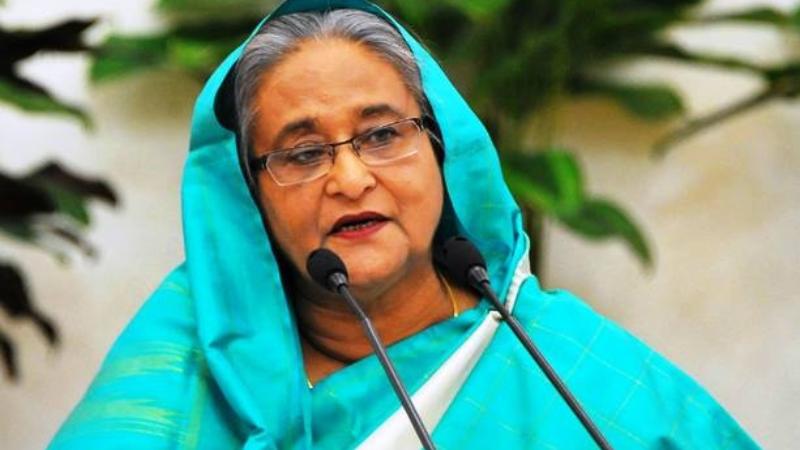
A leaked audio recording has revealed that Bangladesh’s former Prime Minister, Sheikh Hasina, allegedly authorized the brutal crackdown on student protesters in 2024. The recording, captures Hasina’s conversation with a senior government official in which she directs security forces to use "lethal weapons" and to "shoot wherever they find them," referring to the protesters. The conversation took place on July 18, 2024, whi
Leaked Audio Reveals Sheikh Hasina Ordered Brutal Crackdown on Protesters
A leaked audio recording has revealed that Bangladesh’s former Prime Minister, Sheikh Hasina, allegedly authorized the brutal crackdown on student protesters in 2024. The recording, captures Hasina’s conversation with a senior government official in which she directs security forces to use "lethal weapons" and to "shoot wherever they find them," referring to the protesters. The conversation took place on July 18, 2024, whi