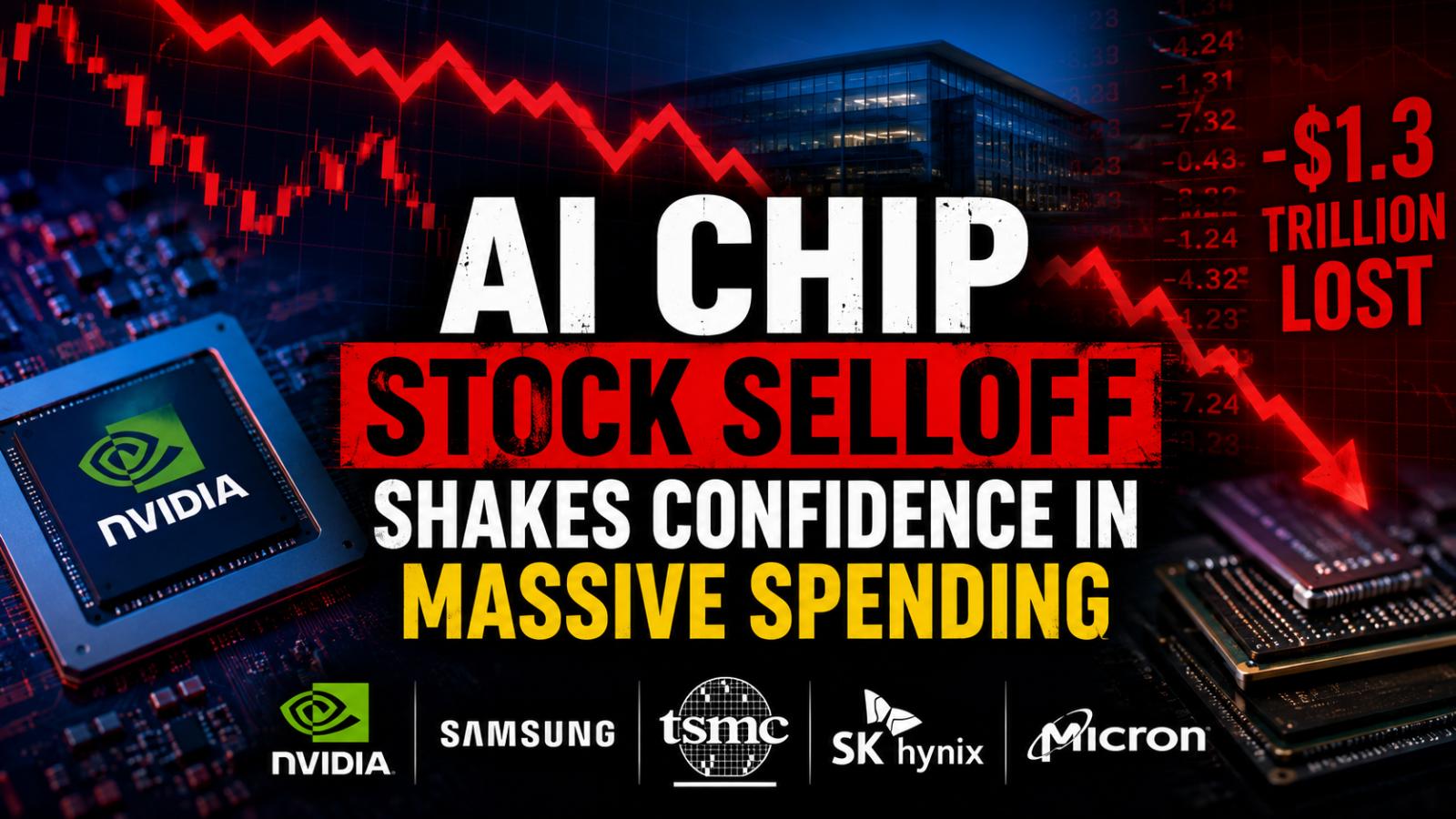
The AI chip stock selloff has erased vast amounts of market value even as semiconductor companies report strong demand, limited supply and record earnings. Investors are no longer questioning whether AI needs more chips. They are questioning whether the companies buying them can earn enough to justify the spending.
AI Chip Stock Selloff Reflects Higher Expectations
Semiconductor shares experienced sharp volatility after years of gains dr
The AI chip stock selloff has erased vast amounts of market value even as semiconductor companies report strong demand, limited supply and record earnings. Investors are no longer questioning whether AI needs more chips. They are questioning whether the companies buying them can earn enough to justify the spending.
AI Chip Stock Selloff Reflects Higher Expectations
Semiconductor shares experienced sharp volatility after years of gains dr
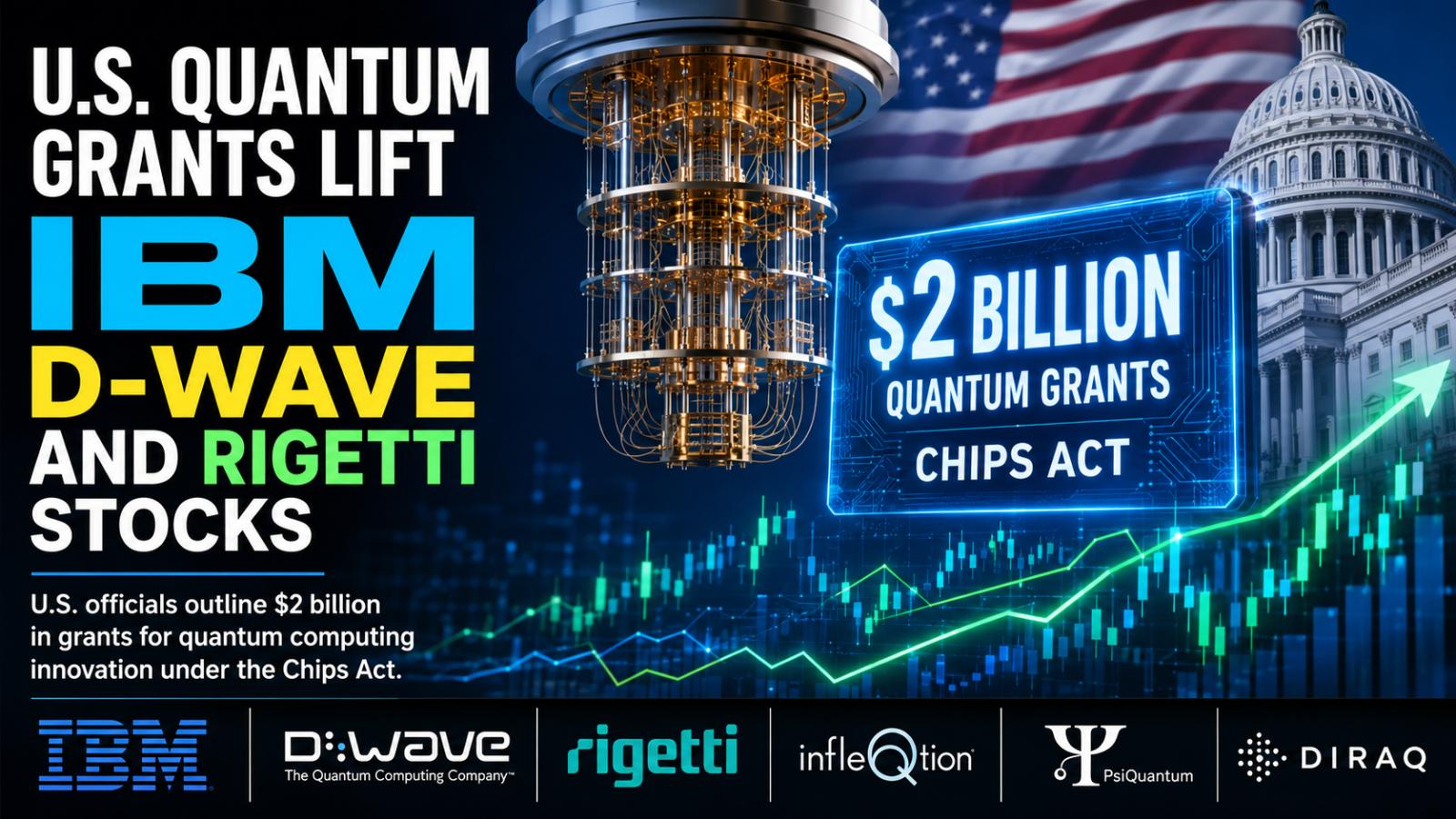
U.S. quantum grants stocks moved higher after federal officials announced planned CHIPS Act incentives for nine companies working on quantum computing hardware and manufacturing.
The U.S. Department of Commerce announced on Thursday, May 21, 2026, that it had signed letters of intent for $2.013 billion in planned federal incentives under the CHIPS and Science Act. The funding is intended to accelerate U.S. leadership in quantum comp
U.S. quantum grants stocks moved higher after federal officials announced planned CHIPS Act incentives for nine companies working on quantum computing hardware and manufacturing.
The U.S. Department of Commerce announced on Thursday, May 21, 2026, that it had signed letters of intent for $2.013 billion in planned federal incentives under the CHIPS and Science Act. The funding is intended to accelerate U.S. leadership in quantum comp
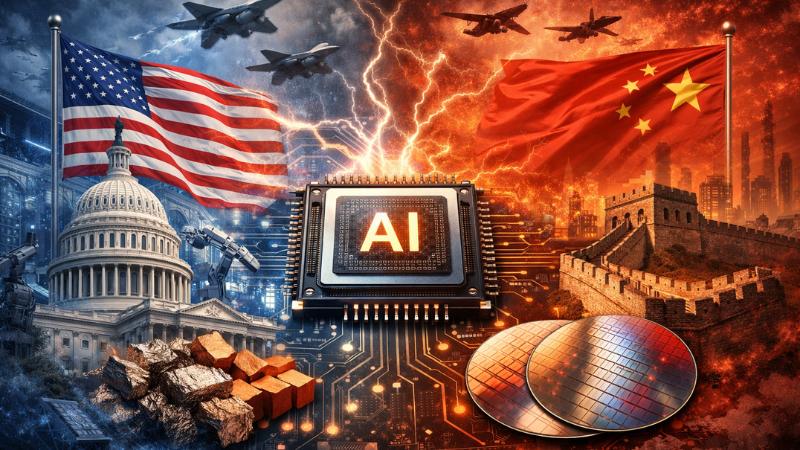
The strategic rivalry between the United States and China in the semiconductor sector continued to intensify throughout 2025, with export controls remaining a central instrument in what has come to be known as the global chip war. The dispute, rooted in concerns over national security, technological leadership and economic influence, significantly affected the semiconductor industry, global supply chains and investment decisions during the year.
At the start of 2025, the United States maintained restrictions on the export of advanced artificial intelligence chips and related technologies to China. These controls were designed to limit Beijing’s access to cutting-edge computing capabilities that could be applied to military and surveillance technologies. US officials defended the measures as necessary to protect national security interests, but the restrictions had immediate commercial consequences for American chipmakers with strong exposure to the Chinese market.
Companies producing high-performance AI chips, including industry leaders such as Nvidia, reported revenue pressures linked to reduced access to Chinese customers. The curbs also led to higher compliance costs and uncertainty over long-term market strategies. Industry executives warned that prolonged restrictions could weaken the global competitiveness of US firms while accelerating China’s efforts to develop independent semiconductor capabilities.
Policy signals shifted after Donald Trump assumed the US presidency in January. His administration moved to ease certain export controls on advanced AI chips for what were described as approved customers in China. Under the revised framework, sales of Nvidia’s H200 chip were permitted, subject to conditions that included profit-sharing arrangements with the US government. The adjustments were widely interpreted as an attempt to balance national security concerns with the commercial interests of American technology companies.
China responded to the US measures by criticising what it described as discriminatory semiconductor policies and urging Washington to reverse the controls. Beijing argued that the restrictions were disrupting global supply chains and undermining fair competition in the semiconductor industry. At the same time, Chinese authorities accelerated domestic initiatives aimed at strengthening the country’s chip manufacturing ecosystem and reducing reliance on foreign suppliers.
As part of its response, China imposed export controls on several rare earth elements, materials that are essential for semiconductor production and advanced electronics. China holds a dominant position in the global rare earth supply, making these measures a powerful lever in the broader technology competition. The restrictions heightened concerns among manufacturers worldwide about material availability and supply chain resilience.
The prolonged US-China chip war had ripple effects across global markets. American and allied semiconductor firms experienced volatility in revenues and share prices as companies reassessed exposure to geopolitical risk. Investment patterns shifted as manufacturers sought to diversify production and sourcing to reduce dependence on any single market. Chinese technology firms increasingly turned to domestic suppliers, accelerating efforts to replace restricted foreign components with locally developed alternatives.
In parallel, the United States expanded its focus on strengthening domestic semiconductor production through subsidy programmes under the CHIPS Act. The initiative supported the construction of new fabrication plants and aimed to secure long-term technological leadership by rebuilding advanced manufacturing capacity within the country.
By late 2025, both Washington and Beijing took limited steps to ease tensions, agreeing to suspend certain rare earth export controls. While the move signalled a willingness to manage escalation, the underlying competition in advanced chip technologies remained unresolved. The year underscored how deeply the semiconductor rivalry has become embedded in global trade, industrial policy and national security calculations, with lasting implications for the future of the technology sector.
The strategic rivalry between the United States and China in the semiconductor sector continued to intensify throughout 2025, with export controls remaining a central instrument in what has come to be known as the global chip war. The dispute, rooted in concerns over national security, technological leadership and economic influence, significantly affected the semiconductor industry, global supply chains and investment decisions during the year.
At the start of 2025, the United States maintained restrictions on the export of advanced artificial intelligence chips and related technologies to China. These controls were designed to limit Beijing’s access to cutting-edge computing capabilities that could be applied to military and surveillance technologies. US officials defended the measures as necessary to protect national security interests, but the restrictions had immediate commercial consequences for American chipmakers with strong exposure to the Chinese market.
Companies producing high-performance AI chips, including industry leaders such as Nvidia, reported revenue pressures linked to reduced access to Chinese customers. The curbs also led to higher compliance costs and uncertainty over long-term market strategies. Industry executives warned that prolonged restrictions could weaken the global competitiveness of US firms while accelerating China’s efforts to develop independent semiconductor capabilities.
Policy signals shifted after Donald Trump assumed the US presidency in January. His administration moved to ease certain export controls on advanced AI chips for what were described as approved customers in China. Under the revised framework, sales of Nvidia’s H200 chip were permitted, subject to conditions that included profit-sharing arrangements with the US government. The adjustments were widely interpreted as an attempt to balance national security concerns with the commercial interests of American technology companies.
China responded to the US measures by criticising what it described as discriminatory semiconductor policies and urging Washington to reverse the controls. Beijing argued that the restrictions were disrupting global supply chains and undermining fair competition in the semiconductor industry. At the same time, Chinese authorities accelerated domestic initiatives aimed at strengthening the country’s chip manufacturing ecosystem and reducing reliance on foreign suppliers.
As part of its response, China imposed export controls on several rare earth elements, materials that are essential for semiconductor production and advanced electronics. China holds a dominant position in the global rare earth supply, making these measures a powerful lever in the broader technology competition. The restrictions heightened concerns among manufacturers worldwide about material availability and supply chain resilience.
The prolonged US-China chip war had ripple effects across global markets. American and allied semiconductor firms experienced volatility in revenues and share prices as companies reassessed exposure to geopolitical risk. Investment patterns shifted as manufacturers sought to diversify production and sourcing to reduce dependence on any single market. Chinese technology firms increasingly turned to domestic suppliers, accelerating efforts to replace restricted foreign components with locally developed alternatives.
In parallel, the United States expanded its focus on strengthening domestic semiconductor production through subsidy programmes under the CHIPS Act. The initiative supported the construction of new fabrication plants and aimed to secure long-term technological leadership by rebuilding advanced manufacturing capacity within the country.
By late 2025, both Washington and Beijing took limited steps to ease tensions, agreeing to suspend certain rare earth export controls. While the move signalled a willingness to manage escalation, the underlying competition in advanced chip technologies remained unresolved. The year underscored how deeply the semiconductor rivalry has become embedded in global trade, industrial policy and national security calculations, with lasting implications for the future of the technology sector.
In a bold and sweeping move that signals a major shift in strategy, Intel Corporation is reportedly planning to lay off 20 percent of its global workforce. The decision, expected to be formally announced this week, marks the first significant restructuring initiative under newly appointed CEO Lip-Bu Tan, who took charge in March this year. The news, reported by Bloomberg, indicates a new era for the once-dominant chipmaker as it seeks to reclaim its position in a rapidly changing semiconducto
In a bold and sweeping move that signals a major shift in strategy, Intel Corporation is reportedly planning to lay off 20 percent of its global workforce. The decision, expected to be formally announced this week, marks the first significant restructuring initiative under newly appointed CEO Lip-Bu Tan, who took charge in March this year. The news, reported by Bloomberg, indicates a new era for the once-dominant chipmaker as it seeks to reclaim its position in a rapidly changing semiconducto
Nvidia, the crown jewel of Wall Street's artificial intelligence boom, suffered a staggering market loss this week, shedding nearly 7% of its value — over $148 billion in market capitalization — following the U.S. government's renewed crackdown on advanced chip exports to China. The dramatic sell-off marks one of the most severe single-day hits for the tech giant and signals growing fragility in the semiconductor sector amid intensifying geopolitical tensions. The immediat
Nvidia, the crown jewel of Wall Street's artificial intelligence boom, suffered a staggering market loss this week, shedding nearly 7% of its value — over $148 billion in market capitalization — following the U.S. government's renewed crackdown on advanced chip exports to China. The dramatic sell-off marks one of the most severe single-day hits for the tech giant and signals growing fragility in the semiconductor sector amid intensifying geopolitical tensions. The immediat
In December 2024, the U.S. Food and Drug Administration (FDA) issued an updated warning regarding a voluntary recall of Lay’s Classic Potato Chips due to the presence of undeclared milk. Frito-Lay, the maker of the popular chips, identified a batch of 13 oz bags that may contain milk as an ingredient, which was not disclosed on the packaging. The affected bags, which were sold in Oregon and Washington, carry an expiration date of February 11, 2025. The issue was first raised by a consum
In December 2024, the U.S. Food and Drug Administration (FDA) issued an updated warning regarding a voluntary recall of Lay’s Classic Potato Chips due to the presence of undeclared milk. Frito-Lay, the maker of the popular chips, identified a batch of 13 oz bags that may contain milk as an ingredient, which was not disclosed on the packaging. The affected bags, which were sold in Oregon and Washington, carry an expiration date of February 11, 2025. The issue was first raised by a consum