#ai-for-business-data
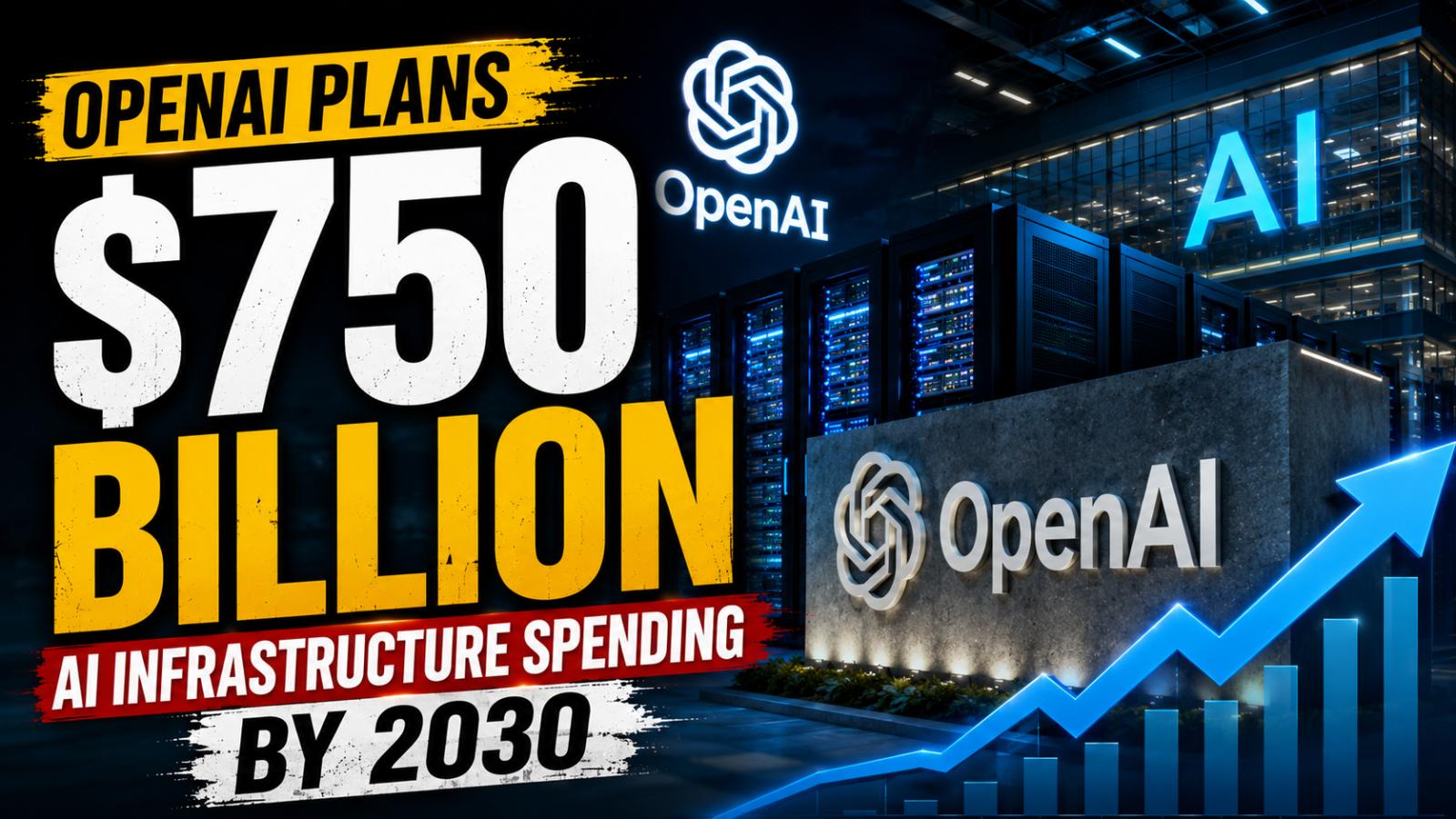
OpenAI Plans $750 Billion AI Infrastructure Spending by 2030
OpenAI plans $750 billion AI infrastructure spending by 2030, reflecting its rapidly expanding demand for computing power. The strategy includes Project Camellia, multi-billion-dollar cloud agreements and new data center investments, while raising questions about financing, profitability and the long-term economics of artificial intelligence infrastructure. Project Camellia data center Georgia
OpenAI Plans $750 Billion AI Infrastructure Spending by 2030
OpenAI plans $750 billion AI infrastructure spending by 2030, reflecting its rapidly expanding demand for computing power. The strategy includes Project Camellia, multi-billion-dollar cloud agreements and new data center investments, while raising questions about financing, profitability and the long-term economics of artificial intelligence infrastructure. Project Camellia data center Georgia
Microsoft Alviso Data Center Breaks Ground in San Jose as AI Demand Rises
Microsoft has broken ground on a 48-megawatt data center campus in San Jose’s Alviso neighborhood, a project expected to support growing demand for artificial intelligence, cloud computing and digital services. The Microsoft Alviso data center is described as the company’s first purpose-built, company-owned and operated data center in San Jose. The source information said the groundbreaking took place on a Wednesday, but did not provide a full calendar date or time.
Microsoft Alviso Data Center Breaks Ground in San Jose as AI Demand Rises
Microsoft has broken ground on a 48-megawatt data center campus in San Jose’s Alviso neighborhood, a project expected to support growing demand for artificial intelligence, cloud computing and digital services. The Microsoft Alviso data center is described as the company’s first purpose-built, company-owned and operated data center in San Jose. The source information said the groundbreaking took place on a Wednesday, but did not provide a full calendar date or time.
AI spending surge could top $1 trillion by 2027, analysts say
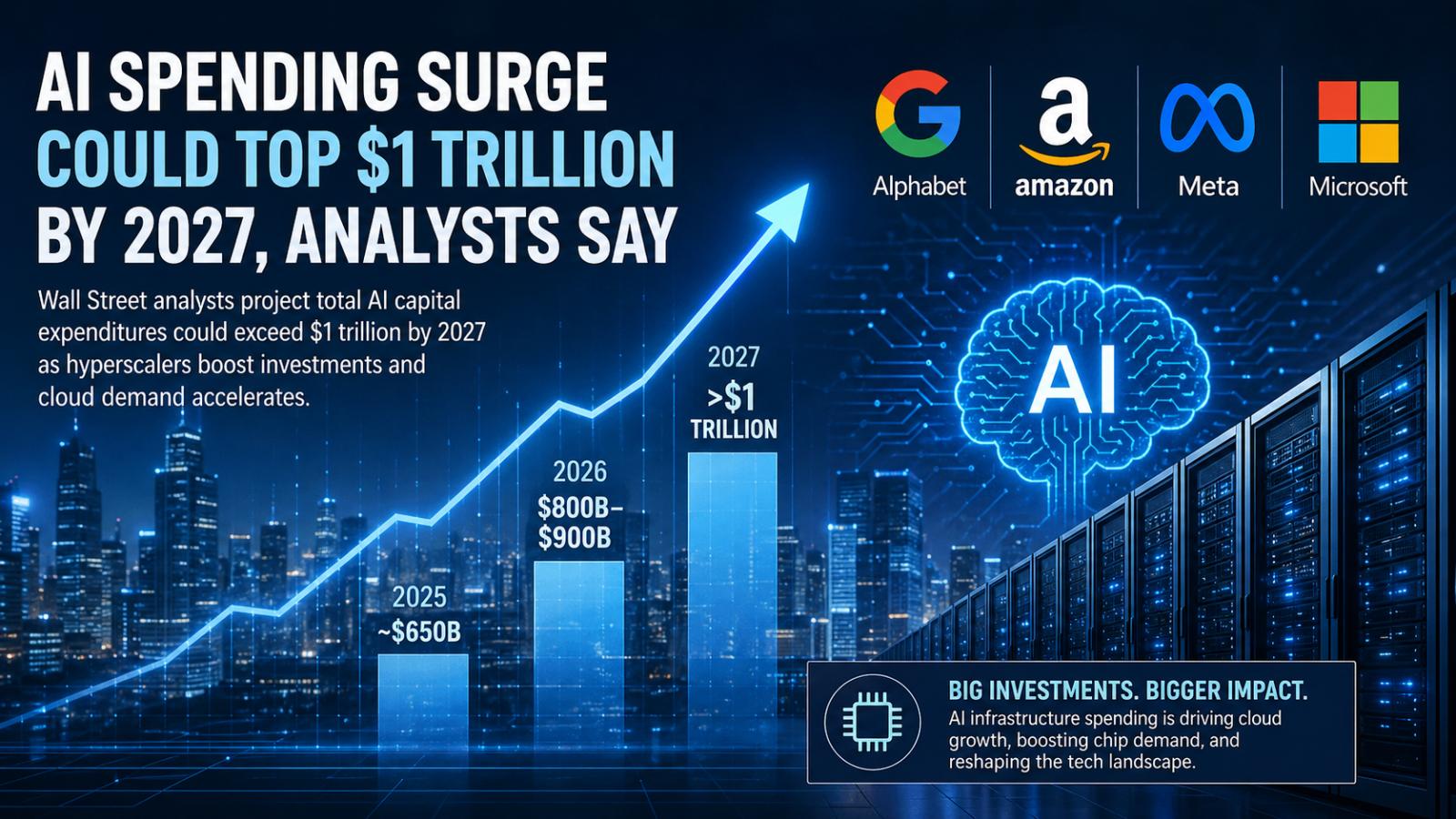
Wall Street analysts project AI spending could exceed $1 trillion by 2027 as major tech firms boost investments. Strong cloud demand and rising revenues support growth, though investor concerns remain over returns and rising infrastructure costs AI spending surge could top $1 trillion by 2027, analysts say is increasingly shaping expectations across the technology sector, as Wall Street analysts project unprecedented capital expenditures driven by artificial intelligence demand. Following recent tech earnings announcements on Wednesday, analysts at firms including Evercore and Bank of America estimate total AI-related capital spending could surpass $1 trillion by 2027, with 2026 projections already rising to between $800 billion and $900 billion. The surge reflects aggressive investment strategies by major technology companies, including Alphabet, Amazon, Meta, and Microsoft. According to analyst estimates, projected capital spending for 2026 includes approximately $200 billion from Amazon, $190 billion from Microsoft, $185 billion from Alphabet, and $135 billion from Meta, reflecting broad increases across the sector. Executives continue to signal confidence in long-term AI investments despite investor concerns about the scale of spending. Amazon CEO Andy Jassy emphasized the company’s commitment to infrastructure expansion, citing strong long-term returns. Similarly, Alphabet reported significant growth in its cloud segment, with revenue increasing sharply year over year, reinforcing expectations that AI-driven services are becoming a major revenue driver. Analysts note that while capital expenditures continue to rise, early signs of return on investment are emerging. Strong cloud demand, expanding contract backlogs, and increasing enterprise adoption of AI tools are contributing to revenue growth. Alphabet, in particular, has seen substantial backlog expansion tied to its cloud platform, with a large portion expected to convert into revenue over the next two years. However, not all companies are receiving equal investor confidence. Meta’s increased spending plans have raised concerns about near-term returns, particularly as its free cash flow has declined significantly compared to the previous year. CEO Mark Zuckerberg acknowledged higher infrastructure costs, including rising component prices, while maintaining confidence in the long-term value of AI investments. The rapid expansion of AI infrastructure is also benefiting semiconductor manufacturers and hardware suppliers. Companies such as Intel are seeing increased demand as AI workloads require a broader range of computing hardware beyond graphics processors. Analysts highlight growing demand for specialized chips and custom silicon solutions, suggesting that AI development could drive sustained growth across the semiconductor industry. Overall, analysts expect improving revenue and cash flow trends across the sector by 2026, supporting continued investment. While skepticism remains about the pace and scale of spending, the combination of strong demand, expanding cloud services, and technological advancements indicates that the AI-driven capital expenditure cycle is likely to continue shaping the global technology landscape.
AI spending surge could top $1 trillion by 2027, analysts say
Wall Street analysts project AI spending could exceed $1 trillion by 2027 as major tech firms boost investments. Strong cloud demand and rising revenues support growth, though investor concerns remain over returns and rising infrastructure costs AI spending surge could top $1 trillion by 2027, analysts say is increasingly shaping expectations across the technology sector, as Wall Street analysts project unprecedented capital expenditures driven by artificial intelligence demand. Following recent tech earnings announcements on Wednesday, analysts at firms including Evercore and Bank of America estimate total AI-related capital spending could surpass $1 trillion by 2027, with 2026 projections already rising to between $800 billion and $900 billion. The surge reflects aggressive investment strategies by major technology companies, including Alphabet, Amazon, Meta, and Microsoft. According to analyst estimates, projected capital spending for 2026 includes approximately $200 billion from Amazon, $190 billion from Microsoft, $185 billion from Alphabet, and $135 billion from Meta, reflecting broad increases across the sector. Executives continue to signal confidence in long-term AI investments despite investor concerns about the scale of spending. Amazon CEO Andy Jassy emphasized the company’s commitment to infrastructure expansion, citing strong long-term returns. Similarly, Alphabet reported significant growth in its cloud segment, with revenue increasing sharply year over year, reinforcing expectations that AI-driven services are becoming a major revenue driver. Analysts note that while capital expenditures continue to rise, early signs of return on investment are emerging. Strong cloud demand, expanding contract backlogs, and increasing enterprise adoption of AI tools are contributing to revenue growth. Alphabet, in particular, has seen substantial backlog expansion tied to its cloud platform, with a large portion expected to convert into revenue over the next two years. However, not all companies are receiving equal investor confidence. Meta’s increased spending plans have raised concerns about near-term returns, particularly as its free cash flow has declined significantly compared to the previous year. CEO Mark Zuckerberg acknowledged higher infrastructure costs, including rising component prices, while maintaining confidence in the long-term value of AI investments. The rapid expansion of AI infrastructure is also benefiting semiconductor manufacturers and hardware suppliers. Companies such as Intel are seeing increased demand as AI workloads require a broader range of computing hardware beyond graphics processors. Analysts highlight growing demand for specialized chips and custom silicon solutions, suggesting that AI development could drive sustained growth across the semiconductor industry. Overall, analysts expect improving revenue and cash flow trends across the sector by 2026, supporting continued investment. While skepticism remains about the pace and scale of spending, the combination of strong demand, expanding cloud services, and technological advancements indicates that the AI-driven capital expenditure cycle is likely to continue shaping the global technology landscape.
Why are AI firms hiring software executives? Talent shift accelerates enterprise push
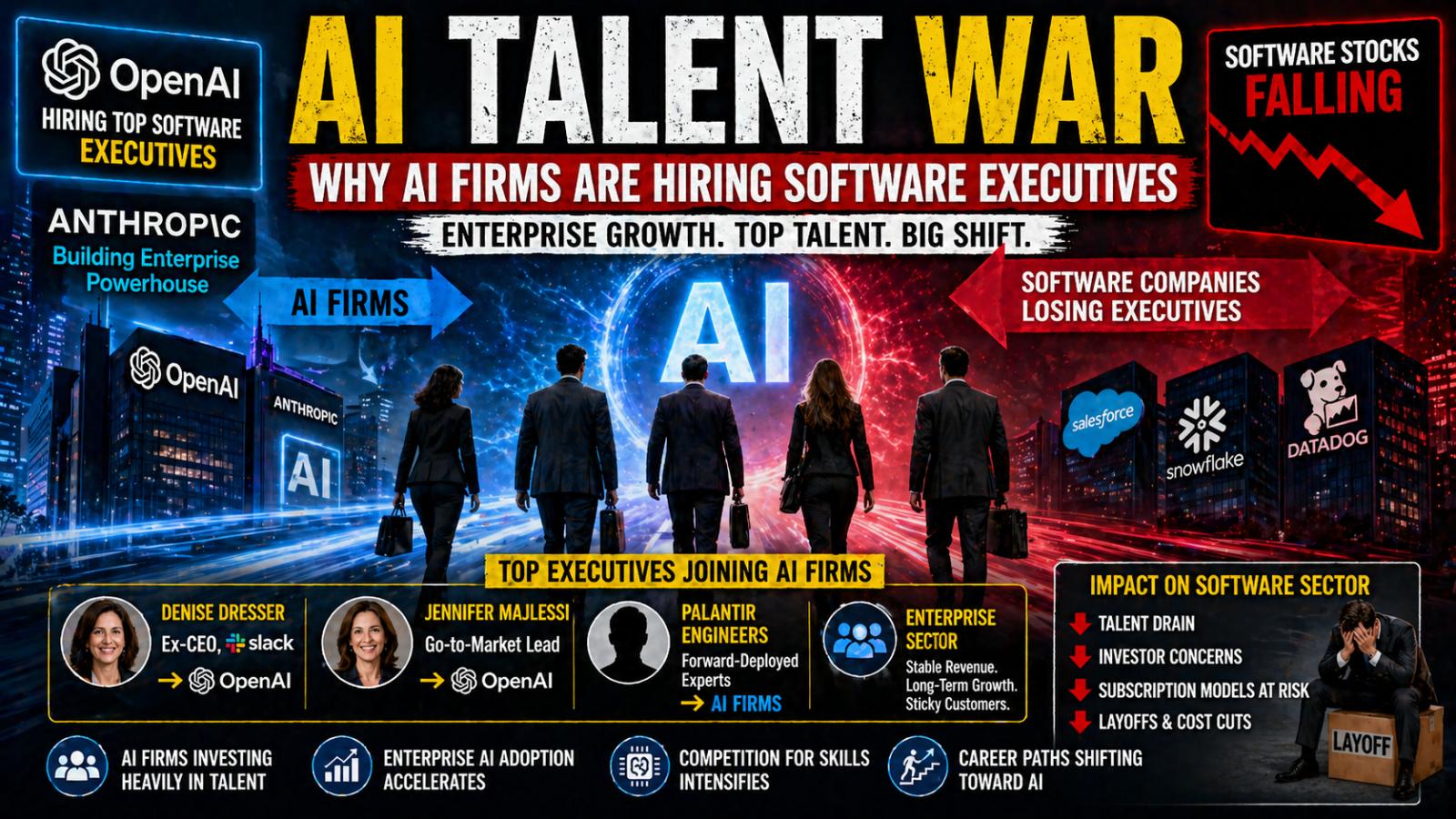
Why are AI firms hiring software executives? Talent shift accelerates enterprise push is becoming a defining question across the technology sector as artificial intelligence companies aggressively recruit senior leaders from traditional software firms, signaling a strategic shift toward enterprise growth and customer expansion. AI companies target enterprise expertise from software leaders Executives from companies including Salesforce, Snowflake, and Datadog have recently joined AI firms such as OpenAI and Anthropic, according to multiple industry sources. These hires are often driven by lucrative compensation packages and the ability to leverage long-standing corporate relationships in enterprise markets. Among the most prominent moves, Denise Dresser transitioned to OpenAI as chief revenue officer after previously serving as CEO of Slack under Salesforce. Jennifer Majlessi also joined OpenAI in a go-to-market leadership role, reflecting a broader trend of AI firms strengthening their sales and commercialization capabilities. Enterprise growth becomes central to AI business strategy The hiring surge highlights a shift in priorities for AI companies, where enterprise adoption is increasingly seen as a key revenue driver. Corporate clients tend to offer more stable, long-term contracts, making them a “sticky” and profitable segment. OpenAI has indicated that enterprise customers already account for roughly 40% of its business, with expectations to grow that share further. AI firms are also recruiting specialized talent such as forward-deployed engineers from Palantir Technologies, professionals known for implementing complex software solutions directly within client organizations. Software sector faces mounting pressure from AI disruption The talent migration comes at a challenging time for traditional software companies, which are already facing investor concerns about AI-driven disruption to subscription-based cloud models. Industry tracking funds have recorded significant declines, reflecting uncertainty about long-term competitiveness. At the same time, layoffs across major tech companies underscore a broader workforce transition. Firms like Oracle, Meta Platforms, and Microsoft have announced workforce reductions while reallocating resources toward AI initiatives. Workforce shifts reshape career paths in technology The evolving landscape is prompting professionals to reassess career trajectories, with many seeking roles aligned with AI innovation. However, integrating talent from traditional software firms into fast-paced AI environments can present challenges, particularly around culture and expectations for long working hours. Still, the movement of experienced executives into AI companies signals a broader structural shift in the tech industry, where enterprise-focused growth and advanced AI capabilities are rapidly redefining competitive dynamics.

Why are AI firms hiring software executives? Talent shift accelerates enterprise push
Why are AI firms hiring software executives? Talent shift accelerates enterprise push is becoming a defining question across the technology sector as artificial intelligence companies aggressively recruit senior leaders from traditional software firms, signaling a strategic shift toward enterprise growth and customer expansion. AI companies target enterprise expertise from software leaders Executives from companies including Salesforce, Snowflake, and Datadog have recently joined AI firms such as OpenAI and Anthropic, according to multiple industry sources. These hires are often driven by lucrative compensation packages and the ability to leverage long-standing corporate relationships in enterprise markets. Among the most prominent moves, Denise Dresser transitioned to OpenAI as chief revenue officer after previously serving as CEO of Slack under Salesforce. Jennifer Majlessi also joined OpenAI in a go-to-market leadership role, reflecting a broader trend of AI firms strengthening their sales and commercialization capabilities. Enterprise growth becomes central to AI business strategy The hiring surge highlights a shift in priorities for AI companies, where enterprise adoption is increasingly seen as a key revenue driver. Corporate clients tend to offer more stable, long-term contracts, making them a “sticky” and profitable segment. OpenAI has indicated that enterprise customers already account for roughly 40% of its business, with expectations to grow that share further. AI firms are also recruiting specialized talent such as forward-deployed engineers from Palantir Technologies, professionals known for implementing complex software solutions directly within client organizations. Software sector faces mounting pressure from AI disruption The talent migration comes at a challenging time for traditional software companies, which are already facing investor concerns about AI-driven disruption to subscription-based cloud models. Industry tracking funds have recorded significant declines, reflecting uncertainty about long-term competitiveness. At the same time, layoffs across major tech companies underscore a broader workforce transition. Firms like Oracle, Meta Platforms, and Microsoft have announced workforce reductions while reallocating resources toward AI initiatives. Workforce shifts reshape career paths in technology The evolving landscape is prompting professionals to reassess career trajectories, with many seeking roles aligned with AI innovation. However, integrating talent from traditional software firms into fast-paced AI environments can present challenges, particularly around culture and expectations for long working hours. Still, the movement of experienced executives into AI companies signals a broader structural shift in the tech industry, where enterprise-focused growth and advanced AI capabilities are rapidly redefining competitive dynamics.
Indian-origin founders of Delve under spotlight amid tech controversy
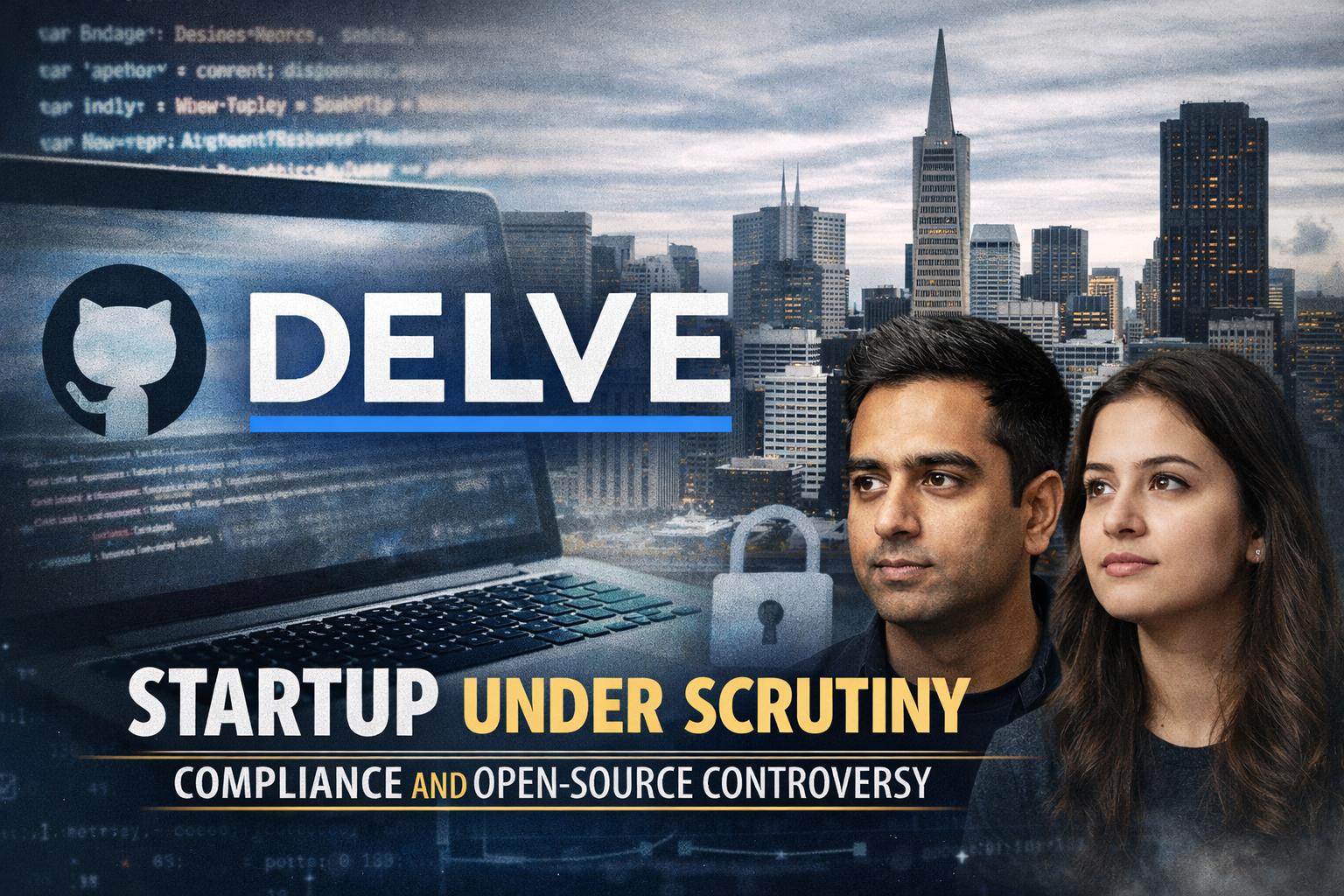
Delve, a San Francisco-based startup associated with the Y Combinator ecosystem, has come under scrutiny following allegations related to its open-source practices and compliance claims, drawing attention within the global technology sector. The controversy, which surfaced online on Saturday, April 4, 2026, has sparked debate about transparency and accountability in early-stage startups. The company is led in part by founders of Indian origin, a detail that has been widely highlighted in discussions surrounding the issue. The concerns emerged from online posts and discussions that questioned whether Delve accurately represented aspects of its compliance processes and technical offerings. These claims have not been independently verified, and the company has publicly responded, disputing the allegations and describing them as misleading. The situation underscores broader challenges within the startup ecosystem, particularly as companies increasingly rely on open-source technologies and third-party partnerships. Questions around how such technologies are integrated, documented, and communicated to customers have become central to the discussion. Industry observers note that early-stage companies often operate in fast-moving environments where governance frameworks may still be evolving. Delve has stated that it remains committed to maintaining transparency and has emphasized its adherence to established standards. However, the controversy has prompted increased scrutiny from the developer community and potential stakeholders, highlighting the importance of clear communication and verifiable claims in maintaining trust. As the discussion continues, the episode reflects a growing trend in which online platforms play a significant role in surfacing and amplifying concerns about startups. For companies operating in competitive and highly visible sectors such as artificial intelligence and compliance technology, reputational risks tied to such controversies can have far-reaching implications.
Indian-origin founders of Delve under spotlight amid tech controversy
Delve, a San Francisco-based startup associated with the Y Combinator ecosystem, has come under scrutiny following allegations related to its open-source practices and compliance claims, drawing attention within the global technology sector. The controversy, which surfaced online on Saturday, April 4, 2026, has sparked debate about transparency and accountability in early-stage startups. The company is led in part by founders of Indian origin, a detail that has been widely highlighted in discussions surrounding the issue. The concerns emerged from online posts and discussions that questioned whether Delve accurately represented aspects of its compliance processes and technical offerings. These claims have not been independently verified, and the company has publicly responded, disputing the allegations and describing them as misleading. The situation underscores broader challenges within the startup ecosystem, particularly as companies increasingly rely on open-source technologies and third-party partnerships. Questions around how such technologies are integrated, documented, and communicated to customers have become central to the discussion. Industry observers note that early-stage companies often operate in fast-moving environments where governance frameworks may still be evolving. Delve has stated that it remains committed to maintaining transparency and has emphasized its adherence to established standards. However, the controversy has prompted increased scrutiny from the developer community and potential stakeholders, highlighting the importance of clear communication and verifiable claims in maintaining trust. As the discussion continues, the episode reflects a growing trend in which online platforms play a significant role in surfacing and amplifying concerns about startups. For companies operating in competitive and highly visible sectors such as artificial intelligence and compliance technology, reputational risks tied to such controversies can have far-reaching implications.
Lokesh Announces Rs 90,000 Crore RMZ Investment to Transform Andhra Pradesh
The Andhra Pradesh delegation’s presence at the World Economic Forum Summit in Davos has already begun yielding remarkable results. IT Minister Nara Lokesh made a major announcement that has drawn national and international attention by revealing a massive strategic infrastructure partnership between the Andhra Pradesh government and RMZ Group. Valued at nearly 10 billion dollars, this partnership is expected to redefine the state’s digital, industrial and employment landscape over the co
Lokesh Announces Rs 90,000 Crore RMZ Investment to Transform Andhra Pradesh
The Andhra Pradesh delegation’s presence at the World Economic Forum Summit in Davos has already begun yielding remarkable results. IT Minister Nara Lokesh made a major announcement that has drawn national and international attention by revealing a massive strategic infrastructure partnership between the Andhra Pradesh government and RMZ Group. Valued at nearly 10 billion dollars, this partnership is expected to redefine the state’s digital, industrial and employment landscape over the co
Reliance to Set Up 1 GW AI Data Center in Andhra Pradesh Following Google
Andhra Pradesh is quickly emerging as a major technology and data hub in India, with global giants like Google and Reliance investing heavily in the state. Following Google’s announcement of a Rs 87,000 crore mega data center, Reliance has now confirmed plans to establish a 1 GW AI-powered data center in Andhra Pradesh. The project will be powered by a 6 GWp solar energy initiative, reflecting a commitment to sustainable and green technology infrastructure.
Reliance to Set Up 1 GW AI Data Center in Andhra Pradesh Following Google
Andhra Pradesh is quickly emerging as a major technology and data hub in India, with global giants like Google and Reliance investing heavily in the state. Following Google’s announcement of a Rs 87,000 crore mega data center, Reliance has now confirmed plans to establish a 1 GW AI-powered data center in Andhra Pradesh. The project will be powered by a 6 GWp solar energy initiative, reflecting a commitment to sustainable and green technology infrastructure.
Salesforce to invest $15 billion in San Francisco to expand AI innovation
Salesforce announced plans to invest $15 billion in San Francisco over the next five years to accelerate the adoption of artificial intelligence among businesses. The move reinforces the company’s goal to remain a leading force in enterprise software as AI-driven tools become an essential part of global business operations. The technology giant, founded and headquartered in San Francisco since 1999, has steadily integrated AI across its suite of cloud-based products, including the
Salesforce to invest $15 billion in San Francisco to expand AI innovation
Salesforce announced plans to invest $15 billion in San Francisco over the next five years to accelerate the adoption of artificial intelligence among businesses. The move reinforces the company’s goal to remain a leading force in enterprise software as AI-driven tools become an essential part of global business operations. The technology giant, founded and headquartered in San Francisco since 1999, has steadily integrated AI across its suite of cloud-based products, including the
How to Use Google Cloud AI Tools for Faster Data Insights
In the modern business world, data moves fast—and decisions need to move even faster. Google Cloud AI offers a powerful set of tools that allow companies to analyze massive datasets, uncover patterns, and generate actionable insights in a fraction of the time it would take with traditional methods. Whether you are a startup or a global enterprise, these tools can help you make smarter choices and stay ahead of the competition. Step 1: Identify Your Dat
How to Use Google Cloud AI Tools for Faster Data Insights
In the modern business world, data moves fast—and decisions need to move even faster. Google Cloud AI offers a powerful set of tools that allow companies to analyze massive datasets, uncover patterns, and generate actionable insights in a fraction of the time it would take with traditional methods. Whether you are a startup or a global enterprise, these tools can help you make smarter choices and stay ahead of the competition. Step 1: Identify Your Dat
AWS AI: A Game-Changer for Data-Driven Businesses
In today’s competitive business landscape, data has become the most valuable resource for making smart, timely decisions. Amazon Web Services (AWS) AI is helping organizations unlock the full potential of their data by providing advanced tools for analysis, automation, and prediction. From startups to large enterprises, AWS AI offers scalable and cost-effective solutions that make it easier to gain insights, improve customer engagement, and streamline ope
AWS AI: A Game-Changer for Data-Driven Businesses
In today’s competitive business landscape, data has become the most valuable resource for making smart, timely decisions. Amazon Web Services (AWS) AI is helping organizations unlock the full potential of their data by providing advanced tools for analysis, automation, and prediction. From startups to large enterprises, AWS AI offers scalable and cost-effective solutions that make it easier to gain insights, improve customer engagement, and streamline ope
How to Get a Job in AI Without Being a Programmer
AI is one of the most exciting fields today, but you don’t need to be a programmer to build a career in this space. Many non-technical roles in AI require business, communication, design, and project management skills rather than coding. In this article, we’ll explore several AI jobs that don’t require programming knowledge. 1. AI Product Manager AI product managers oversee the development of AI-driven p
How to Get a Job in AI Without Being a Programmer
AI is one of the most exciting fields today, but you don’t need to be a programmer to build a career in this space. Many non-technical roles in AI require business, communication, design, and project management skills rather than coding. In this article, we’ll explore several AI jobs that don’t require programming knowledge. 1. AI Product Manager AI product managers oversee the development of AI-driven p
The Role of Microsoft Azure AI in Cloud-Based Solutions
In today’s digital landscape, businesses are increasingly turning to cloud-based solutions to stay agile, scalable, and competitive. One of the most powerful players driving this shift is Microsoft Azure AI. By combining the reliability of Azure’s cloud infrastructure with advanced artificial intelligence capabilities, organizations are unlocking new levels of efficiency, automation, and innovation. Microsoft Azure AI offers a broad set of tools and services designed to
The Role of Microsoft Azure AI in Cloud-Based Solutions
In today’s digital landscape, businesses are increasingly turning to cloud-based solutions to stay agile, scalable, and competitive. One of the most powerful players driving this shift is Microsoft Azure AI. By combining the reliability of Azure’s cloud infrastructure with advanced artificial intelligence capabilities, organizations are unlocking new levels of efficiency, automation, and innovation. Microsoft Azure AI offers a broad set of tools and services designed to
Beware of amazon recall text scam targeting personal and financial information
The Federal Trade Commission has issued a strong warning to consumers about a new scam involving fake text messages that appear to come from Amazon. According to officials, many individuals have reported receiving texts that claim an item they purchased has been recalled. These messages include a link promising a full refund, but the FTC has clarified that these messages are fraudulent and designed to steal money or personal information from unsuspecting victims. Scammers are becomi
Beware of amazon recall text scam targeting personal and financial information
The Federal Trade Commission has issued a strong warning to consumers about a new scam involving fake text messages that appear to come from Amazon. According to officials, many individuals have reported receiving texts that claim an item they purchased has been recalled. These messages include a link promising a full refund, but the FTC has clarified that these messages are fraudulent and designed to steal money or personal information from unsuspecting victims. Scammers are becomi
India’s New Income Tax Bill 2025 Expands Tax Authorities’ Access to Digital Assets and Online Data
The Indian government has introduced the Income Tax Bill 2025, a major overhaul of the country’s tax laws, granting unprecedented investigative powers to tax authorities. While presented as a move to modernize tax compliance, the bill includes provisions that allow tax officers to access digital assets, emails, social media profiles, trading accounts, and cloud storage in cases of suspected tax evasion.Finance Minister Nirmala Sitharaman introduced the bill in Parliament, stating that i
India’s New Income Tax Bill 2025 Expands Tax Authorities’ Access to Digital Assets and Online Data
The Indian government has introduced the Income Tax Bill 2025, a major overhaul of the country’s tax laws, granting unprecedented investigative powers to tax authorities. While presented as a move to modernize tax compliance, the bill includes provisions that allow tax officers to access digital assets, emails, social media profiles, trading accounts, and cloud storage in cases of suspected tax evasion.Finance Minister Nirmala Sitharaman introduced the bill in Parliament, stating that i
Amazon Web Services to Invest $8.2 Billion in Maharashtra to Expand Cloud Infrastructure
Amazon Web Services, the cloud computing arm of Amazon, is set to invest approximately $8.2 billion in Maharashtra over the next few years, according to the Ministry of Electronics and Information Technology. IT Minister Ashwini Vaishnaw stated that the investment would play a key role in job creation while strengthening India’s cloud computing infrastructure. The investment is expected to be rolled out between 2029 and 2030.AWS is also planning to introduce its own graphics processing
Amazon Web Services to Invest $8.2 Billion in Maharashtra to Expand Cloud Infrastructure
Amazon Web Services, the cloud computing arm of Amazon, is set to invest approximately $8.2 billion in Maharashtra over the next few years, according to the Ministry of Electronics and Information Technology. IT Minister Ashwini Vaishnaw stated that the investment would play a key role in job creation while strengthening India’s cloud computing infrastructure. The investment is expected to be rolled out between 2029 and 2030.AWS is also planning to introduce its own graphics processing