FBI warns of sharp rise in ATM jackpotting attacks across US
The Federal Bureau of Investigation has issued a nationwide alert to banks and financial institutions, warning of a significant rise in ATM jackpotting attacks, a form of cyber-enabled theft that forces machines to dispense cash without legitimate transactions. Authorities say the trend is accelerating, with financial losses mounting as criminal groups refine their techniques and expand operations across the United States. According to federal officials, nearly 1,900 ATM jackpotting incidents have been reported nationwide since 2020. More than 700 of those cases occurred in 2025 alone, resulting in losses exceeding $20 million. The sharp increase has prompted urgent calls for banks to strengthen ATM security controls, monitor suspicious activity more closely, and share threat intelligence with law enforcement. At the center of the surge is malware from the Ploutus family, a tool specifically designed to hijack ATM systems. Rather than targeting individual customer accounts, the malware attacks the machine’s internal software layer. It exploits the Extensions for Financial Services, or XFS, which normally manages how ATMs physically dispense cash. By injecting unauthorized commands into this layer, attackers can override standard authorization checks and trigger withdrawals without bank approval, card use, or customer credentials. Security analysts warn that once installed, the malware can give criminals direct control of the machine. Because many ATMs operate on widely used operating systems, the attack can often be adapted across different manufacturers with minimal modification. In many cases, cash-out operations can be completed within minutes, allowing perpetrators to leave before alerts are triggered or the machine runs empty. Investigators emphasize that physical access remains the most common entry point for these attacks. Criminals frequently use generic keys to open ATM cabinets and then deploy malware using one of two primary methods. In some incidents, the machine’s hard drive is removed, infected on a separate computer, and reinstalled. In others, the original drive is replaced entirely with a compromised device preloaded with malicious software. Because the malware operates independently of standard banking communications, it can dispense cash without interacting with customer accounts or triggering traditional fraud detection systems. Officials have outlined several warning signs that may indicate a compromised ATM, including unexpected door alerts outside maintenance windows, sudden low-cash notifications, unauthorized devices connected to the machine, missing or tampered hard drives, and machines abruptly marked out of service. Financial institutions are being urged to review physical security protocols, enhance monitoring of service patterns, and report suspicious activity promptly as part of a broader effort to contain the growing ATM cyberattack threat.
China seeks stronger yuan as Xi Jinping outlines push for global reserve currency
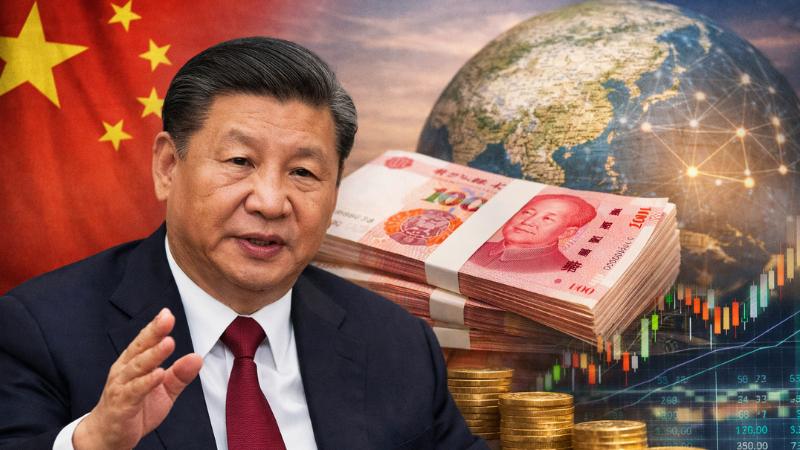
Amid continuing global economic uncertainty and renewed debate over the stability of major reserve currencies, Chinese President Xi Jinping has reiterated China’s ambition to build a “strong currency” and gradually elevate the yuan’s status in the global financial system. Xi said China aims to expand the use of the yuan in international trade, investment, and foreign exchange markets, underscoring a long-standing policy goal to strengthen the country’s financial influence worldwide. Xi’s remarks were outlined in a speech delivered in 2024 to senior provincial and ministerial officials and later published on Saturday in Qiushi, the Communist Party’s leading theoretical journal. The publication of excerpts from the address comes at a time of heightened volatility in global markets and growing scrutiny of the dominance of the US dollar, adding significance to Beijing’s renewed emphasis on currency strength and financial resilience. In the speech, Xi set out what he described as the essential characteristics of a global financial powerhouse. These included a solid economic foundation, world-leading technological and industrial capabilities, and a widely accepted and credible currency. He argued that currency strength was inseparable from broader national competitiveness and institutional capacity, noting that financial influence must be supported by real economic and technological power rather than short-term market movements. Xi also stressed the importance of a capable and independent central bank able to implement effective monetary policy and macroprudential management. He said globally competitive financial institutions, along with influential international financial centres, were necessary to attract global capital and exert pricing power in international markets. According to Xi, these elements must be matched with strong regulation, a reliable legal framework, and a deep pool of skilled financial professionals to ensure long-term stability and credibility. While acknowledging China’s scale in global finance, Xi noted that the country still faced structural limitations. He said China ranked among the world’s largest economies in terms of banking assets, foreign exchange reserves, and capital market size, but remained “big but not strong” overall. Transforming China into a true global financial powerhouse, he added, would be a gradual and long-term undertaking rather than an immediate achievement. Beijing has promoted the internationalisation of the yuan for more than a decade, with measurable progress in its use for cross-border trade settlement. The currency’s role in global markets, however, remains limited when compared with established reserve currencies. China’s Cross-Border Interbank Payment System currently clears an average of about 700 billion yuan, or roughly 100 billion US dollars, in transactions each day. This figure remains well below the nearly 2 trillion US dollars cleared daily through the dollar-based Clearing House Interbank Payments System. Yuan-denominated debt issuance in international markets also accounts for a small share of global activity, representing less than one percent of total issuance. These figures highlight the gap between China’s ambitions and the yuan’s current global footprint, despite steady domestic financial expansion. In recent months, the yuan has generally held firm against the US dollar, even amid trade tensions and uneven global growth. This stability contrasts with the sharper depreciation seen during former US President Donald Trump’s first term, when market observers speculated that Chinese authorities tolerated a weaker currency to offset the impact of tariffs. International investment banks continue to argue that the yuan remains below its long-term fair value, reflecting both policy controls and cautious foreign investor sentiment. The republication of Xi’s speech signals continuity in China’s financial strategy rather than a sudden shift. As global markets navigate uncertainty and reassess existing monetary structures, Beijing appears intent on steadily advancing its vision of a stronger yuan and a more influential role in the international financial system over the long term.
Pravasi Sampark NRI meet highlights Bank of India’s global banking focus
Bank of India’s Mumbai North Zone recently organised an NRI Meet titled “Pravasi Sampark” as part of its ongoing efforts to deepen engagement with Non-Resident Indian customers and better understand their evolving banking, investment, and remittance requirements. The initiative reflects the bank’s focus on strengthening long-term relationships with the global Indian diaspora by offering customer-centric and technology-driven financial solutions. The event was attended by sen
New Year’s Day 2026 openings: retailers, grocery stores, banks and more
As the calendar turns to a new year, New Year’s Day remains a federal holiday across the United States, bringing widespread closures for government offices, schools, banks and financial markets. At the same time, many major retailers and grocery chains plan to welcome customers on January 1, 2026, often with adjusted hours and post-holiday discounts aimed at clearing older inventory. Shoppers and consumers are encouraged to confirm local schedules in advance, as operating hours can vary by
RBI Cuts Repo Rate To 5.25%: Will Your Home Loan EMIs Finally Get Cheaper?
The Reserve Bank of India has reduced the repo rate by 25 basis points, bringing it down from 5.5% to 5.25%. This marks a total reduction of 125 basis points in 2025, sparking fresh hope among homebuyers for affordable loan EMIs as banks prepare to revise lending rates. The Monetary Policy Committee (MPC), which met on December 3, 4 and 5, voted unanimously after assessing inflation control, liquidity status and growth expectations. Governor Sanjay Malhotra confirmed the move, addin
RBI Eases Claim Settlement Rules For Deceased Bank Accounts, Compensation For Delays
The Reserve Bank of India has rolled out a new framework aimed at simplifying and expediting the process of claim settlement for deceased account holders. This step comes after years of confusion caused by different practices adopted by banks, often leaving grieving families struggling with lengthy procedures and paperwork. The new rules mandate that banks must settle claims related to accounts and lockers of deceased customers within 15 days. In addition, nom
Bharat Bandh Today: 25 Crore Workers Protest Against Anti-Worker Policies
A massive nationwide strike, known as the Bharat Bandh, is set to paralyze India’s public services today, with over 25 crore workers from essential government sectors participating in the protest. The strike, organized by a joint forum of 10 central trade unions, supported by farmer and rural worker organizations, is aimed at protesting the central government’s policies, which they consider "anti-worker, anti-farmer, and pro-corporate
Aadhaar-PAN Link, ATM Fees, and More: Key Financial Changes From July 1
Starting July 1, 2025, several important changes in the financial sector will come into effect, impacting individual taxpayers, bank customers, and railway travelers. These changes include new regulations for Aadhaar-PAN linking, increased banking fees, and adjustments in railway ticket prices. Below are some of the key updates that individuals should be aware of: Aadhaar-PAN Linking
Barclays and Deutsche Bank Stocks Soar to Highest Levels in Over a Decade
European bank stocks are enjoying a notable upswing, with both Barclays and Deutsche Bank shares reaching their highest levels in over a decade. This rally is being fueled by a combination of easing geopolitical tensions, signs of improving global trade relations—particularly between the United States and China—and robust first-quarter earnings, especially from investment banking divisions. Barclays, one of the UK’s leading financial institutions, has seen its
SBI Cuts FD, Savings Rates After RBI Policy Shift
In a move reflecting the Reserve Bank of India’s latest policy stance, the State Bank of India (SBI) has reduced interest rates on both savings accounts and fixed deposits (FDs), effective from June 15, 2025. This rate revision is expected to impact millions of depositors across the country, as banks realign with softer monetary cues from the central bank. SBI has cut its savings account interest rate by 5 basi
RBI reins in JPY-linked special deposits as banks scale down premium offerings
Mumbai's financial sector has witnessed a significant recalibration as a once-popular deposit product—the Japanese yen (JPY)-linked special deposit—loses momentum following regulatory scrutiny and shifting bank strategies. These fancy financial instruments, heavily marketed to attract non-resident Indian (NRI) funds and appease analysts with attractive yield spreads, are now undergoing a correction. The Reserve Bank of India (RBI) has reportedly advised certain banks to ensure
RBI Launches WhatsApp Channel to Share Verified Financial Info and Fight Fake News
The Reserve Bank of India (RBI) has introduced a new initiative to connect more directly with the public by launching an official WhatsApp channel. This development is part of the central bank’s broader commitment to enhancing public awareness and making important financial and banking information accessible to every citizen, particularly those in rural and semi-urban areas who might not have regular access to official websites or traditional media. The initiative falls under the RBI&rs
RBI’s Easing Measures to Drive Credit Growth Up to ₹20.5 Lakh Cr in FY26: ICRA Report
India’s banking sector is projected to witness a year-on-year credit expansion of ₹19 lakh crore to ₹20.5 lakh crore in FY2025-26, amounting to a growth of approximately 10.8%, according to a report by ICRA, a leading credit rating agency. This expansion is expected to be driven by recent monetary easing measures implemented by the Reserve Bank of India (RBI), though structural challenges in deposit mobilisation and rising credit-deposit ratios may temper growth momentum. According to

RBI’s Easing Measures to Drive Credit Growth Up to ₹20.5 Lakh Cr in FY26: ICRA Report
India’s banking sector is projected to witness a year-on-year credit expansion of ₹19 lakh crore to ₹20.5 lakh crore in FY2025-26, amounting to a growth of approximately 10.8%, according to a report by ICRA, a leading credit rating agency. This expansion is expected to be driven by recent monetary easing measures implemented by the Reserve Bank of India (RBI), though structural challenges in deposit mobilisation and rising credit-deposit ratios may temper growth momentum. According to

New Financial Year 2025 Begins: Major Changes in Tax, Banking, and Investment Rules from April 1
As the new financial year begins on April 1, 2025, taxpayers, investors, and banking customers in India must prepare for several important changes in financial regulations. These reforms, previously announced by the government and regulatory bodies, are aimed at improving compliance, digital security, and financial transparency. Here’s a simple breakdown of the key changes that come into effect starting April 1. 1. Higher Income Tax Exemption Limit
March 31 Bank Alert: Key Transactions to Be Affected on Fiscal Year-End in 2025
Imagine racing to make an urgent fund transfer on March 31, only to find that your bank is open, but critical transactions aren’t going through. That could be a reality for many this year, as March 31, 2025, marks the last day of the financial year—and it comes with banking limitations that could impact individuals and businesses alike. While banks across India will remain operational on March 31, customers should be aware that many essential financial services may not function as
IDBI Bank Recruitment 2025: Apply for Chief Economist, Data Analytics Head, and Deputy CTO Posts
IDBI Bank has announced its Recruitment 2025 drive to fill key leadership roles in the organization. The Industrial Development Bank of India (IDBI) is inviting applications for three positions: Chief Economist, Head - Data Analytics, and Deputy Chief Technology Officer (Channels). These positions will be offered on a contract basis. Vacancy Details and Key Roles The following posts are open for applications in the IDBI Bank Recruitment 202
DBS to Cut 4,000 Jobs Over AI Automation, Plans 1,000 New AI Roles as Banking Industry Transforms
DBS Group, Southeast Asia’s largest bank, has announced plans to reduce its workforce by 4,000 employees over the next three years due to the increasing adoption of artificial intelligence (AI) and automation in banking operations. The move, confirmed by outgoing CEO Piyush Gupta, signals a major transformation in the financial sector, where AI-driven efficiencies are gradually replacing traditional job roles. Speaking at an industry conference in Mumbai, Gupta r
Hidden Charges in Personal Loans: Key Fees That Increase Your EMI and Reduce Disbursed Amount
Personal loans are often marketed as quick and hassle-free financial solutions, but borrowers are frequently caught off guard by hidden charges that increase the total cost of borrowing. While interest rates are clearly disclosed, additional fees, penalties, and deductions can reduce the actual loan amount disbursed and increase monthly EMIs.Lenders often do not fully disclose these fees upfront, making it essential for borrowers to understand all associated charges before finalizing their lo
HSBC Appoints Pam Kaur as First Female CFO in Bank's History
HSBC Holdings Plc has made history by appointing Pam Kaur as its first female chief financial officer (CFO), a landmark decision for the bank founded over 150 years ago by a Scotsman. At 60, Kaur brings nearly four decades of banking experience, with a strong focus on auditing, risk management, and compliance. Kaur joined HSBC in April 2013 as the head of internal audit, shortly after the bank faced scrutiny for anti-money laundering and sanctions violations, resulting in a deferred
HDFC Bank to Sell ₹9,062 Crore in Car Loans Through Pass-Through Certificates
HDFC Bank Ltd, India's largest private sector lender, is set to sell ₹9,062.38 crore worth of car loans, amounting to 1,08,711 loans, as part of its strategy to address its increasing credit-deposit ratio. The bank will execute this sale using a financial instrument known as 'pass-through certificates' (PTCs), which provide fixed income to holders from a pool of assets like loans. According to insiders, this transaction may represent the largest PTC sale in India to date.