#antitrust
YouTube TV, DirecTV Stream $50M Settlement Claim Deadline
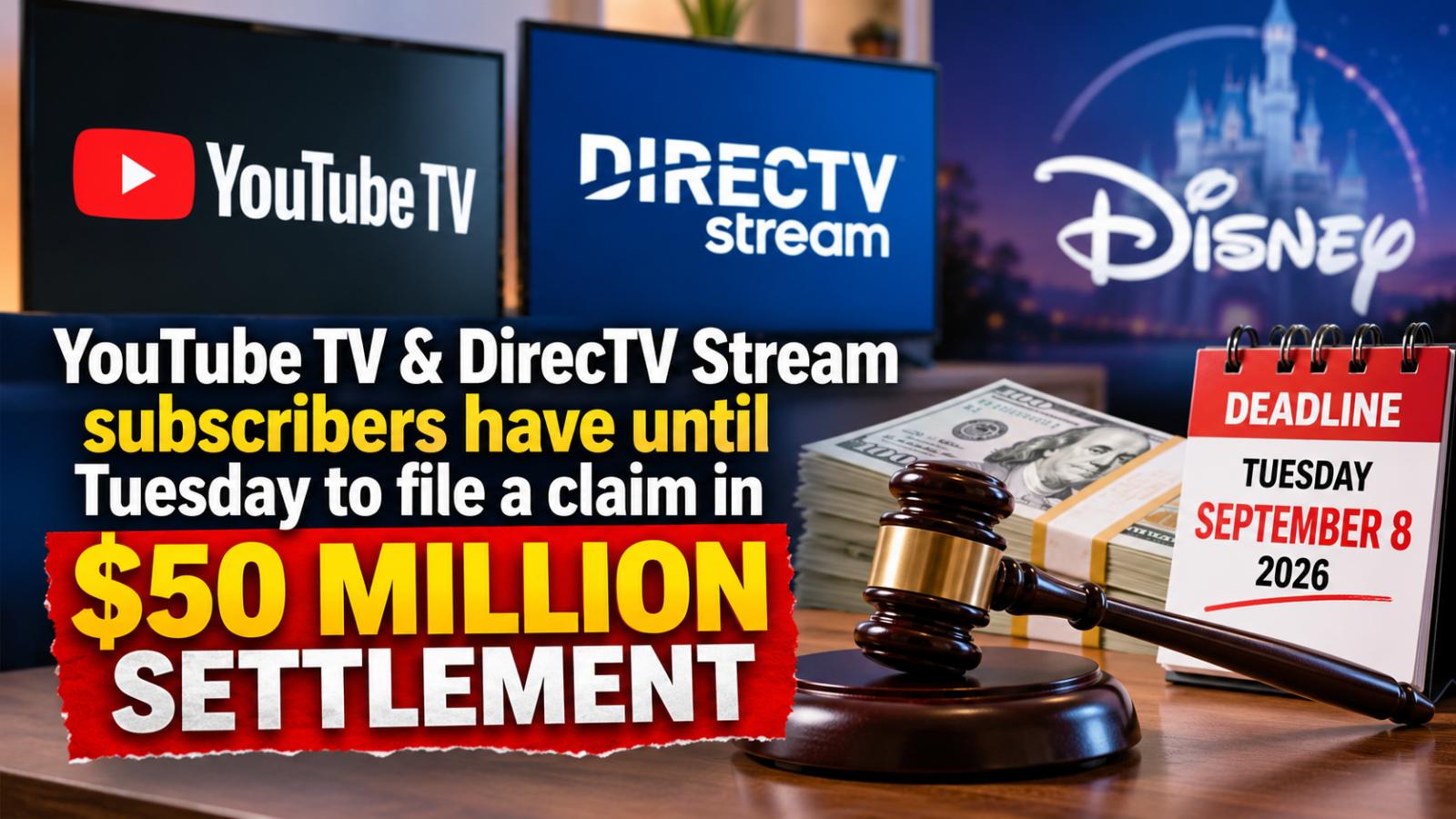
YouTube TV and DirecTV Stream subscribers who paid for eligible live-TV streaming services between April 1, 2019, and March 31, 2026, may qualify to file a claim in a $50 million antitrust class-action settlement involving The Walt Disney Company. The deadline to submit a claim is Tuesday, September 8, 2026. The settlement stems from a lawsuit alleging that certain television carriage agreements reduced price competition and contributed to higher subscription costs for live-streamin
YouTube TV, DirecTV Stream $50M Settlement Claim Deadline
YouTube TV and DirecTV Stream subscribers who paid for eligible live-TV streaming services between April 1, 2019, and March 31, 2026, may qualify to file a claim in a $50 million antitrust class-action settlement involving The Walt Disney Company. The deadline to submit a claim is Tuesday, September 8, 2026. The settlement stems from a lawsuit alleging that certain television carriage agreements reduced price competition and contributed to higher subscription costs for live-streamin
What does the Warner-Paramount merger approval mean? It moves a $111B deal closer to closing
Shareholder vote advances historic media consolidation Warner Bros. Discovery shareholders voted on Thursday, April 23, 2026, to approve a proposed sale of the company to Paramount, marking a major step toward finalizing one of the largest media mergers in recent history. According to preliminary results released the same day, a strong majority supported the $31-per-share offer, placing the total transaction value at nearly $111 billion, including debt. The vote signals significant investor backing for a deal that would reshape the structure of the global entertainment industry. Combined assets could redefine streaming and legacy media If completed, the merger would unite Warner’s portfolio — including HBO Max, CNN, and the Harry Potter franchise — with Paramount’s holdings such as CBS, Paramount+, and major film properties like Top Gun. The combined entity would bring together two of Hollywood’s remaining major studios while consolidating major streaming platforms under one corporate umbrella. Executives argue that the integration could deliver expanded content libraries and potentially streamline consumer offerings through unified services. Rival bids and shifting alliances shaped the outcome The path to shareholder approval followed months of intense competition and shifting strategies. Warner had previously rejected Paramount’s initial approach in favor of a $72 billion proposal from Netflix focused on studio and streaming assets. Paramount later pursued a direct appeal to shareholders with a broader acquisition plan, eventually increasing its bid. Netflix ultimately withdrew, allowing Paramount to secure board support and shareholder approval. Industry backlash and political scrutiny intensify Despite corporate backing, the merger has drawn strong opposition from industry professionals and policymakers. Thousands of actors, writers, and directors have warned that further consolidation could reduce job opportunities and limit creative diversity. U.S. Senator Cory Booker raised concerns during a recent hearing in Washington, questioning the broader implications for control over news and entertainment content. Regulatory agencies, including the Department of Justice, are continuing their review, with additional scrutiny expected from state and international authorities. Uncertainty remains over jobs, pricing, and editorial direction Paramount leadership has pledged to maintain theatrical releases and invest in film production, while also acknowledging the likelihood of cost-cutting measures, including layoffs. Analysts and critics caution that consolidation could lead to higher subscription costs and fewer content choices over time. Questions have also emerged regarding editorial direction at major news outlets like CNN and CBS, particularly as ownership changes intersect with political and financial influences. Warner has indicated the deal could close in the third fiscal quarter of 2026, pending regulatory approvals.
What does the Warner-Paramount merger approval mean? It moves a $111B deal closer to closing
Shareholder vote advances historic media consolidation Warner Bros. Discovery shareholders voted on Thursday, April 23, 2026, to approve a proposed sale of the company to Paramount, marking a major step toward finalizing one of the largest media mergers in recent history. According to preliminary results released the same day, a strong majority supported the $31-per-share offer, placing the total transaction value at nearly $111 billion, including debt. The vote signals significant investor backing for a deal that would reshape the structure of the global entertainment industry. Combined assets could redefine streaming and legacy media If completed, the merger would unite Warner’s portfolio — including HBO Max, CNN, and the Harry Potter franchise — with Paramount’s holdings such as CBS, Paramount+, and major film properties like Top Gun. The combined entity would bring together two of Hollywood’s remaining major studios while consolidating major streaming platforms under one corporate umbrella. Executives argue that the integration could deliver expanded content libraries and potentially streamline consumer offerings through unified services. Rival bids and shifting alliances shaped the outcome The path to shareholder approval followed months of intense competition and shifting strategies. Warner had previously rejected Paramount’s initial approach in favor of a $72 billion proposal from Netflix focused on studio and streaming assets. Paramount later pursued a direct appeal to shareholders with a broader acquisition plan, eventually increasing its bid. Netflix ultimately withdrew, allowing Paramount to secure board support and shareholder approval. Industry backlash and political scrutiny intensify Despite corporate backing, the merger has drawn strong opposition from industry professionals and policymakers. Thousands of actors, writers, and directors have warned that further consolidation could reduce job opportunities and limit creative diversity. U.S. Senator Cory Booker raised concerns during a recent hearing in Washington, questioning the broader implications for control over news and entertainment content. Regulatory agencies, including the Department of Justice, are continuing their review, with additional scrutiny expected from state and international authorities. Uncertainty remains over jobs, pricing, and editorial direction Paramount leadership has pledged to maintain theatrical releases and invest in film production, while also acknowledging the likelihood of cost-cutting measures, including layoffs. Analysts and critics caution that consolidation could lead to higher subscription costs and fewer content choices over time. Questions have also emerged regarding editorial direction at major news outlets like CNN and CBS, particularly as ownership changes intersect with political and financial influences. Warner has indicated the deal could close in the third fiscal quarter of 2026, pending regulatory approvals.
US Universities Face Lawsuit Over Alleged Tuition Inflation in Early Decision Admissions
A group of thirty-two leading universities in the United States is facing a proposed class action lawsuit that alleges a coordinated effort to inflate tuition fees through the early decision admissions process. The case, filed in federal court in Boston, stems from accusations made by former students of Wesleyan University and two other institutions, who claim that these prestigious universities manipulated admission systems in ways that ultimately burdened st
US Universities Face Lawsuit Over Alleged Tuition Inflation in Early Decision Admissions
A group of thirty-two leading universities in the United States is facing a proposed class action lawsuit that alleges a coordinated effort to inflate tuition fees through the early decision admissions process. The case, filed in federal court in Boston, stems from accusations made by former students of Wesleyan University and two other institutions, who claim that these prestigious universities manipulated admission systems in ways that ultimately burdened st
2025: Big Tech Under Fire as Meta, Apple, and Google Face Historic Antitrust Battles
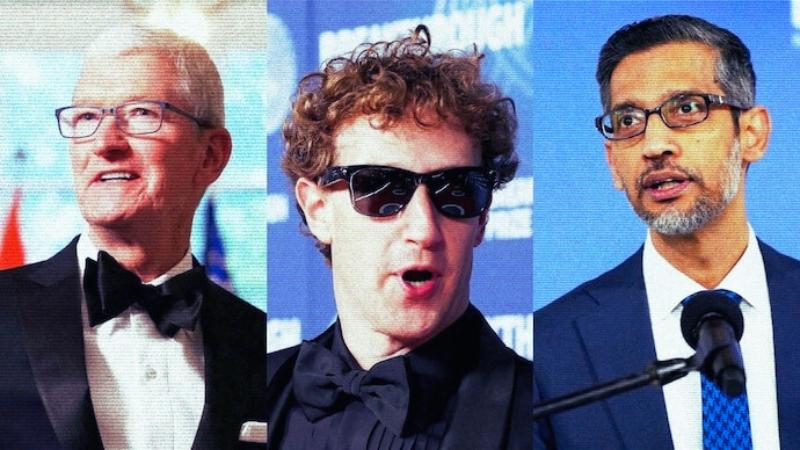
The year 2025 has already become a defining chapter in the history of global technology regulation. Once considered too powerful to be challenged, companies like Meta, Apple, and Google are now being pulled into intense legal battles that threaten to alter the very core of their operations. With their massive influence and trillion-dollar valuations, these tech giants are under scrutiny like never before, as governments and regulators across the globe seek to rein in what many see as unchecke
2025: Big Tech Under Fire as Meta, Apple, and Google Face Historic Antitrust Battles
The year 2025 has already become a defining chapter in the history of global technology regulation. Once considered too powerful to be challenged, companies like Meta, Apple, and Google are now being pulled into intense legal battles that threaten to alter the very core of their operations. With their massive influence and trillion-dollar valuations, these tech giants are under scrutiny like never before, as governments and regulators across the globe seek to rein in what many see as unchecke
Sundar Pichai Opposes Breaking Up Google in Court as Antitrust Case Enters Remedies Phase
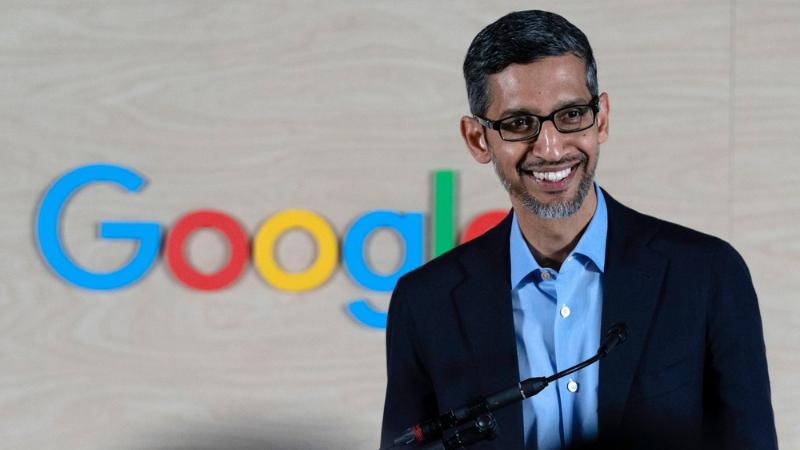
As the landmark antitrust case against Google moves into its remedies phase, the company’s CEO Sundar Pichai has taken the stand to argue against proposed penalties that could drastically reshape the tech giant. Among the most significant proposals from the US Department of Justice (DoJ) is the possibility of breaking up Google including forcing the company to sell its Chrome browser and share user data and search results with competitors. The case, initially filed by the DoJ in 2020, c
Sundar Pichai Opposes Breaking Up Google in Court as Antitrust Case Enters Remedies Phase
As the landmark antitrust case against Google moves into its remedies phase, the company’s CEO Sundar Pichai has taken the stand to argue against proposed penalties that could drastically reshape the tech giant. Among the most significant proposals from the US Department of Justice (DoJ) is the possibility of breaking up Google including forcing the company to sell its Chrome browser and share user data and search results with competitors. The case, initially filed by the DoJ in 2020, c