WhatsApp usernames rollout: privacy boost or new cyber risk in India
WhatsApp usernames and how the system changes WhatsApp is introducing usernames that allow users to connect without sharing their phone number directly. This is a major shift for India, where mobile numbers are deeply tied to UPI payments, Aadhaar-linked verification, banking access, and other digital identity systems. The feature does not remove phone numbers from acc
WhatsApp usernames rollout: privacy boost or new cyber risk in India
WhatsApp usernames and how the system changes WhatsApp is introducing usernames that allow users to connect without sharing their phone number directly. This is a major shift for India, where mobile numbers are deeply tied to UPI payments, Aadhaar-linked verification, banking access, and other digital identity systems. The feature does not remove phone numbers from acc
Jagan Turns MAVIGUN Vs Amaravati Into 2029 Poll Agenda
Jagan Turns MAVIGUN Vs Amaravati Into 2029 Poll Agenda Andhra Pradesh politics is heading toward another major capital-centric debate as former Chief Minister Y. S. Jagan Mohan Reddy has sharpened his stand on MAVIGUN as an alternative to Amaravati. With the ruling NDA government firmly backing Amaravati, Jagan’s latest comments suggest that the capital issue may once again become one of the central political themes in the 2
Jagan Turns MAVIGUN Vs Amaravati Into 2029 Poll Agenda
Jagan Turns MAVIGUN Vs Amaravati Into 2029 Poll Agenda Andhra Pradesh politics is heading toward another major capital-centric debate as former Chief Minister Y. S. Jagan Mohan Reddy has sharpened his stand on MAVIGUN as an alternative to Amaravati. With the ruling NDA government firmly backing Amaravati, Jagan’s latest comments suggest that the capital issue may once again become one of the central political themes in the 2
Japan India digital pact reshapes Indo Pacific tech routes
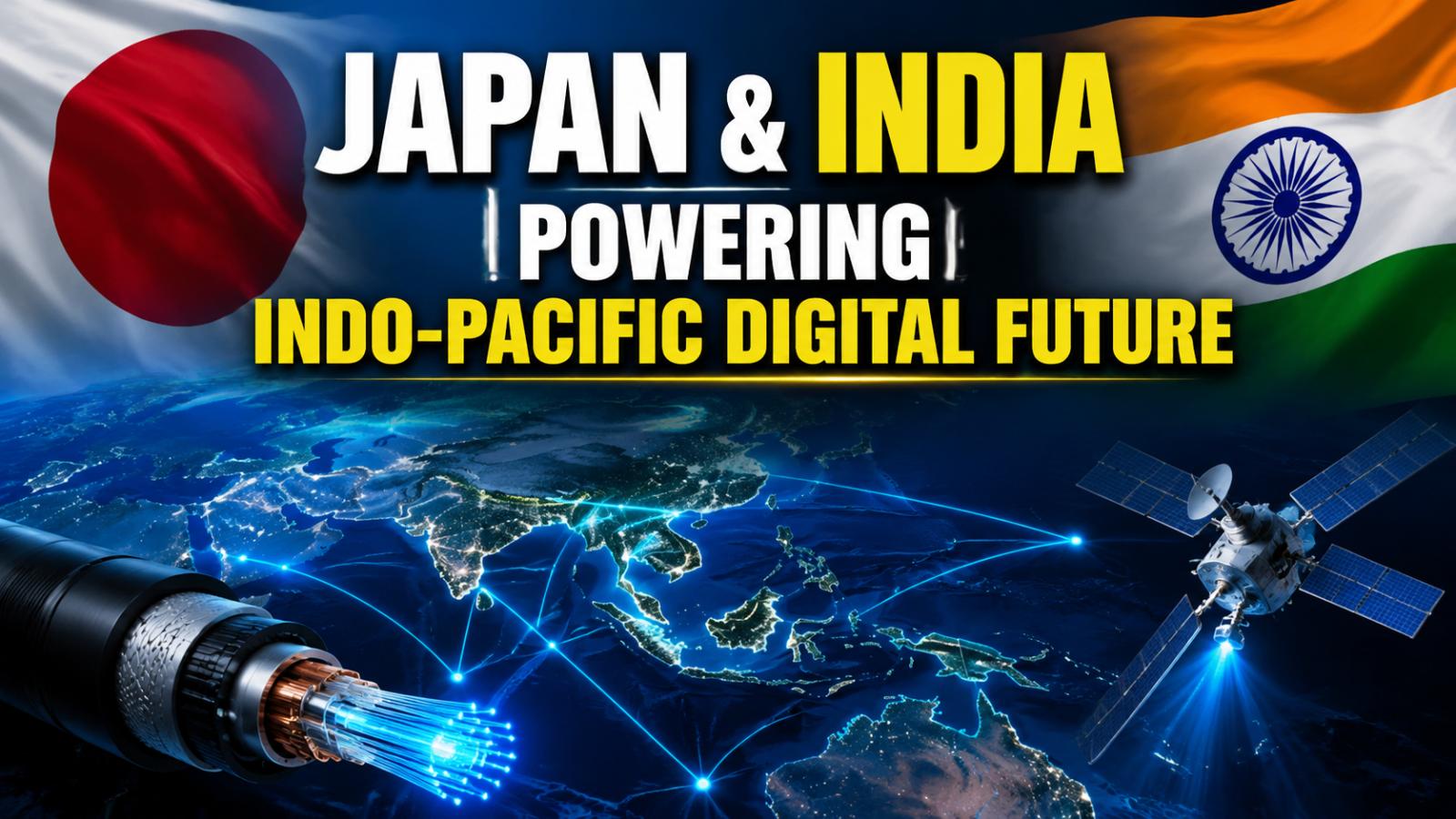
The Indo-Pacific strategy is increasingly moving away from traditional security frameworks toward digital infrastructure control. Japan and India are emerging as key drivers in this transition, focusing on secure data movement, resilient communication systems, and long-term technological independence from concentrated global networks. The shift reflects a broader attempt to reduce vulnerabilities in cross-border data flows and critical digital assets.
Japan India digital pact reshapes Indo Pacific tech routes
The Indo-Pacific strategy is increasingly moving away from traditional security frameworks toward digital infrastructure control. Japan and India are emerging as key drivers in this transition, focusing on secure data movement, resilient communication systems, and long-term technological independence from concentrated global networks. The shift reflects a broader attempt to reduce vulnerabilities in cross-border data flows and critical digital assets.
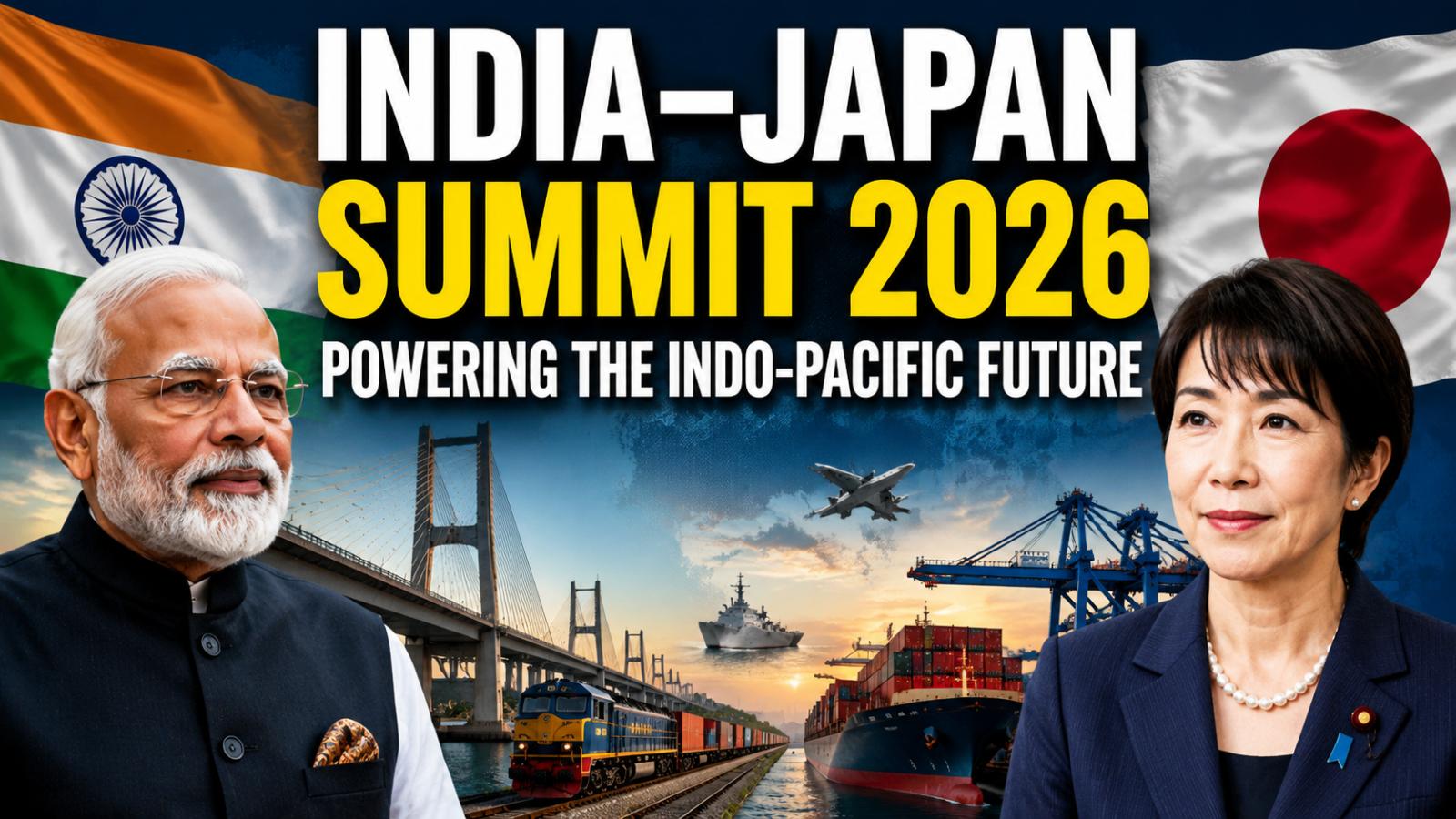
India Japan summit 2026 boosts FOIP rare earth strategy
The India Japan Summit 2026 is emerging as more than diplomatic engagement, shifting toward a structured economic alignment under the Free and Open Indo-Pacific (FOIP) framework. Japan is positioning India as a long-term partner in building alternative production networks outside China’s dominant supply ecosystem. The focus is no longer symbolic cooperation but measurable industrial integration across energy, technology, and critical materials. Rare Earth Dependency and Strategic Diversification A major driver of the summit is global concern over rare earth concentration in China. These materials are essential for electric vehicles, defence systems, and semiconductor manufacturing. Japan has been actively seeking diversification, and India is being viewed as a viable partner due to its untapped mineral reserves and growing extraction capability. However, this shift is not immediate. India still faces infrastructure gaps in refining and processing, which limits its ability to fully replace existing supply chains. The partnership therefore focuses on joint development rather than replacement. Northeast India as an Emerging Industrial Bridge Northeast India is increasingly being integrated into strategic planning as a logistics and manufacturing connector between South Asia and Southeast Asia. Its geographical position near the Bay of Bengal makes it relevant for regional trade routes, especially under Japan-backed connectivity initiatives. The long-term expectation is the development of corridors linking manufacturing zones, ports, and resource hubs. But execution remains a challenge due to terrain, infrastructure bottlenecks, and slow industrial scaling. EV Batteries and Semiconductor Collaboration Expands The summit is expected to accelerate cooperation in electric mobility and chip production. Japan’s technology strength in precision manufacturing complements India’s expanding industrial base and domestic demand growth. Instead of simple export-import trade, both countries are moving toward localized production ecosystems. This includes battery supply chains, semiconductor assembly, and joint research in advanced materials. The real shift here is from consumption-driven trade to production-sharing models. Investment Flow and Industrial Integration Japanese investment in India continues to grow steadily, with a strong presence in automobiles, electronics, and infrastructure. The partnership now appears to be entering a deeper phase where investment is tied to strategic supply chain redesign rather than isolated projects. This creates a long-term dependency loop where both economies benefit from shared manufacturing ecosystems, but also become more structurally linked to global market fluctuations. Strategic Outcome: A Competing Supply Chain Bloc The broader outcome of the India Japan Summit 2026 is the gradual formation of an alternative industrial network in Asia. It does not replace existing systems overnight but creates parallel pathways in critical sectors like energy storage, semiconductors, and defence manufacturing. The key question going forward is execution speed. Policy alignment is strong, but infrastructure readiness and capital deployment will decide how quickly this partnership moves from strategy to reality.
India Japan summit 2026 boosts FOIP rare earth strategy
The India Japan Summit 2026 is emerging as more than diplomatic engagement, shifting toward a structured economic alignment under the Free and Open Indo-Pacific (FOIP) framework. Japan is positioning India as a long-term partner in building alternative production networks outside China’s dominant supply ecosystem. The focus is no longer symbolic cooperation but measurable industrial integration across energy, technology, and critical materials. Rare Earth Dependency and Strategic Diversification A major driver of the summit is global concern over rare earth concentration in China. These materials are essential for electric vehicles, defence systems, and semiconductor manufacturing. Japan has been actively seeking diversification, and India is being viewed as a viable partner due to its untapped mineral reserves and growing extraction capability. However, this shift is not immediate. India still faces infrastructure gaps in refining and processing, which limits its ability to fully replace existing supply chains. The partnership therefore focuses on joint development rather than replacement. Northeast India as an Emerging Industrial Bridge Northeast India is increasingly being integrated into strategic planning as a logistics and manufacturing connector between South Asia and Southeast Asia. Its geographical position near the Bay of Bengal makes it relevant for regional trade routes, especially under Japan-backed connectivity initiatives. The long-term expectation is the development of corridors linking manufacturing zones, ports, and resource hubs. But execution remains a challenge due to terrain, infrastructure bottlenecks, and slow industrial scaling. EV Batteries and Semiconductor Collaboration Expands The summit is expected to accelerate cooperation in electric mobility and chip production. Japan’s technology strength in precision manufacturing complements India’s expanding industrial base and domestic demand growth. Instead of simple export-import trade, both countries are moving toward localized production ecosystems. This includes battery supply chains, semiconductor assembly, and joint research in advanced materials. The real shift here is from consumption-driven trade to production-sharing models. Investment Flow and Industrial Integration Japanese investment in India continues to grow steadily, with a strong presence in automobiles, electronics, and infrastructure. The partnership now appears to be entering a deeper phase where investment is tied to strategic supply chain redesign rather than isolated projects. This creates a long-term dependency loop where both economies benefit from shared manufacturing ecosystems, but also become more structurally linked to global market fluctuations. Strategic Outcome: A Competing Supply Chain Bloc The broader outcome of the India Japan Summit 2026 is the gradual formation of an alternative industrial network in Asia. It does not replace existing systems overnight but creates parallel pathways in critical sectors like energy storage, semiconductors, and defence manufacturing. The key question going forward is execution speed. Policy alignment is strong, but infrastructure readiness and capital deployment will decide how quickly this partnership moves from strategy to reality.
India Japan summit 2026 reshapes Indo Pacific alignment
The latest round of strategic talks between India and Japan signals a shift from broad diplomatic alignment to project-driven cooperation. The visit by Japanese Prime Minister Sanae Takaichi marks a renewed focus on infrastructure delivery, supply chain redesign, and
India Japan summit 2026 reshapes Indo Pacific alignment
The latest round of strategic talks between India and Japan signals a shift from broad diplomatic alignment to project-driven cooperation. The visit by Japanese Prime Minister Sanae Takaichi marks a renewed focus on infrastructure delivery, supply chain redesign, and
Pawan Kalyan Seeks Strong Officials For Better Governance
A stable administration depends heavily on capable senior officials who can understand public policy, guide departments and ensure that government decisions are implemented effectively. Chief Minister N. Chandrababu Naidu has often been seen as a leader who works closely with the bureaucracy, and this administrative style has helped him maintain control over governance issues. Pawan Kalyan’s recent remarks indicate that he too is looking for
Pawan Kalyan Seeks Strong Officials For Better Governance
A stable administration depends heavily on capable senior officials who can understand public policy, guide departments and ensure that government decisions are implemented effectively. Chief Minister N. Chandrababu Naidu has often been seen as a leader who works closely with the bureaucracy, and this administrative style has helped him maintain control over governance issues. Pawan Kalyan’s recent remarks indicate that he too is looking for
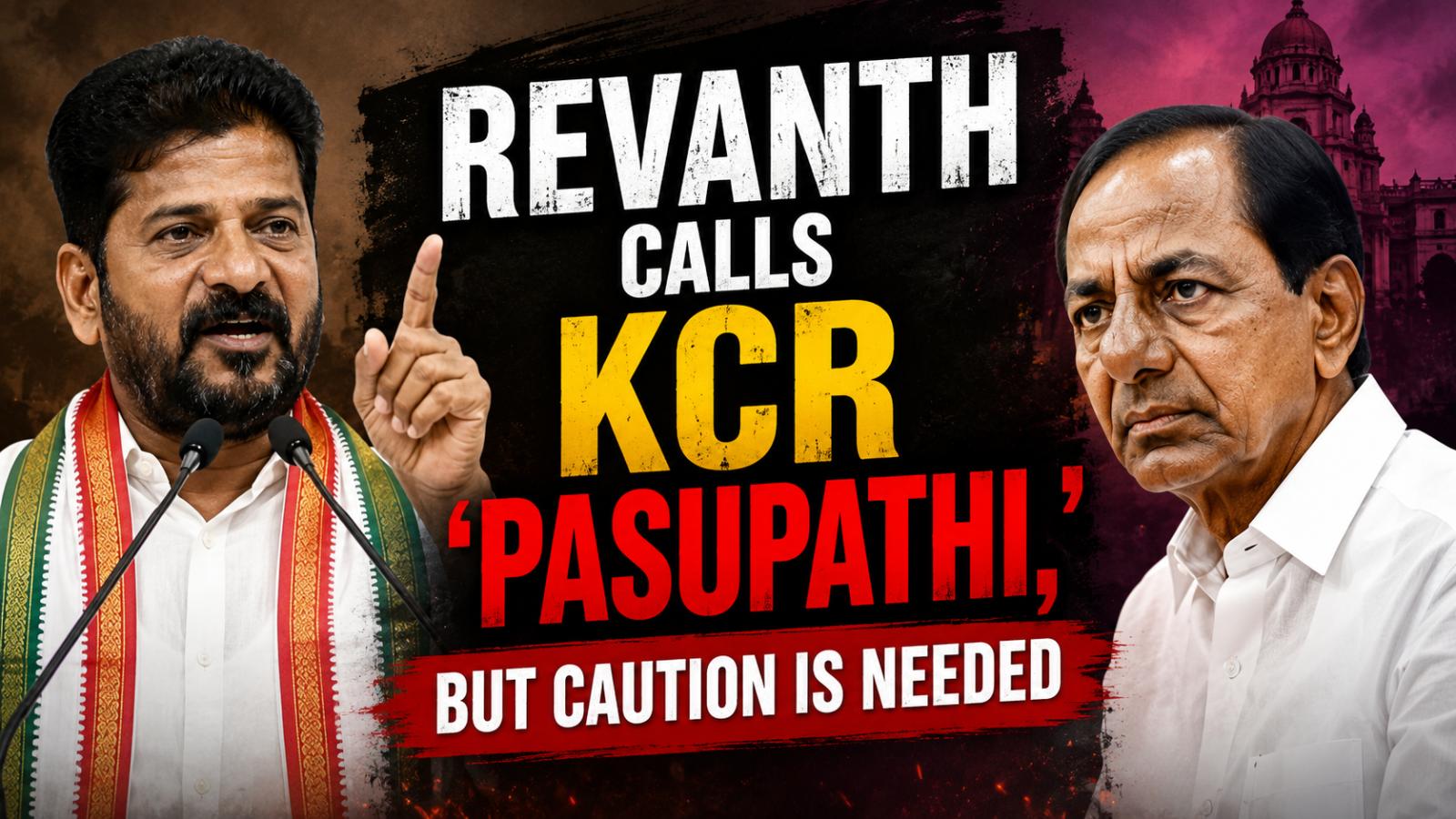
Revanth’s Pasupathi Remark On KCR Sparks Political Debate
Revanth’s Pasupathi Remark On KCR Sparks Political Debate Telangana Chief Minister Revanth Reddy’s sharp political attack on BRS chief and former Chief Minister K. Chandrashekar Rao has triggered a fresh debate in state politics. Known for his aggressive speeches and strong political vocabulary, Revanth once again targeted KCR by comparing him to Pasupathi, the villain character from the Telugu film Arundhati. Revanth’s Aggressive Politics Re
Revanth’s Pasupathi Remark On KCR Sparks Political Debate
Revanth’s Pasupathi Remark On KCR Sparks Political Debate Telangana Chief Minister Revanth Reddy’s sharp political attack on BRS chief and former Chief Minister K. Chandrashekar Rao has triggered a fresh debate in state politics. Known for his aggressive speeches and strong political vocabulary, Revanth once again targeted KCR by comparing him to Pasupathi, the villain character from the Telugu film Arundhati. Revanth’s Aggressive Politics Re
Operation Toofan Row: Chennithala Rejects Sudhakaran Meet Link
Thiruvananthapuram, June 30: Kerala Home Minister Ramesh Chennithala has distanced the Home Department from a reported Operation Toofan meeting linked to Congress MP K Sudhakaran, saying official meetings under the campaign can be convened only by senior police officers. Operation Toofan is Kerala’s police-led anti-drug campaign aimed at cracking down on narcotics networks, drug trafficking and substance abuse. The clari
Operation Toofan Row: Chennithala Rejects Sudhakaran Meet Link
Thiruvananthapuram, June 30: Kerala Home Minister Ramesh Chennithala has distanced the Home Department from a reported Operation Toofan meeting linked to Congress MP K Sudhakaran, saying official meetings under the campaign can be convened only by senior police officers. Operation Toofan is Kerala’s police-led anti-drug campaign aimed at cracking down on narcotics networks, drug trafficking and substance abuse. The clari
New reel trend highlights risks of sharing gestures in social media photos
Social Media Privacy Concerns Gain Attention Through Viral Content A new social media reel concept is drawing attention to how everyday photo habits may expose more information than users realize. The content focuses on common posing gestures, particularly hand signs used in selfies, and raises broader questions about digital privacy awareness in online sharing culture
New reel trend highlights risks of sharing gestures in social media photos
Social Media Privacy Concerns Gain Attention Through Viral Content A new social media reel concept is drawing attention to how everyday photo habits may expose more information than users realize. The content focuses on common posing gestures, particularly hand signs used in selfies, and raises broader questions about digital privacy awareness in online sharing culture
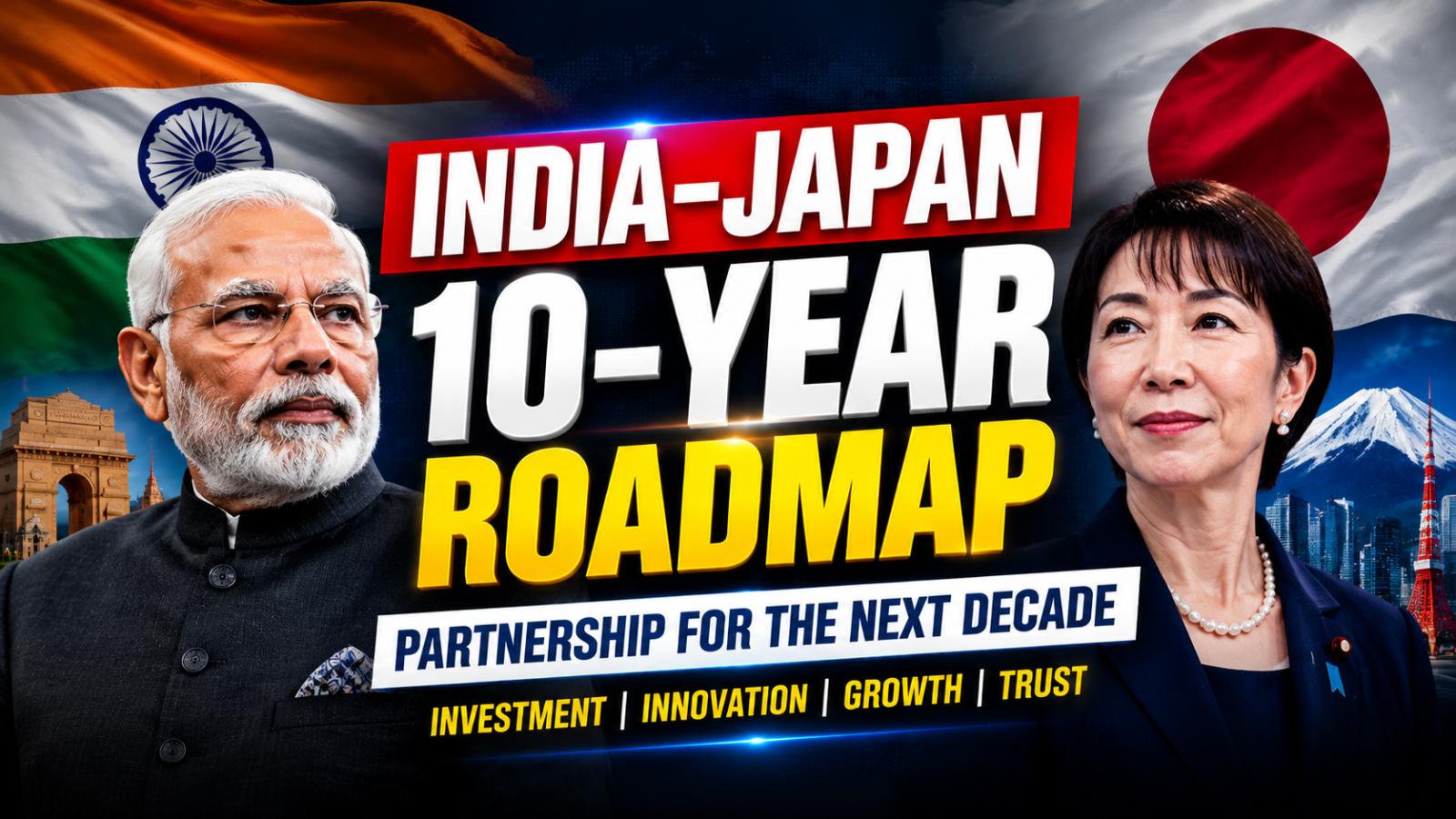
India Japan summit to review 10-year joint vision roadmap cooperation
India-Japan Summit to Review Long-Term Strategic Roadmap India is set to host Japanese Prime Minister Sanae Takaichi from July 1 to 3 for the 16th India-Japan Annual Summit, where both sides are expected to review progress under the Japan-India Joint Vision for the Next Decade. The framework, signed in Tokyo in August 2025, outlines a long-term roadmap aimed at streng
India Japan summit to review 10-year joint vision roadmap cooperation
India-Japan Summit to Review Long-Term Strategic Roadmap India is set to host Japanese Prime Minister Sanae Takaichi from July 1 to 3 for the 16th India-Japan Annual Summit, where both sides are expected to review progress under the Japan-India Joint Vision for the Next Decade. The framework, signed in Tokyo in August 2025, outlines a long-term roadmap aimed at streng
Japan PM visit pushes India Japan tech and defence cooperation
India and Japan have taken another step toward strengthening their long-term strategic relationship as high-level discussions were held in New Delhi focused on expanding cooperation across trade, defence, technology, and infrastructure. The engagement reflects a broader effort by both nations to build resilience in supply chains and increase coordination in the Indo-Pacific region amid shifting global economic and security dynamics. Rather than treating the relationship as routine diplomacy, both sides are increasingly positioning it as a structured partnership tied to economic security, innovation, and regional stability. Trade and investment becoming the core growth driver Economic cooperation continues to act as the backbone of the relationship. Japan remains one of India’s key foreign investors, with long-term commitments spread across manufacturing, transport, and urban development sectors. Japanese companies continue to expand their presence in India, particularly in automotive, electronics, and industrial technology. Infrastructure development remains a central pillar, with ongoing support for metro systems, freight corridors, and high-speed rail projects. Financial and institutional backing through Japanese development agencies has played a major role in shaping large-scale connectivity projects across Indian cities. However, both sides still face structural challenges such as slow project execution timelines and regulatory bottlenecks, which limit the speed of capital deployment despite strong political alignment. Defence cooperation expands beyond symbolic engagement Security collaboration between India and Japan has gradually shifted from occasional exercises to more consistent operational coordination. Joint drills such as maritime exercises and regional security training programs have strengthened interoperability between the two defence forces. The focus is increasingly on maritime domain awareness, especially in the Indo-Pacific region where strategic sea lanes remain critical for global trade. Both countries are also exploring ways to improve defence technology exchange, although this area remains sensitive due to regulatory and strategic constraints. Despite progress, defence cooperation is still relatively cautious compared to economic engagement, reflecting differing strategic thresholds and domestic policy considerations. Northeast India emerges as a strategic connectivity zone One of the most notable areas of cooperation is India’s northeastern region, which has gained attention as a key connectivity and development corridor. Japanese-supported infrastructure projects have contributed to road development, bridge construction, and logistics improvement in the region. Beyond physical infrastructure, skill development initiatives are also being introduced to improve employment readiness and cross-border workforce mobility. The region is increasingly being viewed as a bridge between South Asia and Southeast Asia, aligning with broader Indo-Pacific connectivity goals. Still, the region continues to face challenges including terrain constraints, limited industrial base, and slower private sector participation. Technology, AI and future-oriented collaboration Both countries are expanding cooperation in advanced technologies including artificial intelligence, clean energy systems, and digital infrastructure. Joint initiatives are being explored in areas such as smart manufacturing, automation, and next-generation communication systems. There is also growing interest in building more resilient supply chains for critical sectors like semiconductors and green energy technologies. This reflects a shared concern over global supply disruptions and overdependence on concentrated manufacturing hubs. While ambitions are high, actual implementation will depend on regulatory alignment and private sector participation, which remain uneven across sectors. Strategic outlook for the partnership The India–Japan relationship is increasingly being shaped by long-term geopolitical and economic considerations rather than short-term diplomatic exchanges. Both countries appear aligned on maintaining stability in the Indo-Pacific while expanding economic integration. However, the partnership is still evolving and remains uneven across sectors—strong in trade and infrastructure, moderate in defence, and still developing in advanced technology cooperation. The next phase will depend on execution efficiency and the ability to convert policy agreements into large-scale operational outcomes.
Japan PM visit pushes India Japan tech and defence cooperation
India and Japan have taken another step toward strengthening their long-term strategic relationship as high-level discussions were held in New Delhi focused on expanding cooperation across trade, defence, technology, and infrastructure. The engagement reflects a broader effort by both nations to build resilience in supply chains and increase coordination in the Indo-Pacific region amid shifting global economic and security dynamics. Rather than treating the relationship as routine diplomacy, both sides are increasingly positioning it as a structured partnership tied to economic security, innovation, and regional stability. Trade and investment becoming the core growth driver Economic cooperation continues to act as the backbone of the relationship. Japan remains one of India’s key foreign investors, with long-term commitments spread across manufacturing, transport, and urban development sectors. Japanese companies continue to expand their presence in India, particularly in automotive, electronics, and industrial technology. Infrastructure development remains a central pillar, with ongoing support for metro systems, freight corridors, and high-speed rail projects. Financial and institutional backing through Japanese development agencies has played a major role in shaping large-scale connectivity projects across Indian cities. However, both sides still face structural challenges such as slow project execution timelines and regulatory bottlenecks, which limit the speed of capital deployment despite strong political alignment. Defence cooperation expands beyond symbolic engagement Security collaboration between India and Japan has gradually shifted from occasional exercises to more consistent operational coordination. Joint drills such as maritime exercises and regional security training programs have strengthened interoperability between the two defence forces. The focus is increasingly on maritime domain awareness, especially in the Indo-Pacific region where strategic sea lanes remain critical for global trade. Both countries are also exploring ways to improve defence technology exchange, although this area remains sensitive due to regulatory and strategic constraints. Despite progress, defence cooperation is still relatively cautious compared to economic engagement, reflecting differing strategic thresholds and domestic policy considerations. Northeast India emerges as a strategic connectivity zone One of the most notable areas of cooperation is India’s northeastern region, which has gained attention as a key connectivity and development corridor. Japanese-supported infrastructure projects have contributed to road development, bridge construction, and logistics improvement in the region. Beyond physical infrastructure, skill development initiatives are also being introduced to improve employment readiness and cross-border workforce mobility. The region is increasingly being viewed as a bridge between South Asia and Southeast Asia, aligning with broader Indo-Pacific connectivity goals. Still, the region continues to face challenges including terrain constraints, limited industrial base, and slower private sector participation. Technology, AI and future-oriented collaboration Both countries are expanding cooperation in advanced technologies including artificial intelligence, clean energy systems, and digital infrastructure. Joint initiatives are being explored in areas such as smart manufacturing, automation, and next-generation communication systems. There is also growing interest in building more resilient supply chains for critical sectors like semiconductors and green energy technologies. This reflects a shared concern over global supply disruptions and overdependence on concentrated manufacturing hubs. While ambitions are high, actual implementation will depend on regulatory alignment and private sector participation, which remain uneven across sectors. Strategic outlook for the partnership The India–Japan relationship is increasingly being shaped by long-term geopolitical and economic considerations rather than short-term diplomatic exchanges. Both countries appear aligned on maintaining stability in the Indo-Pacific while expanding economic integration. However, the partnership is still evolving and remains uneven across sectors—strong in trade and infrastructure, moderate in defence, and still developing in advanced technology cooperation. The next phase will depend on execution efficiency and the ability to convert policy agreements into large-scale operational outcomes.
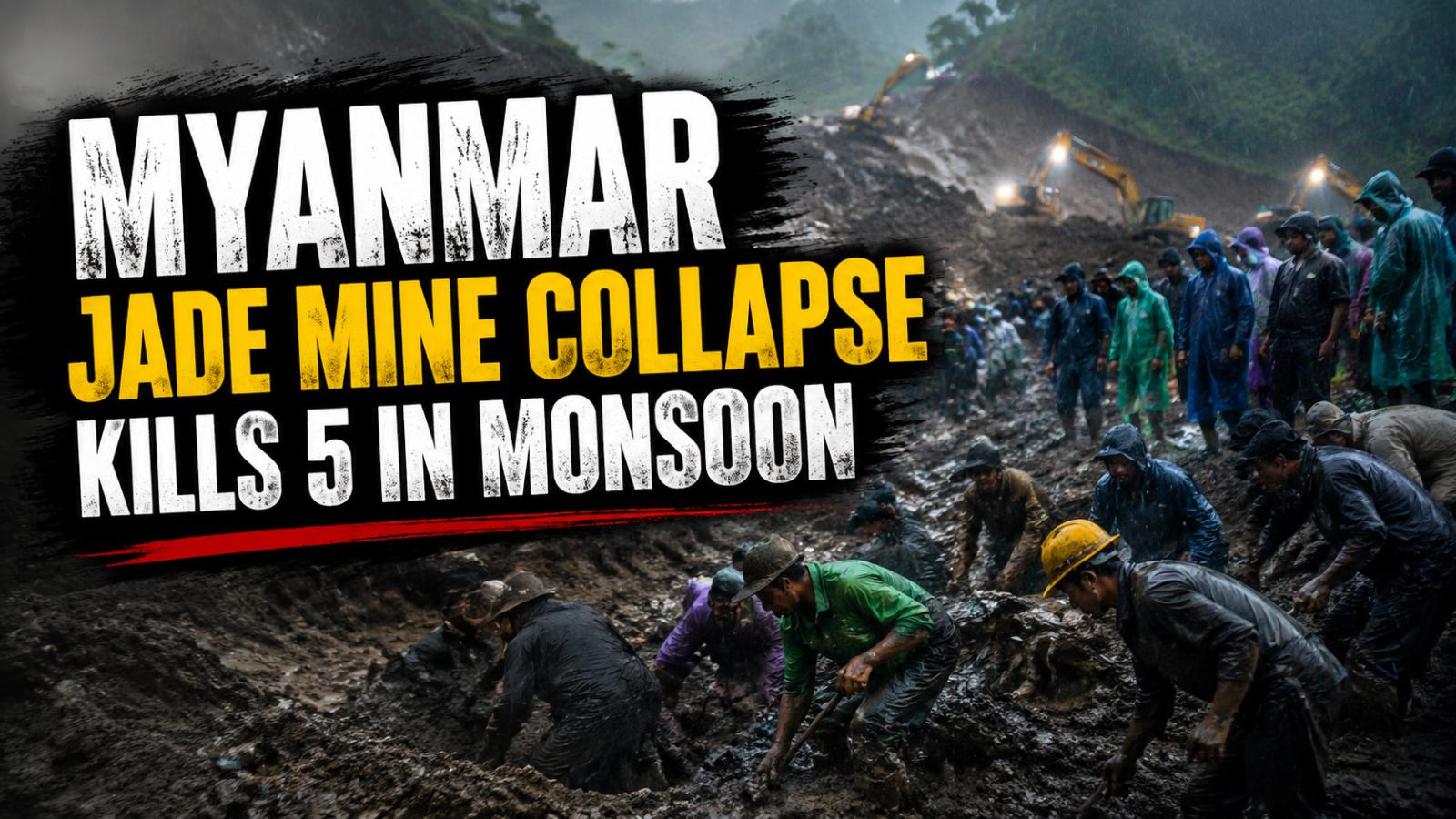
Myanmar jade mine collapse kills 5 in Kachin monsoon disaster
A deadly collapse at a jade mining waste site in Myanmar’s northern Kachin state has left at least five people dead, with several others still unaccounted for after days of heavy monsoon rainfall weakened the terrain in Hpakant township. The incident occurred in an abandoned mining zone where informal workers were searching through discarded material for leftover jade fragments. Continuous rain saturated the unstable slag heaps, causing a su

Myanmar jade mine collapse kills 5 in Kachin monsoon disaster
A deadly collapse at a jade mining waste site in Myanmar’s northern Kachin state has left at least five people dead, with several others still unaccounted for after days of heavy monsoon rainfall weakened the terrain in Hpakant township. The incident occurred in an abandoned mining zone where informal workers were searching through discarded material for leftover jade fragments. Continuous rain saturated the unstable slag heaps, causing a su

Sabarimala Gold Theft: SIT Names 7 In Conspiracy Report
Kochi, June 30, 2026: The Sabarimala gold theft probe has widened after the Special Investigation Team informed the Kerala High Court that it had collected material against seven persons, including former Travancore Devaswom Board president P.S. Prasanth. The SIT report points to alleged criminal breach of trust, forgery and criminal conspiracy in connection with the Dwarapalaka idols and related gold-plating work. Sabarimala Gold Thef
Sabarimala Gold Theft: SIT Names 7 In Conspiracy Report
Kochi, June 30, 2026: The Sabarimala gold theft probe has widened after the Special Investigation Team informed the Kerala High Court that it had collected material against seven persons, including former Travancore Devaswom Board president P.S. Prasanth. The SIT report points to alleged criminal breach of trust, forgery and criminal conspiracy in connection with the Dwarapalaka idols and related gold-plating work. Sabarimala Gold Thef
Pawan Kalyan Delays Shoulder Surgery For Official Duties
Pawan Kalyan has reportedly been advised to undergo immediate shoulder surgery after a recent medical examination found that his injury was more serious than earlier believed. The Andhra Pradesh Deputy Chief Minister visited Kokilaben Dhirubhai Ambani Hospital in Mumbai on Monday, June 29, 2026, for medical tests after dealing with shoulder pain and related discomfort for some time. According to reports, doctors found severe rotator cuff d
Pawan Kalyan Delays Shoulder Surgery For Official Duties
Pawan Kalyan has reportedly been advised to undergo immediate shoulder surgery after a recent medical examination found that his injury was more serious than earlier believed. The Andhra Pradesh Deputy Chief Minister visited Kokilaben Dhirubhai Ambani Hospital in Mumbai on Monday, June 29, 2026, for medical tests after dealing with shoulder pain and related discomfort for some time. According to reports, doctors found severe rotator cuff d
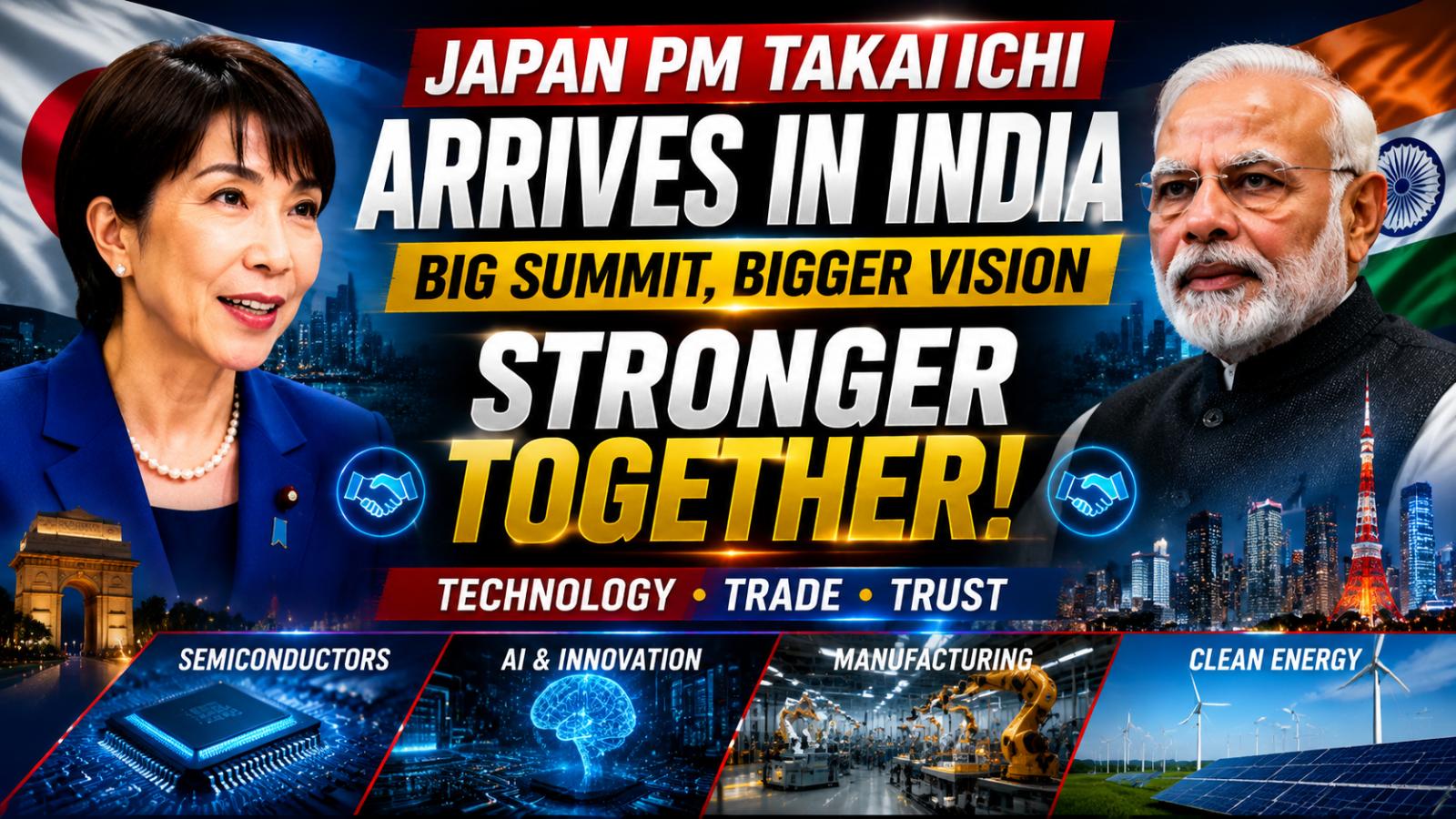
Japan PM Sanae Takaichi to visit India for key summit with Modi
High-level diplomatic engagement in New Delhi Japanese Prime Minister Sanae Takaichi will arrive in India on July 1,2026 for the 16th India-Japan Annual Summit at the invitation of Prime Minister Narendra Modi. The visit marks her first official trip to India since taking office in 2025 and comes at a time when both nations are seeking to strengthen strategic and economic alignment in a rapidly changing global environment.
Japan PM Sanae Takaichi to visit India for key summit with Modi
High-level diplomatic engagement in New Delhi Japanese Prime Minister Sanae Takaichi will arrive in India on July 1,2026 for the 16th India-Japan Annual Summit at the invitation of Prime Minister Narendra Modi. The visit marks her first official trip to India since taking office in 2025 and comes at a time when both nations are seeking to strengthen strategic and economic alignment in a rapidly changing global environment.
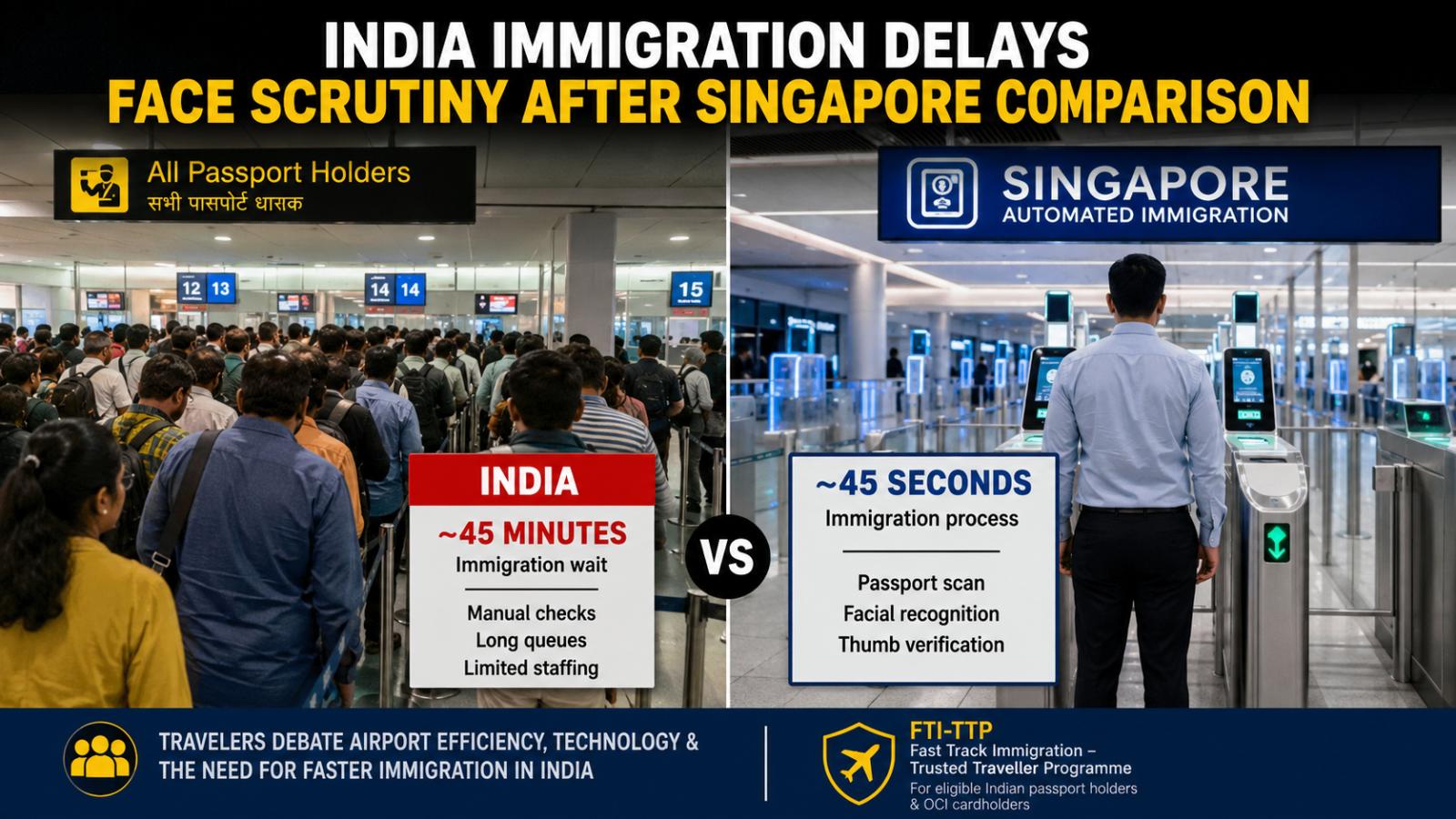
India Immigration Delays Face Scrutiny After Singapore Comparison
An Indian executive’s account of India immigration delays has renewed debate over airport staffing, manual document checks and the use of automated border technology. Venkat Patakota, group chief financial officer of A-Sunmarine Engineering, said in a post on X that one immigration process in India took about 45 minutes, compared with less than a minute in Singapore. India immigration delays prompt traveler debate Patakota sa
India Immigration Delays Face Scrutiny After Singapore Comparison
An Indian executive’s account of India immigration delays has renewed debate over airport staffing, manual document checks and the use of automated border technology. Venkat Patakota, group chief financial officer of A-Sunmarine Engineering, said in a post on X that one immigration process in India took about 45 minutes, compared with less than a minute in Singapore. India immigration delays prompt traveler debate Patakota sa
US Traveler Stranded in Dubai After India Entry Update Delay
A US traveler stranded in Dubai reportedly waited about a week after an India entry update failed to arrive during her journey, according to a social media account. The woman had been traveling from the United States to meet her fiancé’s family in India and was said to have completed the required e-arrival or pre-arrival application before departure. US Traveler Stranded in Dubai: What the Account Says The expected confirmation did not arrive while sh
US Traveler Stranded in Dubai After India Entry Update Delay
A US traveler stranded in Dubai reportedly waited about a week after an India entry update failed to arrive during her journey, according to a social media account. The woman had been traveling from the United States to meet her fiancé’s family in India and was said to have completed the required e-arrival or pre-arrival application before departure. US Traveler Stranded in Dubai: What the Account Says The expected confirmation did not arrive while sh
Andhra Pradesh Student Dies in Kansas Floodwaters Near Wellington
An Andhra Pradesh student died in Kansas floodwaters near Wellington after his vehicle reportedly entered a flooded roadway during a trip from Houston, according to an account shared by a friend. Doppalapudi Venkatesh was identified as an Indian student from Andhra Pradesh. The information provided did not include the date or time of the incident. Andhra Pradesh Student Dies in Kansas Floodwaters The friend’s account said Venkatesh selected a
Andhra Pradesh Student Dies in Kansas Floodwaters Near Wellington
An Andhra Pradesh student died in Kansas floodwaters near Wellington after his vehicle reportedly entered a flooded roadway during a trip from Houston, according to an account shared by a friend. Doppalapudi Venkatesh was identified as an Indian student from Andhra Pradesh. The information provided did not include the date or time of the incident. Andhra Pradesh Student Dies in Kansas Floodwaters The friend’s account said Venkatesh selected a
Venezuela quake toll rises as La Guaira rescue efforts continue
Venezuela is facing one of its worst natural disasters in recent years after two powerful earthquakes struck on June 24, causing widespread destruction and leaving thousands of families in distress. Officials said the death toll has risen to around 1,450, while more than 3,000 people have been injured and nearly 13,000 have been moved from unsafe areas. Rescue teams are still searching through collapsed buildings, damaged homes and broken streets as relatives wait for ne
Venezuela quake toll rises as La Guaira rescue efforts continue
Venezuela is facing one of its worst natural disasters in recent years after two powerful earthquakes struck on June 24, causing widespread destruction and leaving thousands of families in distress. Officials said the death toll has risen to around 1,450, while more than 3,000 people have been injured and nearly 13,000 have been moved from unsafe areas. Rescue teams are still searching through collapsed buildings, damaged homes and broken streets as relatives wait for ne
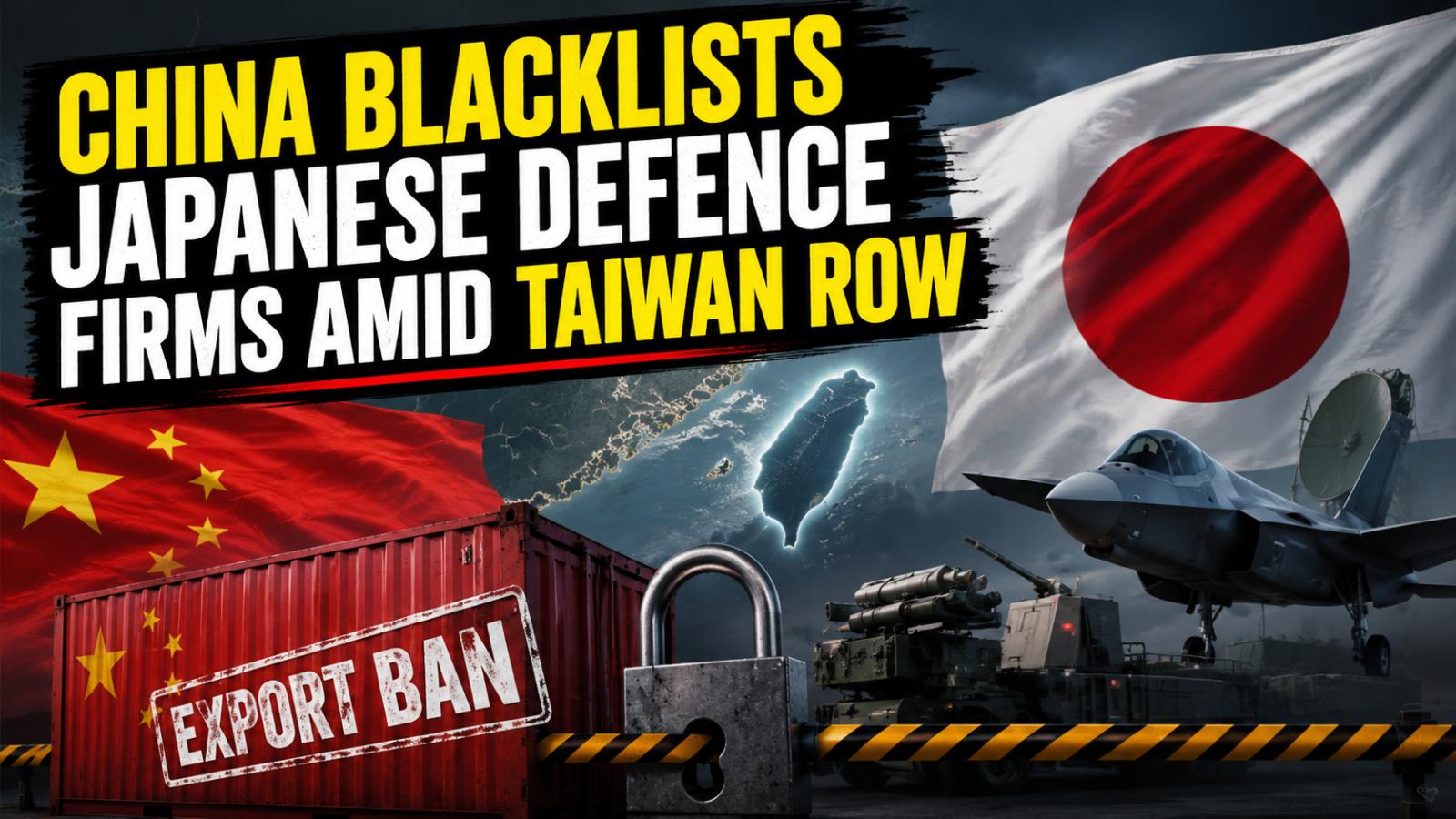
China blacklists Japanese defence firms amid Taiwan row
China has added 20 Japanese defence-linked and technology entities to its export control blacklist, marking a fresh escalation in the already tense relationship between Beijing and Tokyo. The decision blocks the listed organisations from receiving Chinese dual-use goods, materials and technologies without official approval. Beijing said the move was linked to national security, non-proliferation commitments and concerns over supplies that
China blacklists Japanese defence firms amid Taiwan row
China has added 20 Japanese defence-linked and technology entities to its export control blacklist, marking a fresh escalation in the already tense relationship between Beijing and Tokyo. The decision blocks the listed organisations from receiving Chinese dual-use goods, materials and technologies without official approval. Beijing said the move was linked to national security, non-proliferation commitments and concerns over supplies that