#atlanticocean
50-foot whale discovered in Newark Bay under investigation by experts
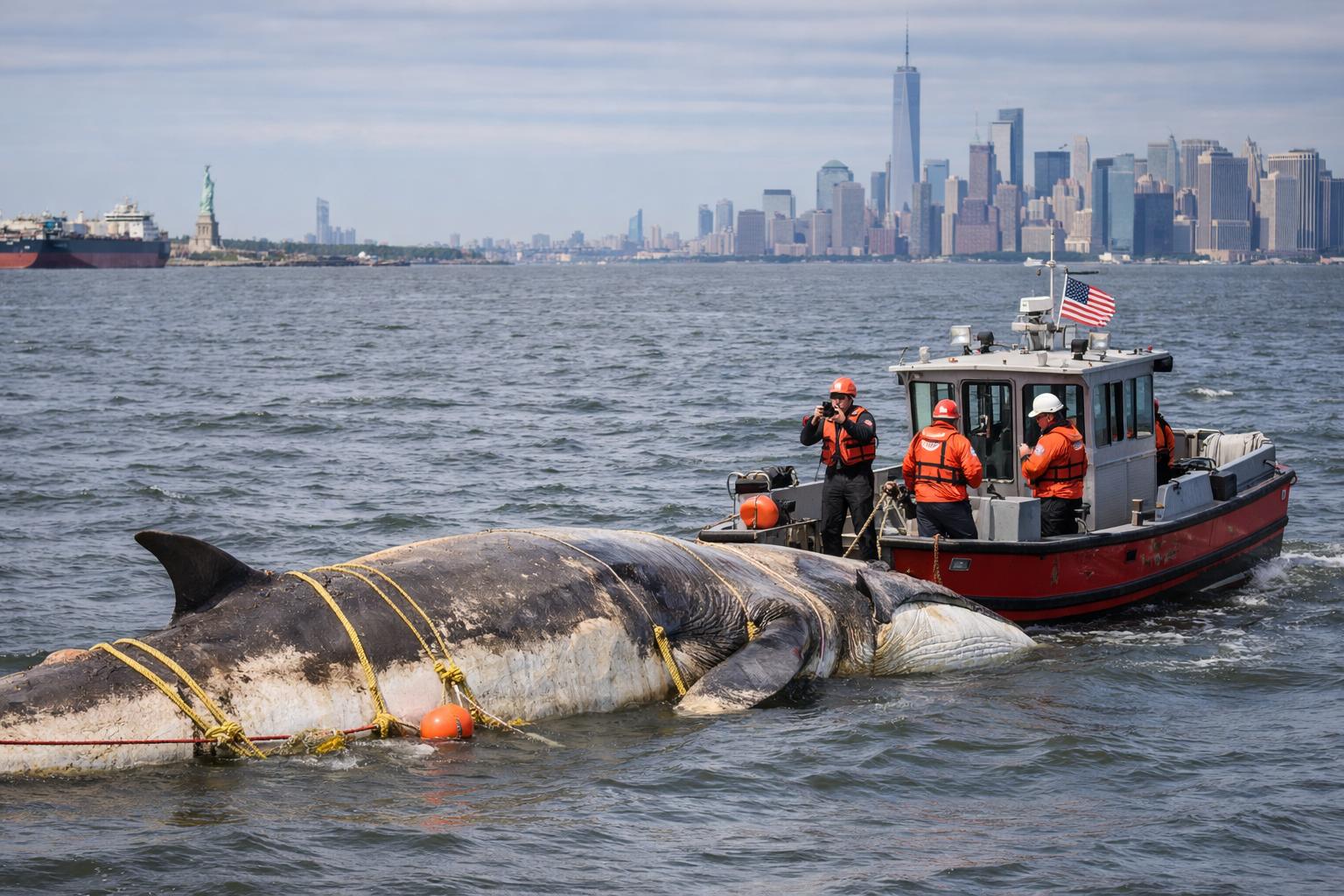
Marine response teams are working to remove a large whale carcass discovered in Newark Bay, as officials coordinate a complex recovery and investigation effort involving multiple agencies. Authorities said the Marine Mammal Stranding Center received a report of the dead whale on Wednesday, April 9, 2026. The animal, estimated to be about 50 feet long, is believed to be either a fin whale or a sei whale, though confirmation is pending further examination. Following the report, the U.S. Army Corps of Engineers assisted in securing the whale to prevent it from posing a navigational hazard in the busy waterway. The carcass was then relocated to a staging area in New York Harbor while officials worked to develop a detailed response plan. On Friday morning, April 11, 2026, specialists from the Marine Mammal Stranding Center, supported by the Army Corps of Engineers, boarded a vessel to document the whale and collect initial tissue samples. These early steps are part of a broader scientific effort to determine the species and assess potential causes of death. The Marine Mammal Stranding Center is collaborating with the Atlantic Marine Conservation Society, along with local, state, and federal partners, to coordinate the next phase of the operation. Plans include towing the whale to a suitable location where a full necropsy can be conducted. Officials emphasized that assembling the necessary team and equipment remains a priority. However, the operation faces several logistical challenges. Authorities are still working to secure an appropriate landing site, manage weather-related constraints, and arrange transportation and heavy machinery needed for the examination. Experts say a comprehensive necropsy will be critical to identifying the species definitively and understanding the circumstances surrounding the whale’s death. Additional updates are expected as the investigation progresses and more information becomes available.
50-foot whale discovered in Newark Bay under investigation by experts
Marine response teams are working to remove a large whale carcass discovered in Newark Bay, as officials coordinate a complex recovery and investigation effort involving multiple agencies. Authorities said the Marine Mammal Stranding Center received a report of the dead whale on Wednesday, April 9, 2026. The animal, estimated to be about 50 feet long, is believed to be either a fin whale or a sei whale, though confirmation is pending further examination. Following the report, the U.S. Army Corps of Engineers assisted in securing the whale to prevent it from posing a navigational hazard in the busy waterway. The carcass was then relocated to a staging area in New York Harbor while officials worked to develop a detailed response plan. On Friday morning, April 11, 2026, specialists from the Marine Mammal Stranding Center, supported by the Army Corps of Engineers, boarded a vessel to document the whale and collect initial tissue samples. These early steps are part of a broader scientific effort to determine the species and assess potential causes of death. The Marine Mammal Stranding Center is collaborating with the Atlantic Marine Conservation Society, along with local, state, and federal partners, to coordinate the next phase of the operation. Plans include towing the whale to a suitable location where a full necropsy can be conducted. Officials emphasized that assembling the necessary team and equipment remains a priority. However, the operation faces several logistical challenges. Authorities are still working to secure an appropriate landing site, manage weather-related constraints, and arrange transportation and heavy machinery needed for the examination. Experts say a comprehensive necropsy will be critical to identifying the species definitively and understanding the circumstances surrounding the whale’s death. Additional updates are expected as the investigation progresses and more information becomes available.
CSU forecasts below-average 2026 Atlantic hurricane season outlook
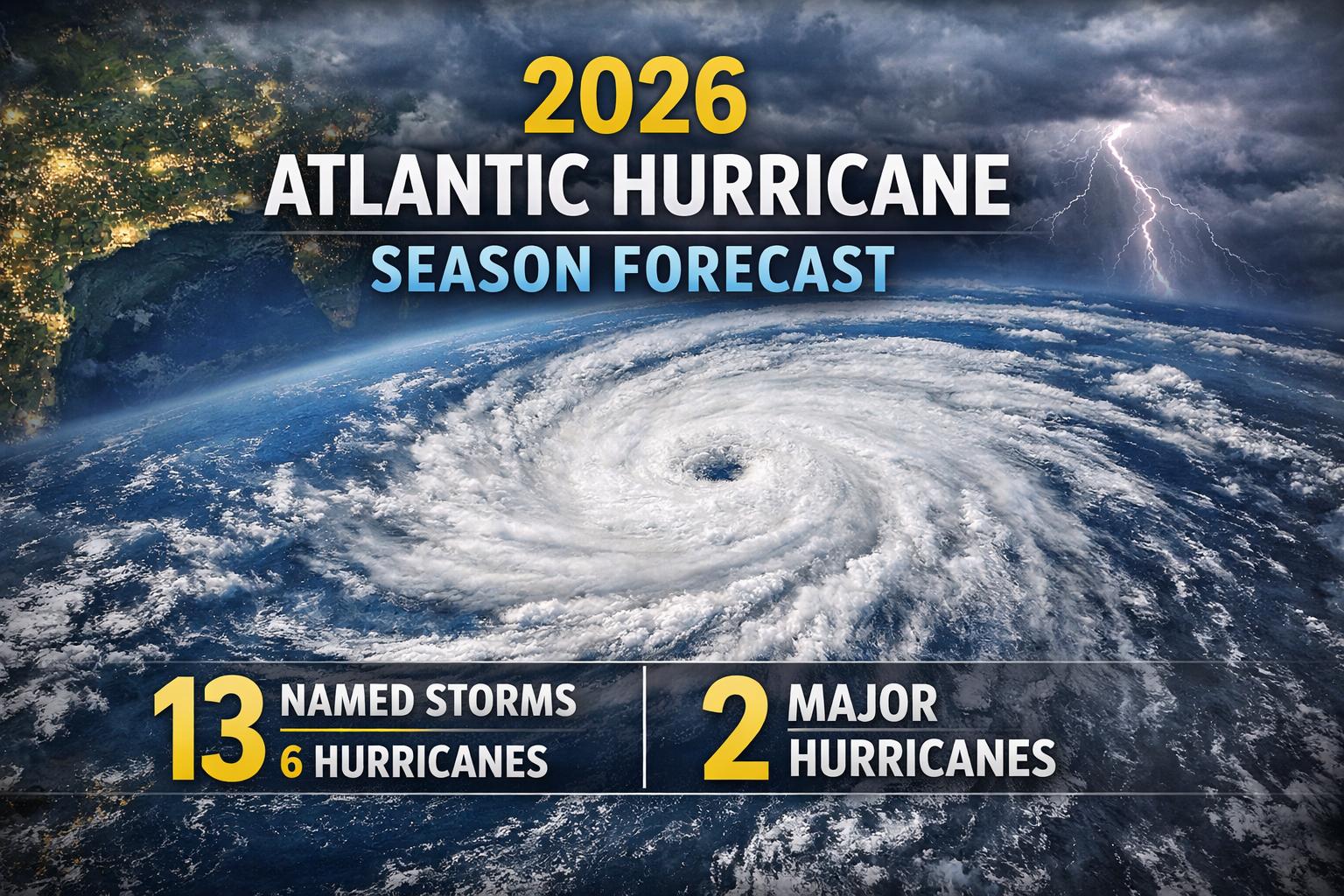
SOUTH PADRE ISLAND, Texas — Thursday, April 10, 2026 — Researchers at Colorado State University (CSU) released their first major outlook for the 2026 Atlantic hurricane season during the National Tropical Weather Conference held on South Padre Island, offering a cautiously optimistic forecast for the months ahead. According to CSU’s Department of Atmospheric Science, the upcoming season is expected to be slightly below average. The forecast projects 13 named storms, including six hurricanes and two major hurricanes classified as Category 3 or higher. By comparison, a typical Atlantic season produces approximately 14 named storms, seven hurricanes, and three major hurricanes. Forecasters attribute the subdued outlook largely to evolving global climate patterns. Current weak La Niña conditions are expected to transition into El Niño in the coming months, a shift that typically increases vertical wind shear across the tropical Atlantic. This atmospheric change can disrupt storm formation and limit the intensity of developing systems. In their analysis, CSU researchers emphasized that El Niño is likely to be the dominant influence during the peak of the season. Increased wind shear associated with this pattern generally reduces the likelihood of strong hurricanes forming and making landfall. As a result, the probability of major hurricane impacts along the continental United States coastline and across the Caribbean is expected to be lower than average. The report also highlights a reduced risk for the Gulf Coast region. CSU estimates a 20% chance of a hurricane making landfall between the Florida Panhandle and Brownsville, Texas, compared to the historical average of 27%. While this suggests a quieter season, researchers caution that even a below-average year can still produce significant and damaging storms. Phil Klotzbach, a senior research scientist at CSU and lead author of the forecast, noted that the projected 2026 season resembles patterns observed in past years such as 2006, 2009, 2015, and 2023. In those seasons, Texas experienced limited tropical activity, with no named storms in 2006 and 2009, and only minor systems recorded in 2015 and 2023. Despite the relatively lower forecast numbers, experts stress that preparedness remains critical, as hurricane activity can be unpredictable and even a single storm can have widespread impacts across coastal communities.
CSU forecasts below-average 2026 Atlantic hurricane season outlook
SOUTH PADRE ISLAND, Texas — Thursday, April 10, 2026 — Researchers at Colorado State University (CSU) released their first major outlook for the 2026 Atlantic hurricane season during the National Tropical Weather Conference held on South Padre Island, offering a cautiously optimistic forecast for the months ahead. According to CSU’s Department of Atmospheric Science, the upcoming season is expected to be slightly below average. The forecast projects 13 named storms, including six hurricanes and two major hurricanes classified as Category 3 or higher. By comparison, a typical Atlantic season produces approximately 14 named storms, seven hurricanes, and three major hurricanes. Forecasters attribute the subdued outlook largely to evolving global climate patterns. Current weak La Niña conditions are expected to transition into El Niño in the coming months, a shift that typically increases vertical wind shear across the tropical Atlantic. This atmospheric change can disrupt storm formation and limit the intensity of developing systems. In their analysis, CSU researchers emphasized that El Niño is likely to be the dominant influence during the peak of the season. Increased wind shear associated with this pattern generally reduces the likelihood of strong hurricanes forming and making landfall. As a result, the probability of major hurricane impacts along the continental United States coastline and across the Caribbean is expected to be lower than average. The report also highlights a reduced risk for the Gulf Coast region. CSU estimates a 20% chance of a hurricane making landfall between the Florida Panhandle and Brownsville, Texas, compared to the historical average of 27%. While this suggests a quieter season, researchers caution that even a below-average year can still produce significant and damaging storms. Phil Klotzbach, a senior research scientist at CSU and lead author of the forecast, noted that the projected 2026 season resembles patterns observed in past years such as 2006, 2009, 2015, and 2023. In those seasons, Texas experienced limited tropical activity, with no named storms in 2006 and 2009, and only minor systems recorded in 2015 and 2023. Despite the relatively lower forecast numbers, experts stress that preparedness remains critical, as hurricane activity can be unpredictable and even a single storm can have widespread impacts across coastal communities.
US seizes Russia-flagged oil tanker in Atlantic amid sanctions enforcement
The United States has seized a Russia-flagged oil tanker in the North Atlantic, escalating enforcement of American sanctions and drawing attention to an unusual maritime confrontation involving Russian military assets. The vessel, originally known as Bella-1, was taken into custody on Wednesday following a coordinated operation by US civilian and military authorities acting under a federal court warrant. According to official statements, the seizure was carried out after the tanker
US seizes Russia-flagged oil tanker in Atlantic amid sanctions enforcement
The United States has seized a Russia-flagged oil tanker in the North Atlantic, escalating enforcement of American sanctions and drawing attention to an unusual maritime confrontation involving Russian military assets. The vessel, originally known as Bella-1, was taken into custody on Wednesday following a coordinated operation by US civilian and military authorities acting under a federal court warrant. According to official statements, the seizure was carried out after the tanker
New Jersey Prepares For Flooding And Beach Erosion As Hurricane Erin Nears
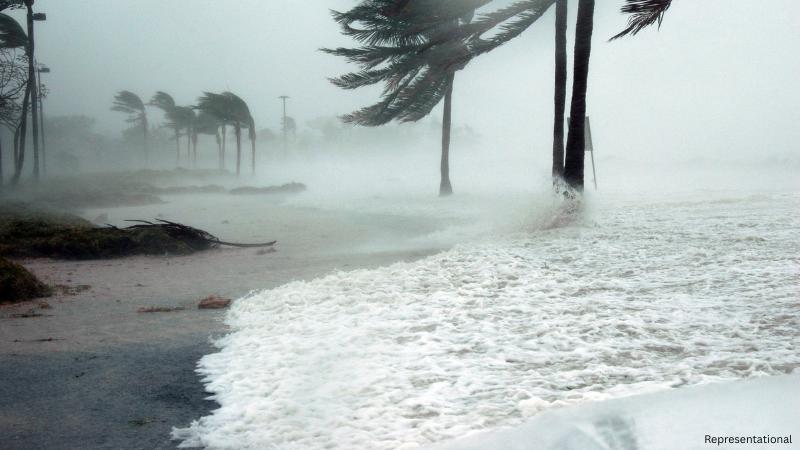
New Jersey is preparing for the arrival of Hurricane Erin, which is expected to bring heavy rains, strong winds, coastal flooding, and significant beach erosion to the state. As the Atlantic storm system moves closer, local authorities and weather experts have issued alerts, urging residents to stay vigilant and avoid vulnerable areas along the shoreline. The concern comes as ocean swells and storm surges are likely to impact low-lying communities, particularly
New Jersey Prepares For Flooding And Beach Erosion As Hurricane Erin Nears
New Jersey is preparing for the arrival of Hurricane Erin, which is expected to bring heavy rains, strong winds, coastal flooding, and significant beach erosion to the state. As the Atlantic storm system moves closer, local authorities and weather experts have issued alerts, urging residents to stay vigilant and avoid vulnerable areas along the shoreline. The concern comes as ocean swells and storm surges are likely to impact low-lying communities, particularly