#auto-tariffs
Will Trump raise EU auto tariffs to 25%? Yes, escalation risks trade tensions
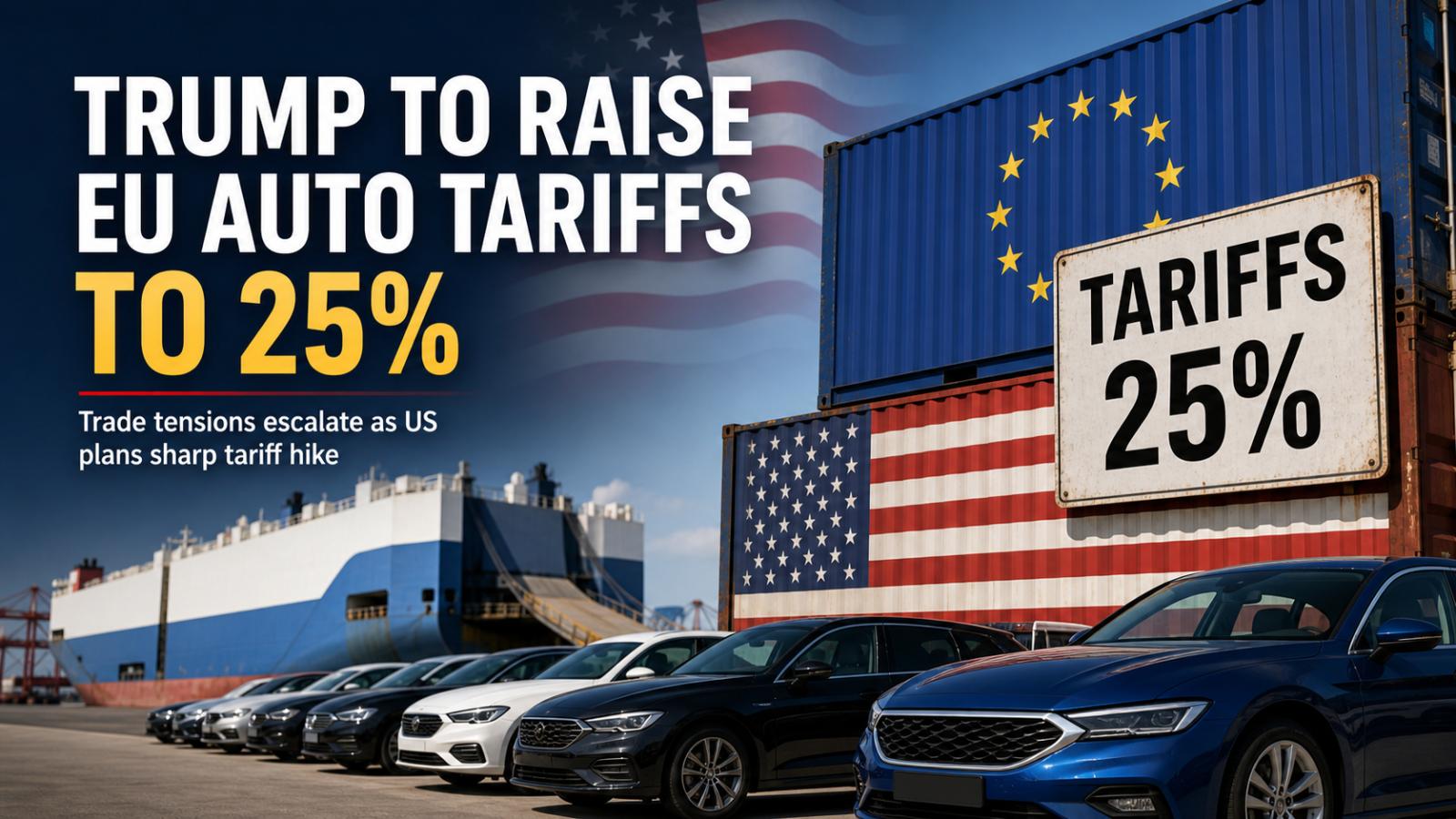
Trump signals sharp increase in tariffs on EU vehicles WASHINGTON — On Friday, May 1, 2026, U.S. President Donald Trump announced plans to raise tariffs on cars and trucks imported from the European Union to 25%, signaling a significant shift in U.S.-EU trade policy. The move, shared publicly in a statement, comes at a time when global markets remain sensitive to policy changes and could trigger broader economic repercussions. Trump stated that the European Union was “not complying” with the previously agreed trade deal, though he did not provide specific details regarding the alleged violations. The announcement marks a departure from the earlier tariff framework negotiated between both sides. Background of the US-EU Turnberry trade framework The current dispute traces back to a bilateral agreement reached in July 2025 between Trump and Ursula von der Leyen, which set a 15% tariff ceiling on most traded goods. Known as the Turnberry Agreement, the arrangement aimed to stabilize trade relations and reduce uncertainty for industries on both sides of the Atlantic. Both the United States and the European Union had reaffirmed their commitment to maintaining this framework even after legal and policy challenges emerged earlier in 2026. Legal challenges reshape tariff authority The agreement’s stability was called into question after a ruling by the U.S. Supreme Court, which determined that the president lacked authority to impose tariffs under an economic emergency declaration. Following the ruling, tariff limits were effectively reduced, prompting the administration to explore alternative legal pathways to implement new import taxes. Ongoing investigations into trade imbalances and national security concerns have since been cited by the administration as justification for a revised tariff strategy, potentially putting the original agreement at risk. Economic stakes for EU and global markets The European Union has consistently emphasized the importance of maintaining agreed tariff limits, noting that the deal was expected to save its automotive sector between €500 million and €600 million monthly. Trade between the U.S. and EU reached approximately €1.7 trillion ($2 trillion) in 2024, highlighting the scale of economic interdependence. European officials have reiterated that commitments under the agreement should be upheld, stressing that EU exports must continue to benefit from competitive tariff treatment without unexpected increases. Rising tensions threaten trade stability The proposed tariff increase introduces fresh uncertainty into one of the world’s largest trading relationships. Analysts warn that such measures could disrupt supply chains, increase costs for manufacturers and consumers, and strain diplomatic ties. As the administration moves forward with its trade investigations, the future of the U.S.-EU trade framework remains uncertain, with potential implications extending beyond the automotive sector into the broader global economy.
Will Trump raise EU auto tariffs to 25%? Yes, escalation risks trade tensions
Trump signals sharp increase in tariffs on EU vehicles WASHINGTON — On Friday, May 1, 2026, U.S. President Donald Trump announced plans to raise tariffs on cars and trucks imported from the European Union to 25%, signaling a significant shift in U.S.-EU trade policy. The move, shared publicly in a statement, comes at a time when global markets remain sensitive to policy changes and could trigger broader economic repercussions. Trump stated that the European Union was “not complying” with the previously agreed trade deal, though he did not provide specific details regarding the alleged violations. The announcement marks a departure from the earlier tariff framework negotiated between both sides. Background of the US-EU Turnberry trade framework The current dispute traces back to a bilateral agreement reached in July 2025 between Trump and Ursula von der Leyen, which set a 15% tariff ceiling on most traded goods. Known as the Turnberry Agreement, the arrangement aimed to stabilize trade relations and reduce uncertainty for industries on both sides of the Atlantic. Both the United States and the European Union had reaffirmed their commitment to maintaining this framework even after legal and policy challenges emerged earlier in 2026. Legal challenges reshape tariff authority The agreement’s stability was called into question after a ruling by the U.S. Supreme Court, which determined that the president lacked authority to impose tariffs under an economic emergency declaration. Following the ruling, tariff limits were effectively reduced, prompting the administration to explore alternative legal pathways to implement new import taxes. Ongoing investigations into trade imbalances and national security concerns have since been cited by the administration as justification for a revised tariff strategy, potentially putting the original agreement at risk. Economic stakes for EU and global markets The European Union has consistently emphasized the importance of maintaining agreed tariff limits, noting that the deal was expected to save its automotive sector between €500 million and €600 million monthly. Trade between the U.S. and EU reached approximately €1.7 trillion ($2 trillion) in 2024, highlighting the scale of economic interdependence. European officials have reiterated that commitments under the agreement should be upheld, stressing that EU exports must continue to benefit from competitive tariff treatment without unexpected increases. Rising tensions threaten trade stability The proposed tariff increase introduces fresh uncertainty into one of the world’s largest trading relationships. Analysts warn that such measures could disrupt supply chains, increase costs for manufacturers and consumers, and strain diplomatic ties. As the administration moves forward with its trade investigations, the future of the U.S.-EU trade framework remains uncertain, with potential implications extending beyond the automotive sector into the broader global economy.
Mercedes-Benz sees challenges ahead despite U.S. sales growth plans
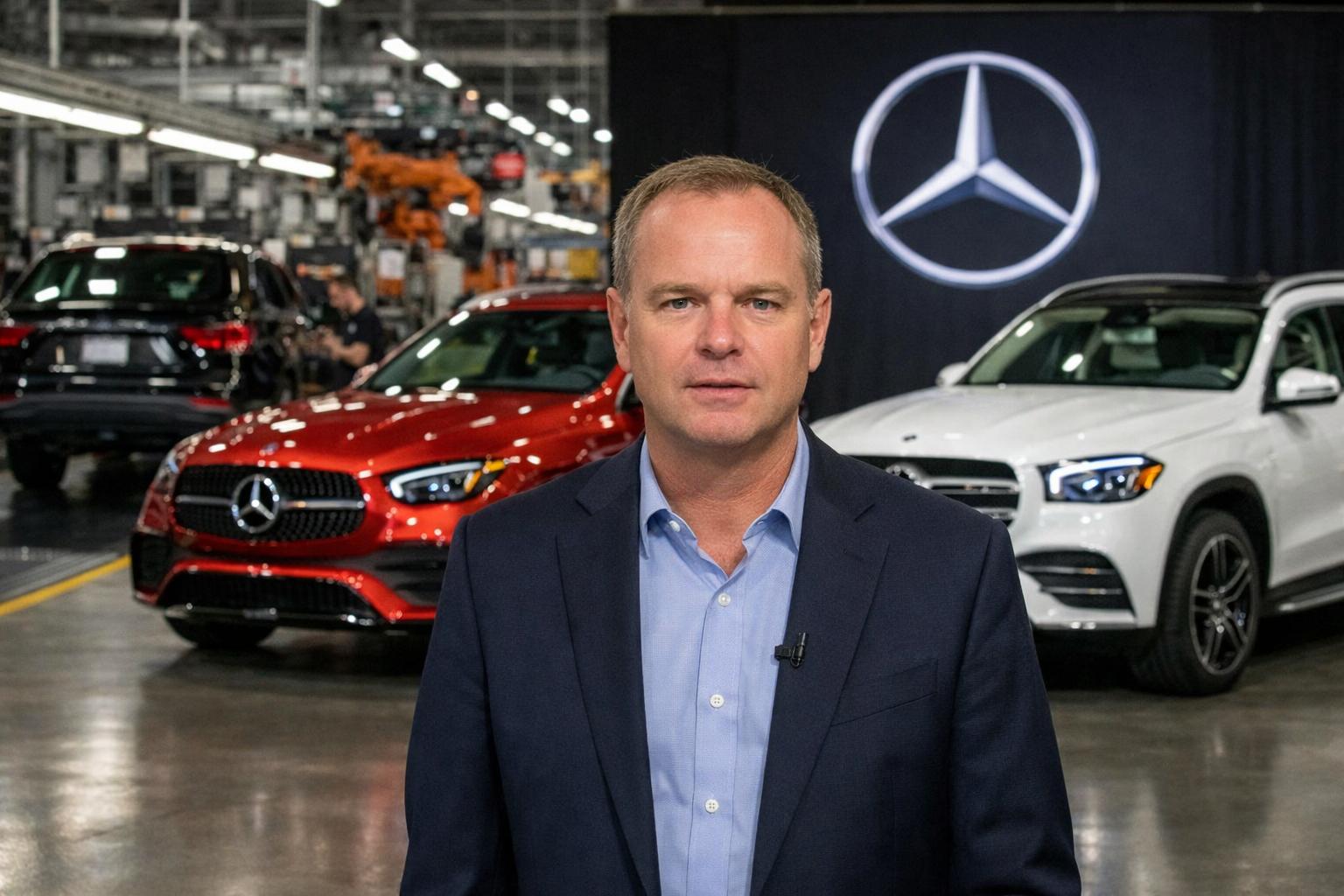
Mercedes-Benz USA CEO Adam Chamberlain said on Tuesday, March 31, 2026, that early indicators suggest the 2026 model year is shaping up to be more challenging than initially expected, as economic uncertainty and external pressures weigh on the U.S. auto market. Speaking at the company’s manufacturing facility in Vance, Alabama, Chamberlain indicated that conditions in the opening months of the year have proven tougher than anticipated. He cited a range of factors influencing the market, in
Mercedes-Benz sees challenges ahead despite U.S. sales growth plans
Mercedes-Benz USA CEO Adam Chamberlain said on Tuesday, March 31, 2026, that early indicators suggest the 2026 model year is shaping up to be more challenging than initially expected, as economic uncertainty and external pressures weigh on the U.S. auto market. Speaking at the company’s manufacturing facility in Vance, Alabama, Chamberlain indicated that conditions in the opening months of the year have proven tougher than anticipated. He cited a range of factors influencing the market, in
Ford anticipates $1.5B profit hit from new tariffs
In the first quarter of 2025, Ford Motor Company reported earnings that surpassed Wall Street expectations, yet the automaker suspended its full-year financial guidance due to the anticipated impact of newly imposed tariffs. The company estimates that these tariffs will result in a $2.5 billion cost for the year, with a net adverse effect of approximately $1.5 billion on its adjusted earnings before interest and taxes (EBIT) . Ford's decision to withdraw its 2025 guidance r
Ford anticipates $1.5B profit hit from new tariffs
In the first quarter of 2025, Ford Motor Company reported earnings that surpassed Wall Street expectations, yet the automaker suspended its full-year financial guidance due to the anticipated impact of newly imposed tariffs. The company estimates that these tariffs will result in a $2.5 billion cost for the year, with a net adverse effect of approximately $1.5 billion on its adjusted earnings before interest and taxes (EBIT) . Ford's decision to withdraw its 2025 guidance r
Asian Automakers React to U.S. Tariffs: Toyota, Nissan, Hyundai Face Major Challenges
This month, the announcement of sweeping 25% tariffs on cars “not made in the U.S.” has sent ripples through the global automotive industry, especially affecting Asian car manufacturers. U.S. President Donald Trump’s decision has put significant pressure on automakers ahead of the implementation of the new duties, which are set to take effect later this week. The move has particularly shaken Japanese and South Korean carmakers, many of whom rely heavily on the U.S. market. S
Asian Automakers React to U.S. Tariffs: Toyota, Nissan, Hyundai Face Major Challenges
This month, the announcement of sweeping 25% tariffs on cars “not made in the U.S.” has sent ripples through the global automotive industry, especially affecting Asian car manufacturers. U.S. President Donald Trump’s decision has put significant pressure on automakers ahead of the implementation of the new duties, which are set to take effect later this week. The move has particularly shaken Japanese and South Korean carmakers, many of whom rely heavily on the U.S. market. S
Car Repairs, Prices, and Insurance Costs Set to Rise Due to Trump's Auto Tariffs
President Donald Trump's 25% tariffs on auto imports, which are set to take effect on April 3, are expected to have far-reaching effects on the automotive industry in the U.S. Even if you're not actively in the market for a new car, these new tariffs could impact the cost of owning and maintaining your vehicle. The tariffs, designed to boost domestic manufacturing and generate significant revenue, will raise the price of cars imported from foreign countries. But beyond the initial cos
Car Repairs, Prices, and Insurance Costs Set to Rise Due to Trump's Auto Tariffs
President Donald Trump's 25% tariffs on auto imports, which are set to take effect on April 3, are expected to have far-reaching effects on the automotive industry in the U.S. Even if you're not actively in the market for a new car, these new tariffs could impact the cost of owning and maintaining your vehicle. The tariffs, designed to boost domestic manufacturing and generate significant revenue, will raise the price of cars imported from foreign countries. But beyond the initial cos
Trump’s 25% Tariffs Hit BMW While Volkswagen and Stellantis Secure Exemptions
The global automotive industry is facing yet another wave of trade uncertainty following the reintroduction of tariffs by former U.S. President Donald Trump. His latest move to impose a 25% tariff on imported cars has sent shockwaves across international markets, particularly affecting European carmakers. While some automakers have successfully maneuvered through these trade barriers, others are grappling with the economic repercussions.
Trump’s 25% Tariffs Hit BMW While Volkswagen and Stellantis Secure Exemptions
The global automotive industry is facing yet another wave of trade uncertainty following the reintroduction of tariffs by former U.S. President Donald Trump. His latest move to impose a 25% tariff on imported cars has sent shockwaves across international markets, particularly affecting European carmakers. While some automakers have successfully maneuvered through these trade barriers, others are grappling with the economic repercussions.
US Demands India Drop Tariffs on Most Goods Amid Trade Tensions, India Stands Firm
The United States has reportedly asked India to eliminate tariffs on nearly all goods except agricultural products, according to a CNBC-TV18 report on March 6. If India accepts this demand, it would mean removing key trade protections while receiving little in return. The proposal has raised concerns in India, as it comes amid escalating trade tensions between the two countries.US President Donald Trump has been vocal in his criticism of India’s trade policies, repeatedly labeling them
US Demands India Drop Tariffs on Most Goods Amid Trade Tensions, India Stands Firm
The United States has reportedly asked India to eliminate tariffs on nearly all goods except agricultural products, according to a CNBC-TV18 report on March 6. If India accepts this demand, it would mean removing key trade protections while receiving little in return. The proposal has raised concerns in India, as it comes amid escalating trade tensions between the two countries.US President Donald Trump has been vocal in his criticism of India’s trade policies, repeatedly labeling them
Global Markets React to Trump’s Tariff Pause: Trade War Fears
In February 2025, US President Donald Trump’s announcement of a 30-day pause on tariffs against Mexico and Canada brought a brief sense of relief to global markets. The decision helped prevent a potential escalation of a full-blown trade war, with US equity futures and international markets responding positively. However, concerns linger about the long-term effects of tariffs on industries such as automotive, semiconductor, consumer goods, e-commerce, and green energy.
Global Markets React to Trump’s Tariff Pause: Trade War Fears
In February 2025, US President Donald Trump’s announcement of a 30-day pause on tariffs against Mexico and Canada brought a brief sense of relief to global markets. The decision helped prevent a potential escalation of a full-blown trade war, with US equity futures and international markets responding positively. However, concerns linger about the long-term effects of tariffs on industries such as automotive, semiconductor, consumer goods, e-commerce, and green energy.