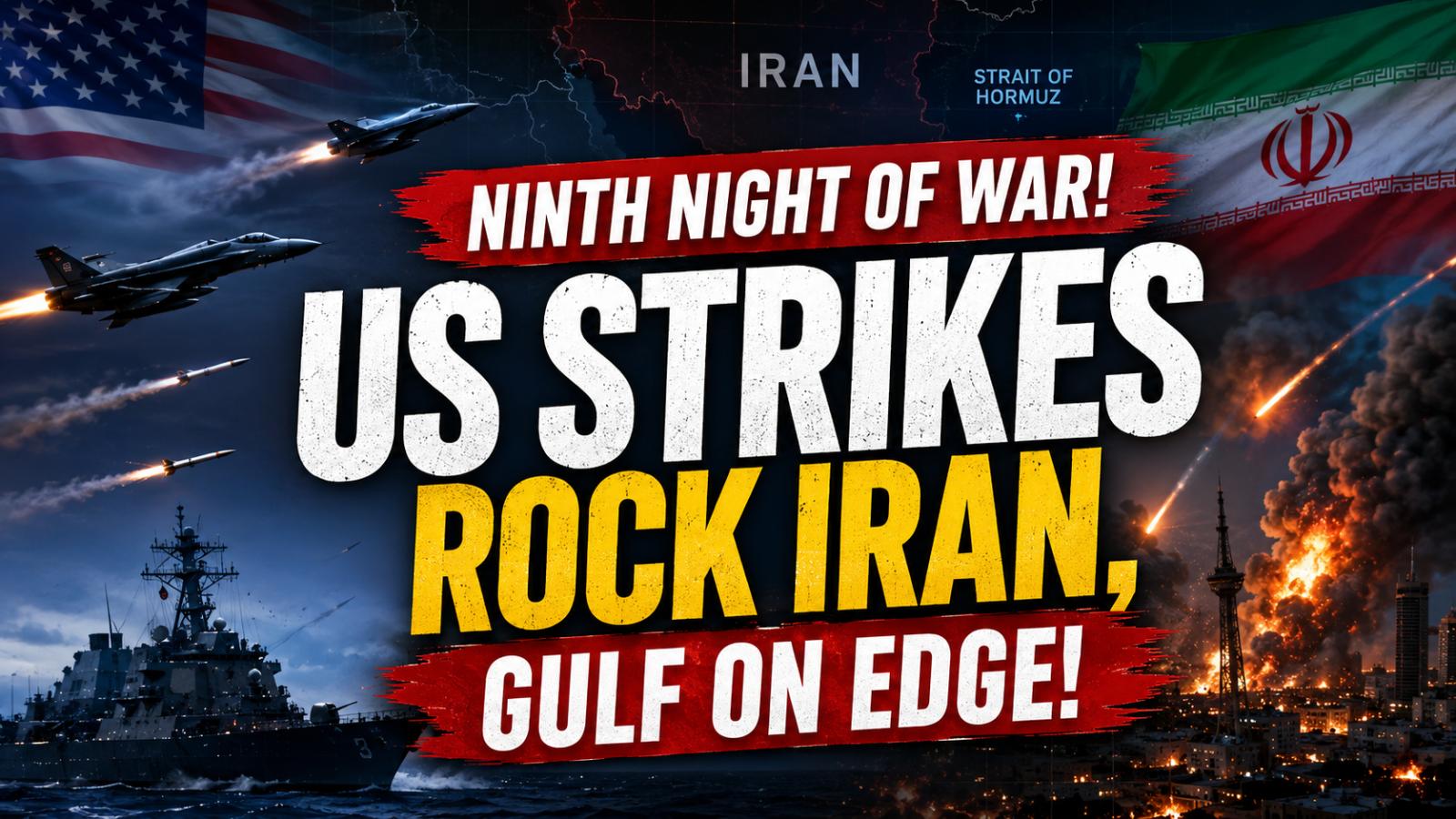
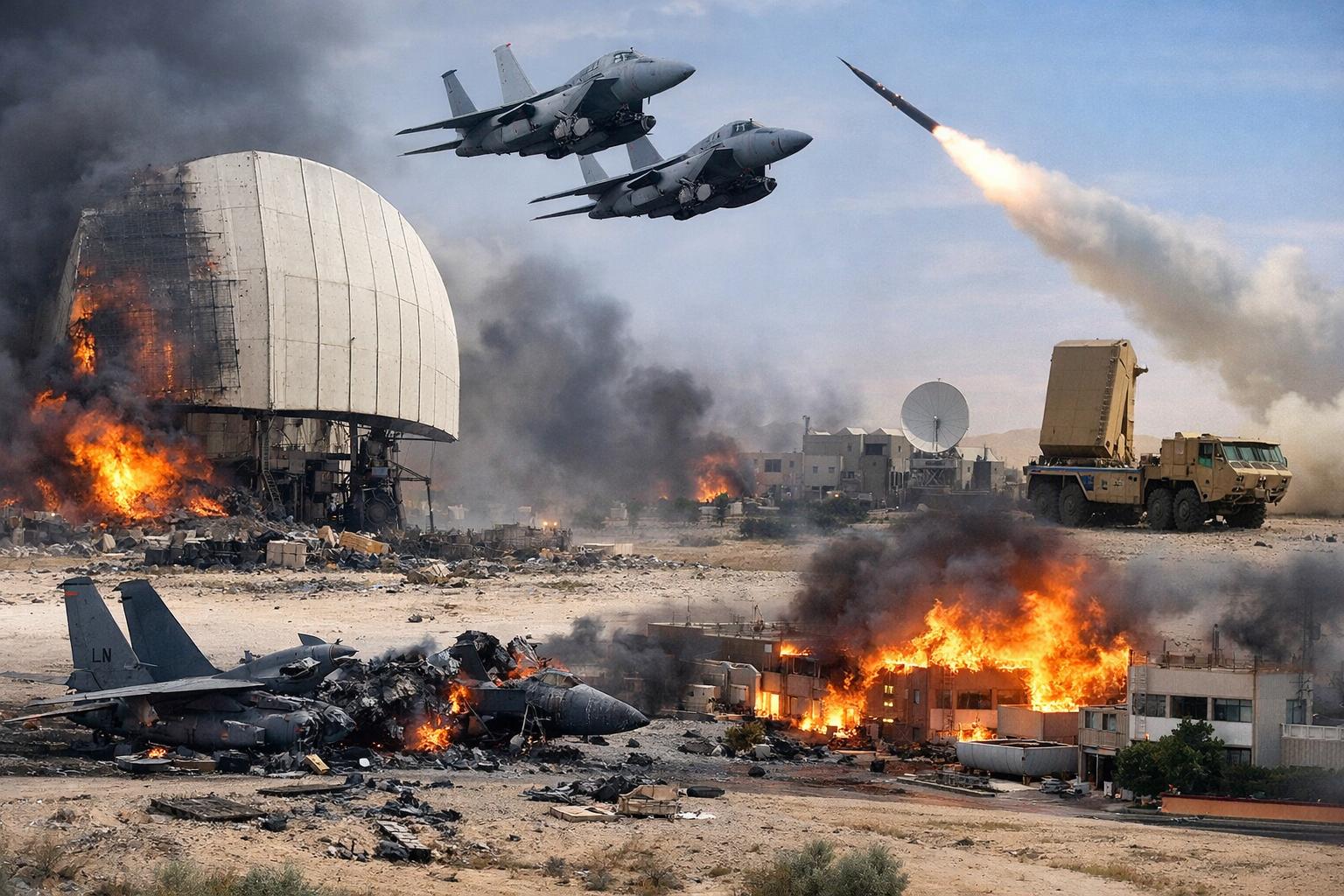
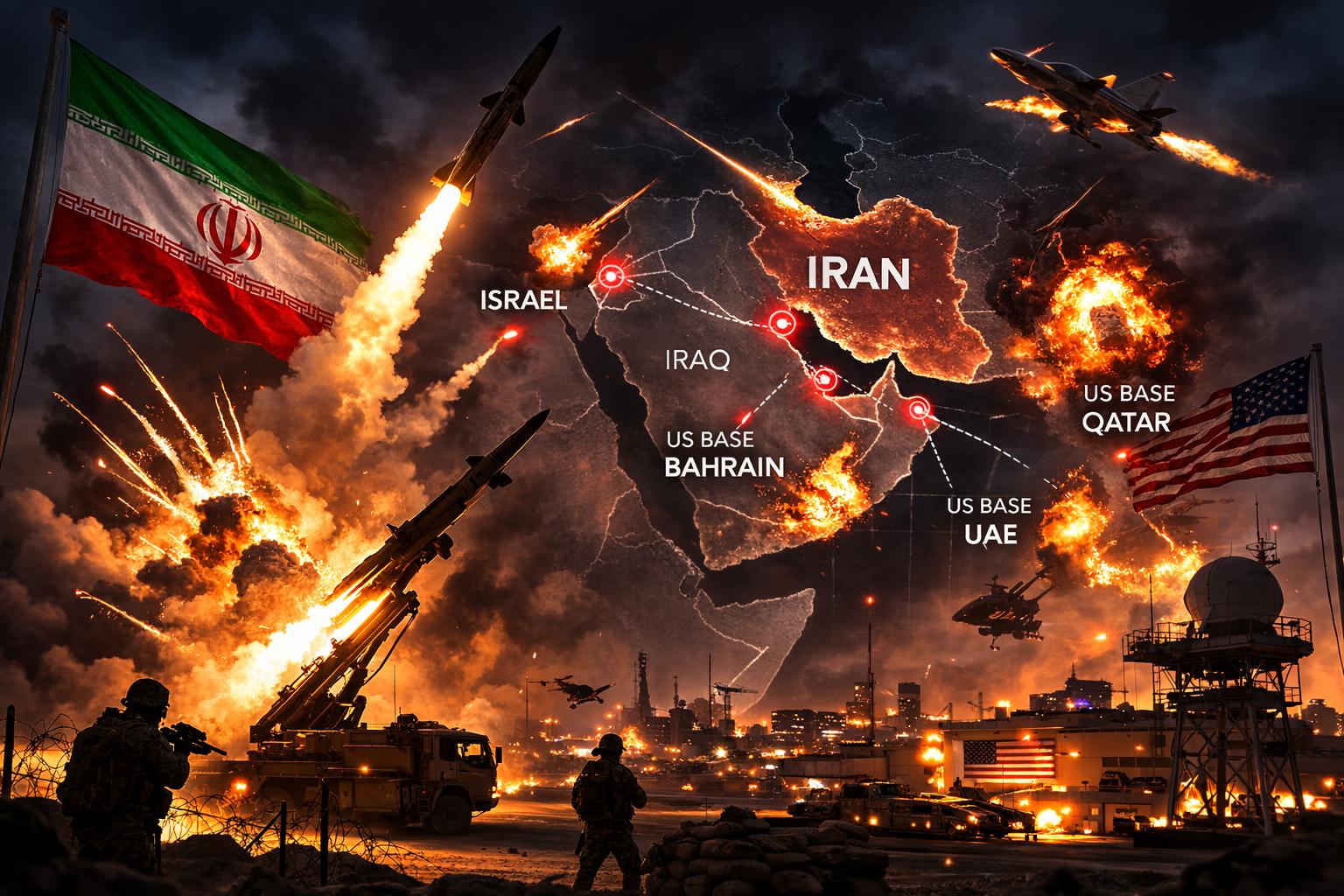
The US Iran ninth night strikes deepened the regional crisis as CENTCOM targeted Iranian military capabilities. Missile alerts spread across the Gulf, another US soldier died in Iraq, and rising oil prices reflected growing fears over the Strait of Hormuz.
US Iran ninth night strikes announced by CENTCOM
The US military launched a ninth consecutive night of attacks against Iran on Sunday, July 19, as the conflict entered another dangerous phase. US Central Command said on X that operations began at 7 p.m. Eastern Time and would continue targeting Iranian capabilities used to attack commercial vessels crossing the Strait of Hormuz.
CENTCOM’s website had earlier confirmed eight consecutive nights of strikes through July 18 and listed several rounds of attacks conducted since July 11. It also confirmed that the United States had resumed its naval blockade against Iranian ports on July 13.
Iranian state media reported explosions in several cities after the latest operation began, including Tabriz and areas near important ports. Reports from inside Iran also claimed that air-defence forces shot down a drone over the country’s south. These battlefield accounts had not been independently verified when they emerged.
US soldier killed by Iranian drone ordnance
CENTCOM announced that a US service member died in northern Iraq during a controlled detonation of unexploded ordnance from a downed Iranian one-way attack drone. Another service member suffered a minor injury during the incident.
The death brought the reported number of US military fatalities linked to the wider Iran conflict to 17. Recent casualties have included service members killed during Iranian attacks in Jordan and other incidents across the region.
The latest death highlights a risk that extends beyond direct missile and drone impacts. Unexploded weapons can remain dangerous after interception or crashing, placing military disposal teams and nearby communities at continued risk.
Kuwait attack and Bahrain alerts widen crisis
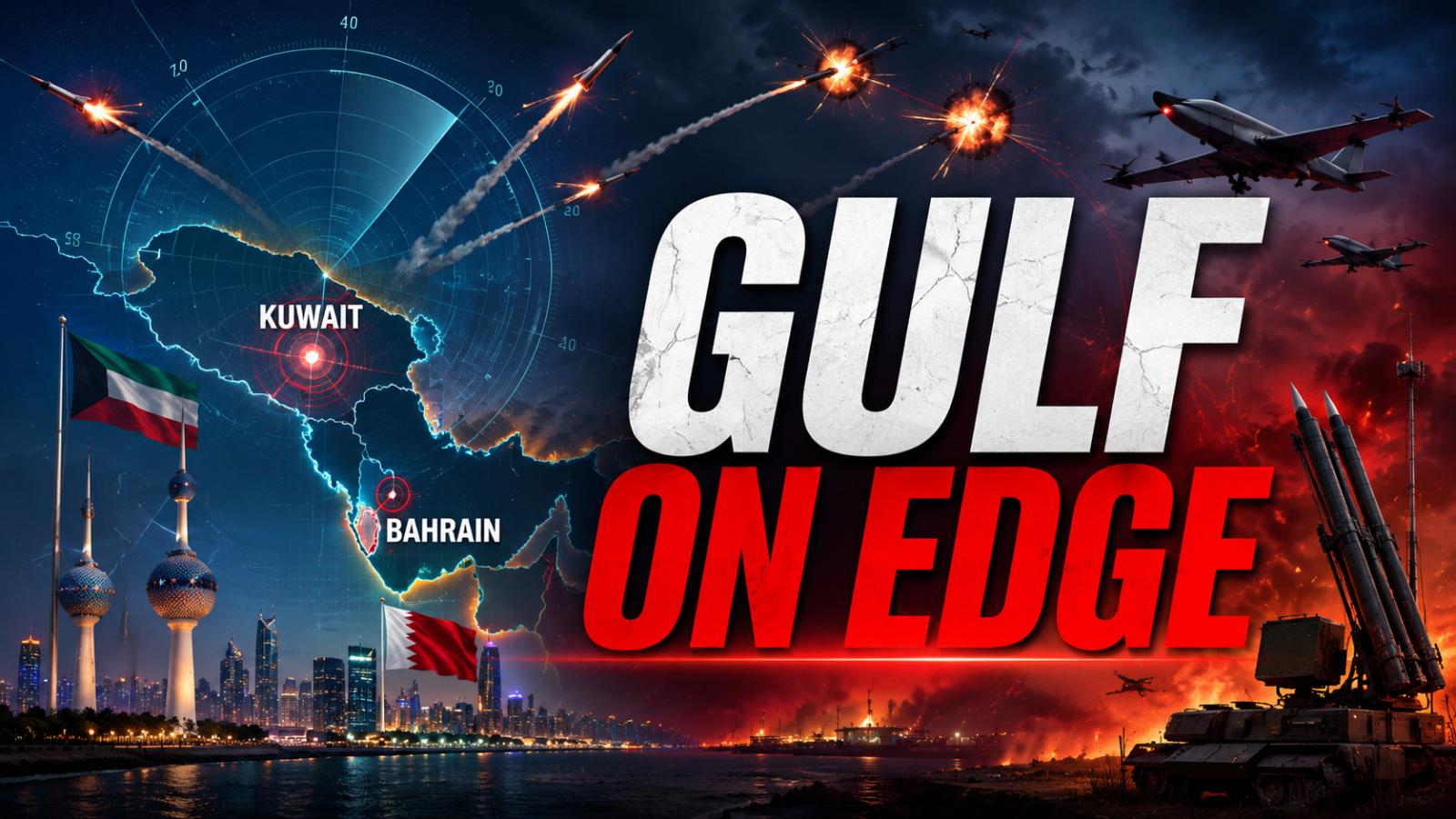
The confrontation also spread further across Gulf states. Bahrain activated warning sirens and instructed residents to seek shelter, while Kuwait said its air defences were responding to Iranian missile and drone attacks.
Kuwaiti authorities accused Iran of damaging energy, water and oil-related facilities and causing fires. Gulf governments condemned the attacks as concerns grew that retaliatory operations could draw more countries into direct confrontation.
The Strait of Hormuz remains at the centre of the crisis because disruptions there can affect major international energy shipments. CENTCOM says its latest attacks aim to reduce Iran’s ability to threaten vessels using the waterway. The renewed US blockade has added pressure on maritime traffic and increased fears of prolonged supply disruption.
Strait of Hormuz crisis pushes oil above $90
Oil markets reacted quickly as fighting continued. Brent crude moved above $90 a barrel, while US crude traded above $84 during Sunday trading. Market reports linked the increase to renewed strikes, Iranian retaliation and uncertainty surrounding shipping through the Strait of Hormuz.
The price rise shows how quickly a military escalation can spread beyond the battlefield. Higher crude costs can increase transport, manufacturing and consumer prices, particularly when traders expect shipping delays or damage to regional energy infrastructure.
Iran also announced that it was suspending commitments connected to its ceasefire understanding with Washington. Iranian officials accused the United States of violating the arrangement by continuing military attacks. Those claims reflect Tehran’s position and require comparison with the original agreement and statements from all parties.
With diplomacy weakening, casualties rising and Gulf infrastructure facing attacks, neither side appears close to de-escalation. The immediate danger is no longer limited to targets inside Iran. It now includes military bases, ports, commercial shipping and essential facilities across the wider region.
Relevant internal links include previous coverage of the CENTCOM strikes on Iran, the Chabahar Port attack, Iranian missile interceptions over Gulf states and the full US-Iran conflict timeline.
The US Iran ninth night strikes deepened the regional crisis as CENTCOM targeted Iranian military capabilities. Missile alerts spread across the Gulf, another US soldier died in Iraq, and rising oil prices reflected growing fears over the Strait of Hormuz.
US Iran ninth night strikes announced by CENTCOM
The US military launched a ninth consecutive night of attacks against Iran on Sunday, July 19, as the conflict entered another dangerous phase. US Central Command said on X that operations began at 7 p.m. Eastern Time and would continue targeting Iranian capabilities used to attack commercial vessels crossing the Strait of Hormuz.
CENTCOM’s website had earlier confirmed eight consecutive nights of strikes through July 18 and listed several rounds of attacks conducted since July 11. It also confirmed that the United States had resumed its naval blockade against Iranian ports on July 13.
Iranian state media reported explosions in several cities after the latest operation began, including Tabriz and areas near important ports. Reports from inside Iran also claimed that air-defence forces shot down a drone over the country’s south. These battlefield accounts had not been independently verified when they emerged.
US soldier killed by Iranian drone ordnance
CENTCOM announced that a US service member died in northern Iraq during a controlled detonation of unexploded ordnance from a downed Iranian one-way attack drone. Another service member suffered a minor injury during the incident.
The death brought the reported number of US military fatalities linked to the wider Iran conflict to 17. Recent casualties have included service members killed during Iranian attacks in Jordan and other incidents across the region.
The latest death highlights a risk that extends beyond direct missile and drone impacts. Unexploded weapons can remain dangerous after interception or crashing, placing military disposal teams and nearby communities at continued risk.
Kuwait attack and Bahrain alerts widen crisis
The confrontation also spread further across Gulf states. Bahrain activated warning sirens and instructed residents to seek shelter, while Kuwait said its air defences were responding to Iranian missile and drone attacks.
Kuwaiti authorities accused Iran of damaging energy, water and oil-related facilities and causing fires. Gulf governments condemned the attacks as concerns grew that retaliatory operations could draw more countries into direct confrontation.
The Strait of Hormuz remains at the centre of the crisis because disruptions there can affect major international energy shipments. CENTCOM says its latest attacks aim to reduce Iran’s ability to threaten vessels using the waterway. The renewed US blockade has added pressure on maritime traffic and increased fears of prolonged supply disruption.
Strait of Hormuz crisis pushes oil above $90
Oil markets reacted quickly as fighting continued. Brent crude moved above $90 a barrel, while US crude traded above $84 during Sunday trading. Market reports linked the increase to renewed strikes, Iranian retaliation and uncertainty surrounding shipping through the Strait of Hormuz.
The price rise shows how quickly a military escalation can spread beyond the battlefield. Higher crude costs can increase transport, manufacturing and consumer prices, particularly when traders expect shipping delays or damage to regional energy infrastructure.
Iran also announced that it was suspending commitments connected to its ceasefire understanding with Washington. Iranian officials accused the United States of violating the arrangement by continuing military attacks. Those claims reflect Tehran’s position and require comparison with the original agreement and statements from all parties.
With diplomacy weakening, casualties rising and Gulf infrastructure facing attacks, neither side appears close to de-escalation. The immediate danger is no longer limited to targets inside Iran. It now includes military bases, ports, commercial shipping and essential facilities across the wider region.
Relevant internal links include previous coverage of the CENTCOM strikes on Iran, the Chabahar Port attack, Iranian missile interceptions over Gulf states and the full US-Iran conflict timeline.
Iran challenges US CENTCOM role in West Asia security framework
Iran has criticised the role of the United States Central Command in West Asia after a regional security conference in Bahrain brought together senior military officials from 12 countries to discuss air defence cooperation and maritime security. Iranian Foreign Minister Abbas Araghchi said peace in the region
Iran challenges US CENTCOM role in West Asia security framework
Iran has criticised the role of the United States Central Command in West Asia after a regional security conference in Bahrain brought together senior military officials from 12 countries to discuss air defence cooperation and maritime security. Iranian Foreign Minister Abbas Araghchi said peace in the region
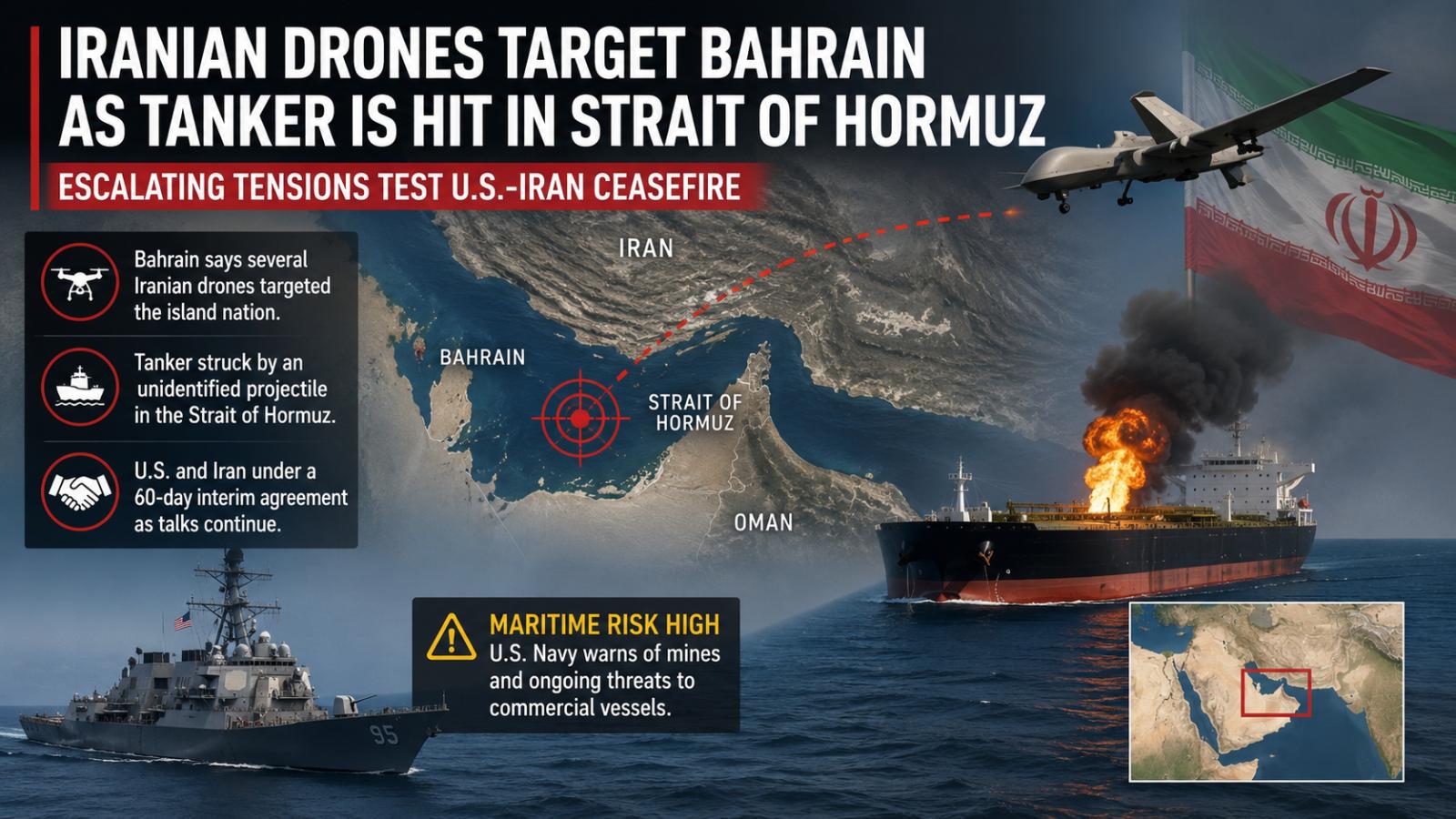
DUBAI, United Arab Emirates — Bahrain said Iranian drones targeted the island nation on Saturday, June 27, 2026, while a tanker was struck by an unidentified projectile in the Strait of Hormuz, adding pressure to a fragile U.S.-Iran ceasefire.
The incidents followed overnight U.S. airstrikes on Iranian missile and drone facilities and coastal radar sites. U.S. Central Command said the strikes followed an Iranian drone attack on a container ship attempting to leave the strait.
DUBAI, United Arab Emirates — Bahrain said Iranian drones targeted the island nation on Saturday, June 27, 2026, while a tanker was struck by an unidentified projectile in the Strait of Hormuz, adding pressure to a fragile U.S.-Iran ceasefire.
The incidents followed overnight U.S. airstrikes on Iranian missile and drone facilities and coastal radar sites. U.S. Central Command said the strikes followed an Iranian drone attack on a container ship attempting to leave the strait.
Trump threatened Iran’s Kharg Island as US-Iran Gulf attacks intensified across oil routes, tankers and military targets, raising new risks for regional security and global energy markets.
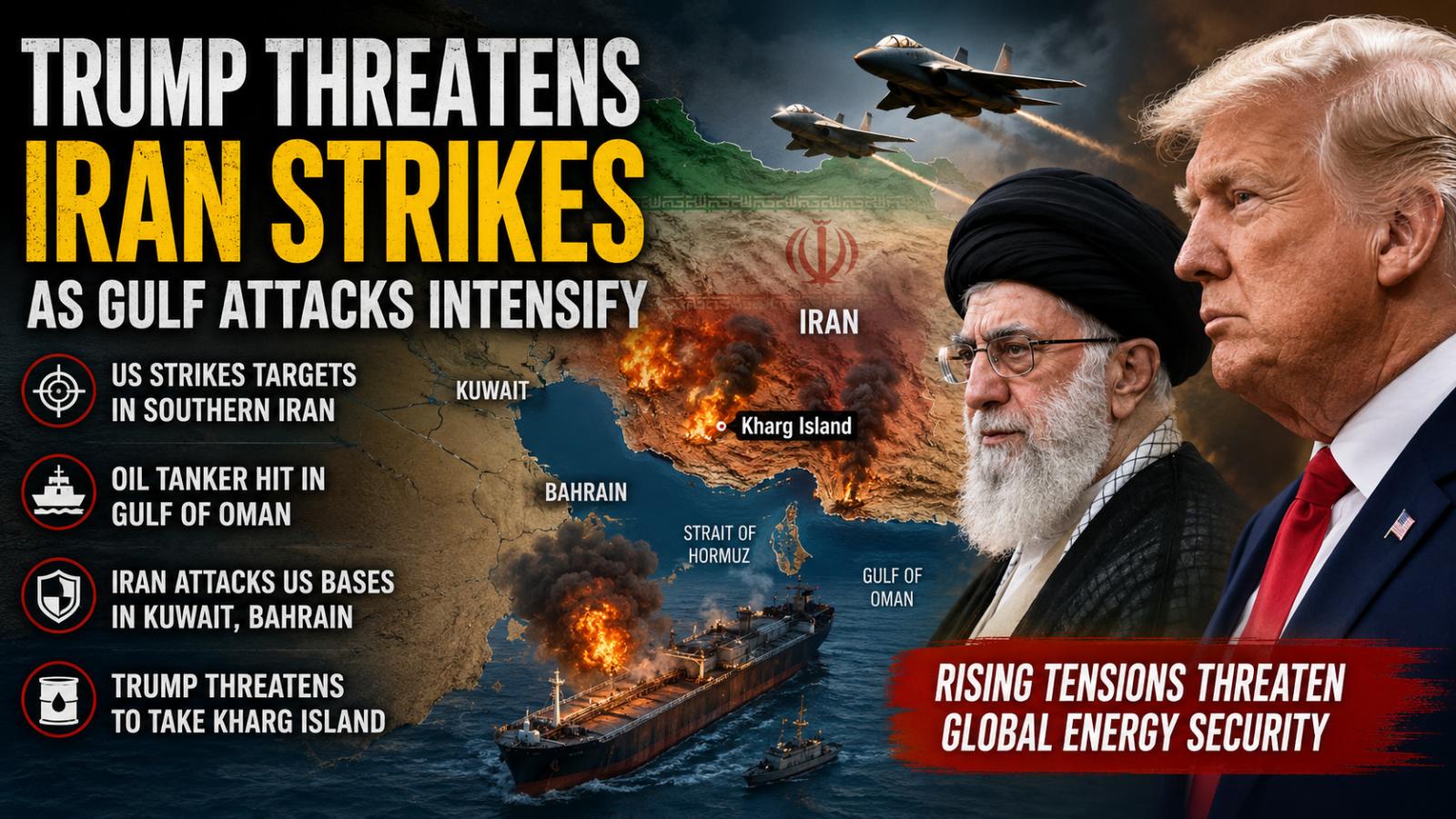
President Donald Trump said the United States would hit Iran “very hard” and threatened to take Kharg Island, a key hub in Iran’s oil economy, as Washington increased pressure on Tehran to shut down its nuclear program and accept a peace deal.
US-Iran Gu
Trump threatened Iran’s Kharg Island as US-Iran Gulf attacks intensified across oil routes, tankers and military targets, raising new risks for regional security and global energy markets.
President Donald Trump said the United States would hit Iran “very hard” and threatened to take Kharg Island, a key hub in Iran’s oil economy, as Washington increased pressure on Tehran to shut down its nuclear program and accept a peace deal.
US-Iran Gu
US Conducts Precision Strikes Following Apache Downing
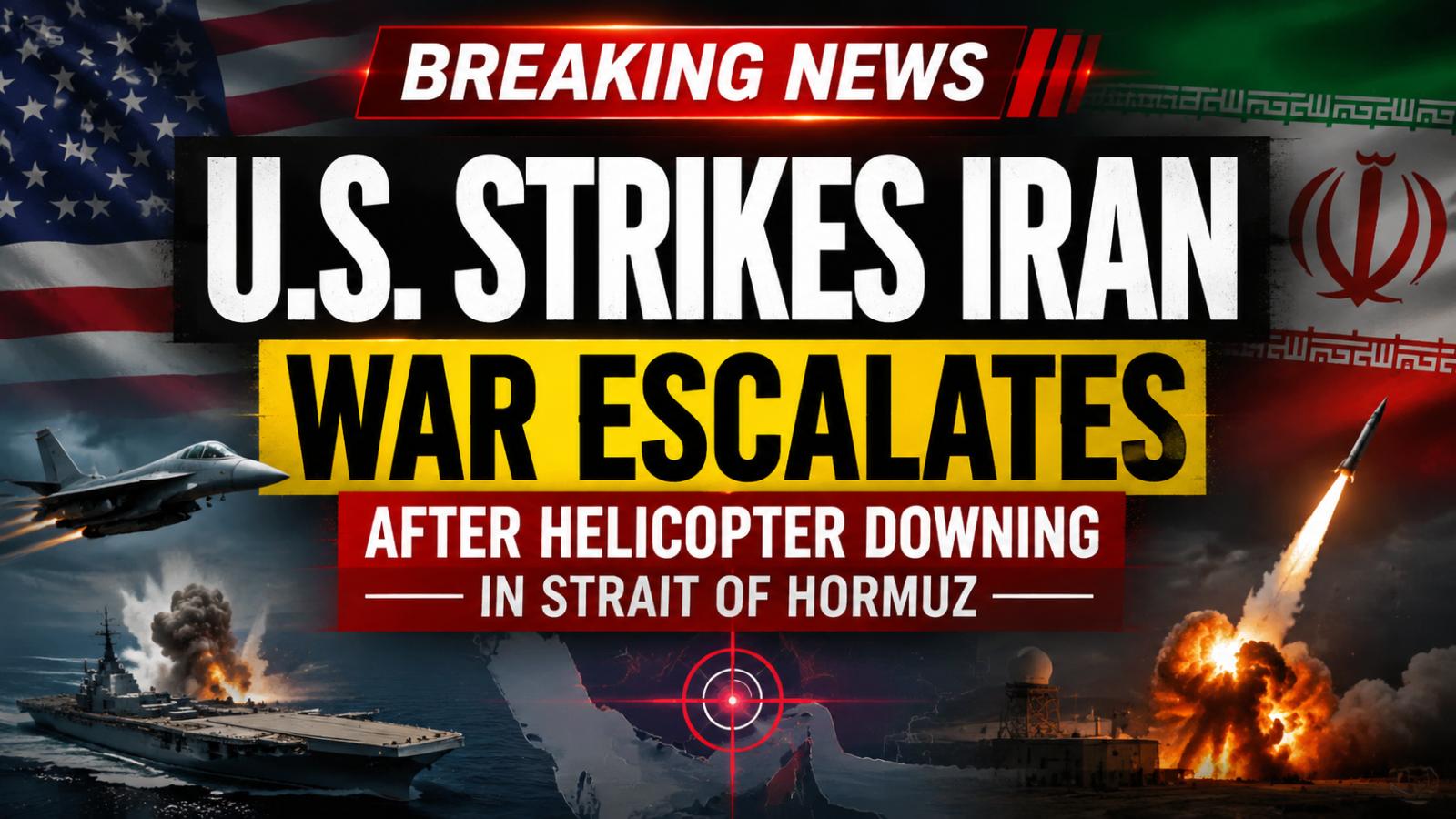
The United States Central Command (CENTCOM) announced that it carried out precision strikes on Iranian targets on June 9, responding to the downing of a U.S. Army Apache helicopter near the Strait of Hormuz. The operation, described as a proportional and defensive measure, targeted Iranian air defense, ground control stations, and surveillance radar i
US Conducts Precision Strikes Following Apache Downing
The United States Central Command (CENTCOM) announced that it carried out precision strikes on Iranian targets on June 9, responding to the downing of a U.S. Army Apache helicopter near the Strait of Hormuz. The operation, described as a proportional and defensive measure, targeted Iranian air defense, ground control stations, and surveillance radar i
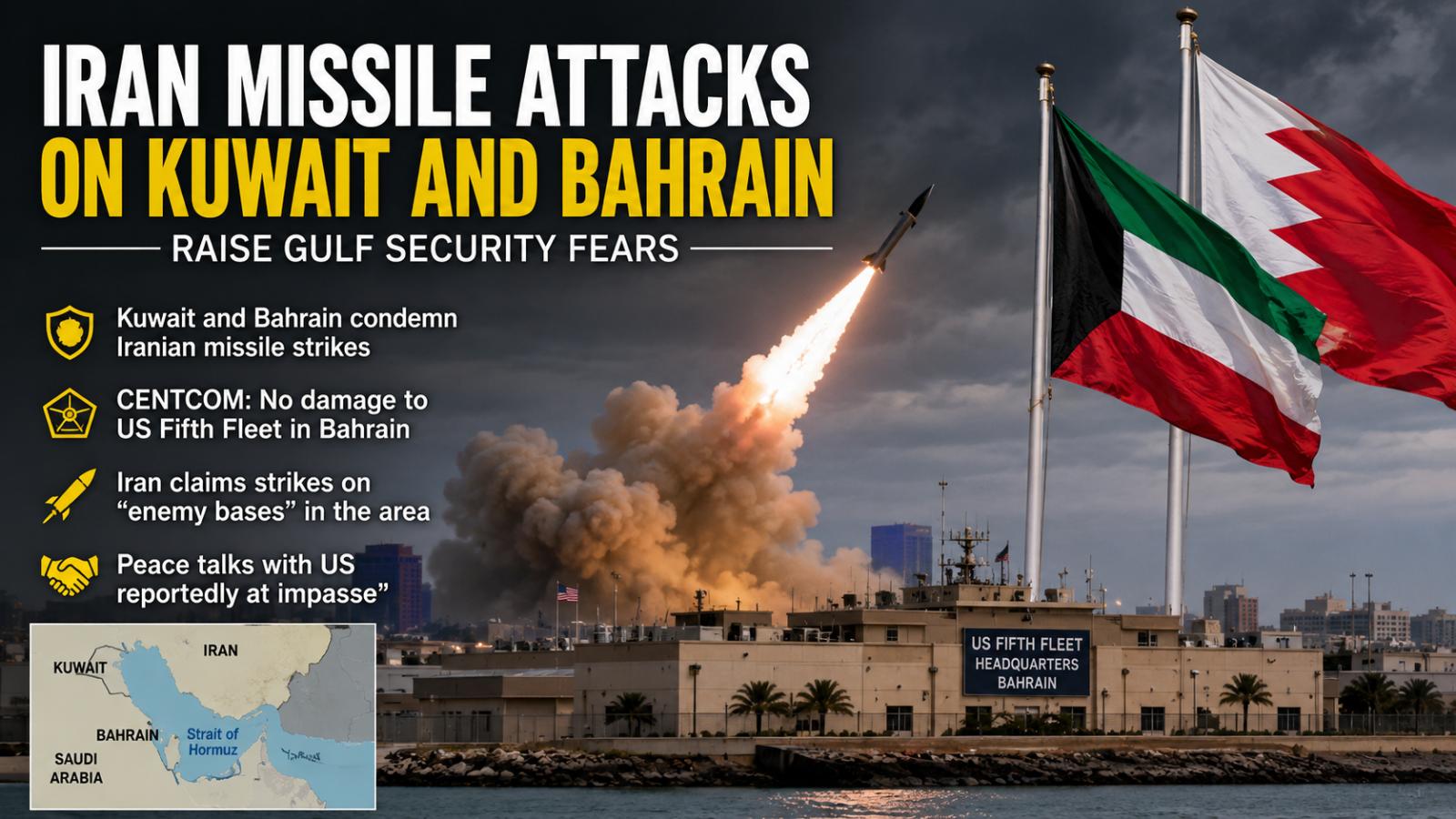
Iran missile attacks on Kuwait and Bahrain have increased concern across the Gulf after both governments condemned the strikes as violations of sovereignty and threats to regional stability.
Kuwait’s Foreign Ministry, in a statement dated only as Saturday in the source material, said the attacks posed a direct threat to the lives of citizens and residents. Bahrain also condemned the strikes, calling them blatant aggression and a violation of sovereignty.
Iran Mi
Iran missile attacks on Kuwait and Bahrain have increased concern across the Gulf after both governments condemned the strikes as violations of sovereignty and threats to regional stability.
Kuwait’s Foreign Ministry, in a statement dated only as Saturday in the source material, said the attacks posed a direct threat to the lives of citizens and residents. Bahrain also condemned the strikes, calling them blatant aggression and a violation of sovereignty.
Iran Mi
Gulf States Raise Security Alerts
Tensions in the Gulf rose again as Kuwait said its air defense systems were responding to hostile missile and drone threats, while Bahrain sounded warning sirens and urged residents to remain calm and move to safe locations. Kuwait’s military said explosions heard in the area were linked to air defense interceptions, but it did not immediately identify the source of the in
Gulf States Raise Security Alerts
Tensions in the Gulf rose again as Kuwait said its air defense systems were responding to hostile missile and drone threats, while Bahrain sounded warning sirens and urged residents to remain calm and move to safe locations. Kuwait’s military said explosions heard in the area were linked to air defense interceptions, but it did not immediately identify the source of the in
Tensions in the Middle East are escalating as multiple nations, including Kuwait, Bahrain, Saudi Arabia, and the UAE, face a series of drone and missile attacks. At Kuwait International Airport, a fuel tank was targeted, sparking a fire, but no casualties were reported. Bahrain also suffered a fire at a company facility due to missile strikes, allegedly launched by Iran. Kuwait’s military and other regional air defense systems have been actively intercepting these threats, with explosion so
Tensions in the Middle East are escalating as multiple nations, including Kuwait, Bahrain, Saudi Arabia, and the UAE, face a series of drone and missile attacks. At Kuwait International Airport, a fuel tank was targeted, sparking a fire, but no casualties were reported. Bahrain also suffered a fire at a company facility due to missile strikes, allegedly launched by Iran. Kuwait’s military and other regional air defense systems have been actively intercepting these threats, with explosion so
Tensions across the Middle East escalated sharply on Thursday as the ongoing Iran-Israel conflict intensified with new drone and missile attacks reported across several locations in the region. Iranian authorities claimed responsibility for launching drone strikes targeting Israel’s Shin Bet headquarters in Tel Aviv as well as the Palmachim and Ovda air bases, signalling a significant escalation in hostilities between the two countries.
Israeli officials confirmed that missiles we
Tensions across the Middle East escalated sharply on Thursday as the ongoing Iran-Israel conflict intensified with new drone and missile attacks reported across several locations in the region. Iranian authorities claimed responsibility for launching drone strikes targeting Israel’s Shin Bet headquarters in Tel Aviv as well as the Palmachim and Ovda air bases, signalling a significant escalation in hostilities between the two countries.
Israeli officials confirmed that missiles we
The United States has reportedly suffered nearly $2 billion in military equipment losses during the first four days of escalating hostilities with Iran following a joint US–Israel military campaign. Data compiled from defence assessments and open-source intelligence indicates that multiple American installations across the Middle East were damaged in retaliatory strikes launched by Tehran after the operation that resulted in the death of Iran’s Supreme Leader, Ali Khamenei.
One
The United States has reportedly suffered nearly $2 billion in military equipment losses during the first four days of escalating hostilities with Iran following a joint US–Israel military campaign. Data compiled from defence assessments and open-source intelligence indicates that multiple American installations across the Middle East were damaged in retaliatory strikes launched by Tehran after the operation that resulted in the death of Iran’s Supreme Leader, Ali Khamenei.
One
Iran launched large-scale retaliatory strikes on Saturday after the United States and Israel carried out coordinated military attacks on multiple targets across Iranian territory following the collapse of recent nuclear negotiations held in Oman and Switzerland. The joint offensive, described by Israel as Operation Roaring Lion and by the United States as Operation Epic Fury, reportedly struck more than 30 locations, including government facilities in Tehran and sites suspected of involvement in
Iran launched large-scale retaliatory strikes on Saturday after the United States and Israel carried out coordinated military attacks on multiple targets across Iranian territory following the collapse of recent nuclear negotiations held in Oman and Switzerland. The joint offensive, described by Israel as Operation Roaring Lion and by the United States as Operation Epic Fury, reportedly struck more than 30 locations, including government facilities in Tehran and sites suspected of involvement in