India Japan economic ties shift toward supply chain resilience
India and Japan are steadily moving their partnership beyond routine trade discussions into a broader realignment shaped by global risk and industrial restructuring. What looks like increased investment flows is actually part of a deeper repositioning of how both countries want to secure long-term economic stability in an uncertain global environment. Investment growth driven by risk recalibration Japanese companies are expanding their footprint in India not only for growth but also to reduce exposure to concentrated supply networks in East Asia. Rising geopolitical friction and periodic trade restrictions have forced firms to reconsider how dependent they are on single-country manufacturing systems. India is increasingly viewed as a viable diversification hub due to its scale, labor availability, and expanding industrial base. Supply chain restructuring becomes the core driver The most significant shift is happening in supply chains rather than headline investment figures. Japanese manufacturers are gradually redesigning sourcing and production models to reduce vulnerabilities in electronics, automotive components, and precision engineering. India fits into this transition as an alternative production and assembly base, especially for sectors where demand is growing but diversification is still limited. Technology and industrial cooperation deepen Cooperation is also expanding into advanced sectors such as semiconductors, digital systems, and artificial intelligence. These areas are no longer treated as purely commercial exchanges but as strategic capabilities. Both countries are aligning on technology resilience, where production continuity and security of supply matter as much as cost efficiency. Rare earths and critical materials gain importance Another emerging focus is critical minerals and rare earth supply chains. These materials are essential for electronics, renewable energy systems, and defence manufacturing. Dependence on concentrated suppliers has pushed both India and Japan to explore alternative sourcing strategies and joint development frameworks to reduce long-term risk. Financial flows signal long-term positioning Japanese capital inflows into Indian financial institutions and industrial projects suggest more than short-term investment interest. Financial participation typically indicates long-term confidence in policy stability and market expansion. However, the real test will be whether this capital flow expands into deeper manufacturing integration rather than remaining portfolio-based exposure. Economic security becomes the defining theme At the core of this evolving relationship is economic security. Trade decisions are increasingly shaped by geopolitical uncertainty rather than pure cost advantage. This marks a shift from efficiency-driven globalization to resilience-driven partnerships, where countries prioritize stability over optimization. A cautious but strategic realignment The India–Japan partnership is gradually becoming a case study in how middle and advanced economies adjust to global fragmentation. While the direction is clear—greater cooperation in technology, investment, and supply chains—the pace will depend on regulatory alignment, infrastructure readiness, and how effectively both sides manage external geopolitical pressures.
India Japan economic ties shift toward supply chain resilience
India and Japan are steadily moving their partnership beyond routine trade discussions into a broader realignment shaped by global risk and industrial restructuring. What looks like increased investment flows is actually part of a deeper repositioning of how both countries want to secure long-term economic stability in an uncertain global environment. Investment growth driven by risk recalibration Japanese companies are expanding their footprint in India not only for growth but also to reduce exposure to concentrated supply networks in East Asia. Rising geopolitical friction and periodic trade restrictions have forced firms to reconsider how dependent they are on single-country manufacturing systems. India is increasingly viewed as a viable diversification hub due to its scale, labor availability, and expanding industrial base. Supply chain restructuring becomes the core driver The most significant shift is happening in supply chains rather than headline investment figures. Japanese manufacturers are gradually redesigning sourcing and production models to reduce vulnerabilities in electronics, automotive components, and precision engineering. India fits into this transition as an alternative production and assembly base, especially for sectors where demand is growing but diversification is still limited. Technology and industrial cooperation deepen Cooperation is also expanding into advanced sectors such as semiconductors, digital systems, and artificial intelligence. These areas are no longer treated as purely commercial exchanges but as strategic capabilities. Both countries are aligning on technology resilience, where production continuity and security of supply matter as much as cost efficiency. Rare earths and critical materials gain importance Another emerging focus is critical minerals and rare earth supply chains. These materials are essential for electronics, renewable energy systems, and defence manufacturing. Dependence on concentrated suppliers has pushed both India and Japan to explore alternative sourcing strategies and joint development frameworks to reduce long-term risk. Financial flows signal long-term positioning Japanese capital inflows into Indian financial institutions and industrial projects suggest more than short-term investment interest. Financial participation typically indicates long-term confidence in policy stability and market expansion. However, the real test will be whether this capital flow expands into deeper manufacturing integration rather than remaining portfolio-based exposure. Economic security becomes the defining theme At the core of this evolving relationship is economic security. Trade decisions are increasingly shaped by geopolitical uncertainty rather than pure cost advantage. This marks a shift from efficiency-driven globalization to resilience-driven partnerships, where countries prioritize stability over optimization. A cautious but strategic realignment The India–Japan partnership is gradually becoming a case study in how middle and advanced economies adjust to global fragmentation. While the direction is clear—greater cooperation in technology, investment, and supply chains—the pace will depend on regulatory alignment, infrastructure readiness, and how effectively both sides manage external geopolitical pressures.
Afghan Air Force conducts strikes inside Pakistan targeting ISIS bases
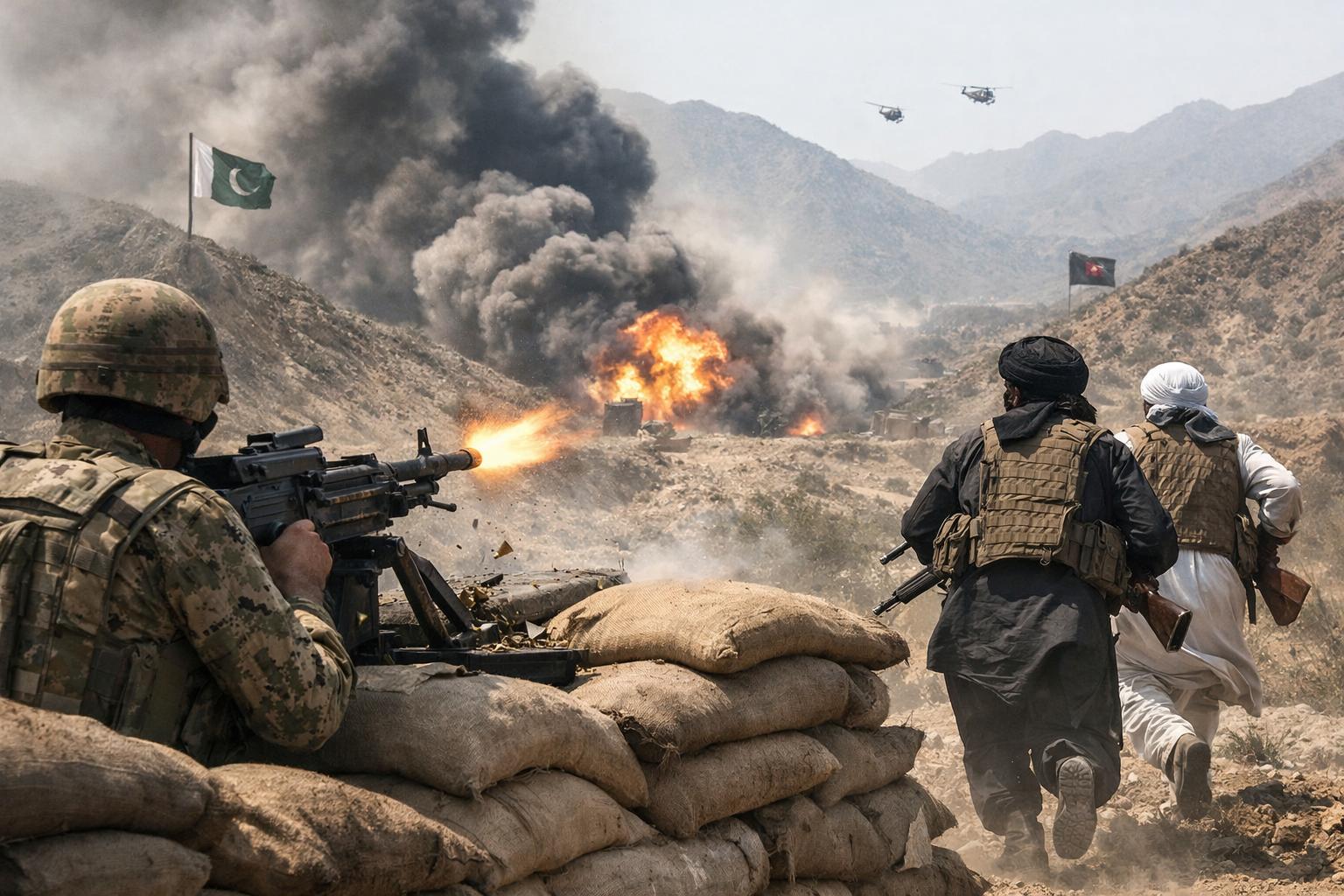
Cross-border military strikes reported The Afghan Air Force has carried out airstrikes inside Pakistan, targeting what it described as ISIS-linked centres allegedly used to plan and coordinate attacks against civilians in Afghanistan. According to the Taliban-run Defence Ministry and reports cited by Tolo News, the strikes were aimed at dismantling operational hubs connected to cross-border militant activity. T
Afghan Air Force conducts strikes inside Pakistan targeting ISIS bases
Cross-border military strikes reported The Afghan Air Force has carried out airstrikes inside Pakistan, targeting what it described as ISIS-linked centres allegedly used to plan and coordinate attacks against civilians in Afghanistan. According to the Taliban-run Defence Ministry and reports cited by Tolo News, the strikes were aimed at dismantling operational hubs connected to cross-border militant activity. T
Indian Army refutes claims of PLA presence in Arunachal sector
The Indian Army has firmly rejected recent reports suggesting any presence of Chinese PLA forces inside the Taksing sector of Arunachal Pradesh. Officials clarified that routine surveillance along the India-China border continues without interruption and no unusual movement or establishment of camps has been detected within Indian territory. Ground monitoring confirms stable situation Security personnel engaged in border management confirmed that the Upper Subansiri region, including forward areas near Taksing, remains under continuous observation. According to defence inputs, patrol patterns and monitoring systems have shown no indicators of encroachment or escalation. The Army emphasized that operational readiness in the region remains unchanged and fully active. Local concerns over land access claims Separate concerns were raised by local community representatives regarding traditional grazing areas and access to ancestral land in parts of the border belt. These concerns include regions such as Oying, Paniar, Marpan, Potrang Lake, and Tindingtang. While these issues reflect long-standing livelihood sensitivities in remote tribal zones, officials have not confirmed any link between these claims and cross-border military activity. Authorities urge caution over unverified reports Officials have urged restraint in circulating unverified information related to sensitive border zones. Defence sources noted that misinformation can easily create unnecessary tension in strategically important areas like Arunachal Pradesh, where geography and accessibility already complicate communication and verification. Citizens have been advised to rely on authenticated updates from official defence channels. Border status remains unchanged At present, there is no verified evidence supporting claims of PLA encroachment or permanent presence in the reported areas. The Army reiterated that the situation along the eastern frontier remains stable, with established protocols in place for surveillance and response. Continuous monitoring and coordination with civil administration continue to ensure security across the region.

Indian Army refutes claims of PLA presence in Arunachal sector
The Indian Army has firmly rejected recent reports suggesting any presence of Chinese PLA forces inside the Taksing sector of Arunachal Pradesh. Officials clarified that routine surveillance along the India-China border continues without interruption and no unusual movement or establishment of camps has been detected within Indian territory. Ground monitoring confirms stable situation Security personnel engaged in border management confirmed that the Upper Subansiri region, including forward areas near Taksing, remains under continuous observation. According to defence inputs, patrol patterns and monitoring systems have shown no indicators of encroachment or escalation. The Army emphasized that operational readiness in the region remains unchanged and fully active. Local concerns over land access claims Separate concerns were raised by local community representatives regarding traditional grazing areas and access to ancestral land in parts of the border belt. These concerns include regions such as Oying, Paniar, Marpan, Potrang Lake, and Tindingtang. While these issues reflect long-standing livelihood sensitivities in remote tribal zones, officials have not confirmed any link between these claims and cross-border military activity. Authorities urge caution over unverified reports Officials have urged restraint in circulating unverified information related to sensitive border zones. Defence sources noted that misinformation can easily create unnecessary tension in strategically important areas like Arunachal Pradesh, where geography and accessibility already complicate communication and verification. Citizens have been advised to rely on authenticated updates from official defence channels. Border status remains unchanged At present, there is no verified evidence supporting claims of PLA encroachment or permanent presence in the reported areas. The Army reiterated that the situation along the eastern frontier remains stable, with established protocols in place for surveillance and response. Continuous monitoring and coordination with civil administration continue to ensure security across the region.



Ayodhya Ram Temple Theft Probe Tracks Money Trail Across 7 Banks
The investigation into the Ayodhya Ram Temple donation theft case has widened into a detailed financial probe, with police seeking five years of banking records from seven banks connected to the eight arrested accused and the Shri Ram Janmabhoomi Teerth Kshetra Trust. Police sources said investigators have asked banks to provide account statements, transaction histories, KYC records, deposit details and other financial documents. The objective is to reconstruct the money trail and e
Ayodhya Ram Temple Theft Probe Tracks Money Trail Across 7 Banks
The investigation into the Ayodhya Ram Temple donation theft case has widened into a detailed financial probe, with police seeking five years of banking records from seven banks connected to the eight arrested accused and the Shri Ram Janmabhoomi Teerth Kshetra Trust. Police sources said investigators have asked banks to provide account statements, transaction histories, KYC records, deposit details and other financial documents. The objective is to reconstruct the money trail and e
Why Are Pakistan and Afghanistan in Conflict Despite Shared Islamic Ties?
Pakistan and Afghanistan are both Muslim-majority countries with deep cultural, religious and economic connections. However, their escalating conflict is not primarily about religion. It is driven by border disputes, militant violence, sovereignty and competing national-security interests. The latest tensions intensified after Pakistan carried out military operations and airstrikes targeting what it described as militant positions inside Afghanistan. Afghan authorities disputed that
Why Are Pakistan and Afghanistan in Conflict Despite Shared Islamic Ties?
Pakistan and Afghanistan are both Muslim-majority countries with deep cultural, religious and economic connections. However, their escalating conflict is not primarily about religion. It is driven by border disputes, militant violence, sovereignty and competing national-security interests. The latest tensions intensified after Pakistan carried out military operations and airstrikes targeting what it described as militant positions inside Afghanistan. Afghan authorities disputed that
Iran frozen funds begin transfer via Qatar under deal talks
A phased release of long-restricted Iranian financial assets has begun under a monitored arrangement involving Qatar and the United States, marking a cautious shift in ongoing diplomatic engagement. Nearly $6 billion in previously inaccessible funds are being routed through controlled channels in Doha as part of a broader effort to ease financial pressure while maintaining oversight on compliance mechanisms. The development comes after months of indirect discussions aimed at stabilising tensions around energy exports, banking restrictions, and regional security concerns that have shaped Iran’s access to global markets. Structured financial transfer mechanism Officials familiar with the arrangement say the funds are not being released in a single transaction. Instead, they are being moved in stages through designated banking pathways in Qatar under strict monitoring conditions. The approach is designed to reduce systemic risk in international financial networks while allowing gradual access to blocked reserves. Qatar’s role as intermediary has been central due to its established diplomatic communication channels with both Tehran and Washington. The structure reflects an attempt to balance economic relief with regulatory safeguards, particularly in sectors linked to oil and petrochemical revenues that remain under sanctions pressure. Doha’s role in ongoing negotiations The latest financial movement is tied to continuing discussions in Doha, where technical teams are expected to refine implementation details of earlier understandings between involved parties. Qatari mediators have maintained active coordination to ensure communication remains open and to prevent breakdowns in the negotiation process. The talks are viewed as part of a wider diplomatic track that has periodically resurfaced amid regional tensions and shifting geopolitical priorities. While no final settlement has been confirmed, the current phase signals that both sides are still engaging through indirect channels rather than moving toward confrontation. Economic implications remain limited for now The partial release of funds may provide short-term liquidity support for Iran, but analysts caution that it does not represent a full resolution of broader economic constraints. Long-standing sanctions, limited access to global banking systems, and uncertainty in energy trade continue to shape the country’s financial outlook. Any meaningful improvement would depend on sustained diplomatic progress and longer-term policy alignment across negotiating parties. Outlook Qatar’s increasing role as a financial and diplomatic bridge highlights its growing influence in regional mediation efforts. However, the situation remains fluid, with outcomes dependent on how upcoming discussions in Doha evolve and whether trust between negotiating sides can be maintained through successive stages of implementation.
Iran frozen funds begin transfer via Qatar under deal talks
A phased release of long-restricted Iranian financial assets has begun under a monitored arrangement involving Qatar and the United States, marking a cautious shift in ongoing diplomatic engagement. Nearly $6 billion in previously inaccessible funds are being routed through controlled channels in Doha as part of a broader effort to ease financial pressure while maintaining oversight on compliance mechanisms. The development comes after months of indirect discussions aimed at stabilising tensions around energy exports, banking restrictions, and regional security concerns that have shaped Iran’s access to global markets. Structured financial transfer mechanism Officials familiar with the arrangement say the funds are not being released in a single transaction. Instead, they are being moved in stages through designated banking pathways in Qatar under strict monitoring conditions. The approach is designed to reduce systemic risk in international financial networks while allowing gradual access to blocked reserves. Qatar’s role as intermediary has been central due to its established diplomatic communication channels with both Tehran and Washington. The structure reflects an attempt to balance economic relief with regulatory safeguards, particularly in sectors linked to oil and petrochemical revenues that remain under sanctions pressure. Doha’s role in ongoing negotiations The latest financial movement is tied to continuing discussions in Doha, where technical teams are expected to refine implementation details of earlier understandings between involved parties. Qatari mediators have maintained active coordination to ensure communication remains open and to prevent breakdowns in the negotiation process. The talks are viewed as part of a wider diplomatic track that has periodically resurfaced amid regional tensions and shifting geopolitical priorities. While no final settlement has been confirmed, the current phase signals that both sides are still engaging through indirect channels rather than moving toward confrontation. Economic implications remain limited for now The partial release of funds may provide short-term liquidity support for Iran, but analysts caution that it does not represent a full resolution of broader economic constraints. Long-standing sanctions, limited access to global banking systems, and uncertainty in energy trade continue to shape the country’s financial outlook. Any meaningful improvement would depend on sustained diplomatic progress and longer-term policy alignment across negotiating parties. Outlook Qatar’s increasing role as a financial and diplomatic bridge highlights its growing influence in regional mediation efforts. However, the situation remains fluid, with outcomes dependent on how upcoming discussions in Doha evolve and whether trust between negotiating sides can be maintained through successive stages of implementation.
Pattaya teen death case: Australian man arrested in Thailand
The death of a 17-year-old Thai girl in Pattaya has led to the arrest of an Australian man after police said her body was found inside a suitcase. The case has drawn attention in Thailand because of the CCTV trail, the suspect’s alleged attempt to leave the country, and the serious charges now filed against him. Police identified the teenager as Tunchanok Donhomla. She was reportedly last seen entering a condominium in Bang Lamung distri
Pattaya teen death case: Australian man arrested in Thailand
The death of a 17-year-old Thai girl in Pattaya has led to the arrest of an Australian man after police said her body was found inside a suitcase. The case has drawn attention in Thailand because of the CCTV trail, the suspect’s alleged attempt to leave the country, and the serious charges now filed against him. Police identified the teenager as Tunchanok Donhomla. She was reportedly last seen entering a condominium in Bang Lamung distri
Harvest Pizzeria Plans New Albany and Hilliard Restaurants
Harvest Pizzeria plans to open restaurants in New Albany and Hilliard, adding two communities to its central Ohio network. The company has not provided a calendar year or exact opening dates for either location. Harvest Pizzeria expansion reaches New Albany first The New Albany restaurant is planned for 24 E. Main St., the former home of 24 Main, a bar and restaurant that closed in 2025. Harvest said the location is expected to open in the fall, although
Harvest Pizzeria Plans New Albany and Hilliard Restaurants
Harvest Pizzeria plans to open restaurants in New Albany and Hilliard, adding two communities to its central Ohio network. The company has not provided a calendar year or exact opening dates for either location. Harvest Pizzeria expansion reaches New Albany first The New Albany restaurant is planned for 24 E. Main St., the former home of 24 Main, a bar and restaurant that closed in 2025. Harvest said the location is expected to open in the fall, although
RBI FCNR Swap: What US-Based NRIs Should Know
The RBI introduced the US dollar-rupee swap facility on Monday, June 8, 2026. It applies to eligible fresh FCNR(B) deposits, including deposits renewed at maturity, with an original tenure of at least three years and no more than five years. Deposits must be mobilized between Monday, June 8, 2026, and Wednesday, September 30, 2026. Banks may use the RBI swap window through Friday, October 16, 2026. The swap
RBI FCNR Swap: What US-Based NRIs Should Know
The RBI introduced the US dollar-rupee swap facility on Monday, June 8, 2026. It applies to eligible fresh FCNR(B) deposits, including deposits renewed at maturity, with an original tenure of at least three years and no more than five years. Deposits must be mobilized between Monday, June 8, 2026, and Wednesday, September 30, 2026. Banks may use the RBI swap window through Friday, October 16, 2026. The swap
Jagan’s Kapu outreach plan faces tough electoral reality check
Kapu Vote Strategy and the Core Assumption Problem The current political discussion in Andhra Pradesh is increasingly centered around how parties are attempting to realign caste-based voter blocs ahead of the 2029 elections. One of the most debated narratives is whether the YSRCP can rebuild influence among Kapu voters after the shifts seen in recent elections. The as
Jagan’s Kapu outreach plan faces tough electoral reality check
Kapu Vote Strategy and the Core Assumption Problem The current political discussion in Andhra Pradesh is increasingly centered around how parties are attempting to realign caste-based voter blocs ahead of the 2029 elections. One of the most debated narratives is whether the YSRCP can rebuild influence among Kapu voters after the shifts seen in recent elections. The as
B-52 nuclear alert during Cuban missile crisis explained simply
The discovery of Soviet missiles in Cuba pushed the United States and the Soviet Union into a direct nuclear confrontation. With only a short distance separating missile sites from U.S. territory, decision-makers in Washington treated the situation as an immediate existential threat rather than a routine diplomatic crisis. Shift to maximum military readiness As intelligence confirmed missile dep
B-52 nuclear alert during Cuban missile crisis explained simply
The discovery of Soviet missiles in Cuba pushed the United States and the Soviet Union into a direct nuclear confrontation. With only a short distance separating missile sites from U.S. territory, decision-makers in Washington treated the situation as an immediate existential threat rather than a routine diplomatic crisis. Shift to maximum military readiness As intelligence confirmed missile dep
Gulf US talks focus Gaza rebuild, Iran risks and Hormuz security
A recent round of discussions between the United States and Gulf Cooperation Council members centered on the future of Gaza, with a strong emphasis on preventing forced displacement and prioritizing civilian safety. The participating sides underscored that any population movement must remain voluntary and reversible, rejecting any framework that would permanently alter the demographic structure of the territory. The talks also reflected growin
Gulf US talks focus Gaza rebuild, Iran risks and Hormuz security
A recent round of discussions between the United States and Gulf Cooperation Council members centered on the future of Gaza, with a strong emphasis on preventing forced displacement and prioritizing civilian safety. The participating sides underscored that any population movement must remain voluntary and reversible, rejecting any framework that would permanently alter the demographic structure of the territory. The talks also reflected growin
India Tourist Visas for Bangladeshi Citizens Resume June 28
India tourist visas for Bangladeshi citizens will resume on Sunday, June 28, 2026, reopening a major travel channel after a suspension of nearly two years. India’s new High Commissioner to Bangladesh, Dinesh Trivedi, announced the change after formally assuming office in Dhaka. India Tourist Visas for Bangladeshi Citizens Reopen June 28 Trivedi presented his credentials to Bangladeshi President Mohammed Shahabuddin at Bangabhaban on Th
India Tourist Visas for Bangladeshi Citizens Resume June 28
India tourist visas for Bangladeshi citizens will resume on Sunday, June 28, 2026, reopening a major travel channel after a suspension of nearly two years. India’s new High Commissioner to Bangladesh, Dinesh Trivedi, announced the change after formally assuming office in Dhaka. India Tourist Visas for Bangladeshi Citizens Reopen June 28 Trivedi presented his credentials to Bangladeshi President Mohammed Shahabuddin at Bangabhaban on Th
Israel Hezbollah clashes raise oil and trade risk for India
The renewed exchange of fire between Israeli forces and Hezbollah-linked positions in southern Lebanon has again drawn attention to an already fragile regional security environment. While both sides continue to frame their actions as targeted and defensive, the situation is increasingly being viewed through a wider geopolitical lens, especially by energy markets and trade-dependent economies. Even limited escalation in this corridor tends to trigger immediate risk recalibration in global markets, not because of direct supply disruption, but due to fear of spillover into wider West Asian conflict zones. Oil markets react to uncertainty, not only disruption Crude oil prices have remained sensitive to developments in the region, with traders closely tracking any sign of expansion beyond localized strikes. Brent crude has shown intermittent swings, reflecting how quickly sentiment shifts when geopolitical risks rise. For import-heavy economies like India, the concern is not only about supply cuts but also price volatility. Even short-lived spikes increase import bills, widen trade deficits, and add pressure on domestic inflation through fuel and transport costs. India remains heavily dependent on imported crude, leaving it exposed to external shocks that originate far from its own borders but quickly reach its economy through global pricing mechanisms. Maritime chokepoints add another layer of risk Beyond oil production zones, shipping routes remain a critical pressure point. The Strait of Hormuz continues to be one of the most strategically sensitive maritime corridors in the world, handling a large share of global crude movement. Any perception of instability in nearby conflict zones tends to increase insurance premiums for tankers and freight operators. This raises shipping costs even when physical disruption does not occur. For trade-dependent economies, the indirect cost of conflict often arrives faster than any actual supply shortage. India’s broader exposure goes beyond energy India’s stake in West Asian stability is not limited to crude imports. A large Indian workforce in Gulf countries supports billions in annual remittances, which play a steady role in foreign exchange stability. At the same time, India maintains layered relationships across the region—energy partnerships with Gulf producers, strategic cooperation with Israel, and connectivity interests linked to Iran and regional ports. This creates a complex policy environment where instability in one corridor can influence multiple economic and diplomatic channels simultaneously. Long-term infrastructure plans face sensitivity risks Large-scale trade and infrastructure initiatives involving West Asia, including proposed trans-regional connectivity corridors, depend heavily on stable political conditions. Projects linked to ports, energy routes, and logistics networks become vulnerable when security risks rise. Even without direct damage, prolonged uncertainty tends to slow investment decisions, delay contracts, and increase financing costs for regional development projects. Conclusion The current Israel–Hezbollah exchange remains geographically contained, but its economic impact is far wider. Oil markets, shipping costs, remittance flows, and long-term trade planning all react quickly to signals of escalation. For India and other import-dependent economies, the primary challenge is not direct involvement in the conflict but exposure to its ripple effects through energy pricing, logistics costs, and regional stability risks.
Israel Hezbollah clashes raise oil and trade risk for India
The renewed exchange of fire between Israeli forces and Hezbollah-linked positions in southern Lebanon has again drawn attention to an already fragile regional security environment. While both sides continue to frame their actions as targeted and defensive, the situation is increasingly being viewed through a wider geopolitical lens, especially by energy markets and trade-dependent economies. Even limited escalation in this corridor tends to trigger immediate risk recalibration in global markets, not because of direct supply disruption, but due to fear of spillover into wider West Asian conflict zones. Oil markets react to uncertainty, not only disruption Crude oil prices have remained sensitive to developments in the region, with traders closely tracking any sign of expansion beyond localized strikes. Brent crude has shown intermittent swings, reflecting how quickly sentiment shifts when geopolitical risks rise. For import-heavy economies like India, the concern is not only about supply cuts but also price volatility. Even short-lived spikes increase import bills, widen trade deficits, and add pressure on domestic inflation through fuel and transport costs. India remains heavily dependent on imported crude, leaving it exposed to external shocks that originate far from its own borders but quickly reach its economy through global pricing mechanisms. Maritime chokepoints add another layer of risk Beyond oil production zones, shipping routes remain a critical pressure point. The Strait of Hormuz continues to be one of the most strategically sensitive maritime corridors in the world, handling a large share of global crude movement. Any perception of instability in nearby conflict zones tends to increase insurance premiums for tankers and freight operators. This raises shipping costs even when physical disruption does not occur. For trade-dependent economies, the indirect cost of conflict often arrives faster than any actual supply shortage. India’s broader exposure goes beyond energy India’s stake in West Asian stability is not limited to crude imports. A large Indian workforce in Gulf countries supports billions in annual remittances, which play a steady role in foreign exchange stability. At the same time, India maintains layered relationships across the region—energy partnerships with Gulf producers, strategic cooperation with Israel, and connectivity interests linked to Iran and regional ports. This creates a complex policy environment where instability in one corridor can influence multiple economic and diplomatic channels simultaneously. Long-term infrastructure plans face sensitivity risks Large-scale trade and infrastructure initiatives involving West Asia, including proposed trans-regional connectivity corridors, depend heavily on stable political conditions. Projects linked to ports, energy routes, and logistics networks become vulnerable when security risks rise. Even without direct damage, prolonged uncertainty tends to slow investment decisions, delay contracts, and increase financing costs for regional development projects. Conclusion The current Israel–Hezbollah exchange remains geographically contained, but its economic impact is far wider. Oil markets, shipping costs, remittance flows, and long-term trade planning all react quickly to signals of escalation. For India and other import-dependent economies, the primary challenge is not direct involvement in the conflict but exposure to its ripple effects through energy pricing, logistics costs, and regional stability risks.
Mukesh Ambani Quote: Dhirubhai’s Lesson For Entrepreneurs
Mukesh Ambani’s quote on entrepreneurship shares a simple but powerful lesson from his father, Dhirubhai Ambani: those who want to build something of their own must learn to find their own way. The message continues to inspire young founders, business owners, and professionals aiming to take charge of their future. The quote, shared in a “Quote of the Day” context, highlights one of the most important principles behi
Mukesh Ambani Quote: Dhirubhai’s Lesson For Entrepreneurs
Mukesh Ambani’s quote on entrepreneurship shares a simple but powerful lesson from his father, Dhirubhai Ambani: those who want to build something of their own must learn to find their own way. The message continues to inspire young founders, business owners, and professionals aiming to take charge of their future. The quote, shared in a “Quote of the Day” context, highlights one of the most important principles behi
Mahua Moitra Praises Suvendu Adhikari, Sparks Bengal Political Buzz
Kolkata, June 24, 2026: Trinamool Congress (TMC) MP Mahua Moitra has stirred fresh political discussions in West Bengal after publicly recalling the support she received from Chief Minister Suvendu Adhikari during the early stages of her political journey. Her remarks come at a crucial time when the TMC is facing internal challenges, defections, and a growing leadership crisis. Mahua Moitra described her relationship with Suvendu Adhikari as one built on personal respect and emotion
Mahua Moitra Praises Suvendu Adhikari, Sparks Bengal Political Buzz
Kolkata, June 24, 2026: Trinamool Congress (TMC) MP Mahua Moitra has stirred fresh political discussions in West Bengal after publicly recalling the support she received from Chief Minister Suvendu Adhikari during the early stages of her political journey. Her remarks come at a crucial time when the TMC is facing internal challenges, defections, and a growing leadership crisis. Mahua Moitra described her relationship with Suvendu Adhikari as one built on personal respect and emotion
London court orders Nirav Modi to repay Bank of India dues
A London court has ruled against diamond merchant Nirav Modi in a financial dispute involving Bank of India, ordering him to repay approximately $10.7 million linked to a defaulted corporate loan. The judgment strengthens the bank’s claim that Modi remains personally liable under a guarantee tied to funding extended to his overseas diamond trading entity. Court upholds personal guarantee obligation
London court orders Nirav Modi to repay Bank of India dues
A London court has ruled against diamond merchant Nirav Modi in a financial dispute involving Bank of India, ordering him to repay approximately $10.7 million linked to a defaulted corporate loan. The judgment strengthens the bank’s claim that Modi remains personally liable under a guarantee tied to funding extended to his overseas diamond trading entity. Court upholds personal guarantee obligation
UP Bans Coaching Centres In Basements After Lucknow Fire Tragedy
Tragedy Triggers Statewide Crackdown The Uttar Pradesh government has imposed a strict ban on coaching centres and all commercial activities operating from basements following the deadly fire in Aliganj, Lucknow. The incident, which claimed at least 15 lives, has exposed serious violations in building safety compliance and triggered a large-scale enforcement response across the state. Chief Ministe
UP Bans Coaching Centres In Basements After Lucknow Fire Tragedy
Tragedy Triggers Statewide Crackdown The Uttar Pradesh government has imposed a strict ban on coaching centres and all commercial activities operating from basements following the deadly fire in Aliganj, Lucknow. The incident, which claimed at least 15 lives, has exposed serious violations in building safety compliance and triggered a large-scale enforcement response across the state. Chief Ministe
Iran–US talks stall as Lebanon crisis deepens over Hezbollah role
Negotiations between Iran and the United States are increasingly being shaped by events in Lebanon, where Hezbollah’s presence has turned a local conflict into a regional negotiation barrier. What was once a narrow security issue has evolved into a wider political and military deadlock involving multiple state and non-state actors. Hezbollah’s dual structure complicates negotiations Hezbolla
Iran–US talks stall as Lebanon crisis deepens over Hezbollah role
Negotiations between Iran and the United States are increasingly being shaped by events in Lebanon, where Hezbollah’s presence has turned a local conflict into a regional negotiation barrier. What was once a narrow security issue has evolved into a wider political and military deadlock involving multiple state and non-state actors. Hezbollah’s dual structure complicates negotiations Hezbolla
Mamata Banerjee faces internal revolt claim in TMC politics
Alleged internal revolt in TMC triggers political buzz A major political development has been reported within the Trinamool Congress (TMC) in West Bengal, with claims of an internal revolt challenging the leadership of party supremo Mamata Banerjee and MP Abhishek Banerjee. According to reports, the development unfolded shortly after the state’s first BJP-led government presented its budget in the Assembly, adding to the political tension in the state.
Mamata Banerjee faces internal revolt claim in TMC politics
Alleged internal revolt in TMC triggers political buzz A major political development has been reported within the Trinamool Congress (TMC) in West Bengal, with claims of an internal revolt challenging the leadership of party supremo Mamata Banerjee and MP Abhishek Banerjee. According to reports, the development unfolded shortly after the state’s first BJP-led government presented its budget in the Assembly, adding to the political tension in the state.