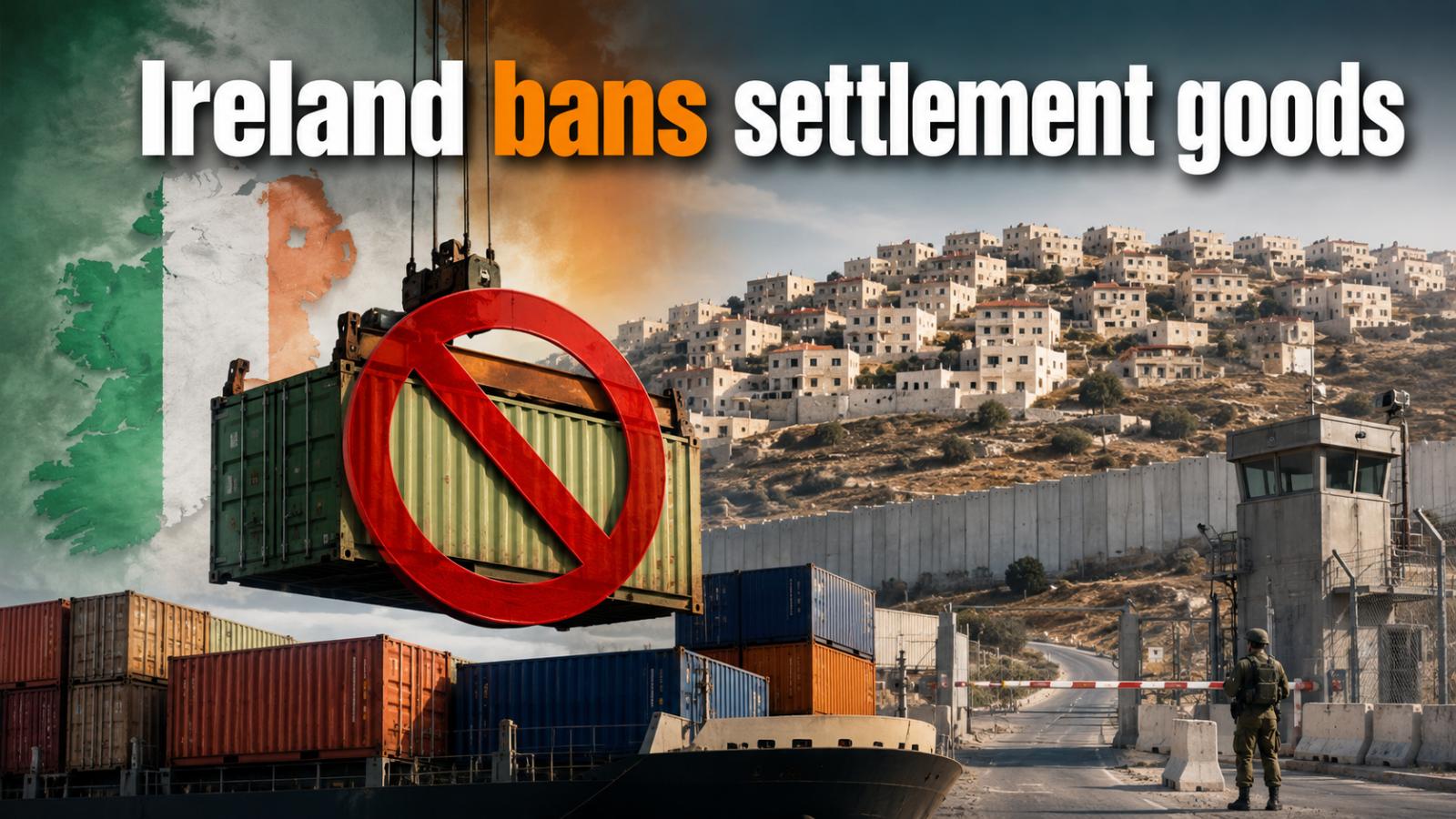
Ireland has approved a ban on goods produced in Israeli settlements in the West Bank and East Jerusalem, marking a sharp political move in its growing dispute with Israel. The measure targets products made in areas that Ireland considers occupied territory and outside Israel’s internationally recognised borders.
The direct trade impact is expected to be limited, but the decision carries strong diplomatic weight. Dublin has framed the move as a response to international law concerns, while Israel is likely to see it as another hostile step from a country that has become one of its strongest critics in Europe.
What the new ban covers
The law blocks imports linked to Israeli settlement activity, including goods from farms, residential settlements and businesses operating in the West Bank and East Jerusalem. These goods can include agricultural items, timber and other products connected to settlement-based commercial activity.
Ireland’s position is that trade should not support or normalise settlements in occupied Palestinian territories. The government has pointed to the International Court of Justice’s 2024 advisory opinion, which said Israel’s presence in the West Bank, East Jerusalem and Gaza was unlawful under international law.
Why the move matters
The actual value of affected imports is small, reportedly below one million euros between 2020 and 2024. However, the importance of the ban is not only economic. It gives Ireland a clear political position at a time when European governments remain divided over how far they should go in responding to Israeli settlement expansion and the Gaza war.
Ireland’s move could increase pressure on other European Union countries to consider similar steps, especially those that have criticised settlement activity but stopped short of direct trade restrictions. For now, a wider EU-level ban remains difficult because member states do not have one common position on Israel policy.
Israel-Ireland relations worsen
The ban comes after months of worsening relations between Ireland and Israel. Dublin has repeatedly criticised Israel’s military campaign in Gaza following the October 2023 Hamas attack. Israel, in turn, has accused Ireland of taking a one-sided and hostile approach.
Tensions have already spilled into diplomacy, including Israel’s decision to close its embassy in Dublin. Ireland has also taken action against Israeli ministers Itamar Ben Gvir and Bezalel Smotrich, citing their public statements and positions on Palestinians.
What could happen next
Ireland’s settlement goods ban is unlikely to cause major economic damage by itself, but it may become a political signal beyond Dublin. If more European countries follow, Israel could face growing pressure over settlement-linked trade.
For Ireland, the law is being presented as a stand on international law and Palestinian rights. For Israel, it adds to a widening diplomatic rift with one of Europe’s most vocal critics. The dispute now goes beyond trade and reflects a deeper divide over Gaza, settlements and the future of EU-Israel relations.