








#bengalpolitics
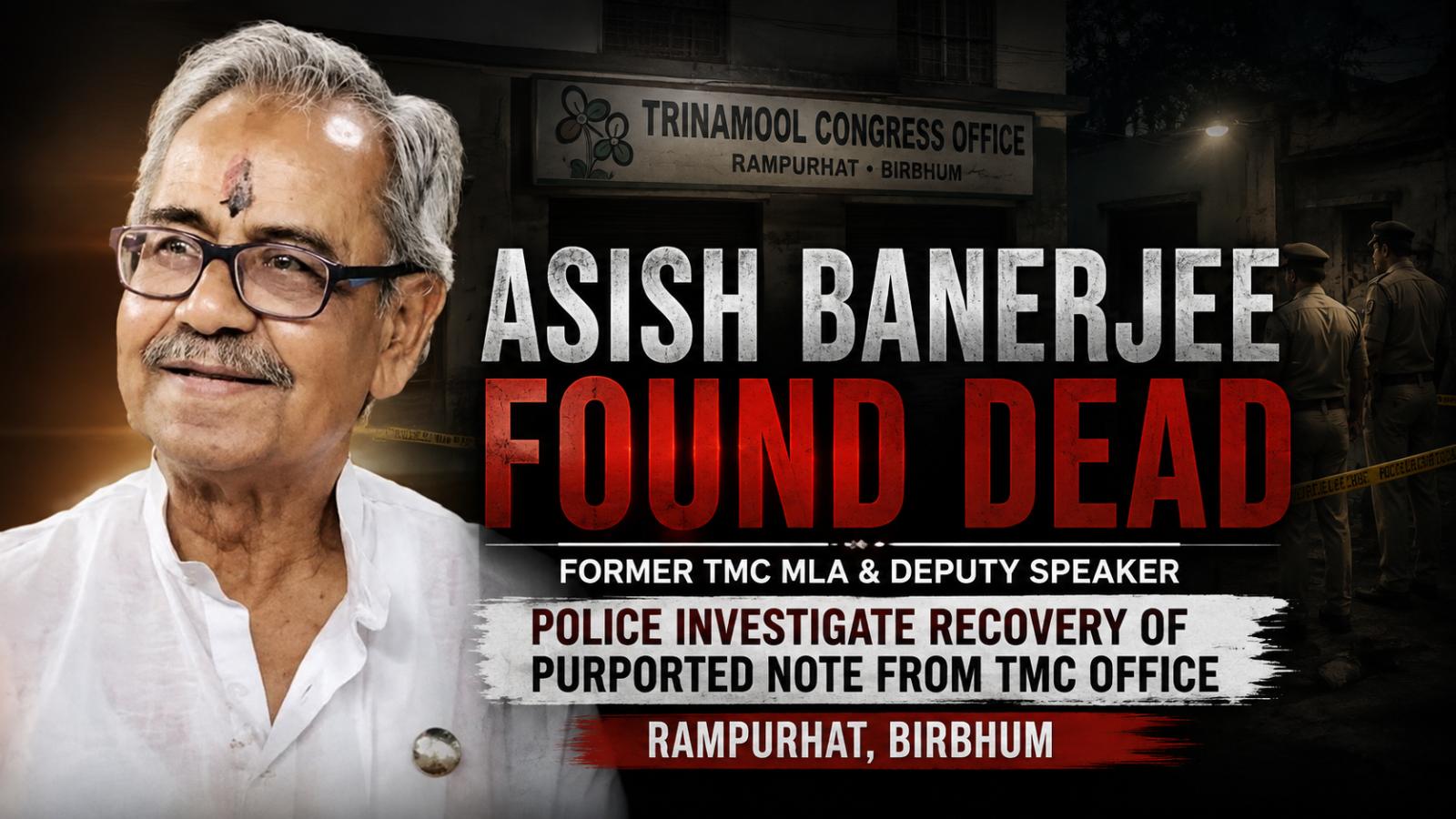
Former TMC MLA Asish Banerjee Found Dead in Birbhum
Former West Bengal Assembly Deputy Speaker and senior Trinamool Congress leader Asish Banerjee was found dead at a party office near his residence in Rampurhat, Birbhum district, on Sunday. Police have begun an investigation, while a purported note recovered from the scene is also being examined. Asish Banerjee Found Dead at TMC Office Senior Trinamool Congress leader Asish Banerjee was found h
Former TMC MLA Asish Banerjee Found Dead in Birbhum
Former West Bengal Assembly Deputy Speaker and senior Trinamool Congress leader Asish Banerjee was found dead at a party office near his residence in Rampurhat, Birbhum district, on Sunday. Police have begun an investigation, while a purported note recovered from the scene is also being examined. Asish Banerjee Found Dead at TMC Office Senior Trinamool Congress leader Asish Banerjee was found h
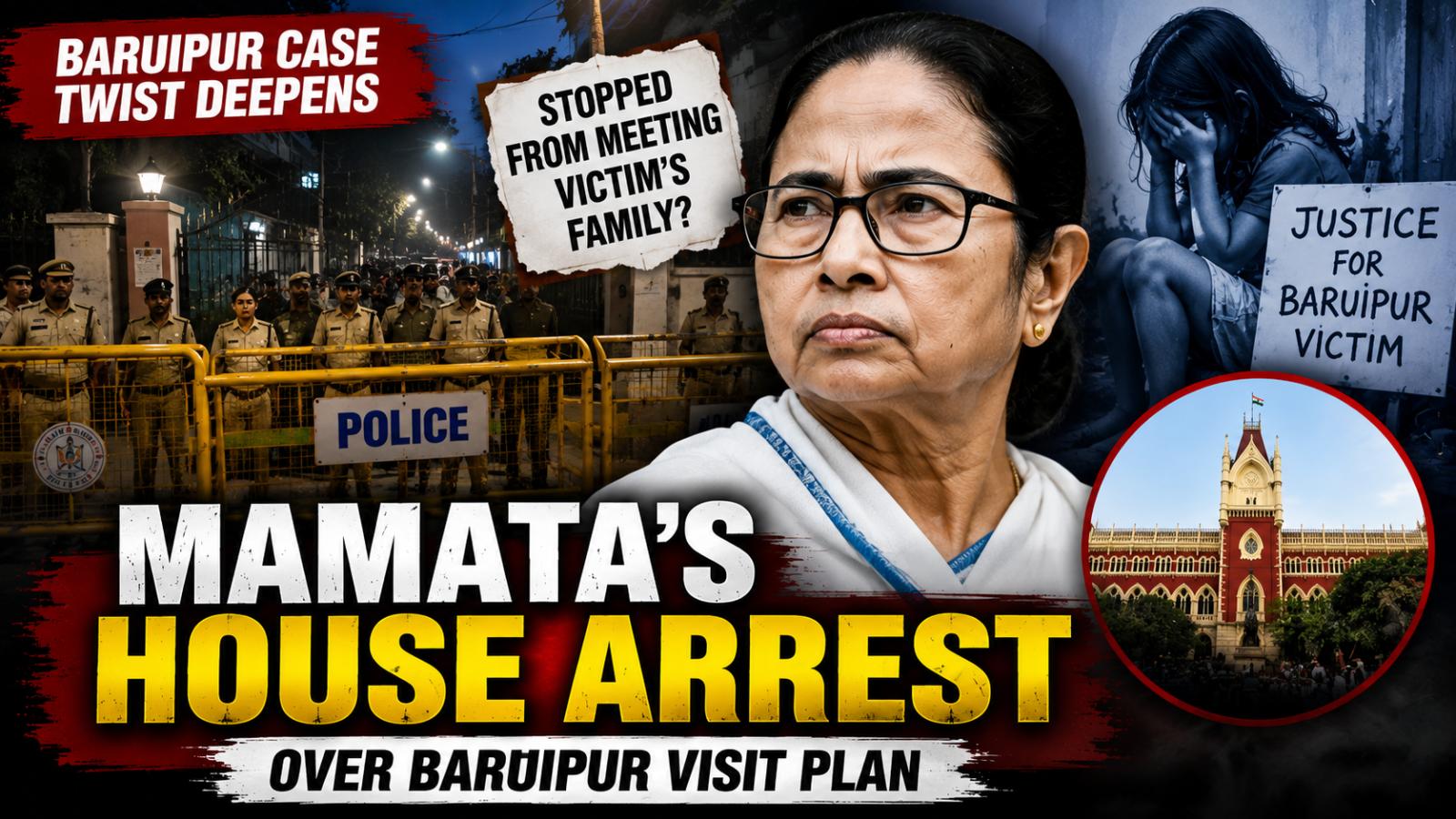
Mamata House Arrest Claim Deepens Baruipur Case Row
Mamata House Arrest Claim Deepens Baruipur Case Row Former West Bengal Chief Minister Mamata Banerjee’s alleged house arrest has added a major political twist to the Baruipur case, where the death of a 12-year-old girl has triggered anger, protests and demands for justice. The Trinamool Congress claimed that Banerjee was stopped from leaving her residence when she planned to visit the victim’s family in Baruipur.
Mamata House Arrest Claim Deepens Baruipur Case Row
Mamata House Arrest Claim Deepens Baruipur Case Row Former West Bengal Chief Minister Mamata Banerjee’s alleged house arrest has added a major political twist to the Baruipur case, where the death of a 12-year-old girl has triggered anger, protests and demands for justice. The Trinamool Congress claimed that Banerjee was stopped from leaving her residence when she planned to visit the victim’s family in Baruipur.
19 TMC Rebel MPs Trigger Lok Sabha Split Suspense
The Trinamool Congress is facing one of its biggest internal crises in recent years as a group of rebel Lok Sabha MPs reportedly moves to seek recognition as the “real TMC” parliamentary faction. The latest twist involves a letter said to have 19 signatures but 20 serial numbers, creating suspense over a possible 20th rebel MP. The Speaker’s office has not officially confirmed receipt of the letter. However, reports say the rebel MPs
19 TMC Rebel MPs Trigger Lok Sabha Split Suspense
The Trinamool Congress is facing one of its biggest internal crises in recent years as a group of rebel Lok Sabha MPs reportedly moves to seek recognition as the “real TMC” parliamentary faction. The latest twist involves a letter said to have 19 signatures but 20 serial numbers, creating suspense over a possible 20th rebel MP. The Speaker’s office has not officially confirmed receipt of the letter. However, reports say the rebel MPs
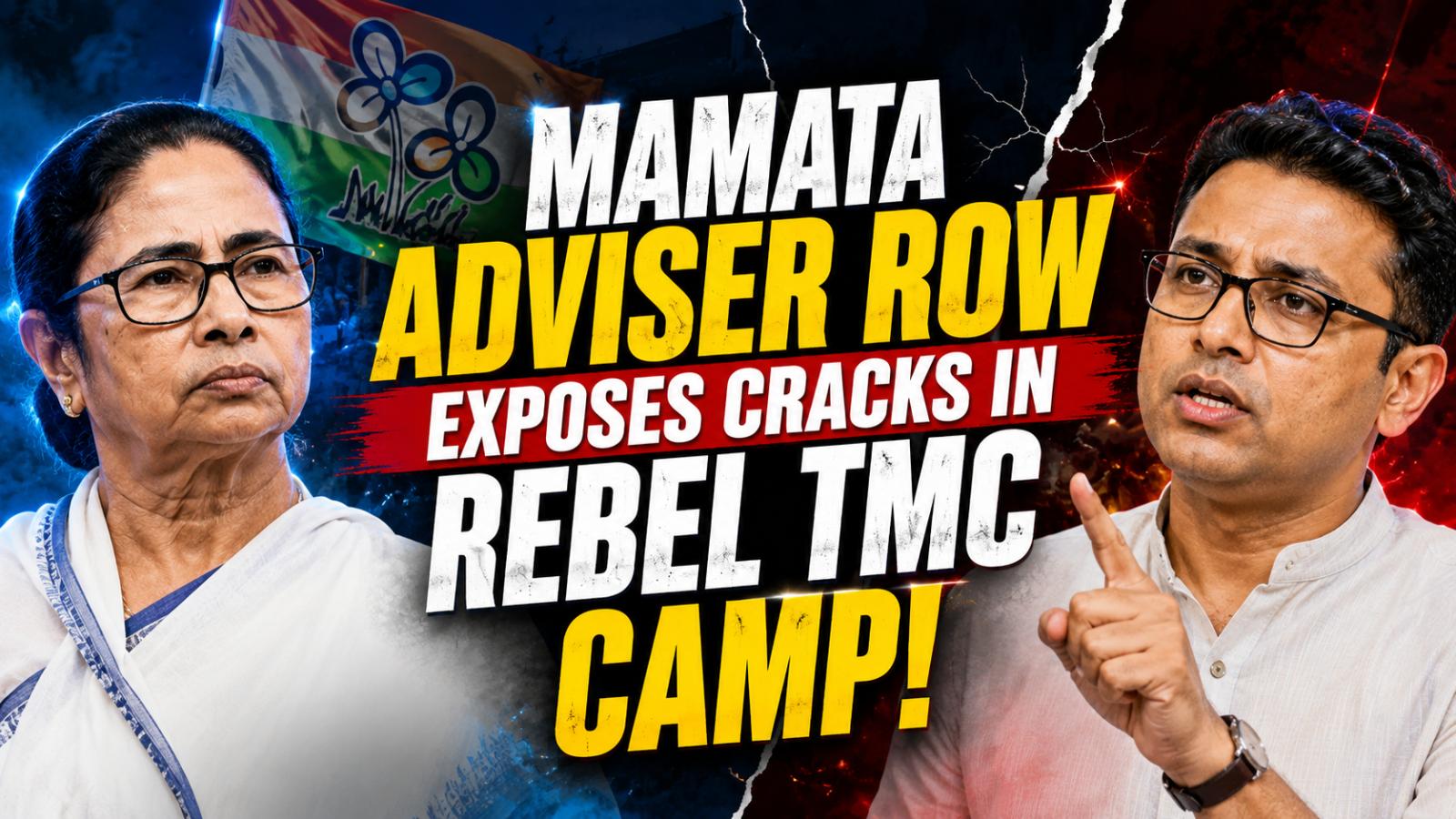
Mamata Banerjee Adviser Row Exposes Cracks In Rebel TMC Camp
Less than 48 hours after 60 rebel MLAs took control of the Trinamool Congress legislature party by defying party chief Mamata Banerjee, signs of internal trouble have begun to surface within the Ritabrata Banerjee-led camp. The disagreement is centred on Mamata Banerjee’s future role in the party and whether she should remain the supreme leader or be limited to the position of a chief adviser. Ritabrata Banerjee, who has now been recognised as the Leader of the Opposition, had said that the rebel group did not intend to split the Trinamool Congress. In their letter to the Assembly Speaker, the rebel MLAs reportedly mentioned Mamata Banerjee as the party chief. However, Ritabrata’s public suggestion that Mamata should serve as a “chief adviser” to the opposition front has created unease among several MLAs who still owe their political loyalty to her. The rebellion inside the TMC was not entirely directed against Mamata Banerjee herself. According to the developments emerging from the rebel camp, much of the anger among MLAs was aimed at Abhishek Banerjee, Mamata’s nephew and the party’s de facto number two. Several rebel leaders were reportedly unhappy with his leadership style and the growing perception that decision-making within the party had become increasingly centralised around him. The tensions deepened after the controversy known as “Signgate”, in which some Trinamool MLAs alleged that their signatures had been forged in a letter supporting Sobhandeb Chattopadhyay as Leader of the Opposition. That episode appears to have intensified resentment within the party and pushed several MLAs toward the rebel bloc. However, their rebellion against the current party structure has not translated into a complete rejection of Mamata Banerjee’s leadership. Several MLAs in the Ritabrata-led camp continue to see Mamata as the central figure of the Trinamool Congress. Rebel MLA Gulshan Mullick said that they had been told the party would continue under Mamata’s leadership and that she could not be treated merely as an adviser. He warned that if Mamata was not accepted as the supreme leader, some MLAs might reconsider whether they should remain in the rebel bloc. Sitai MLA Sangeeta Roy Basunia also rejected the idea of Mamata being shifted into an advisory role. She said Mamata Banerjee remained their supreme leader and could not be reduced to an adviser. These statements have exposed the first major challenge for Ritabrata Banerjee after taking charge as Leader of the Opposition. Ritabrata Bloc Faces Its First Big Political Test The dispute highlights the contradiction at the heart of the rebellion. On one hand, the MLAs have challenged the party’s existing leadership structure and defied Mamata Banerjee’s directions. On the other hand, many of them are unwilling to abandon their political and emotional association with the leader who founded the Trinamool Congress after breaking away from the Congress in 1998. This contradiction could become difficult for the rebel bloc to manage. If the group continues to project Mamata as its leader while acting against her instructions, it may struggle to build a clear political identity. At the same time, if Ritabrata attempts to sideline Mamata completely, he risks losing MLAs who joined the rebellion mainly out of anger against Abhishek Banerjee and the internal functioning of the party, not against Mamata herself. The Trinamool Congress has always been closely identified with Mamata Banerjee’s personality, leadership style and mass appeal. Unlike some other regional parties where factional battles are driven by ideology, caste equations or leadership succession, the current TMC crisis appears more rooted in internal control, authority and resentment over the party’s power structure. That makes Mamata’s role even more sensitive. Political observers believe the rebel bloc may face further instability if Ritabrata Banerjee fails to clearly define Mamata Banerjee’s position. If he accepts her as the supreme leader, the rebellion may appear incomplete. If he rejects her authority, the bloc could lose MLAs who still depend on Mamata’s image and legacy for political legitimacy. For now, Mamata Banerjee remains the biggest unifying force within the Trinamool Congress, even among those who have rebelled against the party leadership. The developments show that Ritabrata Banerjee’s biggest challenge may not be defeating the ruling side inside the Assembly, but keeping his own rebel camp together. The coming days will decide whether the bloc survives as a serious political force or begins to break apart under the weight of its own contradictions.
Mamata Banerjee Adviser Row Exposes Cracks In Rebel TMC Camp
Less than 48 hours after 60 rebel MLAs took control of the Trinamool Congress legislature party by defying party chief Mamata Banerjee, signs of internal trouble have begun to surface within the Ritabrata Banerjee-led camp. The disagreement is centred on Mamata Banerjee’s future role in the party and whether she should remain the supreme leader or be limited to the position of a chief adviser. Ritabrata Banerjee, who has now been recognised as the Leader of the Opposition, had said that the rebel group did not intend to split the Trinamool Congress. In their letter to the Assembly Speaker, the rebel MLAs reportedly mentioned Mamata Banerjee as the party chief. However, Ritabrata’s public suggestion that Mamata should serve as a “chief adviser” to the opposition front has created unease among several MLAs who still owe their political loyalty to her. The rebellion inside the TMC was not entirely directed against Mamata Banerjee herself. According to the developments emerging from the rebel camp, much of the anger among MLAs was aimed at Abhishek Banerjee, Mamata’s nephew and the party’s de facto number two. Several rebel leaders were reportedly unhappy with his leadership style and the growing perception that decision-making within the party had become increasingly centralised around him. The tensions deepened after the controversy known as “Signgate”, in which some Trinamool MLAs alleged that their signatures had been forged in a letter supporting Sobhandeb Chattopadhyay as Leader of the Opposition. That episode appears to have intensified resentment within the party and pushed several MLAs toward the rebel bloc. However, their rebellion against the current party structure has not translated into a complete rejection of Mamata Banerjee’s leadership. Several MLAs in the Ritabrata-led camp continue to see Mamata as the central figure of the Trinamool Congress. Rebel MLA Gulshan Mullick said that they had been told the party would continue under Mamata’s leadership and that she could not be treated merely as an adviser. He warned that if Mamata was not accepted as the supreme leader, some MLAs might reconsider whether they should remain in the rebel bloc. Sitai MLA Sangeeta Roy Basunia also rejected the idea of Mamata being shifted into an advisory role. She said Mamata Banerjee remained their supreme leader and could not be reduced to an adviser. These statements have exposed the first major challenge for Ritabrata Banerjee after taking charge as Leader of the Opposition. Ritabrata Bloc Faces Its First Big Political Test The dispute highlights the contradiction at the heart of the rebellion. On one hand, the MLAs have challenged the party’s existing leadership structure and defied Mamata Banerjee’s directions. On the other hand, many of them are unwilling to abandon their political and emotional association with the leader who founded the Trinamool Congress after breaking away from the Congress in 1998. This contradiction could become difficult for the rebel bloc to manage. If the group continues to project Mamata as its leader while acting against her instructions, it may struggle to build a clear political identity. At the same time, if Ritabrata attempts to sideline Mamata completely, he risks losing MLAs who joined the rebellion mainly out of anger against Abhishek Banerjee and the internal functioning of the party, not against Mamata herself. The Trinamool Congress has always been closely identified with Mamata Banerjee’s personality, leadership style and mass appeal. Unlike some other regional parties where factional battles are driven by ideology, caste equations or leadership succession, the current TMC crisis appears more rooted in internal control, authority and resentment over the party’s power structure. That makes Mamata’s role even more sensitive. Political observers believe the rebel bloc may face further instability if Ritabrata Banerjee fails to clearly define Mamata Banerjee’s position. If he accepts her as the supreme leader, the rebellion may appear incomplete. If he rejects her authority, the bloc could lose MLAs who still depend on Mamata’s image and legacy for political legitimacy. For now, Mamata Banerjee remains the biggest unifying force within the Trinamool Congress, even among those who have rebelled against the party leadership. The developments show that Ritabrata Banerjee’s biggest challenge may not be defeating the ruling side inside the Assembly, but keeping his own rebel camp together. The coming days will decide whether the bloc survives as a serious political force or begins to break apart under the weight of its own contradictions.
Mamata Banerjee Dissolves TMC Committees Amid Widening Rebellion in Bengal
West Bengal Chief Minister Mamata Banerjee has taken the drastic step of dissolving all Trinamool Congress (TMC) committees and frontal organisations in the state with immediate effect as internal strife within the party reaches a critical juncture. The decision comes amid a rapidly widening rebellion among party legislators that has raised questions about unity, leadership authority, and political stability within one of India’s most powerful regional parties. On Wednesday, several members of a self‑described rebel faction within the TMC publicly claimed they have the backing of a majority of the party’s 80 Members of the Legislative Assembly (MLAs), signalling a serious challenge to Mamata Banerjee’s leadership. The rebels objected to the appointment of Sobhandeb Chattopadhyay as the Leader of Opposition in the West Bengal Assembly, alleging that the process lacked legitimacy and was backed by questionable signatures. TMC leaders have described the move as an unprecedented internal crisis, with multiple party MLAs skipping key organisational meetings and senior members distancing themselves from official party activities. This internal rebellion has sparked intense speculation across political corridors in Kolkata and beyond, with opposition parties and political analysts closely following developments that could reshape West Bengal’s political landscape. The situation escalated further after the All India Trinamool Congress (AITC) expelled two of its own MLAs, Sandipan Saha and Ritabrata Banerjee, from the party for alleged anti‑party activities. The expulsions were seen as a pre‑emptive measure by the party leadership to curb defection and dissent, but instead appear to have deepened internal rifts and emboldened rebel leaders. Several rebel MLAs, speaking to reporters, claimed to have a significant number of signatures supporting their stance. TMC MLA Mustafizur Rahman mentioned hearing reports of at least 59 signatures, though he stopped short of providing concrete confirmation. Another MLA, Priya Paul, avoided detailing her position until after party meetings concluded, reflecting the uncertainty and fluidity within party ranks. Probe, Politics and Public Statements The political escalation has drawn sharp reactions from leaders outside the TMC, notably West Bengal BJP leader Suvendu Adhikari. Addressing the media, Adhikari attacked the TMC leadership over allegations of forged signatures and internal miscommunication, asserting that legal and investigative processes will take their course under the Bharatiya Nyaya Sanhita (BNS). He warned that individuals involved in forgery or malpractice would not be spared, indicating a readiness to pursue the matter through formal channels. Adhikari outlined the sequence of events leading to the controversy, starting with a letter dated May 9 from the AITC National General Secretary to the Assembly Speaker proposing Sobhandeb Chattopadhyay as Leader of the Opposition, Nayana Bandyopadhyay and Ashima Patra as deputy leaders, and Firhad Hakim as chief whip. This was followed by another letter on May 20 claiming to bear 70 signatures of party legislators. However, two TMC MLAs, Rithabrata Bandhopadhyay and Sandipan Saha, lodged a formal complaint alleging that the resolution to adopt this leadership structure was never put to a vote by the legislative party. In response, the Assembly Speaker referred the matter to law enforcement, leading to the filing of an FIR at Hare Street Police Station. The case was later transferred to the Criminal Investigation Department (CID), which has since begun collecting signature samples from MLAs whose names appeared on the contested document. Adhikari stated that three TMC MLAs — Baharul Islam, Arup Roy, and Subhashish Das — reportedly told CID officials that they did not sign the document attributed to them. These developments underscore the complexity of the dispute and the legal scrutiny now surrounding internal party procedures. Amid the political conflict and legal entanglements, Adhikari also addressed governance issues, highlighting the BJP‑led state administration’s efforts on welfare measures such as a new free bus service for women and reforms to the Annapurna Yojna application process. He urged calm and restraint among political workers, stressing that investigations should proceed through lawful channels and cautioning against taking matters into their own hands. The ongoing developments within the TMC reflect broader tensions in West Bengal politics, where party loyalty, political power struggles, and legal controversies are intersecting in ways that could have significant implications for governance and legislative dynamics. As the situation continues to unfold, the focus remains on whether the rebel faction can sustain its claims of majority support and what this means for Mamata Banerjee’s leadership and the future of the TMC.
Mamata Banerjee Dissolves TMC Committees Amid Widening Rebellion in Bengal
West Bengal Chief Minister Mamata Banerjee has taken the drastic step of dissolving all Trinamool Congress (TMC) committees and frontal organisations in the state with immediate effect as internal strife within the party reaches a critical juncture. The decision comes amid a rapidly widening rebellion among party legislators that has raised questions about unity, leadership authority, and political stability within one of India’s most powerful regional parties. On Wednesday, several members of a self‑described rebel faction within the TMC publicly claimed they have the backing of a majority of the party’s 80 Members of the Legislative Assembly (MLAs), signalling a serious challenge to Mamata Banerjee’s leadership. The rebels objected to the appointment of Sobhandeb Chattopadhyay as the Leader of Opposition in the West Bengal Assembly, alleging that the process lacked legitimacy and was backed by questionable signatures. TMC leaders have described the move as an unprecedented internal crisis, with multiple party MLAs skipping key organisational meetings and senior members distancing themselves from official party activities. This internal rebellion has sparked intense speculation across political corridors in Kolkata and beyond, with opposition parties and political analysts closely following developments that could reshape West Bengal’s political landscape. The situation escalated further after the All India Trinamool Congress (AITC) expelled two of its own MLAs, Sandipan Saha and Ritabrata Banerjee, from the party for alleged anti‑party activities. The expulsions were seen as a pre‑emptive measure by the party leadership to curb defection and dissent, but instead appear to have deepened internal rifts and emboldened rebel leaders. Several rebel MLAs, speaking to reporters, claimed to have a significant number of signatures supporting their stance. TMC MLA Mustafizur Rahman mentioned hearing reports of at least 59 signatures, though he stopped short of providing concrete confirmation. Another MLA, Priya Paul, avoided detailing her position until after party meetings concluded, reflecting the uncertainty and fluidity within party ranks. Probe, Politics and Public Statements The political escalation has drawn sharp reactions from leaders outside the TMC, notably West Bengal BJP leader Suvendu Adhikari. Addressing the media, Adhikari attacked the TMC leadership over allegations of forged signatures and internal miscommunication, asserting that legal and investigative processes will take their course under the Bharatiya Nyaya Sanhita (BNS). He warned that individuals involved in forgery or malpractice would not be spared, indicating a readiness to pursue the matter through formal channels. Adhikari outlined the sequence of events leading to the controversy, starting with a letter dated May 9 from the AITC National General Secretary to the Assembly Speaker proposing Sobhandeb Chattopadhyay as Leader of the Opposition, Nayana Bandyopadhyay and Ashima Patra as deputy leaders, and Firhad Hakim as chief whip. This was followed by another letter on May 20 claiming to bear 70 signatures of party legislators. However, two TMC MLAs, Rithabrata Bandhopadhyay and Sandipan Saha, lodged a formal complaint alleging that the resolution to adopt this leadership structure was never put to a vote by the legislative party. In response, the Assembly Speaker referred the matter to law enforcement, leading to the filing of an FIR at Hare Street Police Station. The case was later transferred to the Criminal Investigation Department (CID), which has since begun collecting signature samples from MLAs whose names appeared on the contested document. Adhikari stated that three TMC MLAs — Baharul Islam, Arup Roy, and Subhashish Das — reportedly told CID officials that they did not sign the document attributed to them. These developments underscore the complexity of the dispute and the legal scrutiny now surrounding internal party procedures. Amid the political conflict and legal entanglements, Adhikari also addressed governance issues, highlighting the BJP‑led state administration’s efforts on welfare measures such as a new free bus service for women and reforms to the Annapurna Yojna application process. He urged calm and restraint among political workers, stressing that investigations should proceed through lawful channels and cautioning against taking matters into their own hands. The ongoing developments within the TMC reflect broader tensions in West Bengal politics, where party loyalty, political power struggles, and legal controversies are intersecting in ways that could have significant implications for governance and legislative dynamics. As the situation continues to unfold, the focus remains on whether the rebel faction can sustain its claims of majority support and what this means for Mamata Banerjee’s leadership and the future of the TMC.

TMC meet cancelled as 60 MLAs skip Mamata Banerjee call
TMC meet cancelled as 60 MLAs skip Mamata Banerjee call Kolkata: The Trinamool Congress faced an uncomfortable moment on Monday after a scheduled meeting of its newly elected MLAs at Mamata Banerjee’s Kalighat residence had to be called off due to poor attendance. Only around 20 of the party’s 80 MLAs reportedly reached the venue, while nearly 60 legislators stayed away a day after TMC General Secretary Abhishek Banerjee was allegedly attacked. The abs
TMC meet cancelled as 60 MLAs skip Mamata Banerjee call
TMC meet cancelled as 60 MLAs skip Mamata Banerjee call Kolkata: The Trinamool Congress faced an uncomfortable moment on Monday after a scheduled meeting of its newly elected MLAs at Mamata Banerjee’s Kalighat residence had to be called off due to poor attendance. Only around 20 of the party’s 80 MLAs reportedly reached the venue, while nearly 60 legislators stayed away a day after TMC General Secretary Abhishek Banerjee was allegedly attacked. The abs

TMC Picks Kolkata Mayor as Chief Whip Amid Bengal Political Changes
TMC Announces New Assembly Leadership Team in West Bengal The All India Trinamool Congress has announced its new leadership structure in the West Bengal Assembly following the recent political developments in the state. Senior party leader and Kolkata Mayor Firhad Hakim has been appointed as the Chief Whip of the opposition in the Assembly. Veteran Trinamool Congress leader Sobhandeb Chattopadhyay, a 10-time MLA, has been named the Leader of Opposition. The party also appointed Asima Patra and Nayna Bandyopadhyay as Deputy Leaders of Opposition. The appointments come amid major political changes in West Bengal after Suvendu Adhikari took oath as the new Chief Minister. The Trinamool Congress leadership said the new Assembly team will coordinate the party’s strategy and strengthen its role inside the House during the upcoming sessions.
TMC Picks Kolkata Mayor as Chief Whip Amid Bengal Political Changes
TMC Announces New Assembly Leadership Team in West Bengal The All India Trinamool Congress has announced its new leadership structure in the West Bengal Assembly following the recent political developments in the state. Senior party leader and Kolkata Mayor Firhad Hakim has been appointed as the Chief Whip of the opposition in the Assembly. Veteran Trinamool Congress leader Sobhandeb Chattopadhyay, a 10-time MLA, has been named the Leader of Opposition. The party also appointed Asima Patra and Nayna Bandyopadhyay as Deputy Leaders of Opposition. The appointments come amid major political changes in West Bengal after Suvendu Adhikari took oath as the new Chief Minister. The Trinamool Congress leadership said the new Assembly team will coordinate the party’s strategy and strengthen its role inside the House during the upcoming sessions.
Suvendu Adhikari Sworn In as Bengal’s First BJP CM
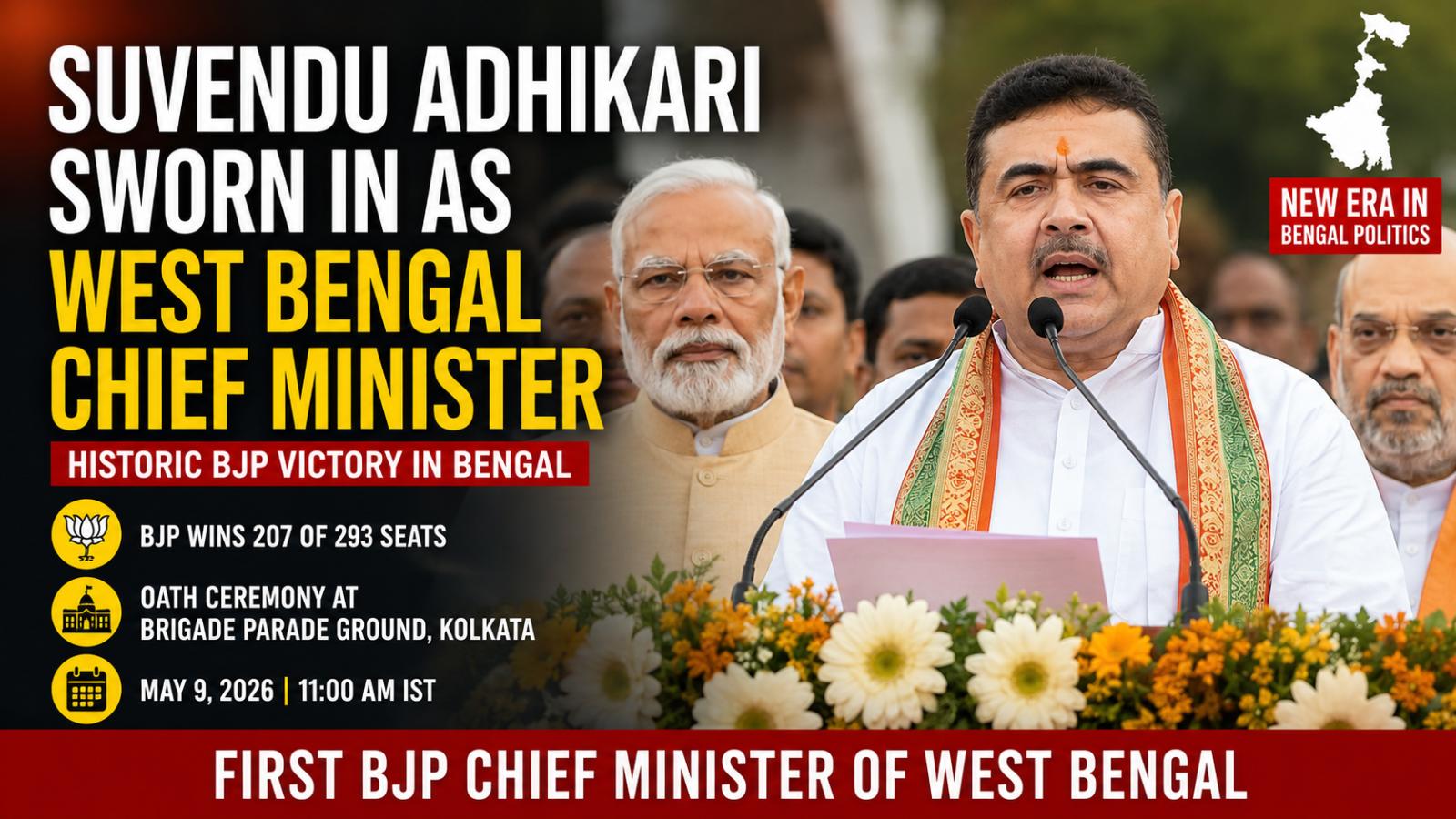
Suvendu Adhikari Takes Oath as West Bengal Chief Minister Suvendu Adhikari was sworn in as West Bengal’s first-ever BJP chief minister on Saturday, May 9, 2026, after the party secured a historic landslide victory in the state assembly elections. The oath ceremony began at 11:00 AM IST at Kolkata’s Brigade Parade Ground, where Governor R. N. Ravi administer
Suvendu Adhikari Sworn In as Bengal’s First BJP CM
Suvendu Adhikari Takes Oath as West Bengal Chief Minister Suvendu Adhikari was sworn in as West Bengal’s first-ever BJP chief minister on Saturday, May 9, 2026, after the party secured a historic landslide victory in the state assembly elections. The oath ceremony began at 11:00 AM IST at Kolkata’s Brigade Parade Ground, where Governor R. N. Ravi administer
Is Suvendu Adhikari Repeating KCR’s Political Journey In Bengal?
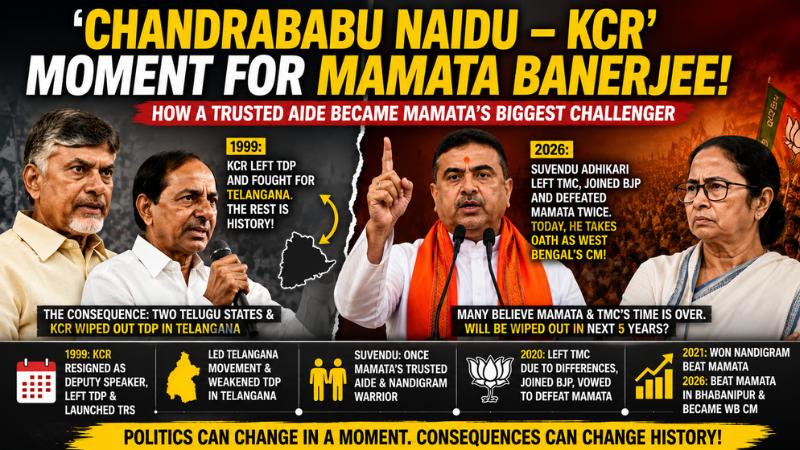
Political observers are drawing parallels between the Chandrababu Naidu–KCR fallout in undivided Andhra Pradesh and the rise of Suvendu Adhikari against Mamata Banerjee in West Bengal politics. Politics often turns on unexpected moments that later reshape entire political landscapes. A small disagreement or a denied opportunity can sometimes create leaders who go on to challenge the very systems they once supported. Many political analysts are now comparing the re
Is Suvendu Adhikari Repeating KCR’s Political Journey In Bengal?
Political observers are drawing parallels between the Chandrababu Naidu–KCR fallout in undivided Andhra Pradesh and the rise of Suvendu Adhikari against Mamata Banerjee in West Bengal politics. Politics often turns on unexpected moments that later reshape entire political landscapes. A small disagreement or a denied opportunity can sometimes create leaders who go on to challenge the very systems they once supported. Many political analysts are now comparing the re
BJP Wins Historic Victory in West Bengal, Ends TMC’s 15-Year Rule
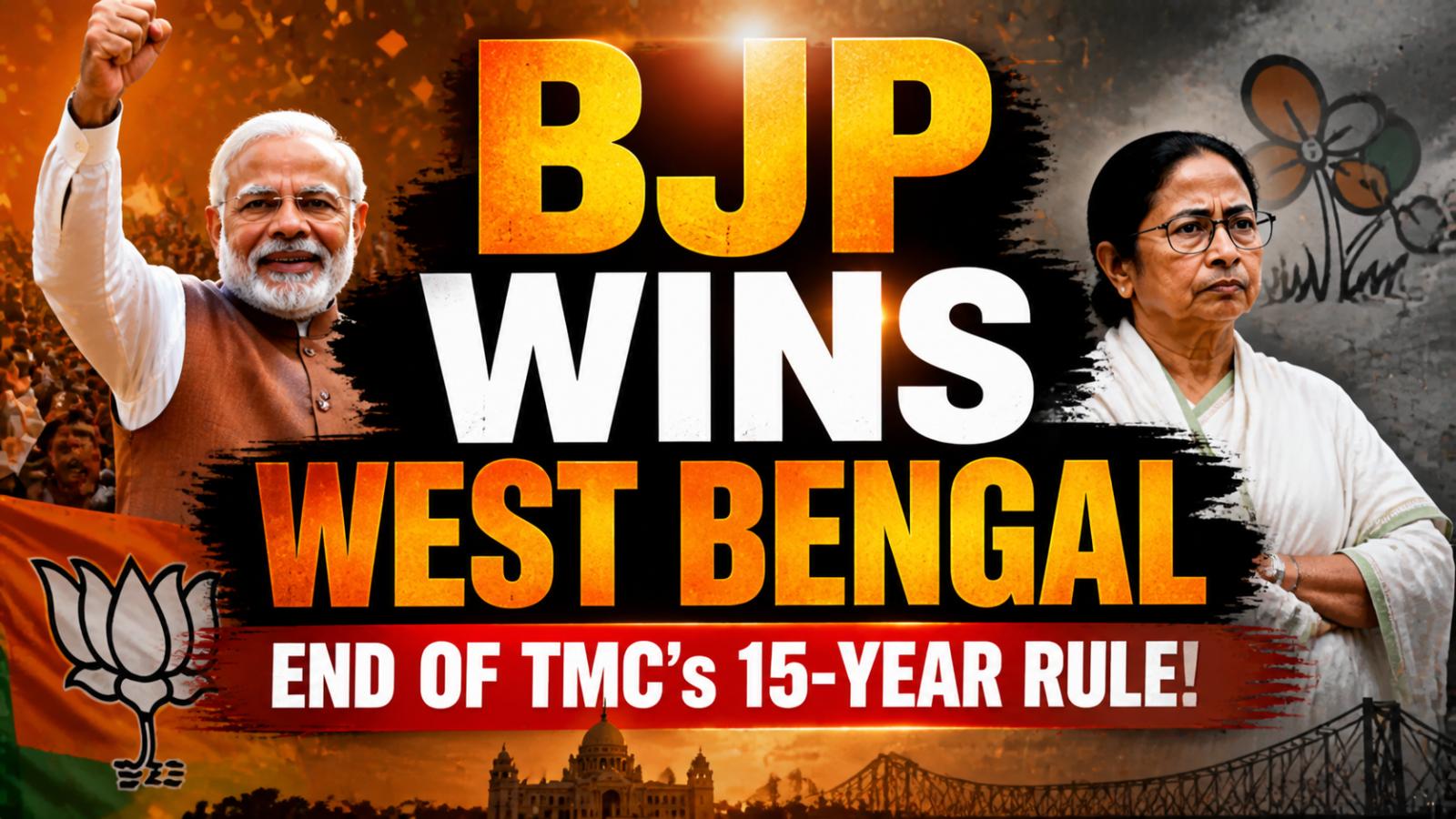
In a historic electoral outcome, the Bharatiya Janata Party (BJP) claimed a resounding victory in the 2026 West Bengal Assembly elections, securing 206 seats and a two-thirds majority. This victory ends the 15-year reign of the Trinamool Congress (TMC) in the state, marking a significant shift in Bengal’s political landscape. The BJP's rise was swift, with the party crossing the halfway mark of 148 seats early in the counting process, signaling a monumental change. The TMC, led by
BJP Wins Historic Victory in West Bengal, Ends TMC’s 15-Year Rule
In a historic electoral outcome, the Bharatiya Janata Party (BJP) claimed a resounding victory in the 2026 West Bengal Assembly elections, securing 206 seats and a two-thirds majority. This victory ends the 15-year reign of the Trinamool Congress (TMC) in the state, marking a significant shift in Bengal’s political landscape. The BJP's rise was swift, with the party crossing the halfway mark of 148 seats early in the counting process, signaling a monumental change. The TMC, led by
Exit Polls 2026 DMK Leads TN Congress Comeback Kerala NDA Sweep Assam Bengal Tight
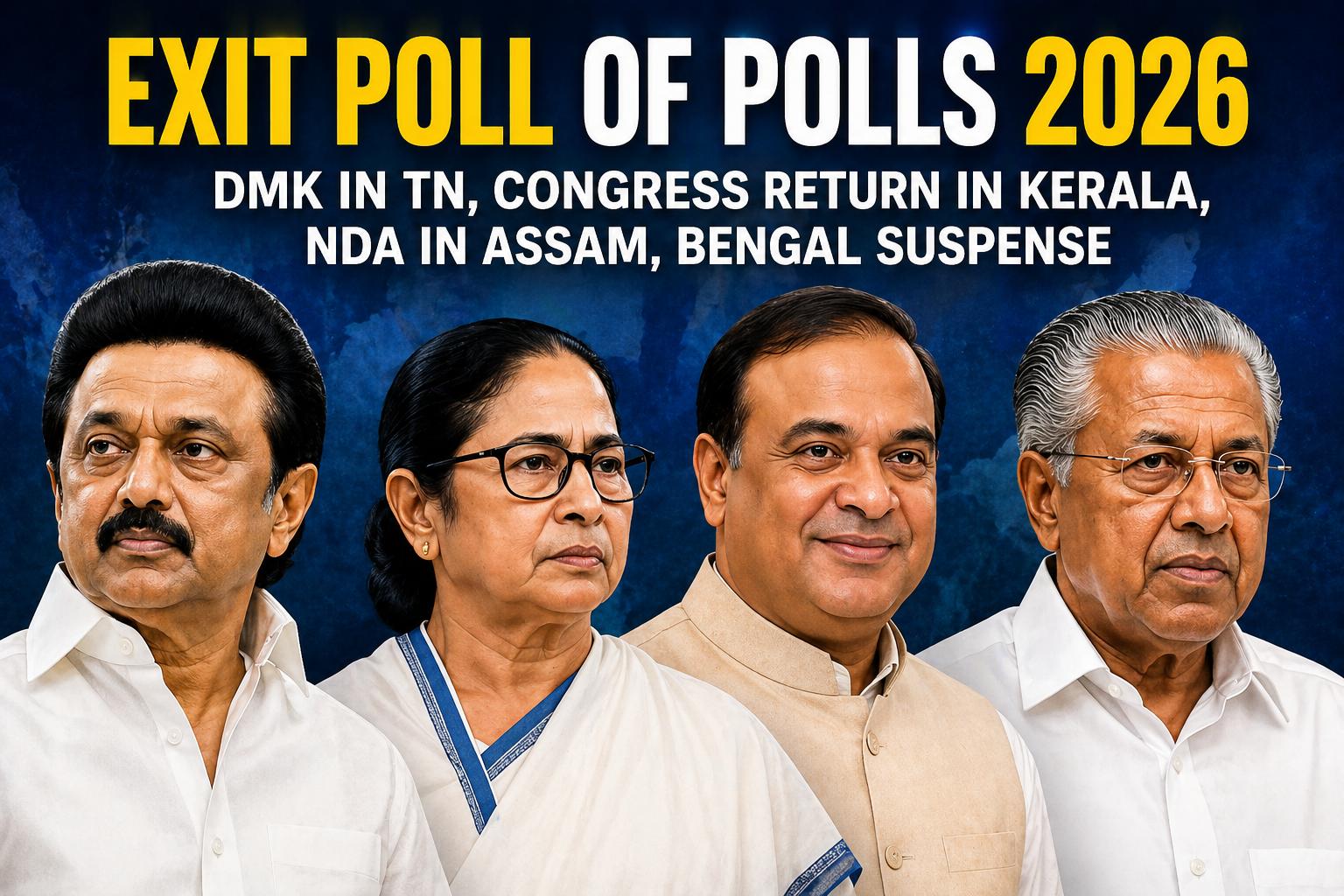
A poll of exit polls for the 2026 assembly elections across key states indicates a mixed political landscape, with different parties gaining ground in different regions. While the Bharatiya Janata Party is projected to dominate Assam, the Dravida Munnetra Kazhagam is expected to retain power in Tam
Exit Polls 2026 DMK Leads TN Congress Comeback Kerala NDA Sweep Assam Bengal Tight
A poll of exit polls for the 2026 assembly elections across key states indicates a mixed political landscape, with different parties gaining ground in different regions. While the Bharatiya Janata Party is projected to dominate Assam, the Dravida Munnetra Kazhagam is expected to retain power in Tam
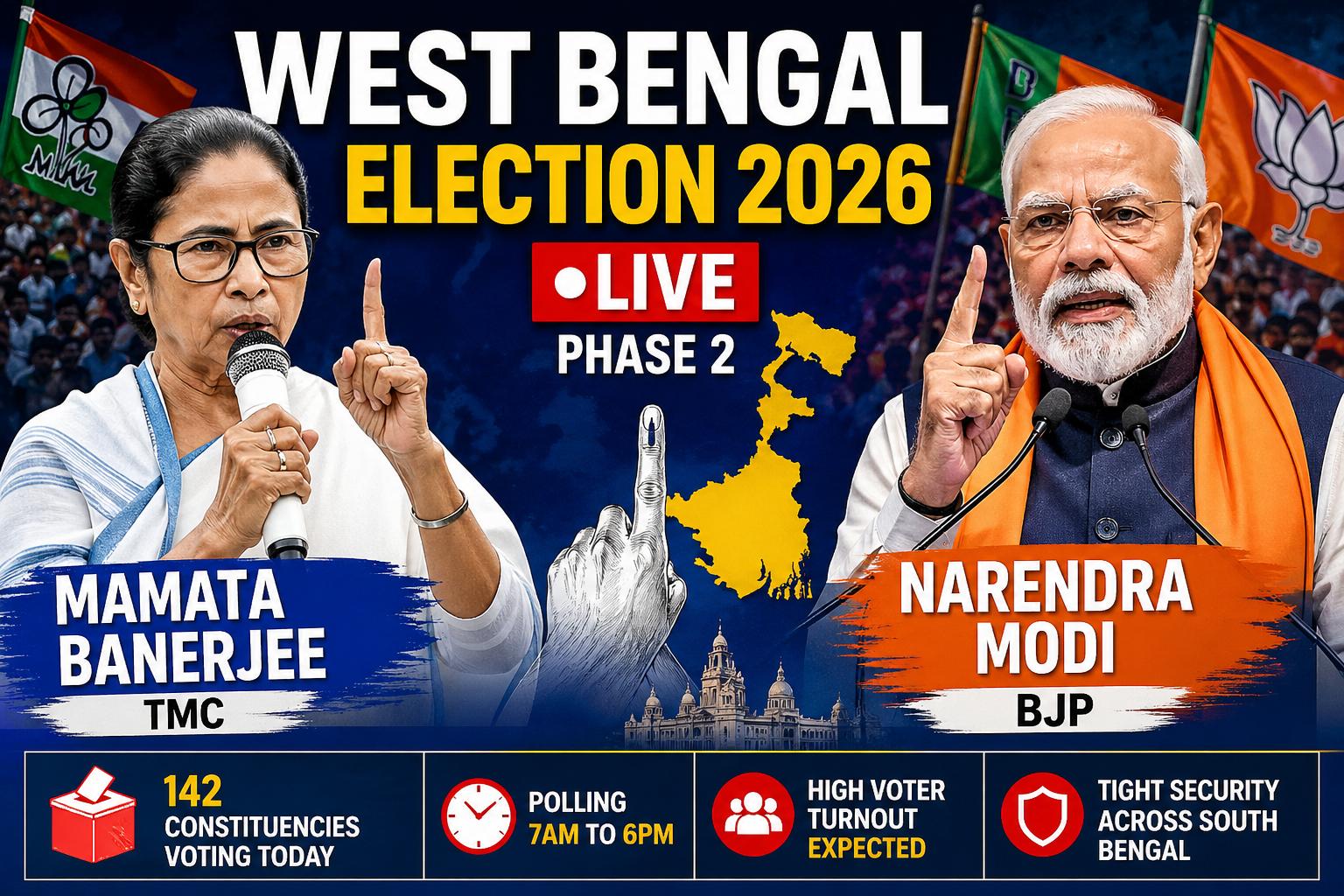
West Bengal Election 2026 Live Phase 2 Mamata Banerjee vs BJP Led by Narendra Modi
April 29, 2026 | Kolkata, West Bengal Election Phase 2 Voting for the second and final phase of the West Bengal Assembly Elections 2026 is currently underway across 142 constituencies in the southern region of the state. The polling, which began at 7 am and will continue until 6 pm, is being closely watched due to its political significance. Key districts such as Kolkata, Howrah, North and South 24 Parganas, Nadia, Hooghly, and Purba Bardhaman are part of this
West Bengal Election 2026 Live Phase 2 Mamata Banerjee vs BJP Led by Narendra Modi
April 29, 2026 | Kolkata, West Bengal Election Phase 2 Voting for the second and final phase of the West Bengal Assembly Elections 2026 is currently underway across 142 constituencies in the southern region of the state. The polling, which began at 7 am and will continue until 6 pm, is being closely watched due to its political significance. Key districts such as Kolkata, Howrah, North and South 24 Parganas, Nadia, Hooghly, and Purba Bardhaman are part of this
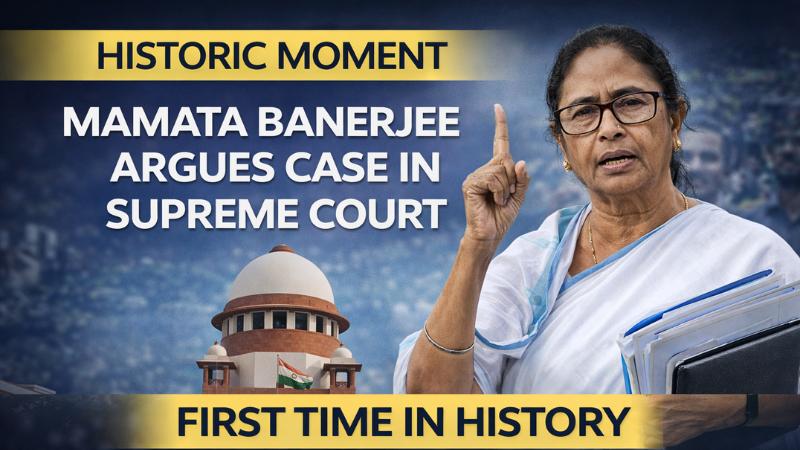
Historic Moment: Mamata Banerjee Argues Case in Supreme Court
For the first time in Indian history, a sitting Chief Minister will argue a case in the Supreme Court. Mamata Banerjee, the Chief Minister of West Bengal, is set to make history by appearing in person to argue a case before the country’s highest court. The case involves the Special Intensive Revision (SIR) of electoral rolls in West Bengal, a topic that has stirred significant political debate in the state. Mamata Banerjee’s appearance in the Supreme Court as a "party in person"
Historic Moment: Mamata Banerjee Argues Case in Supreme Court
For the first time in Indian history, a sitting Chief Minister will argue a case in the Supreme Court. Mamata Banerjee, the Chief Minister of West Bengal, is set to make history by appearing in person to argue a case before the country’s highest court. The case involves the Special Intensive Revision (SIR) of electoral rolls in West Bengal, a topic that has stirred significant political debate in the state. Mamata Banerjee’s appearance in the Supreme Court as a "party in person"
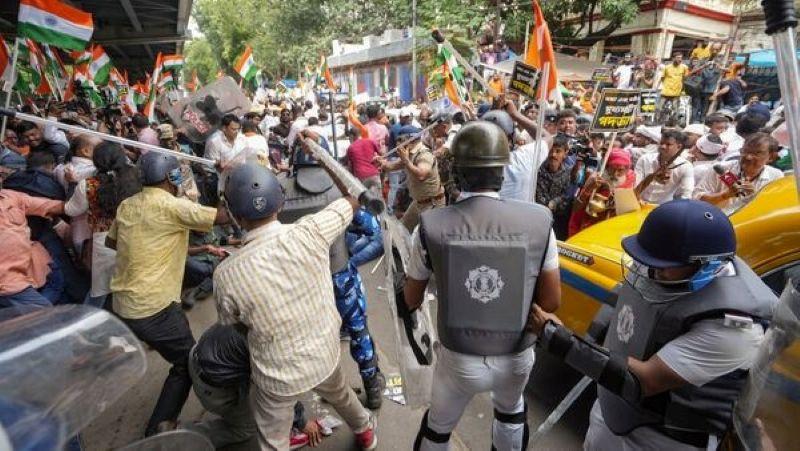
RG Kar Protest Turns Violent in Kolkata; Victim’s Mother Alleges Assault by Mamata’s Police
Tensions erupted in Kolkata on Saturday during a protest led by the parents of the RG Kar Medical College doctor who was raped and murdered in August 2024. The rally, joined by several BJP leaders including Leader of the Opposition Suvendu Adhikari, turned chaotic when demonstrators tried to breach police barricades en route to the West Bengal secretariat, Nabanna. Police resorted to a lathicharge and deployed water cannons, with BJP leaders claiming over 100
RG Kar Protest Turns Violent in Kolkata; Victim’s Mother Alleges Assault by Mamata’s Police
Tensions erupted in Kolkata on Saturday during a protest led by the parents of the RG Kar Medical College doctor who was raped and murdered in August 2024. The rally, joined by several BJP leaders including Leader of the Opposition Suvendu Adhikari, turned chaotic when demonstrators tried to breach police barricades en route to the West Bengal secretariat, Nabanna. Police resorted to a lathicharge and deployed water cannons, with BJP leaders claiming over 100
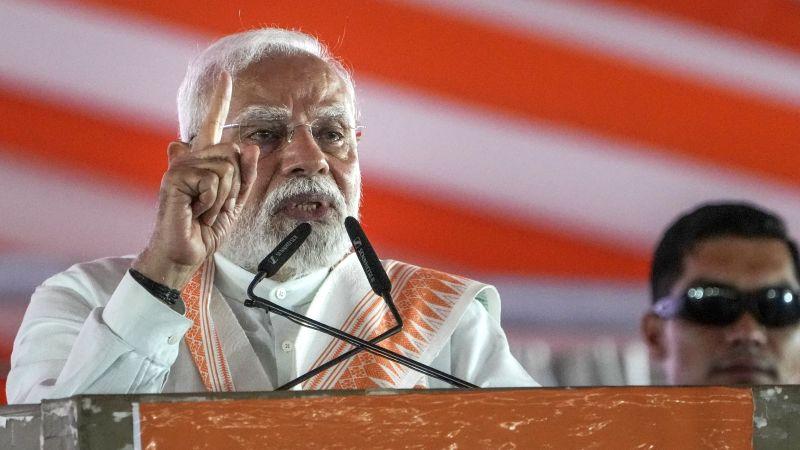
PM Modi Targets TMC on RG Kar Case, Cites Maa Mati Manush
Prime Minister Narendra Modi, while addressing a rally in Durgapur, West Bengal, launched a scathing attack on Chief Minister Mamata Banerjee and the ruling Trinamool Congress (TMC) over the RG Kar rape-murder case. He was in the state to launch Rs 5,000 crore worth of infrastructure projects and used the opportunity to question the law and order situation in Bengal ahead of the 2026 Assembly elections. Modi&
PM Modi Targets TMC on RG Kar Case, Cites Maa Mati Manush
Prime Minister Narendra Modi, while addressing a rally in Durgapur, West Bengal, launched a scathing attack on Chief Minister Mamata Banerjee and the ruling Trinamool Congress (TMC) over the RG Kar rape-murder case. He was in the state to launch Rs 5,000 crore worth of infrastructure projects and used the opportunity to question the law and order situation in Bengal ahead of the 2026 Assembly elections. Modi&










