






























#business-startup
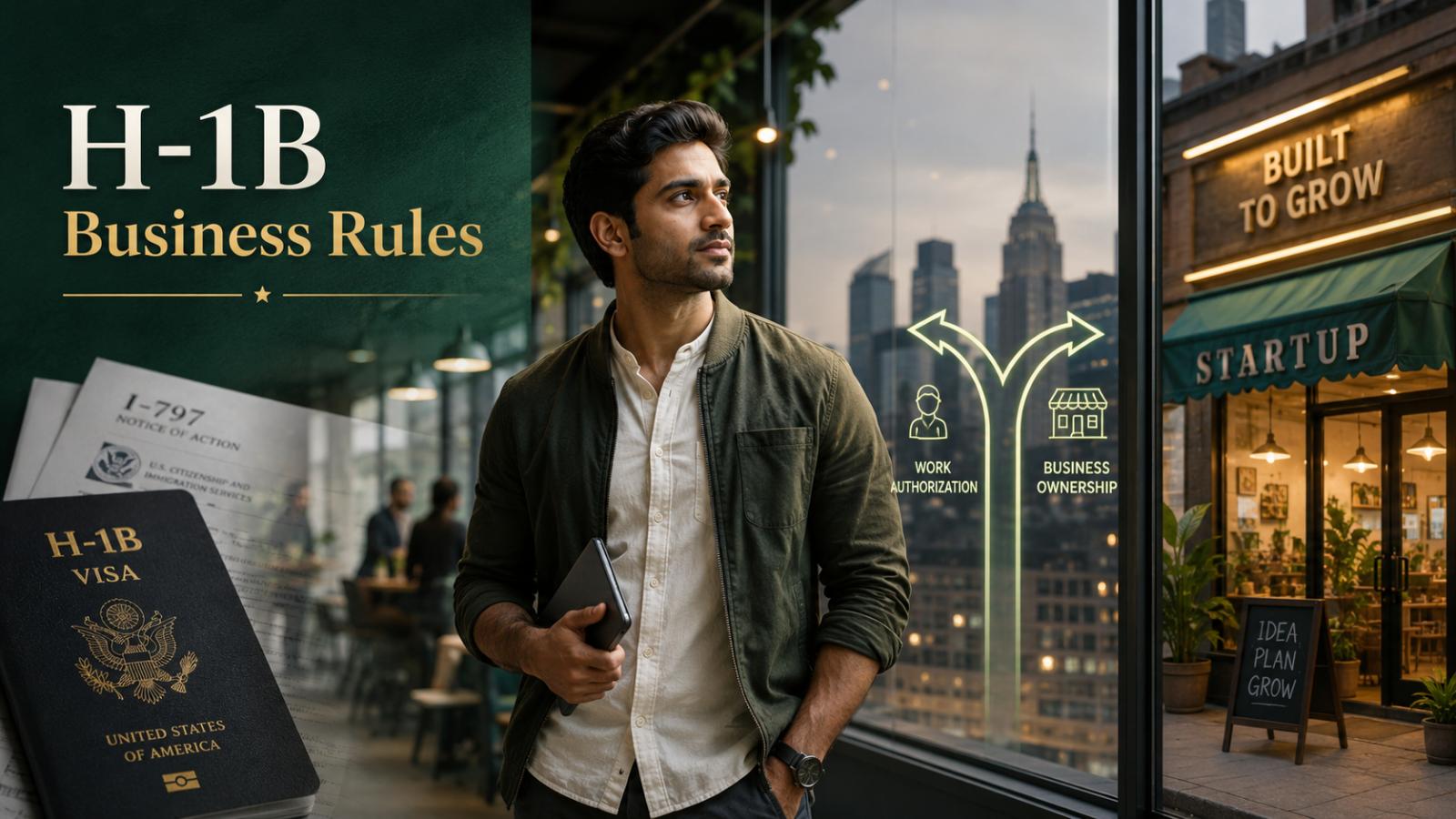
Can an H-1B holder own or start a business in the US?
Can an H-1B holder start a business in the US? Business ownership is generally possible, but actively working for the company requires proper H-1B authorization. Newer rules also allow qualifying beneficiary-owned companies to petition for their founders under specific conditions. An H-1B visa holder can generally own or invest in a U.S. business, including an LLC or corporation. However, owning the compan
Can an H-1B holder own or start a business in the US?
Can an H-1B holder start a business in the US? Business ownership is generally possible, but actively working for the company requires proper H-1B authorization. Newer rules also allow qualifying beneficiary-owned companies to petition for their founders under specific conditions. An H-1B visa holder can generally own or invest in a U.S. business, including an LLC or corporation. However, owning the compan
Mukesh Ambani Quote: Dhirubhai’s Lesson For Entrepreneurs
Mukesh Ambani’s quote on entrepreneurship shares a simple but powerful lesson from his father, Dhirubhai Ambani: those who want to build something of their own must learn to find their own way. The message continues to inspire young founders, business owners, and professionals aiming to take charge of their future. The quote, shared in a “Quote of the Day” context, highlights one of the most important principles behi
Mukesh Ambani Quote: Dhirubhai’s Lesson For Entrepreneurs
Mukesh Ambani’s quote on entrepreneurship shares a simple but powerful lesson from his father, Dhirubhai Ambani: those who want to build something of their own must learn to find their own way. The message continues to inspire young founders, business owners, and professionals aiming to take charge of their future. The quote, shared in a “Quote of the Day” context, highlights one of the most important principles behi
Meta Invests $900 Million in CRED; Kunal Shah to Lead WhatsApp
Meta will invest about $900 million in Indian fintech company CRED as founder Kunal Shah prepares to step away from day-to-day leadership and become WhatsApp’s next leader. The investment and leadership changes were announced on Monday, June 22, 2026. CRED said the financing values the company at $4.5 billion after the investment. The round includes primary and secondary capital and gives Meta an approximately 20% minority stake. Shah will remain a CRED shareholder, while Meta wil
Meta Invests $900 Million in CRED; Kunal Shah to Lead WhatsApp
Meta will invest about $900 million in Indian fintech company CRED as founder Kunal Shah prepares to step away from day-to-day leadership and become WhatsApp’s next leader. The investment and leadership changes were announced on Monday, June 22, 2026. CRED said the financing values the company at $4.5 billion after the investment. The round includes primary and secondary capital and gives Meta an approximately 20% minority stake. Shah will remain a CRED shareholder, while Meta wil
Byju Raveendran Sentenced To Six Months In Singapore Contempt Case
Singapore Court Issues Jail Term Byju’s founder Byju Raveendran has reportedly been sentenced to six months in jail by a Singapore court in a contempt of court case. The order is linked to allegations that he failed to comply with court directions related to asset disclosure and legal proceedings. Reports said the court also directed him to surrender and pay costs of S$90,000. The development has brought f
Byju Raveendran Sentenced To Six Months In Singapore Contempt Case
Singapore Court Issues Jail Term Byju’s founder Byju Raveendran has reportedly been sentenced to six months in jail by a Singapore court in a contempt of court case. The order is linked to allegations that he failed to comply with court directions related to asset disclosure and legal proceedings. Reports said the court also directed him to surrender and pay costs of S$90,000. The development has brought f
33-Year-Old Makes $192K/Month Negotiating Car Deals Remotely
A remote car negotiation service is helping buyers save over $6,000 per deal—and one 33-year-old is earning $192K per month doing it. His business answers a growing question: Can you hire someone to negotiate your car price? The answer is yes—and demand is booming. How the Remote Car Negotiation Service Works Launched in 2023, the entrepreneur began by negotiating deals for free to understand buyer pain points. Aft
33-Year-Old Makes $192K/Month Negotiating Car Deals Remotely
A remote car negotiation service is helping buyers save over $6,000 per deal—and one 33-year-old is earning $192K per month doing it. His business answers a growing question: Can you hire someone to negotiate your car price? The answer is yes—and demand is booming. How the Remote Car Negotiation Service Works Launched in 2023, the entrepreneur began by negotiating deals for free to understand buyer pain points. Aft
Indian-origin founders of Delve under spotlight amid tech controversy
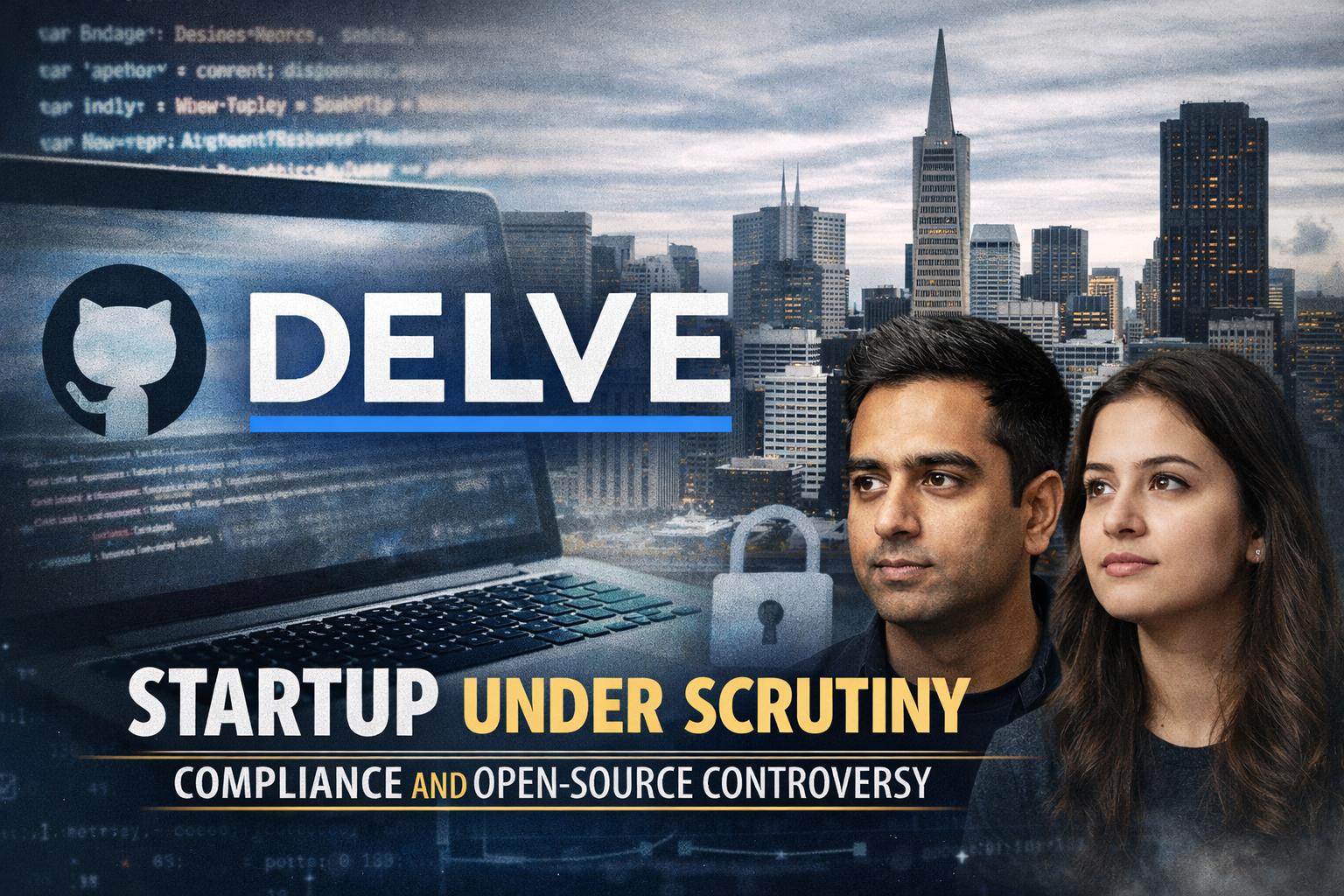
Delve, a San Francisco-based startup associated with the Y Combinator ecosystem, has come under scrutiny following allegations related to its open-source practices and compliance claims, drawing attention within the global technology sector. The controversy, which surfaced online on Saturday, April 4, 2026, has sparked debate about transparency and accountability in early-stage startups. The company is led in part by founders of Indian origin, a detail that has been widely highlighted in discussions surrounding the issue. The concerns emerged from online posts and discussions that questioned whether Delve accurately represented aspects of its compliance processes and technical offerings. These claims have not been independently verified, and the company has publicly responded, disputing the allegations and describing them as misleading. The situation underscores broader challenges within the startup ecosystem, particularly as companies increasingly rely on open-source technologies and third-party partnerships. Questions around how such technologies are integrated, documented, and communicated to customers have become central to the discussion. Industry observers note that early-stage companies often operate in fast-moving environments where governance frameworks may still be evolving. Delve has stated that it remains committed to maintaining transparency and has emphasized its adherence to established standards. However, the controversy has prompted increased scrutiny from the developer community and potential stakeholders, highlighting the importance of clear communication and verifiable claims in maintaining trust. As the discussion continues, the episode reflects a growing trend in which online platforms play a significant role in surfacing and amplifying concerns about startups. For companies operating in competitive and highly visible sectors such as artificial intelligence and compliance technology, reputational risks tied to such controversies can have far-reaching implications.
Indian-origin founders of Delve under spotlight amid tech controversy
Delve, a San Francisco-based startup associated with the Y Combinator ecosystem, has come under scrutiny following allegations related to its open-source practices and compliance claims, drawing attention within the global technology sector. The controversy, which surfaced online on Saturday, April 4, 2026, has sparked debate about transparency and accountability in early-stage startups. The company is led in part by founders of Indian origin, a detail that has been widely highlighted in discussions surrounding the issue. The concerns emerged from online posts and discussions that questioned whether Delve accurately represented aspects of its compliance processes and technical offerings. These claims have not been independently verified, and the company has publicly responded, disputing the allegations and describing them as misleading. The situation underscores broader challenges within the startup ecosystem, particularly as companies increasingly rely on open-source technologies and third-party partnerships. Questions around how such technologies are integrated, documented, and communicated to customers have become central to the discussion. Industry observers note that early-stage companies often operate in fast-moving environments where governance frameworks may still be evolving. Delve has stated that it remains committed to maintaining transparency and has emphasized its adherence to established standards. However, the controversy has prompted increased scrutiny from the developer community and potential stakeholders, highlighting the importance of clear communication and verifiable claims in maintaining trust. As the discussion continues, the episode reflects a growing trend in which online platforms play a significant role in surfacing and amplifying concerns about startups. For companies operating in competitive and highly visible sectors such as artificial intelligence and compliance technology, reputational risks tied to such controversies can have far-reaching implications.
Green card holders barred from SBA small business loans under new US rules
Green card holders will no longer be eligible for government-backed small business loans in the United States beginning March 1, 2026, following a policy change by the US Small Business Administration that tightens citizenship and residency requirements for borrowers. The revised rules limit access to key SBA lending programs exclusively to US citizens and nationals who maintain their principal residence within the country or its territories, effectively barring lawful permanent residents from participation. According to an official policy notice issued in early February, the agency updated its Standard Operating Procedure 50 10 8, the framework that governs lender and development company loan programs. The revision rescinds earlier procedural guidance that permitted limited ownership by foreign nationals or certain residents living outside the United States. Under the new language, every direct and indirect owner of a small business applicant must meet the citizenship criteria. The SBA said the updated rules require 100 percent of ownership interests in any applicant or borrowing entity to be held by eligible US citizens or nationals. As a result, even minority ownership by a legal permanent resident will disqualify a company from receiving SBA-backed financing. The policy applies broadly to applicants, operating companies, and entities tied to the loan structure, leaving little flexibility for mixed-ownership businesses. The change is expected to affect a wide range of small and early-stage firms that rely on SBA loans for working capital, equipment purchases, and expansion. Many startups and family-owned enterprises depend on these lending programs because they offer lower interest rates and government guarantees that make financing more accessible. With the new restrictions in place, businesses that include green card holders among their owners may need to reconsider ownership arrangements or seek alternative sources of credit from private lenders. Agency officials indicated that the revisions align loan eligibility standards with existing federal regulations and a recent executive directive emphasizing stricter residency compliance. The policy will take effect for all new applications submitted on or after the effective date. Existing and prospective borrowers are being advised to review their ownership structures carefully to ensure continued eligibility under the updated requirements. The move marks a significant shift in how federal small business lending programs define qualification, narrowing access to public funds and reshaping the financing landscape for immigrant entrepreneurs. As the implementation date approaches, legal and financial advisers expect increased demand for guidance from affected business owners who must evaluate their options within the new framework.
Green card holders barred from SBA small business loans under new US rules
Green card holders will no longer be eligible for government-backed small business loans in the United States beginning March 1, 2026, following a policy change by the US Small Business Administration that tightens citizenship and residency requirements for borrowers. The revised rules limit access to key SBA lending programs exclusively to US citizens and nationals who maintain their principal residence within the country or its territories, effectively barring lawful permanent residents from participation. According to an official policy notice issued in early February, the agency updated its Standard Operating Procedure 50 10 8, the framework that governs lender and development company loan programs. The revision rescinds earlier procedural guidance that permitted limited ownership by foreign nationals or certain residents living outside the United States. Under the new language, every direct and indirect owner of a small business applicant must meet the citizenship criteria. The SBA said the updated rules require 100 percent of ownership interests in any applicant or borrowing entity to be held by eligible US citizens or nationals. As a result, even minority ownership by a legal permanent resident will disqualify a company from receiving SBA-backed financing. The policy applies broadly to applicants, operating companies, and entities tied to the loan structure, leaving little flexibility for mixed-ownership businesses. The change is expected to affect a wide range of small and early-stage firms that rely on SBA loans for working capital, equipment purchases, and expansion. Many startups and family-owned enterprises depend on these lending programs because they offer lower interest rates and government guarantees that make financing more accessible. With the new restrictions in place, businesses that include green card holders among their owners may need to reconsider ownership arrangements or seek alternative sources of credit from private lenders. Agency officials indicated that the revisions align loan eligibility standards with existing federal regulations and a recent executive directive emphasizing stricter residency compliance. The policy will take effect for all new applications submitted on or after the effective date. Existing and prospective borrowers are being advised to review their ownership structures carefully to ensure continued eligibility under the updated requirements. The move marks a significant shift in how federal small business lending programs define qualification, narrowing access to public funds and reshaping the financing landscape for immigrant entrepreneurs. As the implementation date approaches, legal and financial advisers expect increased demand for guidance from affected business owners who must evaluate their options within the new framework.
Sergey Brin reflects on Google Glass failure and lessons for student innovators
Success stories in technology are often presented as clean narratives of vision, speed and inevitable triumph. An idea is born, a product is launched, and adoption follows. For students and young entrepreneurs trying to understand how innovation truly unfolds, these stories can feel motivating yet incomplete. The more useful insights frequently emerge not from success, but from missteps that expose the limits of confidence, timing and execution. That perspective was at the center of
Sergey Brin reflects on Google Glass failure and lessons for student innovators
Success stories in technology are often presented as clean narratives of vision, speed and inevitable triumph. An idea is born, a product is launched, and adoption follows. For students and young entrepreneurs trying to understand how innovation truly unfolds, these stories can feel motivating yet incomplete. The more useful insights frequently emerge not from success, but from missteps that expose the limits of confidence, timing and execution. That perspective was at the center of
The Power of Google Cloud AI for Businesses Looking to Scale
Scaling a business is no longer just about expanding physical operations—it’s about leveraging technology to reach more customers, operate more efficiently, and innovate faster. Google Cloud AI is becoming a game-changer for businesses that want to scale without compromising quality, security, or speed. By combining powerful machine learning tools with the flexibility of the cloud, Google Cloud AI enables companies to grow strategically while keeping costs in check. One
The Power of Google Cloud AI for Businesses Looking to Scale
Scaling a business is no longer just about expanding physical operations—it’s about leveraging technology to reach more customers, operate more efficiently, and innovate faster. Google Cloud AI is becoming a game-changer for businesses that want to scale without compromising quality, security, or speed. By combining powerful machine learning tools with the flexibility of the cloud, Google Cloud AI enables companies to grow strategically while keeping costs in check. One
How AI Is Helping Indian Entrepreneurs Scale Businesses in the USA
Indian entrepreneurs have long been known for their resilience, innovation, and ability to adapt to global markets. In recent years, artificial intelligence (AI) has become a powerful catalyst for Indian startups looking to grow and thrive in the United States. From automating customer service to predicting market trends, AI is proving to be more than just a buzzword—it's becoming a critical tool for business expansion. One of the biggest advantages AI brings to Indian fou
How AI Is Helping Indian Entrepreneurs Scale Businesses in the USA
Indian entrepreneurs have long been known for their resilience, innovation, and ability to adapt to global markets. In recent years, artificial intelligence (AI) has become a powerful catalyst for Indian startups looking to grow and thrive in the United States. From automating customer service to predicting market trends, AI is proving to be more than just a buzzword—it's becoming a critical tool for business expansion. One of the biggest advantages AI brings to Indian fou
AI-Based Business Ideas Indian Youth Are Pitching in the US
In recent years, Indian youth in the United States have increasingly turned to artificial intelligence (AI) to build innovative startups and disrupt traditional industries. With strong technical backgrounds and global exposure, they are creating smart, scalable, and solution-driven business ideas that are attracting investor interest and market demand. One of the top sectors Indian youth are focusing on is healthcare AI. Startups are using machine learning to develo
AI-Based Business Ideas Indian Youth Are Pitching in the US
In recent years, Indian youth in the United States have increasingly turned to artificial intelligence (AI) to build innovative startups and disrupt traditional industries. With strong technical backgrounds and global exposure, they are creating smart, scalable, and solution-driven business ideas that are attracting investor interest and market demand. One of the top sectors Indian youth are focusing on is healthcare AI. Startups are using machine learning to develo
Indian Young Adults Launching AI Startups in the USA: Revolutionizing Tech
The tech industry is buzzing with innovation, and AI (Artificial Intelligence) is at the forefront of this transformation. In the USA, young Indian entrepreneurs are leading the way, launching successful AI startups that are shaping the future of technology. With a blend of creativity, technical expertise, and entrepreneurial spirit, these young adults are making waves in the AI ecosystem. Why AI? Why Now? AI is everywhere, from healthcare to finance, and its
Indian Young Adults Launching AI Startups in the USA: Revolutionizing Tech
The tech industry is buzzing with innovation, and AI (Artificial Intelligence) is at the forefront of this transformation. In the USA, young Indian entrepreneurs are leading the way, launching successful AI startups that are shaping the future of technology. With a blend of creativity, technical expertise, and entrepreneurial spirit, these young adults are making waves in the AI ecosystem. Why AI? Why Now? AI is everywhere, from healthcare to finance, and its
Digital India Turns 10: PM Modi Celebrates Its Transformation into a People's Movement
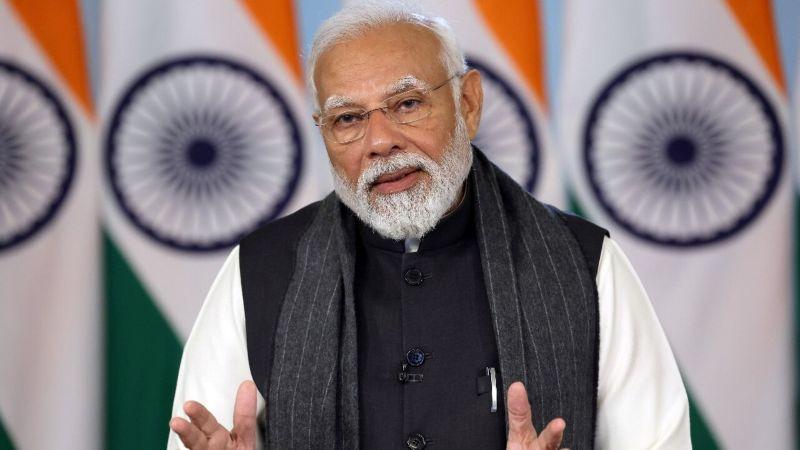
As Digital India celebrates its 10th anniversary in 2025, Prime Minister Narendra Modi shared a heartfelt blog titled 'A Decade of Digital India', highlighting the initiative's far-reaching impact on Indian society. What began as a government program aimed at bridging the digital divide has now evolved into a nationwide movement that empowers people and drives the nation towards self-reliance. Launched in
Digital India Turns 10: PM Modi Celebrates Its Transformation into a People's Movement
As Digital India celebrates its 10th anniversary in 2025, Prime Minister Narendra Modi shared a heartfelt blog titled 'A Decade of Digital India', highlighting the initiative's far-reaching impact on Indian society. What began as a government program aimed at bridging the digital divide has now evolved into a nationwide movement that empowers people and drives the nation towards self-reliance. Launched in
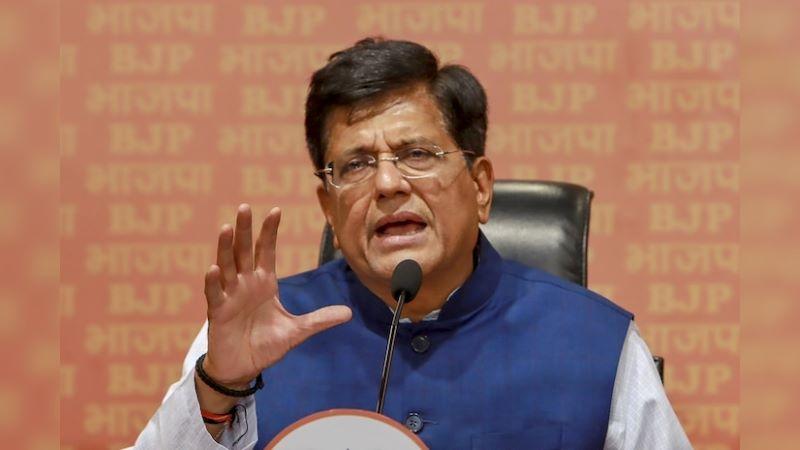
Startup Leaders Defend India’s Ecosystem After Piyush Goyal Criticizes Focus on Delivery Apps
Union Minister Piyush Goyal’s recent remarks questioning the direction of India’s startup ecosystem have sparked a wave of reactions from prominent startup leaders and tech entrepreneurs. While addressing an audience, Goyal questioned whether Indian startups are merely focused on "dukaandari"—running shops—by prioritizing delivery services, fantasy sports, and betting platforms, as opposed to Chinese startups that are innovating in areas like electric vehicle
Startup Leaders Defend India’s Ecosystem After Piyush Goyal Criticizes Focus on Delivery Apps
Union Minister Piyush Goyal’s recent remarks questioning the direction of India’s startup ecosystem have sparked a wave of reactions from prominent startup leaders and tech entrepreneurs. While addressing an audience, Goyal questioned whether Indian startups are merely focused on "dukaandari"—running shops—by prioritizing delivery services, fantasy sports, and betting platforms, as opposed to Chinese startups that are innovating in areas like electric vehicle
Phoebe Gates Launches Podcast "The Burnouts" to Empower Gen Z Women
Phoebe Gates, the youngest daughter of billionaire philanthropists Bill Gates and Melinda French Gates, has ventured into the podcasting world with her new show titled The Burnouts. The podcast, launched on April 1, is co-hosted by Gates and her former Stanford University roommate, Sophia Kianni, who has made a name for herself in the business world as a Forbes 30 Under 30 honoree. In The Burnouts, the two young women aim to provide business advi
Phoebe Gates Launches Podcast "The Burnouts" to Empower Gen Z Women
Phoebe Gates, the youngest daughter of billionaire philanthropists Bill Gates and Melinda French Gates, has ventured into the podcasting world with her new show titled The Burnouts. The podcast, launched on April 1, is co-hosted by Gates and her former Stanford University roommate, Sophia Kianni, who has made a name for herself in the business world as a Forbes 30 Under 30 honoree. In The Burnouts, the two young women aim to provide business advi
Why Indian Startups Should Incorporate Locally in 2025: Key Benefits Over US and Singapore
For years, many Indian startup founders believed that incorporating their businesses in the US or Singapore made it easier to raise venture capital, manage international operations, and plan for exits. However, in 2025, this perception is rapidly changing as more startups recognize the advantages of incorporating in India.Kunal Bahl, co-founder and former CEO of Snapdeal, recently shared insights on why Indian incorporation is now the smartest choice for startups. As per the Hurun Global Unic
Why Indian Startups Should Incorporate Locally in 2025: Key Benefits Over US and Singapore
For years, many Indian startup founders believed that incorporating their businesses in the US or Singapore made it easier to raise venture capital, manage international operations, and plan for exits. However, in 2025, this perception is rapidly changing as more startups recognize the advantages of incorporating in India.Kunal Bahl, co-founder and former CEO of Snapdeal, recently shared insights on why Indian incorporation is now the smartest choice for startups. As per the Hurun Global Unic


