West Bengal Deports Thousands of Illegal Immigrants
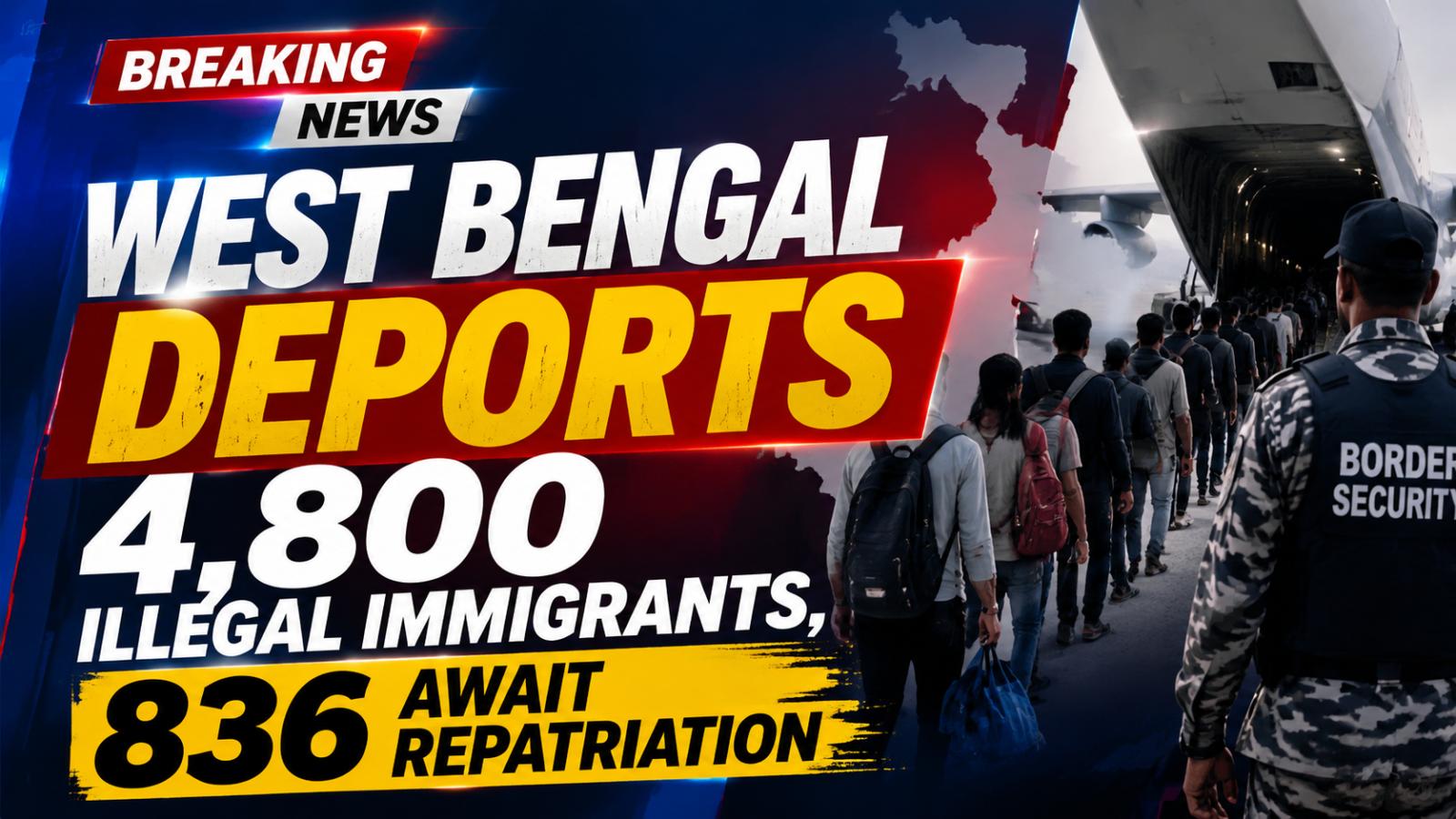
West Bengal Chief Minister Suvendu Adhikari announced that approximately 4,800 illegal immigrants have been deported to Bangladesh from holding centres in the state’s border districts, with 836 more currently awaiting repatriation. Speaking at a preparatory meeting for the BJP’s special training camp, Adhikari emphasized that tackling illegal immigration and securing the India-Bangladesh border remain top prior
West Bengal Deports Thousands of Illegal Immigrants
West Bengal Chief Minister Suvendu Adhikari announced that approximately 4,800 illegal immigrants have been deported to Bangladesh from holding centres in the state’s border districts, with 836 more currently awaiting repatriation. Speaking at a preparatory meeting for the BJP’s special training camp, Adhikari emphasized that tackling illegal immigration and securing the India-Bangladesh border remain top prior
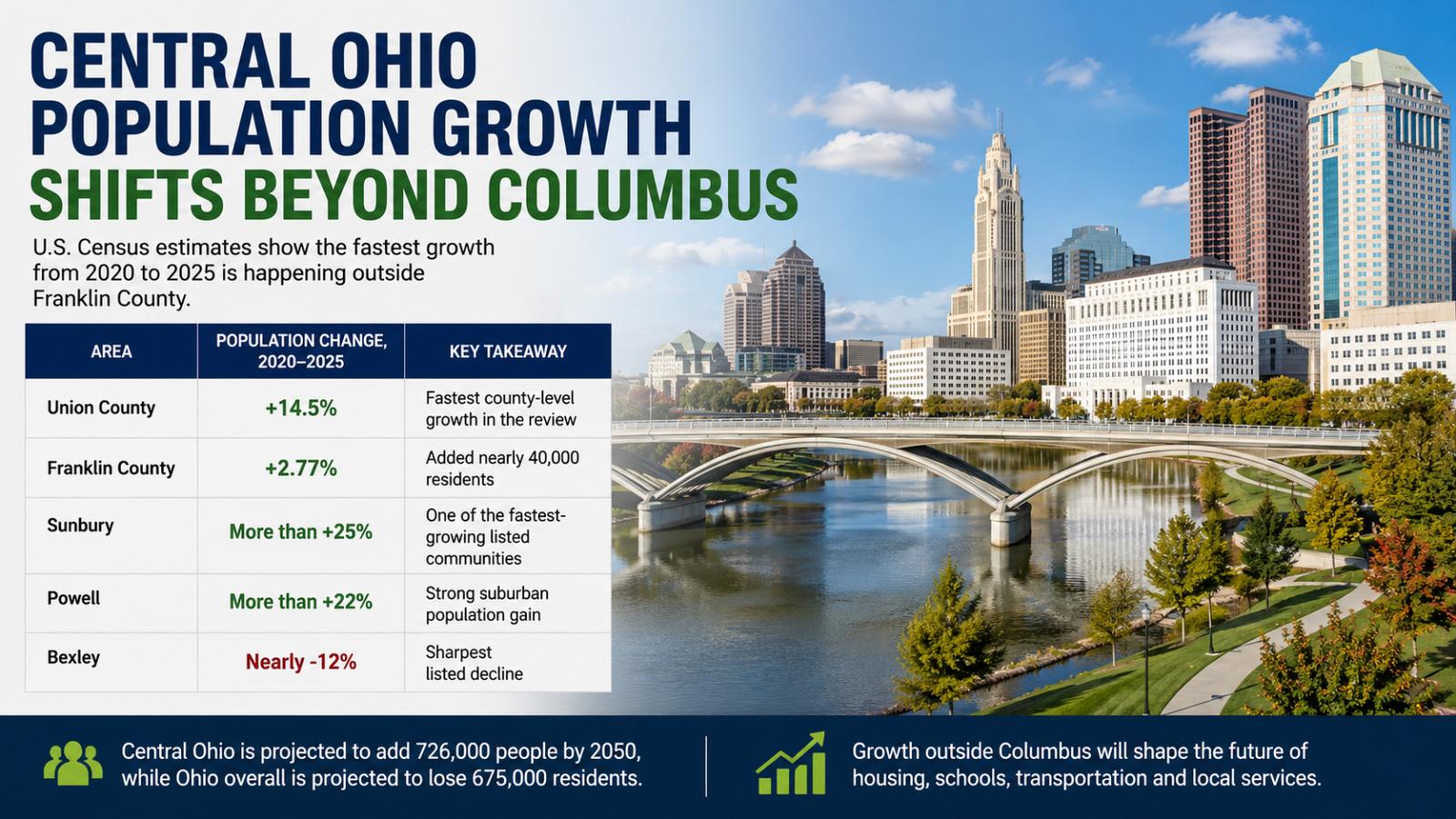
Central Ohio population growth is moving fastest outside Franklin County, according to U.S. Census estimates covering communities in Franklin, Delaware, Licking, Pickaway, Fairfield, Union and Madison counties.
The estimates show the Columbus region continued to expand from 2020 to 2025, but the strongest percentage gains were concentrated in nearby suburban and exurban areas rather than in Columbus’ home county.
Central Ohio Population Growth Moves Beyond Frank
Central Ohio population growth is moving fastest outside Franklin County, according to U.S. Census estimates covering communities in Franklin, Delaware, Licking, Pickaway, Fairfield, Union and Madison counties.
The estimates show the Columbus region continued to expand from 2020 to 2025, but the strongest percentage gains were concentrated in nearby suburban and exurban areas rather than in Columbus’ home county.
Central Ohio Population Growth Moves Beyond Frank
The debate around delimitation and fertility trends in India has long been presented as a matter of data, numbers, and scientific calculation. However, beneath the surface lies a far more complex reality that statistics alone often fail to fully capture. While policymakers and scholars rely heavily on demographic data to redraw constituencies and assess population changes, the lived experiences and political consequences of these decisions extend far beyond what the numbers suggest.
Delimitation, the process of redrawing electoral boundaries based on population, is intended to ensure fair representation. On paper, it appears straightforward: regions with higher populations should have more representation. However, this principle becomes contentious when viewed in the context of India’s diverse demographic patterns. States that have successfully controlled population growth through effective policies may find themselves disadvantaged in terms of political representation, while those with higher fertility rates could gain more seats. This creates a paradox where success in population control might translate into reduced political influence.
The science behind fertility rates also presents limitations. While data can indicate trends such as declining birth rates or regional disparities, it cannot fully explain the social, cultural, and economic factors driving these changes. Fertility decisions are influenced by education, access to healthcare, urbanization, and shifting societal values. These nuances are often overlooked when discussions are framed purely in statistical terms. As a result, policies based solely on numerical analysis risk missing the deeper context that shapes population behavior.
Understanding The Limits Of Data
Scholarly research on delimitation and fertility often lags behind the political realities experienced on the ground. While academics strive to build models and frameworks to explain these phenomena, their findings can take time to reflect the rapidly evolving dynamics of Indian society. Political leaders and citizens, on the other hand, often develop intuitive understandings of these issues based on direct experience. This gap between theory and reality highlights the limitations of relying exclusively on scientific approaches.
Moreover, the use of census data as the primary basis for delimitation introduces its own challenges. Census figures provide a snapshot of population distribution at a specific point in time, but they cannot account for migration patterns, economic shifts, or sudden demographic changes. In a country as vast and diverse as India, these factors can significantly alter the ground reality within a short period. As a result, decisions based on outdated or incomplete data may fail to achieve the intended goal of equitable representation.
Balancing Representation And Fairness
The intersection of delimitation and fertility trends raises important questions about fairness and equity in governance. Should representation be based purely on population numbers, or should it also consider the efforts made by certain regions to control population growth? This dilemma underscores the need for a more nuanced approach that goes beyond traditional metrics.
Policymakers must recognize that demographic data is only one piece of the puzzle. A holistic understanding of social, economic, and cultural factors is essential to create policies that are both fair and effective. This may involve exploring alternative methods of representation or introducing safeguards to ensure that states are not penalized for successful population control measures.
Ultimately, the science of delimitation and fertility provides valuable insights, but it is not a complete solution. To address the challenges posed by these issues, India must move beyond numbers and embrace a more comprehensive perspective that reflects the complexity of its society. Only then can the country achieve a balance between representation, fairness, and sustainable development.
The debate around delimitation and fertility trends in India has long been presented as a matter of data, numbers, and scientific calculation. However, beneath the surface lies a far more complex reality that statistics alone often fail to fully capture. While policymakers and scholars rely heavily on demographic data to redraw constituencies and assess population changes, the lived experiences and political consequences of these decisions extend far beyond what the numbers suggest.
Delimitation, the process of redrawing electoral boundaries based on population, is intended to ensure fair representation. On paper, it appears straightforward: regions with higher populations should have more representation. However, this principle becomes contentious when viewed in the context of India’s diverse demographic patterns. States that have successfully controlled population growth through effective policies may find themselves disadvantaged in terms of political representation, while those with higher fertility rates could gain more seats. This creates a paradox where success in population control might translate into reduced political influence.
The science behind fertility rates also presents limitations. While data can indicate trends such as declining birth rates or regional disparities, it cannot fully explain the social, cultural, and economic factors driving these changes. Fertility decisions are influenced by education, access to healthcare, urbanization, and shifting societal values. These nuances are often overlooked when discussions are framed purely in statistical terms. As a result, policies based solely on numerical analysis risk missing the deeper context that shapes population behavior.
Understanding The Limits Of Data
Scholarly research on delimitation and fertility often lags behind the political realities experienced on the ground. While academics strive to build models and frameworks to explain these phenomena, their findings can take time to reflect the rapidly evolving dynamics of Indian society. Political leaders and citizens, on the other hand, often develop intuitive understandings of these issues based on direct experience. This gap between theory and reality highlights the limitations of relying exclusively on scientific approaches.
Moreover, the use of census data as the primary basis for delimitation introduces its own challenges. Census figures provide a snapshot of population distribution at a specific point in time, but they cannot account for migration patterns, economic shifts, or sudden demographic changes. In a country as vast and diverse as India, these factors can significantly alter the ground reality within a short period. As a result, decisions based on outdated or incomplete data may fail to achieve the intended goal of equitable representation.
Balancing Representation And Fairness
The intersection of delimitation and fertility trends raises important questions about fairness and equity in governance. Should representation be based purely on population numbers, or should it also consider the efforts made by certain regions to control population growth? This dilemma underscores the need for a more nuanced approach that goes beyond traditional metrics.
Policymakers must recognize that demographic data is only one piece of the puzzle. A holistic understanding of social, economic, and cultural factors is essential to create policies that are both fair and effective. This may involve exploring alternative methods of representation or introducing safeguards to ensure that states are not penalized for successful population control measures.
Ultimately, the science of delimitation and fertility provides valuable insights, but it is not a complete solution. To address the challenges posed by these issues, India must move beyond numbers and embrace a more comprehensive perspective that reflects the complexity of its society. Only then can the country achieve a balance between representation, fairness, and sustainable development.
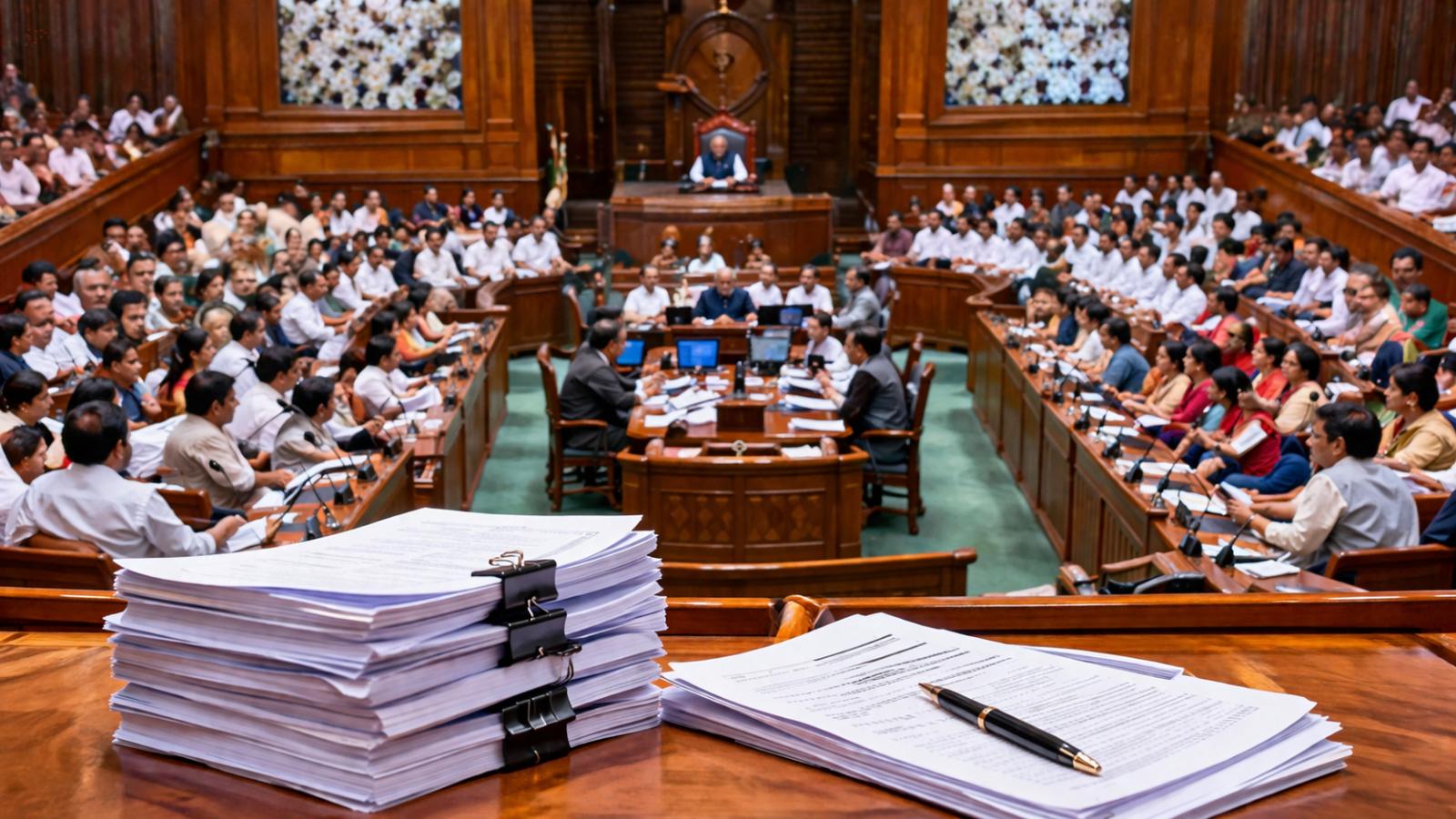
India's Parliament is set to witness a fierce debate over three proposed bills that could significantly alter the country's electoral system, especially the reservation for women. While the government argues these bills are crucial for ensuring a 33% reservation for women, the opposition and legal experts have raised serious concerns about the political and constitutional implications.
The first bill, the Constitutional Amendment Bill, proposes an increase in Lok Sabha seats to 850,
India's Parliament is set to witness a fierce debate over three proposed bills that could significantly alter the country's electoral system, especially the reservation for women. While the government argues these bills are crucial for ensuring a 33% reservation for women, the opposition and legal experts have raised serious concerns about the political and constitutional implications.
The first bill, the Constitutional Amendment Bill, proposes an increase in Lok Sabha seats to 850,
The countdown to Census 2027 has begun with over 700 trained officials set to conduct a door-to-door survey in Delhi as part of the first phase of the census exercise. The house-listing and housing census (HLO) will take place over the next 30 days, concluding on May 15. Officials explained that areas under the jurisdiction of the New Delhi Municipal Council (NDMC) and Delhi Cantonment Board (DCB) have been divided into 560 house-listing blocks, each covering around 180 households. The exerci
The countdown to Census 2027 has begun with over 700 trained officials set to conduct a door-to-door survey in Delhi as part of the first phase of the census exercise. The house-listing and housing census (HLO) will take place over the next 30 days, concluding on May 15. Officials explained that areas under the jurisdiction of the New Delhi Municipal Council (NDMC) and Delhi Cantonment Board (DCB) have been divided into 560 house-listing blocks, each covering around 180 households. The exerci
According to the latest U.S. Census Bureau data, Texas and Florida have taken the lead as homes to some of the fastest-growing cities in the United States from 2023 to 2024. The surge in population across these states has reaffirmed a major demographic shift to the southern and western regions of the country. Among the most dramatic examples is Princeton, Texas, a Dallas suburb, which recorded an astonishing 30.6% population increase making it the fastest-growing city in the U.S. for 2024.
According to the latest U.S. Census Bureau data, Texas and Florida have taken the lead as homes to some of the fastest-growing cities in the United States from 2023 to 2024. The surge in population across these states has reaffirmed a major demographic shift to the southern and western regions of the country. Among the most dramatic examples is Princeton, Texas, a Dallas suburb, which recorded an astonishing 30.6% population increase making it the fastest-growing city in the U.S. for 2024.
In a landmark move with far-reaching political and social implications, the Government of India has announced that caste-based data will be included in the upcoming population census, scheduled for next year. The announcement was made by Union Minister Ashwini Vaishnaw during a Cabinet briefing on Wednesday, marking a significant shift in national policy and fulfilling a long-standing demand by opposition parties. The decision to incorporate caste enumeration—a detailed account of vario
In a landmark move with far-reaching political and social implications, the Government of India has announced that caste-based data will be included in the upcoming population census, scheduled for next year. The announcement was made by Union Minister Ashwini Vaishnaw during a Cabinet briefing on Wednesday, marking a significant shift in national policy and fulfilling a long-standing demand by opposition parties. The decision to incorporate caste enumeration—a detailed account of vario