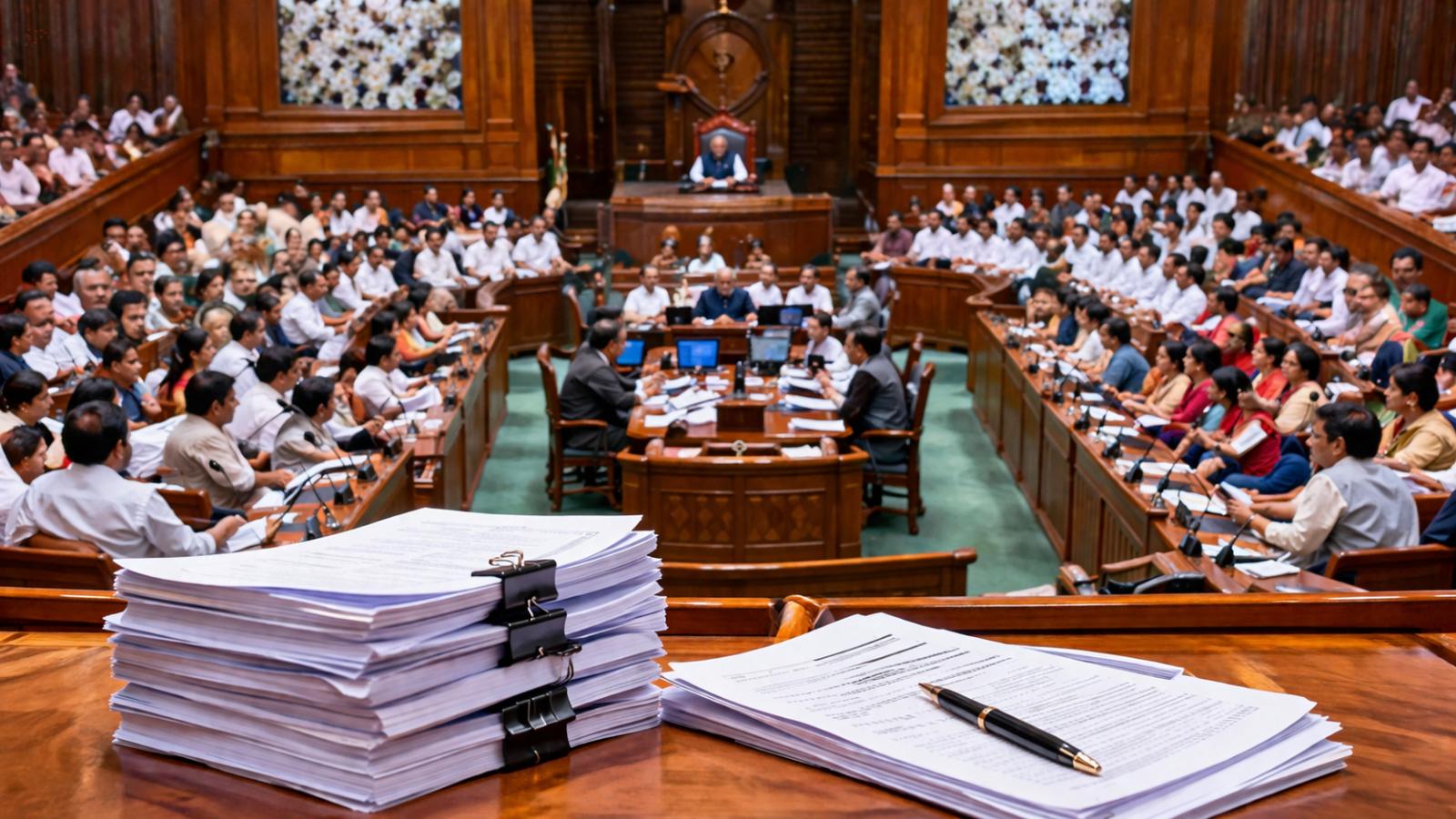
India's Parliament is set to witness a fierce debate over three proposed bills that could significantly alter the country's electoral system, especially the reservation for women. While the government argues these bills are crucial for ensuring a 33% reservation for women, the opposition and legal experts have raised serious concerns about the political and constitutional implications.
The first bill, the Constitutional Amendment Bill, proposes an increase in Lok Sabha seats to 850, with 815 seats for states and 35 for Union Territories. This bill also aims to adjust state assembly seats based on population figures, bringing in a recalibration of political representation. The second bill addresses changes to the Union Territories Act, J&K Reorganisation Act, and GNCT Delhi Act for delimitation, while the third introduces the Delimitation Act, setting up a Delimitation Commission to execute the exercise.
The controversy surrounding these bills revolves around how the population will be counted for seat allocation. Currently, seat distribution is frozen based on the 1971 census, but the proposed amendment allows Parliament to "unfreeze" this by using the 2011 census or another dataset. This brings up concerns over which census will be used and whether states with slower population growth might lose representation.
The women's reservation will only be implemented after a delimitation exercise, raising questions about how long the process will take and whether it should be delinked from delimitation altogether. Women’s organizations and MPs are petitioning for the reservation to be implemented immediately without waiting for the delimitation process.
Another critical aspect of the bills is the provision for reservation within the SC/ST categories, with one-third of seats reserved for women. The seat allocation for both Lok Sabha and state assemblies will be directly impacted by the census data used in the delimitation process.
Southern states, including Tamil Nadu, are particularly concerned that the new system might reduce their representation due to population control measures already in place. The redistribution of seats based on population could lead to a loss of political bargaining power for these states, with leaders like Tamil Nadu CM MK Stalin warning of protests if states lose representation.
While the proposed amendment offers a 15-year timeframe for women’s reservation, it retains the provision that it could be extended by Parliament. This provision mirrors the law passed in 2023, which also deals with women’s reservation in the legislative process.
Despite the government's push, opposition parties, including Congress, have expressed support for women's reservation but are adamantly opposed to linking it with delimitation. Legal experts have cautioned that combining seat redistribution, delimitation, and reservation into a single framework could create a politically charged environment, making it more difficult to address the needs of marginalized communities. As Parliament prepares for the debate on these bills, the discussions will likely be crucial in shaping India’s electoral future, with the delicate balance between gender empowerment, federalism, and political representation at stake.