Tamil Nadu politics has traditionally been shaped by intense rivalries, making political consensus among the state’s major parties difficult even when they broadly agree on an issue. Chief Minister C Joseph Vijay encountered that reality during his latest attempt to build a common Tamil Nadu position on delimitation.
Vijay chaired an all-party meeting of Tamil Nadu MPs at Kalaivanar Arangam in Chennai on Saturday, August 8, to discuss the proposed delimitation exercise and its pos
Tamil Nadu politics has traditionally been shaped by intense rivalries, making political consensus among the state’s major parties difficult even when they broadly agree on an issue. Chief Minister C Joseph Vijay encountered that reality during his latest attempt to build a common Tamil Nadu position on delimitation.
Vijay chaired an all-party meeting of Tamil Nadu MPs at Kalaivanar Arangam in Chennai on Saturday, August 8, to discuss the proposed delimitation exercise and its pos
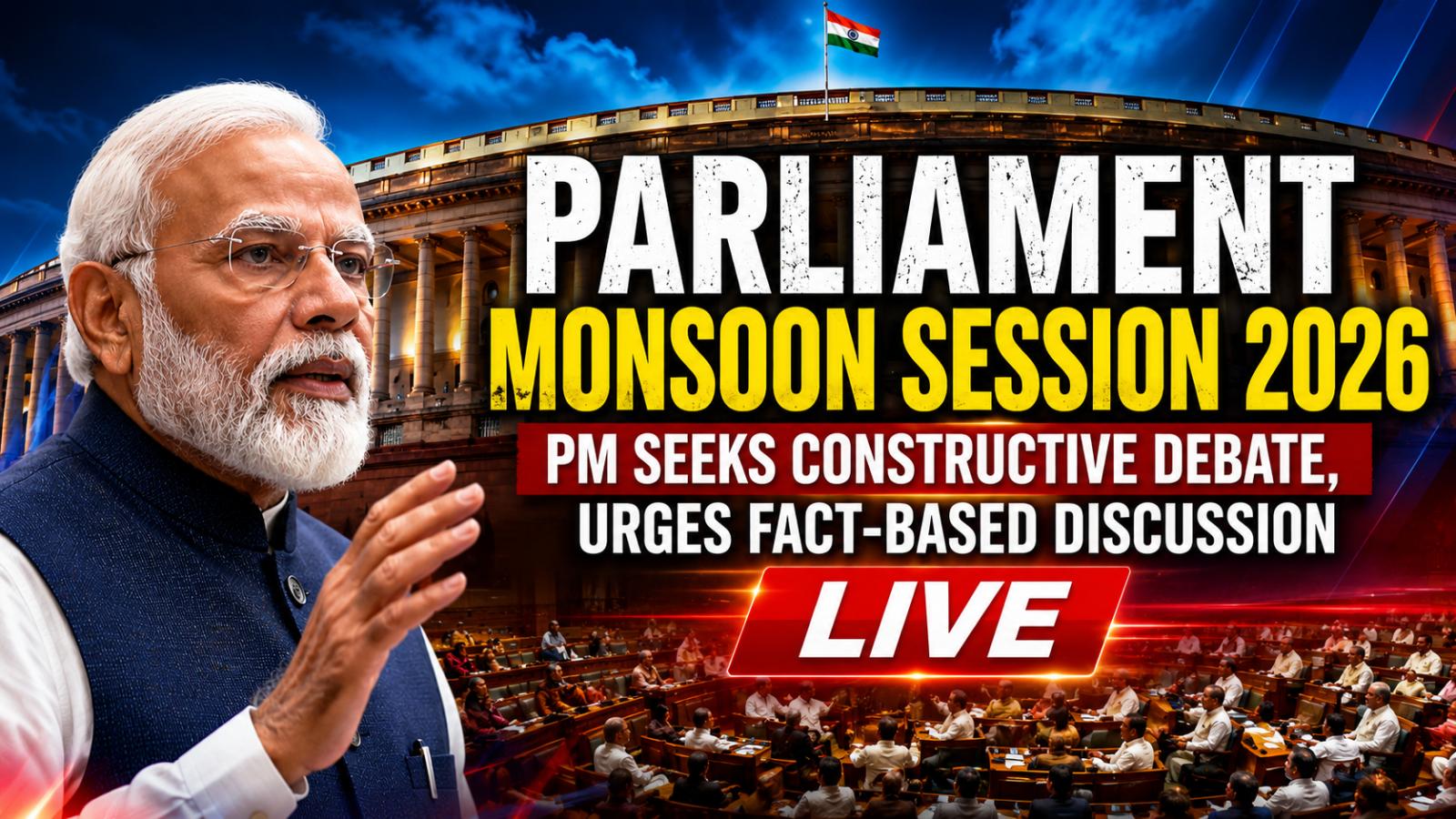
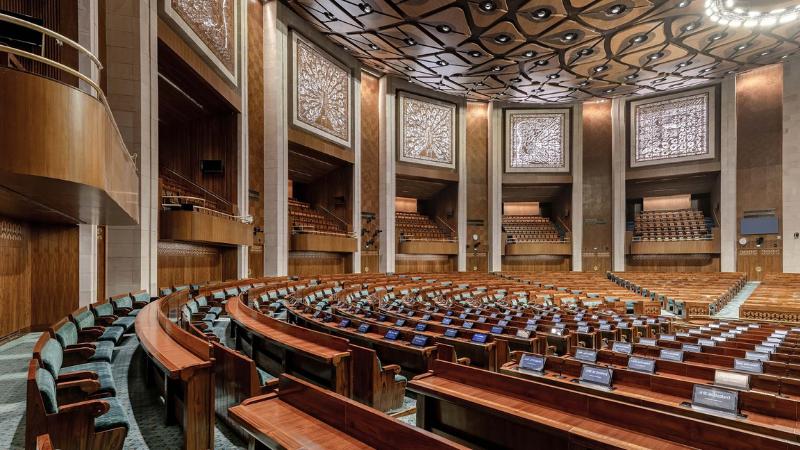
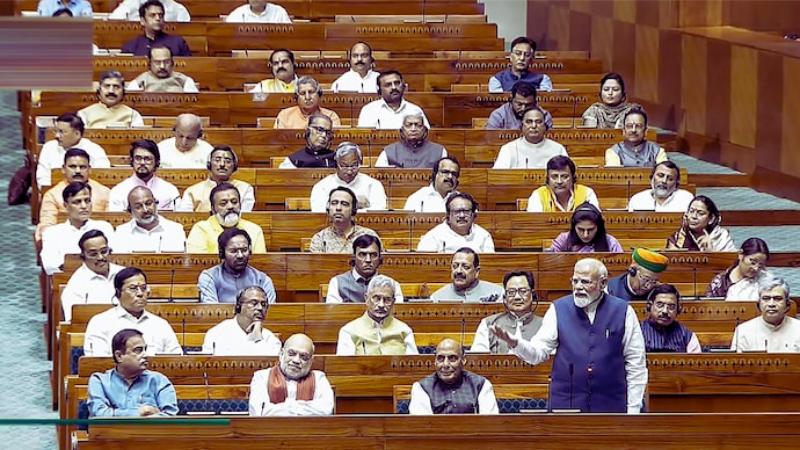
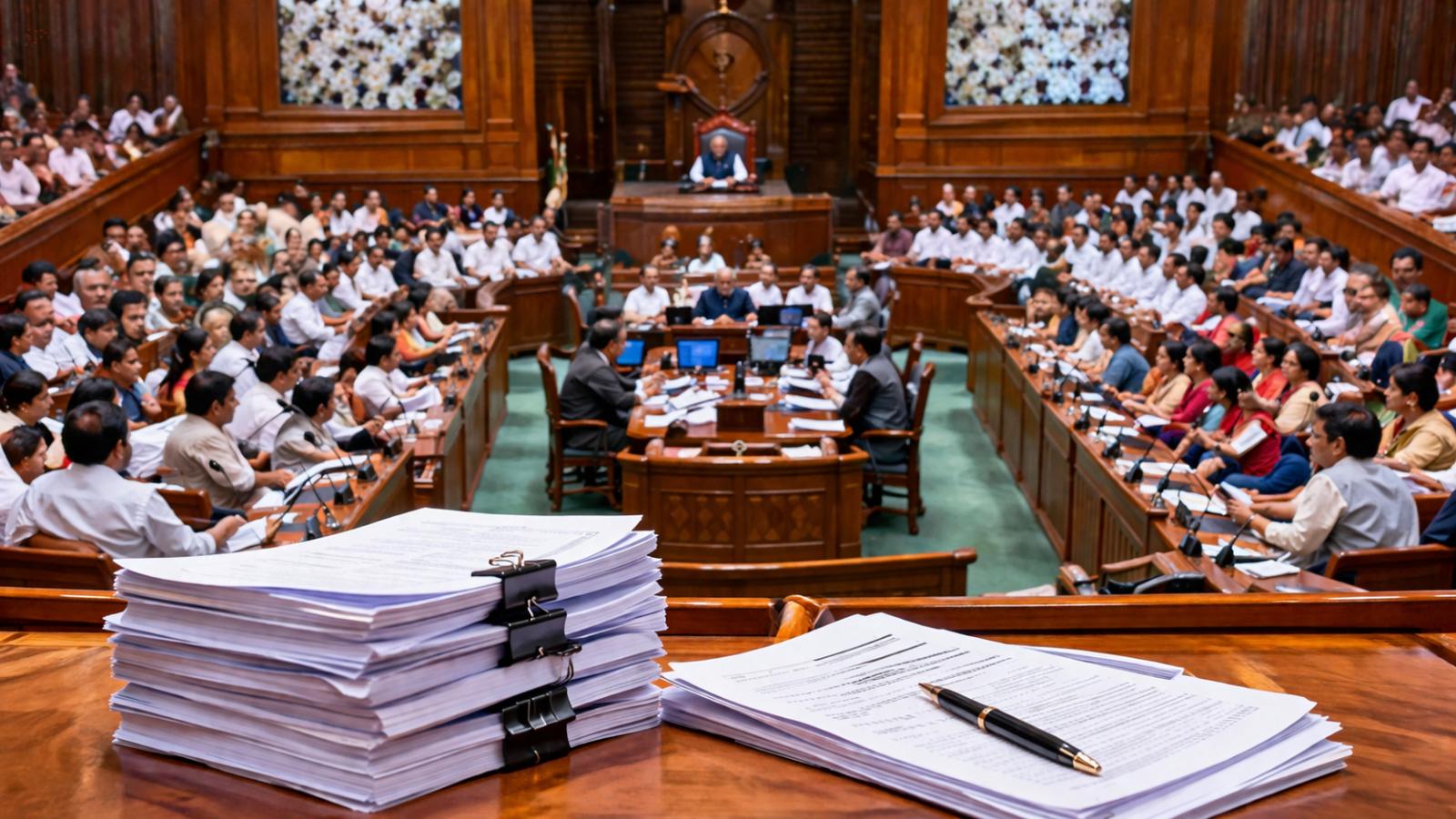
Parliament Monsoon Session 2026 began in New Delhi as Prime Minister Narendra Modi urged lawmakers to hold constructive, fact-based debates and ensure productive proceedings. The Opposition is preparing to raise the NEET-UG paper leak, Sonam Wangchuk’s protest, Ayodhya donation concerns, ethanol policy and other major national issues.
Parliament Monsoon Session 2026 began in New Delhi as Prime Minister Narendra Modi urged lawmakers to hold constructive, fact-based debates and ensure productive proceedings. The Opposition is preparing to raise the NEET-UG paper leak, Sonam Wangchuk’s protest, Ayodhya donation concerns, ethanol policy and other major national issues.
The Centre has listed five new bills and two previously introduced measures for the Monsoon Session 2026 beginning Monday, July 20. However, the Delimitation Bill and Public Office Disqualification Bill are absent, fuelling speculation over whether they could be introduced later.
Monsoon Session Bills Leave Delimitation Question Open
The Union government has outlined its legislative agenda for the Monsoon Session 2026, listing five new bil
The Centre has listed five new bills and two previously introduced measures for the Monsoon Session 2026 beginning Monday, July 20. However, the Delimitation Bill and Public Office Disqualification Bill are absent, fuelling speculation over whether they could be introduced later.
Monsoon Session Bills Leave Delimitation Question Open
The Union government has outlined its legislative agenda for the Monsoon Session 2026, listing five new bil
Political background and earlier opposition
The earlier attempt by the NDA government to move forward with delimitation reforms met with significant political resistance. Several opposition parties raised concerns about its potential impact on regional representation, especially for southern states that have historically maintained lower population growth compared to northern regions. Critics argued that a
Political background and earlier opposition
The earlier attempt by the NDA government to move forward with delimitation reforms met with significant political resistance. Several opposition parties raised concerns about its potential impact on regional representation, especially for southern states that have historically maintained lower population growth compared to northern regions. Critics argued that a
Date: May 4, 2026 Time: 09:12 AM IST
Place: Ahmedabad, Gujarat
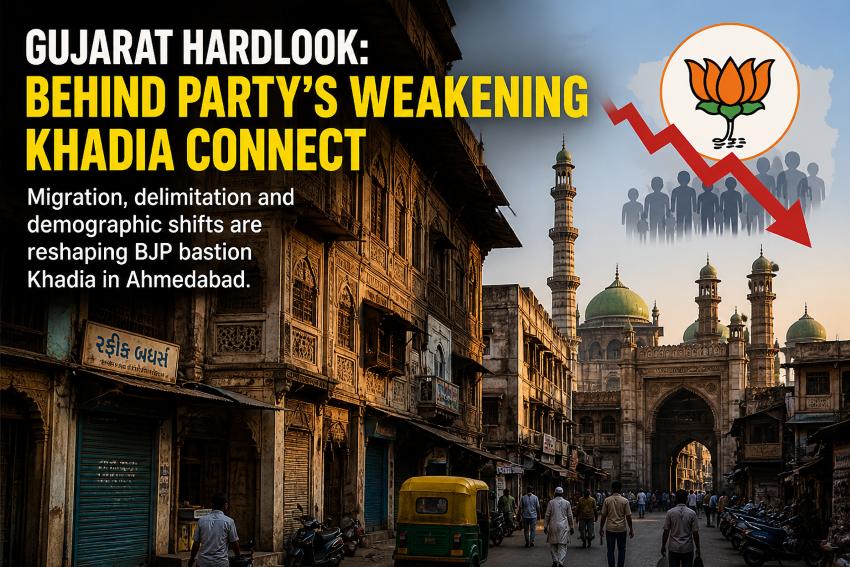
Khadia, once considered a stronghold of the Bharatiya Janata Party in Ahmedabad, is now witnessing a gradual but significant political transformation. The shift is largely attributed to long-term migration patterns, demographic changes, and the impact of delimitation, all of which have altered the region’s voter base and political dynamics. Situated in the heart of Ahmedabad’s historic walled city, Khadia reflects a blend of centuries-old heritage and evolving urban realities. However, as families moved out over the decades in search of better infrastructure and modern living conditions, the social and electoral composition of the area began to change.
Historically, Khadia held immense importance in Gujarat’s political landscape, contributing significantly to the BJP’s rise in the region. The area’s narrow lanes, traditional pol houses, and strong community networks once ensured a stable voter base. However, the closure of textile mills in the late 20th century triggered large-scale migration, particularly among Hindu families who relocated to newer parts of the city. This outflow, combined with the addition of new areas during the delimitation process, reshaped the constituency into Jamalpur-Khadia, where demographic proportions shifted considerably.
Changing Voter Dynamics And Political Impact
The political consequences of these changes have become increasingly visible over the years. The inclusion of areas such as Jamalpur, Kalupur, and Behrampura brought in a different voter demographic, altering the electoral balance. What was once a BJP-dominated seat gradually turned into a competitive battleground, with Congress gaining ground due to the evolving population mix. Local leaders acknowledge that migration reduced the traditional voter base while new voters brought different political preferences, making the constituency more unpredictable.
Despite these challenges, BJP leaders remain optimistic about regaining influence in the region. Internal strategies, including stronger grassroots engagement and addressing local issues, are being discussed to reconnect with voters. At the same time, residents highlight that Khadia continues to maintain its unique cultural identity, where community bonds and traditions still play a vital role in everyday life. The future of Khadia’s politics now depends on how effectively parties adapt to these demographic shifts while addressing the aspirations of a changing population.
Date: May 4, 2026 Time: 09:12 AM IST
Place: Ahmedabad, Gujarat
Khadia, once considered a stronghold of the Bharatiya Janata Party in Ahmedabad, is now witnessing a gradual but significant political transformation. The shift is largely attributed to long-term migration patterns, demographic changes, and the impact of delimitation, all of which have altered the region’s voter base and political dynamics. Situated in the heart of Ahmedabad’s historic walled city, Khadia reflects a blend of centuries-old heritage and evolving urban realities. However, as families moved out over the decades in search of better infrastructure and modern living conditions, the social and electoral composition of the area began to change.
Historically, Khadia held immense importance in Gujarat’s political landscape, contributing significantly to the BJP’s rise in the region. The area’s narrow lanes, traditional pol houses, and strong community networks once ensured a stable voter base. However, the closure of textile mills in the late 20th century triggered large-scale migration, particularly among Hindu families who relocated to newer parts of the city. This outflow, combined with the addition of new areas during the delimitation process, reshaped the constituency into Jamalpur-Khadia, where demographic proportions shifted considerably.
Changing Voter Dynamics And Political Impact
The political consequences of these changes have become increasingly visible over the years. The inclusion of areas such as Jamalpur, Kalupur, and Behrampura brought in a different voter demographic, altering the electoral balance. What was once a BJP-dominated seat gradually turned into a competitive battleground, with Congress gaining ground due to the evolving population mix. Local leaders acknowledge that migration reduced the traditional voter base while new voters brought different political preferences, making the constituency more unpredictable.
Despite these challenges, BJP leaders remain optimistic about regaining influence in the region. Internal strategies, including stronger grassroots engagement and addressing local issues, are being discussed to reconnect with voters. At the same time, residents highlight that Khadia continues to maintain its unique cultural identity, where community bonds and traditions still play a vital role in everyday life. The future of Khadia’s politics now depends on how effectively parties adapt to these demographic shifts while addressing the aspirations of a changing population.
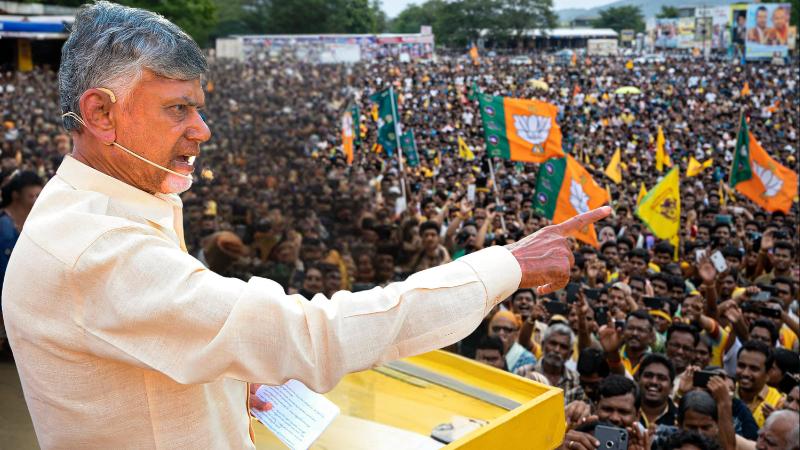
N. Chandrababu Naidu marked his birthday with intense political activity, choosing to campaign in Tamil Nadu for the National Democratic Alliance instead of celebrating the occasion. The veteran leader arrived in Coimbatore, where he received a strong reception from supporters and members of the Telugu community, signaling the growing momentum of the NDA campaign ahead of the Assembly elections.
Continuing his schedule, Naidu interacted with local leaders and key political figures, holding discussions on electoral strategy and regional issues. His visit reflects a broader push by the NDA to strengthen its presence in Tamil Nadu, with Naidu playing an active role in mobilizing support. His decision to campaign on his birthday highlights his commitment to political work and alliance responsibilities.
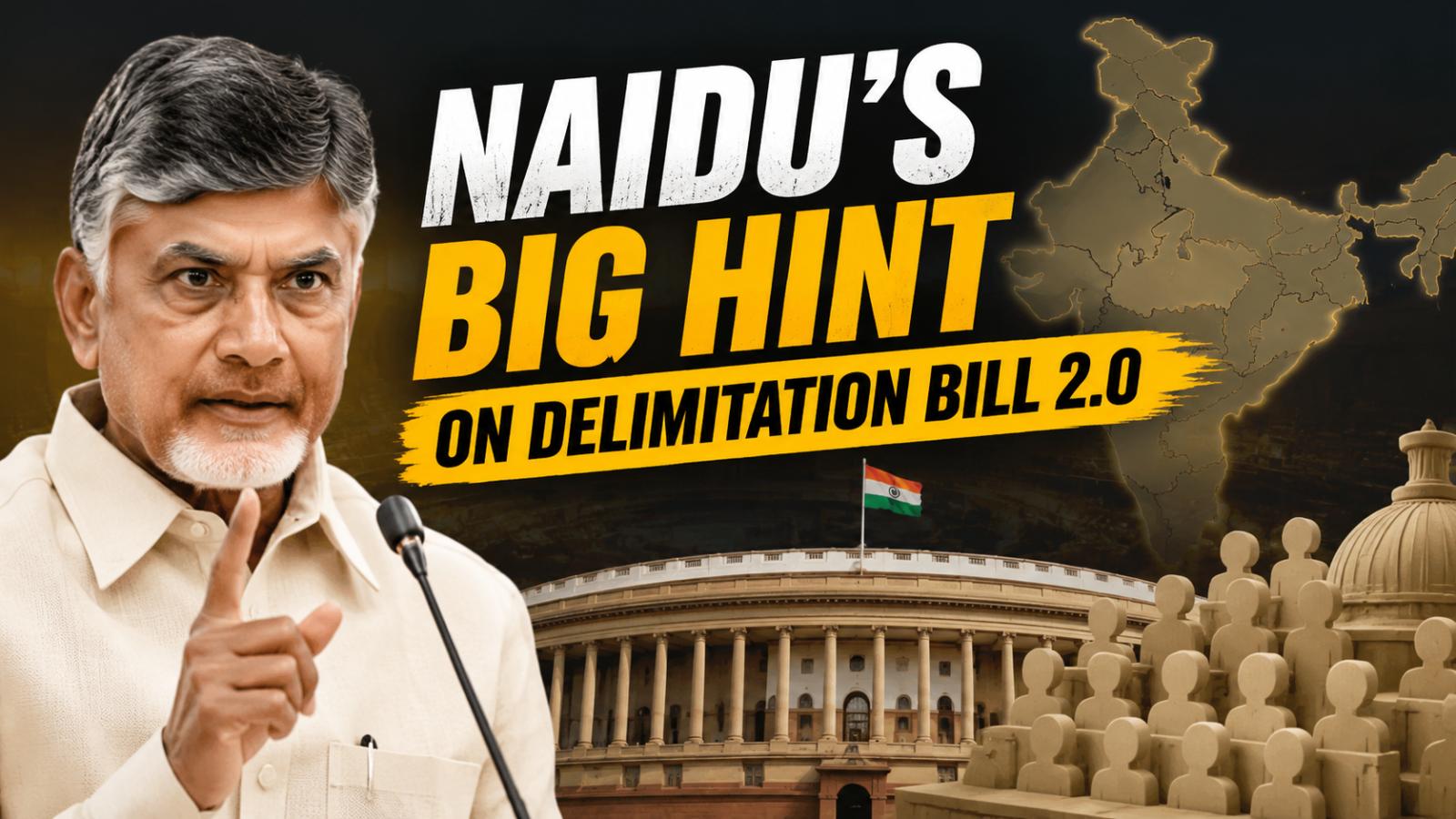
During his address, Naidu criticized the ruling Dravida Munnetra Kazhagam for opposing the delimitation bill, stating that the move could negatively impact southern states in the future. He argued that the bill was intended to address concerns arising from population-based seat allocation and warned that resistance to it could harm the region’s political representation.
Naidu’s remarks came as he took a firm stance in support of the delimitation proposal, even while speaking in a region where the issue remains politically sensitive. He emphasized that such reforms are necessary to ensure balanced representation and long-term benefits for states in South India.
Following his engagements in Coimbatore, Naidu is expected to continue his campaign in Chennai, where he will participate in roadshows and public meetings. His active involvement underlines the NDA’s strategy to intensify outreach efforts in the state ahead of the polls.
With his continued presence on the ground and focus on key political issues, Naidu’s campaign signals a determined push by the NDA to make inroads in Tamil Nadu. His efforts are likely to play a significant role in shaping the alliance’s performance in the upcoming elections.
N. Chandrababu Naidu marked his birthday with intense political activity, choosing to campaign in Tamil Nadu for the National Democratic Alliance instead of celebrating the occasion. The veteran leader arrived in Coimbatore, where he received a strong reception from supporters and members of the Telugu community, signaling the growing momentum of the NDA campaign ahead of the Assembly elections.
Continuing his schedule, Naidu interacted with local leaders and key political figures, holding discussions on electoral strategy and regional issues. His visit reflects a broader push by the NDA to strengthen its presence in Tamil Nadu, with Naidu playing an active role in mobilizing support. His decision to campaign on his birthday highlights his commitment to political work and alliance responsibilities.
During his address, Naidu criticized the ruling Dravida Munnetra Kazhagam for opposing the delimitation bill, stating that the move could negatively impact southern states in the future. He argued that the bill was intended to address concerns arising from population-based seat allocation and warned that resistance to it could harm the region’s political representation.
Naidu’s remarks came as he took a firm stance in support of the delimitation proposal, even while speaking in a region where the issue remains politically sensitive. He emphasized that such reforms are necessary to ensure balanced representation and long-term benefits for states in South India.
Following his engagements in Coimbatore, Naidu is expected to continue his campaign in Chennai, where he will participate in roadshows and public meetings. His active involvement underlines the NDA’s strategy to intensify outreach efforts in the state ahead of the polls.
With his continued presence on the ground and focus on key political issues, Naidu’s campaign signals a determined push by the NDA to make inroads in Tamil Nadu. His efforts are likely to play a significant role in shaping the alliance’s performance in the upcoming elections.
The debate around delimitation and fertility trends in India has long been presented as a matter of data, numbers, and scientific calculation. However, beneath the surface lies a far more complex reality that statistics alone often fail to fully capture. While policymakers and scholars rely heavily on demographic data to redraw constituencies and assess population changes, the lived experiences and political consequences of these decisions extend far beyond what the numbers suggest.
Delimitation, the process of redrawing electoral boundaries based on population, is intended to ensure fair representation. On paper, it appears straightforward: regions with higher populations should have more representation. However, this principle becomes contentious when viewed in the context of India’s diverse demographic patterns. States that have successfully controlled population growth through effective policies may find themselves disadvantaged in terms of political representation, while those with higher fertility rates could gain more seats. This creates a paradox where success in population control might translate into reduced political influence.
The science behind fertility rates also presents limitations. While data can indicate trends such as declining birth rates or regional disparities, it cannot fully explain the social, cultural, and economic factors driving these changes. Fertility decisions are influenced by education, access to healthcare, urbanization, and shifting societal values. These nuances are often overlooked when discussions are framed purely in statistical terms. As a result, policies based solely on numerical analysis risk missing the deeper context that shapes population behavior.
Understanding The Limits Of Data
Scholarly research on delimitation and fertility often lags behind the political realities experienced on the ground. While academics strive to build models and frameworks to explain these phenomena, their findings can take time to reflect the rapidly evolving dynamics of Indian society. Political leaders and citizens, on the other hand, often develop intuitive understandings of these issues based on direct experience. This gap between theory and reality highlights the limitations of relying exclusively on scientific approaches.
Moreover, the use of census data as the primary basis for delimitation introduces its own challenges. Census figures provide a snapshot of population distribution at a specific point in time, but they cannot account for migration patterns, economic shifts, or sudden demographic changes. In a country as vast and diverse as India, these factors can significantly alter the ground reality within a short period. As a result, decisions based on outdated or incomplete data may fail to achieve the intended goal of equitable representation.
Balancing Representation And Fairness
The intersection of delimitation and fertility trends raises important questions about fairness and equity in governance. Should representation be based purely on population numbers, or should it also consider the efforts made by certain regions to control population growth? This dilemma underscores the need for a more nuanced approach that goes beyond traditional metrics.
Policymakers must recognize that demographic data is only one piece of the puzzle. A holistic understanding of social, economic, and cultural factors is essential to create policies that are both fair and effective. This may involve exploring alternative methods of representation or introducing safeguards to ensure that states are not penalized for successful population control measures.
Ultimately, the science of delimitation and fertility provides valuable insights, but it is not a complete solution. To address the challenges posed by these issues, India must move beyond numbers and embrace a more comprehensive perspective that reflects the complexity of its society. Only then can the country achieve a balance between representation, fairness, and sustainable development.
The debate around delimitation and fertility trends in India has long been presented as a matter of data, numbers, and scientific calculation. However, beneath the surface lies a far more complex reality that statistics alone often fail to fully capture. While policymakers and scholars rely heavily on demographic data to redraw constituencies and assess population changes, the lived experiences and political consequences of these decisions extend far beyond what the numbers suggest.
Delimitation, the process of redrawing electoral boundaries based on population, is intended to ensure fair representation. On paper, it appears straightforward: regions with higher populations should have more representation. However, this principle becomes contentious when viewed in the context of India’s diverse demographic patterns. States that have successfully controlled population growth through effective policies may find themselves disadvantaged in terms of political representation, while those with higher fertility rates could gain more seats. This creates a paradox where success in population control might translate into reduced political influence.
The science behind fertility rates also presents limitations. While data can indicate trends such as declining birth rates or regional disparities, it cannot fully explain the social, cultural, and economic factors driving these changes. Fertility decisions are influenced by education, access to healthcare, urbanization, and shifting societal values. These nuances are often overlooked when discussions are framed purely in statistical terms. As a result, policies based solely on numerical analysis risk missing the deeper context that shapes population behavior.
Understanding The Limits Of Data
Scholarly research on delimitation and fertility often lags behind the political realities experienced on the ground. While academics strive to build models and frameworks to explain these phenomena, their findings can take time to reflect the rapidly evolving dynamics of Indian society. Political leaders and citizens, on the other hand, often develop intuitive understandings of these issues based on direct experience. This gap between theory and reality highlights the limitations of relying exclusively on scientific approaches.
Moreover, the use of census data as the primary basis for delimitation introduces its own challenges. Census figures provide a snapshot of population distribution at a specific point in time, but they cannot account for migration patterns, economic shifts, or sudden demographic changes. In a country as vast and diverse as India, these factors can significantly alter the ground reality within a short period. As a result, decisions based on outdated or incomplete data may fail to achieve the intended goal of equitable representation.
Balancing Representation And Fairness
The intersection of delimitation and fertility trends raises important questions about fairness and equity in governance. Should representation be based purely on population numbers, or should it also consider the efforts made by certain regions to control population growth? This dilemma underscores the need for a more nuanced approach that goes beyond traditional metrics.
Policymakers must recognize that demographic data is only one piece of the puzzle. A holistic understanding of social, economic, and cultural factors is essential to create policies that are both fair and effective. This may involve exploring alternative methods of representation or introducing safeguards to ensure that states are not penalized for successful population control measures.
Ultimately, the science of delimitation and fertility provides valuable insights, but it is not a complete solution. To address the challenges posed by these issues, India must move beyond numbers and embrace a more comprehensive perspective that reflects the complexity of its society. Only then can the country achieve a balance between representation, fairness, and sustainable development.
In a major political development, a united Opposition on Friday, April 17, 2026, defeated the government’s Women’s Reservation Bill in the Lok Sabha, marking the first legislative setback for the NDA government in over a decade. Despite last-minute appeals from Prime Minister
In a major political development, a united Opposition on Friday, April 17, 2026, defeated the government’s Women’s Reservation Bill in the Lok Sabha, marking the first legislative setback for the NDA government in over a decade. Despite last-minute appeals from Prime Minister
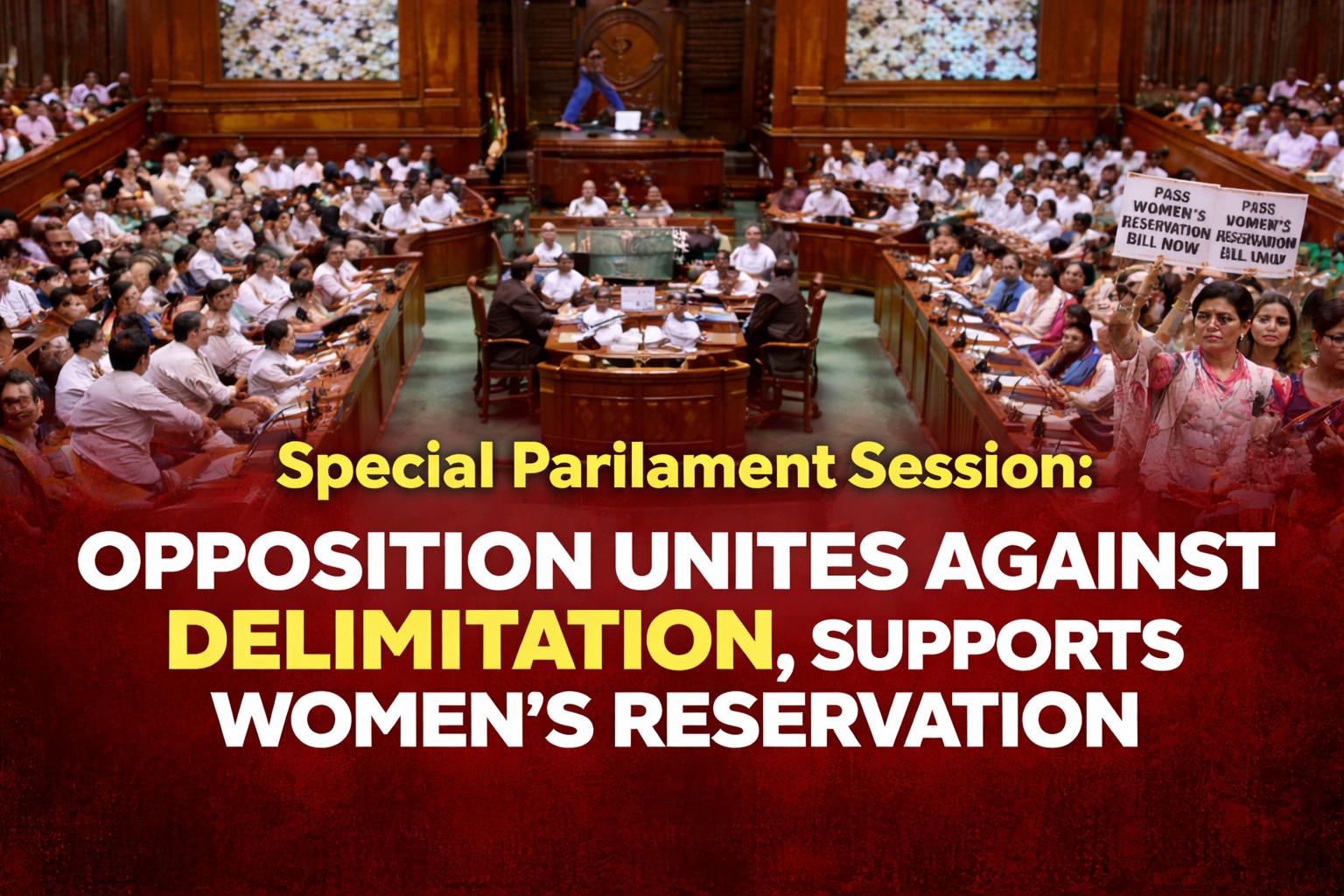
India’s Parliament witnessed intense exchanges and high political drama during the special session as debates around the delimitation bill and women’s reservation took centre stage. The discussions brought out sharp ideological differences between the ruling government and the Opposition, with leaders raising concerns about fairness, representation, and timing of reforms.
Congress leader Karti Chidambaram sparked fresh controversy by likening the delimitation exercise to an “i
India’s Parliament witnessed intense exchanges and high political drama during the special session as debates around the delimitation bill and women’s reservation took centre stage. The discussions brought out sharp ideological differences between the ruling government and the Opposition, with leaders raising concerns about fairness, representation, and timing of reforms.
Congress leader Karti Chidambaram sparked fresh controversy by likening the delimitation exercise to an “i
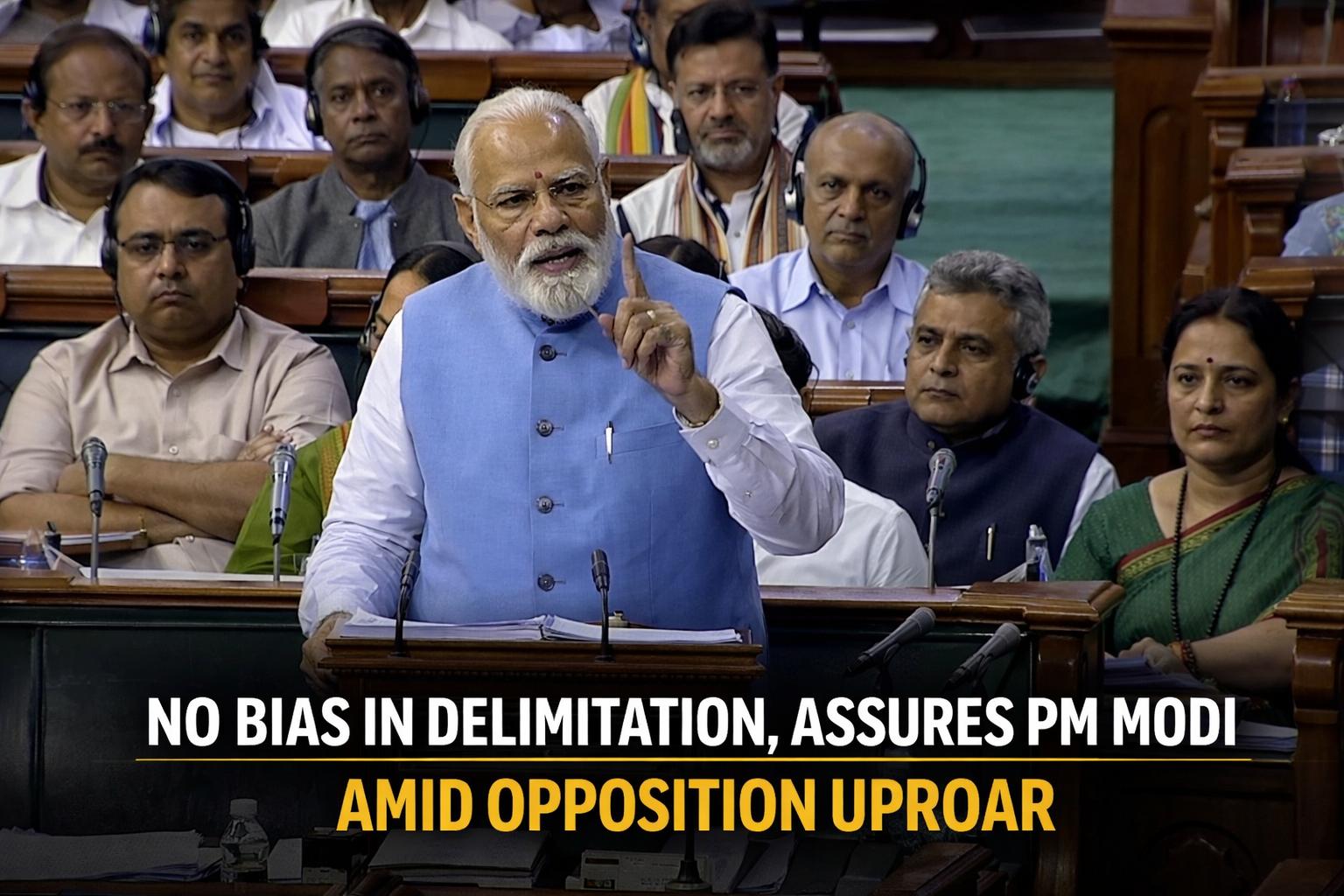
Prime Minister Narendra Modi addressed the Lok Sabha during the ongoing special Parliament session, offering a strong assurance that the proposed delimitation process will be conducted without bias toward any region. His statement comes at a time when the issue has triggered a major political confrontation between the ruling NDA and Opposition parties, especially leaders from southern states who fea
Prime Minister Narendra Modi addressed the Lok Sabha during the ongoing special Parliament session, offering a strong assurance that the proposed delimitation process will be conducted without bias toward any region. His statement comes at a time when the issue has triggered a major political confrontation between the ruling NDA and Opposition parties, especially leaders from southern states who fea
The Special Parliament Session, set to run from April 16 to 18, has kicked off with significant debates surrounding the government’s proposed amendments. One of the most anticipated legislative pieces is the operationalization of the Women’s Reservation Act, which aims to ensure 33% representation for women in both the Lok Sabha and state assemblies by 2029. Alongside this, a Constitution amendment bill will be presented on the first day of the session, marking the beginning of what promi
The Special Parliament Session, set to run from April 16 to 18, has kicked off with significant debates surrounding the government’s proposed amendments. One of the most anticipated legislative pieces is the operationalization of the Women’s Reservation Act, which aims to ensure 33% representation for women in both the Lok Sabha and state assemblies by 2029. Alongside this, a Constitution amendment bill will be presented on the first day of the session, marking the beginning of what promi
India's Parliament is set to witness a fierce debate over three proposed bills that could significantly alter the country's electoral system, especially the reservation for women. While the government argues these bills are crucial for ensuring a 33% reservation for women, the opposition and legal experts have raised serious concerns about the political and constitutional implications.
The first bill, the Constitutional Amendment Bill, proposes an increase in Lok Sabha seats to 850,
India's Parliament is set to witness a fierce debate over three proposed bills that could significantly alter the country's electoral system, especially the reservation for women. While the government argues these bills are crucial for ensuring a 33% reservation for women, the opposition and legal experts have raised serious concerns about the political and constitutional implications.
The first bill, the Constitutional Amendment Bill, proposes an increase in Lok Sabha seats to 850,
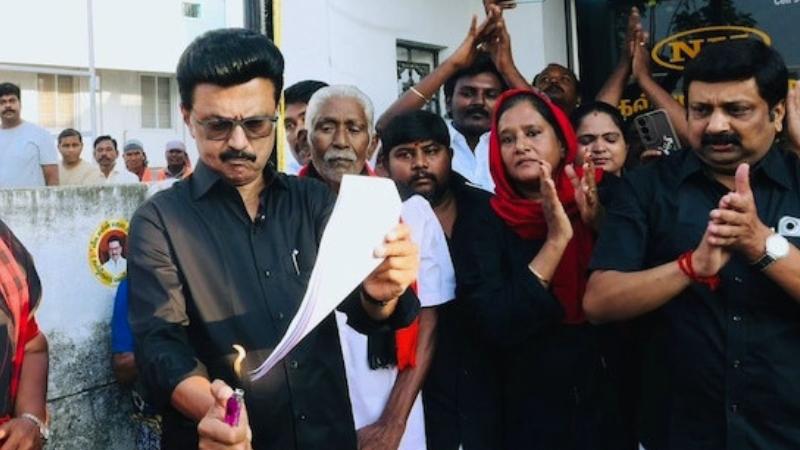
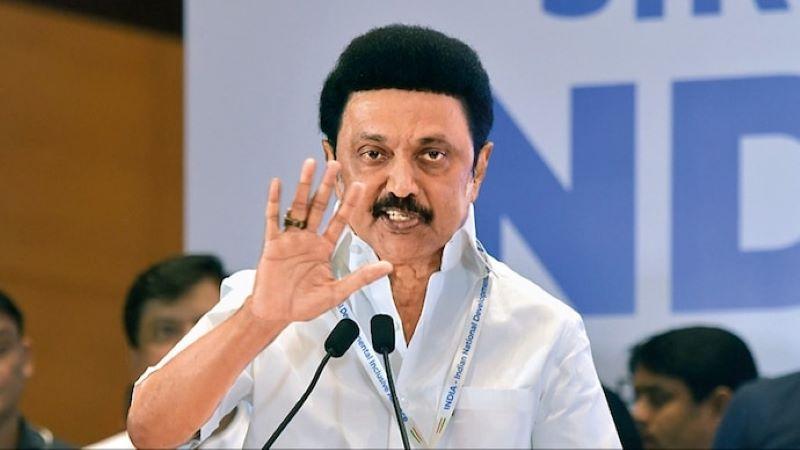
MK Stalin, the Chief Minister of Tamil Nadu, has intensified his protests against the Centre’s proposed delimitation move, burning a copy of the bill and hoisting a black flag. This move is part of a broader statewide agitation initiated by Stalin, who has termed the proposed delimitation as a direct attack on Tamil rights and federalism. In a symbolic gesture of defiance, Stalin called the bill a "black law" and urged widespread resistance across Tamil Nadu.
The protest was spark
MK Stalin, the Chief Minister of Tamil Nadu, has intensified his protests against the Centre’s proposed delimitation move, burning a copy of the bill and hoisting a black flag. This move is part of a broader statewide agitation initiated by Stalin, who has termed the proposed delimitation as a direct attack on Tamil rights and federalism. In a symbolic gesture of defiance, Stalin called the bill a "black law" and urged widespread resistance across Tamil Nadu.
The protest was spark
China has acknowledged that the longstanding border dispute with India remains "complicated" and will require time to resolve. However, the Chinese Foreign Ministry expressed readiness to engage in discussions on delimiting the border and maintaining peace in the border areas. This statement came in response to remarks made by Indian Defence Minister Rajnath Singh during his meeting with Chinese Defence Minister Dong Jun in Qingdao on June 26, 2025,
China has acknowledged that the longstanding border dispute with India remains "complicated" and will require time to resolve. However, the Chinese Foreign Ministry expressed readiness to engage in discussions on delimiting the border and maintaining peace in the border areas. This statement came in response to remarks made by Indian Defence Minister Rajnath Singh during his meeting with Chinese Defence Minister Dong Jun in Qingdao on June 26, 2025,
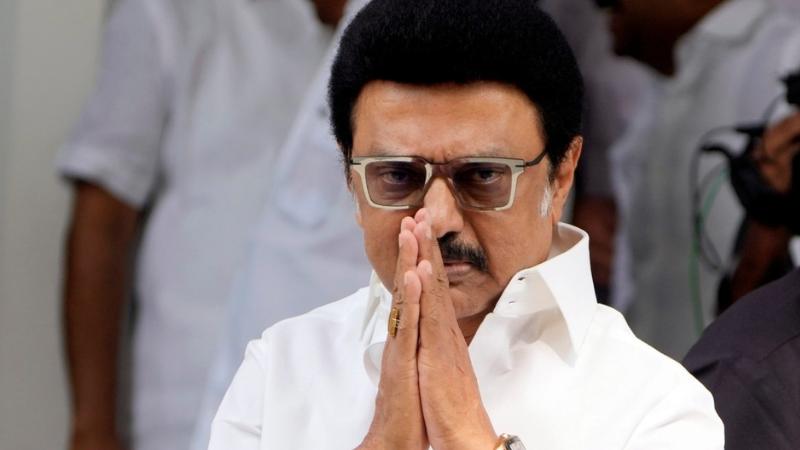
Tamil Nadu Chief Minister MK Stalin has launched a political offensive against the Centre’s proposed delimitation exercise, calling it a direct assault on federalism. In an unprecedented move, he has written letters to the chief ministers of all South Indian states, along with West Bengal, Odisha, and Punjab, urging them to form a Joint Action Committee (JAC) to oppose the move.
A Nationwide Political Outreach
The letter marks a major political
Tamil Nadu Chief Minister MK Stalin has launched a political offensive against the Centre’s proposed delimitation exercise, calling it a direct assault on federalism. In an unprecedented move, he has written letters to the chief ministers of all South Indian states, along with West Bengal, Odisha, and Punjab, urging them to form a Joint Action Committee (JAC) to oppose the move.
A Nationwide Political Outreach
The letter marks a major political
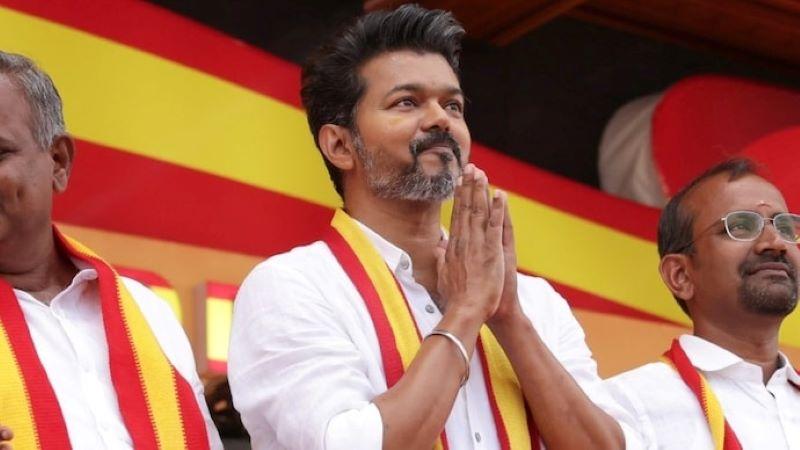
Tamilaga Vettri Kazhagam (TVK) chief and actor Vijay has expressed strong concerns over the proposed delimitation process, urging the government to ensure fair representation and conduct public consultations before finalizing any changes. In a detailed five-page statement, Vijay clarified that his party is not against delimitation but firmly believes that no state should lose its rightful representation in Parliament due to constituency redistribution.Vijay emphasized that simply increasing t
Tamilaga Vettri Kazhagam (TVK) chief and actor Vijay has expressed strong concerns over the proposed delimitation process, urging the government to ensure fair representation and conduct public consultations before finalizing any changes. In a detailed five-page statement, Vijay clarified that his party is not against delimitation but firmly believes that no state should lose its rightful representation in Parliament due to constituency redistribution.Vijay emphasized that simply increasing t
Tamil Nadu Chief Minister MK Stalin has reaffirmed his strong opposition to the imposition of Hindi, warning that the state is ready for another language war if necessary. His comments come amid growing concerns over the Centre’s three-language policy, which Tamil Nadu’s ruling Dravida Munnetra Kazhagam (DMK) has long opposed.The DMK has consistently maintained that Tamil Nadu will only follow Tamil and English as its official languages and has frequently accused the BJP-led Union
Tamil Nadu Chief Minister MK Stalin has reaffirmed his strong opposition to the imposition of Hindi, warning that the state is ready for another language war if necessary. His comments come amid growing concerns over the Centre’s three-language policy, which Tamil Nadu’s ruling Dravida Munnetra Kazhagam (DMK) has long opposed.The DMK has consistently maintained that Tamil Nadu will only follow Tamil and English as its official languages and has frequently accused the BJP-led Union