Date: May 4, 2026 Time: 09:12 AM IST
Place: Ahmedabad, Gujarat
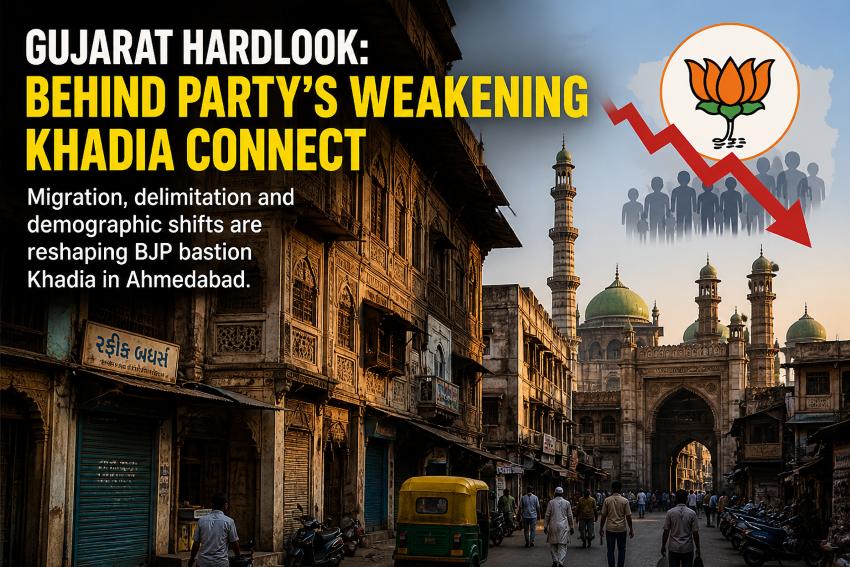
Khadia, once considered a stronghold of the Bharatiya Janata Party in Ahmedabad, is now witnessing a gradual but significant political transformation. The shift is largely attributed to long-term migration patterns, demographic changes, and the impact of delimitation, all of which have altered the region’s voter base and political dynamics. Situated in the heart of Ahmedabad’s historic walled city, Khadia reflects a blend of centuries-old heritage and evolving urban realities. However, as families moved out over the decades in search of better infrastructure and modern living conditions, the social and electoral composition of the area began to change.
Historically, Khadia held immense importance in Gujarat’s political landscape, contributing significantly to the BJP’s rise in the region. The area’s narrow lanes, traditional pol houses, and strong community networks once ensured a stable voter base. However, the closure of textile mills in the late 20th century triggered large-scale migration, particularly among Hindu families who relocated to newer parts of the city. This outflow, combined with the addition of new areas during the delimitation process, reshaped the constituency into Jamalpur-Khadia, where demographic proportions shifted considerably.
Changing Voter Dynamics And Political Impact
The political consequences of these changes have become increasingly visible over the years. The inclusion of areas such as Jamalpur, Kalupur, and Behrampura brought in a different voter demographic, altering the electoral balance. What was once a BJP-dominated seat gradually turned into a competitive battleground, with Congress gaining ground due to the evolving population mix. Local leaders acknowledge that migration reduced the traditional voter base while new voters brought different political preferences, making the constituency more unpredictable.
Despite these challenges, BJP leaders remain optimistic about regaining influence in the region. Internal strategies, including stronger grassroots engagement and addressing local issues, are being discussed to reconnect with voters. At the same time, residents highlight that Khadia continues to maintain its unique cultural identity, where community bonds and traditions still play a vital role in everyday life. The future of Khadia’s politics now depends on how effectively parties adapt to these demographic shifts while addressing the aspirations of a changing population.