

















#gujaratpolitics
Khadia Political Shift Weakens BJP Hold As Demographic Changes Reshape Ahmedabad
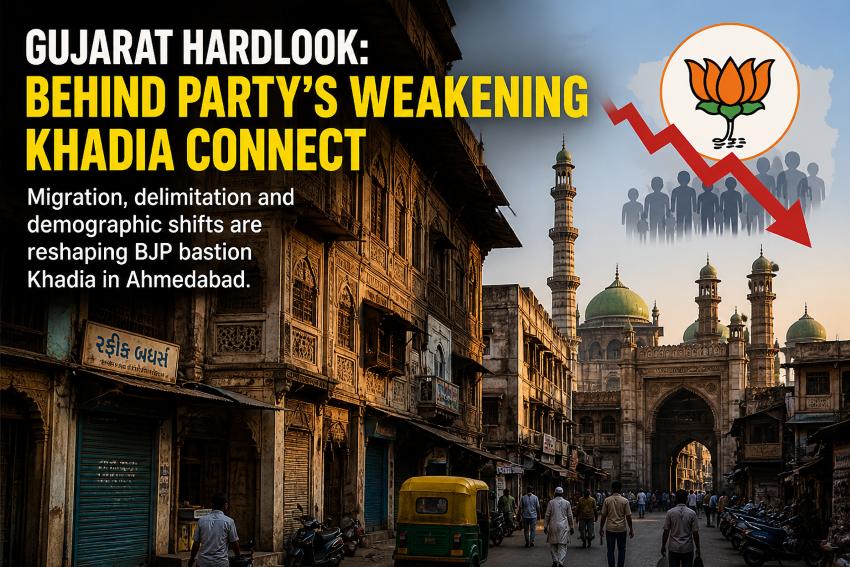
Date: May 4, 2026 Time: 09:12 AM IST Place: Ahmedabad, Gujarat Khadia, once considered a stronghold of the Bharatiya Janata Party in Ahmedabad, is now witnessing a gradual but significant political transformation. The shift is largely attributed to long-term migration patterns, demographic changes, and the impact of delimitation, all of which have altered the region’s voter base and political dynamics. Situated in the heart of Ahmedabad’s historic walled city, Khadia reflects a blend of centuries-old heritage and evolving urban realities. However, as families moved out over the decades in search of better infrastructure and modern living conditions, the social and electoral composition of the area began to change. Historically, Khadia held immense importance in Gujarat’s political landscape, contributing significantly to the BJP’s rise in the region. The area’s narrow lanes, traditional pol houses, and strong community networks once ensured a stable voter base. However, the closure of textile mills in the late 20th century triggered large-scale migration, particularly among Hindu families who relocated to newer parts of the city. This outflow, combined with the addition of new areas during the delimitation process, reshaped the constituency into Jamalpur-Khadia, where demographic proportions shifted considerably. Changing Voter Dynamics And Political Impact The political consequences of these changes have become increasingly visible over the years. The inclusion of areas such as Jamalpur, Kalupur, and Behrampura brought in a different voter demographic, altering the electoral balance. What was once a BJP-dominated seat gradually turned into a competitive battleground, with Congress gaining ground due to the evolving population mix. Local leaders acknowledge that migration reduced the traditional voter base while new voters brought different political preferences, making the constituency more unpredictable. Despite these challenges, BJP leaders remain optimistic about regaining influence in the region. Internal strategies, including stronger grassroots engagement and addressing local issues, are being discussed to reconnect with voters. At the same time, residents highlight that Khadia continues to maintain its unique cultural identity, where community bonds and traditions still play a vital role in everyday life. The future of Khadia’s politics now depends on how effectively parties adapt to these demographic shifts while addressing the aspirations of a changing population.
Khadia Political Shift Weakens BJP Hold As Demographic Changes Reshape Ahmedabad
Date: May 4, 2026 Time: 09:12 AM IST Place: Ahmedabad, Gujarat Khadia, once considered a stronghold of the Bharatiya Janata Party in Ahmedabad, is now witnessing a gradual but significant political transformation. The shift is largely attributed to long-term migration patterns, demographic changes, and the impact of delimitation, all of which have altered the region’s voter base and political dynamics. Situated in the heart of Ahmedabad’s historic walled city, Khadia reflects a blend of centuries-old heritage and evolving urban realities. However, as families moved out over the decades in search of better infrastructure and modern living conditions, the social and electoral composition of the area began to change. Historically, Khadia held immense importance in Gujarat’s political landscape, contributing significantly to the BJP’s rise in the region. The area’s narrow lanes, traditional pol houses, and strong community networks once ensured a stable voter base. However, the closure of textile mills in the late 20th century triggered large-scale migration, particularly among Hindu families who relocated to newer parts of the city. This outflow, combined with the addition of new areas during the delimitation process, reshaped the constituency into Jamalpur-Khadia, where demographic proportions shifted considerably. Changing Voter Dynamics And Political Impact The political consequences of these changes have become increasingly visible over the years. The inclusion of areas such as Jamalpur, Kalupur, and Behrampura brought in a different voter demographic, altering the electoral balance. What was once a BJP-dominated seat gradually turned into a competitive battleground, with Congress gaining ground due to the evolving population mix. Local leaders acknowledge that migration reduced the traditional voter base while new voters brought different political preferences, making the constituency more unpredictable. Despite these challenges, BJP leaders remain optimistic about regaining influence in the region. Internal strategies, including stronger grassroots engagement and addressing local issues, are being discussed to reconnect with voters. At the same time, residents highlight that Khadia continues to maintain its unique cultural identity, where community bonds and traditions still play a vital role in everyday life. The future of Khadia’s politics now depends on how effectively parties adapt to these demographic shifts while addressing the aspirations of a changing population.
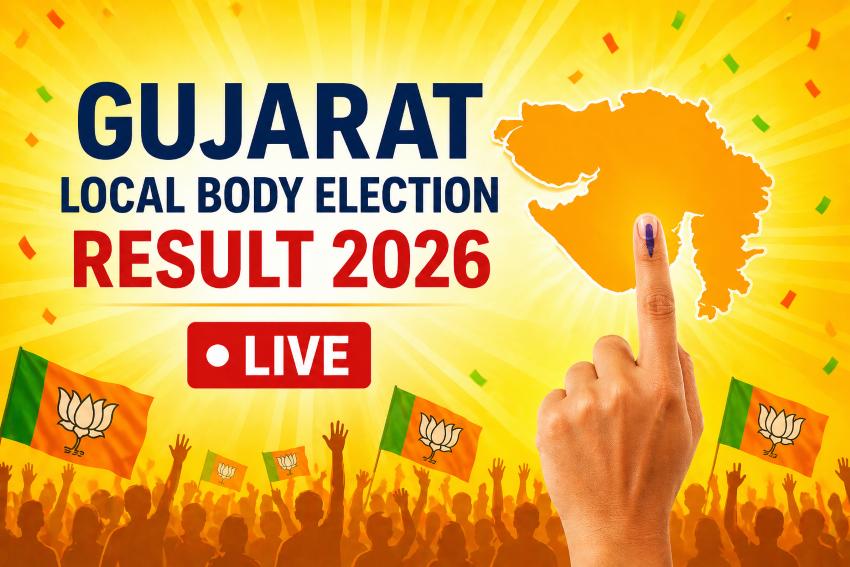
Gujarat Local Body Election Result 2026 Live: BJP Wins Big Across Urban and Rural Areas
The results of the Gujarat Local Body Elections 2026 show a strong victory for the Bharatiya Janata Party (BJP). The party has secured a large number of seats across both urban and rural areas, clearly dominating the elections.In major cities and municipal corporations, BJP candidates won by comfortable margins. The party also performed very well in municipalities and panchayats, showing strong support from rural voters. Opposition parties like Congress and Aam Aadmi Party (AAP) str
Gujarat Local Body Election Result 2026 Live: BJP Wins Big Across Urban and Rural Areas
The results of the Gujarat Local Body Elections 2026 show a strong victory for the Bharatiya Janata Party (BJP). The party has secured a large number of seats across both urban and rural areas, clearly dominating the elections.In major cities and municipal corporations, BJP candidates won by comfortable margins. The party also performed very well in municipalities and panchayats, showing strong support from rural voters. Opposition parties like Congress and Aam Aadmi Party (AAP) str
Kharge’s Illiterate Gujaratis Remark Sparks BJP Outrage Ahead of Kerala Polls
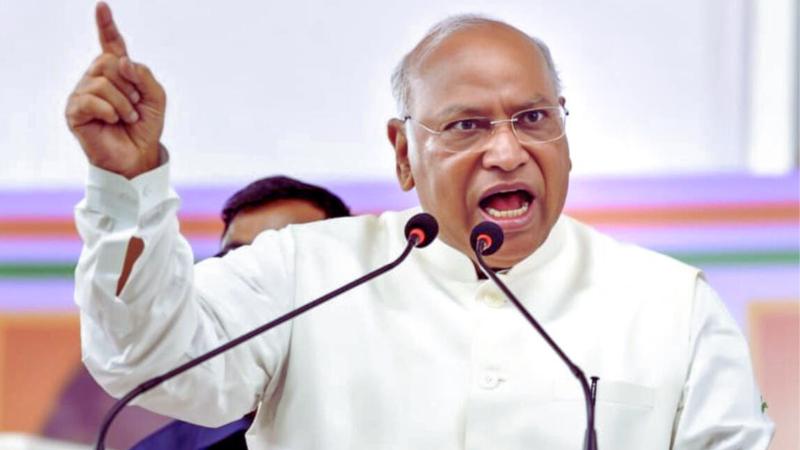
A major political controversy has erupted ahead of the Kerala Assembly elections after Mallikarjun Kharge made a remark comparing voters in Kerala with those in Gujarat. Speaking at a rally in Idukki district, the Congress president stated that people in Kerala are educated and cannot be misled, unlike “illiterate” individuals in Gujarat and some other regions. The statement quickly triggered sharp reactions from the Bharatiya Janata Party, intensifying the already heated election atmosphere. The remark was made while Kharge was addressing political rivals, including Narendra Modi and Kerala Chief Minister Pinarayi Vijayan. His comments were interpreted by BJP leaders as an insult to the people of Gujarat, leading to widespread criticism across party lines. The controversy comes at a crucial time when political parties are actively campaigning and trying to consolidate voter support ahead of polling. The BJP responded aggressively, with Gujarat Deputy Chief Minister Harsh Sanghavi accusing Kharge of disrespecting the people of Gujarat and undermining the state’s legacy. Sanghavi highlighted Gujarat’s historical contribution to India, pointing out that it is the birthplace of leaders like Mahatma Gandhi and Sardar Vallabhbhai Patel. He questioned whether Congress continues to target Gujarat out of frustration after losing political ground in the state. Adding to the criticism, BJP spokesperson Sudhanshu Trivedi challenged Kharge’s statement by referencing prominent leaders from different parts of India, including Gujarat and Uttar Pradesh. Trivedi accused the Congress of engaging in divisive rhetoric ahead of elections, suggesting that such remarks are part of a broader strategy to polarize voters. The timing of the controversy has amplified its political significance, as Kerala prepares to vote. The BJP has framed the issue as an example of Congress’s alleged “divide-and-rule” approach, aiming to mobilize public sentiment against the party. Meanwhile, Congress leaders are likely to face pressure to clarify or defend Kharge’s statement as the debate continues to dominate headlines. This episode highlights how election campaigns in India often escalate into sharp exchanges, where statements made during rallies can quickly turn into national controversies. With polling day approaching, the fallout from this remark could influence voter perception and shape campaign narratives in the final phase of the election race.
Kharge’s Illiterate Gujaratis Remark Sparks BJP Outrage Ahead of Kerala Polls
A major political controversy has erupted ahead of the Kerala Assembly elections after Mallikarjun Kharge made a remark comparing voters in Kerala with those in Gujarat. Speaking at a rally in Idukki district, the Congress president stated that people in Kerala are educated and cannot be misled, unlike “illiterate” individuals in Gujarat and some other regions. The statement quickly triggered sharp reactions from the Bharatiya Janata Party, intensifying the already heated election atmosphere. The remark was made while Kharge was addressing political rivals, including Narendra Modi and Kerala Chief Minister Pinarayi Vijayan. His comments were interpreted by BJP leaders as an insult to the people of Gujarat, leading to widespread criticism across party lines. The controversy comes at a crucial time when political parties are actively campaigning and trying to consolidate voter support ahead of polling. The BJP responded aggressively, with Gujarat Deputy Chief Minister Harsh Sanghavi accusing Kharge of disrespecting the people of Gujarat and undermining the state’s legacy. Sanghavi highlighted Gujarat’s historical contribution to India, pointing out that it is the birthplace of leaders like Mahatma Gandhi and Sardar Vallabhbhai Patel. He questioned whether Congress continues to target Gujarat out of frustration after losing political ground in the state. Adding to the criticism, BJP spokesperson Sudhanshu Trivedi challenged Kharge’s statement by referencing prominent leaders from different parts of India, including Gujarat and Uttar Pradesh. Trivedi accused the Congress of engaging in divisive rhetoric ahead of elections, suggesting that such remarks are part of a broader strategy to polarize voters. The timing of the controversy has amplified its political significance, as Kerala prepares to vote. The BJP has framed the issue as an example of Congress’s alleged “divide-and-rule” approach, aiming to mobilize public sentiment against the party. Meanwhile, Congress leaders are likely to face pressure to clarify or defend Kharge’s statement as the debate continues to dominate headlines. This episode highlights how election campaigns in India often escalate into sharp exchanges, where statements made during rallies can quickly turn into national controversies. With polling day approaching, the fallout from this remark could influence voter perception and shape campaign narratives in the final phase of the election race.


