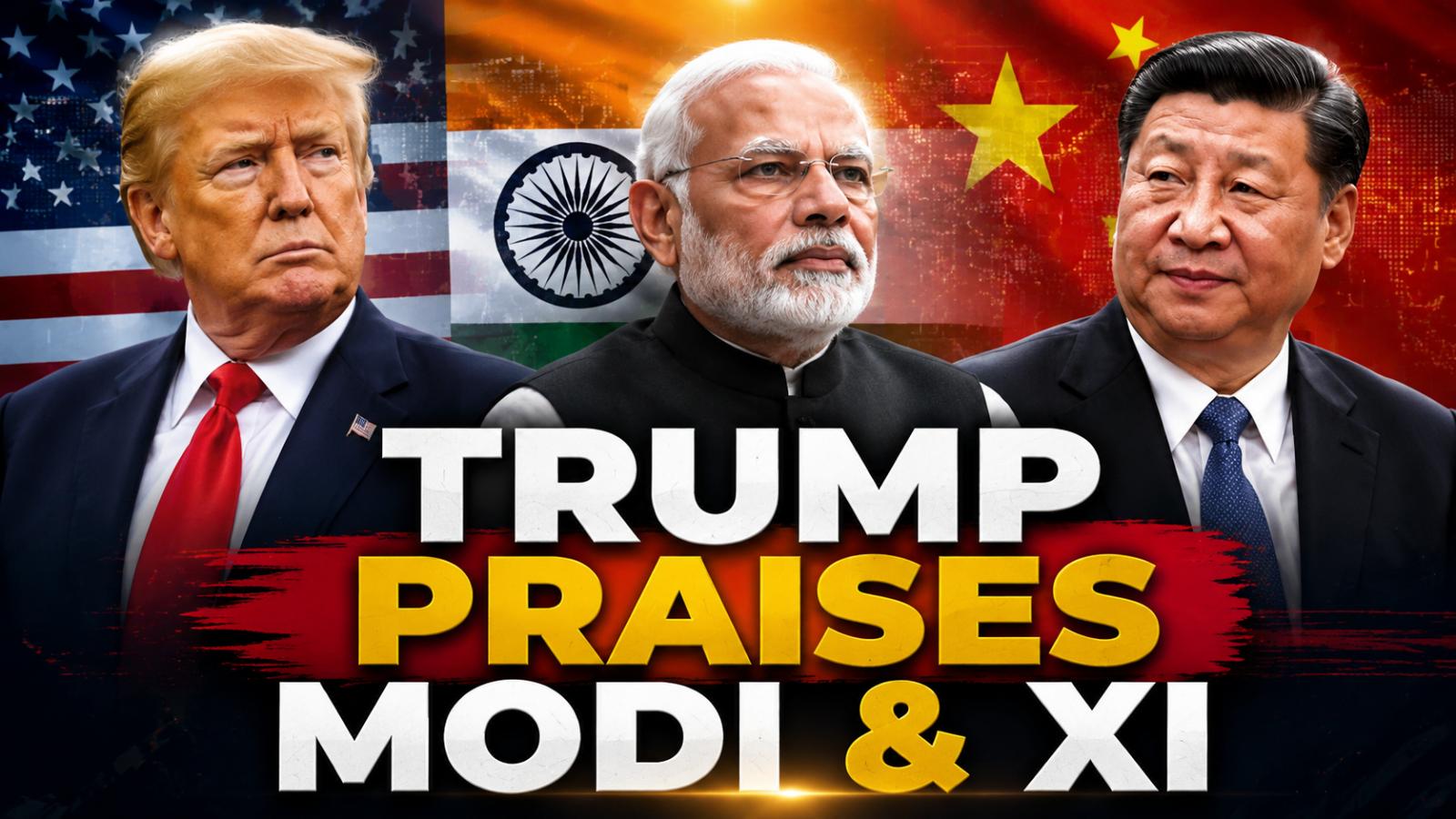
Trump calls Modi and Xi strong global leaders in interview
Trump’s remarks draw attention on global stage US President Donald Trump recently made notable comments about global leadership while speaking in an Axios interview. During the conversation, he referred to Indian Prime Minister Narendra Modi and Chinese President Xi Jinping as influential figures shaping international politics and economic direction. The remarks come at a time when global allianc
Trump calls Modi and Xi strong global leaders in interview
Trump’s remarks draw attention on global stage US President Donald Trump recently made notable comments about global leadership while speaking in an Axios interview. During the conversation, he referred to Indian Prime Minister Narendra Modi and Chinese President Xi Jinping as influential figures shaping international politics and economic direction. The remarks come at a time when global allianc
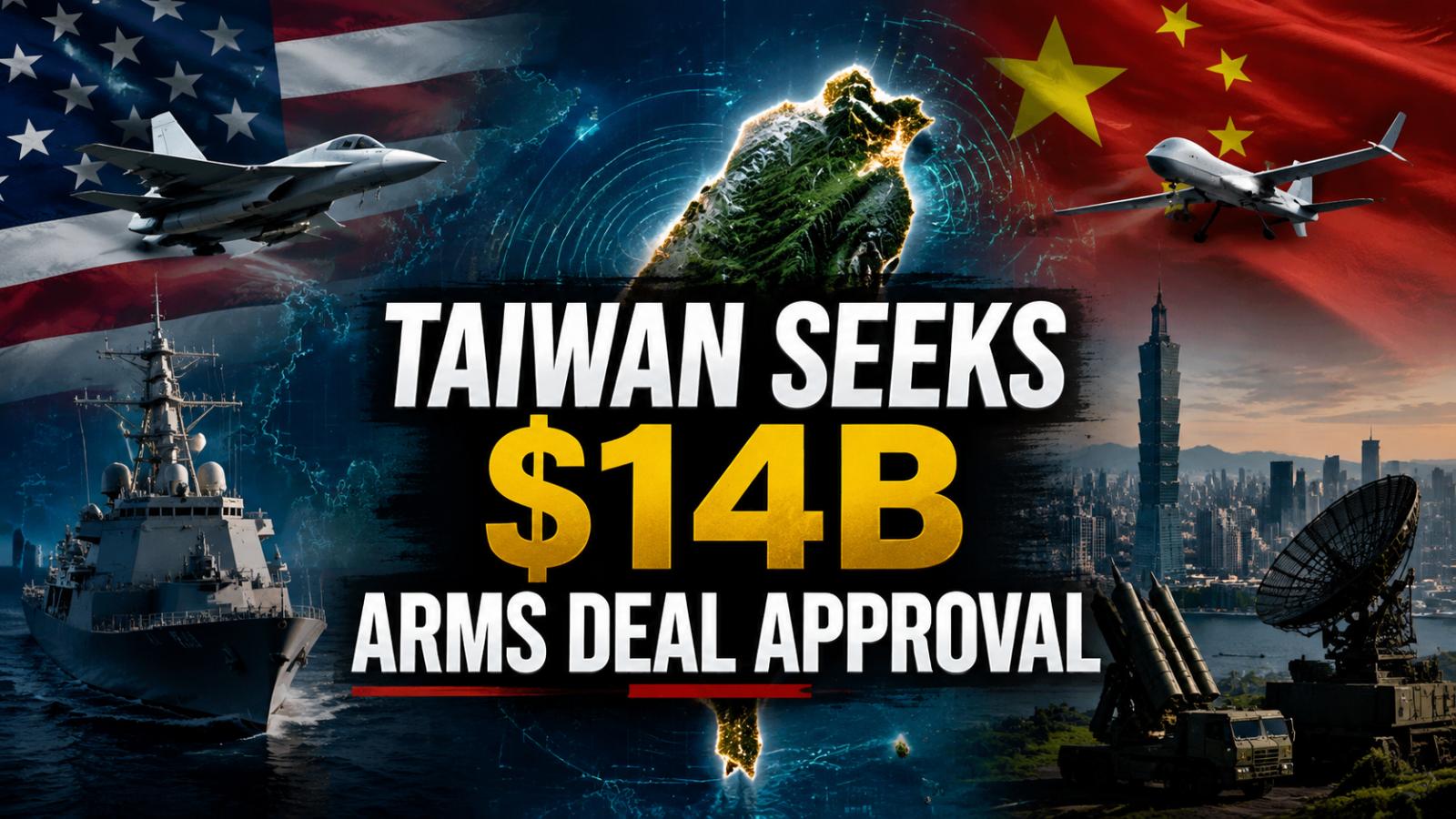
Taiwan presses US for $14bn arms approval amid China tensions
Taiwan has renewed its push for approval of a proposed $14 billion defense package from the United States, arguing that its security environment has become increasingly unstable. The request comes at a time when military activity and political messaging across the Taiwan Strait have intensified, placing additional pressure on Washington’s strategic decision-making. US officials are currently evaluating the proposal through standard defense export channels, weighing supply constrai
Taiwan presses US for $14bn arms approval amid China tensions
Taiwan has renewed its push for approval of a proposed $14 billion defense package from the United States, arguing that its security environment has become increasingly unstable. The request comes at a time when military activity and political messaging across the Taiwan Strait have intensified, placing additional pressure on Washington’s strategic decision-making. US officials are currently evaluating the proposal through standard defense export channels, weighing supply constrai
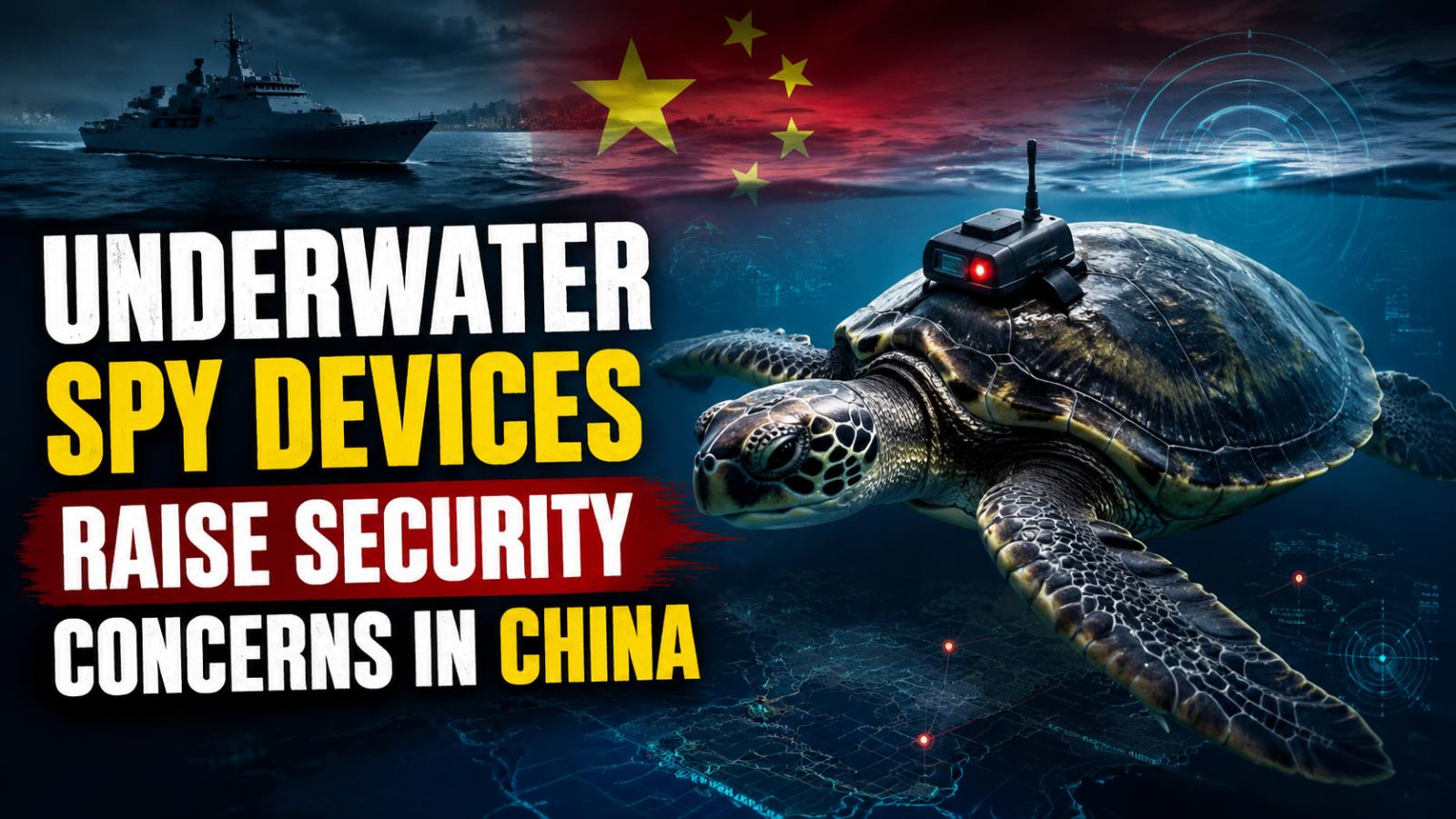
China marine surveillance claims raise coastal security debate
Reports emerging from Chinese security authorities have triggered discussion over the growing use of advanced underwater monitoring systems along coastal regions. The claims suggest that various marine-based platforms, including sensor-equipped aquatic life and autonomous devices, may be collecting detailed ocean data near sensitive shoreline zones. This includes measurements such as temperature shifts, salinity levels, and underwater current behavior, which can collectively reveal patterns of coastal activity. How ocean data becomes strategically sensitive Even basic environmental data, when collected continuously and processed at scale, can create highly detailed digital maps of underwater geography. These maps may outline seabed structures, shipping lanes, and depth variations close to ports. Security analysts note that such information, if accessed by external actors, could potentially be used to study movement patterns of naval or commercial vessels and identify infrastructure vulnerabilities without direct physical intrusion. Expanding role of autonomous maritime technology Modern ocean monitoring has moved far beyond traditional ship-based surveys. Technologies such as wave gliders, drifting sensor buoys, and autonomous underwater vehicles are now widely used for scientific research and environmental tracking. However, the same systems can also be adapted for intelligence collection, depending on their configuration and intent. This overlap between civilian research tools and security applications is creating growing uncertainty in how maritime technology is regulated and interpreted. Security implications and policy response Authorities have reportedly increased attention toward unusual devices and foreign-operated equipment in coastal waters. Guidance has been issued to local maritime workers to report unidentified floating or submerged objects that appear out of place. The situation reflects a broader global trend where environmental monitoring technologies are increasingly viewed through a security lens. As multiple nations expand their ocean data capabilities, the line between scientific exploration and strategic surveillance continues to blur, raising new challenges for coastal defense planning and international maritime trust.
China marine surveillance claims raise coastal security debate
Reports emerging from Chinese security authorities have triggered discussion over the growing use of advanced underwater monitoring systems along coastal regions. The claims suggest that various marine-based platforms, including sensor-equipped aquatic life and autonomous devices, may be collecting detailed ocean data near sensitive shoreline zones. This includes measurements such as temperature shifts, salinity levels, and underwater current behavior, which can collectively reveal patterns of coastal activity. How ocean data becomes strategically sensitive Even basic environmental data, when collected continuously and processed at scale, can create highly detailed digital maps of underwater geography. These maps may outline seabed structures, shipping lanes, and depth variations close to ports. Security analysts note that such information, if accessed by external actors, could potentially be used to study movement patterns of naval or commercial vessels and identify infrastructure vulnerabilities without direct physical intrusion. Expanding role of autonomous maritime technology Modern ocean monitoring has moved far beyond traditional ship-based surveys. Technologies such as wave gliders, drifting sensor buoys, and autonomous underwater vehicles are now widely used for scientific research and environmental tracking. However, the same systems can also be adapted for intelligence collection, depending on their configuration and intent. This overlap between civilian research tools and security applications is creating growing uncertainty in how maritime technology is regulated and interpreted. Security implications and policy response Authorities have reportedly increased attention toward unusual devices and foreign-operated equipment in coastal waters. Guidance has been issued to local maritime workers to report unidentified floating or submerged objects that appear out of place. The situation reflects a broader global trend where environmental monitoring technologies are increasingly viewed through a security lens. As multiple nations expand their ocean data capabilities, the line between scientific exploration and strategic surveillance continues to blur, raising new challenges for coastal defense planning and international maritime trust.
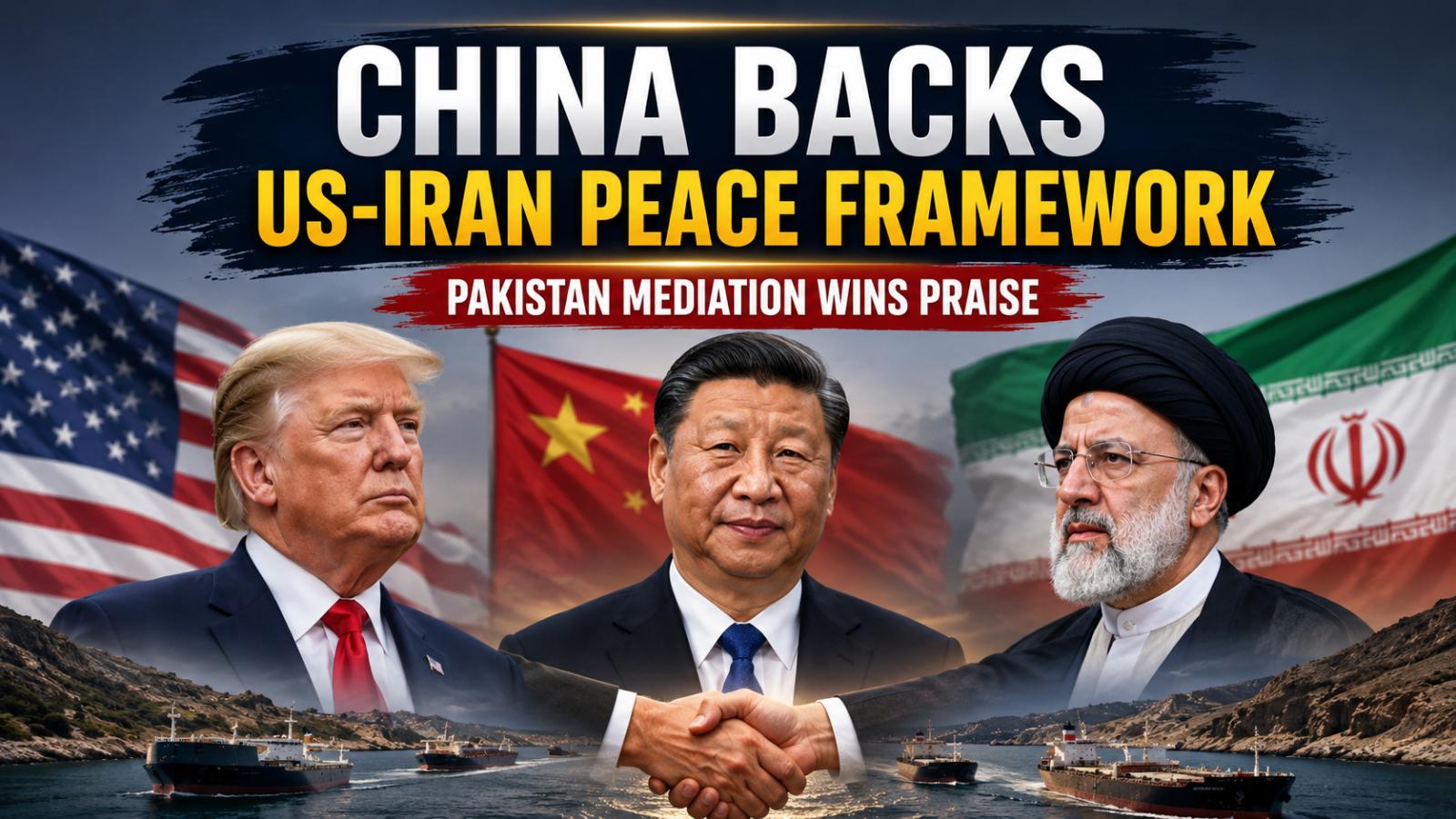
China backs US-Iran peace framework
China has welcomed the reported US-Iran peace framework and said the move could help reduce tensions in the Middle East after weeks of uncertainty. Beijing described the development as a positive step and said it supports efforts that can bring stability, stop further escalation and protect the movement of ships through key regional routes. Chinese foreign ministry spokesperson Lin Jian said China appreciates Pakistan’s mediation efforts
China backs US-Iran peace framework
China has welcomed the reported US-Iran peace framework and said the move could help reduce tensions in the Middle East after weeks of uncertainty. Beijing described the development as a positive step and said it supports efforts that can bring stability, stop further escalation and protect the movement of ships through key regional routes. Chinese foreign ministry spokesperson Lin Jian said China appreciates Pakistan’s mediation efforts
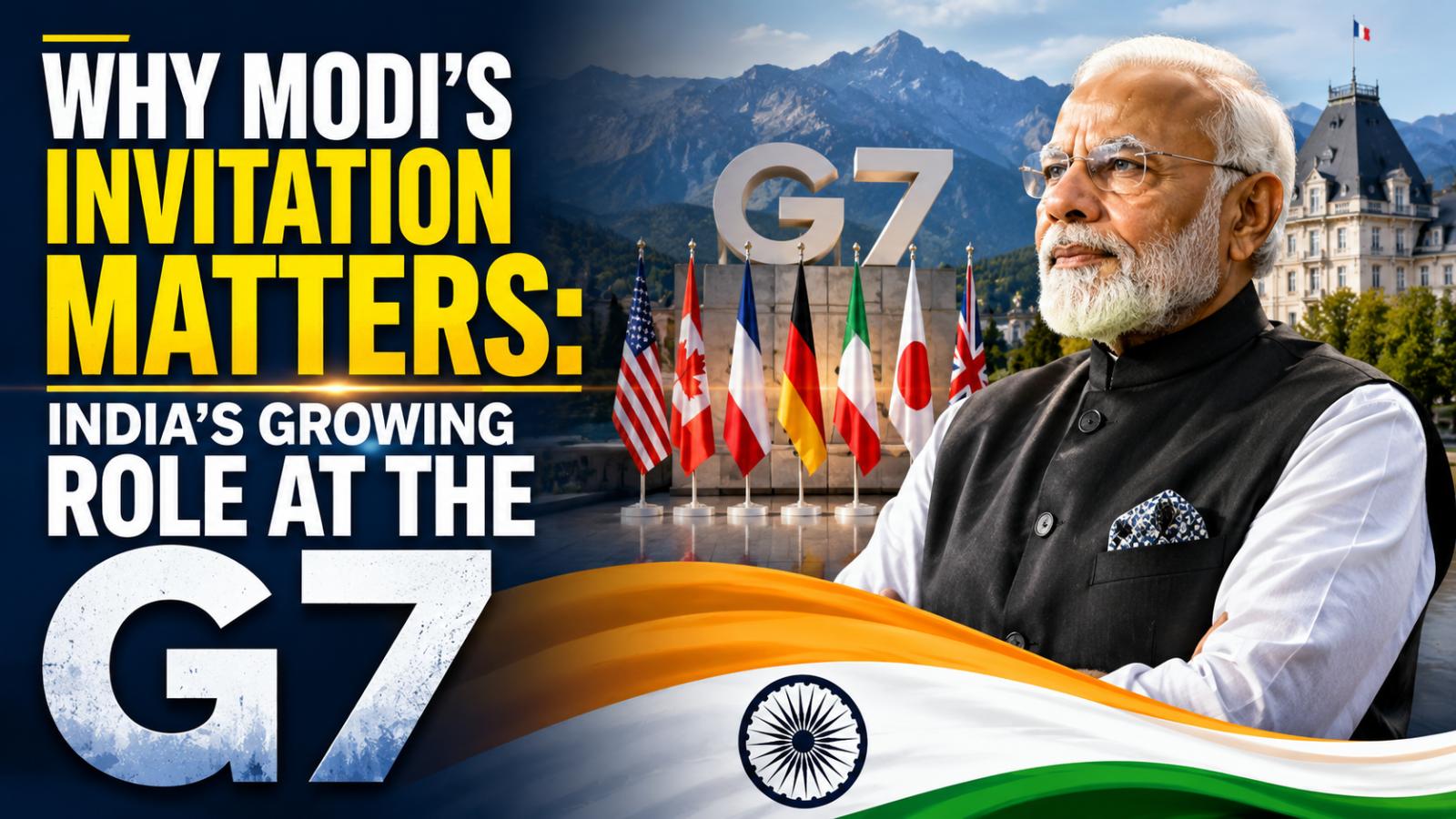
PM Narendra Modi to attend G7 as India’s role grows
Modi’s G7 invitation highlights India’s rising global role Prime Minister Narendra Modi is set to attend the G7 Summit in Évian-les-Bains, France, from June 15 to 17, 2026, after being invited as a special guest by French President Emmanuel Macron. India is not a member of the G7, but its repeated presence at the forum shows how New Delhi has become increasingly important to discussions on global economics, security, supply chains and de
PM Narendra Modi to attend G7 as India’s role grows
Modi’s G7 invitation highlights India’s rising global role Prime Minister Narendra Modi is set to attend the G7 Summit in Évian-les-Bains, France, from June 15 to 17, 2026, after being invited as a special guest by French President Emmanuel Macron. India is not a member of the G7, but its repeated presence at the forum shows how New Delhi has become increasingly important to discussions on global economics, security, supply chains and de
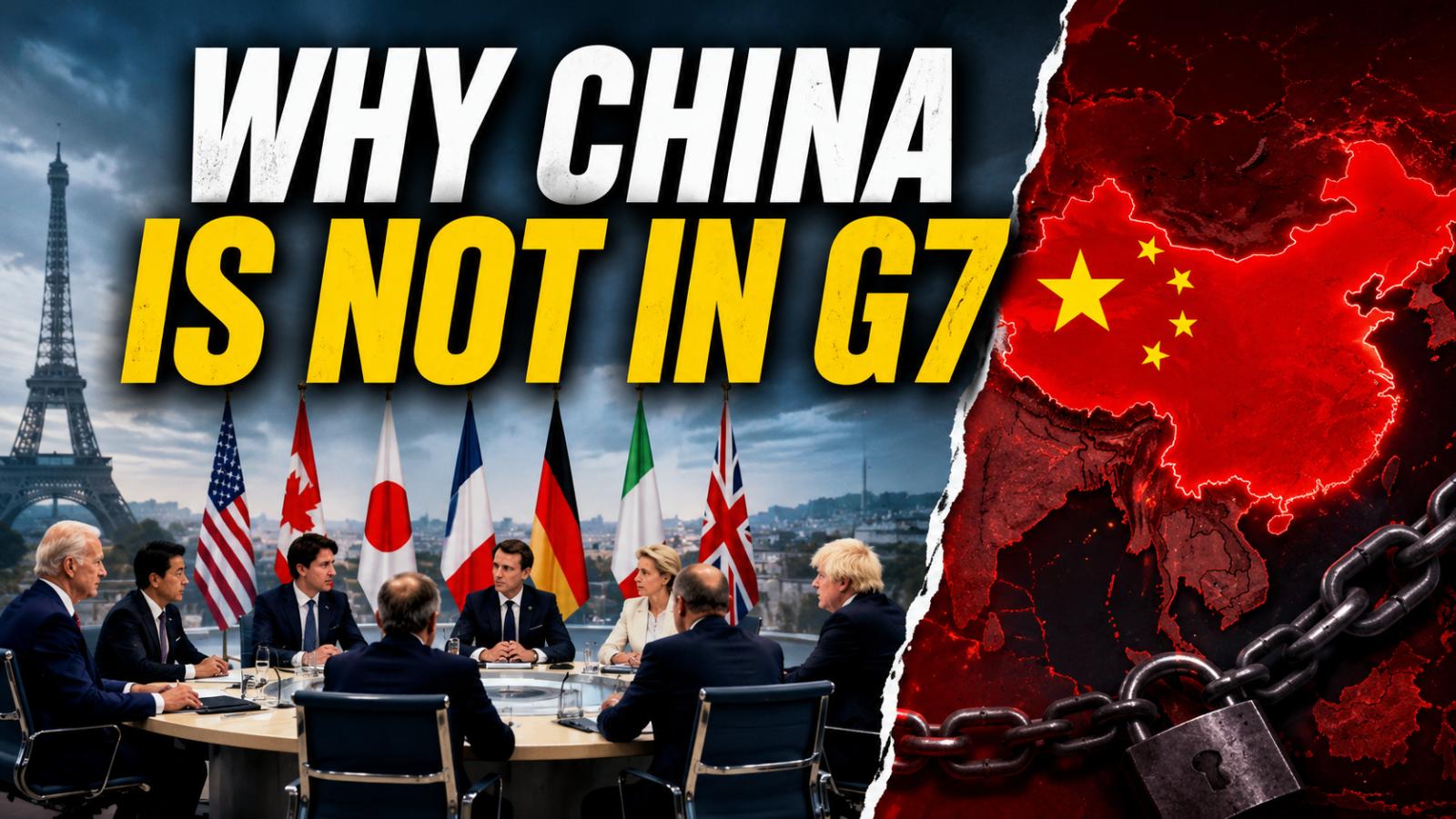
Why China is not a G7 member despite its global influence
G7 origins shaped membership criteria As world leaders prepare for the 2026 G7 Summit in Évian-les-Bains, France, attention has once again turned to a recurring question in global politics: why is China, the world's second-largest economy, not a member of the influential group? While Beijing plays a major role in global trade, manufacturing and international affairs, it remains outside the G7 framework that brings together some of the world'
Why China is not a G7 member despite its global influence
G7 origins shaped membership criteria As world leaders prepare for the 2026 G7 Summit in Évian-les-Bains, France, attention has once again turned to a recurring question in global politics: why is China, the world's second-largest economy, not a member of the influential group? While Beijing plays a major role in global trade, manufacturing and international affairs, it remains outside the G7 framework that brings together some of the world'
Nuclear Weapons Spending Hits Record $119 Billion in 2025 as ICAN Warns of New Arms Race
The world spent more money on nuclear weapons in 2025 than at any time in recent years, raising fresh concern about where global security is heading. According to the International Campaign to Abolish Nuclear Weapons, nine nuclear-armed countries together spent about $119 billion on nuclear weapons in 2025. This was not a small increase. ICAN said nuclear weapons spending rose by around 19 percent in just one year. At a time when many coun
Nuclear Weapons Spending Hits Record $119 Billion in 2025 as ICAN Warns of New Arms Race
The world spent more money on nuclear weapons in 2025 than at any time in recent years, raising fresh concern about where global security is heading. According to the International Campaign to Abolish Nuclear Weapons, nine nuclear-armed countries together spent about $119 billion on nuclear weapons in 2025. This was not a small increase. ICAN said nuclear weapons spending rose by around 19 percent in just one year. At a time when many coun
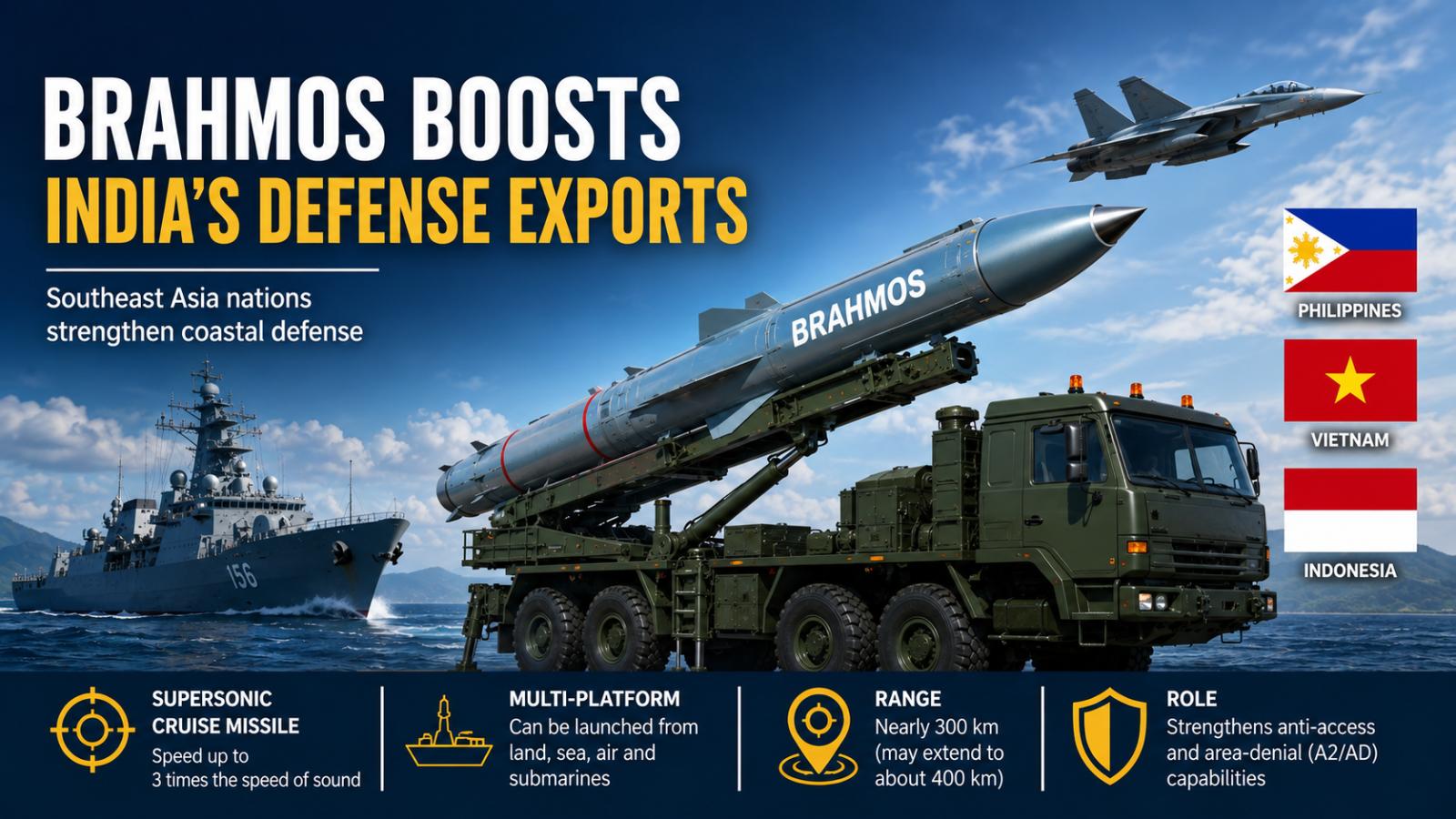
BrahMos System Boosts India’s Defense Exports in Southeast Asia
India’s BrahMos coastal defense system is becoming a key part of the country’s rise as a defense exporter, as several Asian nations look for stronger maritime protection. India’s defense exports reached a record Rs 38,424 crore in fiscal year 2025-26, according to the figures provided in the article. That was Rs 14,802 crore higher than the previous fiscal year, a rise of 62.66 percent. BrahMos Coastal Defense System Draws Southeast Asian Interest

BrahMos System Boosts India’s Defense Exports in Southeast Asia
India’s BrahMos coastal defense system is becoming a key part of the country’s rise as a defense exporter, as several Asian nations look for stronger maritime protection. India’s defense exports reached a record Rs 38,424 crore in fiscal year 2025-26, according to the figures provided in the article. That was Rs 14,802 crore higher than the previous fiscal year, a rise of 62.66 percent. BrahMos Coastal Defense System Draws Southeast Asian Interest

India Hosts Quad Delhi Meeting as Indo-Pacific Security, China and West Asia Tensions Take Centre Stage
India is hosting the Quad foreign ministers’ meeting in New Delhi on May 26, 2026, bringing together senior leaders from India, the United States, Japan and Australia. External Affairs Minister S. Jaishankar is chairing the meeting, with U.S. Secretary of State Marco Rubio, Australian Foreign Minister Penny Wong and Japanese Foreign Minister Toshimitsu Motegi attending the talks. The participation details are confirmed by India’s Ministry of External Affairs. The meeting comes a
India Hosts Quad Delhi Meeting as Indo-Pacific Security, China and West Asia Tensions Take Centre Stage
India is hosting the Quad foreign ministers’ meeting in New Delhi on May 26, 2026, bringing together senior leaders from India, the United States, Japan and Australia. External Affairs Minister S. Jaishankar is chairing the meeting, with U.S. Secretary of State Marco Rubio, Australian Foreign Minister Penny Wong and Japanese Foreign Minister Toshimitsu Motegi attending the talks. The participation details are confirmed by India’s Ministry of External Affairs. The meeting comes a
US Intel Says Iran Rebuilding Drone Program Faster Than Expected
Iran Restores Drone Production During Ceasefire Iran has resumed parts of its drone production during the six-week ceasefire that began in early April, according to people familiar with recent US intelligence assessments. The development suggests Tehran is rebuilding key military capabilities faster than some officials initially expected after US-Israeli strikes damaged missile launch sites, weapons facilities and related military infrastructure. The assessments indicate Iran’s military recovery is moving quickly, including efforts to repair launchers, restore weapons production and recover equipment affected during the conflict. Intelligence Assessments Raise Regional Concerns The findings suggest Iran could continue posing a serious threat to US regional allies if military operations resume. According to one US official familiar with the assessments, Iran may be able to fully restore its drone strike capability within six months. The pace of rebuilding also challenges earlier claims that strikes had caused long-term crippling damage to Iran’s military infrastructure. Officials believe Tehran may rely more heavily on drone attacks while missile production systems are still being repaired. Trump Warns Military Action Could Resume President Donald Trump has repeatedly warned that US military operations against Iran could restart if negotiations fail to end the conflict. On Tuesday, he said he had been close to ordering renewed bombing operations before holding back. Recent assessments suggest Iran’s rapid recovery has been helped by several factors, including possible outside assistance and the possibility that earlier strikes caused less lasting damage than expected. Russia China And Missile Supply Questions Some assessments point to continued foreign support for Iran’s weapons production network. Sources said China supplied components that could be used in missile production during the conflict, though the flow may have slowed because of the US blockade. China has rejected accusations that it is supporting Iran’s missile manufacturing. Russia has also been cited by sources as a factor in Iran’s broader recovery efforts, though officials have not publicly detailed the extent of any assistance. Iran Retains Significant Military Capacity Despite heavy damage from earlier attacks, recent estimates suggest Iran still retains ballistic missile systems, drone capabilities and anti-air defenses. Intelligence assessments indicate around half of Iran’s drone capacity remains intact, with thousands of drones still available. Many coastal defense cruise missiles also survived because coastal assets were not heavily targeted. Those systems remain important to Iran’s ability to threaten shipping near the Strait of Hormuz, even as the conflict has weakened but not eliminated its military power.
US Intel Says Iran Rebuilding Drone Program Faster Than Expected
Iran Restores Drone Production During Ceasefire Iran has resumed parts of its drone production during the six-week ceasefire that began in early April, according to people familiar with recent US intelligence assessments. The development suggests Tehran is rebuilding key military capabilities faster than some officials initially expected after US-Israeli strikes damaged missile launch sites, weapons facilities and related military infrastructure. The assessments indicate Iran’s military recovery is moving quickly, including efforts to repair launchers, restore weapons production and recover equipment affected during the conflict. Intelligence Assessments Raise Regional Concerns The findings suggest Iran could continue posing a serious threat to US regional allies if military operations resume. According to one US official familiar with the assessments, Iran may be able to fully restore its drone strike capability within six months. The pace of rebuilding also challenges earlier claims that strikes had caused long-term crippling damage to Iran’s military infrastructure. Officials believe Tehran may rely more heavily on drone attacks while missile production systems are still being repaired. Trump Warns Military Action Could Resume President Donald Trump has repeatedly warned that US military operations against Iran could restart if negotiations fail to end the conflict. On Tuesday, he said he had been close to ordering renewed bombing operations before holding back. Recent assessments suggest Iran’s rapid recovery has been helped by several factors, including possible outside assistance and the possibility that earlier strikes caused less lasting damage than expected. Russia China And Missile Supply Questions Some assessments point to continued foreign support for Iran’s weapons production network. Sources said China supplied components that could be used in missile production during the conflict, though the flow may have slowed because of the US blockade. China has rejected accusations that it is supporting Iran’s missile manufacturing. Russia has also been cited by sources as a factor in Iran’s broader recovery efforts, though officials have not publicly detailed the extent of any assistance. Iran Retains Significant Military Capacity Despite heavy damage from earlier attacks, recent estimates suggest Iran still retains ballistic missile systems, drone capabilities and anti-air defenses. Intelligence assessments indicate around half of Iran’s drone capacity remains intact, with thousands of drones still available. Many coastal defense cruise missiles also survived because coastal assets were not heavily targeted. Those systems remain important to Iran’s ability to threaten shipping near the Strait of Hormuz, even as the conflict has weakened but not eliminated its military power.
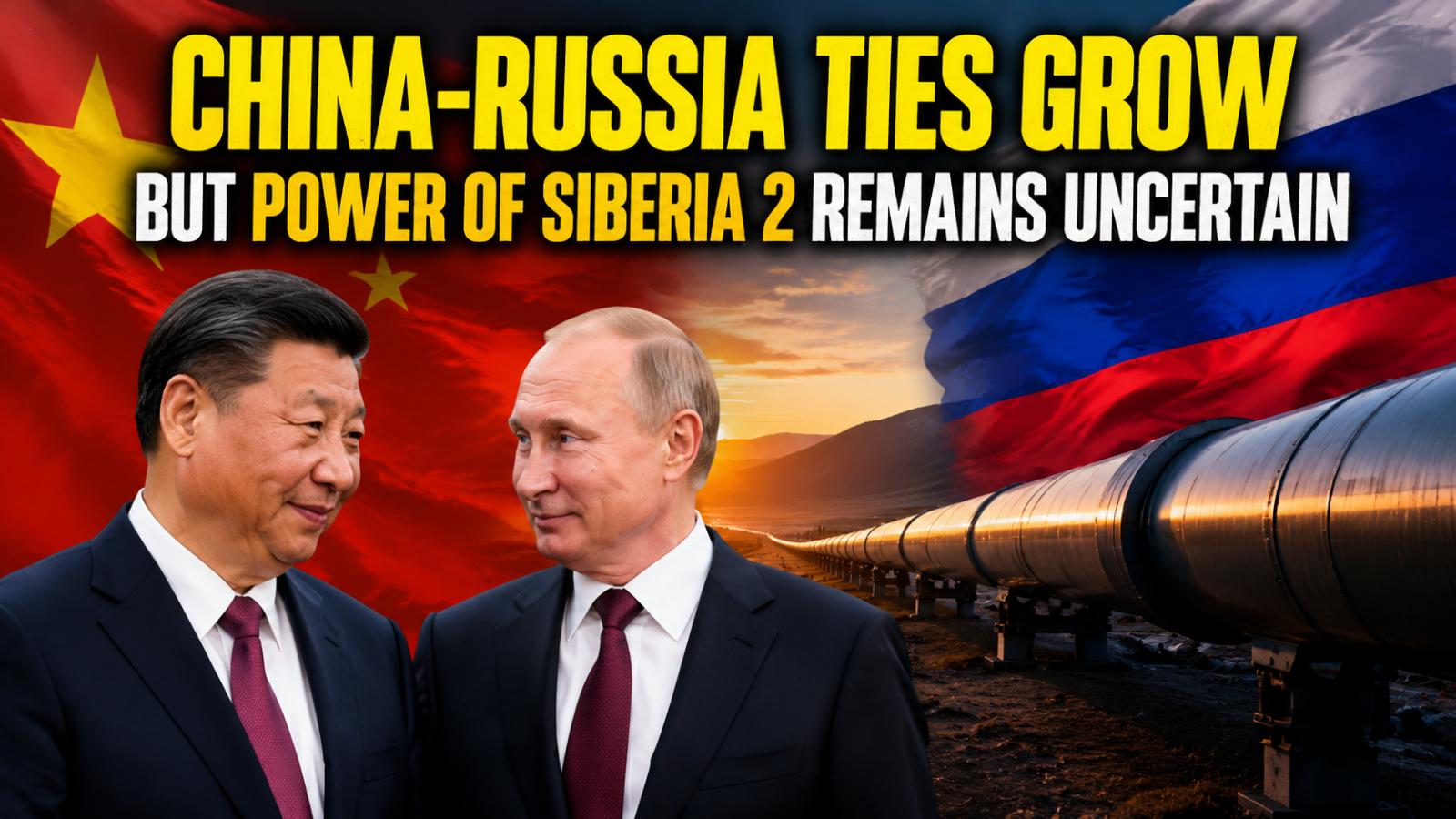
Xi and Putin strengthen energy, trade ties amid pipeline uncertainty
Chinese President Xi Jinping and Russian President Vladimir Putin met in Beijing to reaffirm the growing strategic partnership between their nations. The summit emphasized energy cooperation, trade expansion, and technological collaboration. Xi described the bilateral relationship as a “source of stability,” underscoring the importance of maintaining a strong alliance amid shifting global dynamics. Key Agreemen
Xi and Putin strengthen energy, trade ties amid pipeline uncertainty
Chinese President Xi Jinping and Russian President Vladimir Putin met in Beijing to reaffirm the growing strategic partnership between their nations. The summit emphasized energy cooperation, trade expansion, and technological collaboration. Xi described the bilateral relationship as a “source of stability,” underscoring the importance of maintaining a strong alliance amid shifting global dynamics. Key Agreemen
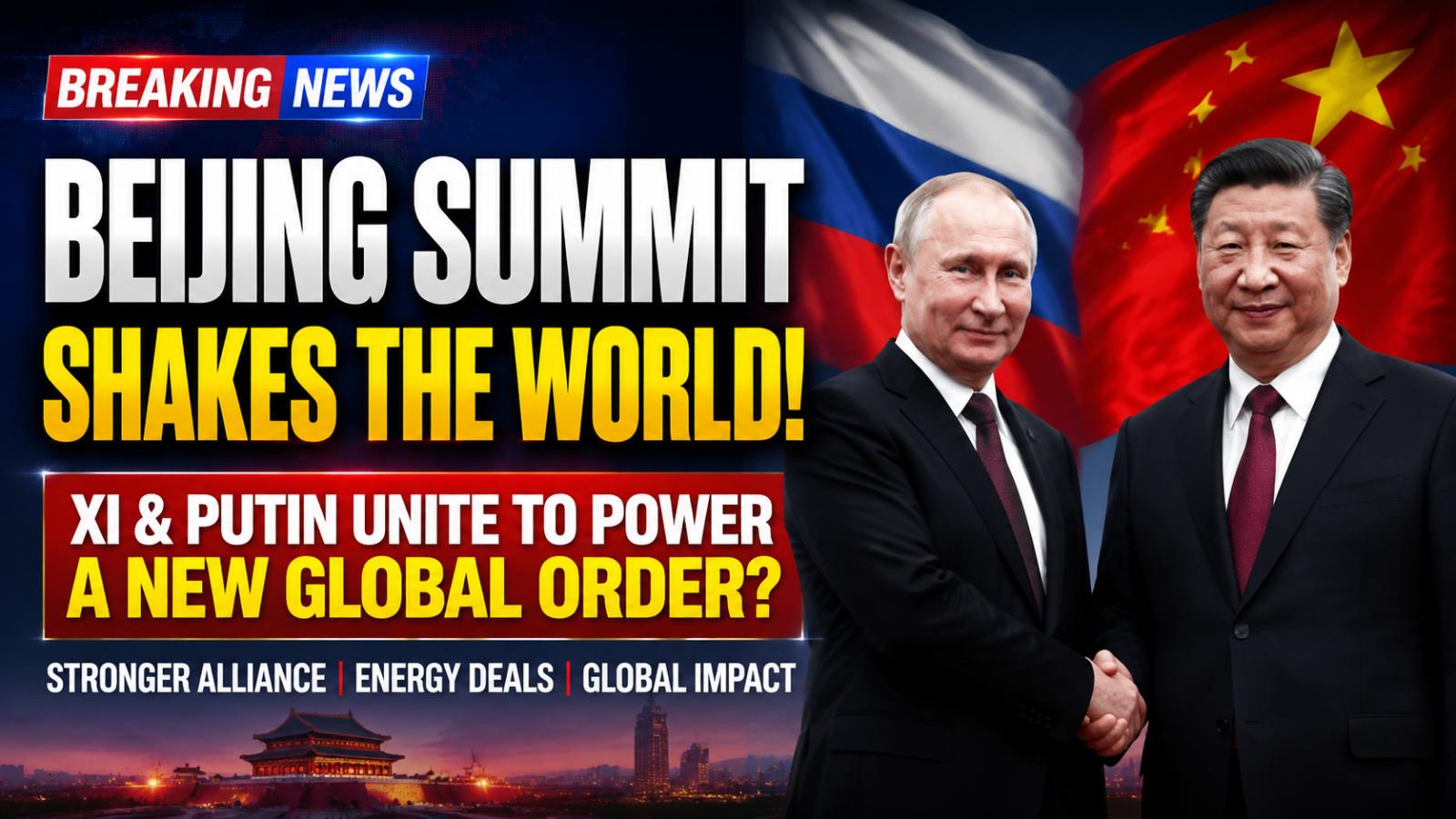
China Hosts Putin in Beijing: Strengthening Strategic Ties
Chinese President Xi Jinping welcomed Russian President Vladimir Putin to Beijing this week, shortly after a visit from US President Donald Trump. The summit emphasizes China’s role as a central global power, balancing relations with both Washington and Moscow while advancing its strategic interests. Amid energy crises, trade disputes, and geopolitical conflicts, China aims to project stability and strengthen its influence on the global stage. Strengthening China-Russia S
China Hosts Putin in Beijing: Strengthening Strategic Ties
Chinese President Xi Jinping welcomed Russian President Vladimir Putin to Beijing this week, shortly after a visit from US President Donald Trump. The summit emphasizes China’s role as a central global power, balancing relations with both Washington and Moscow while advancing its strategic interests. Amid energy crises, trade disputes, and geopolitical conflicts, China aims to project stability and strengthen its influence on the global stage. Strengthening China-Russia S
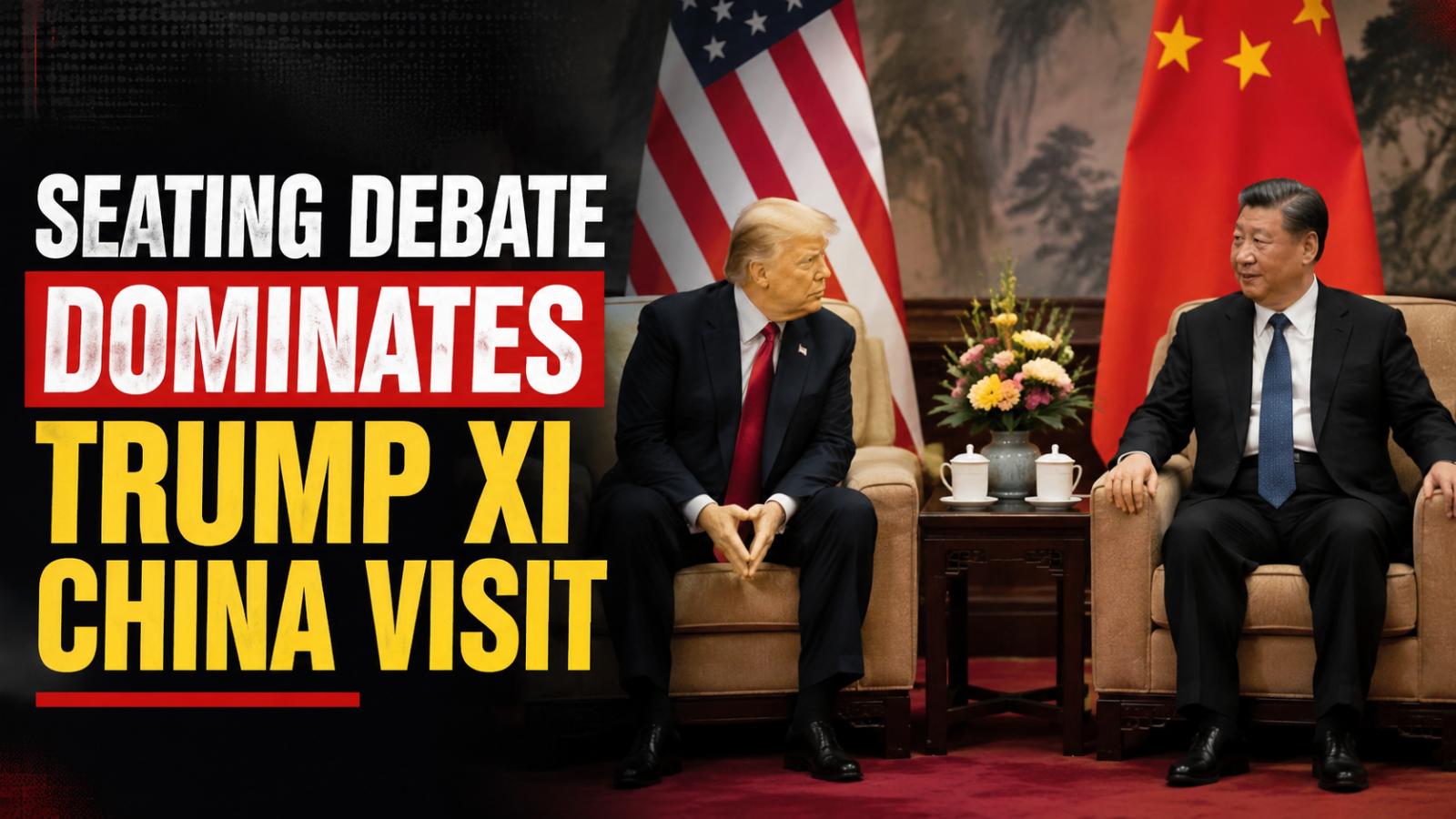
Trump-Xi meeting video sparks height debate in Beijing
A viral video from the official meeting between US President Donald Trump and Chinese President Xi Jinping in Beijing has sparked intense discussion over seating arrangements. The clip, widely circulated on social media, shows Xi seated on a sofa that appears slightly taller than Trump’s. Observers noted that Trump is taller than Xi, prompting speculation that the seating was designed to make the US president appear shorter. The footage emerged during Trump’s three-day China visit, markin
Trump-Xi meeting video sparks height debate in Beijing
A viral video from the official meeting between US President Donald Trump and Chinese President Xi Jinping in Beijing has sparked intense discussion over seating arrangements. The clip, widely circulated on social media, shows Xi seated on a sofa that appears slightly taller than Trump’s. Observers noted that Trump is taller than Xi, prompting speculation that the seating was designed to make the US president appear shorter. The footage emerged during Trump’s three-day China visit, markin
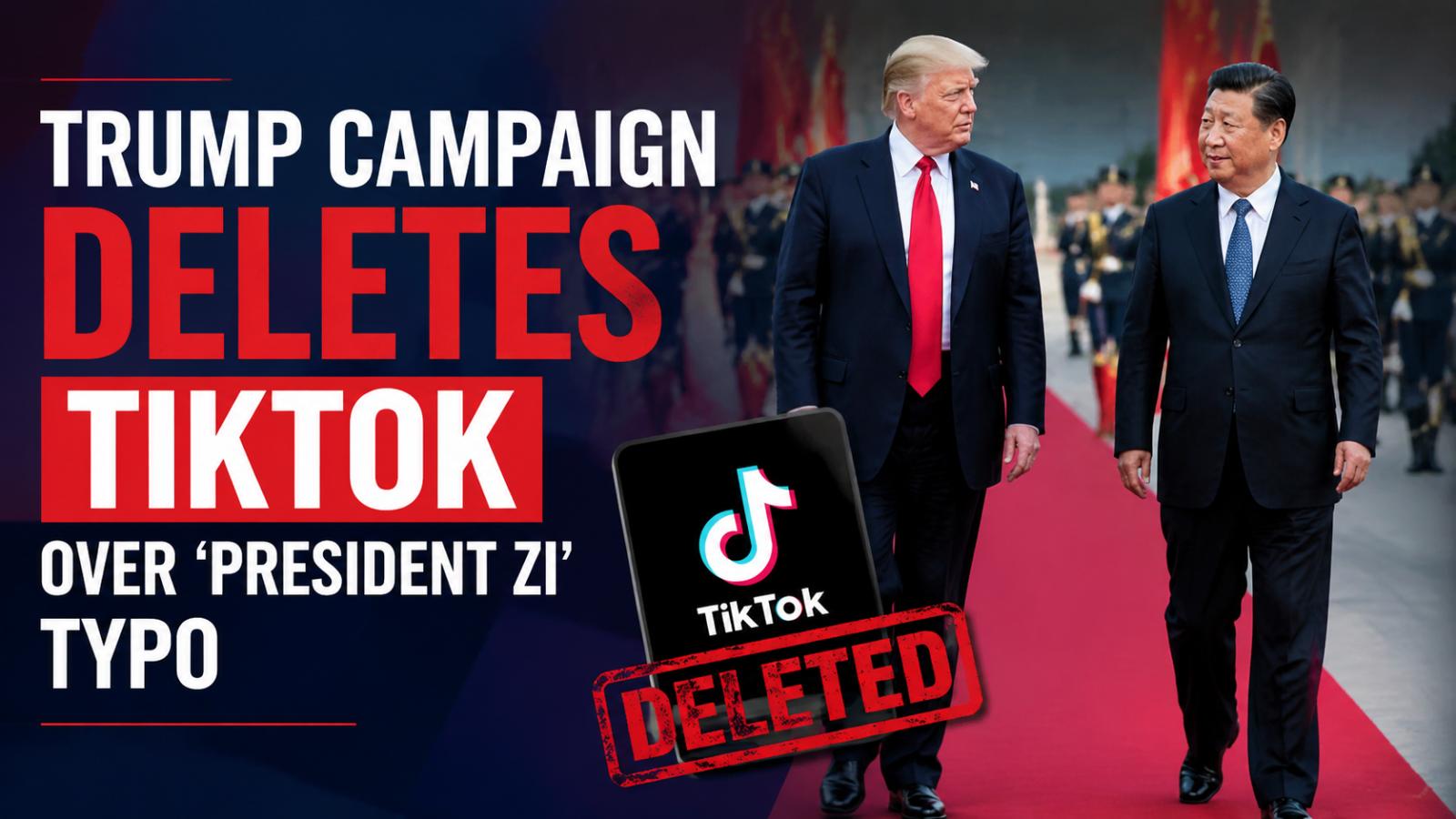
Trump Campaign Deletes TikTok After ‘President Zi’ Typo
A TikTok video posted by the Donald Trump campaign was quickly deleted after viewers noticed a glaring spelling error. The clip, showing Donald Trump and Chinese President Xi Jinping walking on a red carpet during Trump’s state visit to China, mislabelled Xi as “President Zi” while Trump’s name appeared correctly. Screenshots of the post circulated rapidly across social media, amplifying the mistake. Public Reaction: Criticism and H
Trump Campaign Deletes TikTok After ‘President Zi’ Typo
A TikTok video posted by the Donald Trump campaign was quickly deleted after viewers noticed a glaring spelling error. The clip, showing Donald Trump and Chinese President Xi Jinping walking on a red carpet during Trump’s state visit to China, mislabelled Xi as “President Zi” while Trump’s name appeared correctly. Screenshots of the post circulated rapidly across social media, amplifying the mistake. Public Reaction: Criticism and H
Trump Taiwan Arms Sale Explained After China Trip
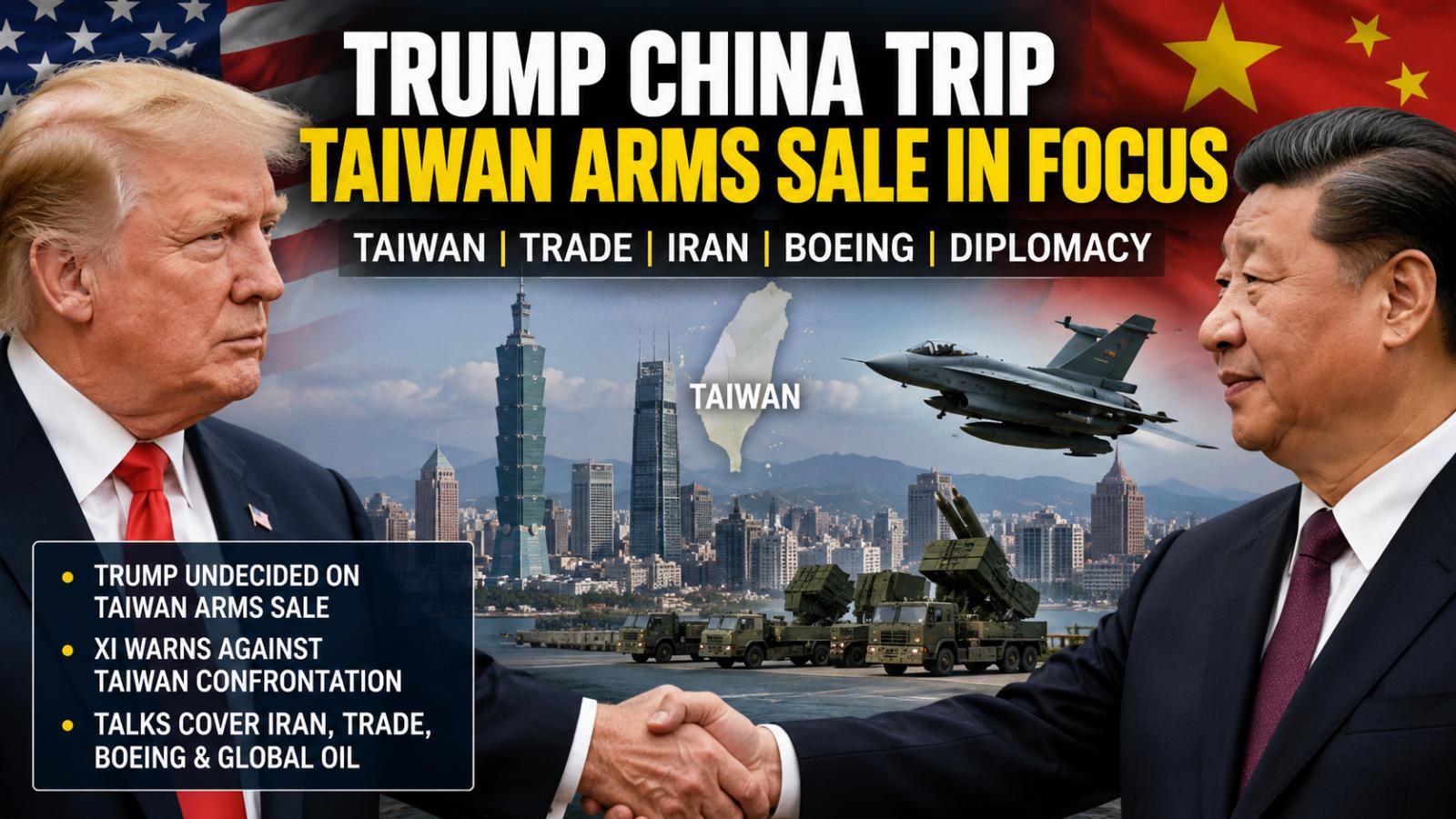
President Donald Trump left Beijing on Friday, May 15, 2026, without a final decision on a major U.S. arms sale to Taiwan, keeping one of the most sensitive issues in U.S.-China relations unresolved. The Trump Taiwan arms sale decision became a central focus after his three-day China visit, where talks with Chinese President Xi Jinping covered Taiwan, Iran, trade, Boeing aircraft and wider efforts to stabilize relations between Washington and Beijing. Trump-Xi Tai
Trump Taiwan Arms Sale Explained After China Trip
President Donald Trump left Beijing on Friday, May 15, 2026, without a final decision on a major U.S. arms sale to Taiwan, keeping one of the most sensitive issues in U.S.-China relations unresolved. The Trump Taiwan arms sale decision became a central focus after his three-day China visit, where talks with Chinese President Xi Jinping covered Taiwan, Iran, trade, Boeing aircraft and wider efforts to stabilize relations between Washington and Beijing. Trump-Xi Tai
Trump Invites Xi Jinping to the White House
Trump's Historic Visit to Beijing During his address from Beijing, US President Donald Trump praised the enduring strength of the relationship between the United States and China, emphasizing the mutual respect that exists between the citizens of both nations. Trump expressed his gratitude for the "magnificent welcome" he received upon his arrival, acknowledging the warmth and hospitality extended to him during his historic visit. Trump and Xi Jinping As part
Trump Invites Xi Jinping to the White House
Trump's Historic Visit to Beijing During his address from Beijing, US President Donald Trump praised the enduring strength of the relationship between the United States and China, emphasizing the mutual respect that exists between the citizens of both nations. Trump expressed his gratitude for the "magnificent welcome" he received upon his arrival, acknowledging the warmth and hospitality extended to him during his historic visit. Trump and Xi Jinping As part
Trump’s Visit to China: A Grand Reception
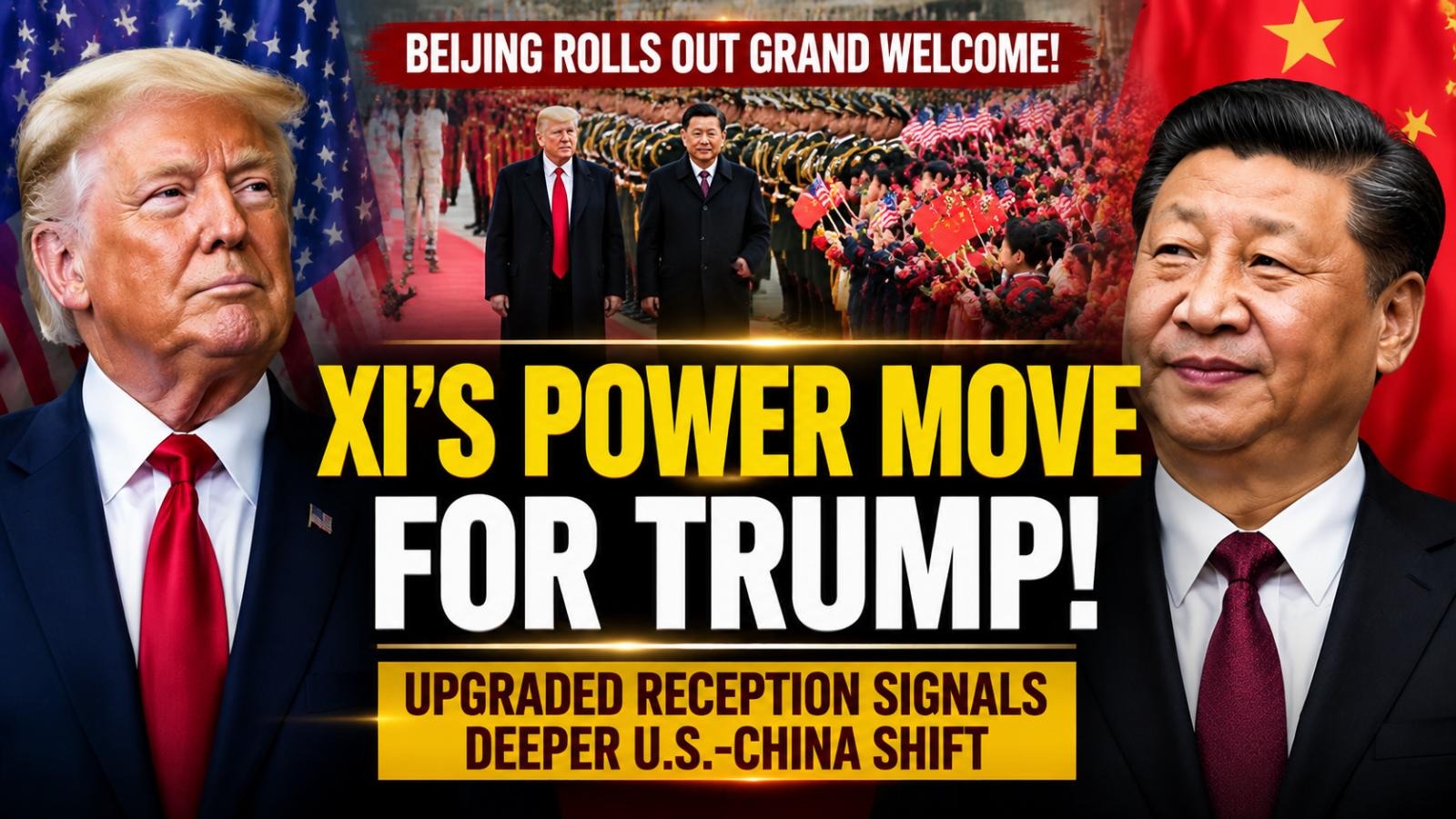
A Warmer Welcome for Trump Chinese President Xi Jinping’s diplomatic approach to Donald Trump’s recent visit to Beijing marked a clear shift in China-US relations. Unlike in 2017, when Trump was greeted by a lower-ranking official, this time China sent Vice President Han Zheng, along with both ambassadors and senior foreign affairs officials, signaling a significant elevation in the diplomatic reception. Isabelle Vladoiu, founder of the US Institute of Diplomacy and Human Righ
Trump’s Visit to China: A Grand Reception
A Warmer Welcome for Trump Chinese President Xi Jinping’s diplomatic approach to Donald Trump’s recent visit to Beijing marked a clear shift in China-US relations. Unlike in 2017, when Trump was greeted by a lower-ranking official, this time China sent Vice President Han Zheng, along with both ambassadors and senior foreign affairs officials, signaling a significant elevation in the diplomatic reception. Isabelle Vladoiu, founder of the US Institute of Diplomacy and Human Righ
US-China relations: Trump and Xi hold critical talks on trade, rare minerals, and Taiwan
On May 14, 2026, a historic meeting unfolded in Beijing between U.S. President Donald Trump and Chinese President Xi Jinping. Hosted at the Great Hall of the People, the summit aimed to strengthen the ties between the two largest economies in the world. The opening moments were marked by a brief but firm handshake that lasted a solid 40 seconds, setting a serious but cordial tone for the discussions ahead. High-Level
US-China relations: Trump and Xi hold critical talks on trade, rare minerals, and Taiwan
On May 14, 2026, a historic meeting unfolded in Beijing between U.S. President Donald Trump and Chinese President Xi Jinping. Hosted at the Great Hall of the People, the summit aimed to strengthen the ties between the two largest economies in the world. The opening moments were marked by a brief but firm handshake that lasted a solid 40 seconds, setting a serious but cordial tone for the discussions ahead. High-Level
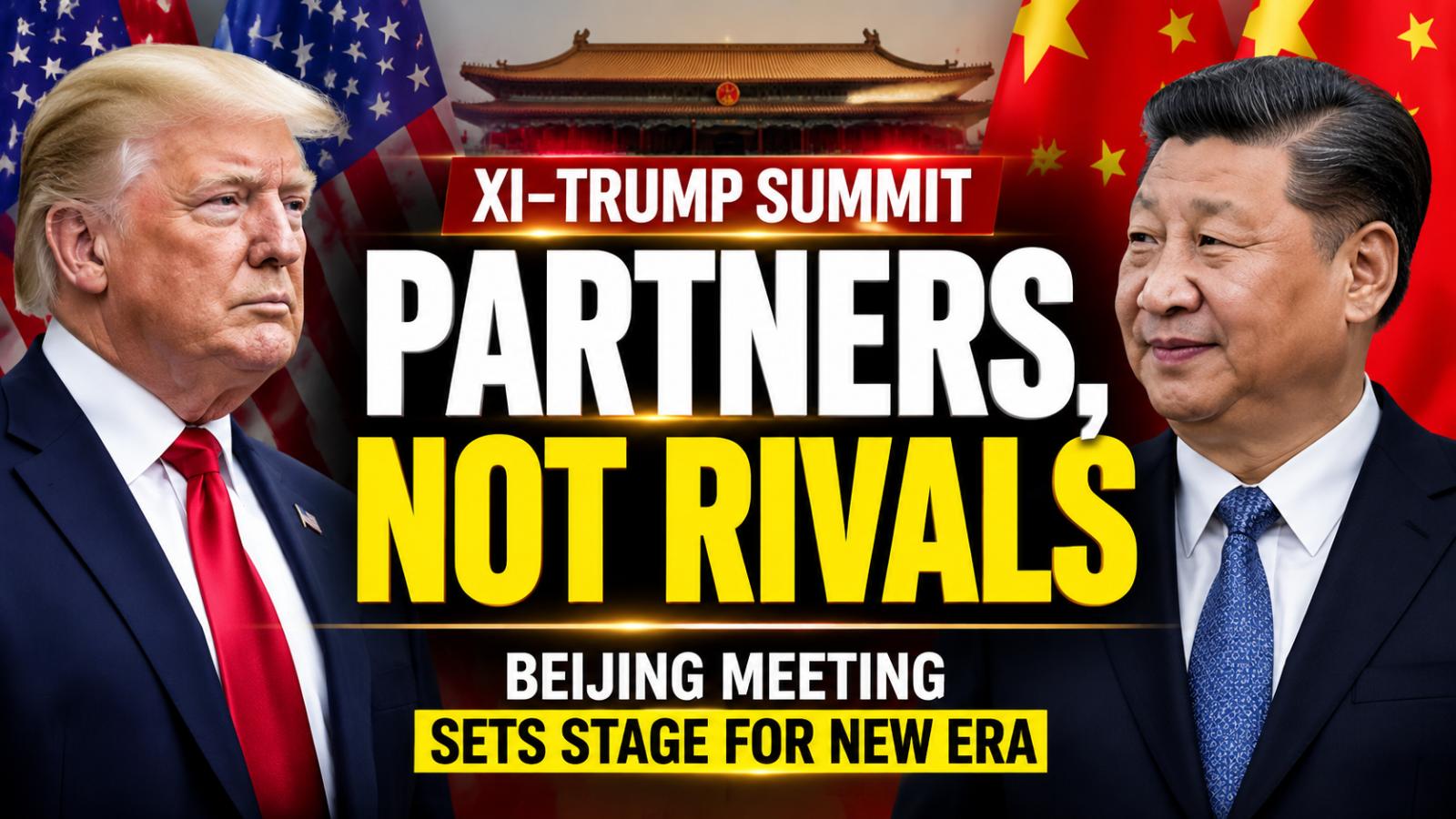
Xi and Trump Summit at Beijing
Historic Summit Marks a New Phase for US-China Relations On Thursday, May 14, 2026, Chinese President Xi Jinping welcomed US President Donald Trump to Beijing for a high-stakes summit, marking a critical moment in the evolving relationship between the two global powers. Xi set the tone for the summit by stressing the importance of cooperation over confrontation, calling for a stable US-China relationship as a foundation for global stability. “A stable China-US relationship is a
Xi and Trump Summit at Beijing
Historic Summit Marks a New Phase for US-China Relations On Thursday, May 14, 2026, Chinese President Xi Jinping welcomed US President Donald Trump to Beijing for a high-stakes summit, marking a critical moment in the evolving relationship between the two global powers. Xi set the tone for the summit by stressing the importance of cooperation over confrontation, calling for a stable US-China relationship as a foundation for global stability. “A stable China-US relationship is a
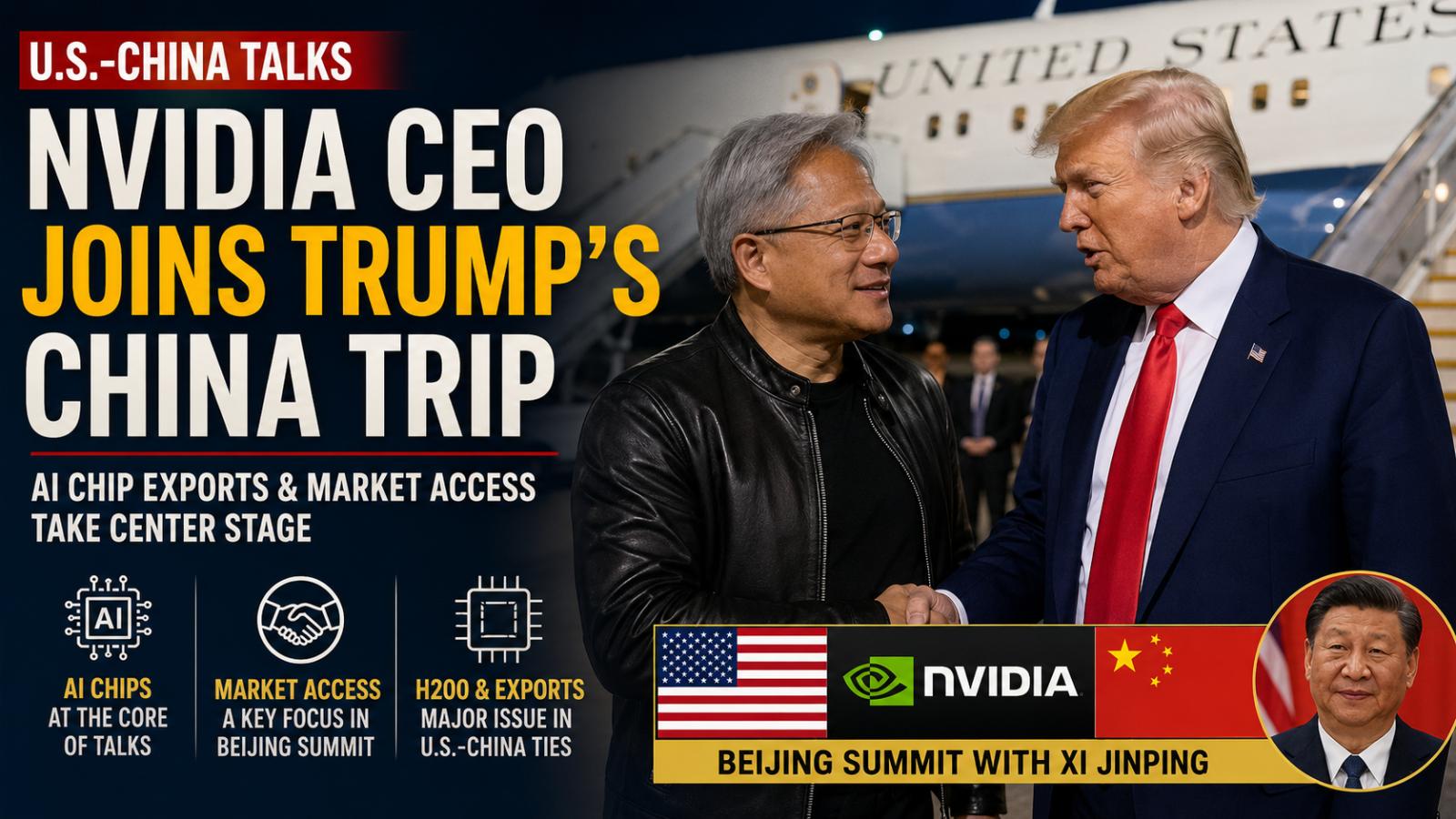
Nvidia CEO Joins Trump’s China Trip as AI Chip Stakes Rise
Nvidia CEO Jensen Huang joined President Donald Trump’s China trip on Wednesday, May 13, 2026, as AI chip exports and market access moved to the center of U.S.-China talks. His presence matters because Nvidia’s powerful GPUs sit at the heart of AI development, while U.S. export controls have limited high-end chip sales to China. Why Huang’s Role Matters Huang was added after earlier indications he was not in the U.S. business delegation,
Nvidia CEO Joins Trump’s China Trip as AI Chip Stakes Rise
Nvidia CEO Jensen Huang joined President Donald Trump’s China trip on Wednesday, May 13, 2026, as AI chip exports and market access moved to the center of U.S.-China talks. His presence matters because Nvidia’s powerful GPUs sit at the heart of AI development, while U.S. export controls have limited high-end chip sales to China. Why Huang’s Role Matters Huang was added after earlier indications he was not in the U.S. business delegation,