





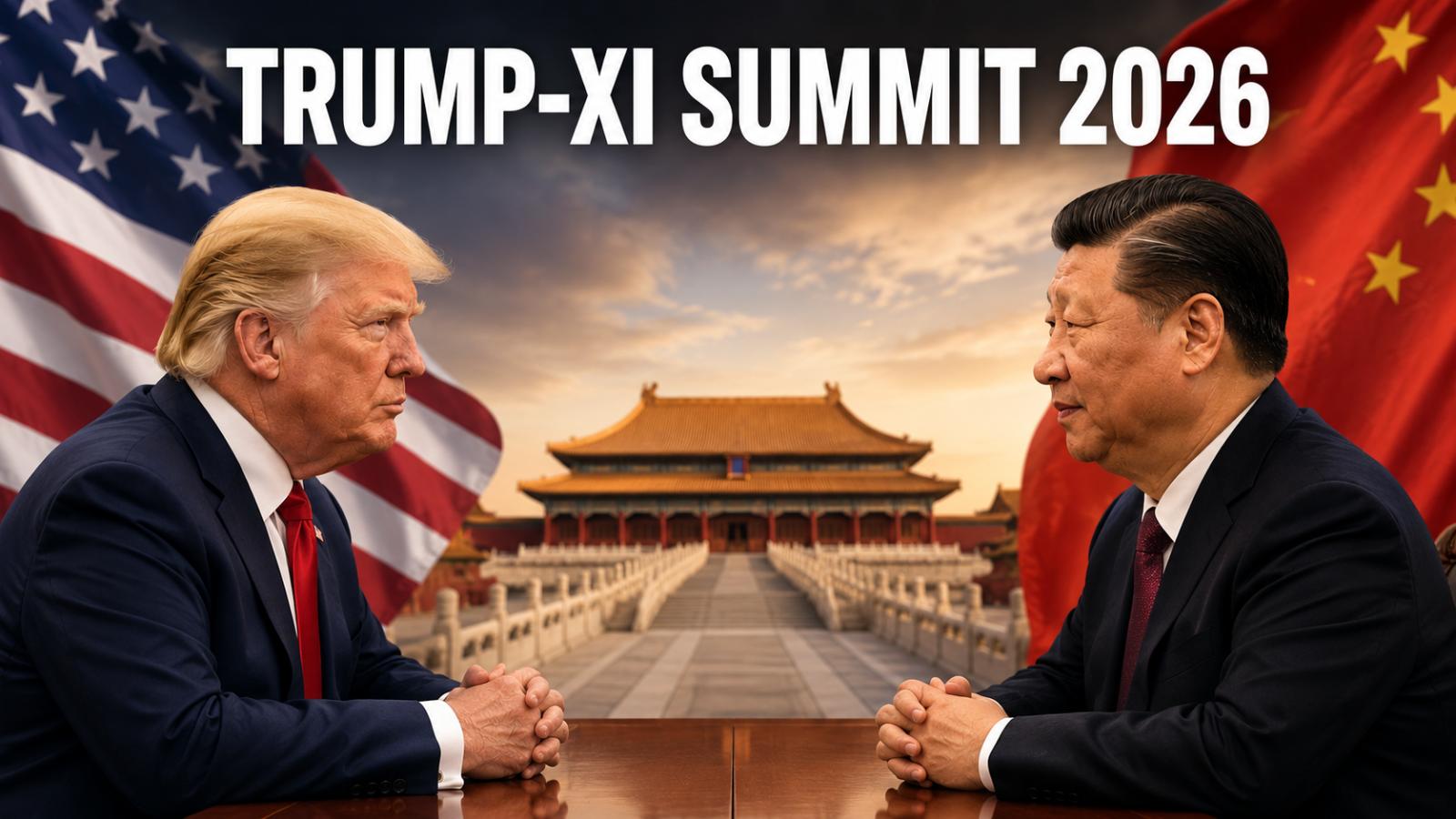
Trump-Xi Summit 2026: 6 Past Meetings That Explain US-China Tensions
Trump-Xi Summit Puts US-China Tensions Back in Focus US President Donald Trump arrived in Beijing on Wednesday, May 13, 2026, for a high-stakes summit with Chinese President Xi Jinping, bringing tariffs, rare earth exports, AI chips, Taiwan and global security back to the center of US-China relations. The summit is expected to mark another major test for the world’s two largest economies after six previous Trump-Xi meetings shaped trade disputes, tariff pauses and fragile diplomatic resets since 2017. For Washington, the key questions include trade access, technology restrictions, agriculture purchases, Taiwan and supply-chain stability. For Beijing, the meeting is a chance to push back against US tariffs and technology controls while protecting China’s position in global trade. Why the Trump-Xi Summit Matters in 2026 The 2026 Trump-Xi summit matters because the issues are no longer limited to trade. The talks now include rare earth minerals, artificial intelligence, agriculture, Taiwan, nuclear concerns and broader geopolitical tensions. Reuters reported that Trump and Xi are expected to discuss trade, AI, agriculture, rare earths and global security issues during the summit period. Rare earth exports are especially important because China plays a major role in minerals used in defense systems, electric vehicles, electronics and clean-energy technology. Any movement on export controls could affect global supply chains and US manufacturers. AI chips are another major pressure point. Trump’s Beijing visit also drew attention because Nvidia CEO Jensen Huang joined the mission as US companies seek broader access to China’s technology market. Taiwan remains one of the most sensitive security issues. Beijing strongly opposes US arms sales to Taiwan, while Washington continues to maintain political and security ties with Taipei. AP reported that US arms sales to Taiwan are among the issues surrounding the summit. Trump-Xi Meetings Timeline Meeting Date Location Main Focus Why It Matters Now First Trump-Xi meeting Thursday, April 6, 2017 Mar-a-Lago, Florida Trade, diplomacy, North Korea Opened direct leader-level communication G20 meeting Saturday, July 8, 2017 Hamburg, Germany North Korea and economic ties Came before stronger US trade action Trump China visit Wednesday, November 8, 2017 to Friday, November 10, 2017 Beijing, China Business deals and trade imbalance Warm diplomacy did not stop tariff tensions G20 dinner Saturday, December 1, 2018 Buenos Aires, Argentina Tariffs, intellectual property and cyber concerns Opened temporary negotiations during the trade war Osaka G20 meeting Saturday, June 29, 2019 Osaka, Japan Tariff pause and farm purchases Restarted trade talks after escalation APEC meeting Thursday, October 30, 2025 Busan, South Korea Tariffs, rare earths and farm exports Created a temporary pause before the 2026 summit How Six Meetings Shaped US-China Relations Trump and Xi first met at Mar-a-Lago in Florida on Thursday, April 6, 2017. The meeting created a personal channel between the two leaders, but it did not resolve deeper US concerns over China’s trade practices, market access and industrial policy. Their second meeting came on Saturday, July 8, 2017, during the G20 summit in Hamburg, Germany. North Korea was a major topic, but trade tensions were already rising. Soon after, Washington moved toward stronger action over alleged Chinese intellectual property theft and unfair trade practices. Trump visited Beijing from Wednesday, November 8, 2017, to Friday, November 10, 2017. The visit included ceremonial events and business announcements, but the friendly tone did not prevent the two countries from moving toward a wider trade confrontation. By Saturday, December 1, 2018, when Trump and Xi met at the G20 summit in Buenos Aires, both countries had already imposed tariffs. The dinner opened temporary negotiations on trade imbalances, intellectual property and cyber concerns. The next major pause came at the G20 summit in Osaka on Saturday, June 29, 2019. Trump and Xi agreed to restart trade talks and delay new tariffs. China also pledged to buy more US agricultural goods. Their sixth meeting came after a six-year gap on Thursday, October 30, 2025, during the APEC summit in Busan, South Korea. That meeting helped create a temporary pause in parts of the trade dispute, including movement on tariffs, rare earth exports and US farm purchases. What the 2026 Trump-Xi Meeting Could Decide The Beijing summit could decide whether Washington and Beijing extend a period of limited stability or return to sharper confrontation. For the United States, the main goals include tariff relief, stronger export access for farmers, rare earth supply stability, technology safeguards and progress on broader security issues. American companies are also watching whether the talks create more space for business access in China. For China, the summit is about reducing pressure from tariffs and technology restrictions while showing that Beijing can negotiate from strength. Rare earths give China leverage, while its large consumer and technology market remains important for US companies. The six previous Trump-Xi meetings show a clear pattern: personal diplomacy can slow escalation, but it rarely solves the deeper disputes. Mar-a-Lago and Beijing created warmth but did not prevent the trade war. Buenos Aires and Osaka produced temporary pauses. Busan again showed that both sides could step back from escalation, but only for a limited period. That makes the 2026 summit more than another diplomatic event. It is a test of whether the United States and China can manage competition without allowing tariffs, AI chip restrictions, rare earth controls and Taiwan tensions to trigger another major crisis.
Trump-Xi Summit 2026: 6 Past Meetings That Explain US-China Tensions
Trump-Xi Summit Puts US-China Tensions Back in Focus US President Donald Trump arrived in Beijing on Wednesday, May 13, 2026, for a high-stakes summit with Chinese President Xi Jinping, bringing tariffs, rare earth exports, AI chips, Taiwan and global security back to the center of US-China relations. The summit is expected to mark another major test for the world’s two largest economies after six previous Trump-Xi meetings shaped trade disputes, tariff pauses and fragile diplomatic resets since 2017. For Washington, the key questions include trade access, technology restrictions, agriculture purchases, Taiwan and supply-chain stability. For Beijing, the meeting is a chance to push back against US tariffs and technology controls while protecting China’s position in global trade. Why the Trump-Xi Summit Matters in 2026 The 2026 Trump-Xi summit matters because the issues are no longer limited to trade. The talks now include rare earth minerals, artificial intelligence, agriculture, Taiwan, nuclear concerns and broader geopolitical tensions. Reuters reported that Trump and Xi are expected to discuss trade, AI, agriculture, rare earths and global security issues during the summit period. Rare earth exports are especially important because China plays a major role in minerals used in defense systems, electric vehicles, electronics and clean-energy technology. Any movement on export controls could affect global supply chains and US manufacturers. AI chips are another major pressure point. Trump’s Beijing visit also drew attention because Nvidia CEO Jensen Huang joined the mission as US companies seek broader access to China’s technology market. Taiwan remains one of the most sensitive security issues. Beijing strongly opposes US arms sales to Taiwan, while Washington continues to maintain political and security ties with Taipei. AP reported that US arms sales to Taiwan are among the issues surrounding the summit. Trump-Xi Meetings Timeline Meeting Date Location Main Focus Why It Matters Now First Trump-Xi meeting Thursday, April 6, 2017 Mar-a-Lago, Florida Trade, diplomacy, North Korea Opened direct leader-level communication G20 meeting Saturday, July 8, 2017 Hamburg, Germany North Korea and economic ties Came before stronger US trade action Trump China visit Wednesday, November 8, 2017 to Friday, November 10, 2017 Beijing, China Business deals and trade imbalance Warm diplomacy did not stop tariff tensions G20 dinner Saturday, December 1, 2018 Buenos Aires, Argentina Tariffs, intellectual property and cyber concerns Opened temporary negotiations during the trade war Osaka G20 meeting Saturday, June 29, 2019 Osaka, Japan Tariff pause and farm purchases Restarted trade talks after escalation APEC meeting Thursday, October 30, 2025 Busan, South Korea Tariffs, rare earths and farm exports Created a temporary pause before the 2026 summit How Six Meetings Shaped US-China Relations Trump and Xi first met at Mar-a-Lago in Florida on Thursday, April 6, 2017. The meeting created a personal channel between the two leaders, but it did not resolve deeper US concerns over China’s trade practices, market access and industrial policy. Their second meeting came on Saturday, July 8, 2017, during the G20 summit in Hamburg, Germany. North Korea was a major topic, but trade tensions were already rising. Soon after, Washington moved toward stronger action over alleged Chinese intellectual property theft and unfair trade practices. Trump visited Beijing from Wednesday, November 8, 2017, to Friday, November 10, 2017. The visit included ceremonial events and business announcements, but the friendly tone did not prevent the two countries from moving toward a wider trade confrontation. By Saturday, December 1, 2018, when Trump and Xi met at the G20 summit in Buenos Aires, both countries had already imposed tariffs. The dinner opened temporary negotiations on trade imbalances, intellectual property and cyber concerns. The next major pause came at the G20 summit in Osaka on Saturday, June 29, 2019. Trump and Xi agreed to restart trade talks and delay new tariffs. China also pledged to buy more US agricultural goods. Their sixth meeting came after a six-year gap on Thursday, October 30, 2025, during the APEC summit in Busan, South Korea. That meeting helped create a temporary pause in parts of the trade dispute, including movement on tariffs, rare earth exports and US farm purchases. What the 2026 Trump-Xi Meeting Could Decide The Beijing summit could decide whether Washington and Beijing extend a period of limited stability or return to sharper confrontation. For the United States, the main goals include tariff relief, stronger export access for farmers, rare earth supply stability, technology safeguards and progress on broader security issues. American companies are also watching whether the talks create more space for business access in China. For China, the summit is about reducing pressure from tariffs and technology restrictions while showing that Beijing can negotiate from strength. Rare earths give China leverage, while its large consumer and technology market remains important for US companies. The six previous Trump-Xi meetings show a clear pattern: personal diplomacy can slow escalation, but it rarely solves the deeper disputes. Mar-a-Lago and Beijing created warmth but did not prevent the trade war. Buenos Aires and Osaka produced temporary pauses. Busan again showed that both sides could step back from escalation, but only for a limited period. That makes the 2026 summit more than another diplomatic event. It is a test of whether the United States and China can manage competition without allowing tariffs, AI chip restrictions, rare earth controls and Taiwan tensions to trigger another major crisis.
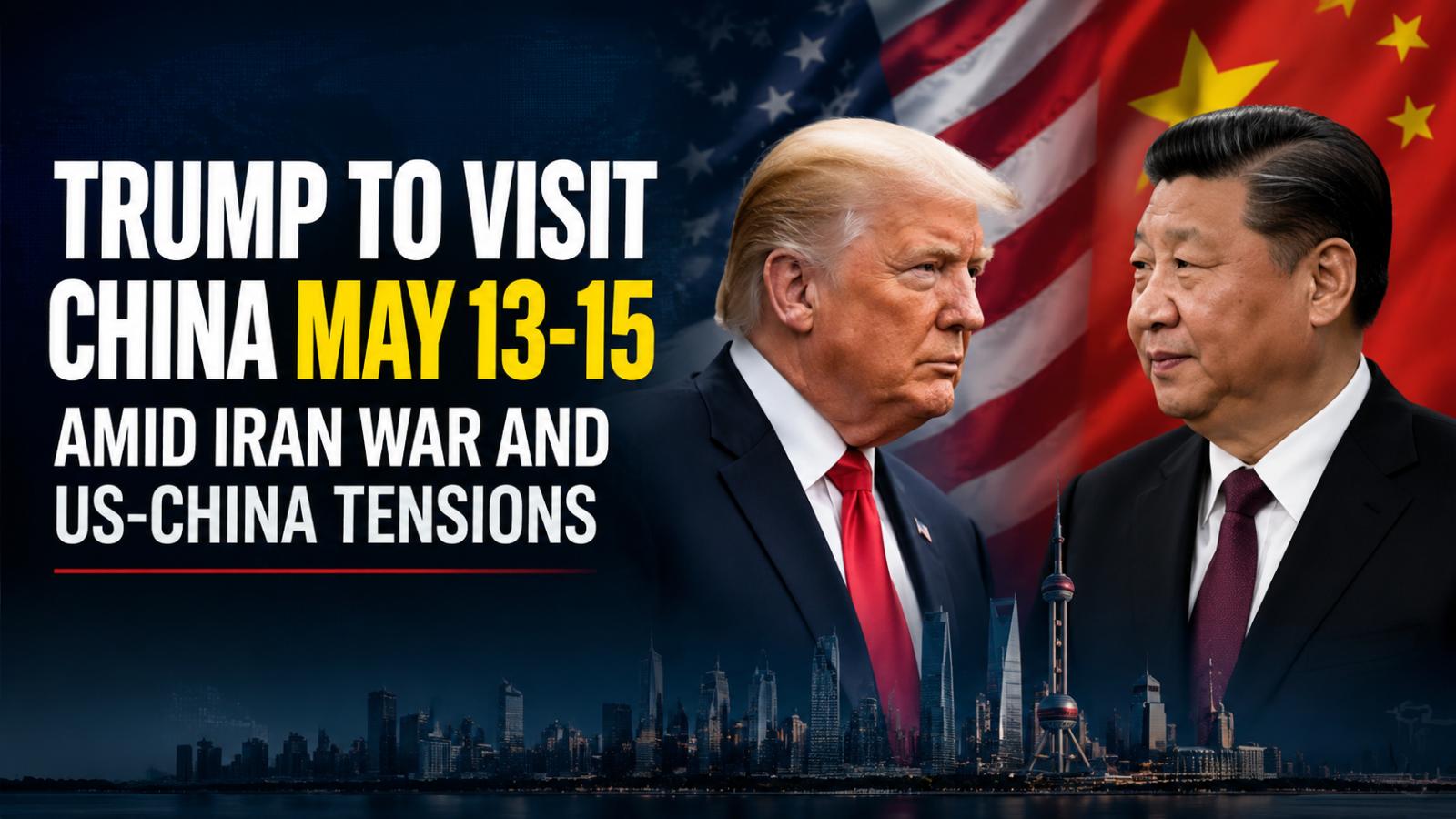
Trump-Xi summit: Key issues, trade talks, and Iran conflict to be addressed
US President Donald Trump is set to visit China from May 13 to 15, marking the first visit to the country by an American president in nearly nine years. The invitation comes from Chinese President Xi Jinping amid growing tensions between the two nations over issues such as trade, technology, and defense. This visit comes at a critical time for global politics, with the ongoing Iran conflict impacting both economic stability and energy prices. The timing of Trump’s visit coincides with a volatile situation in the Strait of Hormuz, where a dual blockade has significantly disrupted global oil trade, driving up energy prices. These disruptions have the potential to harm global economic growth, as the Strait is a vital shipping route for the world’s oil supply. Trump’s administration has placed significant pressure on Iran over its nuclear program, and in recent remarks, he stated that the US would “finish the job” if Iran did not agree to the terms aimed at halting the conflict. While tensions remain high, the US continues to press for a diplomatic resolution to the situation, with President Trump asserting that Iran must meet specific demands regarding its nuclear ambitions. Despite these pressures, Trump maintains that the US does not need China’s assistance to resolve the issue, suggesting that the conflict could be settled with or without China’s involvement. Iran, for its part, has signaled its intention to pursue peace, with chief negotiator Mohammad Bagher Ghalibaf issuing an ultimatum to the US. According to Ghalibaf, Washington must accept Iran’s recent peace proposal or face further failure in negotiations. He emphasized that there was no alternative but to acknowledge the rights of the Iranian people as outlined in Tehran’s 14-point proposal. Beyond the Iran conflict, the upcoming Trump-Xi summit is expected to address several key issues affecting US-China relations. Trade discussions will likely focus on extending a temporary truce in the ongoing trade dispute, particularly concerning rare earth minerals. Both leaders are expected to explore agreements related to Boeing aircraft purchases, as well as expanding trade and investment ties. Additionally, China is anticipated to announce purchases in the US agricultural and energy sectors. Another significant topic of discussion will be Taiwan, with Xi expressing frustration over the US’s continued support for the island nation, which China claims as part of its territory. Trump’s administration has reiterated its commitment to Taiwan, despite escalating military activities in the region by China. The summit will also cover the rapid development of artificial intelligence (AI) in both countries, with US officials highlighting concerns about the potential military and economic implications of AI advancements. With both nations at the forefront of technological innovation, there is a growing need for open communication to avoid misunderstandings or potential conflicts arising from the use of AI. This high-stakes summit between the US and China is poised to shape the future of global trade, energy security, and technological development, with both sides seeking to manage their differences while addressing urgent geopolitical challenges. As the world watches, the outcome of these talks could have far-reaching implications for international relations.
Trump-Xi summit: Key issues, trade talks, and Iran conflict to be addressed
US President Donald Trump is set to visit China from May 13 to 15, marking the first visit to the country by an American president in nearly nine years. The invitation comes from Chinese President Xi Jinping amid growing tensions between the two nations over issues such as trade, technology, and defense. This visit comes at a critical time for global politics, with the ongoing Iran conflict impacting both economic stability and energy prices. The timing of Trump’s visit coincides with a volatile situation in the Strait of Hormuz, where a dual blockade has significantly disrupted global oil trade, driving up energy prices. These disruptions have the potential to harm global economic growth, as the Strait is a vital shipping route for the world’s oil supply. Trump’s administration has placed significant pressure on Iran over its nuclear program, and in recent remarks, he stated that the US would “finish the job” if Iran did not agree to the terms aimed at halting the conflict. While tensions remain high, the US continues to press for a diplomatic resolution to the situation, with President Trump asserting that Iran must meet specific demands regarding its nuclear ambitions. Despite these pressures, Trump maintains that the US does not need China’s assistance to resolve the issue, suggesting that the conflict could be settled with or without China’s involvement. Iran, for its part, has signaled its intention to pursue peace, with chief negotiator Mohammad Bagher Ghalibaf issuing an ultimatum to the US. According to Ghalibaf, Washington must accept Iran’s recent peace proposal or face further failure in negotiations. He emphasized that there was no alternative but to acknowledge the rights of the Iranian people as outlined in Tehran’s 14-point proposal. Beyond the Iran conflict, the upcoming Trump-Xi summit is expected to address several key issues affecting US-China relations. Trade discussions will likely focus on extending a temporary truce in the ongoing trade dispute, particularly concerning rare earth minerals. Both leaders are expected to explore agreements related to Boeing aircraft purchases, as well as expanding trade and investment ties. Additionally, China is anticipated to announce purchases in the US agricultural and energy sectors. Another significant topic of discussion will be Taiwan, with Xi expressing frustration over the US’s continued support for the island nation, which China claims as part of its territory. Trump’s administration has reiterated its commitment to Taiwan, despite escalating military activities in the region by China. The summit will also cover the rapid development of artificial intelligence (AI) in both countries, with US officials highlighting concerns about the potential military and economic implications of AI advancements. With both nations at the forefront of technological innovation, there is a growing need for open communication to avoid misunderstandings or potential conflicts arising from the use of AI. This high-stakes summit between the US and China is poised to shape the future of global trade, energy security, and technological development, with both sides seeking to manage their differences while addressing urgent geopolitical challenges. As the world watches, the outcome of these talks could have far-reaching implications for international relations.
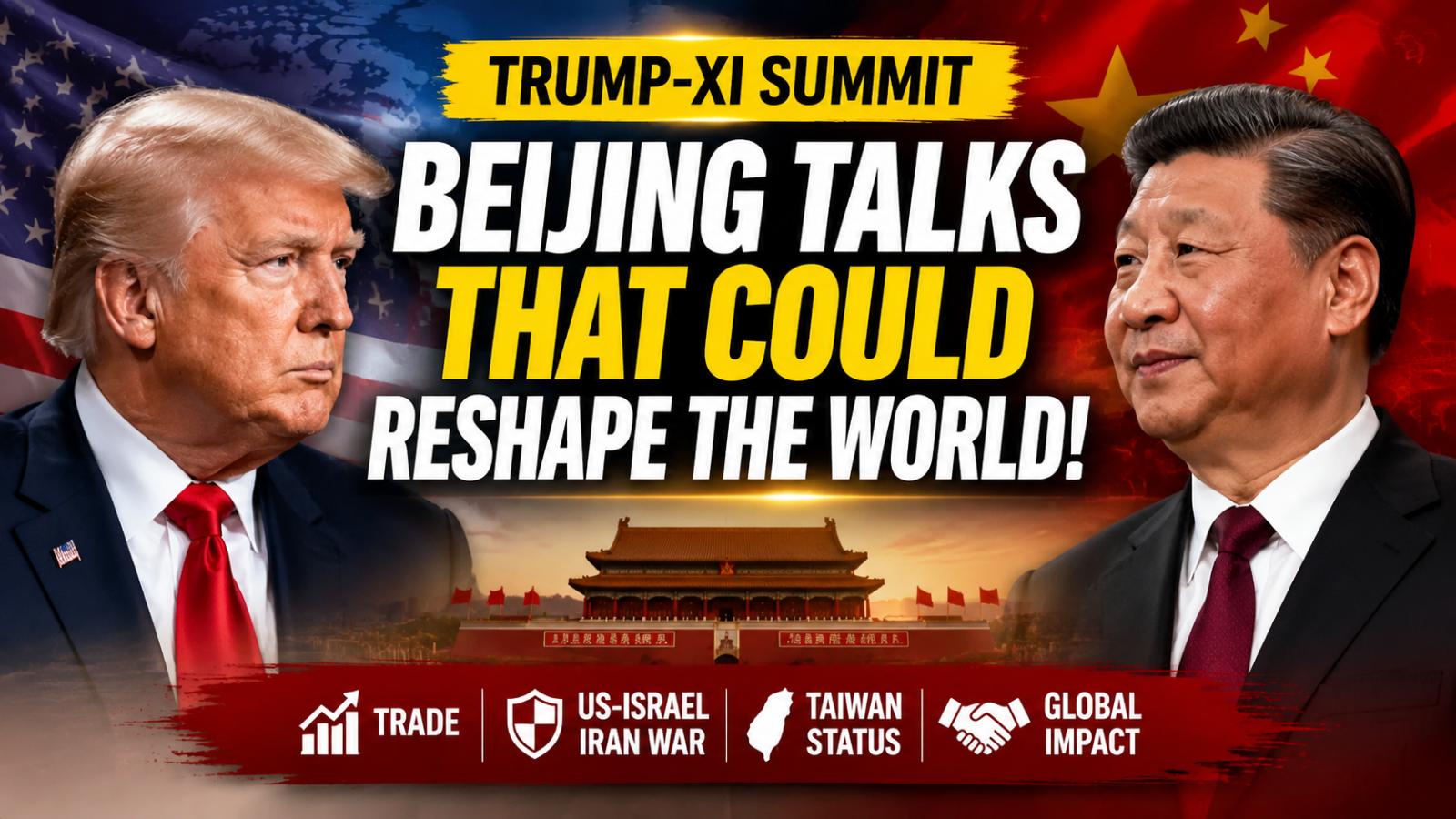
Historic US-China Summit: Trump and Xi Discuss Iran, Trade, and Taiwan in Beijing
Trump and Xi Jinping Meet in Beijing for Key Summit US President Donald Trump and Chinese President Xi Jinping are set to meet in Beijing for a highly anticipated three-day summit. This is Trump’s first visit to China in nearly a decade, making the meeting particularly significant. The summit is expected to focus on critical global issues, including the ongoing US-Israel war on Iran, trade relations between the two nations, and the status of Taiw
Historic US-China Summit: Trump and Xi Discuss Iran, Trade, and Taiwan in Beijing
Trump and Xi Jinping Meet in Beijing for Key Summit US President Donald Trump and Chinese President Xi Jinping are set to meet in Beijing for a highly anticipated three-day summit. This is Trump’s first visit to China in nearly a decade, making the meeting particularly significant. The summit is expected to focus on critical global issues, including the ongoing US-Israel war on Iran, trade relations between the two nations, and the status of Taiw
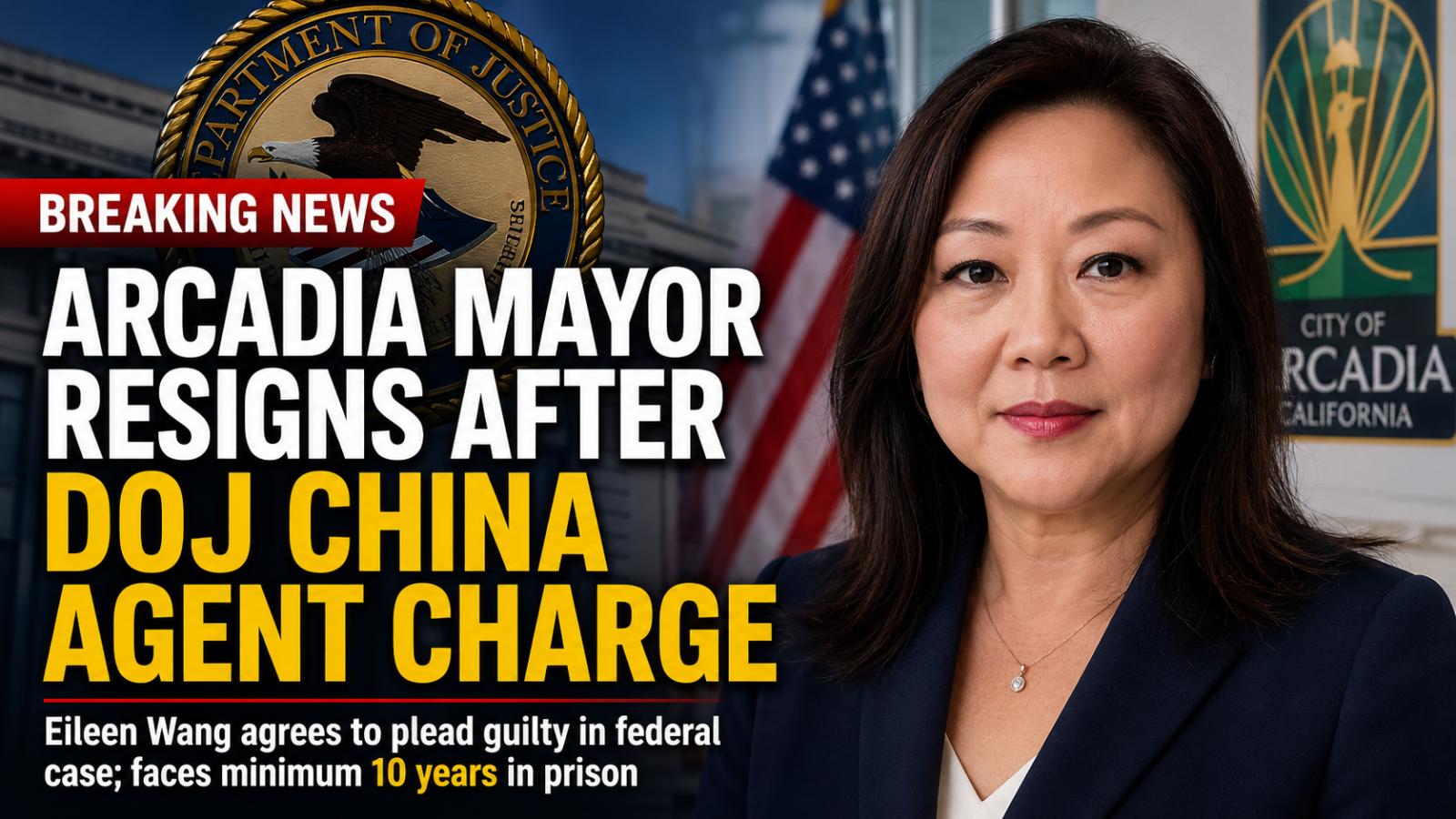
Arcadia Mayor Resigns After DOJ China Agent Charge
Eileen Wang resigned as mayor of Arcadia on Monday, May 12, 2026, after the U.S. Department of Justice announced she agreed to plead guilty in a federal foreign agent case tied to China. Federal prosecutors said Wang, 58, acted as a covert agent for the People’s Republic of China while helping distribute propaganda content targeting Chinese American communities in Southern California. Officials said the felony charge carries a mandatory minimum sentence of 10 years in federal prison. DOJ Says Propaganda Was Shared Through Community News Platforms According to court filings, Chinese officials allegedly used encrypted WeChat messages in June 2021 to send prewritten articles to Wang and others. One article reportedly denied allegations of genocide and forced labor involving ethnic minorities in China’s Xinjiang region. Prosecutors said Wang reposted the content on websites presented as local news platforms and later shared proof of publication with individuals linked to the Chinese government. Federal investigators also alleged that Wang coordinated with John Chen, who previously pleaded guilty to acting as an illegal foreign agent and conspiracy to bribe a public official. What Happens Next for Arcadia? City officials in Arcadia said the federal allegations did not involve city finances, employees, or municipal operations. Wang was elected to the City Council in November 2022 and later became mayor through the council’s rotating leadership system. The City Council is now expected to discuss appointing a temporary replacement for Wang’s 3rd District seat ahead of the November 2026 election. Assistant Attorney General John Eisenberg said public officials in the United States must represent American interests only, calling the allegations against Wang “deeply concerning.”
Arcadia Mayor Resigns After DOJ China Agent Charge
Eileen Wang resigned as mayor of Arcadia on Monday, May 12, 2026, after the U.S. Department of Justice announced she agreed to plead guilty in a federal foreign agent case tied to China. Federal prosecutors said Wang, 58, acted as a covert agent for the People’s Republic of China while helping distribute propaganda content targeting Chinese American communities in Southern California. Officials said the felony charge carries a mandatory minimum sentence of 10 years in federal prison. DOJ Says Propaganda Was Shared Through Community News Platforms According to court filings, Chinese officials allegedly used encrypted WeChat messages in June 2021 to send prewritten articles to Wang and others. One article reportedly denied allegations of genocide and forced labor involving ethnic minorities in China’s Xinjiang region. Prosecutors said Wang reposted the content on websites presented as local news platforms and later shared proof of publication with individuals linked to the Chinese government. Federal investigators also alleged that Wang coordinated with John Chen, who previously pleaded guilty to acting as an illegal foreign agent and conspiracy to bribe a public official. What Happens Next for Arcadia? City officials in Arcadia said the federal allegations did not involve city finances, employees, or municipal operations. Wang was elected to the City Council in November 2022 and later became mayor through the council’s rotating leadership system. The City Council is now expected to discuss appointing a temporary replacement for Wang’s 3rd District seat ahead of the November 2026 election. Assistant Attorney General John Eisenberg said public officials in the United States must represent American interests only, calling the allegations against Wang “deeply concerning.”
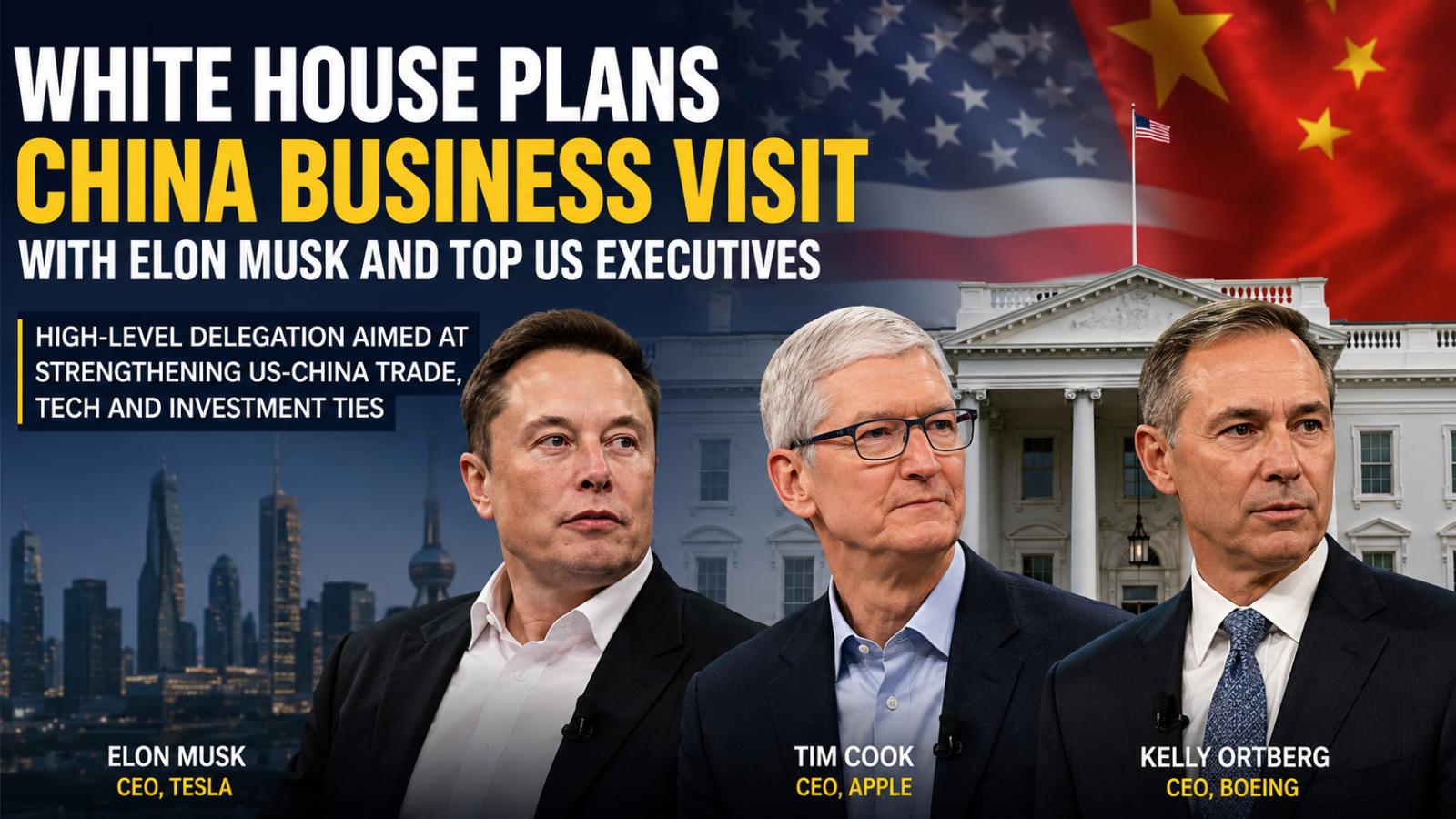
White House China Visit May Bring Musk, Cook to Trump-Xi Summit
The White House China visit planned for May 13–15, 2026, may bring Elon Musk, Apple CEO Tim Cook and Boeing CEO Kelly Ortberg into President Donald Trump’s high-stakes summit with Chinese President Xi Jinping. The trip is aimed at easing business tensions and opening space for trade deals between the world’s two largest economies. Why Musk, Cook and Boeing Matter Musk’s Tesla has major operations in Shanghai, making China central to the
White House China Visit May Bring Musk, Cook to Trump-Xi Summit
The White House China visit planned for May 13–15, 2026, may bring Elon Musk, Apple CEO Tim Cook and Boeing CEO Kelly Ortberg into President Donald Trump’s high-stakes summit with Chinese President Xi Jinping. The trip is aimed at easing business tensions and opening space for trade deals between the world’s two largest economies. Why Musk, Cook and Boeing Matter Musk’s Tesla has major operations in Shanghai, making China central to the

FIFA World Cup TV Rights Crisis Deepens in India and China
FIFA is racing to finalize 2026 FIFA World Cup TV rights in China and India, with broadcast deals still unresolved less than a month before the tournament begins on Thursday, June 11, 2026. The delay matters because China and India represent two of the world’s largest sports audiences. Without final agreements, millions of football fans could face uncertainty over where to watch the tournament. China CCTV Talks Move Forward Senior FIFA offici
FIFA World Cup TV Rights Crisis Deepens in India and China
FIFA is racing to finalize 2026 FIFA World Cup TV rights in China and India, with broadcast deals still unresolved less than a month before the tournament begins on Thursday, June 11, 2026. The delay matters because China and India represent two of the world’s largest sports audiences. Without final agreements, millions of football fans could face uncertainty over where to watch the tournament. China CCTV Talks Move Forward Senior FIFA offici
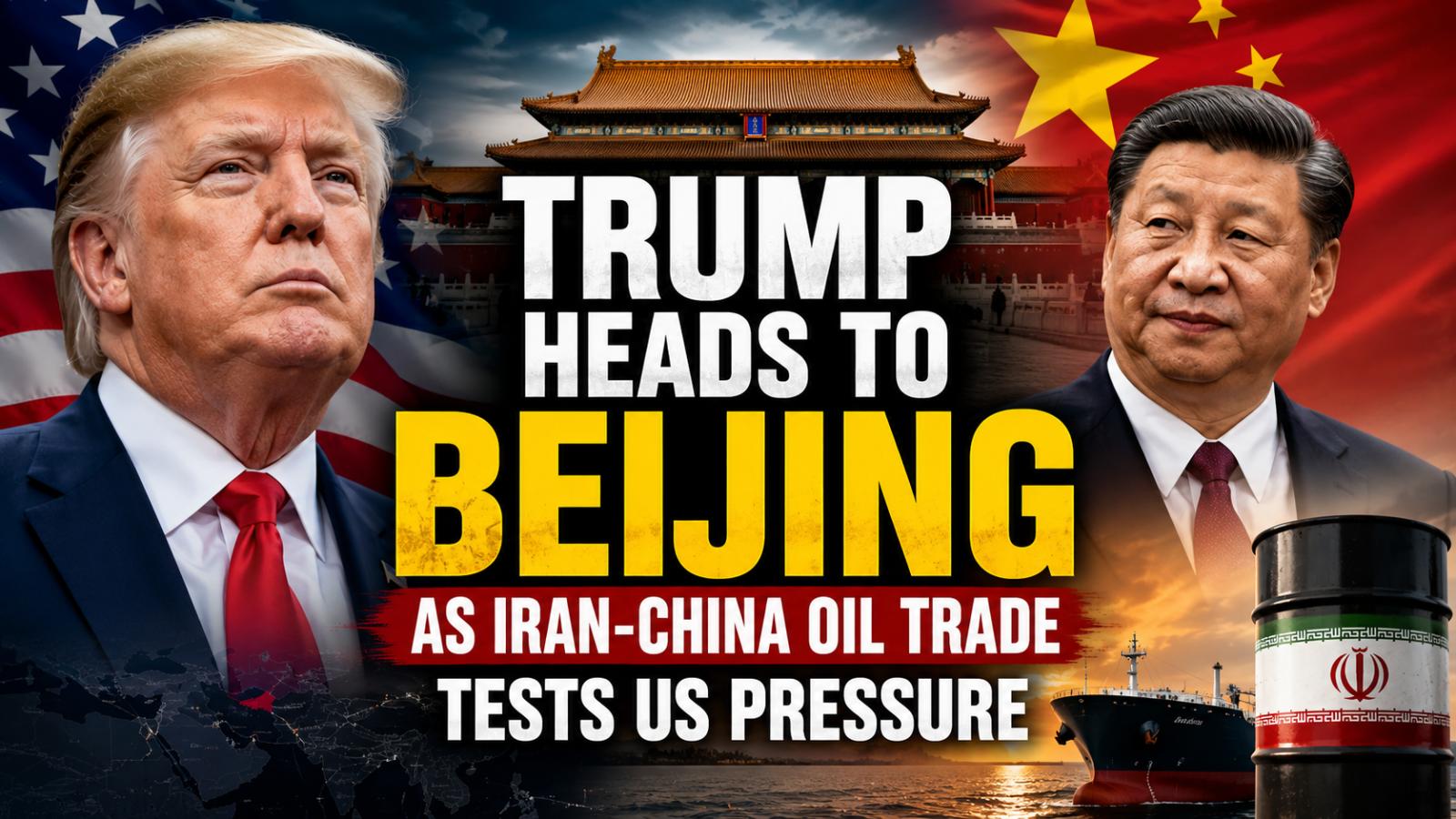
Trump Heads to Beijing as Iran-China Oil Trade Tests US Pressure
President Donald Trump is scheduled to arrive in Beijing on Wednesday, May 13, 2026, for high-level talks with Chinese President Xi Jinping as tensions over Iran, oil trade and regional stability continue to grow.
Trump Heads to Beijing as Iran-China Oil Trade Tests US Pressure
President Donald Trump is scheduled to arrive in Beijing on Wednesday, May 13, 2026, for high-level talks with Chinese President Xi Jinping as tensions over Iran, oil trade and regional stability continue to grow.
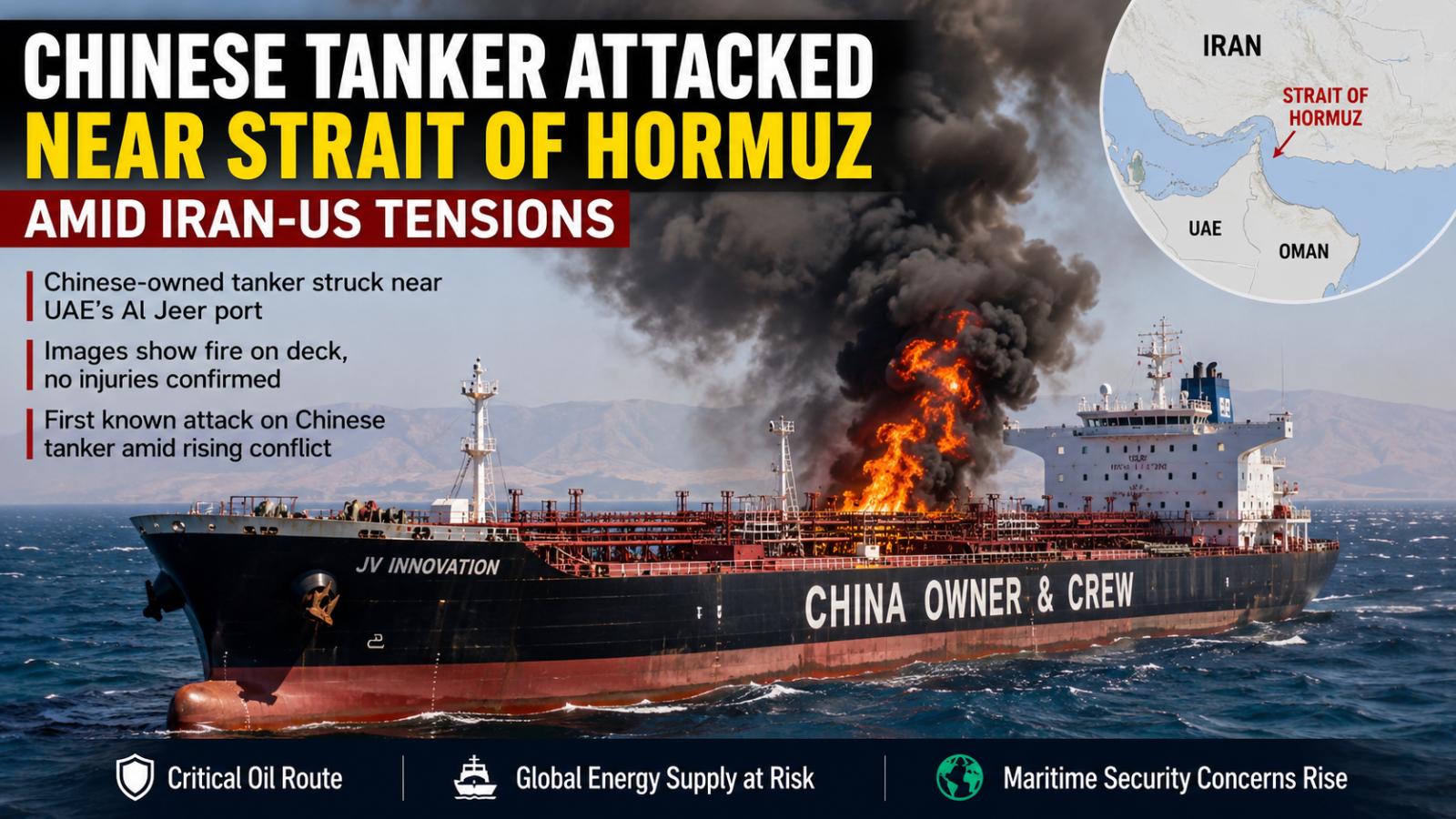
Chinese Tanker Attack Near Strait of Hormuz Sparks Oil Route Alarm Amid Iran-US Tensions
Chinese Tanker Attack Near Strait of Hormuz Raises Global Oil Fears A Chinese-owned oil tanker was attacked near the Strait of Hormuz, intensifying fears over oil shipping safety as Iran-US tensions deepen across Gulf waters. The vessel, identified in reports as JV Innovation, was reportedly hit off UAE’s Al Jeer port on May 4, with images showing flames on deck and markings reading “CHINA OWNER & CREW.”
Chinese Tanker Attack Near Strait of Hormuz Sparks Oil Route Alarm Amid Iran-US Tensions
Chinese Tanker Attack Near Strait of Hormuz Raises Global Oil Fears A Chinese-owned oil tanker was attacked near the Strait of Hormuz, intensifying fears over oil shipping safety as Iran-US tensions deepen across Gulf waters. The vessel, identified in reports as JV Innovation, was reportedly hit off UAE’s Al Jeer port on May 4, with images showing flames on deck and markings reading “CHINA OWNER & CREW.”
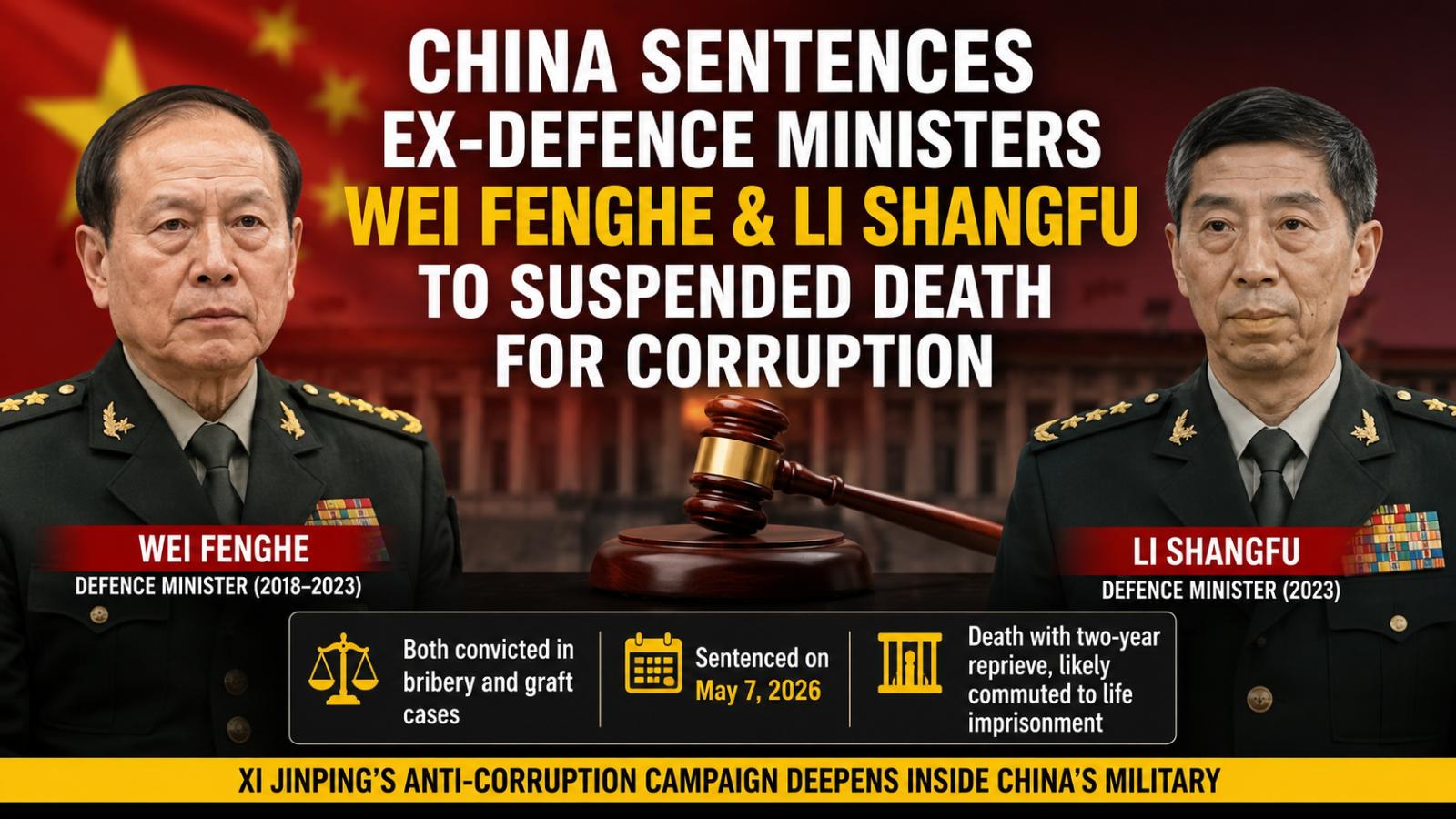
China Sentences Ex-Defence Ministers Wei Fenghe, Li Shangfu to Suspended Death in PLA Corruption Purge
China Hands Suspended Death Sentences to Former Defence Ministers China has sentenced former defence ministers Wei Fenghe and Li Shangfu to death with a two-year reprieve in a major PLA corruption case, state media reported Thursday. The ruling marks one of the harshest punishments against senior Chinese military figures in years and signals that President Xi Jinping’s anti-graft campaign
China Sentences Ex-Defence Ministers Wei Fenghe, Li Shangfu to Suspended Death in PLA Corruption Purge
China Hands Suspended Death Sentences to Former Defence Ministers China has sentenced former defence ministers Wei Fenghe and Li Shangfu to death with a two-year reprieve in a major PLA corruption case, state media reported Thursday. The ruling marks one of the harshest punishments against senior Chinese military figures in years and signals that President Xi Jinping’s anti-graft campaign

China Fireworks Plant Explosion Claims 21 Lives, Hundreds Injured
A powerful explosion at a fireworks factory in China’s Hunan province on Monday (May 4) has tragically killed at least 21 people and injured 61 others, according to state media reports. The explosion occurred at the Changsha Liuyang Huasheng Fireworks plant in the city of Liuyang, a major hub for the country’s fireworks industry. Videos circulating online showed thick grey smoke rising high into the sky, with the intensity of the blast visibly shaking nearby structures. Chinese
China Fireworks Plant Explosion Claims 21 Lives, Hundreds Injured
A powerful explosion at a fireworks factory in China’s Hunan province on Monday (May 4) has tragically killed at least 21 people and injured 61 others, according to state media reports. The explosion occurred at the Changsha Liuyang Huasheng Fireworks plant in the city of Liuyang, a major hub for the country’s fireworks industry. Videos circulating online showed thick grey smoke rising high into the sky, with the intensity of the blast visibly shaking nearby structures. Chinese
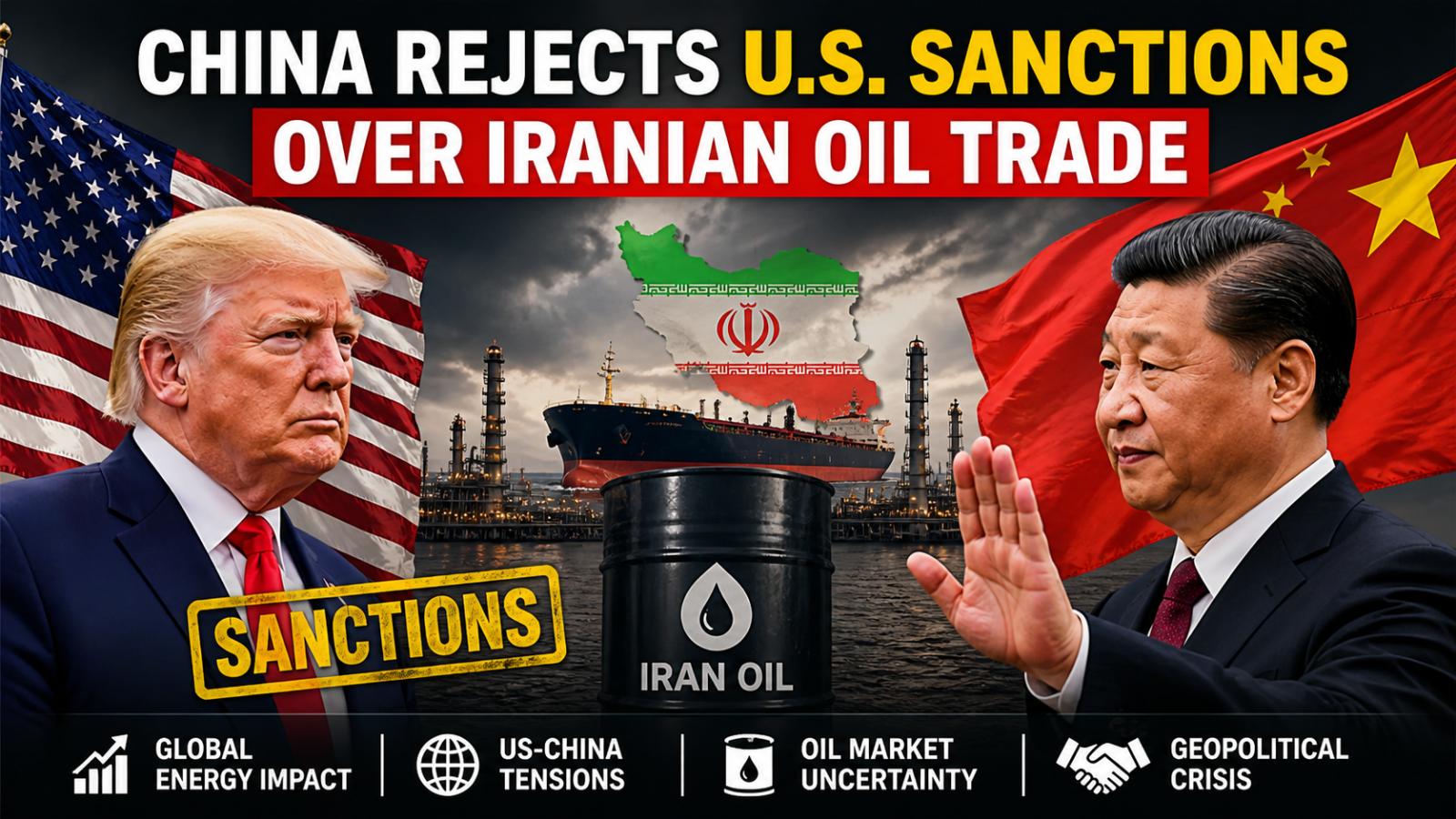
China Rejects US Sanctions on Iranian Oil Trade, Escalating Global Energy Tensions in 2026
China has strongly rejected new sanctions imposed by the United States on Chinese firms accused of purchasing Iranian oil, calling the measures “unlawful” and a violation of international trade norms. The move marks a fresh escalation in tensions between China and Washington, with potential ripple effe
China Rejects US Sanctions on Iranian Oil Trade, Escalating Global Energy Tensions in 2026
China has strongly rejected new sanctions imposed by the United States on Chinese firms accused of purchasing Iranian oil, calling the measures “unlawful” and a violation of international trade norms. The move marks a fresh escalation in tensions between China and Washington, with potential ripple effe
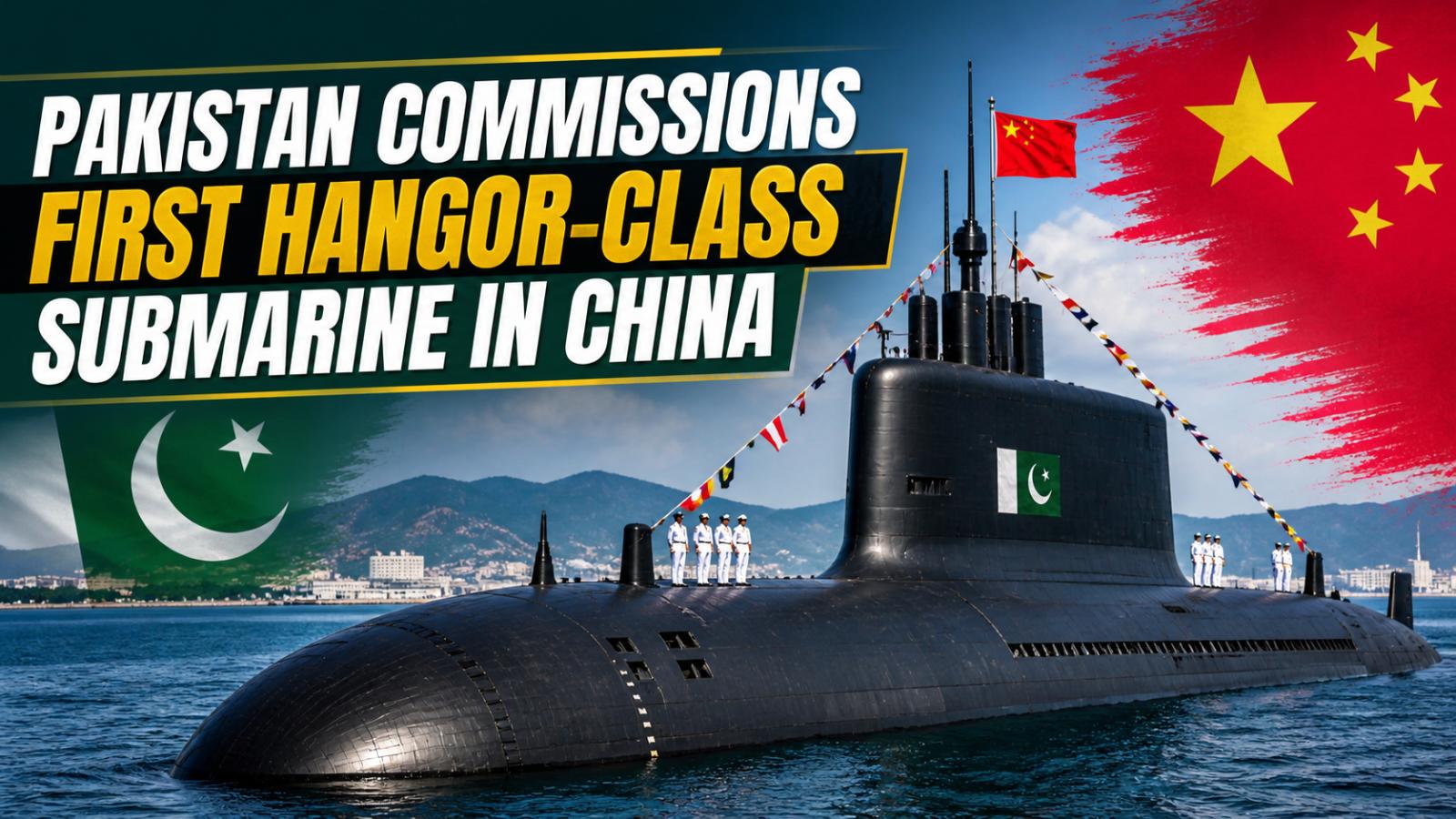
Pakistan commissions first Hangor-class submarine built in China
Pakistan submarine induction marks major naval boost Pakistan submarine induction marked a major milestone as the country commissioned its first Hangor-class submarine built in China. The ceremony was held in Sanya and attended by President Asif Ali Zardari and Naval Chief Admiral Naveed Ashraf. This move highlights strong China Pakistan defence cooperation and signals a major expansion in naval fleet capacity.
Pakistan commissions first Hangor-class submarine built in China
Pakistan submarine induction marks major naval boost Pakistan submarine induction marked a major milestone as the country commissioned its first Hangor-class submarine built in China. The ceremony was held in Sanya and attended by President Asif Ali Zardari and Naval Chief Admiral Naveed Ashraf. This move highlights strong China Pakistan defence cooperation and signals a major expansion in naval fleet capacity.

Chinese hacker extradited from Italy to face U.S. charges in COVID-19 cyber case
A Chinese national accused of hacking U.S. COVID-19 research systems was extradited from Italy on Friday, April 25, 2026, to face federal charges. The FBI links the case to China’s intelligence services and the global HAFNIUM cyber campaign. Chinese hacker extradited from Italy to face U.S. charges in COVID-19 cyber case as federal authorities confirmed that a previously scrutinized trip to Italy in early 2026 helped facilitate the arrest of a Chinese national ac
Chinese hacker extradited from Italy to face U.S. charges in COVID-19 cyber case
A Chinese national accused of hacking U.S. COVID-19 research systems was extradited from Italy on Friday, April 25, 2026, to face federal charges. The FBI links the case to China’s intelligence services and the global HAFNIUM cyber campaign. Chinese hacker extradited from Italy to face U.S. charges in COVID-19 cyber case as federal authorities confirmed that a previously scrutinized trip to Italy in early 2026 helped facilitate the arrest of a Chinese national ac
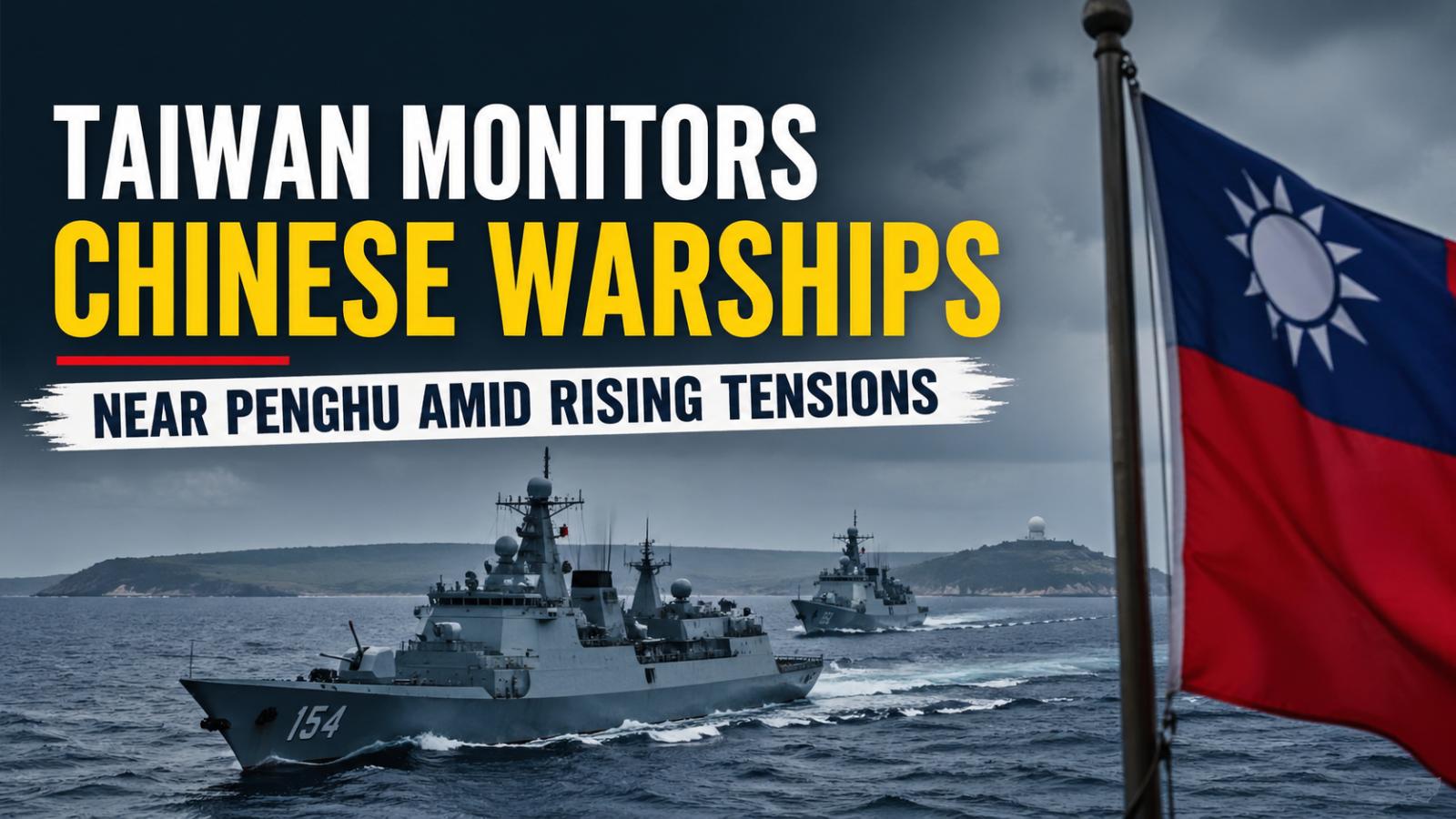
Taiwan steps up defence as Chinese warships enter sensitive waters
Taiwan China tension has intensified after Taiwan detected Chinese warships near the Penghu islands, prompting immediate military monitoring and response. Taiwan’s defence ministry confirmed that a Chinese destroyer and frigate entered sensitive waters southwest of the Penghu islands, an area known for hosting key naval and air force bases. In response, Taiwan deployed its own naval and air assets to track the ships closely and ensure security in the region. Officials stated that
Taiwan steps up defence as Chinese warships enter sensitive waters
Taiwan China tension has intensified after Taiwan detected Chinese warships near the Penghu islands, prompting immediate military monitoring and response. Taiwan’s defence ministry confirmed that a Chinese destroyer and frigate entered sensitive waters southwest of the Penghu islands, an area known for hosting key naval and air force bases. In response, Taiwan deployed its own naval and air assets to track the ships closely and ensure security in the region. Officials stated that
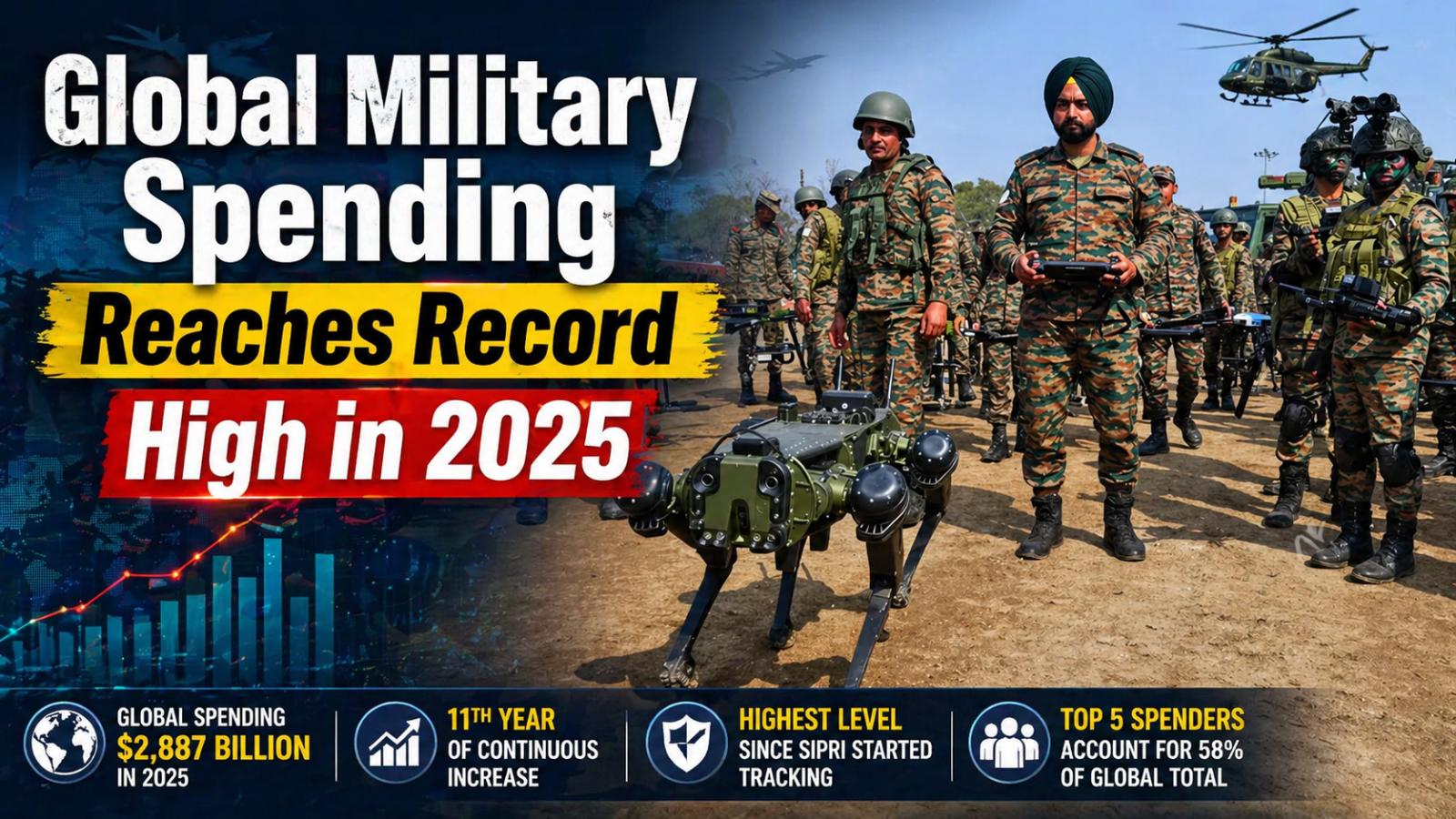
India Enters Top Five as Global Defense Spending Surge
Global military spending reached a record $2,887 billion in 2025, marking the eleventh consecutive year of growth and the highest level ever recorded. According to the latest SIPRI report, the increase reflects rising geopolitical tensions, ongoing conflicts, and a shifting global security environment that has prompted governments to expand their defense budgets. India emerged as one of the world’s top military spenders, entering the top five for the first time with total expenditure of $92.1 billion. The country’s defense spending rose by 8.9 percent, reflecting heightened security concerns and operational demands. The report noted that this increase coincided with armed tensions involving Pakistan in May 2025, during which India deployed a range of military assets including aircraft, drones, and missile systems. The five largest spenders—the United States, China, Russia, Germany, and India—collectively accounted for 58 percent of global military expenditure, totaling $1,686 billion. Pakistan also increased its defense budget by 11 percent to $11.9 billion, driven largely by procurement activities and ongoing modernization efforts following regional tensions. Europe was identified as the primary contributor to the global rise in military spending, with a 14 percent increase bringing the region’s total to $864 billion. This marked the fastest growth in Central and Western Europe since the Cold War, as countries accelerated rearmament programs in response to security concerns, particularly the ongoing conflict involving Russia and Ukraine. The United States remained the largest military spender globally, allocating $954 billion in 2025. However, this represented a 7.5 percent decline compared to the previous year. The decrease was attributed mainly to reduced financial assistance to Ukraine, contrasting with higher levels of support in earlier years. Overall, the data highlights a continued global trend toward increased defense investment, driven by evolving security challenges and shifting geopolitical dynamics.
India Enters Top Five as Global Defense Spending Surge
Global military spending reached a record $2,887 billion in 2025, marking the eleventh consecutive year of growth and the highest level ever recorded. According to the latest SIPRI report, the increase reflects rising geopolitical tensions, ongoing conflicts, and a shifting global security environment that has prompted governments to expand their defense budgets. India emerged as one of the world’s top military spenders, entering the top five for the first time with total expenditure of $92.1 billion. The country’s defense spending rose by 8.9 percent, reflecting heightened security concerns and operational demands. The report noted that this increase coincided with armed tensions involving Pakistan in May 2025, during which India deployed a range of military assets including aircraft, drones, and missile systems. The five largest spenders—the United States, China, Russia, Germany, and India—collectively accounted for 58 percent of global military expenditure, totaling $1,686 billion. Pakistan also increased its defense budget by 11 percent to $11.9 billion, driven largely by procurement activities and ongoing modernization efforts following regional tensions. Europe was identified as the primary contributor to the global rise in military spending, with a 14 percent increase bringing the region’s total to $864 billion. This marked the fastest growth in Central and Western Europe since the Cold War, as countries accelerated rearmament programs in response to security concerns, particularly the ongoing conflict involving Russia and Ukraine. The United States remained the largest military spender globally, allocating $954 billion in 2025. However, this represented a 7.5 percent decline compared to the previous year. The decrease was attributed mainly to reduced financial assistance to Ukraine, contrasting with higher levels of support in earlier years. Overall, the data highlights a continued global trend toward increased defense investment, driven by evolving security challenges and shifting geopolitical dynamics.
Global military spending hits $2.9 trillion in 2025 amid rising tensions
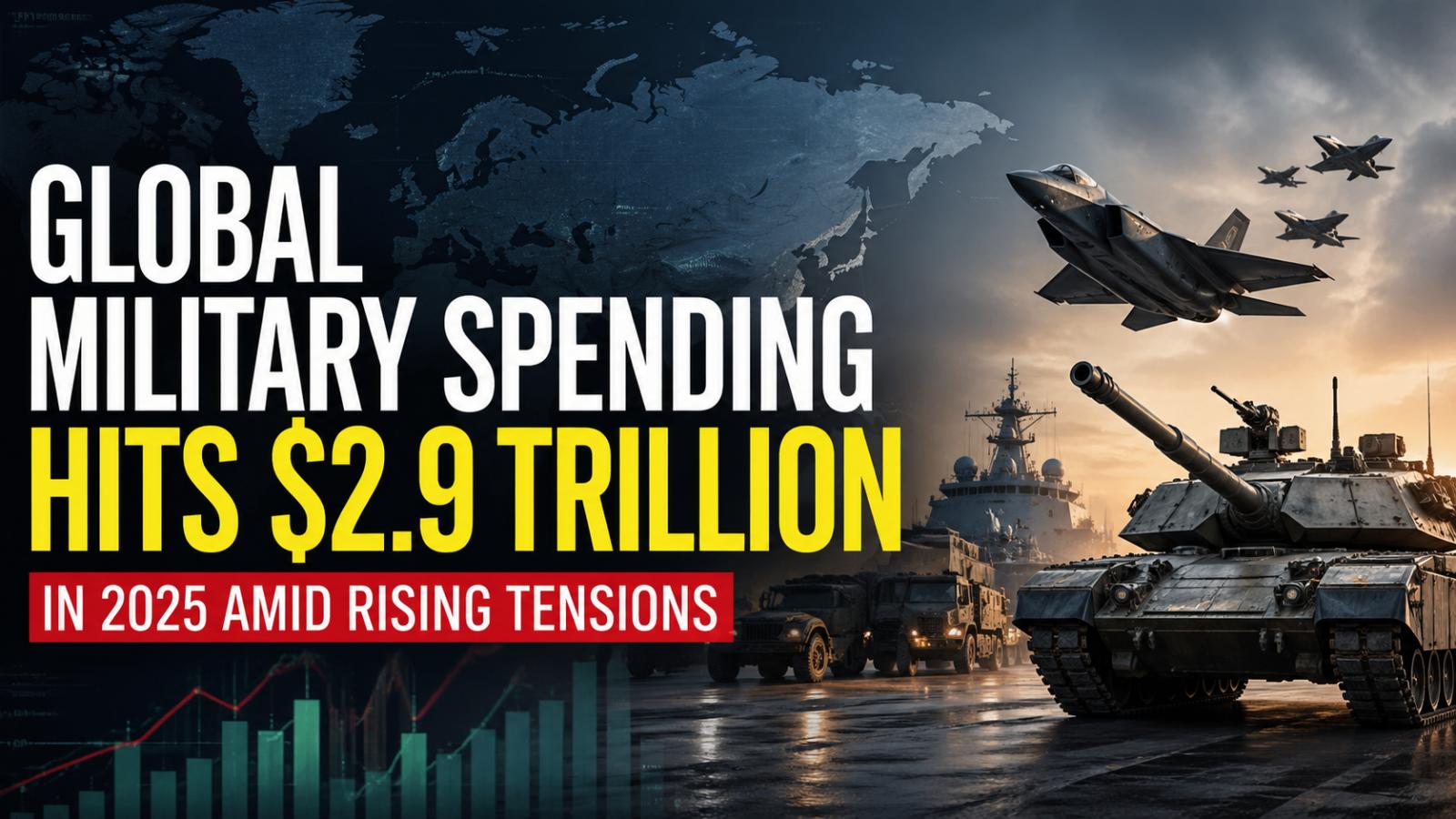
Global military spending 2025 overview Global military spending in 2025 has reached nearly $2.9 trillion, clearly showing how countries are increasing defence budgets as global tensions continue to rise. The total spending stood at $2887 billion in 2025, marking a 2.9 per cent increase from 2024, highlighting a steady rise in military expenditure trends worldwide. This reflects a world becoming less secure, with nations investing more in defence to protect themselves. The United States, Russia, and China remained the top three military spenders, with a combined total of $1.48 trillion. These nations continue to dominate global defence spending, shaping international security dynamics. Experts say this rise in defence budget growth shows that countries are preparing for both current conflicts and future uncertainties. Europe witnessed a major surge, with military spending increasing by 14 per cent to $864 billion in 2025. This sharp rise is mainly driven by the ongoing Russia-Ukraine war and reduced dependence on the United States for security. Countries like Germany increased spending by 24 per cent to $114 billion, while Spain recorded a significant 50 per cent jump to $40.2 billion, crossing two per cent of GDP for the first time in decades. The United States remained the largest spender despite a decline of 7.5 per cent, bringing its total to $954 billion in 2025. The decrease is linked to reduced financial aid approvals for Ukraine, although future budgets suggest spending could exceed $1 trillion in 2026, indicating a possible rebound. In Eastern Europe, Russia increased its military expenditure by 5.9 per cent to $190 billion, while Ukraine saw a sharp rise of 20 per cent to $84.1 billion. Ukraine’s defence spending now accounts for a large share of its GDP, showing the intensity of the ongoing conflict. Asia and Oceania recorded one of the fastest growth rates, with spending reaching $681 billion in 2025, an 8.5 per cent increase. China led the region with $336 billion, followed by Japan and India. India increased its defence budget by 8.9 per cent to $92.1 billion, making it the fifth-largest military spender globally. This growth highlights rising security concerns across the region. In the Middle East, spending patterns were mixed. Iran’s defence expenditure fell by 5.6 per cent to $7.4 billion, mainly due to high inflation. Israel also saw a decline of 4.9 per cent to $48.3 billion after reducing military operations following a ceasefire in early 2025, although its spending remains significantly higher compared to earlier years. Regional tensions continue to influence defence strategies across the Middle East. Overall, the SIPRI report shows that global military spending is steadily increasing as countries respond to rising geopolitical tensions and conflicts. The trend highlights a shift toward stronger military preparedness, reflecting uncertainty in the global security environment.
Global military spending hits $2.9 trillion in 2025 amid rising tensions
Global military spending 2025 overview Global military spending in 2025 has reached nearly $2.9 trillion, clearly showing how countries are increasing defence budgets as global tensions continue to rise. The total spending stood at $2887 billion in 2025, marking a 2.9 per cent increase from 2024, highlighting a steady rise in military expenditure trends worldwide. This reflects a world becoming less secure, with nations investing more in defence to protect themselves. The United States, Russia, and China remained the top three military spenders, with a combined total of $1.48 trillion. These nations continue to dominate global defence spending, shaping international security dynamics. Experts say this rise in defence budget growth shows that countries are preparing for both current conflicts and future uncertainties. Europe witnessed a major surge, with military spending increasing by 14 per cent to $864 billion in 2025. This sharp rise is mainly driven by the ongoing Russia-Ukraine war and reduced dependence on the United States for security. Countries like Germany increased spending by 24 per cent to $114 billion, while Spain recorded a significant 50 per cent jump to $40.2 billion, crossing two per cent of GDP for the first time in decades. The United States remained the largest spender despite a decline of 7.5 per cent, bringing its total to $954 billion in 2025. The decrease is linked to reduced financial aid approvals for Ukraine, although future budgets suggest spending could exceed $1 trillion in 2026, indicating a possible rebound. In Eastern Europe, Russia increased its military expenditure by 5.9 per cent to $190 billion, while Ukraine saw a sharp rise of 20 per cent to $84.1 billion. Ukraine’s defence spending now accounts for a large share of its GDP, showing the intensity of the ongoing conflict. Asia and Oceania recorded one of the fastest growth rates, with spending reaching $681 billion in 2025, an 8.5 per cent increase. China led the region with $336 billion, followed by Japan and India. India increased its defence budget by 8.9 per cent to $92.1 billion, making it the fifth-largest military spender globally. This growth highlights rising security concerns across the region. In the Middle East, spending patterns were mixed. Iran’s defence expenditure fell by 5.6 per cent to $7.4 billion, mainly due to high inflation. Israel also saw a decline of 4.9 per cent to $48.3 billion after reducing military operations following a ceasefire in early 2025, although its spending remains significantly higher compared to earlier years. Regional tensions continue to influence defence strategies across the Middle East. Overall, the SIPRI report shows that global military spending is steadily increasing as countries respond to rising geopolitical tensions and conflicts. The trend highlights a shift toward stronger military preparedness, reflecting uncertainty in the global security environment.
Meta faces setback as China cancels $2B Manus AI startup acquisition
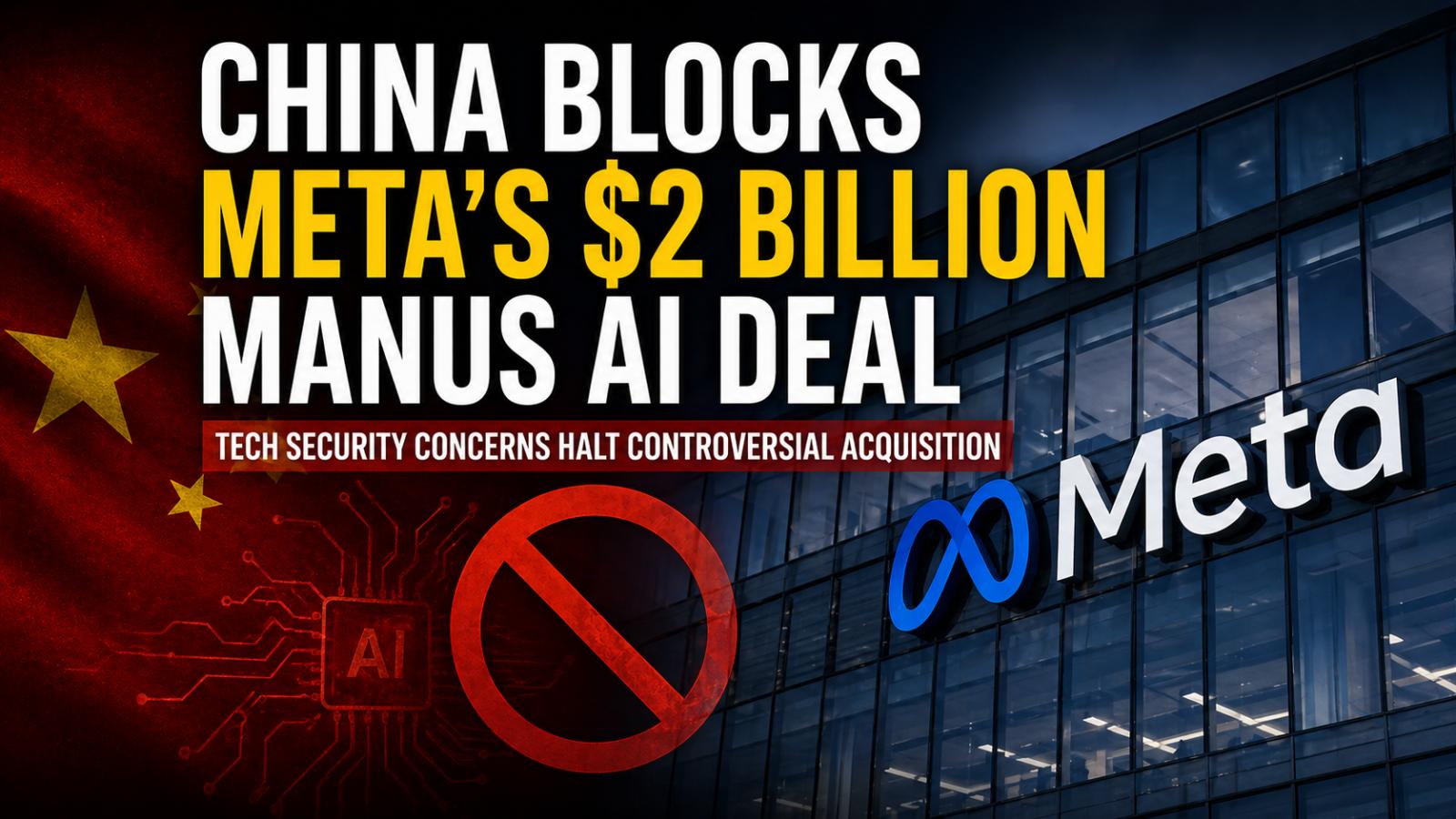
China’s decision to block the acquisition of Manus AI by Meta marks a major shift in global technology deals, as authorities cited concerns over technology transfer and national interests. The country’s top economic planner, the National Development and Reform Commission, ordered the cancellation of th
Meta faces setback as China cancels $2B Manus AI startup acquisition
China’s decision to block the acquisition of Manus AI by Meta marks a major shift in global technology deals, as authorities cited concerns over technology transfer and national interests. The country’s top economic planner, the National Development and Reform Commission, ordered the cancellation of th

Who gives more death sentences, India or the U.S.? India ranks much higher
Global death penalty data shows executions remain concentrated in a few countries, while India issues far more death sentences than the U.S. The global death penalty remains in force in a limited number of countries, but recent figures show that its use is still concentrated in a small group of states. In 2024, Amnesty International recorded 2,087 new death sentences across 46 countries and 1,518 executions in 15 countries, the highest execution total since 2015. The
Who gives more death sentences, India or the U.S.? India ranks much higher
Global death penalty data shows executions remain concentrated in a few countries, while India issues far more death sentences than the U.S. The global death penalty remains in force in a limited number of countries, but recent figures show that its use is still concentrated in a small group of states. In 2024, Amnesty International recorded 2,087 new death sentences across 46 countries and 1,518 executions in 15 countries, the highest execution total since 2015. The
What sanctions did the U.S. impose on China-linked oil trade? The move targets refinery and tankers tied to Iran
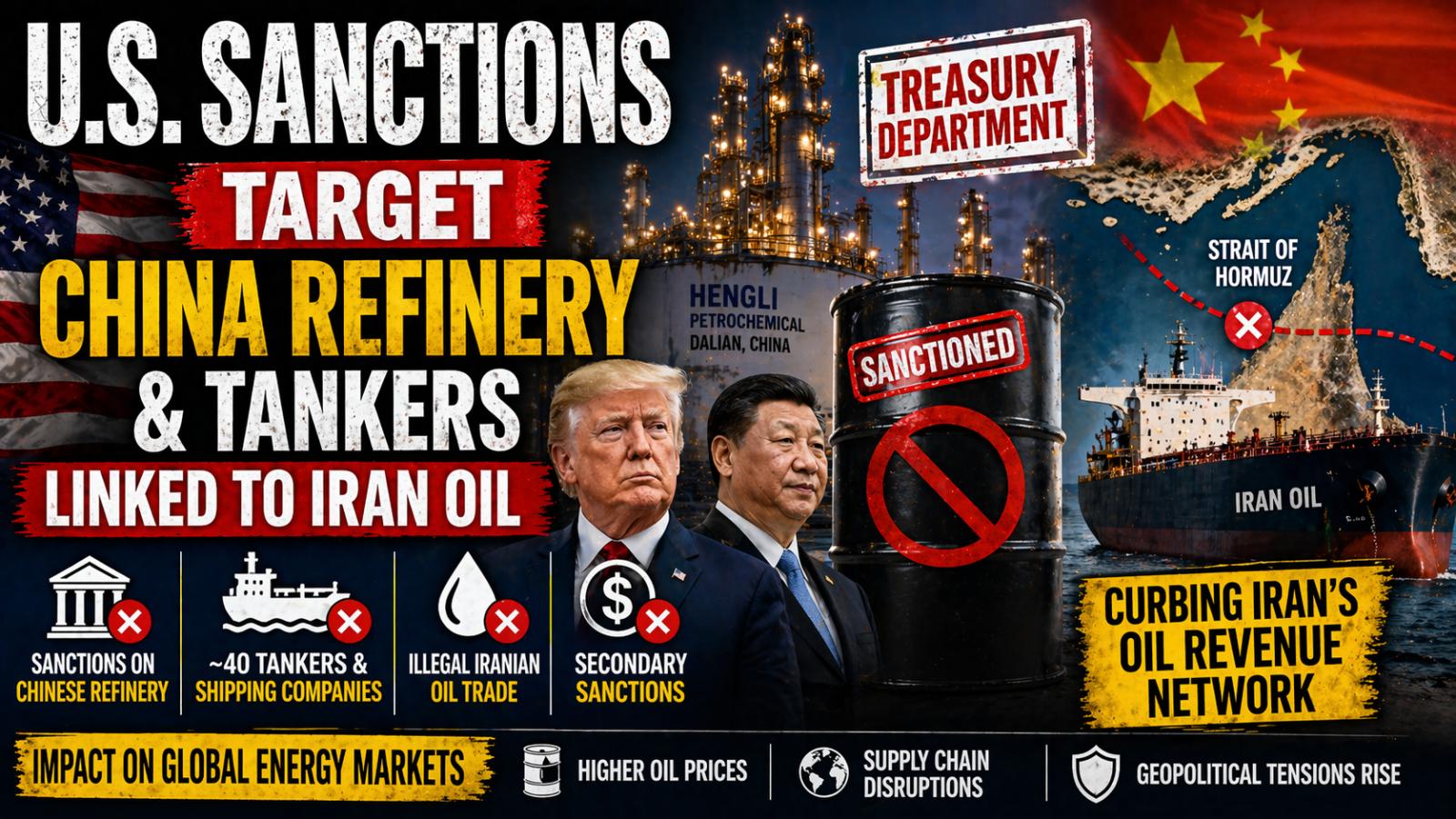
The United States has imposed sweeping new sanctions targeting a China-linked oil trade network tied to Iran, focusing on a major refinery and dozens of shipping entities. Announced on Friday, April 25, 2026, the measures aim to disrupt Tehran’s oil revenue streams by penalizing companies involved in transporting and processing Iranian crude, reinforcing Washington’s broader use of secondary sanctions. Targeting key nodes in Iran’s oil supply chain Among those sanctioned is Hengli Petrochemical’s large refinery in Dalian, China, which has the capacity to process about 400,000 barrels of crude oil per day. The U.S. Treasury Department said the facility has accepted Iranian crude shipments since 2023, generating substantial revenue that allegedly supports Iran’s military. Officials indicated the action is part of a wider strategy to dismantle networks of vessels, intermediaries, and buyers enabling Iranian oil exports. Escalating pressure amid geopolitical tensions The sanctions come just weeks before a planned meeting between U.S. President Donald Trump and Chinese President Xi Jinping in China, adding strain to an already complex economic relationship. Earlier in April 2026, U.S. officials issued warnings to financial institutions in China, Hong Kong, the United Arab Emirates, and Oman about potential penalties for facilitating Iranian transactions. Treasury Secretary Scott Bessent said the administration is prepared to apply stringent secondary sanctions to entities involved in such dealings. Impact on global energy flows and shipping routes These developments coincide with broader disruptions in global energy markets. Earlier in April 2026, the U.S. implemented a physical blockade of the Strait of Hormuz, a critical passage for oil shipments from the Persian Gulf. The move has contributed to rising oil prices and heightened uncertainty across energy markets, though U.S. authorities have issued limited waivers to ease immediate supply concerns. China’s response and global compliance concerns China remains the largest importer of Iranian oil and has consistently opposed U.S. sanctions, arguing they undermine international trade rules. Despite this position, many Chinese firms and banks continue to comply due to their reliance on the U.S.-dominated financial system. Chinese officials have previously criticized such sanctions as disruptive to legitimate economic activity, highlighting ongoing tensions over trade enforcement and global energy flows.
What sanctions did the U.S. impose on China-linked oil trade? The move targets refinery and tankers tied to Iran
The United States has imposed sweeping new sanctions targeting a China-linked oil trade network tied to Iran, focusing on a major refinery and dozens of shipping entities. Announced on Friday, April 25, 2026, the measures aim to disrupt Tehran’s oil revenue streams by penalizing companies involved in transporting and processing Iranian crude, reinforcing Washington’s broader use of secondary sanctions. Targeting key nodes in Iran’s oil supply chain Among those sanctioned is Hengli Petrochemical’s large refinery in Dalian, China, which has the capacity to process about 400,000 barrels of crude oil per day. The U.S. Treasury Department said the facility has accepted Iranian crude shipments since 2023, generating substantial revenue that allegedly supports Iran’s military. Officials indicated the action is part of a wider strategy to dismantle networks of vessels, intermediaries, and buyers enabling Iranian oil exports. Escalating pressure amid geopolitical tensions The sanctions come just weeks before a planned meeting between U.S. President Donald Trump and Chinese President Xi Jinping in China, adding strain to an already complex economic relationship. Earlier in April 2026, U.S. officials issued warnings to financial institutions in China, Hong Kong, the United Arab Emirates, and Oman about potential penalties for facilitating Iranian transactions. Treasury Secretary Scott Bessent said the administration is prepared to apply stringent secondary sanctions to entities involved in such dealings. Impact on global energy flows and shipping routes These developments coincide with broader disruptions in global energy markets. Earlier in April 2026, the U.S. implemented a physical blockade of the Strait of Hormuz, a critical passage for oil shipments from the Persian Gulf. The move has contributed to rising oil prices and heightened uncertainty across energy markets, though U.S. authorities have issued limited waivers to ease immediate supply concerns. China’s response and global compliance concerns China remains the largest importer of Iranian oil and has consistently opposed U.S. sanctions, arguing they undermine international trade rules. Despite this position, many Chinese firms and banks continue to comply due to their reliance on the U.S.-dominated financial system. Chinese officials have previously criticized such sanctions as disruptive to legitimate economic activity, highlighting ongoing tensions over trade enforcement and global energy flows.
Xi Jinping urges Hormuz reopening: What it means for global oil and China’s strategy
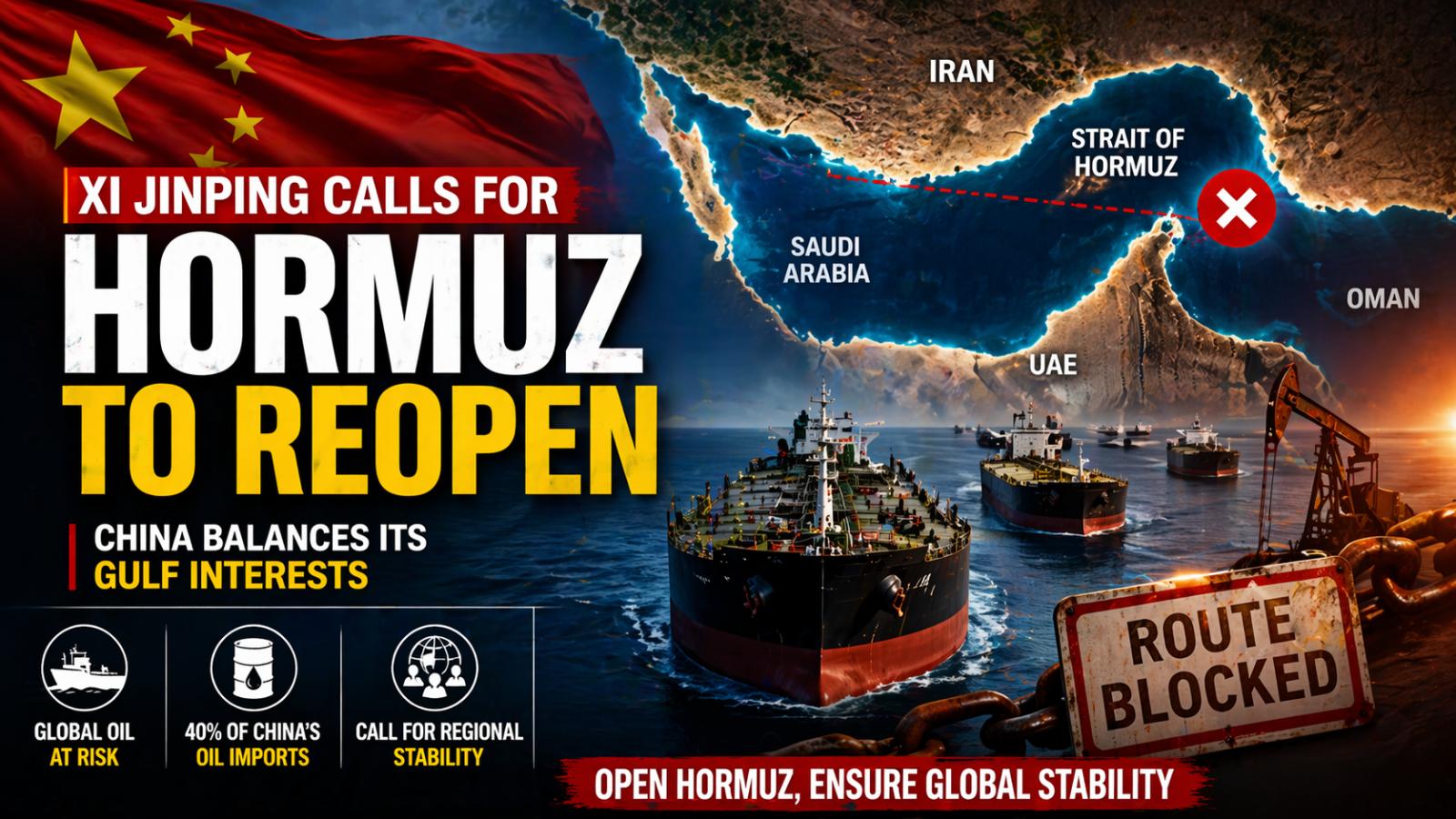
The Xi Jinping Hormuz statement has drawn global attention as China’s leader called for the reopening of the critical Strait of Hormuz. The move comes amid rising tensions in the Middle East and highlights China’s delicate balancing act between strategic alliances and economic interests. What happened and why it matters On Monday, April 20, 2026, Chin
Xi Jinping urges Hormuz reopening: What it means for global oil and China’s strategy
The Xi Jinping Hormuz statement has drawn global attention as China’s leader called for the reopening of the critical Strait of Hormuz. The move comes amid rising tensions in the Middle East and highlights China’s delicate balancing act between strategic alliances and economic interests. What happened and why it matters On Monday, April 20, 2026, Chin