Sanctioned tanker diverts Iranian crude from India to China amid payment concerns
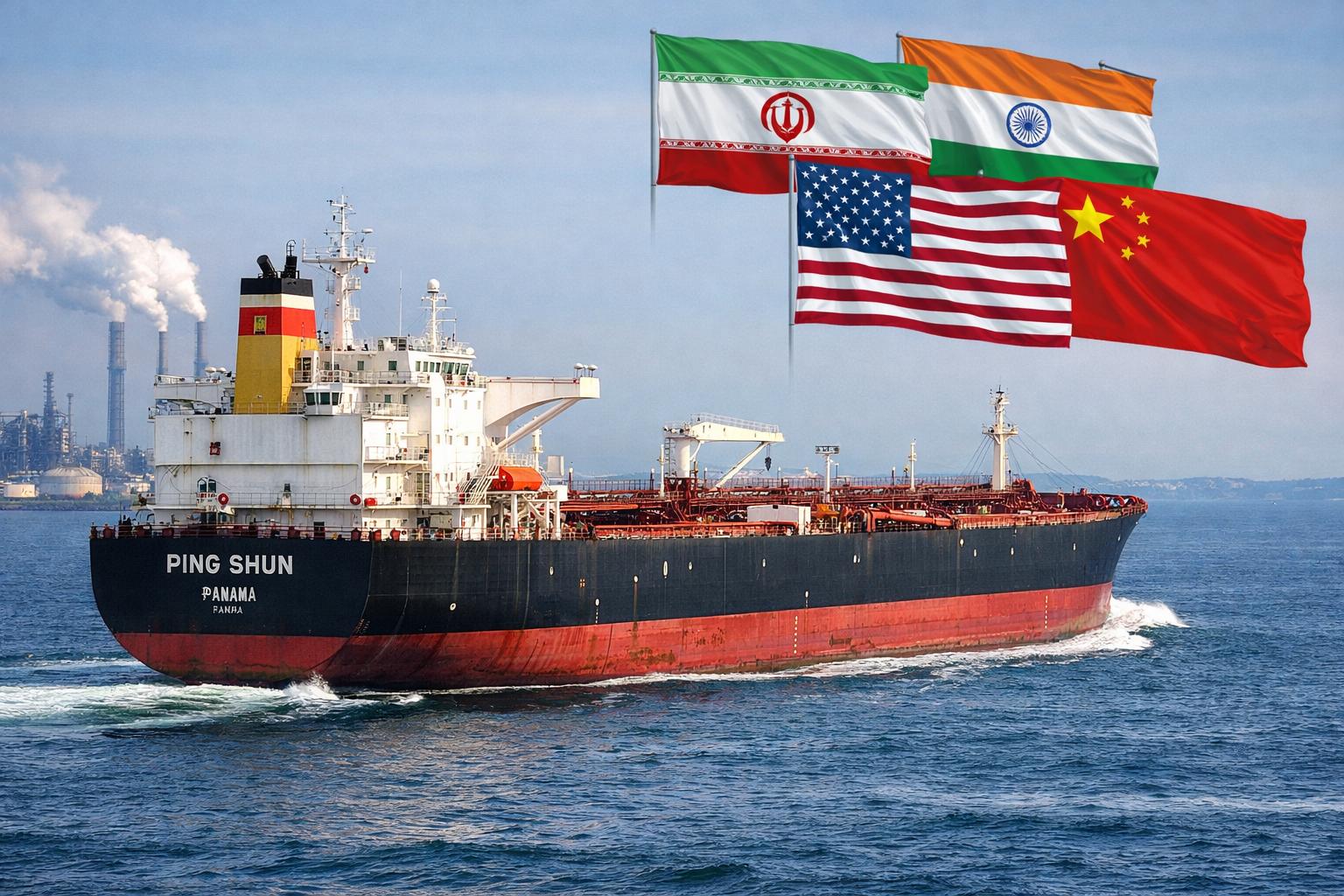
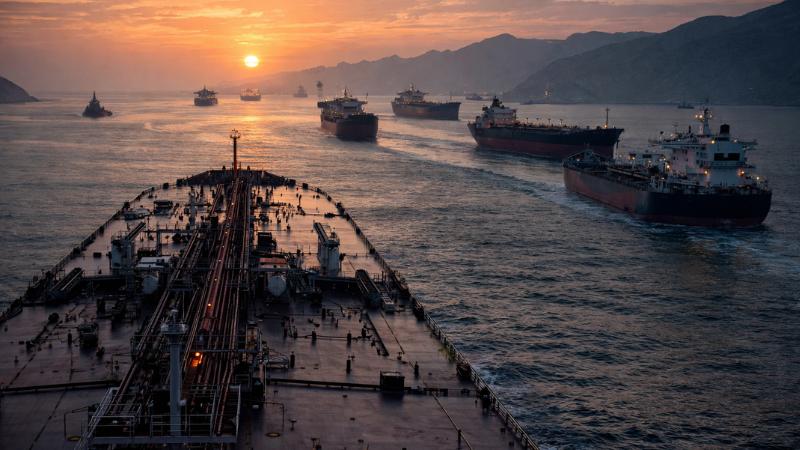
A U.S.-sanctioned oil tanker carrying Iranian crude has changed course from India to China, raising uncertainty over what could have been India’s first Iranian oil import in nearly seven years. The Aframax tanker Ping Shun, built in 2002 and sanctioned by the United States in 2025, is now signaling Dongying, China, as its destination instead of Vadinar in Gujarat, according to data from Kpler.
Sanctioned tanker diverts Iranian crude from India to China amid payment concerns
A U.S.-sanctioned oil tanker carrying Iranian crude has changed course from India to China, raising uncertainty over what could have been India’s first Iranian oil import in nearly seven years. The Aframax tanker Ping Shun, built in 2002 and sanctioned by the United States in 2025, is now signaling Dongying, China, as its destination instead of Vadinar in Gujarat, according to data from Kpler.
Mass robotaxi failure disrupts traffic in China’s Wuhan city
A large-scale robotaxi outage in Wuhan, China, disrupted traffic after multiple self-driving cars stopped mid-road due to a suspected system failure on Tuesday (March 31, 2026). Local police said the issue is under investigation and confirmed no injuries were reported. Videos circulating online showed halted vehicles causing congestion, with passengers exiting safely. One such video capturing the incident can be viewed here: https://x.com/ZeyiYang/status/2039153730533405102. The incident has raised concerns about the reliability of autonomous vehicles and the risks associated with system-wide failures. Similar disruptions occurred in San Francisco and Chongqing in 2025, highlighting ongoing challenges in driverless technology.
Mass robotaxi failure disrupts traffic in China’s Wuhan city
A large-scale robotaxi outage in Wuhan, China, disrupted traffic after multiple self-driving cars stopped mid-road due to a suspected system failure on Tuesday (March 31, 2026). Local police said the issue is under investigation and confirmed no injuries were reported. Videos circulating online showed halted vehicles causing congestion, with passengers exiting safely. One such video capturing the incident can be viewed here: https://x.com/ZeyiYang/status/2039153730533405102. The incident has raised concerns about the reliability of autonomous vehicles and the risks associated with system-wide failures. Similar disruptions occurred in San Francisco and Chongqing in 2025, highlighting ongoing challenges in driverless technology.
90 Ships Cross Hormuz as Iran Continues Oil Exports Amid War, Despite Challenges
In the midst of the ongoing war, Iran has continued to export millions of barrels of oil, with about 90 ships, including oil tankers, crossing the critical Strait of Hormuz between March 1 and 15, 2026. Despite the waterway being effectively "closed" to most traffic due to the conflict, Iran has managed to keep its oil exports flowing, benefitting from its control over this vital chokepoint. According to maritime traffic data from Lloyd's List Intelligence, Iran has relied on a mix
90 Ships Cross Hormuz as Iran Continues Oil Exports Amid War, Despite Challenges
In the midst of the ongoing war, Iran has continued to export millions of barrels of oil, with about 90 ships, including oil tankers, crossing the critical Strait of Hormuz between March 1 and 15, 2026. Despite the waterway being effectively "closed" to most traffic due to the conflict, Iran has managed to keep its oil exports flowing, benefitting from its control over this vital chokepoint. According to maritime traffic data from Lloyd's List Intelligence, Iran has relied on a mix
China announces humanitarian aid to Iran, Lebanon amid escalating West Asia conflict
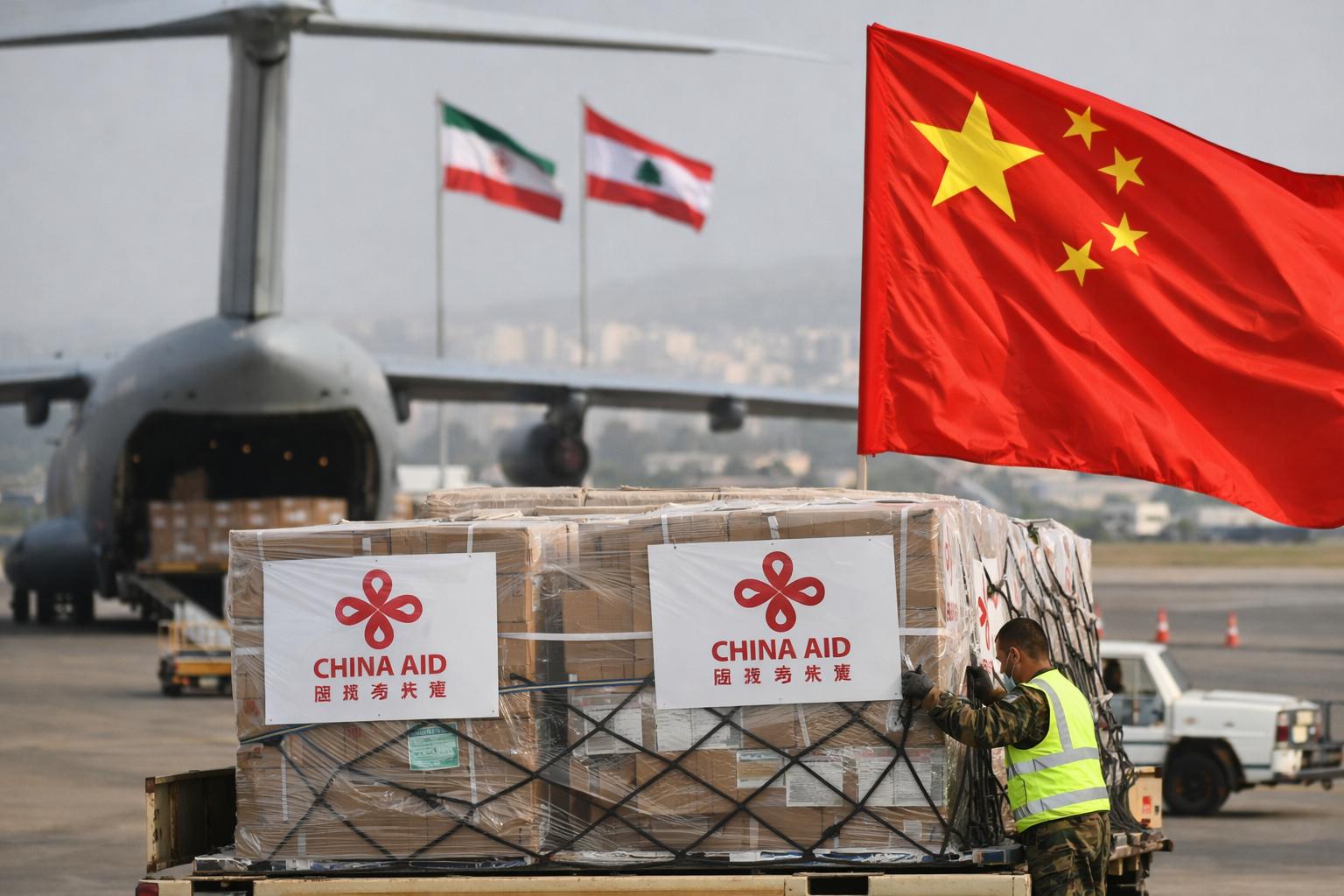
China on Tuesday announced that it will extend humanitarian assistance to several West Asia countries, including Iran and Lebanon, as the ongoing conflict involving the United States and Israel enters its third week and continues to escalate. The move reflects Beijing’s growing concern over the worsening humanitarian situation across the region, where sustained military operations have disrupted civilian life and critical infrastructure. Speaking at a regular press briefing, Chinese Foreig
China announces humanitarian aid to Iran, Lebanon amid escalating West Asia conflict
China on Tuesday announced that it will extend humanitarian assistance to several West Asia countries, including Iran and Lebanon, as the ongoing conflict involving the United States and Israel enters its third week and continues to escalate. The move reflects Beijing’s growing concern over the worsening humanitarian situation across the region, where sustained military operations have disrupted civilian life and critical infrastructure. Speaking at a regular press briefing, Chinese Foreig
US–Israel–Iran War | Russia reportedly shares US military intelligence with Iran amid rising tensions
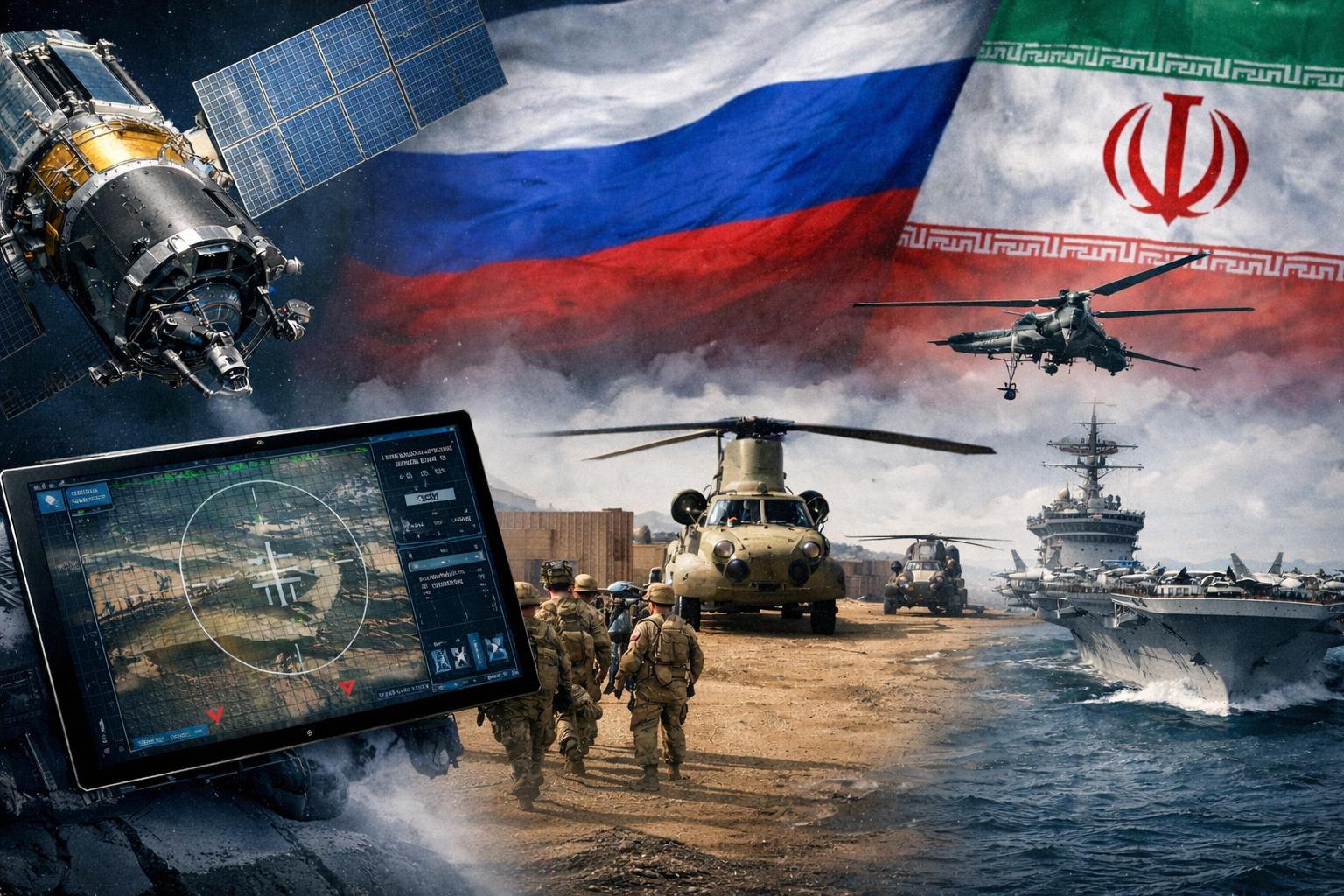
Russia has reportedly provided Iran with intelligence regarding the locations of United States military forces, according to people familiar with US intelligence assessments. The information is said to include satellite imagery showing the positions and movements of American troops, ships, and aircraft across parts of the region. Officials briefed on the matter indicated that much of the data came from Russia’s network of overhead surveillance satellites, marking the first indication that M
US–Israel–Iran War | Russia reportedly shares US military intelligence with Iran amid rising tensions
Russia has reportedly provided Iran with intelligence regarding the locations of United States military forces, according to people familiar with US intelligence assessments. The information is said to include satellite imagery showing the positions and movements of American troops, ships, and aircraft across parts of the region. Officials briefed on the matter indicated that much of the data came from Russia’s network of overhead surveillance satellites, marking the first indication that M
Asia-Pacific markets mixed as Trump tariff warning unsettles investors
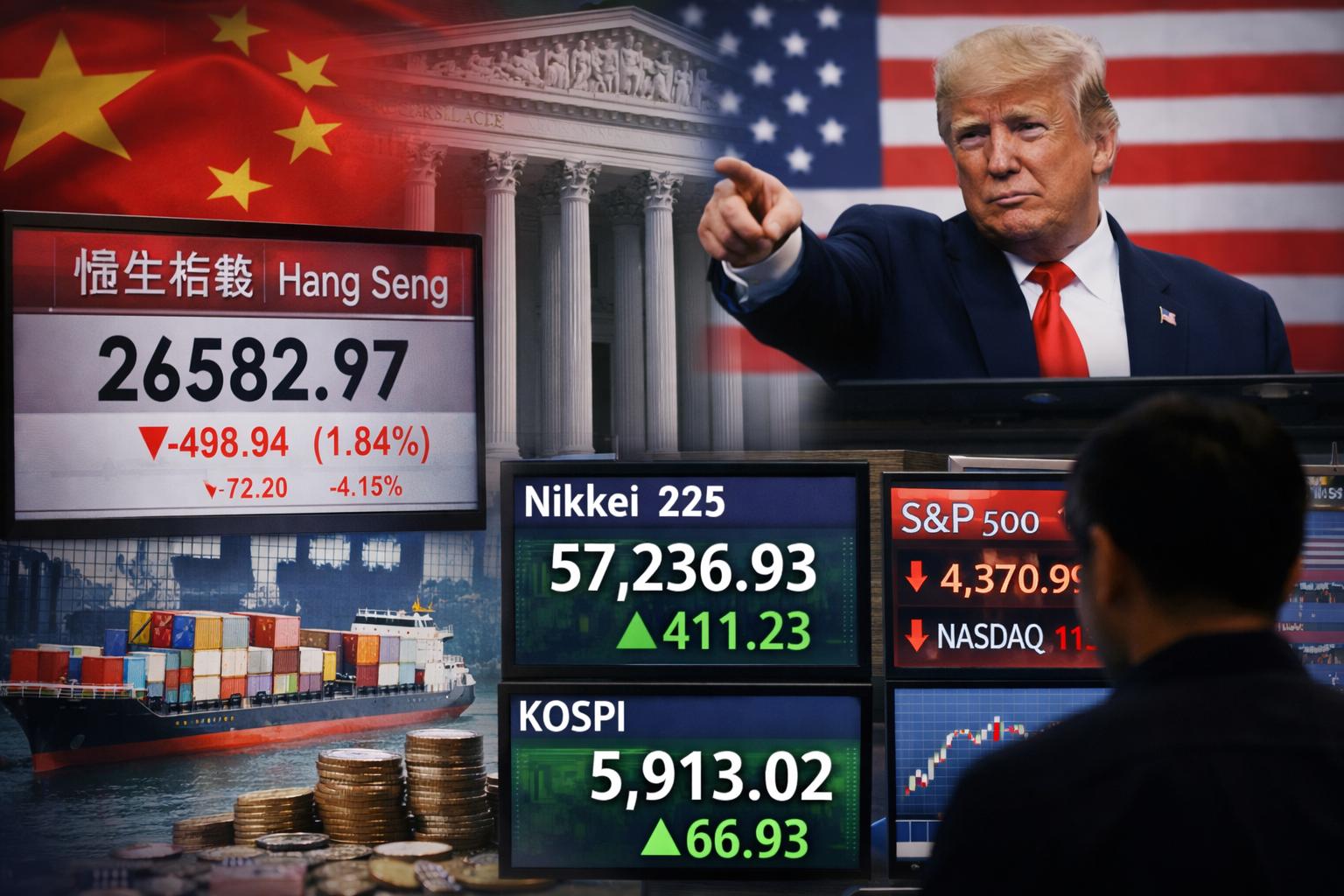
Asia-Pacific markets delivered a mixed performance on Tuesday as investors assessed renewed tariff threats from U.S. President Donald Trump alongside growing concerns about the potential impact of artificial intelligence on the software and cybersecurity sectors. The cautious mood reflected broader uncertainty in global stocks, with market participants closely monitoring trade tensions and technology-driven disruption. The unease followed comments posted by Trump on Truth Social, wh
Asia-Pacific markets mixed as Trump tariff warning unsettles investors
Asia-Pacific markets delivered a mixed performance on Tuesday as investors assessed renewed tariff threats from U.S. President Donald Trump alongside growing concerns about the potential impact of artificial intelligence on the software and cybersecurity sectors. The cautious mood reflected broader uncertainty in global stocks, with market participants closely monitoring trade tensions and technology-driven disruption. The unease followed comments posted by Trump on Truth Social, wh
China spotlights humanoid robots at CCTV Spring Festival gala
BEIJING — China used its most-watched television event, the annual CCTV Spring Festival gala, to showcase the country’s accelerating ambitions in artificial intelligence, humanoids, and advanced manufacturing, underscoring Beijing’s broader industrial strategy. Four emerging humanoid robotics companies — Unitree, Galbot, Noetix, and MagicLab — presented their latest machines during the high-profile broadcast, an event often compared in cultural impact to the Super Bowl in the Un
China spotlights humanoid robots at CCTV Spring Festival gala
BEIJING — China used its most-watched television event, the annual CCTV Spring Festival gala, to showcase the country’s accelerating ambitions in artificial intelligence, humanoids, and advanced manufacturing, underscoring Beijing’s broader industrial strategy. Four emerging humanoid robotics companies — Unitree, Galbot, Noetix, and MagicLab — presented their latest machines during the high-profile broadcast, an event often compared in cultural impact to the Super Bowl in the Un
Humanoid Robots Wow World With Dance And Martial Arts At China Gala
China’s 2026 Spring Festival Gala turned into a futuristic spectacle as humanoid robots stole the spotlight with life-like dance routines, martial arts moves and acrobatic flips. The annual event, broadcast by CCTV and held in Yiwu, showcased the rapid progress of China’s robotics industry, leaving viewers across the globe stunned. Several leading robotics firms including Unitree Robotics, MagicLab, Noetix Robotics and Beijing Galbot demonstrated their latest advancements in hum
Humanoid Robots Wow World With Dance And Martial Arts At China Gala
China’s 2026 Spring Festival Gala turned into a futuristic spectacle as humanoid robots stole the spotlight with life-like dance routines, martial arts moves and acrobatic flips. The annual event, broadcast by CCTV and held in Yiwu, showcased the rapid progress of China’s robotics industry, leaving viewers across the globe stunned. Several leading robotics firms including Unitree Robotics, MagicLab, Noetix Robotics and Beijing Galbot demonstrated their latest advancements in hum
China’s Polar Silk Road: Arctic ambitions reshape trade and security
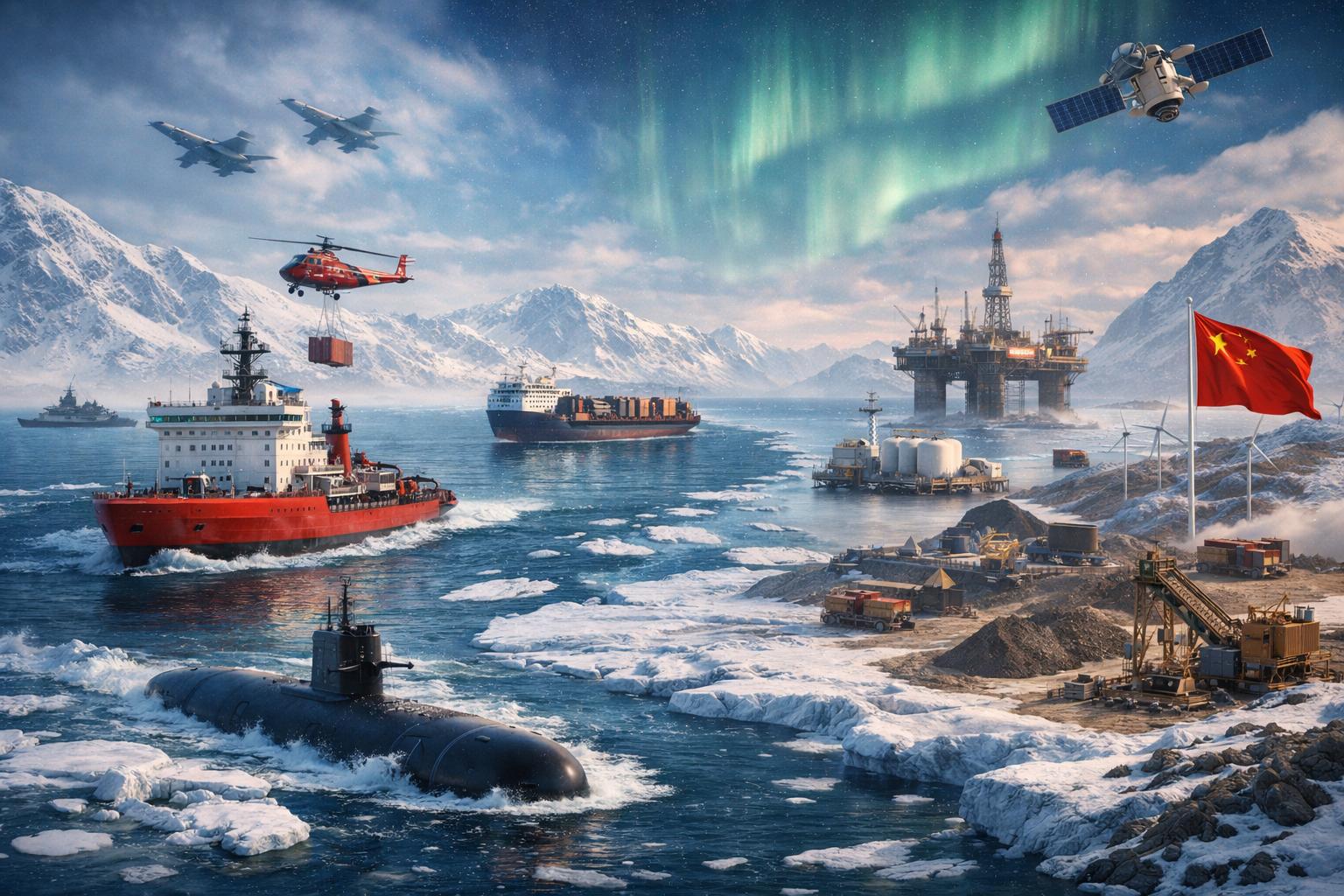
The Arctic, once considered remote and largely inaccessible, is emerging as a key area of global strategic interest. China has formally included its “Polar Silk Road” initiative within its broader Belt and Road strategy, signaling an expansion of influence in a region historically dominated by Arctic nations. By calling itself a “near-Arctic state,” Beijing is asserting that its economic and strategic interests extend well beyond its geographical borders, prompting concern from other glo
China’s Polar Silk Road: Arctic ambitions reshape trade and security
The Arctic, once considered remote and largely inaccessible, is emerging as a key area of global strategic interest. China has formally included its “Polar Silk Road” initiative within its broader Belt and Road strategy, signaling an expansion of influence in a region historically dominated by Arctic nations. By calling itself a “near-Arctic state,” Beijing is asserting that its economic and strategic interests extend well beyond its geographical borders, prompting concern from other glo
India Rejected Gwadar Port in 1956, Now Under Chinese Control - Balochistan's Grievances
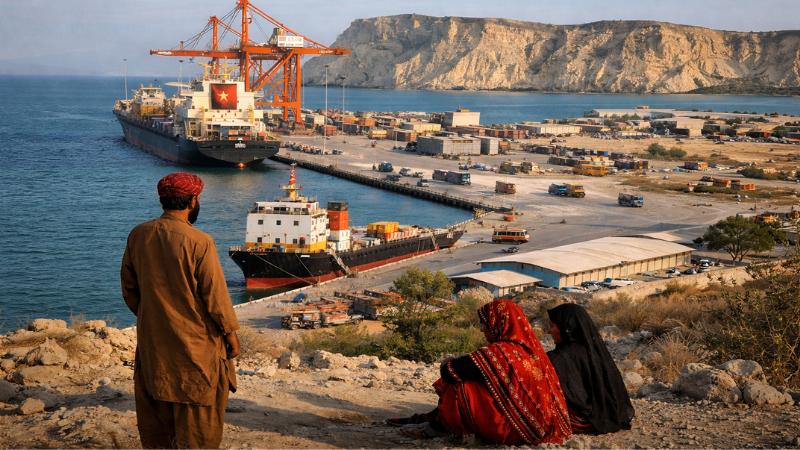
Gwadar, a port in Pakistan's Balochistan province, has become a focal point for geopolitical tensions, local unrest, and external influence, especially from China. Originally a fishing settlement on the Arabian Sea, it is now home to Pakistan's third-largest port, which plays a crucial role in the China–Pakistan Economic Corridor (CPEC). The strategic location of Gwadar, near the Strait of Hormuz, has made it a highly coveted asset for various powers. What is most remarkable about
India Rejected Gwadar Port in 1956, Now Under Chinese Control - Balochistan's Grievances
Gwadar, a port in Pakistan's Balochistan province, has become a focal point for geopolitical tensions, local unrest, and external influence, especially from China. Originally a fishing settlement on the Arabian Sea, it is now home to Pakistan's third-largest port, which plays a crucial role in the China–Pakistan Economic Corridor (CPEC). The strategic location of Gwadar, near the Strait of Hormuz, has made it a highly coveted asset for various powers. What is most remarkable about
Warren moves to block sale of U.S. AI chips to UAE over security concerns
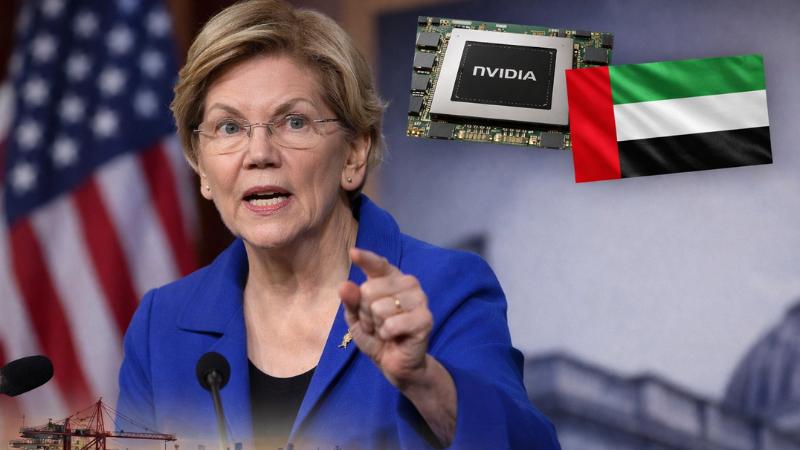
Sen. Elizabeth Warren of Massachusetts is preparing to introduce a Senate resolution that would formally condemn and seek the reversal of a proposed sale of 500,000 advanced artificial intelligence chips annually to the United Arab Emirates, arguing the transaction could threaten U.S. national security and raise serious ethical questions about conflicts of interest. The measure is expected to be brought to the Senate floor on Thursday, where Warren plans to call for lawmakers to block the exp
Warren moves to block sale of U.S. AI chips to UAE over security concerns
Sen. Elizabeth Warren of Massachusetts is preparing to introduce a Senate resolution that would formally condemn and seek the reversal of a proposed sale of 500,000 advanced artificial intelligence chips annually to the United Arab Emirates, arguing the transaction could threaten U.S. national security and raise serious ethical questions about conflicts of interest. The measure is expected to be brought to the Senate floor on Thursday, where Warren plans to call for lawmakers to block the exp
China seeks stronger yuan as Xi Jinping outlines push for global reserve currency
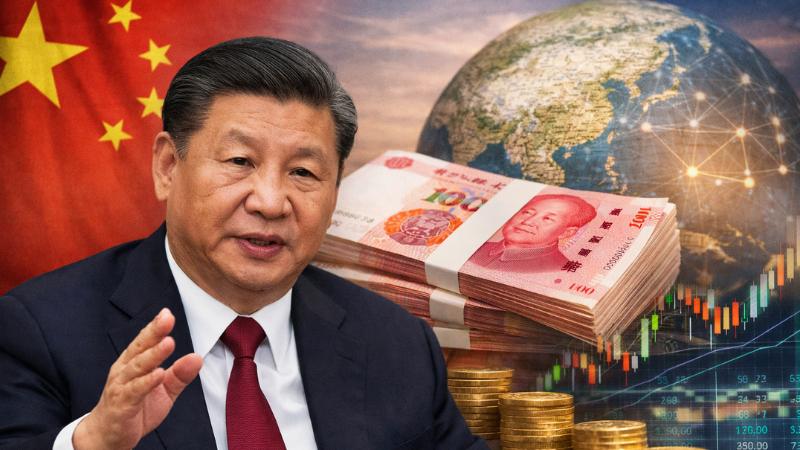
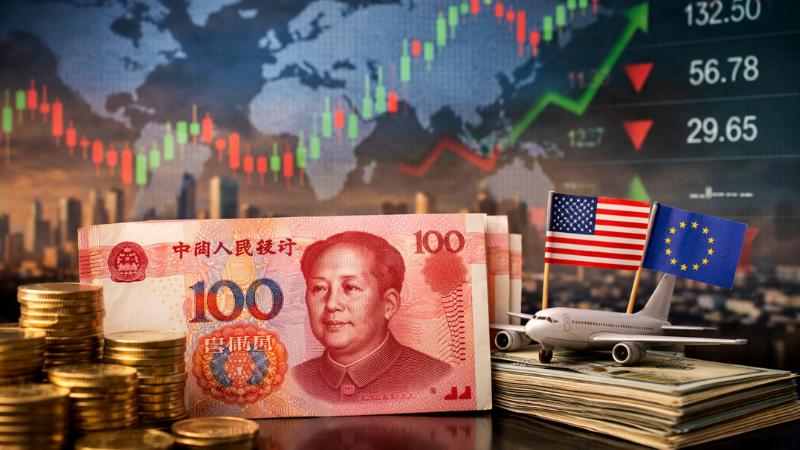
Amid continuing global economic uncertainty and renewed debate over the stability of major reserve currencies, Chinese President Xi Jinping has reiterated China’s ambition to build a “strong currency” and gradually elevate the yuan’s status in the global financial system. Xi said China aims to expand the use of the yuan in international trade, investment, and foreign exchange markets, underscoring a long-standing policy goal to strengthen the country’s financial influence worldwide. Xi’s remarks were outlined in a speech delivered in 2024 to senior provincial and ministerial officials and later published on Saturday in Qiushi, the Communist Party’s leading theoretical journal. The publication of excerpts from the address comes at a time of heightened volatility in global markets and growing scrutiny of the dominance of the US dollar, adding significance to Beijing’s renewed emphasis on currency strength and financial resilience. In the speech, Xi set out what he described as the essential characteristics of a global financial powerhouse. These included a solid economic foundation, world-leading technological and industrial capabilities, and a widely accepted and credible currency. He argued that currency strength was inseparable from broader national competitiveness and institutional capacity, noting that financial influence must be supported by real economic and technological power rather than short-term market movements. Xi also stressed the importance of a capable and independent central bank able to implement effective monetary policy and macroprudential management. He said globally competitive financial institutions, along with influential international financial centres, were necessary to attract global capital and exert pricing power in international markets. According to Xi, these elements must be matched with strong regulation, a reliable legal framework, and a deep pool of skilled financial professionals to ensure long-term stability and credibility. While acknowledging China’s scale in global finance, Xi noted that the country still faced structural limitations. He said China ranked among the world’s largest economies in terms of banking assets, foreign exchange reserves, and capital market size, but remained “big but not strong” overall. Transforming China into a true global financial powerhouse, he added, would be a gradual and long-term undertaking rather than an immediate achievement. Beijing has promoted the internationalisation of the yuan for more than a decade, with measurable progress in its use for cross-border trade settlement. The currency’s role in global markets, however, remains limited when compared with established reserve currencies. China’s Cross-Border Interbank Payment System currently clears an average of about 700 billion yuan, or roughly 100 billion US dollars, in transactions each day. This figure remains well below the nearly 2 trillion US dollars cleared daily through the dollar-based Clearing House Interbank Payments System. Yuan-denominated debt issuance in international markets also accounts for a small share of global activity, representing less than one percent of total issuance. These figures highlight the gap between China’s ambitions and the yuan’s current global footprint, despite steady domestic financial expansion. In recent months, the yuan has generally held firm against the US dollar, even amid trade tensions and uneven global growth. This stability contrasts with the sharper depreciation seen during former US President Donald Trump’s first term, when market observers speculated that Chinese authorities tolerated a weaker currency to offset the impact of tariffs. International investment banks continue to argue that the yuan remains below its long-term fair value, reflecting both policy controls and cautious foreign investor sentiment. The republication of Xi’s speech signals continuity in China’s financial strategy rather than a sudden shift. As global markets navigate uncertainty and reassess existing monetary structures, Beijing appears intent on steadily advancing its vision of a stronger yuan and a more influential role in the international financial system over the long term.
China seeks stronger yuan as Xi Jinping outlines push for global reserve currency
Amid continuing global economic uncertainty and renewed debate over the stability of major reserve currencies, Chinese President Xi Jinping has reiterated China’s ambition to build a “strong currency” and gradually elevate the yuan’s status in the global financial system. Xi said China aims to expand the use of the yuan in international trade, investment, and foreign exchange markets, underscoring a long-standing policy goal to strengthen the country’s financial influence worldwide. Xi’s remarks were outlined in a speech delivered in 2024 to senior provincial and ministerial officials and later published on Saturday in Qiushi, the Communist Party’s leading theoretical journal. The publication of excerpts from the address comes at a time of heightened volatility in global markets and growing scrutiny of the dominance of the US dollar, adding significance to Beijing’s renewed emphasis on currency strength and financial resilience. In the speech, Xi set out what he described as the essential characteristics of a global financial powerhouse. These included a solid economic foundation, world-leading technological and industrial capabilities, and a widely accepted and credible currency. He argued that currency strength was inseparable from broader national competitiveness and institutional capacity, noting that financial influence must be supported by real economic and technological power rather than short-term market movements. Xi also stressed the importance of a capable and independent central bank able to implement effective monetary policy and macroprudential management. He said globally competitive financial institutions, along with influential international financial centres, were necessary to attract global capital and exert pricing power in international markets. According to Xi, these elements must be matched with strong regulation, a reliable legal framework, and a deep pool of skilled financial professionals to ensure long-term stability and credibility. While acknowledging China’s scale in global finance, Xi noted that the country still faced structural limitations. He said China ranked among the world’s largest economies in terms of banking assets, foreign exchange reserves, and capital market size, but remained “big but not strong” overall. Transforming China into a true global financial powerhouse, he added, would be a gradual and long-term undertaking rather than an immediate achievement. Beijing has promoted the internationalisation of the yuan for more than a decade, with measurable progress in its use for cross-border trade settlement. The currency’s role in global markets, however, remains limited when compared with established reserve currencies. China’s Cross-Border Interbank Payment System currently clears an average of about 700 billion yuan, or roughly 100 billion US dollars, in transactions each day. This figure remains well below the nearly 2 trillion US dollars cleared daily through the dollar-based Clearing House Interbank Payments System. Yuan-denominated debt issuance in international markets also accounts for a small share of global activity, representing less than one percent of total issuance. These figures highlight the gap between China’s ambitions and the yuan’s current global footprint, despite steady domestic financial expansion. In recent months, the yuan has generally held firm against the US dollar, even amid trade tensions and uneven global growth. This stability contrasts with the sharper depreciation seen during former US President Donald Trump’s first term, when market observers speculated that Chinese authorities tolerated a weaker currency to offset the impact of tariffs. International investment banks continue to argue that the yuan remains below its long-term fair value, reflecting both policy controls and cautious foreign investor sentiment. The republication of Xi’s speech signals continuity in China’s financial strategy rather than a sudden shift. As global markets navigate uncertainty and reassess existing monetary structures, Beijing appears intent on steadily advancing its vision of a stronger yuan and a more influential role in the international financial system over the long term.
Global leaders extend Republic Day greetings as India marks 77 years as a republic
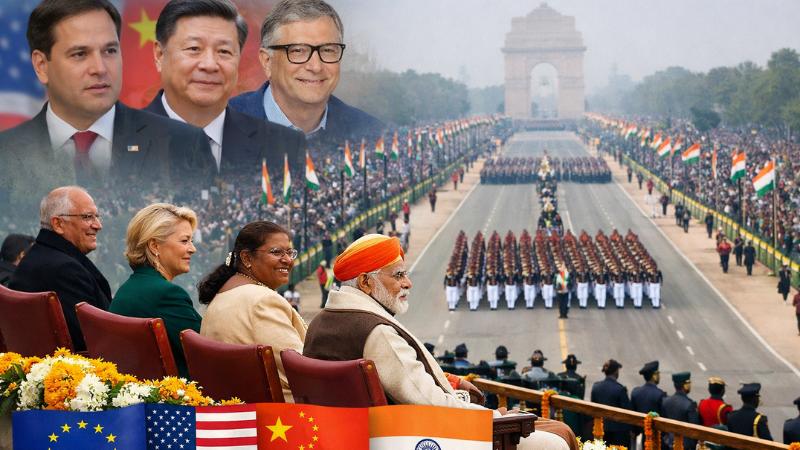
India’s 77th Republic Day was marked on Monday, January 26, 2026, with a wide range of greetings from global leaders and prominent international figures, reflecting the country’s growing diplomatic influence and expanding partnerships across regions. Messages from political leaders, senior officials, and business figures highlighted shared democratic values, strategic cooperation, and the importance of dialogue in an increasingly complex global environment. The Republic Day cele

Global leaders extend Republic Day greetings as India marks 77 years as a republic
India’s 77th Republic Day was marked on Monday, January 26, 2026, with a wide range of greetings from global leaders and prominent international figures, reflecting the country’s growing diplomatic influence and expanding partnerships across regions. Messages from political leaders, senior officials, and business figures highlighted shared democratic values, strategic cooperation, and the importance of dialogue in an increasingly complex global environment. The Republic Day cele
Why rising labour costs failed to weaken China’s manufacturing dominance
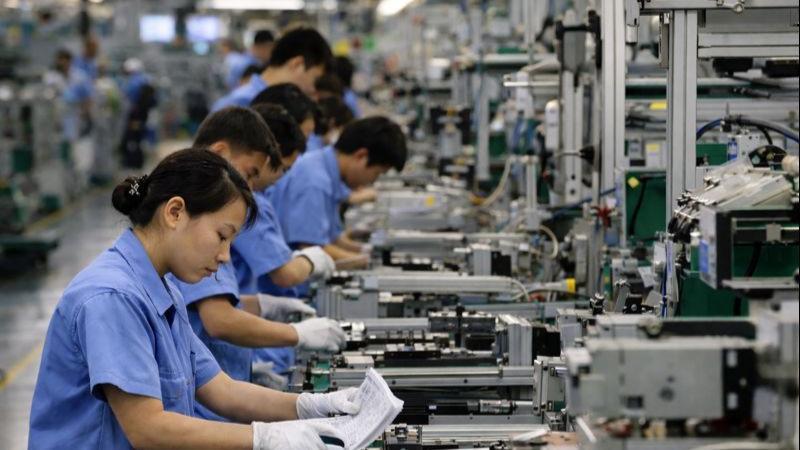
China’s manufacturing success was attributed to cheap labour. That perception has now changed completely. Factory wages in China have climbed close to eight dollars per hour, far higher than those in Vietnam, Malaysia, Thailand, and India. By cost logic alone, China should have lost its position as the world’s manufacturing hub. Instead, it continues to dominate global production, contributing nearly 28 percent of worldwide manufacturing output. The reason lies not in wages, but in produc
Why rising labour costs failed to weaken China’s manufacturing dominance
China’s manufacturing success was attributed to cheap labour. That perception has now changed completely. Factory wages in China have climbed close to eight dollars per hour, far higher than those in Vietnam, Malaysia, Thailand, and India. By cost logic alone, China should have lost its position as the world’s manufacturing hub. Instead, it continues to dominate global production, contributing nearly 28 percent of worldwide manufacturing output. The reason lies not in wages, but in produc
China and Canada cut tariffs and signal reset in bilateral relations after Beijing talks
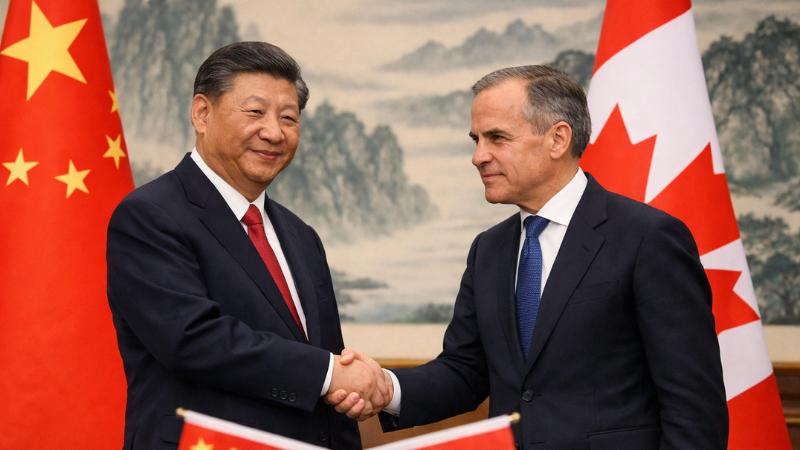
China and Canada have announced a significant reduction in tariffs and signalled a broader reset in their bilateral relationship following high-level talks in Beijing, marking a notable shift after years of strained diplomatic and trade ties. The agreement was confirmed after a meeting on Friday between Chinese President Xi Jinping and Canadian Prime Minister Mark Carney, the first Canadian leader to visit China in nearly a decade. Under the deal, China is expected to reduce tariffs on Canad
China and Canada cut tariffs and signal reset in bilateral relations after Beijing talks
China and Canada have announced a significant reduction in tariffs and signalled a broader reset in their bilateral relationship following high-level talks in Beijing, marking a notable shift after years of strained diplomatic and trade ties. The agreement was confirmed after a meeting on Friday between Chinese President Xi Jinping and Canadian Prime Minister Mark Carney, the first Canadian leader to visit China in nearly a decade. Under the deal, China is expected to reduce tariffs on Canad
Record Chinese exports drive private capital into global stocks and bonds
China’s record-breaking trade surplus is increasingly reshaping global financial markets as export earnings that once accumulated primarily in state reserves are now being redirected into private investments overseas. The shift marks a notable departure from Beijing’s traditionally centralized management of foreign exchange inflows and introduces new dynamics into global capital movements at a time of heightened sensitivity over trade imbalances and financial stability. Last yea
Record Chinese exports drive private capital into global stocks and bonds
China’s record-breaking trade surplus is increasingly reshaping global financial markets as export earnings that once accumulated primarily in state reserves are now being redirected into private investments overseas. The shift marks a notable departure from Beijing’s traditionally centralized management of foreign exchange inflows and introduces new dynamics into global capital movements at a time of heightened sensitivity over trade imbalances and financial stability. Last yea
China sets record trade surplus and strengthens global auto leadership in 2025
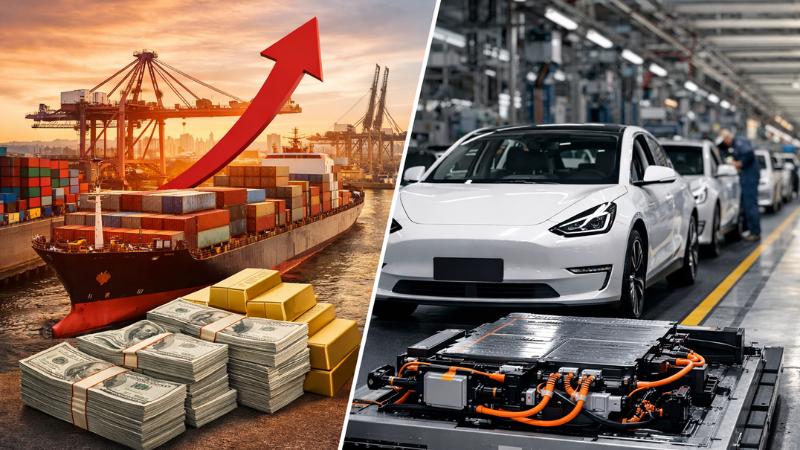
Amid ongoing geopolitical tensions, trade disputes, and armed conflicts across multiple regions, China quietly achieved two major economic milestones in 2025, underscoring its continued influence over global manufacturing and trade. Official data released this month shows that the country recorded the largest annual trade surplus in its history while further consolidating its position as the world’s leading automobile producer and seller. These achievements came despite persistent pressures
China sets record trade surplus and strengthens global auto leadership in 2025
Amid ongoing geopolitical tensions, trade disputes, and armed conflicts across multiple regions, China quietly achieved two major economic milestones in 2025, underscoring its continued influence over global manufacturing and trade. Official data released this month shows that the country recorded the largest annual trade surplus in its history while further consolidating its position as the world’s leading automobile producer and seller. These achievements came despite persistent pressures
BRICS warships arrive in South Africa for joint naval drills near Cape Town
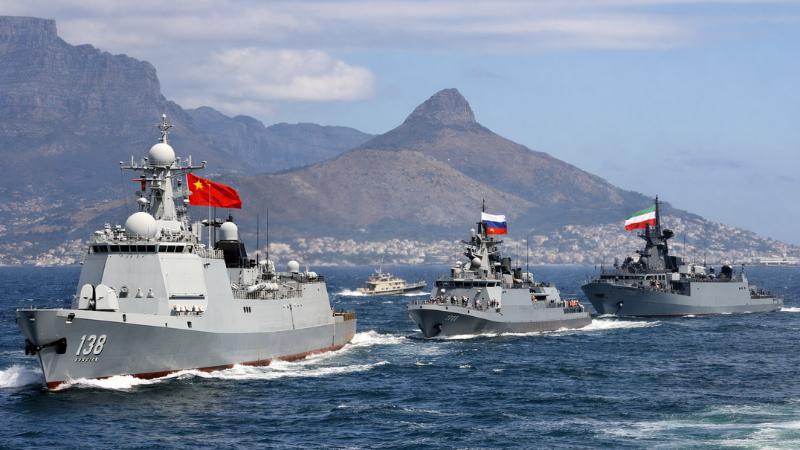
Warships from China, Russia and Iran arrived in South African waters on Friday to participate in a week-long multinational naval exercise off the coast of Cape Town, drawing attention amid heightened global tensions and renewed scrutiny of South Africa’s foreign policy positioning. The exercise, titled “Will for Peace 2026,” is being conducted under the framework of the BRICS group of emerging economies and is scheduled to continue until next Friday. South Africa’s armed forces sa
BRICS warships arrive in South Africa for joint naval drills near Cape Town
Warships from China, Russia and Iran arrived in South African waters on Friday to participate in a week-long multinational naval exercise off the coast of Cape Town, drawing attention amid heightened global tensions and renewed scrutiny of South Africa’s foreign policy positioning. The exercise, titled “Will for Peace 2026,” is being conducted under the framework of the BRICS group of emerging economies and is scheduled to continue until next Friday. South Africa’s armed forces sa
China-linked cyber operation breached US House staff email systems
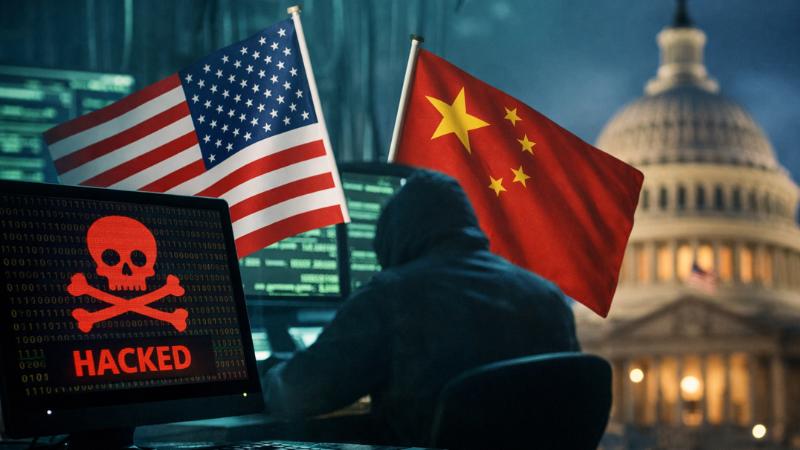
Chinese intelligence services have penetrated email systems used by staff members working for key committees in the United States House of Representatives, according to officials familiar with the matter, marking one of the most significant congressional cyber intrusions disclosed in recent years. The operation, known internally as Salt Typhoon, is described as part of a long-running cyber-espionage campaign attributed to China’s Ministry of State Security. Sources with knowledge of the investigation said the breach affected email accounts used by congressional staff supporting the House China Committee, as well as aides associated with the Foreign Affairs Committee, the Intelligence Committee, and the Armed Services Committee. The unauthorized access was discovered in December, prompting federal authorities to begin a broader review of congressional digital security practices and potential exposure of sensitive communications. Officials emphasized that the compromised accounts belonged to staffers rather than elected lawmakers, and it remains unclear whether the personal email accounts of members of Congress were accessed during the intrusion. Nonetheless, the targeting of committees responsible for national security, foreign policy, and intelligence oversight has raised concerns about the scale and intent of the operation. Investigators are continuing to assess what data may have been viewed or extracted and whether the intrusion enabled further access to internal government systems. Salt Typhoon is believed to be part of a sustained cyber campaign that has targeted US communications infrastructure for several years. According to individuals familiar with the operation, the tools and methods linked to the campaign have allowed Chinese intelligence to exploit vulnerabilities in telecommunications networks, providing access to unencrypted phone calls, text messages, and voicemail traffic across the United States. In certain circumstances, the same infrastructure has reportedly been used to gain entry into email systems. Security officials have also indicated that communications involving senior US government figures may have been intercepted as part of this broader effort, underscoring the persistent nature of the threat. While the full scope of the intercepted material has not been publicly detailed, authorities view the campaign as a strategic intelligence-gathering effort rather than a short-term or isolated attack. The incident highlights ongoing challenges facing US institutions as foreign intelligence agencies increasingly rely on cyber tools to collect information. Lawmakers and security experts have repeatedly warned that congressional offices, which often operate with limited technical resources compared with executive branch agencies, can present attractive targets for sophisticated adversaries seeking insight into policy deliberations and legislative priorities. Federal agencies responsible for cybersecurity and counterintelligence are coordinating with congressional officials to strengthen defenses, review access controls, and improve monitoring of digital systems. The breach is expected to intensify calls for additional investment in cybersecurity protections for legislative offices and for closer cooperation between Congress and national security agencies in responding to advanced cyber threats. As investigations continue, officials have stressed that the episode serves as a reminder of the evolving nature of cyber espionage and the need for constant vigilance in protecting sensitive government communications.
China-linked cyber operation breached US House staff email systems
Chinese intelligence services have penetrated email systems used by staff members working for key committees in the United States House of Representatives, according to officials familiar with the matter, marking one of the most significant congressional cyber intrusions disclosed in recent years. The operation, known internally as Salt Typhoon, is described as part of a long-running cyber-espionage campaign attributed to China’s Ministry of State Security. Sources with knowledge of the investigation said the breach affected email accounts used by congressional staff supporting the House China Committee, as well as aides associated with the Foreign Affairs Committee, the Intelligence Committee, and the Armed Services Committee. The unauthorized access was discovered in December, prompting federal authorities to begin a broader review of congressional digital security practices and potential exposure of sensitive communications. Officials emphasized that the compromised accounts belonged to staffers rather than elected lawmakers, and it remains unclear whether the personal email accounts of members of Congress were accessed during the intrusion. Nonetheless, the targeting of committees responsible for national security, foreign policy, and intelligence oversight has raised concerns about the scale and intent of the operation. Investigators are continuing to assess what data may have been viewed or extracted and whether the intrusion enabled further access to internal government systems. Salt Typhoon is believed to be part of a sustained cyber campaign that has targeted US communications infrastructure for several years. According to individuals familiar with the operation, the tools and methods linked to the campaign have allowed Chinese intelligence to exploit vulnerabilities in telecommunications networks, providing access to unencrypted phone calls, text messages, and voicemail traffic across the United States. In certain circumstances, the same infrastructure has reportedly been used to gain entry into email systems. Security officials have also indicated that communications involving senior US government figures may have been intercepted as part of this broader effort, underscoring the persistent nature of the threat. While the full scope of the intercepted material has not been publicly detailed, authorities view the campaign as a strategic intelligence-gathering effort rather than a short-term or isolated attack. The incident highlights ongoing challenges facing US institutions as foreign intelligence agencies increasingly rely on cyber tools to collect information. Lawmakers and security experts have repeatedly warned that congressional offices, which often operate with limited technical resources compared with executive branch agencies, can present attractive targets for sophisticated adversaries seeking insight into policy deliberations and legislative priorities. Federal agencies responsible for cybersecurity and counterintelligence are coordinating with congressional officials to strengthen defenses, review access controls, and improve monitoring of digital systems. The breach is expected to intensify calls for additional investment in cybersecurity protections for legislative offices and for closer cooperation between Congress and national security agencies in responding to advanced cyber threats. As investigations continue, officials have stressed that the episode serves as a reminder of the evolving nature of cyber espionage and the need for constant vigilance in protecting sensitive government communications.
US–Venezuela crisis – China condemns US pressure on Venezuela oil ties, calls it violation of sovereignty
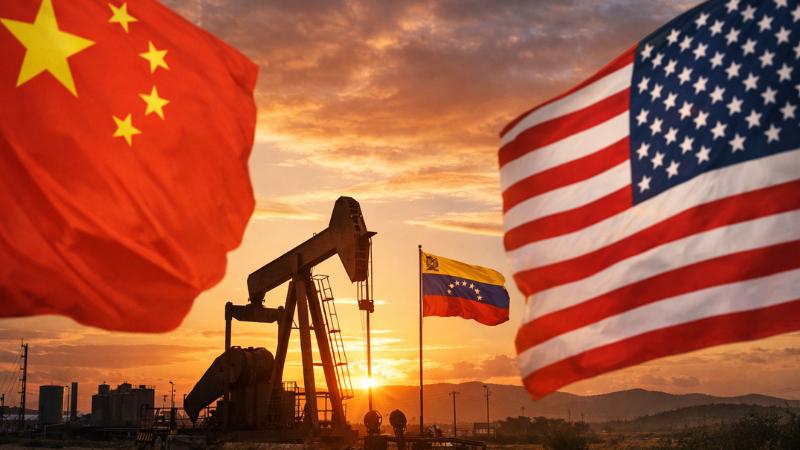
China on Wednesday strongly criticized reported United States demands aimed at reshaping Venezuela’s oil partnerships, calling the move an act of coercion that violates both national sovereignty and international law. Beijing’s response follows media reports that Washington has sought exclusive control over Venezuela’s oil sector as part of its political and economic engagement with the South American nation. Speaking at a regular press briefing, Chinese Foreign Ministry spoke
US–Venezuela crisis – China condemns US pressure on Venezuela oil ties, calls it violation of sovereignty
China on Wednesday strongly criticized reported United States demands aimed at reshaping Venezuela’s oil partnerships, calling the move an act of coercion that violates both national sovereignty and international law. Beijing’s response follows media reports that Washington has sought exclusive control over Venezuela’s oil sector as part of its political and economic engagement with the South American nation. Speaking at a regular press briefing, Chinese Foreign Ministry spoke