
























#digital-education
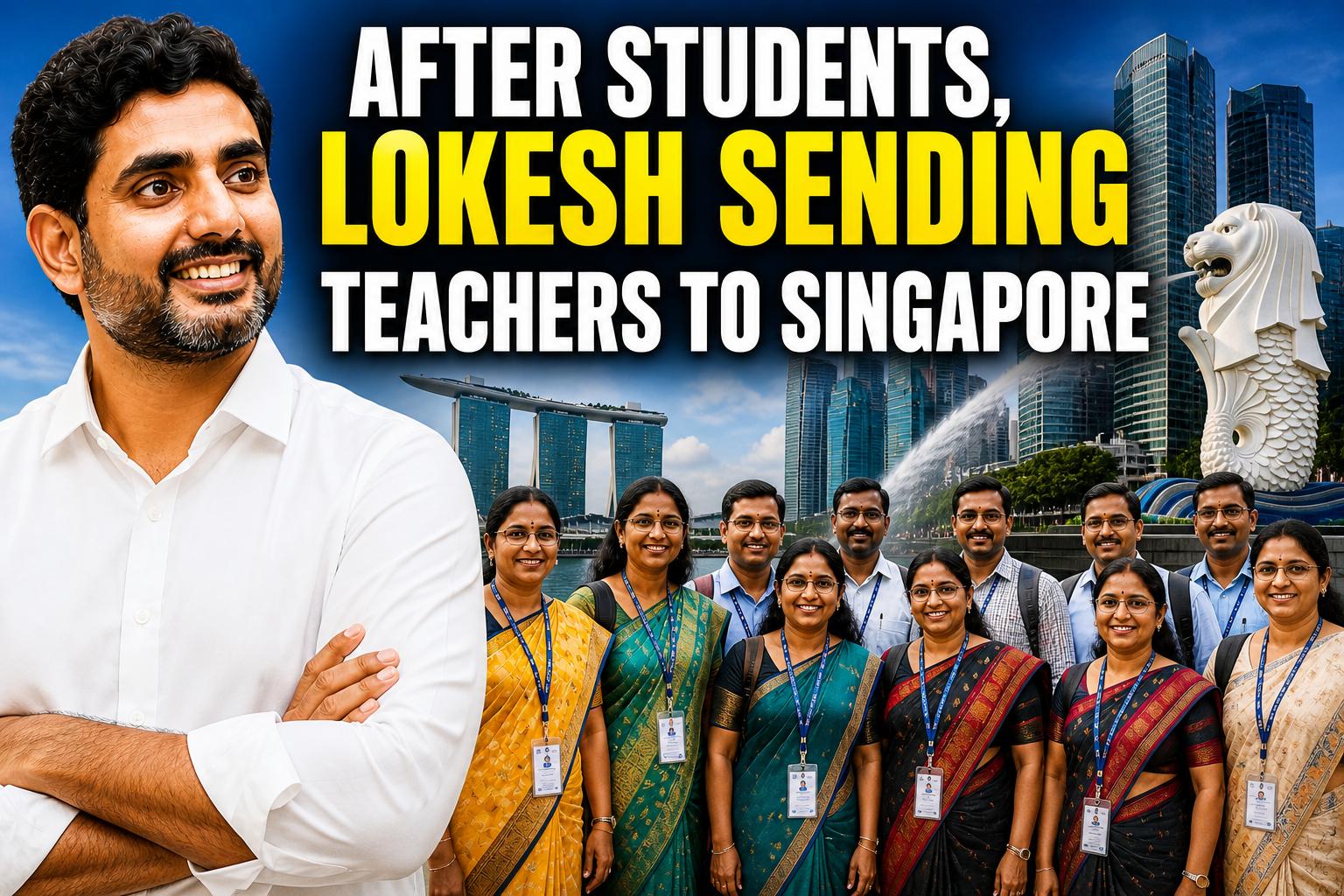
AP Govt Sends Teachers to Singapore for Training After Student Tours Initiative
Andhra Pradesh’s education system is undergoing a noticeable shift under the leadership of Nara Lokesh, with the government now focusing not just on students but also on strengthening teachers. In a new initiative, the state has selected 37 high-performing teachers from government schools and is sending them to Singapore for a one-week intensive training program aimed at upgrading teaching standards. Until recently, the government’s reforms were largely centered around students, including exposure visits and learning enhancement programs. One such initiative involved taking students from government schools to New Delhi, where they explored science institutions and gained practical learning experiences beyond textbooks. Now, the attention has shifted toward teachers, recognizing that improving teaching quality directly impacts student outcomes. The selected educators will observe and learn advanced teaching practices widely adopted in Singapore, including digital learning systems, smart classroom integration, project-based teaching models, and modern evaluation techniques. These methods are known for making learning more interactive and effective. The expectation is straightforward but ambitious. After completing their training, these teachers will return and implement what they have learned across government schools in Andhra Pradesh. The goal is not just incremental improvement but a broader transformation in how education is delivered. However, the real test lies in execution. Sending 37 teachers abroad makes for a good headline, but unless there is a structured plan to scale these learnings across thousands of schools, the impact could remain limited. If the government ensures proper follow-up, training replication, and accountability, this initiative could genuinely improve classroom standards. Otherwise, it risks becoming another isolated reform without long-term effect. This move signals a more balanced approach to education reform—one that acknowledges that strong teachers are just as critical as motivated students in building a future-ready education system.
AP Govt Sends Teachers to Singapore for Training After Student Tours Initiative
Andhra Pradesh’s education system is undergoing a noticeable shift under the leadership of Nara Lokesh, with the government now focusing not just on students but also on strengthening teachers. In a new initiative, the state has selected 37 high-performing teachers from government schools and is sending them to Singapore for a one-week intensive training program aimed at upgrading teaching standards. Until recently, the government’s reforms were largely centered around students, including exposure visits and learning enhancement programs. One such initiative involved taking students from government schools to New Delhi, where they explored science institutions and gained practical learning experiences beyond textbooks. Now, the attention has shifted toward teachers, recognizing that improving teaching quality directly impacts student outcomes. The selected educators will observe and learn advanced teaching practices widely adopted in Singapore, including digital learning systems, smart classroom integration, project-based teaching models, and modern evaluation techniques. These methods are known for making learning more interactive and effective. The expectation is straightforward but ambitious. After completing their training, these teachers will return and implement what they have learned across government schools in Andhra Pradesh. The goal is not just incremental improvement but a broader transformation in how education is delivered. However, the real test lies in execution. Sending 37 teachers abroad makes for a good headline, but unless there is a structured plan to scale these learnings across thousands of schools, the impact could remain limited. If the government ensures proper follow-up, training replication, and accountability, this initiative could genuinely improve classroom standards. Otherwise, it risks becoming another isolated reform without long-term effect. This move signals a more balanced approach to education reform—one that acknowledges that strong teachers are just as critical as motivated students in building a future-ready education system.
CBSE Expands Curriculum With Early AI Education From Class 3
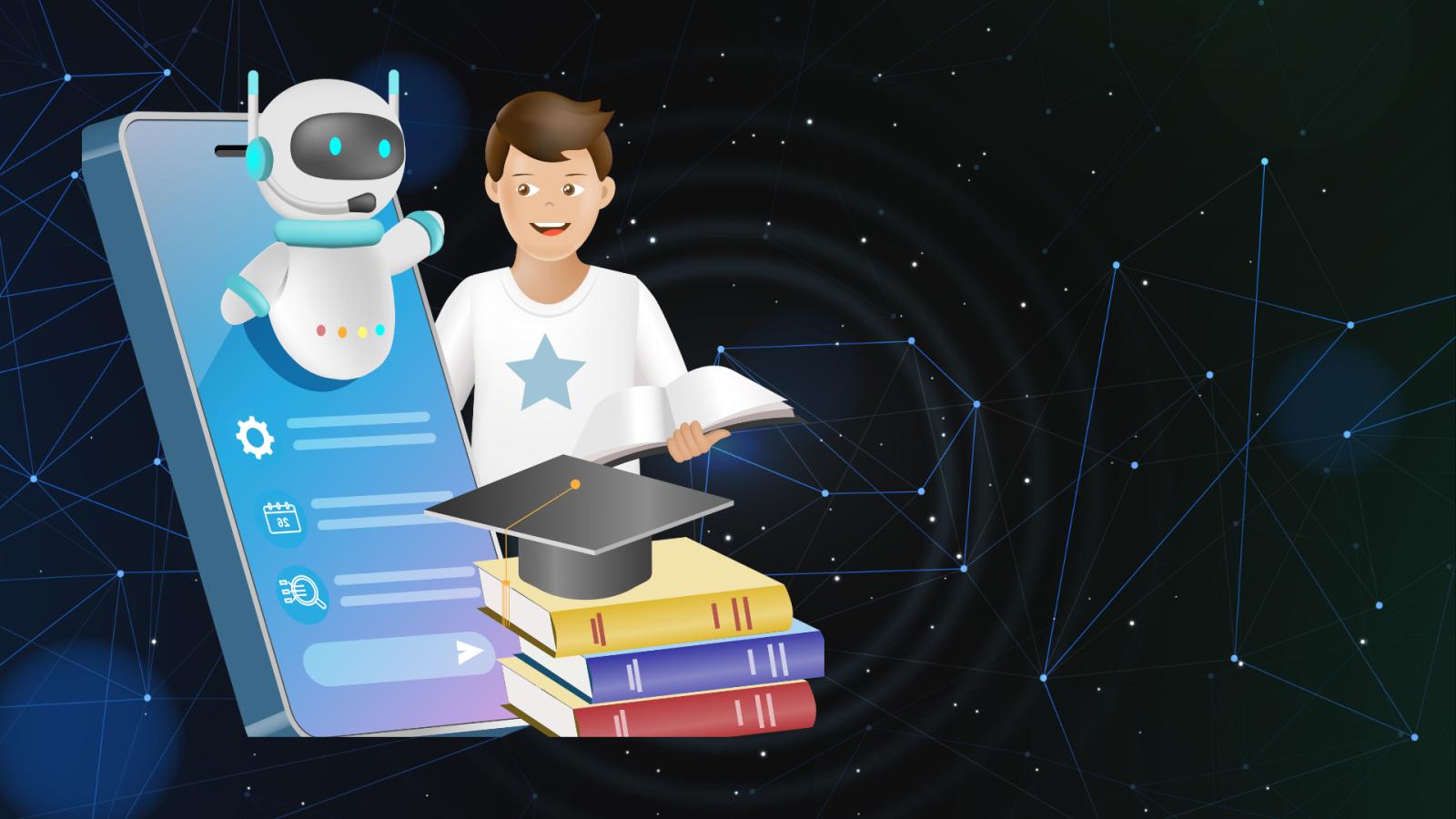
The Central Board of Secondary Education (CBSE) has taken a significant step towards modernizing India’s education system by introducing artificial intelligence learning for students starting from Class 3. This move reflects the growing importance of digital literacy and emerging technologies in shaping the future workforce. By incorporating AI concepts at an early stage, CBSE aims to ensure that students are not just consumers of technology but also understand its fundamentals and applications. The initiative is part of a broader effort to align school education with global technological trends and prepare students for a rapidly evolving digital world. Under this new curriculum, young learners will be introduced to basic concepts of artificial intelligence through interactive and activity-based learning methods. Instead of complex coding, the focus will be on developing logical thinking, problem-solving skills, and an understanding of how AI impacts everyday life. Students will engage in simple exercises, games, and real-life examples to grasp how machines can learn and make decisions. This foundational approach ensures that children build curiosity and confidence in technology without feeling overwhelmed. Curriculum Focus and Implementation The AI curriculum for primary classes is designed to be age-appropriate and engaging. CBSE has collaborated with education experts and technology partners to create content that is both informative and easy to understand. Teachers will also receive specialized training to effectively deliver AI-related lessons in classrooms. The board plans to integrate AI topics with existing subjects, making learning more interdisciplinary and practical. This approach will help students connect theoretical knowledge with real-world applications, enhancing their overall learning experience. Impact on Students and Future Education Introducing AI learning at an early stage is expected to have a long-term impact on students’ academic and career paths. As industries increasingly rely on automation and data-driven technologies, early exposure to AI will give students a competitive edge. It will also encourage innovation and creativity among young minds, enabling them to think beyond traditional career options. Parents and educators have largely welcomed this move, seeing it as a progressive step toward building a tech-savvy generation. With this initiative, CBSE reinforces its commitment to evolving education standards and preparing students for the challenges of the future. The inclusion of artificial intelligence in the curriculum marks a shift from rote learning to skill-based education, ensuring that students are better equipped to navigate and contribute to a technology-driven world.
CBSE Expands Curriculum With Early AI Education From Class 3
The Central Board of Secondary Education (CBSE) has taken a significant step towards modernizing India’s education system by introducing artificial intelligence learning for students starting from Class 3. This move reflects the growing importance of digital literacy and emerging technologies in shaping the future workforce. By incorporating AI concepts at an early stage, CBSE aims to ensure that students are not just consumers of technology but also understand its fundamentals and applications. The initiative is part of a broader effort to align school education with global technological trends and prepare students for a rapidly evolving digital world. Under this new curriculum, young learners will be introduced to basic concepts of artificial intelligence through interactive and activity-based learning methods. Instead of complex coding, the focus will be on developing logical thinking, problem-solving skills, and an understanding of how AI impacts everyday life. Students will engage in simple exercises, games, and real-life examples to grasp how machines can learn and make decisions. This foundational approach ensures that children build curiosity and confidence in technology without feeling overwhelmed. Curriculum Focus and Implementation The AI curriculum for primary classes is designed to be age-appropriate and engaging. CBSE has collaborated with education experts and technology partners to create content that is both informative and easy to understand. Teachers will also receive specialized training to effectively deliver AI-related lessons in classrooms. The board plans to integrate AI topics with existing subjects, making learning more interdisciplinary and practical. This approach will help students connect theoretical knowledge with real-world applications, enhancing their overall learning experience. Impact on Students and Future Education Introducing AI learning at an early stage is expected to have a long-term impact on students’ academic and career paths. As industries increasingly rely on automation and data-driven technologies, early exposure to AI will give students a competitive edge. It will also encourage innovation and creativity among young minds, enabling them to think beyond traditional career options. Parents and educators have largely welcomed this move, seeing it as a progressive step toward building a tech-savvy generation. With this initiative, CBSE reinforces its commitment to evolving education standards and preparing students for the challenges of the future. The inclusion of artificial intelligence in the curriculum marks a shift from rote learning to skill-based education, ensuring that students are better equipped to navigate and contribute to a technology-driven world.
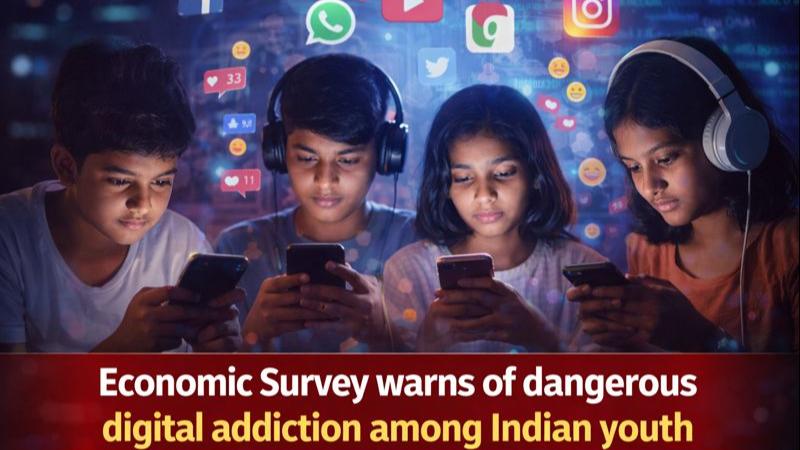
Economic Survey warns of dangerous digital addiction among Indian youth
India’s Economic Survey 2025–26 has raised a serious warning over the rapid rise of digital addiction among children and adolescents, calling it a growing public health and economic risk. Tabled in Parliament on Thursday, the report highlights how excessive use of smartphones, social media, gaming platforms, and online entertainment is increasingly affecting mental wellbeing, academic performance, and long-term productivity among the country’s youth. The survey defines digital addiction
Economic Survey warns of dangerous digital addiction among Indian youth
India’s Economic Survey 2025–26 has raised a serious warning over the rapid rise of digital addiction among children and adolescents, calling it a growing public health and economic risk. Tabled in Parliament on Thursday, the report highlights how excessive use of smartphones, social media, gaming platforms, and online entertainment is increasingly affecting mental wellbeing, academic performance, and long-term productivity among the country’s youth. The survey defines digital addiction
Gen Z Leads Protests in POK Against Shehbaz Govt Over Fees and E-Marking
The streets of Pakistan-Occupied Kashmir (POK) are once again engulfed in protests, this time led by Gen Z students angered by rising tuition fees and a controversial digital evaluation system. What began as a small student-led protest over unfair exam results has evolved into a large-scale anti-government movement targeting the Shehbaz Sharif administration. Demonstrations first erupted in Muzaffarabad, where students voiced outrage over the newly introduced e-marking system. The i
Gen Z Leads Protests in POK Against Shehbaz Govt Over Fees and E-Marking
The streets of Pakistan-Occupied Kashmir (POK) are once again engulfed in protests, this time led by Gen Z students angered by rising tuition fees and a controversial digital evaluation system. What began as a small student-led protest over unfair exam results has evolved into a large-scale anti-government movement targeting the Shehbaz Sharif administration. Demonstrations first erupted in Muzaffarabad, where students voiced outrage over the newly introduced e-marking system. The i
India’s Literacy Rate Hits 80.9% In 2023–24: Dharmendra Pradhan On International Literacy Day
India’s literacy rate has reached a new milestone, rising from 74% in 2011 to 80.9% in 2023–24, according to Union Education Minister Dharmendra Pradhan. The announcement was made on the occasion of International Literacy Day 2025, where he emphasized that literacy must not be viewed merely as the ability to read and write but as a foundation for empowerment, dignity, and self-reliance for every citizen.
India’s Literacy Rate Hits 80.9% In 2023–24: Dharmendra Pradhan On International Literacy Day
India’s literacy rate has reached a new milestone, rising from 74% in 2011 to 80.9% in 2023–24, according to Union Education Minister Dharmendra Pradhan. The announcement was made on the occasion of International Literacy Day 2025, where he emphasized that literacy must not be viewed merely as the ability to read and write but as a foundation for empowerment, dignity, and self-reliance for every citizen.
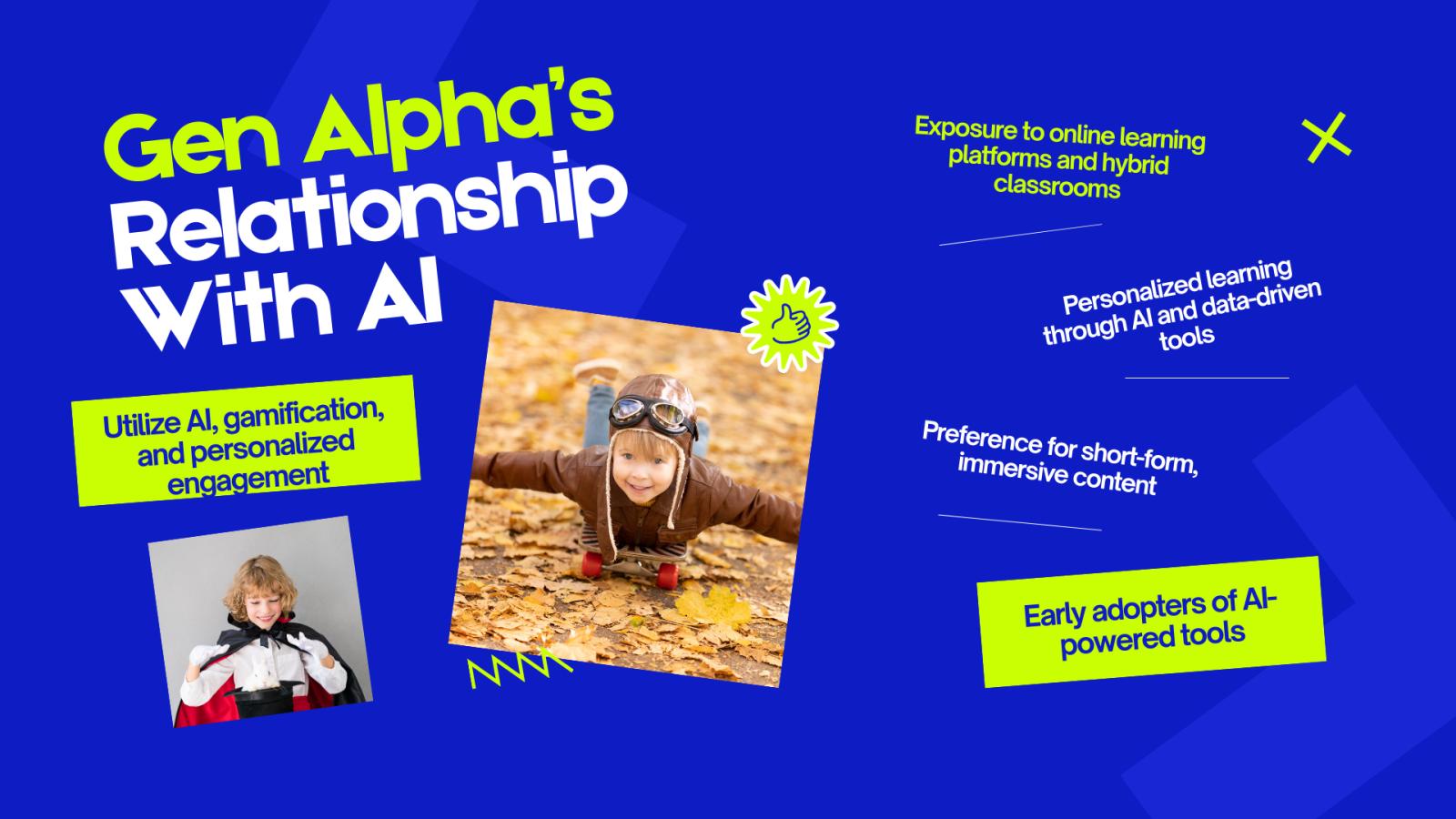
Understanding Gen Alpha’s Relationship With AI
Gen Alpha, the generation born from 2010 onward, is growing up in a world where artificial intelligence (AI) is part of everyday life. From voice assistants like Alexa to personalized learning apps, AI is shaping how this generation learns, plays, and interacts. Unlike previous generations who had to adapt to new technology, Gen Alpha is being raised alongside it, making their relationship with AI unique. Growing Up With AI from Day One For Gen Alpha kid
Understanding Gen Alpha’s Relationship With AI
Gen Alpha, the generation born from 2010 onward, is growing up in a world where artificial intelligence (AI) is part of everyday life. From voice assistants like Alexa to personalized learning apps, AI is shaping how this generation learns, plays, and interacts. Unlike previous generations who had to adapt to new technology, Gen Alpha is being raised alongside it, making their relationship with AI unique. Growing Up With AI from Day One For Gen Alpha kid
Are Indian Educators Being Sidelined by AI Tutors?
The AI Wave in Indian Education From online test prep platforms to AI chatbots answering math problems, artificial intelligence is reshaping the Indian education landscape. Many parents are turning to AI tools for quick solutions, raising concerns: Are Indian teachers being replaced? Or is this just the beginning of a new partnership between humans and machines? AI-Based Tutors: What They Offer AI tutors are efficient, always availab
Are Indian Educators Being Sidelined by AI Tutors?
The AI Wave in Indian Education From online test prep platforms to AI chatbots answering math problems, artificial intelligence is reshaping the Indian education landscape. Many parents are turning to AI tools for quick solutions, raising concerns: Are Indian teachers being replaced? Or is this just the beginning of a new partnership between humans and machines? AI-Based Tutors: What They Offer AI tutors are efficient, always availab
Why AI Teacher Training is Crucial for Classroom Success
The future of education is inevitably linked to technological advancements like AI, VR, AR, and gamified learning tools. However, the success of these tools in classrooms hinges not just on the technology itself but on the educators who use them. As AI becomes more integrated into the education system, experts emphasize that teacher training is critical for ensuring technology enhances learning rather than disrupts it.
Why AI Teacher Training is Crucial for Classroom Success
The future of education is inevitably linked to technological advancements like AI, VR, AR, and gamified learning tools. However, the success of these tools in classrooms hinges not just on the technology itself but on the educators who use them. As AI becomes more integrated into the education system, experts emphasize that teacher training is critical for ensuring technology enhances learning rather than disrupts it.
Delhi University Launches Course on Modern Relationship Issues
Delhi University is taking an innovative step to address the emotional and psychological challenges young people face in today’s digital age. From the 2025–26 academic session, DU's Department of Psychology is offering a new undergraduate elective titled Negotiating Intimate Relationships. The course is designed to help students understand and manage love, dating, friendships, emotional boundaries, and toxic behaviors especially as dat
Delhi University Launches Course on Modern Relationship Issues
Delhi University is taking an innovative step to address the emotional and psychological challenges young people face in today’s digital age. From the 2025–26 academic session, DU's Department of Psychology is offering a new undergraduate elective titled Negotiating Intimate Relationships. The course is designed to help students understand and manage love, dating, friendships, emotional boundaries, and toxic behaviors especially as dat
Lawmakers push for mental health warnings on social platforms across U.S.
Across the United States, a growing number of lawmakers are pushing to require warning labels on social media platforms to alert teenagers to potential mental health risks. Legislators in states like California, Texas, and New York are introducing measures that could change how platforms present themselves to younger users, with the broader aim of addressing a worsening youth mental health crisis. The proposed legislation aims to inform users, especially teens, about the psycholog
Lawmakers push for mental health warnings on social platforms across U.S.
Across the United States, a growing number of lawmakers are pushing to require warning labels on social media platforms to alert teenagers to potential mental health risks. Legislators in states like California, Texas, and New York are introducing measures that could change how platforms present themselves to younger users, with the broader aim of addressing a worsening youth mental health crisis. The proposed legislation aims to inform users, especially teens, about the psycholog
Union Budget 2025: Focus on NEP, Digital Education, and Skill Development
The Role of National Education Policy (NEP) in the Union Budget 2025: The Union Budget 2025-26 is crucial for shaping the future of India's education system, especially with the National Education Policy (NEP) 2020 being a significant focus. The BJP-led NDA government, entering its third term, continues to prioritize education and skill development. The NEP aims to modernize educati
Union Budget 2025: Focus on NEP, Digital Education, and Skill Development
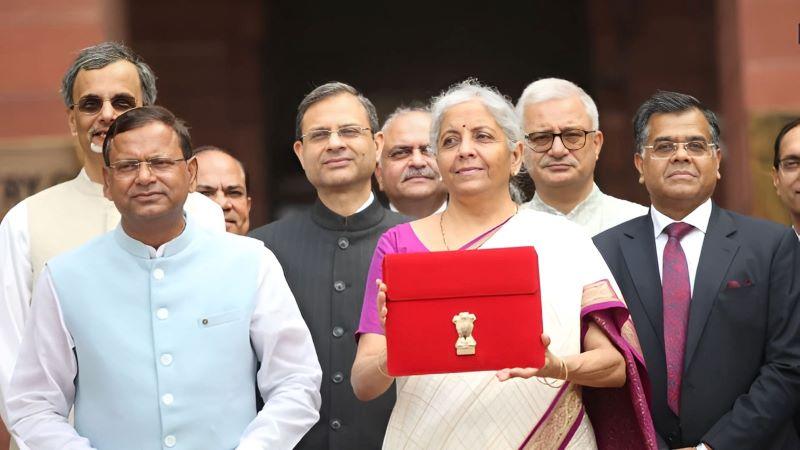
The Role of National Education Policy (NEP) in the Union Budget 2025: The Union Budget 2025-26 is crucial for shaping the future of India's education system, especially with the National Education Policy (NEP) 2020 being a significant focus. The BJP-led NDA government, entering its third term, continues to prioritize education and skill development. The NEP aims to modernize educati


