#economicoutlook
Barry Callebaut cuts profit outlook amid cocoa price drop and supply risks
Barry Callebaut, the world’s largest chocolate producer, announced on Thursday, April 16, 2026, that it has lowered its operating profit forecast for the 2025–2026 fiscal year, citing falling cocoa prices, industry overcapacity, and potential supply disruptions linked to geopolitical tensions involving Iran. The Zurich-based company now expects earnings before interest and tax (EBIT)
Barry Callebaut cuts profit outlook amid cocoa price drop and supply risks
Barry Callebaut, the world’s largest chocolate producer, announced on Thursday, April 16, 2026, that it has lowered its operating profit forecast for the 2025–2026 fiscal year, citing falling cocoa prices, industry overcapacity, and potential supply disruptions linked to geopolitical tensions involving Iran. The Zurich-based company now expects earnings before interest and tax (EBIT)
US corporate profits remain strong despite global tensions and rising costs
From the early 2020s through 2026, U.S. corporations have demonstrated a remarkable ability to sustain and expand profits despite a series of economic shocks, including the COVID-19 pandemic, rising inflation, tariffs, and ongoing geopolitical conflicts. Recent data indicate that corporate profits have reached a record share of gross domestic product, while profit margins—measuring the gap between input costs and final selling prices—remain near historic highs. Executives across m
US corporate profits remain strong despite global tensions and rising costs
From the early 2020s through 2026, U.S. corporations have demonstrated a remarkable ability to sustain and expand profits despite a series of economic shocks, including the COVID-19 pandemic, rising inflation, tariffs, and ongoing geopolitical conflicts. Recent data indicate that corporate profits have reached a record share of gross domestic product, while profit margins—measuring the gap between input costs and final selling prices—remain near historic highs. Executives across m
US consumer confidence hits record low amid Iran conflict and rising energy prices
Consumer confidence in the United States fell sharply in April, reaching its lowest level on record as concerns over rising energy prices and the economic impact of the Iran conflict intensified, according to survey data released on Friday, April 11, 2026. The University of Michigan’s closely watched consumer sentiment index dropped to 47.6, marking a 10.7% decline from March and setting a new historic low. Both the current economic conditions index and the expectations index also p
US consumer confidence hits record low amid Iran conflict and rising energy prices
Consumer confidence in the United States fell sharply in April, reaching its lowest level on record as concerns over rising energy prices and the economic impact of the Iran conflict intensified, according to survey data released on Friday, April 11, 2026. The University of Michigan’s closely watched consumer sentiment index dropped to 47.6, marking a 10.7% decline from March and setting a new historic low. Both the current economic conditions index and the expectations index also p
India growth forecast raised to 6.6% as South Asia faces economic uncertainty
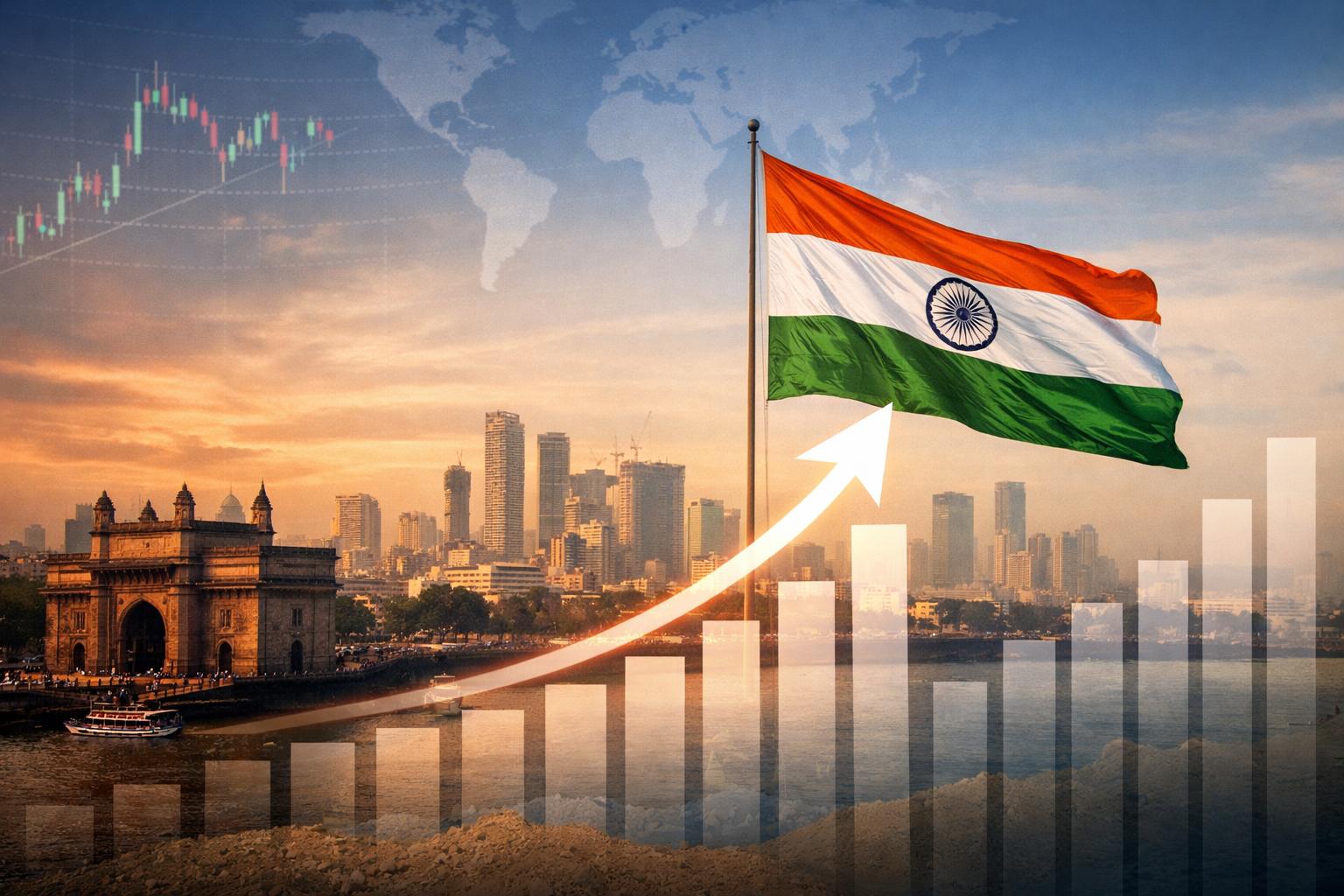
India is expected to remain the central driver of economic growth in South Asia, even as global uncertainties continue to pressure the broader region, according to the latest outlook from the World Bank. The institution has revised India’s growth forecast for the 2026–27 fiscal year upward to 6.6 percent, an increase from its earlier estimate of 6.3 percent, underscoring confidence in the country’s economic resilience. The updated projection comes amid a challenging global environment shaped by geopolitical tensions, shifting trade dynamics, and volatility in energy markets. These factors have weighed on growth expectations across South Asia, where several economies are projected to experience slower expansion in the coming years. Despite these headwinds, India’s performance continues to stand out, supported by strong domestic demand, policy stability, and ongoing structural reforms. For U.S.-based observers and global investors, India’s upgraded outlook signals a relatively stable growth engine within emerging markets in Asia. As economic uncertainty persists worldwide, India’s trajectory offers a degree of predictability that contrasts with the broader regional slowdown. Analysts note that while external risks remain significant, including supply chain disruptions and energy price fluctuations, India’s diversified economy positions it to better absorb global shocks. The World Bank’s revision highlights India’s role as a stabilizing force in South Asia’s economic landscape. While neighboring economies face mounting fiscal and external pressures, India is expected to continue contributing the largest share of regional growth. This dynamic reinforces the country’s importance not only within Asia but also in the context of the global economy, where emerging markets are increasingly influential. Overall, the revised forecast reflects cautious optimism. While challenges persist, India’s economic fundamentals and growth momentum suggest it will remain a key pillar of regional and global economic stability in the years ahead.
India growth forecast raised to 6.6% as South Asia faces economic uncertainty
India is expected to remain the central driver of economic growth in South Asia, even as global uncertainties continue to pressure the broader region, according to the latest outlook from the World Bank. The institution has revised India’s growth forecast for the 2026–27 fiscal year upward to 6.6 percent, an increase from its earlier estimate of 6.3 percent, underscoring confidence in the country’s economic resilience. The updated projection comes amid a challenging global environment shaped by geopolitical tensions, shifting trade dynamics, and volatility in energy markets. These factors have weighed on growth expectations across South Asia, where several economies are projected to experience slower expansion in the coming years. Despite these headwinds, India’s performance continues to stand out, supported by strong domestic demand, policy stability, and ongoing structural reforms. For U.S.-based observers and global investors, India’s upgraded outlook signals a relatively stable growth engine within emerging markets in Asia. As economic uncertainty persists worldwide, India’s trajectory offers a degree of predictability that contrasts with the broader regional slowdown. Analysts note that while external risks remain significant, including supply chain disruptions and energy price fluctuations, India’s diversified economy positions it to better absorb global shocks. The World Bank’s revision highlights India’s role as a stabilizing force in South Asia’s economic landscape. While neighboring economies face mounting fiscal and external pressures, India is expected to continue contributing the largest share of regional growth. This dynamic reinforces the country’s importance not only within Asia but also in the context of the global economy, where emerging markets are increasingly influential. Overall, the revised forecast reflects cautious optimism. While challenges persist, India’s economic fundamentals and growth momentum suggest it will remain a key pillar of regional and global economic stability in the years ahead.
Mercedes-Benz sees challenges ahead despite U.S. sales growth plans
Mercedes-Benz USA CEO Adam Chamberlain said on Tuesday, March 31, 2026, that early indicators suggest the 2026 model year is shaping up to be more challenging than initially expected, as economic uncertainty and external pressures weigh on the U.S. auto market. Speaking at the company’s manufacturing facility in Vance, Alabama, Chamberlain indicated that conditions in the opening months of the year have proven tougher than anticipated. He cited a range of factors influencing the market, in
Mercedes-Benz sees challenges ahead despite U.S. sales growth plans
Mercedes-Benz USA CEO Adam Chamberlain said on Tuesday, March 31, 2026, that early indicators suggest the 2026 model year is shaping up to be more challenging than initially expected, as economic uncertainty and external pressures weigh on the U.S. auto market. Speaking at the company’s manufacturing facility in Vance, Alabama, Chamberlain indicated that conditions in the opening months of the year have proven tougher than anticipated. He cited a range of factors influencing the market, in
Ray Dalio flags risk of capital war as geopolitics unsettle global financial markets
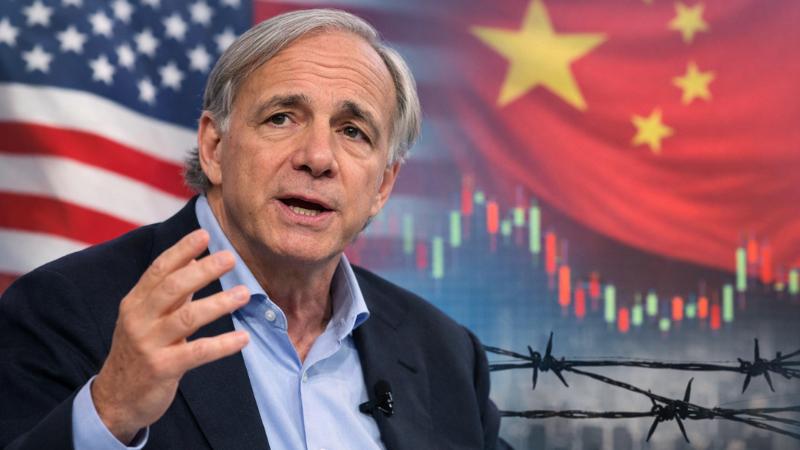
Legendary investor Ray Dalio has cautioned that the global economy is approaching a dangerous tipping point, warning that mounting geopolitical frictions and unstable financial markets could trigger what he describes as a “capital war,” in which nations weaponize money, trade, and investment flows to exert influence over one another. Speaking at the World Governments Summit in Dubai, Dalio said the international system is not yet in such a conflict but is “on the brink,” with conditions that could quickly escalate. He described capital war as a scenario where governments restrict access to markets, impose sanctions, enforce capital controls, or use debt holdings and trade leverage to pressure rivals. According to Dalio, rising mistrust among major economies is increasing the likelihood of these tools being deployed more aggressively. He pointed to growing tensions between the United States and its allies and competitors as a key source of concern. Discussions surrounding Washington’s interest in Greenland, a Danish territory, as well as broader disagreements over trade and security policy, have unsettled investors. Dalio said some European holders of U.S.-denominated assets fear potential sanctions or restrictions, while American policymakers may worry about losing reliable foreign buyers for government debt. European investors have played a significant role in financing U.S. borrowing needs, accounting for a large share of foreign purchases of Treasurys in recent months. Any disruption to those flows could amplify volatility in global markets and increase funding pressures. Dalio noted that “capital, money, matters,” emphasizing that financial interdependence has become both a strength and a vulnerability for the global system. Since returning to office, President Donald Trump has introduced and, at times, rolled back punitive tariffs targeting several trading partners. Those policy shifts have added to market swings and uncertainty. Dalio said similar patterns in the past have often preceded broader economic confrontations, with governments imposing foreign exchange restrictions and tightening controls to protect domestic interests. Drawing parallels with history, he referenced periods leading up to major conflicts, when sanctions and trade barriers intensified rivalries between nations. He suggested that today’s environment could produce comparable strains, particularly in relations between the United States and China, or between the United States and Europe, where trade deficits and capital imbalances remain sensitive issues. Against this backdrop, Dalio reiterated his long-standing view that gold remains an effective hedge during periods of stress. Although prices have fluctuated recently, he said the precious metal continues to serve as a reliable diversifier for portfolios. Rather than focusing on short-term movements, he advised investors, central banks, and sovereign wealth funds to maintain a steady allocation to gold as protection against systemic risk. Ultimately, Dalio urged a disciplined approach to investing, stressing that diversification across assets and regions is the best defense in an increasingly uncertain economic landscape.
Ray Dalio flags risk of capital war as geopolitics unsettle global financial markets
Legendary investor Ray Dalio has cautioned that the global economy is approaching a dangerous tipping point, warning that mounting geopolitical frictions and unstable financial markets could trigger what he describes as a “capital war,” in which nations weaponize money, trade, and investment flows to exert influence over one another. Speaking at the World Governments Summit in Dubai, Dalio said the international system is not yet in such a conflict but is “on the brink,” with conditions that could quickly escalate. He described capital war as a scenario where governments restrict access to markets, impose sanctions, enforce capital controls, or use debt holdings and trade leverage to pressure rivals. According to Dalio, rising mistrust among major economies is increasing the likelihood of these tools being deployed more aggressively. He pointed to growing tensions between the United States and its allies and competitors as a key source of concern. Discussions surrounding Washington’s interest in Greenland, a Danish territory, as well as broader disagreements over trade and security policy, have unsettled investors. Dalio said some European holders of U.S.-denominated assets fear potential sanctions or restrictions, while American policymakers may worry about losing reliable foreign buyers for government debt. European investors have played a significant role in financing U.S. borrowing needs, accounting for a large share of foreign purchases of Treasurys in recent months. Any disruption to those flows could amplify volatility in global markets and increase funding pressures. Dalio noted that “capital, money, matters,” emphasizing that financial interdependence has become both a strength and a vulnerability for the global system. Since returning to office, President Donald Trump has introduced and, at times, rolled back punitive tariffs targeting several trading partners. Those policy shifts have added to market swings and uncertainty. Dalio said similar patterns in the past have often preceded broader economic confrontations, with governments imposing foreign exchange restrictions and tightening controls to protect domestic interests. Drawing parallels with history, he referenced periods leading up to major conflicts, when sanctions and trade barriers intensified rivalries between nations. He suggested that today’s environment could produce comparable strains, particularly in relations between the United States and China, or between the United States and Europe, where trade deficits and capital imbalances remain sensitive issues. Against this backdrop, Dalio reiterated his long-standing view that gold remains an effective hedge during periods of stress. Although prices have fluctuated recently, he said the precious metal continues to serve as a reliable diversifier for portfolios. Rather than focusing on short-term movements, he advised investors, central banks, and sovereign wealth funds to maintain a steady allocation to gold as protection against systemic risk. Ultimately, Dalio urged a disciplined approach to investing, stressing that diversification across assets and regions is the best defense in an increasingly uncertain economic landscape.
Dollar decline creates double-edged sword for US economy
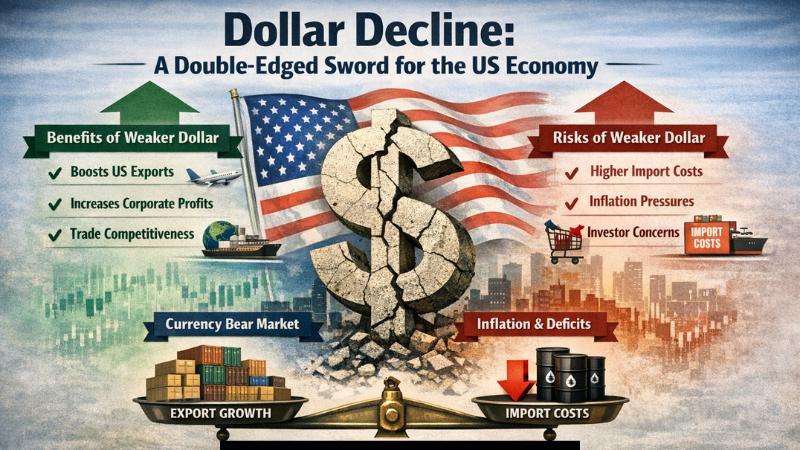
The U.S. dollar has continued its recent decline, extending a trend that presents both opportunities and challenges for the American economy. President Donald Trump described the currency as “doing great,” reflecting his view that a moderately weaker dollar can provide strategic benefits in international trade. Despite this optimism, economists warn that the weakening greenback represents a “double-edged sword,” offering advantages to exporters while introducing risks related to inflatio
Dollar decline creates double-edged sword for US economy
The U.S. dollar has continued its recent decline, extending a trend that presents both opportunities and challenges for the American economy. President Donald Trump described the currency as “doing great,” reflecting his view that a moderately weaker dollar can provide strategic benefits in international trade. Despite this optimism, economists warn that the weakening greenback represents a “double-edged sword,” offering advantages to exporters while introducing risks related to inflatio
Japan’s birth crisis deepens as 2025 births hit historic low
Japan is on course to record its lowest number of births since national data collection began in 1899, with estimates for 2025 indicating the total will fall below 670,000. The figure is not only historically low but also worse than the most pessimistic government forecasts, underscoring the speed and scale of the country’s demographic decline. As the population continues to shrink, the question facing policymakers and businesses alike is whether Japan can sustain its economic and social systems with a rapidly diminishing younger generation. The population trend has been moving in this direction for more than a decade. Japan’s total population began declining in 2011 and has continued to contract each year since. In 2024, deaths exceeded births by nearly one million people, marking the largest annual natural decrease on record. That year also saw births drop below 700,000 for the first time, a decline of 5.7 percent from the previous year. Once home to about 128 million people, Japan’s population now stands at roughly 123 million and continues to fall. At the center of the crisis is an extremely low fertility rate. Japan’s current fertility level is estimated at around 1.14 children per woman, far below the replacement rate of approximately 2.1 required to maintain population stability. This gap reflects deep-rooted economic and social pressures that have reshaped family formation. Economic insecurity remains a major factor, with stagnant wages, rising living costs, and high childcare expenses discouraging many young adults from marrying or having children. Marriage rates have declined sharply over recent decades, and because childbirth outside marriage remains relatively uncommon, fewer marriages translate directly into fewer births. Work culture and social expectations have also played a significant role. Japan’s long working hours and limited work-life balance make parenting particularly challenging, especially for women. Despite gradual improvements, gender inequality continues to place most childcare responsibilities on mothers. At the same time, more women are pursuing higher education, careers, and financial independence, leading many to delay or reject traditional family models altogether. These choices reflect changing aspirations as much as structural constraints. The demographic shift is already affecting the economy. With fewer young people entering the workforce each year, labor shortages are emerging across key sectors including manufacturing, construction, agriculture, caregiving, and services. Businesses are facing reduced production capacity, strained supply chains, and rising operational costs. Small and medium-sized enterprises, in particular, are struggling to recruit and retain workers, adding pressure to regional economies. While fears of an outright economic collapse are overstated, the risk of prolonged stagnation is real. Japan remains a global leader in technology, automation, and robotics, and these strengths are helping to offset some labor shortages. Automated systems can increase productivity and reduce reliance on human labor in certain industries. However, technology has limits. Fields such as healthcare, education, and many service roles depend heavily on human interaction, empathy, and judgment, qualities machines cannot fully replicate. Japan’s population challenge is no longer a distant projection but an immediate reality shaping daily life and long-term planning. How effectively the country combines technological innovation with social reform, workforce participation changes, and potential adjustments to immigration policy will determine whether this demographic turning point leads to managed adaptation or deepening economic and social strain.
Japan’s birth crisis deepens as 2025 births hit historic low
Japan is on course to record its lowest number of births since national data collection began in 1899, with estimates for 2025 indicating the total will fall below 670,000. The figure is not only historically low but also worse than the most pessimistic government forecasts, underscoring the speed and scale of the country’s demographic decline. As the population continues to shrink, the question facing policymakers and businesses alike is whether Japan can sustain its economic and social systems with a rapidly diminishing younger generation. The population trend has been moving in this direction for more than a decade. Japan’s total population began declining in 2011 and has continued to contract each year since. In 2024, deaths exceeded births by nearly one million people, marking the largest annual natural decrease on record. That year also saw births drop below 700,000 for the first time, a decline of 5.7 percent from the previous year. Once home to about 128 million people, Japan’s population now stands at roughly 123 million and continues to fall. At the center of the crisis is an extremely low fertility rate. Japan’s current fertility level is estimated at around 1.14 children per woman, far below the replacement rate of approximately 2.1 required to maintain population stability. This gap reflects deep-rooted economic and social pressures that have reshaped family formation. Economic insecurity remains a major factor, with stagnant wages, rising living costs, and high childcare expenses discouraging many young adults from marrying or having children. Marriage rates have declined sharply over recent decades, and because childbirth outside marriage remains relatively uncommon, fewer marriages translate directly into fewer births. Work culture and social expectations have also played a significant role. Japan’s long working hours and limited work-life balance make parenting particularly challenging, especially for women. Despite gradual improvements, gender inequality continues to place most childcare responsibilities on mothers. At the same time, more women are pursuing higher education, careers, and financial independence, leading many to delay or reject traditional family models altogether. These choices reflect changing aspirations as much as structural constraints. The demographic shift is already affecting the economy. With fewer young people entering the workforce each year, labor shortages are emerging across key sectors including manufacturing, construction, agriculture, caregiving, and services. Businesses are facing reduced production capacity, strained supply chains, and rising operational costs. Small and medium-sized enterprises, in particular, are struggling to recruit and retain workers, adding pressure to regional economies. While fears of an outright economic collapse are overstated, the risk of prolonged stagnation is real. Japan remains a global leader in technology, automation, and robotics, and these strengths are helping to offset some labor shortages. Automated systems can increase productivity and reduce reliance on human labor in certain industries. However, technology has limits. Fields such as healthcare, education, and many service roles depend heavily on human interaction, empathy, and judgment, qualities machines cannot fully replicate. Japan’s population challenge is no longer a distant projection but an immediate reality shaping daily life and long-term planning. How effectively the country combines technological innovation with social reform, workforce participation changes, and potential adjustments to immigration policy will determine whether this demographic turning point leads to managed adaptation or deepening economic and social strain.
Small Business Owners Struggling to Fill Jobs Amid Labor Shortages
A recent survey conducted by the National Federation of Independent Business (NFIB) reveals that filling job openings remains a significant challenge for small business owners across the United States. According to the June survey, 36% of small businesses still have unfilled job positions, a 2% increase from May. Additionally, 86% of small business owners report receiving few or no qualified applicants for the roles they need to fill.
Small Business Owners Struggling to Fill Jobs Amid Labor Shortages
A recent survey conducted by the National Federation of Independent Business (NFIB) reveals that filling job openings remains a significant challenge for small business owners across the United States. According to the June survey, 36% of small businesses still have unfilled job positions, a 2% increase from May. Additionally, 86% of small business owners report receiving few or no qualified applicants for the roles they need to fill.