






















#educationplanning
How 529 Plans Work for NRI and Indian-American Families
A 529 plan for NRI families can provide tax-advantaged savings for U.S. education and certain eligible foreign colleges. Indian-American parents should verify qualified expenses, FAFSA treatment, state tax benefits and cross-border tax consequences. A 529 plan can help NRI and Indian-American families save for college without immediately sacrificing retirement funds. Contributions are made with after-tax
How 529 Plans Work for NRI and Indian-American Families
A 529 plan for NRI families can provide tax-advantaged savings for U.S. education and certain eligible foreign colleges. Indian-American parents should verify qualified expenses, FAFSA treatment, state tax benefits and cross-border tax consequences. A 529 plan can help NRI and Indian-American families save for college without immediately sacrificing retirement funds. Contributions are made with after-tax
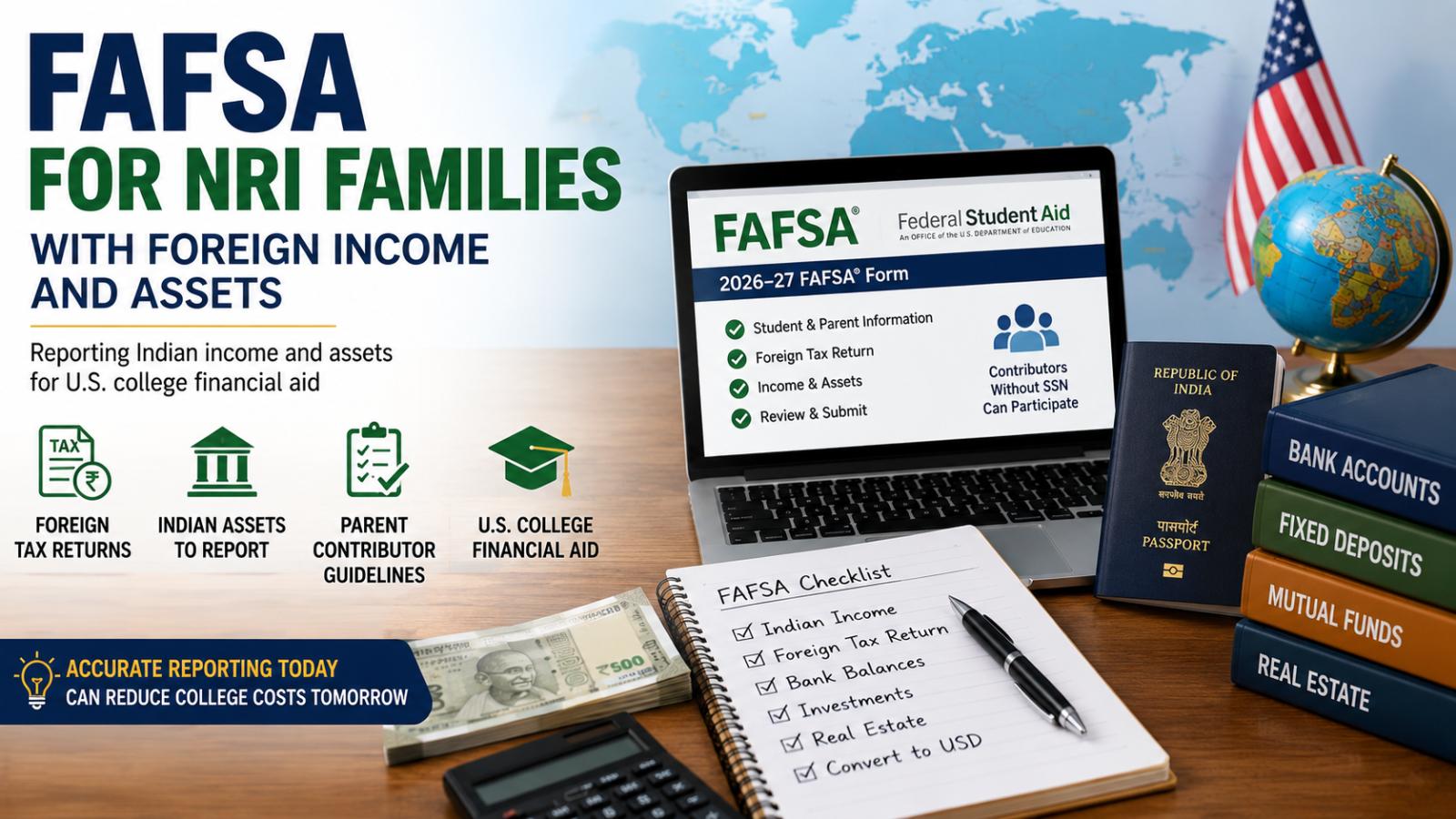
FAFSA for NRI Families With Foreign Income and Assets
FAFSA for NRI families can involve Indian tax returns, foreign income, bank balances and investments. Parents living abroad may participate without a Social Security number, but the student’s citizenship or eligible-noncitizen status determines access to federal aid. FAFSA can be confusing for NRI families whose income, tax records and assets are divided between India and the United States. The form remains relevant when
FAFSA for NRI Families With Foreign Income and Assets
FAFSA for NRI families can involve Indian tax returns, foreign income, bank balances and investments. Parents living abroad may participate without a Social Security number, but the student’s citizenship or eligible-noncitizen status determines access to federal aid. FAFSA can be confusing for NRI families whose income, tax records and assets are divided between India and the United States. The form remains relevant when
Should Parents Use Retirement Savings for College?
A family earning $550,000 a year is considering using $300,000 of its $1.2 million retirement savings for a daughter’s preferred college. The case shows why parents must compare 529 funds, athletic aid, taxes, lost investment growth and retirement needs before committing. A high-earning U.S. family is weighing whether to spend about $300,000 on a daughter’s preferred college or preserve the money for retirement. The parents, age 48 with $1
Should Parents Use Retirement Savings for College?
A family earning $550,000 a year is considering using $300,000 of its $1.2 million retirement savings for a daughter’s preferred college. The case shows why parents must compare 529 funds, athletic aid, taxes, lost investment growth and retirement needs before committing. A high-earning U.S. family is weighing whether to spend about $300,000 on a daughter’s preferred college or preserve the money for retirement. The parents, age 48 with $1


