





Ray Dalio flags risk of capital war as geopolitics unsettle global financial markets
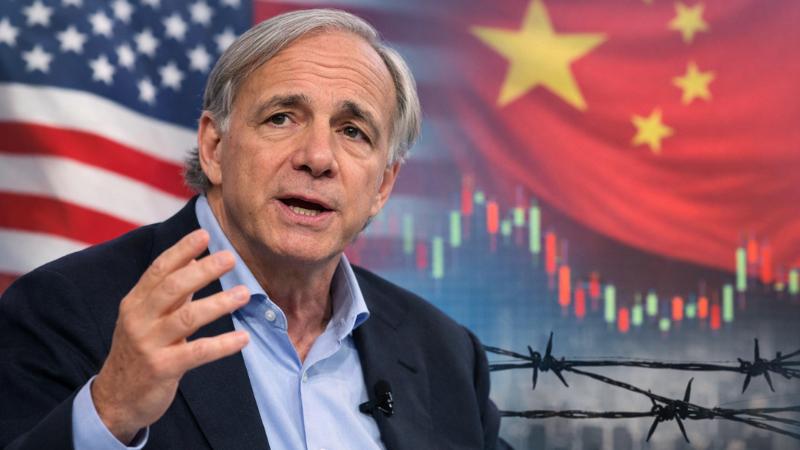
Legendary investor Ray Dalio has cautioned that the global economy is approaching a dangerous tipping point, warning that mounting geopolitical frictions and unstable financial markets could trigger what he describes as a “capital war,” in which nations weaponize money, trade, and investment flows to exert influence over one another. Speaking at the World Governments Summit in Dubai, Dalio said the international system is not yet in such a conflict but is “on the brink,” with conditions that could quickly escalate. He described capital war as a scenario where governments restrict access to markets, impose sanctions, enforce capital controls, or use debt holdings and trade leverage to pressure rivals. According to Dalio, rising mistrust among major economies is increasing the likelihood of these tools being deployed more aggressively. He pointed to growing tensions between the United States and its allies and competitors as a key source of concern. Discussions surrounding Washington’s interest in Greenland, a Danish territory, as well as broader disagreements over trade and security policy, have unsettled investors. Dalio said some European holders of U.S.-denominated assets fear potential sanctions or restrictions, while American policymakers may worry about losing reliable foreign buyers for government debt. European investors have played a significant role in financing U.S. borrowing needs, accounting for a large share of foreign purchases of Treasurys in recent months. Any disruption to those flows could amplify volatility in global markets and increase funding pressures. Dalio noted that “capital, money, matters,” emphasizing that financial interdependence has become both a strength and a vulnerability for the global system. Since returning to office, President Donald Trump has introduced and, at times, rolled back punitive tariffs targeting several trading partners. Those policy shifts have added to market swings and uncertainty. Dalio said similar patterns in the past have often preceded broader economic confrontations, with governments imposing foreign exchange restrictions and tightening controls to protect domestic interests. Drawing parallels with history, he referenced periods leading up to major conflicts, when sanctions and trade barriers intensified rivalries between nations. He suggested that today’s environment could produce comparable strains, particularly in relations between the United States and China, or between the United States and Europe, where trade deficits and capital imbalances remain sensitive issues. Against this backdrop, Dalio reiterated his long-standing view that gold remains an effective hedge during periods of stress. Although prices have fluctuated recently, he said the precious metal continues to serve as a reliable diversifier for portfolios. Rather than focusing on short-term movements, he advised investors, central banks, and sovereign wealth funds to maintain a steady allocation to gold as protection against systemic risk. Ultimately, Dalio urged a disciplined approach to investing, stressing that diversification across assets and regions is the best defense in an increasingly uncertain economic landscape.
Ray Dalio flags risk of capital war as geopolitics unsettle global financial markets
Legendary investor Ray Dalio has cautioned that the global economy is approaching a dangerous tipping point, warning that mounting geopolitical frictions and unstable financial markets could trigger what he describes as a “capital war,” in which nations weaponize money, trade, and investment flows to exert influence over one another. Speaking at the World Governments Summit in Dubai, Dalio said the international system is not yet in such a conflict but is “on the brink,” with conditions that could quickly escalate. He described capital war as a scenario where governments restrict access to markets, impose sanctions, enforce capital controls, or use debt holdings and trade leverage to pressure rivals. According to Dalio, rising mistrust among major economies is increasing the likelihood of these tools being deployed more aggressively. He pointed to growing tensions between the United States and its allies and competitors as a key source of concern. Discussions surrounding Washington’s interest in Greenland, a Danish territory, as well as broader disagreements over trade and security policy, have unsettled investors. Dalio said some European holders of U.S.-denominated assets fear potential sanctions or restrictions, while American policymakers may worry about losing reliable foreign buyers for government debt. European investors have played a significant role in financing U.S. borrowing needs, accounting for a large share of foreign purchases of Treasurys in recent months. Any disruption to those flows could amplify volatility in global markets and increase funding pressures. Dalio noted that “capital, money, matters,” emphasizing that financial interdependence has become both a strength and a vulnerability for the global system. Since returning to office, President Donald Trump has introduced and, at times, rolled back punitive tariffs targeting several trading partners. Those policy shifts have added to market swings and uncertainty. Dalio said similar patterns in the past have often preceded broader economic confrontations, with governments imposing foreign exchange restrictions and tightening controls to protect domestic interests. Drawing parallels with history, he referenced periods leading up to major conflicts, when sanctions and trade barriers intensified rivalries between nations. He suggested that today’s environment could produce comparable strains, particularly in relations between the United States and China, or between the United States and Europe, where trade deficits and capital imbalances remain sensitive issues. Against this backdrop, Dalio reiterated his long-standing view that gold remains an effective hedge during periods of stress. Although prices have fluctuated recently, he said the precious metal continues to serve as a reliable diversifier for portfolios. Rather than focusing on short-term movements, he advised investors, central banks, and sovereign wealth funds to maintain a steady allocation to gold as protection against systemic risk. Ultimately, Dalio urged a disciplined approach to investing, stressing that diversification across assets and regions is the best defense in an increasingly uncertain economic landscape.
SAP shares slide after cloud backlog growth misses expectations in fourth quarter
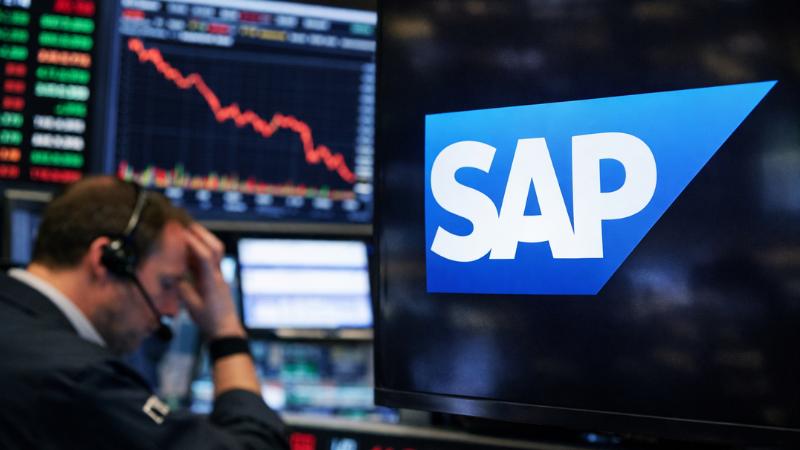
Shares of German software company SAP fell sharply on Thursday after the company reported weaker-than-expected growth in its cloud contract backlog for the fourth quarter, unsettling investors and triggering its steepest one-day decline in more than four years. The stock dropped as much as 16% during the session, marking its largest daily fall since October 2020, when the company suffered a sharp sell-off following disappointing quarterly results. By the close of trading, SAP shares were at t
SAP shares slide after cloud backlog growth misses expectations in fourth quarter
Shares of German software company SAP fell sharply on Thursday after the company reported weaker-than-expected growth in its cloud contract backlog for the fourth quarter, unsettling investors and triggering its steepest one-day decline in more than four years. The stock dropped as much as 16% during the session, marking its largest daily fall since October 2020, when the company suffered a sharp sell-off following disappointing quarterly results. By the close of trading, SAP shares were at t
US museum to repatriate ancient Tamil Nadu bronzes to India
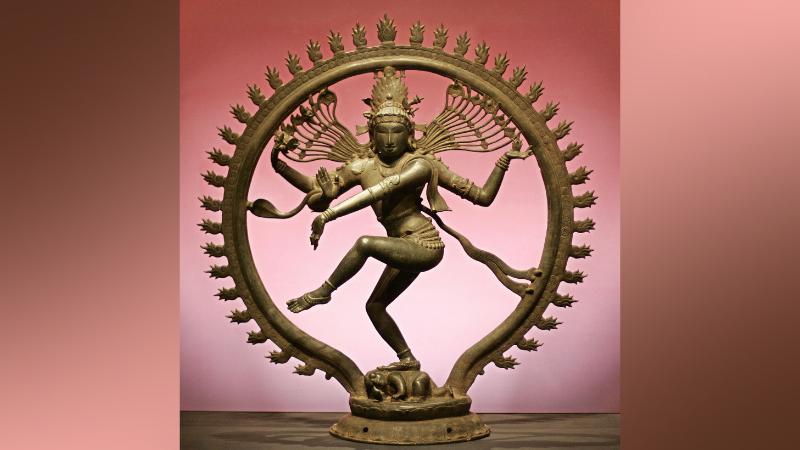
The Smithsonian’s National Museum of Asian Art in the United States has announced that it will return three historic bronze sculptures to India after concluding that the works were illegally removed from temple sites in Tamil Nadu. The decision follows an extensive provenance review of the museum’s South Asian collection and marks a significant step in addressing the long-standing issue of illicit trafficking of cultural heritage. The most prominent of the sculptures slated for return is a bronze depiction of Shiva Nataraja, dating to around A.D. 990. Created during the Chola period, the sculpture represents the Hindu deity Shiva in his cosmic dance, symbolizing the cycle of creation and destruction. The figure shows Shiva dancing upon a demon that embodies ignorance, encircled by a ring of fire and standing on a lotus base. Art historians regard this form as one of the most visually powerful and symbolically rich representations in Indian art, revered both within India and among global audiences. Alongside the Shiva Nataraja, the museum will repatriate a Somaskanda sculpture from the 12th century, also from the Chola period. This bronze depicts Shiva seated with his consort Parvathy and their son Skanda, reflecting devotional traditions that were central to temple worship in medieval South India. The third work to be returned is a 16th-century bronze titled Saint Sundarar With Paravai, dating to the Vijayanagar period, which portrays the revered Shaivite saint with his companion. The museum stated that the return of these works reflects its commitment to ethical museum practices and responsible stewardship. A comprehensive review was initiated to determine whether any objects in the collection had been unlawfully acquired. During this process, researchers uncovered evidence that raised serious concerns about the origins of the three bronzes. The Shiva Nataraja entered the museum’s collection in 2002 through a New York art gallery. Subsequent investigation revealed inconsistencies in the documentation associated with the acquisition, including the inability to verify the gallery’s listed address. Researchers later established that the sculpture appeared in photographs taken at a Tamil Nadu temple during the 1950s, confirming that it had been removed from its original religious setting. Further inquiry connected the gallery to a network involved in the trafficking of stolen antiquities. Court records have shown that individuals associated with this network engaged in smuggling cultural objects from South Asia and falsifying provenance records to introduce them into the international art market. In recent years, other institutions have also returned comparable works linked to the same sources. The Somaskanda and Saint Sundarar With Paravai sculptures were donated to the museum in 1987 as part of a major private collection. Their provenance came under scrutiny after a tip prompted researchers to consult archival material held by the French Institute of Pondicherry. Photographs from the 1950s in the institute’s archives showed both sculptures installed in temples in Tamil Nadu, providing clear evidence that they had been stolen and exported illegally. Experts note that bronze sculptures from South Indian temples have been frequent targets of theft due to their artistic value and global demand. Replicas have circulated widely in tourist markets, while original works disappeared from sacred sites, often leaving communities without objects of worship that had been central to their cultural and religious identity for centuries. The Smithsonian’s decision is being viewed as part of a broader international movement toward repatriation and accountability in the museum sector. By returning these sculptures, the institution acknowledges the importance of restoring cultural heritage to its place of origin and reinforces growing global standards for transparency and ethical collecting practices.
US museum to repatriate ancient Tamil Nadu bronzes to India
The Smithsonian’s National Museum of Asian Art in the United States has announced that it will return three historic bronze sculptures to India after concluding that the works were illegally removed from temple sites in Tamil Nadu. The decision follows an extensive provenance review of the museum’s South Asian collection and marks a significant step in addressing the long-standing issue of illicit trafficking of cultural heritage. The most prominent of the sculptures slated for return is a bronze depiction of Shiva Nataraja, dating to around A.D. 990. Created during the Chola period, the sculpture represents the Hindu deity Shiva in his cosmic dance, symbolizing the cycle of creation and destruction. The figure shows Shiva dancing upon a demon that embodies ignorance, encircled by a ring of fire and standing on a lotus base. Art historians regard this form as one of the most visually powerful and symbolically rich representations in Indian art, revered both within India and among global audiences. Alongside the Shiva Nataraja, the museum will repatriate a Somaskanda sculpture from the 12th century, also from the Chola period. This bronze depicts Shiva seated with his consort Parvathy and their son Skanda, reflecting devotional traditions that were central to temple worship in medieval South India. The third work to be returned is a 16th-century bronze titled Saint Sundarar With Paravai, dating to the Vijayanagar period, which portrays the revered Shaivite saint with his companion. The museum stated that the return of these works reflects its commitment to ethical museum practices and responsible stewardship. A comprehensive review was initiated to determine whether any objects in the collection had been unlawfully acquired. During this process, researchers uncovered evidence that raised serious concerns about the origins of the three bronzes. The Shiva Nataraja entered the museum’s collection in 2002 through a New York art gallery. Subsequent investigation revealed inconsistencies in the documentation associated with the acquisition, including the inability to verify the gallery’s listed address. Researchers later established that the sculpture appeared in photographs taken at a Tamil Nadu temple during the 1950s, confirming that it had been removed from its original religious setting. Further inquiry connected the gallery to a network involved in the trafficking of stolen antiquities. Court records have shown that individuals associated with this network engaged in smuggling cultural objects from South Asia and falsifying provenance records to introduce them into the international art market. In recent years, other institutions have also returned comparable works linked to the same sources. The Somaskanda and Saint Sundarar With Paravai sculptures were donated to the museum in 1987 as part of a major private collection. Their provenance came under scrutiny after a tip prompted researchers to consult archival material held by the French Institute of Pondicherry. Photographs from the 1950s in the institute’s archives showed both sculptures installed in temples in Tamil Nadu, providing clear evidence that they had been stolen and exported illegally. Experts note that bronze sculptures from South Indian temples have been frequent targets of theft due to their artistic value and global demand. Replicas have circulated widely in tourist markets, while original works disappeared from sacred sites, often leaving communities without objects of worship that had been central to their cultural and religious identity for centuries. The Smithsonian’s decision is being viewed as part of a broader international movement toward repatriation and accountability in the museum sector. By returning these sculptures, the institution acknowledges the importance of restoring cultural heritage to its place of origin and reinforces growing global standards for transparency and ethical collecting practices.

Keurig recalls over 80,000 decaf coffee pods that may contain caffeine
Keurig has issued a voluntary recall of more than 80,000 decaf coffee pods after discovering that the products may contain caffeine. The recall applies specifically to K-Cup pods labeled as McCafe Premium Roast Decaf Coffee, with a best-by date of November 17, 2026, and a UPC code of 043000073438. Consumers who purchased these pods are advised to check their inventory, as the product may not meet its labeled decaf specifications. The recall was initially announced on December 6, 2025,
Keurig recalls over 80,000 decaf coffee pods that may contain caffeine
Keurig has issued a voluntary recall of more than 80,000 decaf coffee pods after discovering that the products may contain caffeine. The recall applies specifically to K-Cup pods labeled as McCafe Premium Roast Decaf Coffee, with a best-by date of November 17, 2026, and a UPC code of 043000073438. Consumers who purchased these pods are advised to check their inventory, as the product may not meet its labeled decaf specifications. The recall was initially announced on December 6, 2025,
Ajit Pawar plane crash in Baramati sparks panic as first visuals emerge
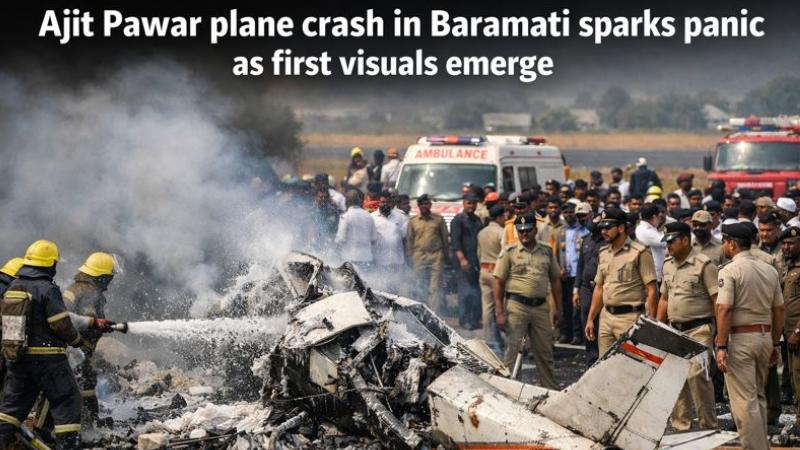
A major incident shocked Maharashtra on Tuesday after reports emerged that a plane carrying Deputy Chief Minister Ajit Pawar crashed while landing in Baramati. According to early inputs shared through live updates, the aircraft encountered difficulties during the landing process, leading to a crash that immediately triggered emergency protocols at the site. First visuals from the location began circulating online, showing heightened security presence and rescue teams rushing to the scene. Aut
Ajit Pawar plane crash in Baramati sparks panic as first visuals emerge
A major incident shocked Maharashtra on Tuesday after reports emerged that a plane carrying Deputy Chief Minister Ajit Pawar crashed while landing in Baramati. According to early inputs shared through live updates, the aircraft encountered difficulties during the landing process, leading to a crash that immediately triggered emergency protocols at the site. First visuals from the location began circulating online, showing heightened security presence and rescue teams rushing to the scene. Aut
Zelenskyy says Ukraine expects EU membership by 2027 amid war and security talks
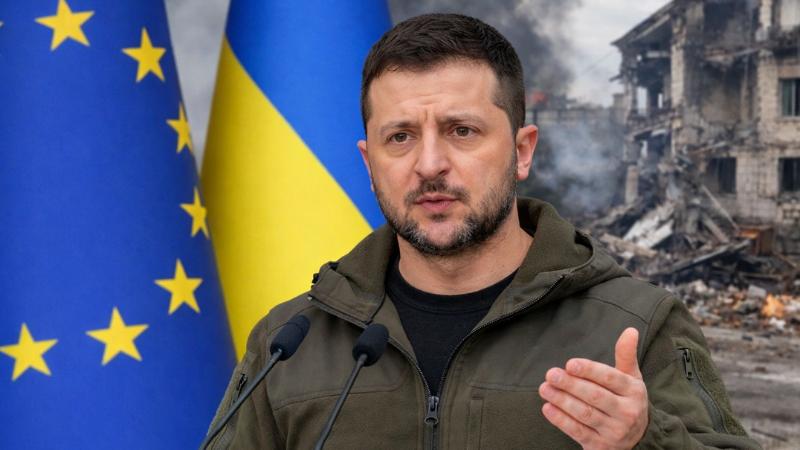
Ukrainian President Volodymyr Zelenskyy has stated that Ukraine expects to become a member of the European Union in 2027, underlining that a clear accession timeline must be part of any future peace agreement. Speaking during a joint press conference with the presidents of Lithuania and Poland in Vilnius on Tuesday, Zelenskyy stressed that a fixed date for EU membership would serve as a crucial security guarantee for Ukraine and reduce the risk of political or procedural delays in the accession process. The president said that Ukraine’s integration into the European Union is not only a strategic objective for Kyiv but also an essential element of long-term stability for the continent. According to Zelenskyy, a defined accession date would reinforce confidence among international partners and help anchor Ukraine firmly within Europe’s political, economic, and security framework at a time when the country continues to face sustained military pressure from Russia. Zelenskyy also held a telephone conversation with Austrian Chancellor Christian Stocker, during which the two leaders discussed Ukraine’s path toward EU membership and the worsening energy situation caused by repeated Russian attacks. Ukraine’s energy infrastructure has been targeted extensively in recent months, resulting in widespread disruptions to electricity and heating supplies across several regions. In a statement shared on social media, Zelenskyy said the daily strikes on energy facilities were aimed at leaving millions of Ukrainians without basic services, particularly during critical periods. He welcomed Austria’s recent decision to allocate financial assistance to support Ukraine’s energy sector, calling the move an important signal of solidarity. The discussion also covered additional measures that could help stabilize and protect Ukraine’s power system against ongoing attacks. Beyond energy concerns, Zelenskyy briefed the Austrian chancellor on recent trilateral discussions involving Ukrainian, American, and Russian representatives that took place in the United Arab Emirates. Those talks, he noted, focused primarily on military matters and potential security guarantees, reflecting continued diplomatic efforts to address the broader conflict. Reiterating his position on European integration, Zelenskyy said that Ukraine’s EU membership would strengthen not only national security but also Europe’s collective resilience. He argued that Ukraine brings significant security, technological, and economic capabilities that would contribute positively to the European Union as a whole. For this reason, he emphasized the importance of setting 2027 as a concrete target and expressed confidence that partner nations would support this goal. Zelenskyy also extended an invitation to Chancellor Stocker to visit Ukraine for in-person discussions, signaling Kyiv’s intention to maintain active diplomatic engagement despite the ongoing war. Meanwhile, Russian attacks continued to take a toll on civilians. Ukrainian regional authorities reported multiple fatalities following drone strikes and shelling in several areas. In the southern port city of Odesa, a drone barrage resulted in two deaths and left dozens of people injured. In eastern Donetsk region, a couple aged 45 and 48 were killed in the city of Sloviansk, while a 58-year-old resident was killed in a drone strike on a home in the Zaporizhzhia region. Another civilian, a 72-year-old woman, died in her home in the southern Kherson region as a result of shelling. As the conflict persists, Ukrainian officials continue to frame EU accession as a central pillar of the country’s future security and recovery, linking political integration with Europe to broader efforts to end the war and rebuild national resilience.
Zelenskyy says Ukraine expects EU membership by 2027 amid war and security talks
Ukrainian President Volodymyr Zelenskyy has stated that Ukraine expects to become a member of the European Union in 2027, underlining that a clear accession timeline must be part of any future peace agreement. Speaking during a joint press conference with the presidents of Lithuania and Poland in Vilnius on Tuesday, Zelenskyy stressed that a fixed date for EU membership would serve as a crucial security guarantee for Ukraine and reduce the risk of political or procedural delays in the accession process. The president said that Ukraine’s integration into the European Union is not only a strategic objective for Kyiv but also an essential element of long-term stability for the continent. According to Zelenskyy, a defined accession date would reinforce confidence among international partners and help anchor Ukraine firmly within Europe’s political, economic, and security framework at a time when the country continues to face sustained military pressure from Russia. Zelenskyy also held a telephone conversation with Austrian Chancellor Christian Stocker, during which the two leaders discussed Ukraine’s path toward EU membership and the worsening energy situation caused by repeated Russian attacks. Ukraine’s energy infrastructure has been targeted extensively in recent months, resulting in widespread disruptions to electricity and heating supplies across several regions. In a statement shared on social media, Zelenskyy said the daily strikes on energy facilities were aimed at leaving millions of Ukrainians without basic services, particularly during critical periods. He welcomed Austria’s recent decision to allocate financial assistance to support Ukraine’s energy sector, calling the move an important signal of solidarity. The discussion also covered additional measures that could help stabilize and protect Ukraine’s power system against ongoing attacks. Beyond energy concerns, Zelenskyy briefed the Austrian chancellor on recent trilateral discussions involving Ukrainian, American, and Russian representatives that took place in the United Arab Emirates. Those talks, he noted, focused primarily on military matters and potential security guarantees, reflecting continued diplomatic efforts to address the broader conflict. Reiterating his position on European integration, Zelenskyy said that Ukraine’s EU membership would strengthen not only national security but also Europe’s collective resilience. He argued that Ukraine brings significant security, technological, and economic capabilities that would contribute positively to the European Union as a whole. For this reason, he emphasized the importance of setting 2027 as a concrete target and expressed confidence that partner nations would support this goal. Zelenskyy also extended an invitation to Chancellor Stocker to visit Ukraine for in-person discussions, signaling Kyiv’s intention to maintain active diplomatic engagement despite the ongoing war. Meanwhile, Russian attacks continued to take a toll on civilians. Ukrainian regional authorities reported multiple fatalities following drone strikes and shelling in several areas. In the southern port city of Odesa, a drone barrage resulted in two deaths and left dozens of people injured. In eastern Donetsk region, a couple aged 45 and 48 were killed in the city of Sloviansk, while a 58-year-old resident was killed in a drone strike on a home in the Zaporizhzhia region. Another civilian, a 72-year-old woman, died in her home in the southern Kherson region as a result of shelling. As the conflict persists, Ukrainian officials continue to frame EU accession as a central pillar of the country’s future security and recovery, linking political integration with Europe to broader efforts to end the war and rebuild national resilience.
EU and India deepen strategic ties with trade pact, Costa calls it personal moment
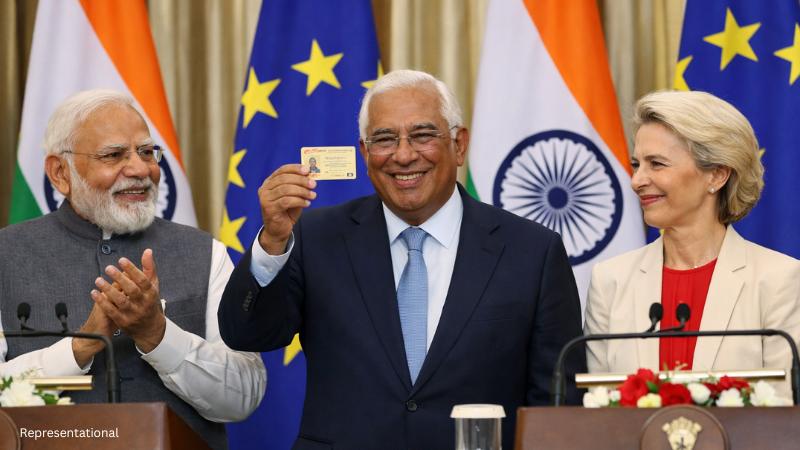
European Council President Antonio Costa on Tuesday said the conclusion of a comprehensive trade agreement between the European Union and India carried special personal significance for him, citing his Indian heritage and long-standing connection to the country. The agreement was announced following high-level talks in New Delhi, where Costa addressed a joint press conference alongside Indian Prime Minister Narendra Modi and European Commission President Ursula von der Leyen. Speaki
EU and India deepen strategic ties with trade pact, Costa calls it personal moment
European Council President Antonio Costa on Tuesday said the conclusion of a comprehensive trade agreement between the European Union and India carried special personal significance for him, citing his Indian heritage and long-standing connection to the country. The agreement was announced following high-level talks in New Delhi, where Costa addressed a joint press conference alongside Indian Prime Minister Narendra Modi and European Commission President Ursula von der Leyen. Speaki
US treasury secretary says Europe funding war through Russian oil refined in India
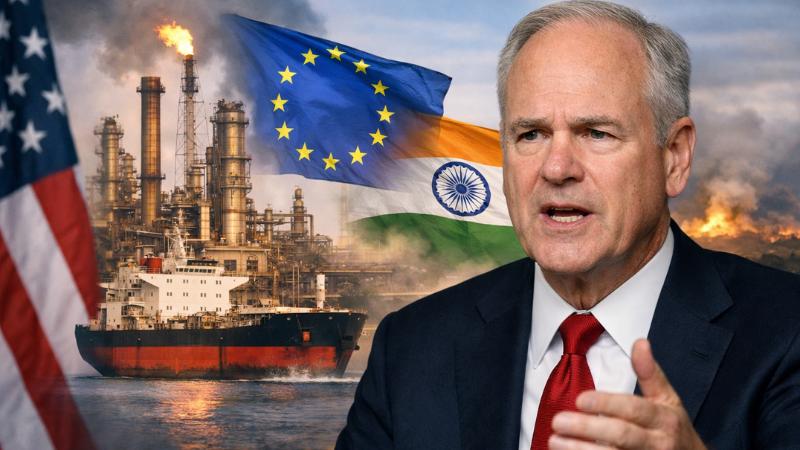
United States Treasury Secretary Scott Bessent has accused European nations of indirectly financing Russia’s war in Ukraine by purchasing refined oil products originating from Russian crude processed in India. His remarks come amid ongoing geopolitical tensions over energy trade and sanctions linked to the conflict in Eastern Europe. In an interview aired on Sunday, Bessent alleged that while European leaders publicly condemn Russia’s actions in Ukraine, their trade practices ar
US treasury secretary says Europe funding war through Russian oil refined in India
United States Treasury Secretary Scott Bessent has accused European nations of indirectly financing Russia’s war in Ukraine by purchasing refined oil products originating from Russian crude processed in India. His remarks come amid ongoing geopolitical tensions over energy trade and sanctions linked to the conflict in Eastern Europe. In an interview aired on Sunday, Bessent alleged that while European leaders publicly condemn Russia’s actions in Ukraine, their trade practices ar
Rutte stresses US role in Europe’s defense during NATO and Greenland debate
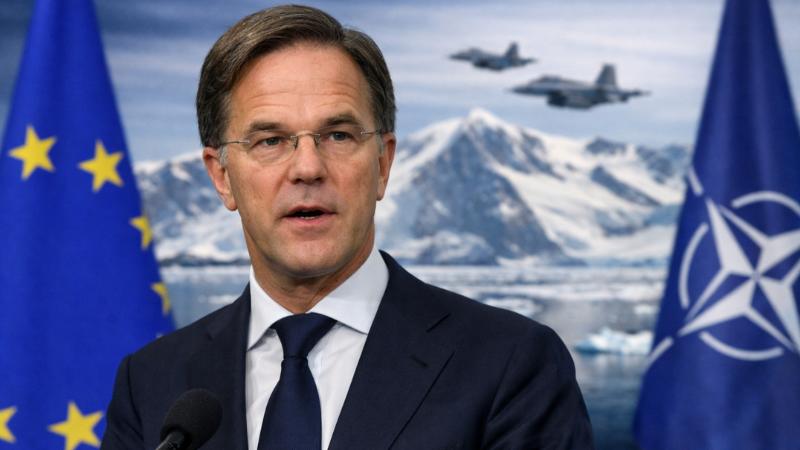
NATO Secretary General Mark Rutte has reiterated that Europe remains fundamentally dependent on the United States for its collective defense, pushing back against any notion that the continent could independently guarantee its security. Speaking to lawmakers at the European Parliament on Monday, Rutte emphasized that the transatlantic alliance remains indispensable at a time of rising geopolitical uncertainty and renewed debate over Europe’s military capabilities. Rutte’s remark
Rutte stresses US role in Europe’s defense during NATO and Greenland debate
NATO Secretary General Mark Rutte has reiterated that Europe remains fundamentally dependent on the United States for its collective defense, pushing back against any notion that the continent could independently guarantee its security. Speaking to lawmakers at the European Parliament on Monday, Rutte emphasized that the transatlantic alliance remains indispensable at a time of rising geopolitical uncertainty and renewed debate over Europe’s military capabilities. Rutte’s remark
India and EU conclude free trade talks ahead of New Delhi summit
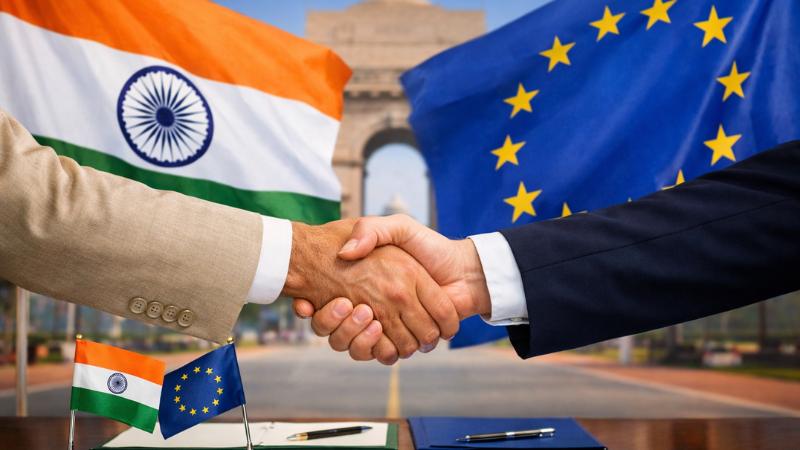
India and the European Union are set to announce the conclusion of negotiations on a long-awaited free trade agreement during a high-level summit in New Delhi on January 27. Senior leaders from both sides are expected to participate in the meeting, which will focus on trade liberalisation, security cooperation and mobility arrangements for students and professionals. The conclusion of the talks marks a significant moment in bilateral relations, reflecting renewed political momentum after years of intermittent progress. Officials involved in the process have indicated that the agreement is designed to be balanced and forward-looking, aligning with the long-term economic interests of both partners. While the pact is expected to boost trade volumes, policymakers see it as a qualitative shift in India–EU engagement, strengthening cooperation across manufacturing, services, technology and sustainable development. The timing is notable, as global trade flows continue to face uncertainty amid rising tariff barriers and geopolitical tensions. Economic experts have described the agreement as a landmark step that could reshape commercial ties between the two economies. They point to strong complementarities, with India offering a large and growing market and the European Union bringing advanced technology, investment capacity and diversified demand. The efficient exchange of goods and services under the agreement is expected to enhance supply chains and open new opportunities for businesses on both sides. From India’s perspective, the trade pact reflects a strategic effort to deepen integration with major global partners while safeguarding domestic priorities. Officials confirmed that negotiations have been completed and that the agreement is undergoing final legal review. The remaining procedural steps are expected to be completed soon, paving the way for formal signing and implementation. The announcement has drawn international attention, including criticism from some quarters in the United States. A senior US official recently expressed concern over the deal, linking it to broader disputes over energy trade and tariffs. The remarks underscored differing approaches to trade policy and highlighted how the India–EU agreement fits into a complex global economic landscape shaped by competing interests and sanctions regimes. The summit in New Delhi is also expected to mark progress beyond trade. Leaders are likely to finalise a Security and Defence Partnership aimed at enhancing strategic coordination, as well as a framework to facilitate mobility for Indian students and professionals seeking opportunities in Europe. These initiatives reflect a broader effort to strengthen people-to-people ties and cooperation in emerging areas of mutual interest. Negotiations for an India–EU free trade agreement first began in 2007 but were suspended in 2013 due to differences over ambition and market access. The process was revived in 2022, following renewed political commitment on both sides to address outstanding issues and adapt the talks to changing global conditions. The European Union remains India’s largest trading partner, accounting for a significant share of the country’s total trade in goods and services. With the conclusion of the free trade negotiations, both sides are positioning the agreement as a cornerstone of their economic relationship, one that could provide stability and growth amid an evolving global trade environment.
India and EU conclude free trade talks ahead of New Delhi summit
India and the European Union are set to announce the conclusion of negotiations on a long-awaited free trade agreement during a high-level summit in New Delhi on January 27. Senior leaders from both sides are expected to participate in the meeting, which will focus on trade liberalisation, security cooperation and mobility arrangements for students and professionals. The conclusion of the talks marks a significant moment in bilateral relations, reflecting renewed political momentum after years of intermittent progress. Officials involved in the process have indicated that the agreement is designed to be balanced and forward-looking, aligning with the long-term economic interests of both partners. While the pact is expected to boost trade volumes, policymakers see it as a qualitative shift in India–EU engagement, strengthening cooperation across manufacturing, services, technology and sustainable development. The timing is notable, as global trade flows continue to face uncertainty amid rising tariff barriers and geopolitical tensions. Economic experts have described the agreement as a landmark step that could reshape commercial ties between the two economies. They point to strong complementarities, with India offering a large and growing market and the European Union bringing advanced technology, investment capacity and diversified demand. The efficient exchange of goods and services under the agreement is expected to enhance supply chains and open new opportunities for businesses on both sides. From India’s perspective, the trade pact reflects a strategic effort to deepen integration with major global partners while safeguarding domestic priorities. Officials confirmed that negotiations have been completed and that the agreement is undergoing final legal review. The remaining procedural steps are expected to be completed soon, paving the way for formal signing and implementation. The announcement has drawn international attention, including criticism from some quarters in the United States. A senior US official recently expressed concern over the deal, linking it to broader disputes over energy trade and tariffs. The remarks underscored differing approaches to trade policy and highlighted how the India–EU agreement fits into a complex global economic landscape shaped by competing interests and sanctions regimes. The summit in New Delhi is also expected to mark progress beyond trade. Leaders are likely to finalise a Security and Defence Partnership aimed at enhancing strategic coordination, as well as a framework to facilitate mobility for Indian students and professionals seeking opportunities in Europe. These initiatives reflect a broader effort to strengthen people-to-people ties and cooperation in emerging areas of mutual interest. Negotiations for an India–EU free trade agreement first began in 2007 but were suspended in 2013 due to differences over ambition and market access. The process was revived in 2022, following renewed political commitment on both sides to address outstanding issues and adapt the talks to changing global conditions. The European Union remains India’s largest trading partner, accounting for a significant share of the country’s total trade in goods and services. With the conclusion of the free trade negotiations, both sides are positioning the agreement as a cornerstone of their economic relationship, one that could provide stability and growth amid an evolving global trade environment.
Global leaders extend Republic Day greetings as India marks 77 years as a republic
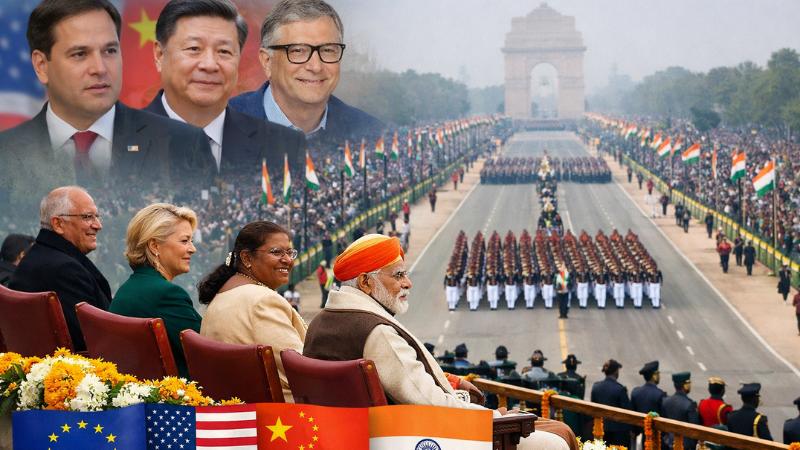
India’s 77th Republic Day was marked on Monday, January 26, 2026, with a wide range of greetings from global leaders and prominent international figures, reflecting the country’s growing diplomatic influence and expanding partnerships across regions. Messages from political leaders, senior officials, and business figures highlighted shared democratic values, strategic cooperation, and the importance of dialogue in an increasingly complex global environment. The Republic Day cele
Global leaders extend Republic Day greetings as India marks 77 years as a republic
India’s 77th Republic Day was marked on Monday, January 26, 2026, with a wide range of greetings from global leaders and prominent international figures, reflecting the country’s growing diplomatic influence and expanding partnerships across regions. Messages from political leaders, senior officials, and business figures highlighted shared democratic values, strategic cooperation, and the importance of dialogue in an increasingly complex global environment. The Republic Day cele
Chicago-area schools and libraries close as extreme cold hits
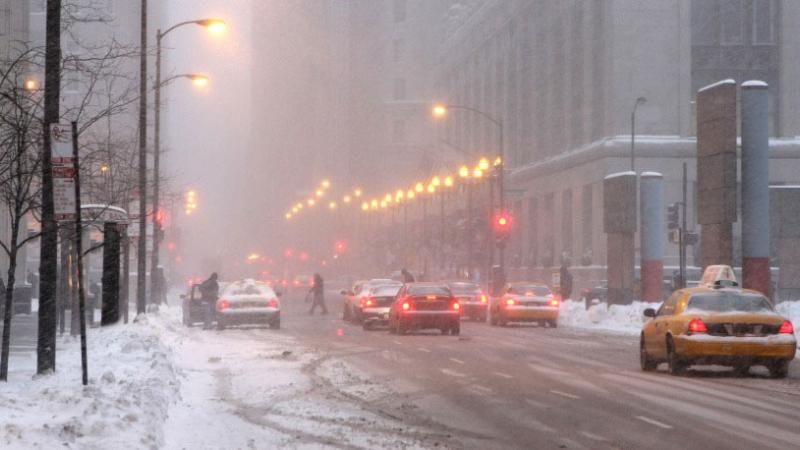
Dozens of schools, libraries, museums, and local businesses across the Chicago area closed Friday as extreme cold grips northeastern Illinois. The region is under an Extreme Cold Warning, with wind chills expected to drop as low as -35 degrees, creating dangerous conditions for travel and outdoor activity. Public safety officials have urged residents to remain indoors and avoid exposure to the frigid temperatures whenever possible. More than 100 schools, including the city’s largest
Chicago-area schools and libraries close as extreme cold hits
Dozens of schools, libraries, museums, and local businesses across the Chicago area closed Friday as extreme cold grips northeastern Illinois. The region is under an Extreme Cold Warning, with wind chills expected to drop as low as -35 degrees, creating dangerous conditions for travel and outdoor activity. Public safety officials have urged residents to remain indoors and avoid exposure to the frigid temperatures whenever possible. More than 100 schools, including the city’s largest
European Parliament halts EU-US trade deal talks amid Trump tariff and Greenland threats
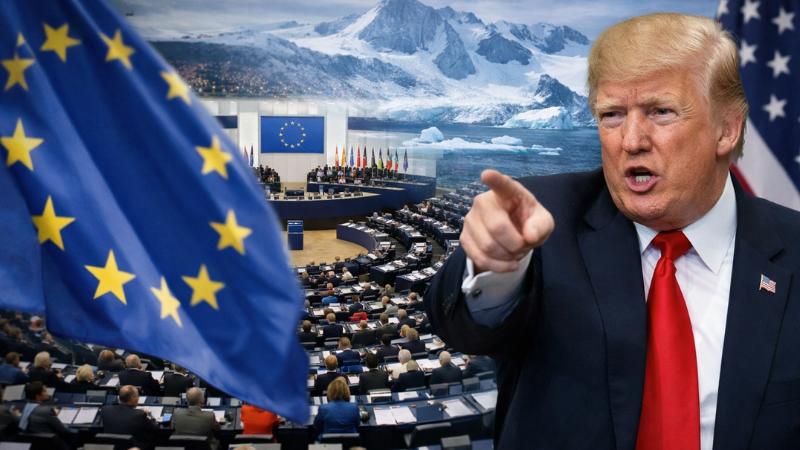
The European Parliament has suspended its work on a proposed trade agreement between the European Union and the United States, citing escalating political pressure from US President
European Parliament halts EU-US trade deal talks amid Trump tariff and Greenland threats
The European Parliament has suspended its work on a proposed trade agreement between the European Union and the United States, citing escalating political pressure from US President
India Nears Mother of All Trade Deals With EU Amid Trump Tariff Tensions
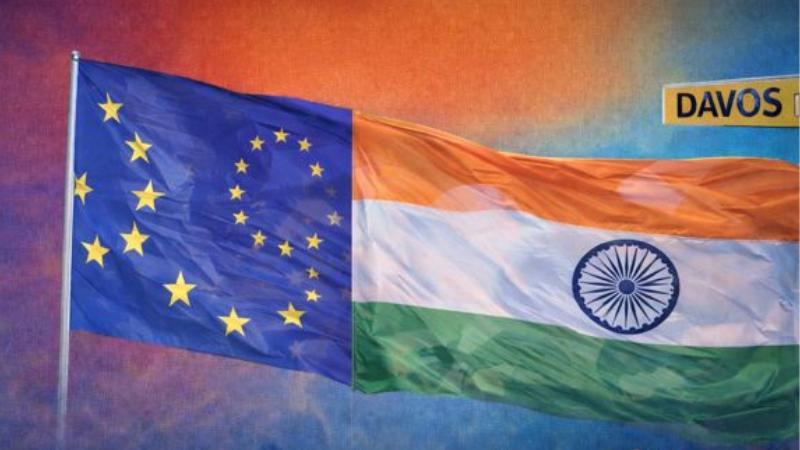
Global geopolitics is witnessing a major shift as India positions itself for what is being described as the “Mother of All Trade Deals” with the European Union. This development comes at a time when United States President Donald Trump has intensified tariff pressures and sanctions on several nations, including India. These aggressive trade policies have forced multiple global powers to rethink their economic alliances, creating fresh opportunities for India on the international stage.
India Nears Mother of All Trade Deals With EU Amid Trump Tariff Tensions
Global geopolitics is witnessing a major shift as India positions itself for what is being described as the “Mother of All Trade Deals” with the European Union. This development comes at a time when United States President Donald Trump has intensified tariff pressures and sanctions on several nations, including India. These aggressive trade policies have forced multiple global powers to rethink their economic alliances, creating fresh opportunities for India on the international stage.
Sell America trade accelerates as Trump–Europe tensions shake global markets
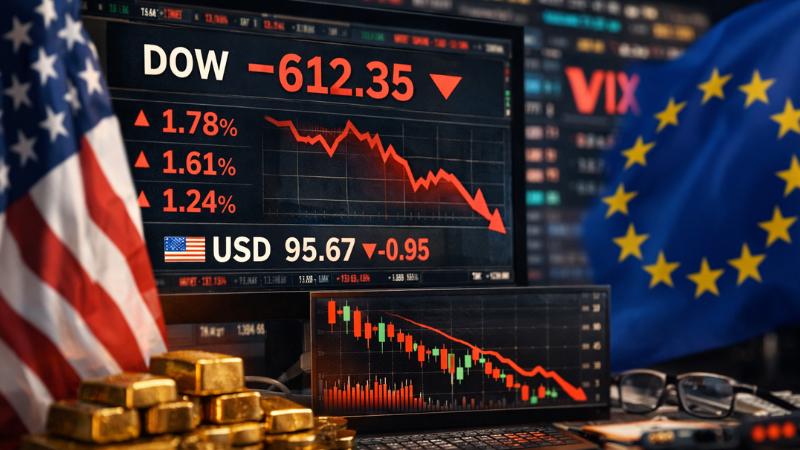
Global financial markets moved sharply lower Tuesday as renewed political tensions between the United States and Europe triggered a broad sell America trade, prompting investors to reduce exposure to U.S. assets. The shift came after President Donald Trump escalated rhetoric surrounding Greenland and proposed new tariffs targeting several European countries, reviving fears of a widening trade conflict and long-term economic fallout. U.S. bond prices fell steeply, pushing Treasury yi
Sell America trade accelerates as Trump–Europe tensions shake global markets
Global financial markets moved sharply lower Tuesday as renewed political tensions between the United States and Europe triggered a broad sell America trade, prompting investors to reduce exposure to U.S. assets. The shift came after President Donald Trump escalated rhetoric surrounding Greenland and proposed new tariffs targeting several European countries, reviving fears of a widening trade conflict and long-term economic fallout. U.S. bond prices fell steeply, pushing Treasury yi
EU delays US trade deal vote amid Trump tariff threat over Greenland
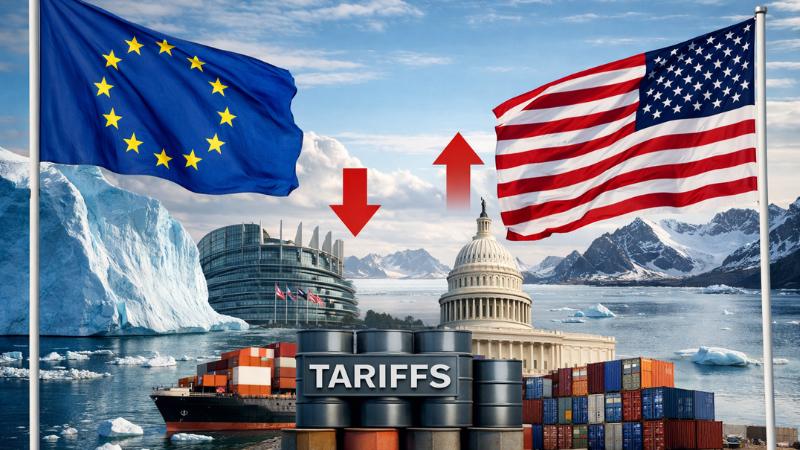
European Union lawmakers have decided to postpone the ratification of a recently concluded trade agreement with the United States following new tariff threats issued by President Donald Trump in connection with Greenland. The European Parliament, the bloc’s main political institution, had been scheduled to vote in the coming week on measures that would remove tariffs on selected US exports under the agreement. That plan has now been put on hold as tensions between Washington and several Eur
EU delays US trade deal vote amid Trump tariff threat over Greenland
European Union lawmakers have decided to postpone the ratification of a recently concluded trade agreement with the United States following new tariff threats issued by President Donald Trump in connection with Greenland. The European Parliament, the bloc’s main political institution, had been scheduled to vote in the coming week on measures that would remove tariffs on selected US exports under the agreement. That plan has now been put on hold as tensions between Washington and several Eur
Aviation Minister Promises Direct Europe Flights For Telugu NRIs
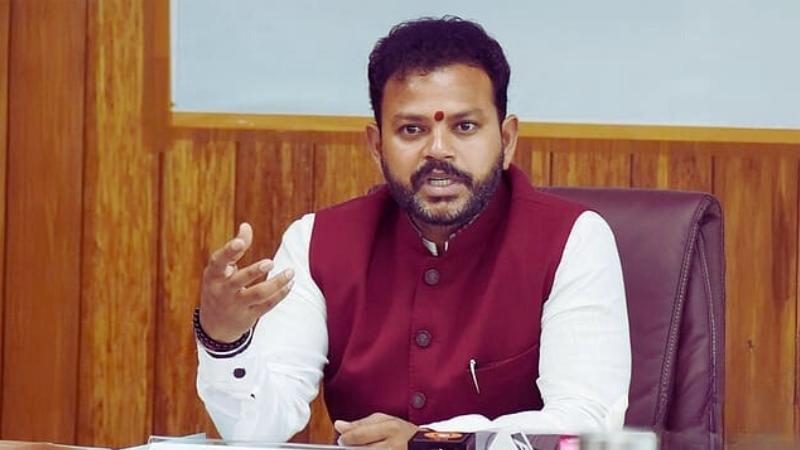
Union Civil Aviation Minister Ram Mohan Naidu has made a major announcement that has brought fresh hope to Telugu NRIs living across Europe. Speaking during an interaction with Europe’s Telugu diaspora, the minister assured that the central government is actively exploring the possibility of launching direct international flights from Europe to Andhra Pradesh. Proposed destinations include Visakhapatnam, Vijayawada and other major cities in South India. If implemented, this move would signi
Aviation Minister Promises Direct Europe Flights For Telugu NRIs
Union Civil Aviation Minister Ram Mohan Naidu has made a major announcement that has brought fresh hope to Telugu NRIs living across Europe. Speaking during an interaction with Europe’s Telugu diaspora, the minister assured that the central government is actively exploring the possibility of launching direct international flights from Europe to Andhra Pradesh. Proposed destinations include Visakhapatnam, Vijayawada and other major cities in South India. If implemented, this move would signi
Massive pileup shuts down I-196 in western Michigan amid hazardous winter weather
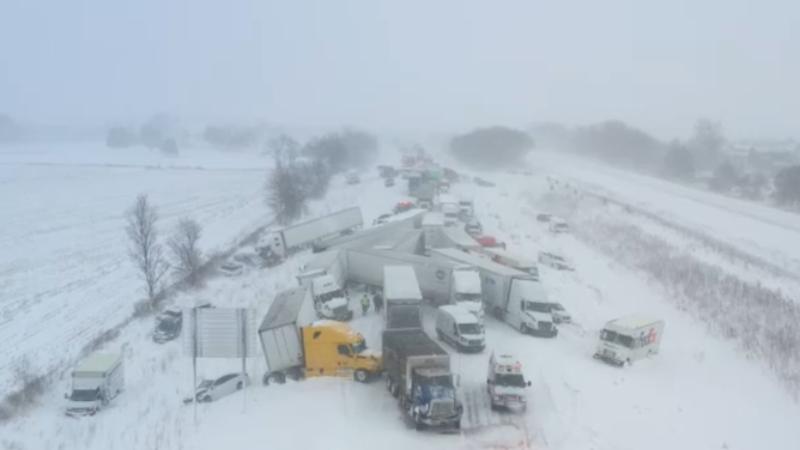
A large-scale traffic crash involving as many as 100 vehicles forced the complete shutdown of a major western Michigan highway on Monday, stranding motorists amid hazardous winter weather and prompting emergency response efforts across the region. Authorities said the multi-vehicle pileup occurred on Interstate 196 near 64th Avenue in Zeeland Township, roughly 25 miles southwest of Grand Rapids, as snow and blowing winds significantly reduced visibility. According to the
Massive pileup shuts down I-196 in western Michigan amid hazardous winter weather
A large-scale traffic crash involving as many as 100 vehicles forced the complete shutdown of a major western Michigan highway on Monday, stranding motorists amid hazardous winter weather and prompting emergency response efforts across the region. Authorities said the multi-vehicle pileup occurred on Interstate 196 near 64th Avenue in Zeeland Township, roughly 25 miles southwest of Grand Rapids, as snow and blowing winds significantly reduced visibility. According to the
Trump declines comment on Greenland force question, links issue to Europe tariffs
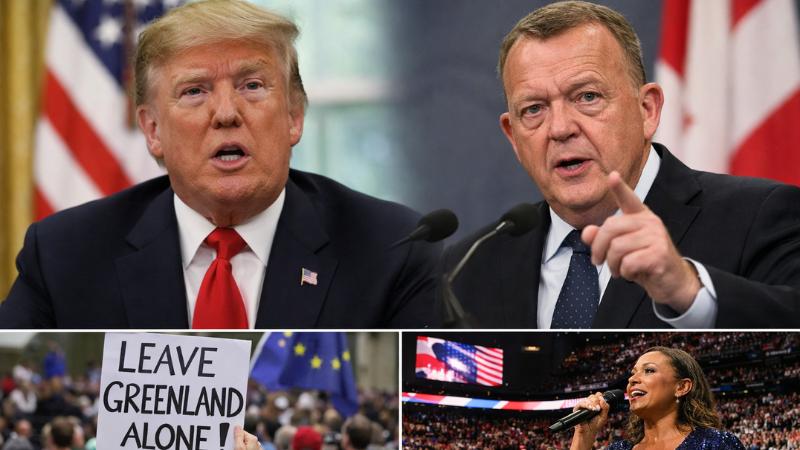
US President Donald Trump has declined to address whether his administration would consider the use of force to acquire Greenland, responding with a brief refusal when asked during a telephone interview with NBC News. Pressed on the issue, Trump said only “no comment,” leaving unresolved questions about the seriousness of previous remarks regarding the strategically important Arctic territory. During the interview, Trump reiterated his willingness to impose tariffs on European n
Trump declines comment on Greenland force question, links issue to Europe tariffs
US President Donald Trump has declined to address whether his administration would consider the use of force to acquire Greenland, responding with a brief refusal when asked during a telephone interview with NBC News. Pressed on the issue, Trump said only “no comment,” leaving unresolved questions about the seriousness of previous remarks regarding the strategically important Arctic territory. During the interview, Trump reiterated his willingness to impose tariffs on European n
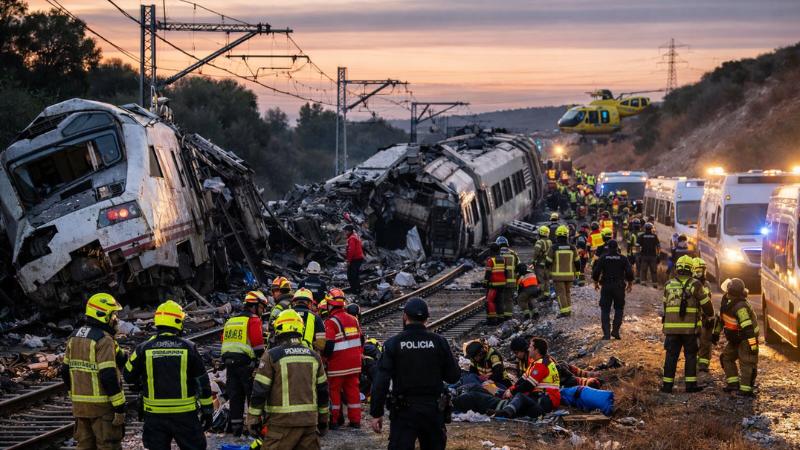
Spain train crash in Andalusia kills at least 21, dozens injured
At least 21 people were killed and more than 70 others were injured after a devastating collision between two high-speed passenger trains in Spain’s southern Andalusia region on Sunday evening. The incident has been described by national authorities as one of the deadliest rail disasters in recent years, triggering a large-scale emergency response and a nationwide investigation into rail safety. According to information released by the country’s rail infrastructure operator Adif
Spain train crash in Andalusia kills at least 21, dozens injured
At least 21 people were killed and more than 70 others were injured after a devastating collision between two high-speed passenger trains in Spain’s southern Andalusia region on Sunday evening. The incident has been described by national authorities as one of the deadliest rail disasters in recent years, triggering a large-scale emergency response and a nationwide investigation into rail safety. According to information released by the country’s rail infrastructure operator Adif










