







#globalfinance
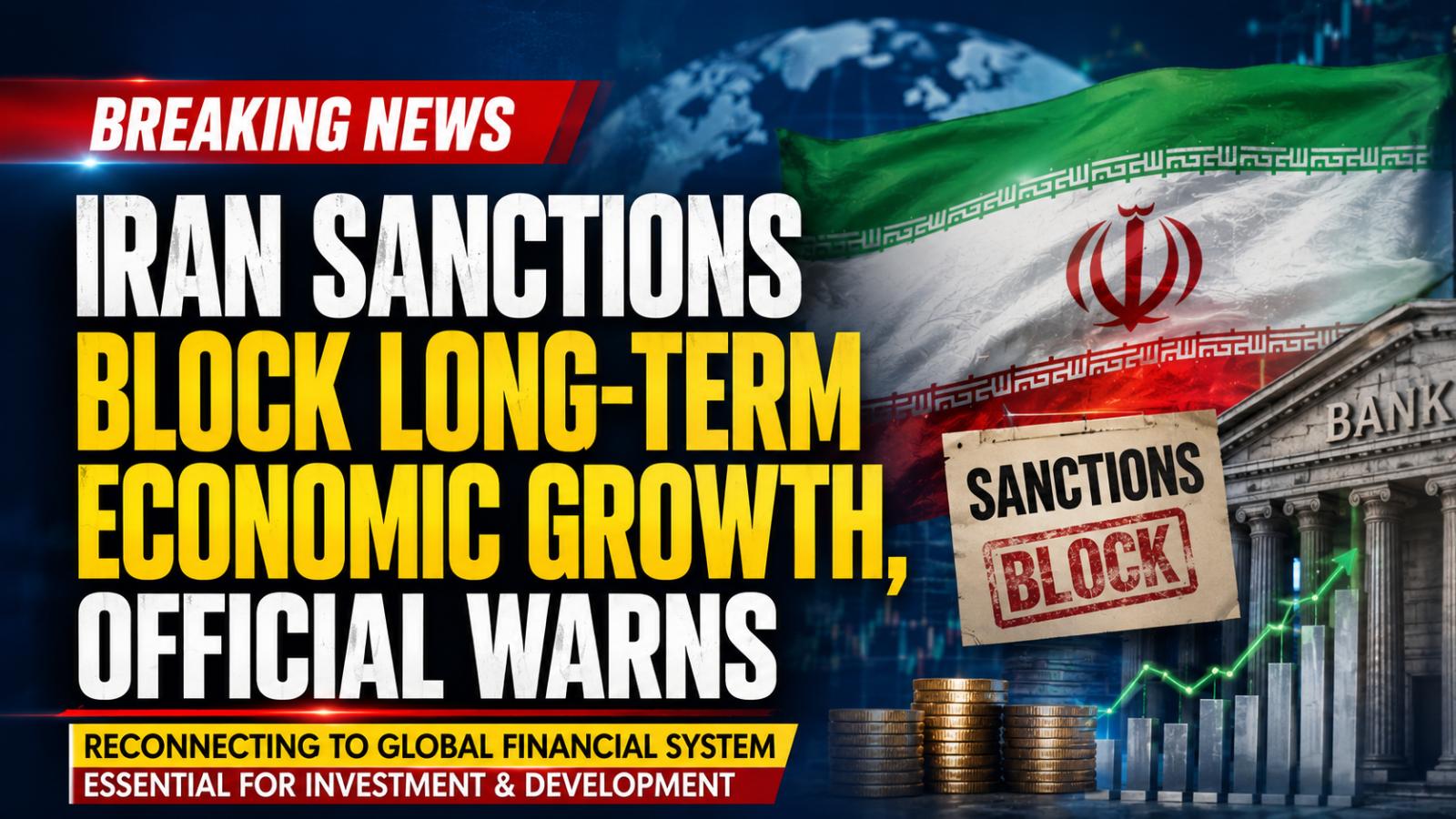
Iran Sanctions Block Long-Term Economic Growth, Official Warns
Iran sanctions block long-term economic growth, according to a senior Iranian official who says the country cannot achieve sustainable development without reconnecting to the global financial system. While temporary measures have kept trade moving, officials argue that lasting economic progress requires renewed access to international banking, investment and financial markets.
Iran Sanctions Block Long-Term Economic Growth, Official Warns
Iran sanctions block long-term economic growth, according to a senior Iranian official who says the country cannot achieve sustainable development without reconnecting to the global financial system. While temporary measures have kept trade moving, officials argue that lasting economic progress requires renewed access to international banking, investment and financial markets.
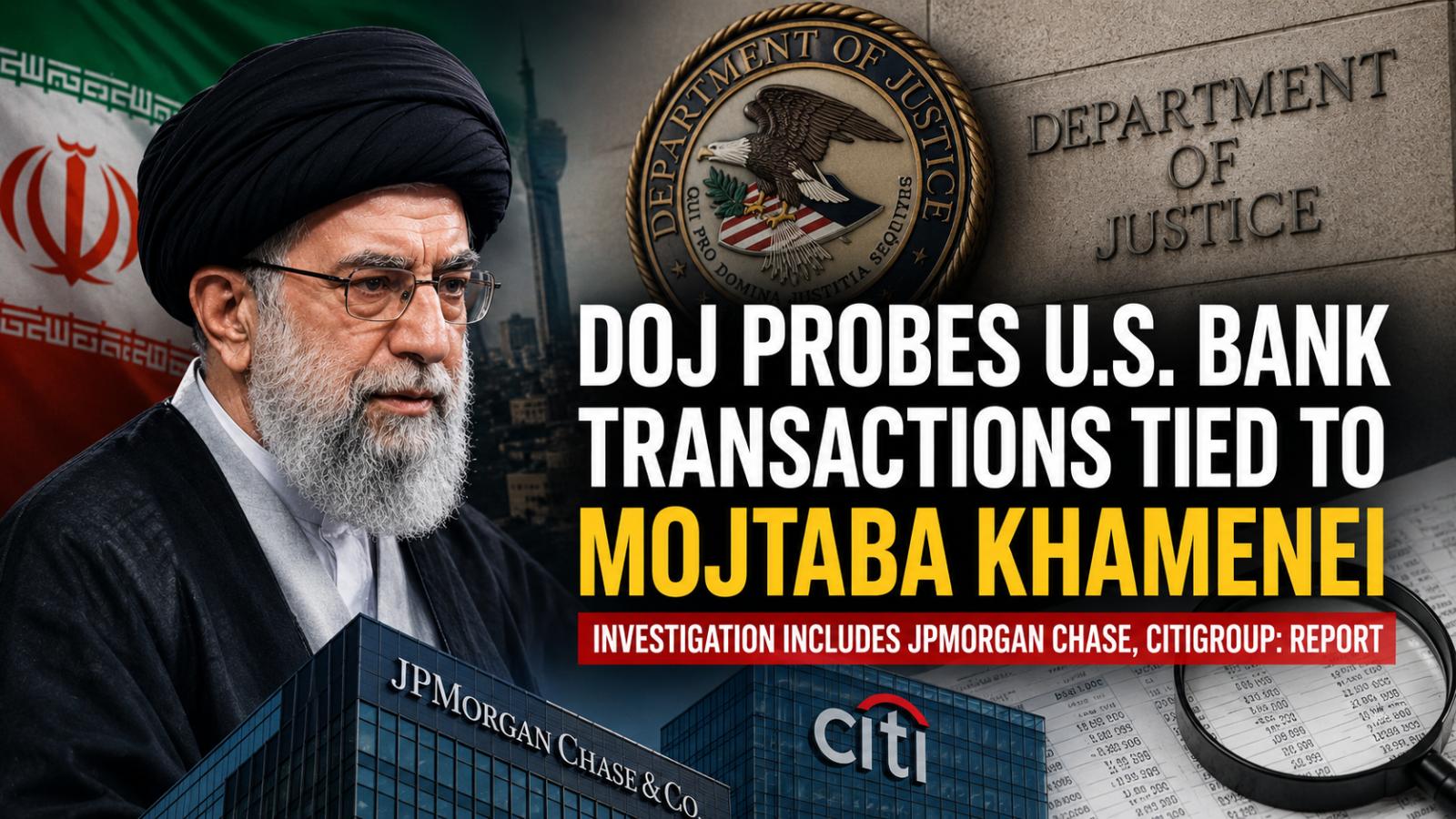
DOJ Reportedly Probes U.S. Bank Transactions Tied to Mojtaba Khamenei
The U.S. Department of Justice is reportedly investigating how Iranian Supreme Leader Mojtaba Khamenei built a global investment portfolio with exposure to Wall Street banks, according to a Bloomberg News report published Thursday, June 18, 2026. Bloomberg cited officials familiar with the matter. The Justice Department had not publicly commented on the reported investigation when Reuters published its account. Mojtaba Khamenei Transactions Under Reported DOJ Review The investigation is reportedly part of a broader examination of allegations involving money laundering and corruption. Investigators are reviewing transactions involving companies overseen by Khamenei and examining the role U.S. financial institutions may have played in processing them, according to the report. JPMorgan Chase and Citigroup are among the banks reportedly under review. The report did not establish that either bank had violated U.S. law. JPMorgan, Citigroup and DOJ Responses Reuters said Citigroup declined to comment on the report. JPMorgan Chase and the Justice Department did not immediately respond to Reuters’ requests for comment when the story was published. The existence of an investigation does not mean criminal charges will be filed. Bloomberg reported that Khamenei, rather than the banks, was the primary focus of the inquiry. Why the Report Matters As Iran’s supreme leader, Khamenei has final authority over major matters of state, including the country’s foreign policy and nuclear program. The reported investigation could attract further scrutiny of financial transactions connected to Iranian political networks and their potential exposure to U.S. institutions. However, the inquiry remains at the investigative stage. No charges or findings of wrongdoing were announced in the report. Related: Mojtaba Khamenei Approves US-Iran Agreement as Swiss Talks Advance
DOJ Reportedly Probes U.S. Bank Transactions Tied to Mojtaba Khamenei
The U.S. Department of Justice is reportedly investigating how Iranian Supreme Leader Mojtaba Khamenei built a global investment portfolio with exposure to Wall Street banks, according to a Bloomberg News report published Thursday, June 18, 2026. Bloomberg cited officials familiar with the matter. The Justice Department had not publicly commented on the reported investigation when Reuters published its account. Mojtaba Khamenei Transactions Under Reported DOJ Review The investigation is reportedly part of a broader examination of allegations involving money laundering and corruption. Investigators are reviewing transactions involving companies overseen by Khamenei and examining the role U.S. financial institutions may have played in processing them, according to the report. JPMorgan Chase and Citigroup are among the banks reportedly under review. The report did not establish that either bank had violated U.S. law. JPMorgan, Citigroup and DOJ Responses Reuters said Citigroup declined to comment on the report. JPMorgan Chase and the Justice Department did not immediately respond to Reuters’ requests for comment when the story was published. The existence of an investigation does not mean criminal charges will be filed. Bloomberg reported that Khamenei, rather than the banks, was the primary focus of the inquiry. Why the Report Matters As Iran’s supreme leader, Khamenei has final authority over major matters of state, including the country’s foreign policy and nuclear program. The reported investigation could attract further scrutiny of financial transactions connected to Iranian political networks and their potential exposure to U.S. institutions. However, the inquiry remains at the investigative stage. No charges or findings of wrongdoing were announced in the report. Related: Mojtaba Khamenei Approves US-Iran Agreement as Swiss Talks Advance
What Is FATF? Grey List, Black List and Global Power Explained
What is FATF, and why can its decisions affect governments, banks and investors worldwide? The Financial Action Task Force is the leading international body that sets standards for combating money laundering, terrorist financing and the financing of weapons proliferation. The organisation has received renewed attention after India was elected FAT
What Is FATF? Grey List, Black List and Global Power Explained
What is FATF, and why can its decisions affect governments, banks and investors worldwide? The Financial Action Task Force is the leading international body that sets standards for combating money laundering, terrorist financing and the financing of weapons proliferation. The organisation has received renewed attention after India was elected FAT
India Elected FATF Vice-President for First Time: Why It Matters
India has been elected FATF vice-president for the first time, placing senior official Vivek Aggarwal in a key leadership role at the global body that sets standards against money laundering, terrorist financing and proliferation financing. The Financial Action Task Force announced the appointment after its plenary meeting in Paris on Friday, June 19, 2026. Aggarwal, a 1994-batch Indian Administrative Service officer and secretary in India’s Ministry of Culture, will serve from Ju
India Elected FATF Vice-President for First Time: Why It Matters
India has been elected FATF vice-president for the first time, placing senior official Vivek Aggarwal in a key leadership role at the global body that sets standards against money laundering, terrorist financing and proliferation financing. The Financial Action Task Force announced the appointment after its plenary meeting in Paris on Friday, June 19, 2026. Aggarwal, a 1994-batch Indian Administrative Service officer and secretary in India’s Ministry of Culture, will serve from Ju

RBI Plans Incentives for NRI Deposits to Stabilize Indian Rupee
The Reserve Bank of India (RBI) is expected to introduce incentives for Non-Resident Indian (NRI) deposits in its upcoming April monetary policy review to help stabilize the Indian Rupee. Experts suggest that the RBI may revive the foreign currency non-resident (FCNR B) deposit scheme to attract foreign deposits and address the rupee's volatility. Currently, the UAE accounts for over 40% of FCNR (B) deposits, showing a heavy reliance on the Gulf region. NRI deposit inflows have seen
RBI Plans Incentives for NRI Deposits to Stabilize Indian Rupee
The Reserve Bank of India (RBI) is expected to introduce incentives for Non-Resident Indian (NRI) deposits in its upcoming April monetary policy review to help stabilize the Indian Rupee. Experts suggest that the RBI may revive the foreign currency non-resident (FCNR B) deposit scheme to attract foreign deposits and address the rupee's volatility. Currently, the UAE accounts for over 40% of FCNR (B) deposits, showing a heavy reliance on the Gulf region. NRI deposit inflows have seen
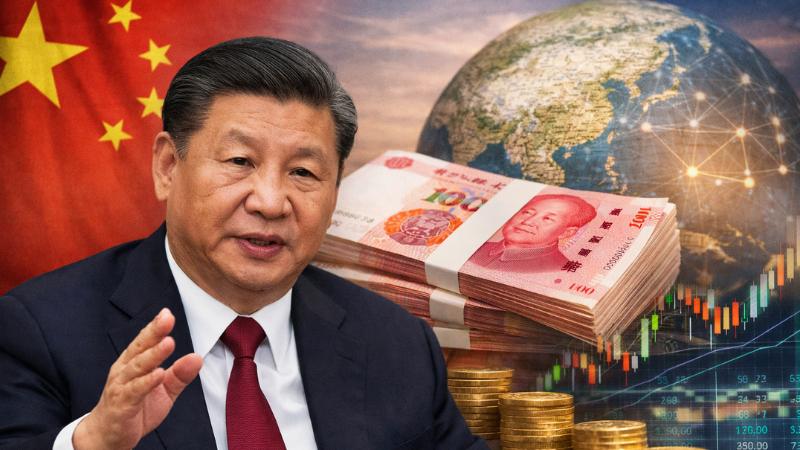
China seeks stronger yuan as Xi Jinping outlines push for global reserve currency
Amid continuing global economic uncertainty and renewed debate over the stability of major reserve currencies, Chinese President Xi Jinping has reiterated China’s ambition to build a “strong currency” and gradually elevate the yuan’s status in the global financial system. Xi said China aims to expand the use of the yuan in international trade, investment, and foreign exchange markets, underscoring a long-standing policy goal to strengthen the country’s financial influence worldwide. Xi’s remarks were outlined in a speech delivered in 2024 to senior provincial and ministerial officials and later published on Saturday in Qiushi, the Communist Party’s leading theoretical journal. The publication of excerpts from the address comes at a time of heightened volatility in global markets and growing scrutiny of the dominance of the US dollar, adding significance to Beijing’s renewed emphasis on currency strength and financial resilience. In the speech, Xi set out what he described as the essential characteristics of a global financial powerhouse. These included a solid economic foundation, world-leading technological and industrial capabilities, and a widely accepted and credible currency. He argued that currency strength was inseparable from broader national competitiveness and institutional capacity, noting that financial influence must be supported by real economic and technological power rather than short-term market movements. Xi also stressed the importance of a capable and independent central bank able to implement effective monetary policy and macroprudential management. He said globally competitive financial institutions, along with influential international financial centres, were necessary to attract global capital and exert pricing power in international markets. According to Xi, these elements must be matched with strong regulation, a reliable legal framework, and a deep pool of skilled financial professionals to ensure long-term stability and credibility. While acknowledging China’s scale in global finance, Xi noted that the country still faced structural limitations. He said China ranked among the world’s largest economies in terms of banking assets, foreign exchange reserves, and capital market size, but remained “big but not strong” overall. Transforming China into a true global financial powerhouse, he added, would be a gradual and long-term undertaking rather than an immediate achievement. Beijing has promoted the internationalisation of the yuan for more than a decade, with measurable progress in its use for cross-border trade settlement. The currency’s role in global markets, however, remains limited when compared with established reserve currencies. China’s Cross-Border Interbank Payment System currently clears an average of about 700 billion yuan, or roughly 100 billion US dollars, in transactions each day. This figure remains well below the nearly 2 trillion US dollars cleared daily through the dollar-based Clearing House Interbank Payments System. Yuan-denominated debt issuance in international markets also accounts for a small share of global activity, representing less than one percent of total issuance. These figures highlight the gap between China’s ambitions and the yuan’s current global footprint, despite steady domestic financial expansion. In recent months, the yuan has generally held firm against the US dollar, even amid trade tensions and uneven global growth. This stability contrasts with the sharper depreciation seen during former US President Donald Trump’s first term, when market observers speculated that Chinese authorities tolerated a weaker currency to offset the impact of tariffs. International investment banks continue to argue that the yuan remains below its long-term fair value, reflecting both policy controls and cautious foreign investor sentiment. The republication of Xi’s speech signals continuity in China’s financial strategy rather than a sudden shift. As global markets navigate uncertainty and reassess existing monetary structures, Beijing appears intent on steadily advancing its vision of a stronger yuan and a more influential role in the international financial system over the long term.
China seeks stronger yuan as Xi Jinping outlines push for global reserve currency
Amid continuing global economic uncertainty and renewed debate over the stability of major reserve currencies, Chinese President Xi Jinping has reiterated China’s ambition to build a “strong currency” and gradually elevate the yuan’s status in the global financial system. Xi said China aims to expand the use of the yuan in international trade, investment, and foreign exchange markets, underscoring a long-standing policy goal to strengthen the country’s financial influence worldwide. Xi’s remarks were outlined in a speech delivered in 2024 to senior provincial and ministerial officials and later published on Saturday in Qiushi, the Communist Party’s leading theoretical journal. The publication of excerpts from the address comes at a time of heightened volatility in global markets and growing scrutiny of the dominance of the US dollar, adding significance to Beijing’s renewed emphasis on currency strength and financial resilience. In the speech, Xi set out what he described as the essential characteristics of a global financial powerhouse. These included a solid economic foundation, world-leading technological and industrial capabilities, and a widely accepted and credible currency. He argued that currency strength was inseparable from broader national competitiveness and institutional capacity, noting that financial influence must be supported by real economic and technological power rather than short-term market movements. Xi also stressed the importance of a capable and independent central bank able to implement effective monetary policy and macroprudential management. He said globally competitive financial institutions, along with influential international financial centres, were necessary to attract global capital and exert pricing power in international markets. According to Xi, these elements must be matched with strong regulation, a reliable legal framework, and a deep pool of skilled financial professionals to ensure long-term stability and credibility. While acknowledging China’s scale in global finance, Xi noted that the country still faced structural limitations. He said China ranked among the world’s largest economies in terms of banking assets, foreign exchange reserves, and capital market size, but remained “big but not strong” overall. Transforming China into a true global financial powerhouse, he added, would be a gradual and long-term undertaking rather than an immediate achievement. Beijing has promoted the internationalisation of the yuan for more than a decade, with measurable progress in its use for cross-border trade settlement. The currency’s role in global markets, however, remains limited when compared with established reserve currencies. China’s Cross-Border Interbank Payment System currently clears an average of about 700 billion yuan, or roughly 100 billion US dollars, in transactions each day. This figure remains well below the nearly 2 trillion US dollars cleared daily through the dollar-based Clearing House Interbank Payments System. Yuan-denominated debt issuance in international markets also accounts for a small share of global activity, representing less than one percent of total issuance. These figures highlight the gap between China’s ambitions and the yuan’s current global footprint, despite steady domestic financial expansion. In recent months, the yuan has generally held firm against the US dollar, even amid trade tensions and uneven global growth. This stability contrasts with the sharper depreciation seen during former US President Donald Trump’s first term, when market observers speculated that Chinese authorities tolerated a weaker currency to offset the impact of tariffs. International investment banks continue to argue that the yuan remains below its long-term fair value, reflecting both policy controls and cautious foreign investor sentiment. The republication of Xi’s speech signals continuity in China’s financial strategy rather than a sudden shift. As global markets navigate uncertainty and reassess existing monetary structures, Beijing appears intent on steadily advancing its vision of a stronger yuan and a more influential role in the international financial system over the long term.

Saudi crown prince’s $1 trillion US pledge sparks questions over sovereign fund liquidity
During his recent visit to the United States, Saudi Arabia’s crown prince, Mohammed bin Salman, made a high-profile commitment to invest $1 trillion in Washington while seated beside the US president at the Oval Office. The announcement underscored the scale of Saudi Arabia’s financial ambitions, but it also renewed debate over whether the kingdom’s sovereign wealth fund has sufficient liquidity to support such a massive pledge at a time when its domestic projects are encountering financial strain. Much of the responsibility for executing the investment promise would likely fall on the Public Investment Fund, the kingdom’s flagship sovereign wealth fund, which has been under increasing pressure due to slowing returns from several large-scale ventures. The Public Investment Fund has for years been at the centre of Saudi Arabia’s economic transformation strategy, financing ambitious projects intended to diversify the nation’s oil-dependent economy. While the fund officially controls assets valued at approximately $1 trillion, a significant portion is tied up in holdings that are difficult to liquidate and lack transparent public valuations. The situation has prompted fund officials, according to people familiar with internal discussions, to caution international partners that future allocations may be scaled back until liquidity conditions improve. This comes at a time when Saudi Arabia is seeking additional capital for ongoing megaprojects that have already absorbed substantial resources. Among the most prominent initiatives facing headwinds is Neom, the futuristic development planned for the kingdom’s northwest. Conceived as a hub for advanced technology, sustainable living, and major tourism attractions, Neom was expected to showcase the scale and innovation of Saudi Arabia’s modernisation efforts. However, the project has encountered delays, rising costs, and questions about its commercial viability. Similar challenges have surfaced across other ventures funded by the PIF, including luxury Red Sea resorts that remain largely unoccupied despite significant investment. These difficulties have intensified scrutiny over the fund’s ability to sustain its commitments while supporting a broad portfolio of domestic developments. Saudi Arabia continues to benefit from substantial oil reserves, but its energy revenues have been constrained by production cuts linked to global market agreements alongside relatively subdued crude prices. As a result, the kingdom is managing a budget deficit and has increased borrowing to support national spending priorities. Analysts note that these fiscal pressures add complexity to the crown prince’s pledge, which arrives at a moment when the government is balancing long-term economic goals with short-term financial realities. The PIF, established in 1971 to support nationally significant industries, grew slowly for decades before being placed under Prince Mohammed’s direct authority in 2015. Since then, the fund has taken on a far more expansive role, backed by injections of government capital, redirected oil revenues, and assets seized under anti-corruption campaigns. Its portfolio now spans global equities, domestic infrastructure, and emerging sectors such as artificial intelligence, reflecting the prince’s drive to position the kingdom as a major player in future technologies. Despite achieving notable gains during periods of rising markets, the fund’s more recent initiatives have faced tougher conditions. In response to financial pressures, the fund’s leadership has reportedly adjusted internal forecasts, restructured teams, and replaced executives overseeing underperforming ventures. Officials have also signalled a shift in focus toward private investments in technology firms, an area viewed as strategically important to the kingdom’s long-term plans. These moves come as global investors track the fund’s evolving strategy, especially given the symbolic weight of the crown prince’s $1 trillion pledge. While signs of strain are evident within the fund’s operations, analysts caution that it is premature to conclude that Saudi Arabia is facing broader economic distress. The kingdom retains substantial financial capacity, and its long-term diversification agenda continues to receive strong state backing. However, the contrast between ambitious international commitments and the financial demands of domestic megaprojects has raised questions about sustainability. Observers will be watching closely to determine whether the kingdom can balance its aspirations abroad with the fiscal realities at home, particularly as the PIF navigates a period of tighter liquidity and heightened scrutiny.
Saudi crown prince’s $1 trillion US pledge sparks questions over sovereign fund liquidity
During his recent visit to the United States, Saudi Arabia’s crown prince, Mohammed bin Salman, made a high-profile commitment to invest $1 trillion in Washington while seated beside the US president at the Oval Office. The announcement underscored the scale of Saudi Arabia’s financial ambitions, but it also renewed debate over whether the kingdom’s sovereign wealth fund has sufficient liquidity to support such a massive pledge at a time when its domestic projects are encountering financial strain. Much of the responsibility for executing the investment promise would likely fall on the Public Investment Fund, the kingdom’s flagship sovereign wealth fund, which has been under increasing pressure due to slowing returns from several large-scale ventures. The Public Investment Fund has for years been at the centre of Saudi Arabia’s economic transformation strategy, financing ambitious projects intended to diversify the nation’s oil-dependent economy. While the fund officially controls assets valued at approximately $1 trillion, a significant portion is tied up in holdings that are difficult to liquidate and lack transparent public valuations. The situation has prompted fund officials, according to people familiar with internal discussions, to caution international partners that future allocations may be scaled back until liquidity conditions improve. This comes at a time when Saudi Arabia is seeking additional capital for ongoing megaprojects that have already absorbed substantial resources. Among the most prominent initiatives facing headwinds is Neom, the futuristic development planned for the kingdom’s northwest. Conceived as a hub for advanced technology, sustainable living, and major tourism attractions, Neom was expected to showcase the scale and innovation of Saudi Arabia’s modernisation efforts. However, the project has encountered delays, rising costs, and questions about its commercial viability. Similar challenges have surfaced across other ventures funded by the PIF, including luxury Red Sea resorts that remain largely unoccupied despite significant investment. These difficulties have intensified scrutiny over the fund’s ability to sustain its commitments while supporting a broad portfolio of domestic developments. Saudi Arabia continues to benefit from substantial oil reserves, but its energy revenues have been constrained by production cuts linked to global market agreements alongside relatively subdued crude prices. As a result, the kingdom is managing a budget deficit and has increased borrowing to support national spending priorities. Analysts note that these fiscal pressures add complexity to the crown prince’s pledge, which arrives at a moment when the government is balancing long-term economic goals with short-term financial realities. The PIF, established in 1971 to support nationally significant industries, grew slowly for decades before being placed under Prince Mohammed’s direct authority in 2015. Since then, the fund has taken on a far more expansive role, backed by injections of government capital, redirected oil revenues, and assets seized under anti-corruption campaigns. Its portfolio now spans global equities, domestic infrastructure, and emerging sectors such as artificial intelligence, reflecting the prince’s drive to position the kingdom as a major player in future technologies. Despite achieving notable gains during periods of rising markets, the fund’s more recent initiatives have faced tougher conditions. In response to financial pressures, the fund’s leadership has reportedly adjusted internal forecasts, restructured teams, and replaced executives overseeing underperforming ventures. Officials have also signalled a shift in focus toward private investments in technology firms, an area viewed as strategically important to the kingdom’s long-term plans. These moves come as global investors track the fund’s evolving strategy, especially given the symbolic weight of the crown prince’s $1 trillion pledge. While signs of strain are evident within the fund’s operations, analysts caution that it is premature to conclude that Saudi Arabia is facing broader economic distress. The kingdom retains substantial financial capacity, and its long-term diversification agenda continues to receive strong state backing. However, the contrast between ambitious international commitments and the financial demands of domestic megaprojects has raised questions about sustainability. Observers will be watching closely to determine whether the kingdom can balance its aspirations abroad with the fiscal realities at home, particularly as the PIF navigates a period of tighter liquidity and heightened scrutiny.
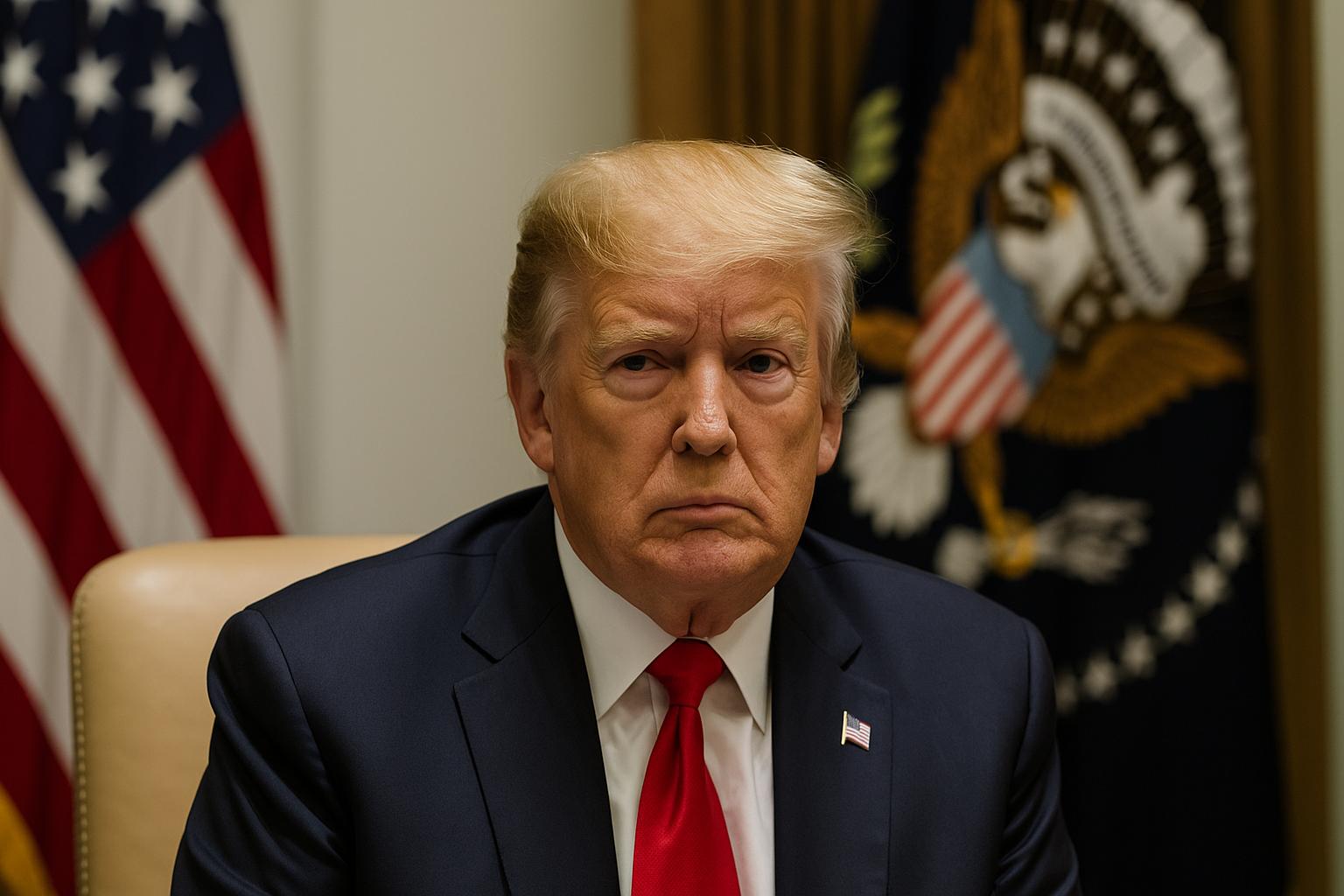
Trump calls BRICS an attack on the dollar, warns of tariffs on member nations
US President Donald Trump has reignited debate over the influence of the BRICS bloc, claiming that the group represents “an attack on the dollar” and warning that countries joining it could face tariffs from the United States. Trump made the remarks during a bilateral lunch with Argentine President Javier Milei at the White House, reiterating his stance on protecting the dominance of the US dollar in global trade. Speaking to reporters, Trump asserted that the United States woul
Trump calls BRICS an attack on the dollar, warns of tariffs on member nations
US President Donald Trump has reignited debate over the influence of the BRICS bloc, claiming that the group represents “an attack on the dollar” and warning that countries joining it could face tariffs from the United States. Trump made the remarks during a bilateral lunch with Argentine President Javier Milei at the White House, reiterating his stance on protecting the dominance of the US dollar in global trade. Speaking to reporters, Trump asserted that the United States woul










