#india-s-future
India Risks Missing Driverless Car Revolution Without Policy Support
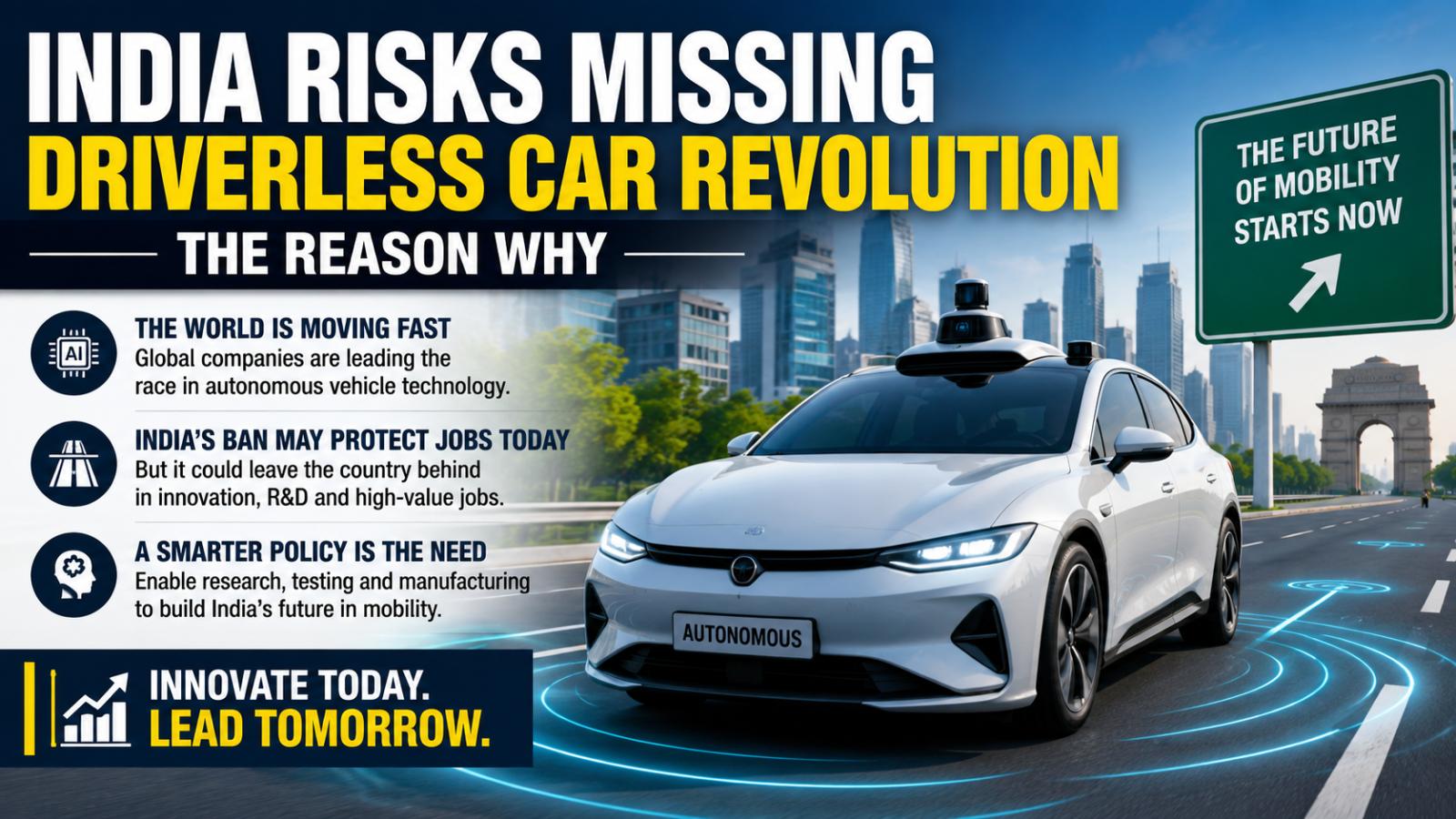
Driverless cars are moving from concept to reality in many parts of the world. Autonomous cab services are already operating in select cities, and companies across the globe are investing heavily in self-driving technology. India, however, risks missing out on this fast-growing revolution if it continues to take a rigid stand against driverless vehicles. The concern is understandable. India has millions of people whose livelihoods depend on driving. A sudden entry of fully
India Risks Missing Driverless Car Revolution Without Policy Support
Driverless cars are moving from concept to reality in many parts of the world. Autonomous cab services are already operating in select cities, and companies across the globe are investing heavily in self-driving technology. India, however, risks missing out on this fast-growing revolution if it continues to take a rigid stand against driverless vehicles. The concern is understandable. India has millions of people whose livelihoods depend on driving. A sudden entry of fully
CBSE Expands Curriculum With Early AI Education From Class 3
The Central Board of Secondary Education (CBSE) has taken a significant step towards modernizing India’s education system by introducing artificial intelligence learning for students starting from Class 3. This move reflects the growing importance of digital literacy and emerging technologies in shaping the future workforce. By incorporating AI concepts at an early stage, CBSE aims to ensure that students are not just consumers of technology but also understand its fundamentals and applications. The initiative is part of a broader effort to align school education with global technological trends and prepare students for a rapidly evolving digital world. Under this new curriculum, young learners will be introduced to basic concepts of artificial intelligence through interactive and activity-based learning methods. Instead of complex coding, the focus will be on developing logical thinking, problem-solving skills, and an understanding of how AI impacts everyday life. Students will engage in simple exercises, games, and real-life examples to grasp how machines can learn and make decisions. This foundational approach ensures that children build curiosity and confidence in technology without feeling overwhelmed. Curriculum Focus and Implementation The AI curriculum for primary classes is designed to be age-appropriate and engaging. CBSE has collaborated with education experts and technology partners to create content that is both informative and easy to understand. Teachers will also receive specialized training to effectively deliver AI-related lessons in classrooms. The board plans to integrate AI topics with existing subjects, making learning more interdisciplinary and practical. This approach will help students connect theoretical knowledge with real-world applications, enhancing their overall learning experience. Impact on Students and Future Education Introducing AI learning at an early stage is expected to have a long-term impact on students’ academic and career paths. As industries increasingly rely on automation and data-driven technologies, early exposure to AI will give students a competitive edge. It will also encourage innovation and creativity among young minds, enabling them to think beyond traditional career options. Parents and educators have largely welcomed this move, seeing it as a progressive step toward building a tech-savvy generation. With this initiative, CBSE reinforces its commitment to evolving education standards and preparing students for the challenges of the future. The inclusion of artificial intelligence in the curriculum marks a shift from rote learning to skill-based education, ensuring that students are better equipped to navigate and contribute to a technology-driven world.
CBSE Expands Curriculum With Early AI Education From Class 3
The Central Board of Secondary Education (CBSE) has taken a significant step towards modernizing India’s education system by introducing artificial intelligence learning for students starting from Class 3. This move reflects the growing importance of digital literacy and emerging technologies in shaping the future workforce. By incorporating AI concepts at an early stage, CBSE aims to ensure that students are not just consumers of technology but also understand its fundamentals and applications. The initiative is part of a broader effort to align school education with global technological trends and prepare students for a rapidly evolving digital world. Under this new curriculum, young learners will be introduced to basic concepts of artificial intelligence through interactive and activity-based learning methods. Instead of complex coding, the focus will be on developing logical thinking, problem-solving skills, and an understanding of how AI impacts everyday life. Students will engage in simple exercises, games, and real-life examples to grasp how machines can learn and make decisions. This foundational approach ensures that children build curiosity and confidence in technology without feeling overwhelmed. Curriculum Focus and Implementation The AI curriculum for primary classes is designed to be age-appropriate and engaging. CBSE has collaborated with education experts and technology partners to create content that is both informative and easy to understand. Teachers will also receive specialized training to effectively deliver AI-related lessons in classrooms. The board plans to integrate AI topics with existing subjects, making learning more interdisciplinary and practical. This approach will help students connect theoretical knowledge with real-world applications, enhancing their overall learning experience. Impact on Students and Future Education Introducing AI learning at an early stage is expected to have a long-term impact on students’ academic and career paths. As industries increasingly rely on automation and data-driven technologies, early exposure to AI will give students a competitive edge. It will also encourage innovation and creativity among young minds, enabling them to think beyond traditional career options. Parents and educators have largely welcomed this move, seeing it as a progressive step toward building a tech-savvy generation. With this initiative, CBSE reinforces its commitment to evolving education standards and preparing students for the challenges of the future. The inclusion of artificial intelligence in the curriculum marks a shift from rote learning to skill-based education, ensuring that students are better equipped to navigate and contribute to a technology-driven world.
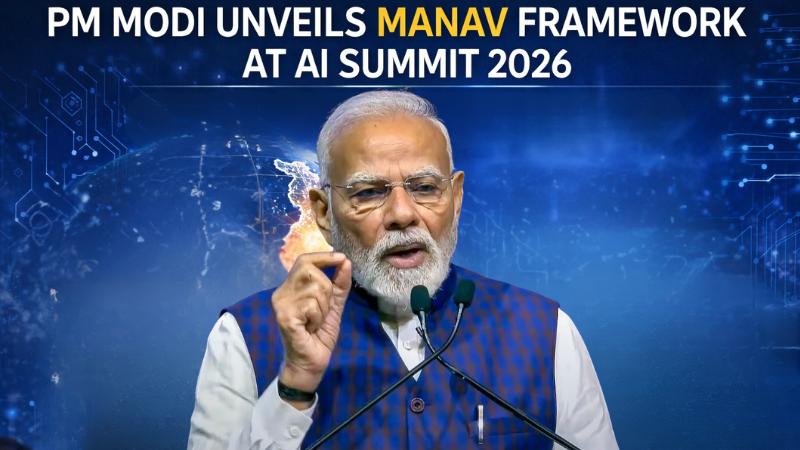
PM Modi Unveils MANAV Framework At AI Summit 2026, Calls For Inclusive AI For Global South
Prime Minister Narendra Modi presented India’s bold and human-centric vision for artificial intelligence at the India AI Impact Summit 2026 in New Delhi, calling for the democratisation of AI and introducing the MANAV framework to guide its ethical and inclusive development. Addressing global leaders, technology pioneers, and policymakers, the Prime Minister stressed that artificial intelligence must empower humanity rather than reduce people to mere data points. He highlighted the need to ensure that AI benefits everyone, particularly developing nations in the Global South, and does not remain concentrated in the hands of a few powerful entities. The MANAV framework, introduced as India’s roadmap for responsible AI governance, focuses on five core principles: Moral and Ethical Systems, Accountable Governance, National Data Sovereignty, Accessible and Inclusive Technology, and Valid and Legitimate AI systems. According to the Prime Minister, AI must operate within ethical boundaries, ensure transparency, protect national data rights, and remain accessible to all sections of society. He emphasized that AI should serve as a multiplier of human potential rather than a monopolistic force controlled by limited stakeholders. The framework aims to ensure that AI remains lawful, trustworthy, and beneficial to humanity while supporting innovation and growth. Prime Minister Modi described artificial intelligence as one of the most transformative technologies in human history, comparable to major breakthroughs such as the discovery of fire and the invention of communication systems. He noted that AI is evolving at an unprecedented pace, impacting industries, economies, and societies worldwide. He warned that without proper governance, AI could create disruption, but with the right direction, it can become a powerful solution to global challenges including healthcare, education, and economic development. The India AI Impact Summit 2026, which brought together over 200,000 participants and representatives from more than 100 countries, reflects India’s growing leadership role in shaping the future of AI. The event featured participation from major global technology leaders, innovators, and policymakers, highlighting India’s position as a key hub for AI innovation. The Prime Minister also praised young innovators and entrepreneurs, noting that the next generation is actively shaping the future of artificial intelligence despite early scepticism surrounding emerging technologies. Prime Minister Modi emphasized that India’s MANAV vision is designed not just for national development but for global benefit, particularly for countries in the Global South. He called on international leaders to work together to ensure that artificial intelligence remains inclusive, ethical, and aligned with human values. He reiterated that the ultimate goal of AI should be welfare for all and happiness for all, ensuring that technological progress strengthens societies rather than widening inequalities. The summit marks a significant milestone in India’s technological journey, positioning the country as a global advocate for responsible AI governance. With its focus on inclusivity, ethics, and accessibility, the MANAV framework represents a major step toward building a balanced and human-centric artificial intelligence ecosystem that can benefit people across the world.
PM Modi Unveils MANAV Framework At AI Summit 2026, Calls For Inclusive AI For Global South
Prime Minister Narendra Modi presented India’s bold and human-centric vision for artificial intelligence at the India AI Impact Summit 2026 in New Delhi, calling for the democratisation of AI and introducing the MANAV framework to guide its ethical and inclusive development. Addressing global leaders, technology pioneers, and policymakers, the Prime Minister stressed that artificial intelligence must empower humanity rather than reduce people to mere data points. He highlighted the need to ensure that AI benefits everyone, particularly developing nations in the Global South, and does not remain concentrated in the hands of a few powerful entities. The MANAV framework, introduced as India’s roadmap for responsible AI governance, focuses on five core principles: Moral and Ethical Systems, Accountable Governance, National Data Sovereignty, Accessible and Inclusive Technology, and Valid and Legitimate AI systems. According to the Prime Minister, AI must operate within ethical boundaries, ensure transparency, protect national data rights, and remain accessible to all sections of society. He emphasized that AI should serve as a multiplier of human potential rather than a monopolistic force controlled by limited stakeholders. The framework aims to ensure that AI remains lawful, trustworthy, and beneficial to humanity while supporting innovation and growth. Prime Minister Modi described artificial intelligence as one of the most transformative technologies in human history, comparable to major breakthroughs such as the discovery of fire and the invention of communication systems. He noted that AI is evolving at an unprecedented pace, impacting industries, economies, and societies worldwide. He warned that without proper governance, AI could create disruption, but with the right direction, it can become a powerful solution to global challenges including healthcare, education, and economic development. The India AI Impact Summit 2026, which brought together over 200,000 participants and representatives from more than 100 countries, reflects India’s growing leadership role in shaping the future of AI. The event featured participation from major global technology leaders, innovators, and policymakers, highlighting India’s position as a key hub for AI innovation. The Prime Minister also praised young innovators and entrepreneurs, noting that the next generation is actively shaping the future of artificial intelligence despite early scepticism surrounding emerging technologies. Prime Minister Modi emphasized that India’s MANAV vision is designed not just for national development but for global benefit, particularly for countries in the Global South. He called on international leaders to work together to ensure that artificial intelligence remains inclusive, ethical, and aligned with human values. He reiterated that the ultimate goal of AI should be welfare for all and happiness for all, ensuring that technological progress strengthens societies rather than widening inequalities. The summit marks a significant milestone in India’s technological journey, positioning the country as a global advocate for responsible AI governance. With its focus on inclusivity, ethics, and accessibility, the MANAV framework represents a major step toward building a balanced and human-centric artificial intelligence ecosystem that can benefit people across the world.
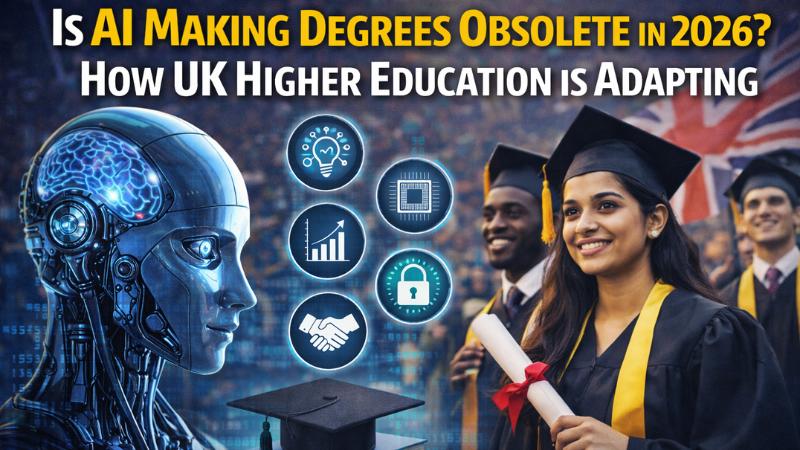
Is AI Making Degrees Obsolete in 2026? How UK Higher Education is Adapting
As artificial intelligence (AI) reshapes industries and job markets, higher education, especially in the UK, is undergoing a transformation to adapt to new skill demands. In 2026, universities are increasingly focusing on practical skills and AI literacy to ensure graduates are ready for the workforce. This shift away from traditional degrees is a response to the growing need for hybrid capabilities that blend human insight with machine intelligence. The UK, in particular, faces a r
Is AI Making Degrees Obsolete in 2026? How UK Higher Education is Adapting
As artificial intelligence (AI) reshapes industries and job markets, higher education, especially in the UK, is undergoing a transformation to adapt to new skill demands. In 2026, universities are increasingly focusing on practical skills and AI literacy to ensure graduates are ready for the workforce. This shift away from traditional degrees is a response to the growing need for hybrid capabilities that blend human insight with machine intelligence. The UK, in particular, faces a r
Online Bootcamps vs. College Degrees for Indian Job Seekers
The Indian job market has evolved rapidly in the last decade, driven by technology, automation, and the global shift toward digital-first industries. As a result, Indian job seekers—especially freshers and young professionals—often face an important question: Is a traditional college degree still the best path, or do online bootcamps offer a faster, more effective route to employment? This article dives deep into both options to help Indian job seeke
Online Bootcamps vs. College Degrees for Indian Job Seekers
The Indian job market has evolved rapidly in the last decade, driven by technology, automation, and the global shift toward digital-first industries. As a result, Indian job seekers—especially freshers and young professionals—often face an important question: Is a traditional college degree still the best path, or do online bootcamps offer a faster, more effective route to employment? This article dives deep into both options to help Indian job seeke
AR/VR Careers: Exploring Future-Proof Tech Paths for Indians
Augmented Reality (AR) and Virtual Reality (VR) have emerged as some of the most innovative and rapidly expanding fields in technology today. These technologies are transforming industries ranging from gaming and entertainment to healthcare, education, and real estate. As global demand for AR/VR solutions grows, so do career opportunities in these fields, especially for skilled professionals. For Indians looking to dive into the future of tech, exploring care
AR/VR Careers: Exploring Future-Proof Tech Paths for Indians
Augmented Reality (AR) and Virtual Reality (VR) have emerged as some of the most innovative and rapidly expanding fields in technology today. These technologies are transforming industries ranging from gaming and entertainment to healthcare, education, and real estate. As global demand for AR/VR solutions grows, so do career opportunities in these fields, especially for skilled professionals. For Indians looking to dive into the future of tech, exploring care
Are Indian Educators Being Sidelined by AI Tutors?
The AI Wave in Indian Education From online test prep platforms to AI chatbots answering math problems, artificial intelligence is reshaping the Indian education landscape. Many parents are turning to AI tools for quick solutions, raising concerns: Are Indian teachers being replaced? Or is this just the beginning of a new partnership between humans and machines? AI-Based Tutors: What They Offer AI tutors are efficient, always availab
Are Indian Educators Being Sidelined by AI Tutors?
The AI Wave in Indian Education From online test prep platforms to AI chatbots answering math problems, artificial intelligence is reshaping the Indian education landscape. Many parents are turning to AI tools for quick solutions, raising concerns: Are Indian teachers being replaced? Or is this just the beginning of a new partnership between humans and machines? AI-Based Tutors: What They Offer AI tutors are efficient, always availab
Will AI Replace Indian Nannies and Babysitters in the US?
A New Era in Childcare AI has entered homes across America—from smart speakers to learning apps and even robots. As this technology starts handling tasks like monitoring kids or assisting with routines, it raises a big question: Will traditional caregivers like Indian nannies and babysitters be replaced? Why Indian Nannies Are Irreplaceable Indian caregivers have built a strong reputation in the US for being dependable, nurturing,
Will AI Replace Indian Nannies and Babysitters in the US?
A New Era in Childcare AI has entered homes across America—from smart speakers to learning apps and even robots. As this technology starts handling tasks like monitoring kids or assisting with routines, it raises a big question: Will traditional caregivers like Indian nannies and babysitters be replaced? Why Indian Nannies Are Irreplaceable Indian caregivers have built a strong reputation in the US for being dependable, nurturing,
What the Future Holds for Indian Innovators in AI and Robotics
India is on the brink of a technological revolution. With rapid advancements in Artificial Intelligence (AI) and Robotics, Indian innovators are stepping into a future filled with opportunity, disruption, and global recognition. From smart agriculture to intelligent healthcare systems and cutting-edge automation, Indian minds are reshaping industries with AI-driven innovations. India boasts one of the world’s largest and youngest tech-savvy populations. Startu
What the Future Holds for Indian Innovators in AI and Robotics
India is on the brink of a technological revolution. With rapid advancements in Artificial Intelligence (AI) and Robotics, Indian innovators are stepping into a future filled with opportunity, disruption, and global recognition. From smart agriculture to intelligent healthcare systems and cutting-edge automation, Indian minds are reshaping industries with AI-driven innovations. India boasts one of the world’s largest and youngest tech-savvy populations. Startu
Will AI Replace Indian IT Jobs in the USA?
Indian tech professionals, especially those on H-1B visas, often work in roles such as software testing, system maintenance, back-end operations, and technical support—areas increasingly targeted for automation. With recent layoffs across big tech firms, many fear that AI could accelerate job losses, particularly in these easily automatable domains. But It’s Not All Bad News While some tasks are being automated, AI isn’t replacing all tech
Will AI Replace Indian IT Jobs in the USA?
Indian tech professionals, especially those on H-1B visas, often work in roles such as software testing, system maintenance, back-end operations, and technical support—areas increasingly targeted for automation. With recent layoffs across big tech firms, many fear that AI could accelerate job losses, particularly in these easily automatable domains. But It’s Not All Bad News While some tasks are being automated, AI isn’t replacing all tech
US Firm Jane Street Banned From Indian Securities Market Over Alleged Index Manipulation
Global trading giant Jane Street has been barred from participating in India's securities markets following an investigation by the Securities and Exchange Board of India (sebi). The interim order, issued by the market regulator, accuses the firm and its subsidiaries of manipulating index-based derivative trades in the Indian market to secure massive illegal profits. The ban, announced late last week, restricts Jane Street and four affiliated entities from buying, selling, or dealing in a
US Firm Jane Street Banned From Indian Securities Market Over Alleged Index Manipulation
Global trading giant Jane Street has been barred from participating in India's securities markets following an investigation by the Securities and Exchange Board of India (sebi). The interim order, issued by the market regulator, accuses the firm and its subsidiaries of manipulating index-based derivative trades in the Indian market to secure massive illegal profits. The ban, announced late last week, restricts Jane Street and four affiliated entities from buying, selling, or dealing in a
Gold Futures Prices Hit Record High on MCX
Gold futures on the Multi Commodity Exchange (MCX) have surged to an all-time high, climbing 0.43% from Thursday's rates, reaching Rs 79,970 for contracts expiring on February 5, 2025. The precious metal has seen an upward trajectory this week, following a climb in spot prices which also touched record highs. As of 6:50 a.m. on Friday, gold's spot price in India stood at Rs 79,980 per 10 grams, according to the India Bullion Association. Despite the earlier rise, prices cooled o
Gold Futures Prices Hit Record High on MCX
Gold futures on the Multi Commodity Exchange (MCX) have surged to an all-time high, climbing 0.43% from Thursday's rates, reaching Rs 79,970 for contracts expiring on February 5, 2025. The precious metal has seen an upward trajectory this week, following a climb in spot prices which also touched record highs. As of 6:50 a.m. on Friday, gold's spot price in India stood at Rs 79,980 per 10 grams, according to the India Bullion Association. Despite the earlier rise, prices cooled o
Gautam Adani Inspires Students with Life Lessons and Vision for India's Future
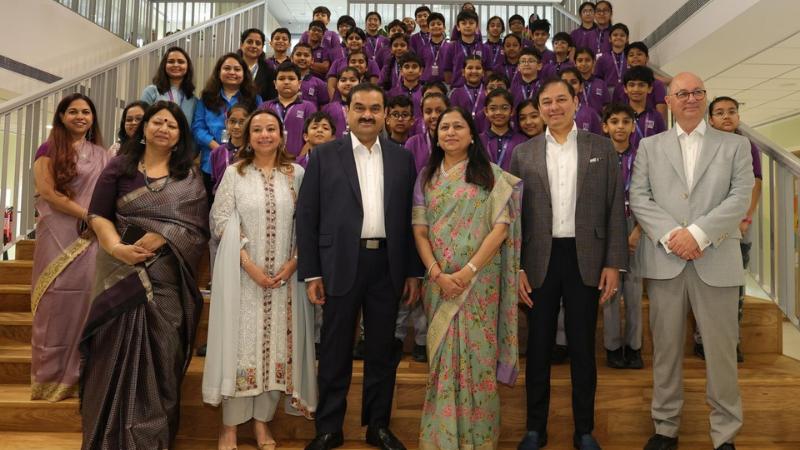
Gautam Adani’s Address to Students On Monday, Gautam Adani, the chairman of the Adani Group, addressed the students of Adani International School in Ahmedabad. During his speech, Adani shared three core principles for the students: "dream relentlessly, learn relentlessly, and build relentlessly," encouraging them to aim high and remain determined in their endeavor
Gautam Adani Inspires Students with Life Lessons and Vision for India's Future
Gautam Adani’s Address to Students On Monday, Gautam Adani, the chairman of the Adani Group, addressed the students of Adani International School in Ahmedabad. During his speech, Adani shared three core principles for the students: "dream relentlessly, learn relentlessly, and build relentlessly," encouraging them to aim high and remain determined in their endeavor