


























America First Visa Tool May Speed Up US Visa Scheduling for India-US Business Travel
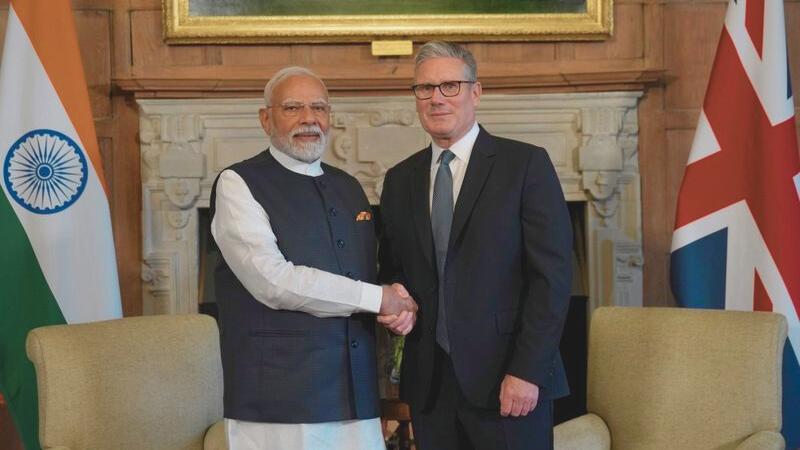
US Secretary of State Marco Rubio has announced a new “America First” visa scheduling tool aimed at making the American consular process faster, more secure and more aligned with US national interests. The announcement came during his four-day visit to India, where discussions focused on the growing importance of India-US relations in trade, investment, technology, defense and strategic cooperation. The tool is reportedly built around a priority principle: visa applicants whose
America First Visa Tool May Speed Up US Visa Scheduling for India-US Business Travel
US Secretary of State Marco Rubio has announced a new “America First” visa scheduling tool aimed at making the American consular process faster, more secure and more aligned with US national interests. The announcement came during his four-day visit to India, where discussions focused on the growing importance of India-US relations in trade, investment, technology, defense and strategic cooperation. The tool is reportedly built around a priority principle: visa applicants whose
US May Drop Gautam Adani Fraud Case, Report Says
U.S. authorities may move to drop criminal fraud charges against Indian billionaire Gautam Adani, according to a Bloomberg report cited by Reuters on Thursday, May 14, 2026. Reuters reported that the U.S. Justice Department could announce a decision as early as this week, but said it could not independently verify the report. No formal court filing confirming dismissal was immediately available. What the Gautam Adani Case Is About The case trac
US May Drop Gautam Adani Fraud Case, Report Says
U.S. authorities may move to drop criminal fraud charges against Indian billionaire Gautam Adani, according to a Bloomberg report cited by Reuters on Thursday, May 14, 2026. Reuters reported that the U.S. Justice Department could announce a decision as early as this week, but said it could not independently verify the report. No formal court filing confirming dismissal was immediately available. What the Gautam Adani Case Is About The case trac
Modi’s Push for Green Energy Impacts Markets: EV Stocks Rise, Jewellery Stocks Fall
Prime Minister Narendra Modi recently emphasized the need to reduce dependency on petrol and diesel, advocating for sustainable practices and increased adoption of work-from-home models. He also suggested that consumers reconsider discretionary purchases, including gold, in the near term. Following the speech, the stock market reacted sharply. Shares
Modi’s Push for Green Energy Impacts Markets: EV Stocks Rise, Jewellery Stocks Fall
Prime Minister Narendra Modi recently emphasized the need to reduce dependency on petrol and diesel, advocating for sustainable practices and increased adoption of work-from-home models. He also suggested that consumers reconsider discretionary purchases, including gold, in the near term. Following the speech, the stock market reacted sharply. Shares
What defines JRD Tata’s legacy? A life of service over ownership
A life of service over ownership JRD Tata’s legacy offers a striking contrast to modern perceptions of wealth and leadership. As one of India’s most influential industrialists, he led the Tata Group for over five decades, yet chose to live in a rented residence rather than accumulate personal assets. His approach reflected a philosophy that prioritized responsibility, ethics, and long-term impact over visible displays of success. Leadership that expanded an industrial empire Under JRD Tata’s leadership, the Tata Group evolved into one of India’s most significant industrial conglomerates, spanning sectors such as steel, aviation, power, and chemicals. His tenure marked a period of sustained growth and modernization, contributing to the country’s economic development. Rather than focusing on personal gain, he emphasized institutional strength, innovation, and employee welfare, setting standards that influenced corporate governance across industries. Simplicity as a leadership principle JRD Tata’s personal lifestyle remained notably modest despite his professional stature. He lived in a rented bungalow in Mumbai for decades, demonstrating that leadership did not require material excess. His daily life reflected discipline and humility, reinforcing the idea that influence comes from actions and values rather than possessions. This approach continues to resonate in discussions about ethical leadership and sustainable success. Impact measured beyond wealth The scale of JRD Tata’s impact is reflected not only in business expansion but also in the opportunities created for thousands of employees and communities. His leadership helped build institutions that continue to operate globally, shaping industries and contributing to economic stability. For many observers, his legacy represents a model where success is defined by contribution rather than ownership. A lasting example for global audiences For audiences in the United States and beyond, JRD Taa’s story provides a broader perspective on leadership in a global context. His life underscores the importance of purpose-driven decision-making and challenges assumptions about the relationship between wealth and success. In an era where corporate influence is closely examined, his example remains relevant as a benchmark for integrity and long-term vision.
What defines JRD Tata’s legacy? A life of service over ownership
A life of service over ownership JRD Tata’s legacy offers a striking contrast to modern perceptions of wealth and leadership. As one of India’s most influential industrialists, he led the Tata Group for over five decades, yet chose to live in a rented residence rather than accumulate personal assets. His approach reflected a philosophy that prioritized responsibility, ethics, and long-term impact over visible displays of success. Leadership that expanded an industrial empire Under JRD Tata’s leadership, the Tata Group evolved into one of India’s most significant industrial conglomerates, spanning sectors such as steel, aviation, power, and chemicals. His tenure marked a period of sustained growth and modernization, contributing to the country’s economic development. Rather than focusing on personal gain, he emphasized institutional strength, innovation, and employee welfare, setting standards that influenced corporate governance across industries. Simplicity as a leadership principle JRD Tata’s personal lifestyle remained notably modest despite his professional stature. He lived in a rented bungalow in Mumbai for decades, demonstrating that leadership did not require material excess. His daily life reflected discipline and humility, reinforcing the idea that influence comes from actions and values rather than possessions. This approach continues to resonate in discussions about ethical leadership and sustainable success. Impact measured beyond wealth The scale of JRD Tata’s impact is reflected not only in business expansion but also in the opportunities created for thousands of employees and communities. His leadership helped build institutions that continue to operate globally, shaping industries and contributing to economic stability. For many observers, his legacy represents a model where success is defined by contribution rather than ownership. A lasting example for global audiences For audiences in the United States and beyond, JRD Taa’s story provides a broader perspective on leadership in a global context. His life underscores the importance of purpose-driven decision-making and challenges assumptions about the relationship between wealth and success. In an era where corporate influence is closely examined, his example remains relevant as a benchmark for integrity and long-term vision.
What challenges is Tesla facing in India? Market hurdles limit EV expansion
What challenges is Tesla facing in India? Market hurdles limit EV expansion India has emerged as the weakest new market globally for Tesla Inc, underscoring the structural and policy challenges facing the automaker led by Elon Musk despite rising demand for electric vehicles in
What challenges is Tesla facing in India? Market hurdles limit EV expansion
What challenges is Tesla facing in India? Market hurdles limit EV expansion India has emerged as the weakest new market globally for Tesla Inc, underscoring the structural and policy challenges facing the automaker led by Elon Musk despite rising demand for electric vehicles in
Odisha Set for New Steel Plant as JSW Steel Partners with POSCO
JSW Steel and POSCO have entered into a joint venture agreement to establish a new steel manufacturing plant in Odisha. The development comes at a significant time, coinciding with the official visit of the South K
Odisha Set for New Steel Plant as JSW Steel Partners with POSCO
JSW Steel and POSCO have entered into a joint venture agreement to establish a new steel manufacturing plant in Odisha. The development comes at a significant time, coinciding with the official visit of the South K
India Bullion Rates: Gold and Silver Prices Update for April 7, 2026
As of April 7, 2026, the gold and silver markets in India have seen moderate fluctuations. Gold prices have increased slightly, with a ₹80 rise in the 10-gram rate, while silver has experienced a drop of ₹1,320 per kilogram. The updates for both metals are as follows: Gold Rates (Rs ₹) - Updated on April 7, 2026
India Bullion Rates: Gold and Silver Prices Update for April 7, 2026
As of April 7, 2026, the gold and silver markets in India have seen moderate fluctuations. Gold prices have increased slightly, with a ₹80 rise in the 10-gram rate, while silver has experienced a drop of ₹1,320 per kilogram. The updates for both metals are as follows: Gold Rates (Rs ₹) - Updated on April 7, 2026
Today Gold and Silver Rates in India – April 6, 2026
As of April 6, 2026, India’s bullion market has witnessed notable price movements for both gold and silver. The price of gold has increased by 1.110%, while silver has risen by 1.250%, offering new opportunities for investors and buyers alike. Gold Rate Today in India
Today Gold and Silver Rates in India – April 6, 2026
As of April 6, 2026, India’s bullion market has witnessed notable price movements for both gold and silver. The price of gold has increased by 1.110%, while silver has risen by 1.250%, offering new opportunities for investors and buyers alike. Gold Rate Today in India
Indian-origin founders of Delve under spotlight amid tech controversy
Delve, a San Francisco-based startup associated with the Y Combinator ecosystem, has come under scrutiny following allegations related to its open-source practices and compliance claims, drawing attention within the global technology sector. The controversy, which surfaced online on Saturday, April 4, 2026, has sparked debate about transparency and accountability in early-stage startups. The company is led in part by founders of Indian origin, a detail that has been widely highlighted in discussions surrounding the issue. The concerns emerged from online posts and discussions that questioned whether Delve accurately represented aspects of its compliance processes and technical offerings. These claims have not been independently verified, and the company has publicly responded, disputing the allegations and describing them as misleading. The situation underscores broader challenges within the startup ecosystem, particularly as companies increasingly rely on open-source technologies and third-party partnerships. Questions around how such technologies are integrated, documented, and communicated to customers have become central to the discussion. Industry observers note that early-stage companies often operate in fast-moving environments where governance frameworks may still be evolving. Delve has stated that it remains committed to maintaining transparency and has emphasized its adherence to established standards. However, the controversy has prompted increased scrutiny from the developer community and potential stakeholders, highlighting the importance of clear communication and verifiable claims in maintaining trust. As the discussion continues, the episode reflects a growing trend in which online platforms play a significant role in surfacing and amplifying concerns about startups. For companies operating in competitive and highly visible sectors such as artificial intelligence and compliance technology, reputational risks tied to such controversies can have far-reaching implications.
Indian-origin founders of Delve under spotlight amid tech controversy
Delve, a San Francisco-based startup associated with the Y Combinator ecosystem, has come under scrutiny following allegations related to its open-source practices and compliance claims, drawing attention within the global technology sector. The controversy, which surfaced online on Saturday, April 4, 2026, has sparked debate about transparency and accountability in early-stage startups. The company is led in part by founders of Indian origin, a detail that has been widely highlighted in discussions surrounding the issue. The concerns emerged from online posts and discussions that questioned whether Delve accurately represented aspects of its compliance processes and technical offerings. These claims have not been independently verified, and the company has publicly responded, disputing the allegations and describing them as misleading. The situation underscores broader challenges within the startup ecosystem, particularly as companies increasingly rely on open-source technologies and third-party partnerships. Questions around how such technologies are integrated, documented, and communicated to customers have become central to the discussion. Industry observers note that early-stage companies often operate in fast-moving environments where governance frameworks may still be evolving. Delve has stated that it remains committed to maintaining transparency and has emphasized its adherence to established standards. However, the controversy has prompted increased scrutiny from the developer community and potential stakeholders, highlighting the importance of clear communication and verifiable claims in maintaining trust. As the discussion continues, the episode reflects a growing trend in which online platforms play a significant role in surfacing and amplifying concerns about startups. For companies operating in competitive and highly visible sectors such as artificial intelligence and compliance technology, reputational risks tied to such controversies can have far-reaching implications.
Today’s Gold and Silver Prices in India – March 30, 2026
As of Monday, March 30, 2026, the bullion market in India has seen significant price movements for both gold and silver. The price of gold rose to ₹148,530.00 per 10 grams, reflecting a positive change of ₹1,220 (+0.830%). Similarly, silver prices also experienced an uptick, reaching ₹231,390.00 per kilogram, up by ₹3,010 (+1.320%). Gold Rate Today in India
Today’s Gold and Silver Prices in India – March 30, 2026
As of Monday, March 30, 2026, the bullion market in India has seen significant price movements for both gold and silver. The price of gold rose to ₹148,530.00 per 10 grams, reflecting a positive change of ₹1,220 (+0.830%). Similarly, silver prices also experienced an uptick, reaching ₹231,390.00 per kilogram, up by ₹3,010 (+1.320%). Gold Rate Today in India
India Bullion Rates Today: Gold and Silver Prices Update 27 March 2026
The gold and silver market in India continues to reflect the global economic situation, with both metals showing upward movements in their prices. As of Friday, 27th March 2026, gold prices have risen by ₹2080 (+1.48%), reaching ₹142,640 per 10 grams. Meanwhile, silver prices have increased by ₹5380 (+2.45%), trading at ₹225,140 per kilogram. Gold Rates Today in India (27th M
India Bullion Rates Today: Gold and Silver Prices Update 27 March 2026
The gold and silver market in India continues to reflect the global economic situation, with both metals showing upward movements in their prices. As of Friday, 27th March 2026, gold prices have risen by ₹2080 (+1.48%), reaching ₹142,640 per 10 grams. Meanwhile, silver prices have increased by ₹5380 (+2.45%), trading at ₹225,140 per kilogram. Gold Rates Today in India (27th M
Rupee Hits Record Low as It Slips Past 94 Mark Against US Dollar Amid Global Tensions
The Indian rupee has slipped to a new record low, falling to 94.1575 per US dollar, surpassing its previous all-time low of 93.98 set earlier this week. The continued decline is being attributed to growing concerns over the ongoing conflict in the Middle East, which has placed significant pressure on global markets, including the Indian currency. Since the war broke out late last month, the rupee has weakened by about 3.5%, reflecting the heightened uncertainty in international mark
Rupee Hits Record Low as It Slips Past 94 Mark Against US Dollar Amid Global Tensions
The Indian rupee has slipped to a new record low, falling to 94.1575 per US dollar, surpassing its previous all-time low of 93.98 set earlier this week. The continued decline is being attributed to growing concerns over the ongoing conflict in the Middle East, which has placed significant pressure on global markets, including the Indian currency. Since the war broke out late last month, the rupee has weakened by about 3.5%, reflecting the heightened uncertainty in international mark
Rupee Rebounds 7 Paise to 92.14 Against US Dollar Amid Falling Oil Prices
The Indian Rupee rebounded from its all-time low on Tuesday morning, rising by 7 paise to 92.14 against the US Dollar in early trade. This recovery follows a sharp fall in global oil prices, spurred by comments from US President Donald Trump regarding the potential end of the ongoing conflict with Iran. Additionally, a weaker US Dollar and a strong opening in the domestic equity markets further supported the local currency, although Foreign Institutional Investors (FII) outflows limited signi
Rupee Rebounds 7 Paise to 92.14 Against US Dollar Amid Falling Oil Prices
The Indian Rupee rebounded from its all-time low on Tuesday morning, rising by 7 paise to 92.14 against the US Dollar in early trade. This recovery follows a sharp fall in global oil prices, spurred by comments from US President Donald Trump regarding the potential end of the ongoing conflict with Iran. Additionally, a weaker US Dollar and a strong opening in the domestic equity markets further supported the local currency, although Foreign Institutional Investors (FII) outflows limited signi
India’s new baggage rules 2026: how much gold you can bring from Dubai duty-free
Rising global gold prices and attractive discounts in Dubai have prompted many Indian travellers to consider purchasing the precious metal in the United Arab Emirates and bringing it home. With gold prices touching nearly Rs 1,60,000 per 10 grams in India, Dubai’s relatively lower prices have increased interest among buyers seeking a better deal. However, Indian authorities have clear rules governing how much gold passengers can carry into the country and what taxes may apply. Under the
India’s new baggage rules 2026: how much gold you can bring from Dubai duty-free
Rising global gold prices and attractive discounts in Dubai have prompted many Indian travellers to consider purchasing the precious metal in the United Arab Emirates and bringing it home. With gold prices touching nearly Rs 1,60,000 per 10 grams in India, Dubai’s relatively lower prices have increased interest among buyers seeking a better deal. However, Indian authorities have clear rules governing how much gold passengers can carry into the country and what taxes may apply. Under the
Crude Oil Crosses $110 Amid Gulf Conflict, Petrol and Flight Fares May Rise
Global crude oil prices have surged past $110 per barrel as escalating tensions in the Gulf region shake energy markets worldwide. The sharp increase has triggered concerns about potential supply disruptions, particularly through the Strait of Hormuz, one of the most critical oil transit routes globally. The sudden spike represents the biggest jump in crude prices since 2020 and has raised fears about its possible ripple effects on economies that depend heavily on imported oil. Desp
Crude Oil Crosses $110 Amid Gulf Conflict, Petrol and Flight Fares May Rise
Global crude oil prices have surged past $110 per barrel as escalating tensions in the Gulf region shake energy markets worldwide. The sharp increase has triggered concerns about potential supply disruptions, particularly through the Strait of Hormuz, one of the most critical oil transit routes globally. The sudden spike represents the biggest jump in crude prices since 2020 and has raised fears about its possible ripple effects on economies that depend heavily on imported oil. Desp
No Tax Refund Even After 90 Days? Here's the Reason Behind the Delay
Many taxpayers are facing a frustrating wait for their tax refunds as nearly 24 lakh income tax returns (ITRs) for the Assessment Year 2025–26 have been pending for more than 90 days. According to the Minister of State for Finance, Pankaj Chaudhary, as of February 4, 2026, out of 8.79 crore ITRs filed, approximately 24.64 lakh were yet to be processed, leaving millions of individuals waiting for their refunds. The large backlog has triggered concerns, especially for senior citizen
No Tax Refund Even After 90 Days? Here's the Reason Behind the Delay
Many taxpayers are facing a frustrating wait for their tax refunds as nearly 24 lakh income tax returns (ITRs) for the Assessment Year 2025–26 have been pending for more than 90 days. According to the Minister of State for Finance, Pankaj Chaudhary, as of February 4, 2026, out of 8.79 crore ITRs filed, approximately 24.64 lakh were yet to be processed, leaving millions of individuals waiting for their refunds. The large backlog has triggered concerns, especially for senior citizen
India–US trade pact to cut tariffs on food, wine, tech and vehicles
A broad range of American goods, including wines, spirits, dry fruits, technology products and select industrial items, are set to enter the Indian market at zero or reduced import duties under the first phase of a new trade pact between India and the United States. The move is expected to lower retail prices for consumers, expand market access for businesses and strengthen bilateral trade ties between the two economies. Officials from both countries confirmed that they have finalised the framework for the initial phase of a bilateral trade agreement aimed at cutting tariffs and easing barriers that have historically slowed cross-border commerce. The framework will now be converted into a legally binding agreement, with signing expected by mid-March. Duty concessions are likely to come into effect immediately upon implementation, while some reductions will be introduced in stages. Under the arrangement, India will eliminate or reduce tariffs on several categories of US industrial and agricultural goods. These include dried distillers’ grains, red sorghum used for animal feed, soybean oil, fresh and processed fruits, and a variety of tree nuts. Almonds, walnuts, pistachios and certain lentils are among the products that will benefit from lower import duties. Alcoholic beverages such as wine and spirits are also expected to become more competitively priced in the Indian market as tariffs decline. The concessions extend beyond food and farm products. High-end cars and motorcycles, along with aircraft, semiconductor components and specialised machinery, will receive duty benefits. Medical and healthcare products, including select medicines for neurological, cardiac and diabetes treatment, as well as medical devices, diagnostic reagents, pacemakers, imaging equipment, hearing aids and artificial joints, are also covered under the pact. Both sides have agreed to address non-tariff barriers that affect trade flows. India has committed to easing restrictions that have delayed market access for US medical devices and to simplifying import licensing procedures for information and communication technology goods. These products are considered essential for India’s expanding data centres and industrial infrastructure. At the same time, New Delhi said it will adopt a calibrated approach to protect domestic producers, including small and medium enterprises and farmers. Minimum import prices on certain products, such as apples, have been fixed to safeguard local interests. In return, a wide basket of Indian exports will gain duty-free or preferential access to the US market. Spices, tea, coffee, coconut-based products, cashews, fruits such as mangoes, bananas, guavas and pineapples, along with bakery goods, cocoa products, seeds, vegetable planting material and processed foods, are among the items set to attract zero reciprocal tariffs. Officials said the measures could provide a significant boost to India’s agriculture and food processing sectors. Trade experts view the agreement as a step toward deeper economic integration between the two countries, with the potential to diversify supply chains and stimulate two-way investment. By reducing tariff and non-tariff barriers, the pact is expected to increase trade volumes, enhance competitiveness and create new opportunities for exporters and consumers on both sides.
India–US trade pact to cut tariffs on food, wine, tech and vehicles
A broad range of American goods, including wines, spirits, dry fruits, technology products and select industrial items, are set to enter the Indian market at zero or reduced import duties under the first phase of a new trade pact between India and the United States. The move is expected to lower retail prices for consumers, expand market access for businesses and strengthen bilateral trade ties between the two economies. Officials from both countries confirmed that they have finalised the framework for the initial phase of a bilateral trade agreement aimed at cutting tariffs and easing barriers that have historically slowed cross-border commerce. The framework will now be converted into a legally binding agreement, with signing expected by mid-March. Duty concessions are likely to come into effect immediately upon implementation, while some reductions will be introduced in stages. Under the arrangement, India will eliminate or reduce tariffs on several categories of US industrial and agricultural goods. These include dried distillers’ grains, red sorghum used for animal feed, soybean oil, fresh and processed fruits, and a variety of tree nuts. Almonds, walnuts, pistachios and certain lentils are among the products that will benefit from lower import duties. Alcoholic beverages such as wine and spirits are also expected to become more competitively priced in the Indian market as tariffs decline. The concessions extend beyond food and farm products. High-end cars and motorcycles, along with aircraft, semiconductor components and specialised machinery, will receive duty benefits. Medical and healthcare products, including select medicines for neurological, cardiac and diabetes treatment, as well as medical devices, diagnostic reagents, pacemakers, imaging equipment, hearing aids and artificial joints, are also covered under the pact. Both sides have agreed to address non-tariff barriers that affect trade flows. India has committed to easing restrictions that have delayed market access for US medical devices and to simplifying import licensing procedures for information and communication technology goods. These products are considered essential for India’s expanding data centres and industrial infrastructure. At the same time, New Delhi said it will adopt a calibrated approach to protect domestic producers, including small and medium enterprises and farmers. Minimum import prices on certain products, such as apples, have been fixed to safeguard local interests. In return, a wide basket of Indian exports will gain duty-free or preferential access to the US market. Spices, tea, coffee, coconut-based products, cashews, fruits such as mangoes, bananas, guavas and pineapples, along with bakery goods, cocoa products, seeds, vegetable planting material and processed foods, are among the items set to attract zero reciprocal tariffs. Officials said the measures could provide a significant boost to India’s agriculture and food processing sectors. Trade experts view the agreement as a step toward deeper economic integration between the two countries, with the potential to diversify supply chains and stimulate two-way investment. By reducing tariff and non-tariff barriers, the pact is expected to increase trade volumes, enhance competitiveness and create new opportunities for exporters and consumers on both sides.
RBI MPC Announcement Today: Will Governor Sanjay Malhotra Reduce Repo Rate?
The Reserve Bank of India (RBI) will announce its latest monetary policy decision today, February 6, 2026, with markets largely expecting the central bank to keep the repo rate unchanged. This announcement follows a series of rate cuts, with the last one made in December 2025, reducing the repo rate from 5.50% to 5.25%. Experts predict that the RBI will maintain a pause in rate cuts as it assesses the impacts of the previous changes on inflation and growth. RBI Governor Sanjay Malho
RBI MPC Announcement Today: Will Governor Sanjay Malhotra Reduce Repo Rate?
The Reserve Bank of India (RBI) will announce its latest monetary policy decision today, February 6, 2026, with markets largely expecting the central bank to keep the repo rate unchanged. This announcement follows a series of rate cuts, with the last one made in December 2025, reducing the repo rate from 5.50% to 5.25%. Experts predict that the RBI will maintain a pause in rate cuts as it assesses the impacts of the previous changes on inflation and growth. RBI Governor Sanjay Malho
Budget 2026: Jewellery industry seeks GST cut, duty relief and simpler tax rules
As the Union Budget 2026 draws closer, India’s gems and jewellery industry has stepped up its demands for policy reforms aimed at reviving demand, supporting employment and improving transparency. Industry leaders believe the upcoming Budget can play a decisive role in restoring consumer confidence at a time when global trade uncertainty and high prices have made buyers cautious. With jewellery being both a cultural and economic mainstay, the sector is urging the government to adopt growth-
Budget 2026: Jewellery industry seeks GST cut, duty relief and simpler tax rules
As the Union Budget 2026 draws closer, India’s gems and jewellery industry has stepped up its demands for policy reforms aimed at reviving demand, supporting employment and improving transparency. Industry leaders believe the upcoming Budget can play a decisive role in restoring consumer confidence at a time when global trade uncertainty and high prices have made buyers cautious. With jewellery being both a cultural and economic mainstay, the sector is urging the government to adopt growth-
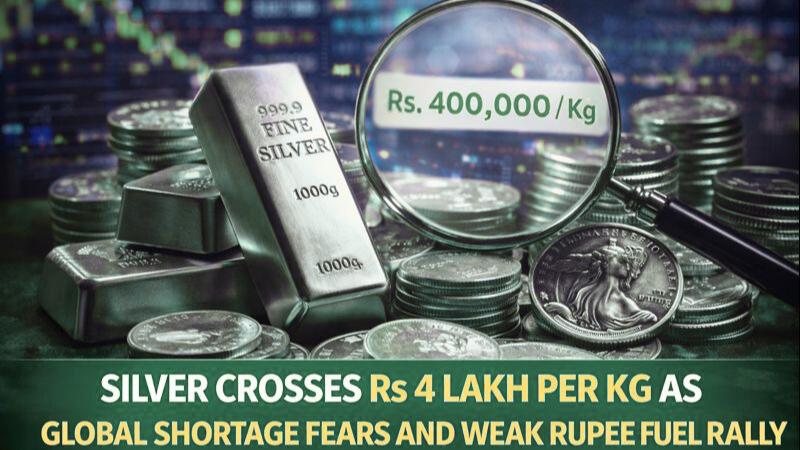
Silver crosses Rs 4 lakh per kg as global shortage fears and weak rupee fuel rally
Silver prices in India have surged to a historic high, crossing the Rs 4 lakh per kilogram mark in futures trading and pushing up spot prices across major cities. The sudden spike has caught many buyers by surprise, especially as silver was trading at much lower levels just weeks ago. The rally has been sharp and swift, making silver one of the strongest-performing commodities in recent times and raising questions among consumers and investors about whether prices will continue to rise or cor
Silver crosses Rs 4 lakh per kg as global shortage fears and weak rupee fuel rally
Silver prices in India have surged to a historic high, crossing the Rs 4 lakh per kilogram mark in futures trading and pushing up spot prices across major cities. The sudden spike has caught many buyers by surprise, especially as silver was trading at much lower levels just weeks ago. The rally has been sharp and swift, making silver one of the strongest-performing commodities in recent times and raising questions among consumers and investors about whether prices will continue to rise or cor


