

















#indiagdp
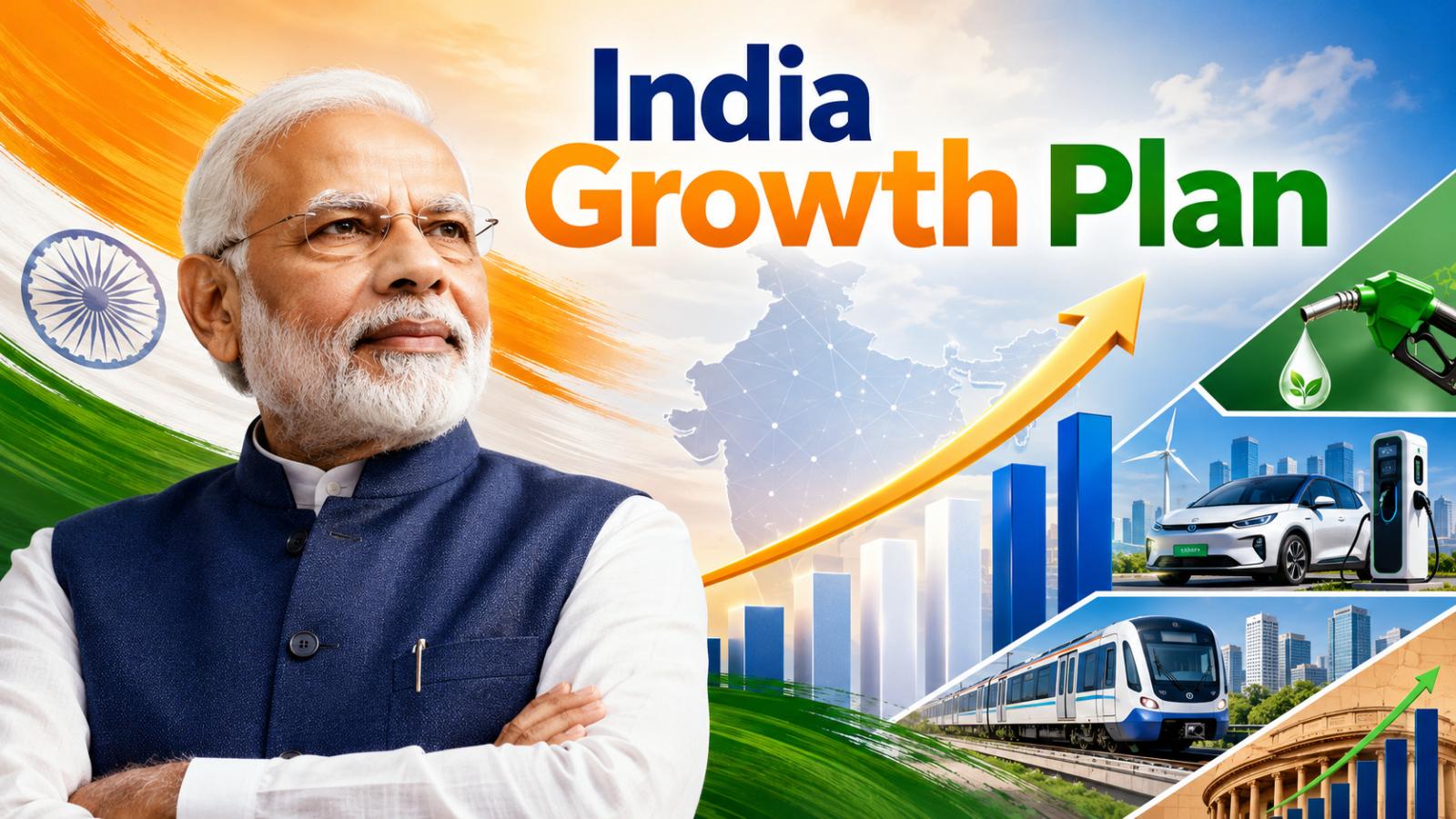
PM Modi Reviews India Growth Plan as GDP FY26 Hits 7.7%, Fuel Savings and Reforms Take Focus
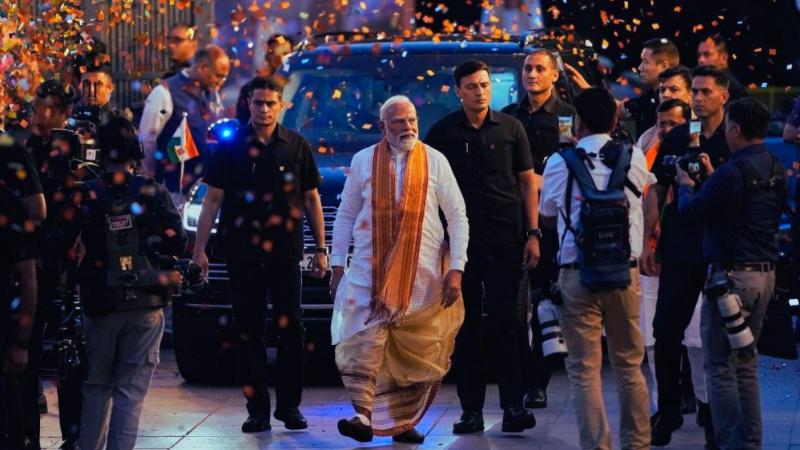
Prime Minister Narendra Modi reviewed India’s economic growth strategy with members of the PM-Economic Advisory Council as global uncertainty, trade pressures and tensions in West Asia continue to create risks for major economies. The discussion focused on strengthening India’s economic resilience, improving business conditions and ensuring that growth benefits both companies and ordinary citizens. The meeting also looked at how India can maintain momentum while protecting itsel
PM Modi Reviews India Growth Plan as GDP FY26 Hits 7.7%, Fuel Savings and Reforms Take Focus
Prime Minister Narendra Modi reviewed India’s economic growth strategy with members of the PM-Economic Advisory Council as global uncertainty, trade pressures and tensions in West Asia continue to create risks for major economies. The discussion focused on strengthening India’s economic resilience, improving business conditions and ensuring that growth benefits both companies and ordinary citizens. The meeting also looked at how India can maintain momentum while protecting itsel
India’s Growth Outlook Remains Strong at 6.5% in 2026, Says IMF Report
The International Monetary Fund (IMF) has revised its growth projections for India, forecasting a robust 6.5% growth for both 2026 and 2027, despite the global economic disruptions caused by the ongoing war in West Asia. India remains the fastest-growing major economy, although the IMF's global growth forecast has been downgraded to 3.1% for 2026, a decline from its January projection. The IMF report highlights the toll the war has taken on global markets and supply chains, especially in sect
India’s Growth Outlook Remains Strong at 6.5% in 2026, Says IMF Report
The International Monetary Fund (IMF) has revised its growth projections for India, forecasting a robust 6.5% growth for both 2026 and 2027, despite the global economic disruptions caused by the ongoing war in West Asia. India remains the fastest-growing major economy, although the IMF's global growth forecast has been downgraded to 3.1% for 2026, a decline from its January projection. The IMF report highlights the toll the war has taken on global markets and supply chains, especially in sect
India growth forecast raised to 6.6% as South Asia faces economic uncertainty
India is expected to remain the central driver of economic growth in South Asia, even as global uncertainties continue to pressure the broader region, according to the latest outlook from the World Bank. The institution has revised India’s growth forecast for the 2026–27 fiscal year upward to 6.6 percent, an increase from its earlier estimate of 6.3 percent, underscoring confidence in the country’s economic resilience. The updated projection comes amid a challenging global environment shaped by geopolitical tensions, shifting trade dynamics, and volatility in energy markets. These factors have weighed on growth expectations across South Asia, where several economies are projected to experience slower expansion in the coming years. Despite these headwinds, India’s performance continues to stand out, supported by strong domestic demand, policy stability, and ongoing structural reforms. For U.S.-based observers and global investors, India’s upgraded outlook signals a relatively stable growth engine within emerging markets in Asia. As economic uncertainty persists worldwide, India’s trajectory offers a degree of predictability that contrasts with the broader regional slowdown. Analysts note that while external risks remain significant, including supply chain disruptions and energy price fluctuations, India’s diversified economy positions it to better absorb global shocks. The World Bank’s revision highlights India’s role as a stabilizing force in South Asia’s economic landscape. While neighboring economies face mounting fiscal and external pressures, India is expected to continue contributing the largest share of regional growth. This dynamic reinforces the country’s importance not only within Asia but also in the context of the global economy, where emerging markets are increasingly influential. Overall, the revised forecast reflects cautious optimism. While challenges persist, India’s economic fundamentals and growth momentum suggest it will remain a key pillar of regional and global economic stability in the years ahead.
India growth forecast raised to 6.6% as South Asia faces economic uncertainty
India is expected to remain the central driver of economic growth in South Asia, even as global uncertainties continue to pressure the broader region, according to the latest outlook from the World Bank. The institution has revised India’s growth forecast for the 2026–27 fiscal year upward to 6.6 percent, an increase from its earlier estimate of 6.3 percent, underscoring confidence in the country’s economic resilience. The updated projection comes amid a challenging global environment shaped by geopolitical tensions, shifting trade dynamics, and volatility in energy markets. These factors have weighed on growth expectations across South Asia, where several economies are projected to experience slower expansion in the coming years. Despite these headwinds, India’s performance continues to stand out, supported by strong domestic demand, policy stability, and ongoing structural reforms. For U.S.-based observers and global investors, India’s upgraded outlook signals a relatively stable growth engine within emerging markets in Asia. As economic uncertainty persists worldwide, India’s trajectory offers a degree of predictability that contrasts with the broader regional slowdown. Analysts note that while external risks remain significant, including supply chain disruptions and energy price fluctuations, India’s diversified economy positions it to better absorb global shocks. The World Bank’s revision highlights India’s role as a stabilizing force in South Asia’s economic landscape. While neighboring economies face mounting fiscal and external pressures, India is expected to continue contributing the largest share of regional growth. This dynamic reinforces the country’s importance not only within Asia but also in the context of the global economy, where emerging markets are increasingly influential. Overall, the revised forecast reflects cautious optimism. While challenges persist, India’s economic fundamentals and growth momentum suggest it will remain a key pillar of regional and global economic stability in the years ahead.
India Becomes World’s 4th Largest Economy
In a landmark economic achievement, India has officially become the world’s 4th largest economy, overtaking Japan, according to recent data shared by government officials and confirmed by the International Monetary Fund (IMF). The development comes just days after Prime Minister Narendra Modi reaffirmed India’s ambitious goal of becoming a $5 trillion economy by 2025. Union Minister Jitendra Singh announced the milestone on social media platform X, stati
India Becomes World’s 4th Largest Economy
In a landmark economic achievement, India has officially become the world’s 4th largest economy, overtaking Japan, according to recent data shared by government officials and confirmed by the International Monetary Fund (IMF). The development comes just days after Prime Minister Narendra Modi reaffirmed India’s ambitious goal of becoming a $5 trillion economy by 2025. Union Minister Jitendra Singh announced the milestone on social media platform X, stati


