#indiajapan
India Japan unveil 16 point roadmap to expand strategic partnership
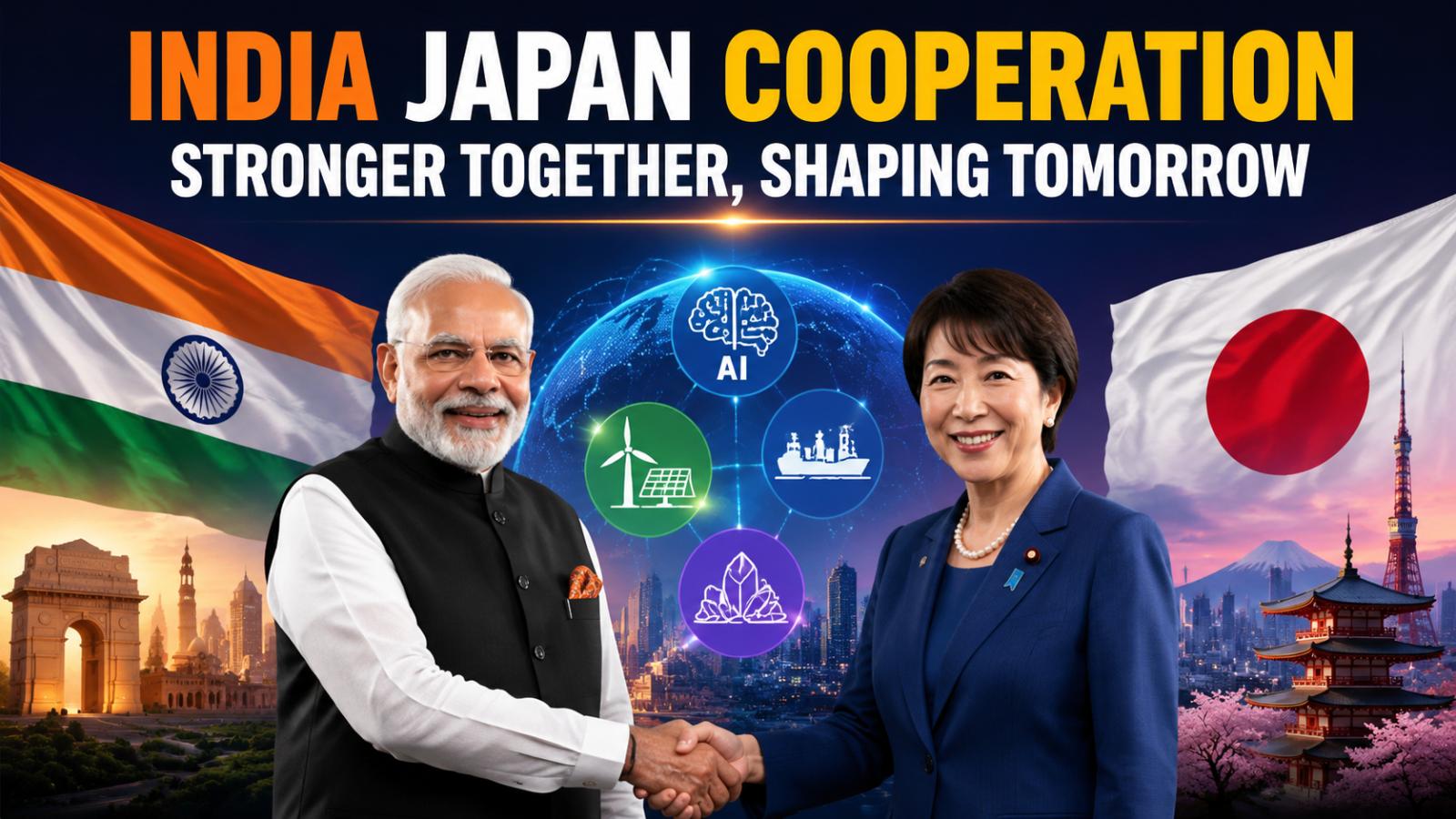
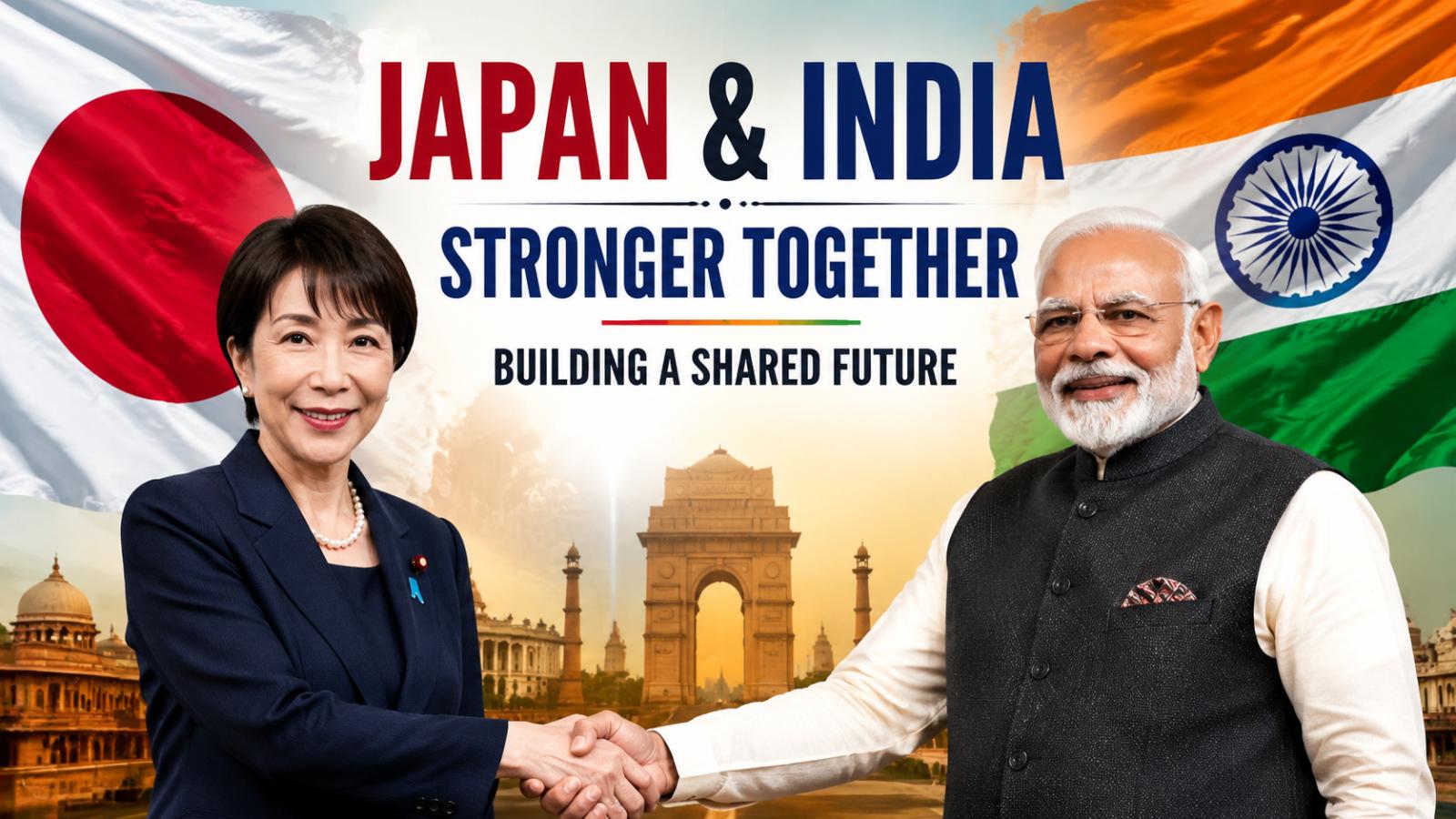
India Japan expand strategic partnership framework India and Japan have announced a 16-point roadmap aimed at significantly expanding their Special Strategic and Global Partnership, marking a shift toward deeper cooperation in economic security, advanced technology and energy resilience. The initiative was unveiled following the 16th India-Japan Annual Summit held in
India Japan unveil 16 point roadmap to expand strategic partnership
India Japan expand strategic partnership framework India and Japan have announced a 16-point roadmap aimed at significantly expanding their Special Strategic and Global Partnership, marking a shift toward deeper cooperation in economic security, advanced technology and energy resilience. The initiative was unveiled following the 16th India-Japan Annual Summit held in
India Japan expand military drills across land sea air
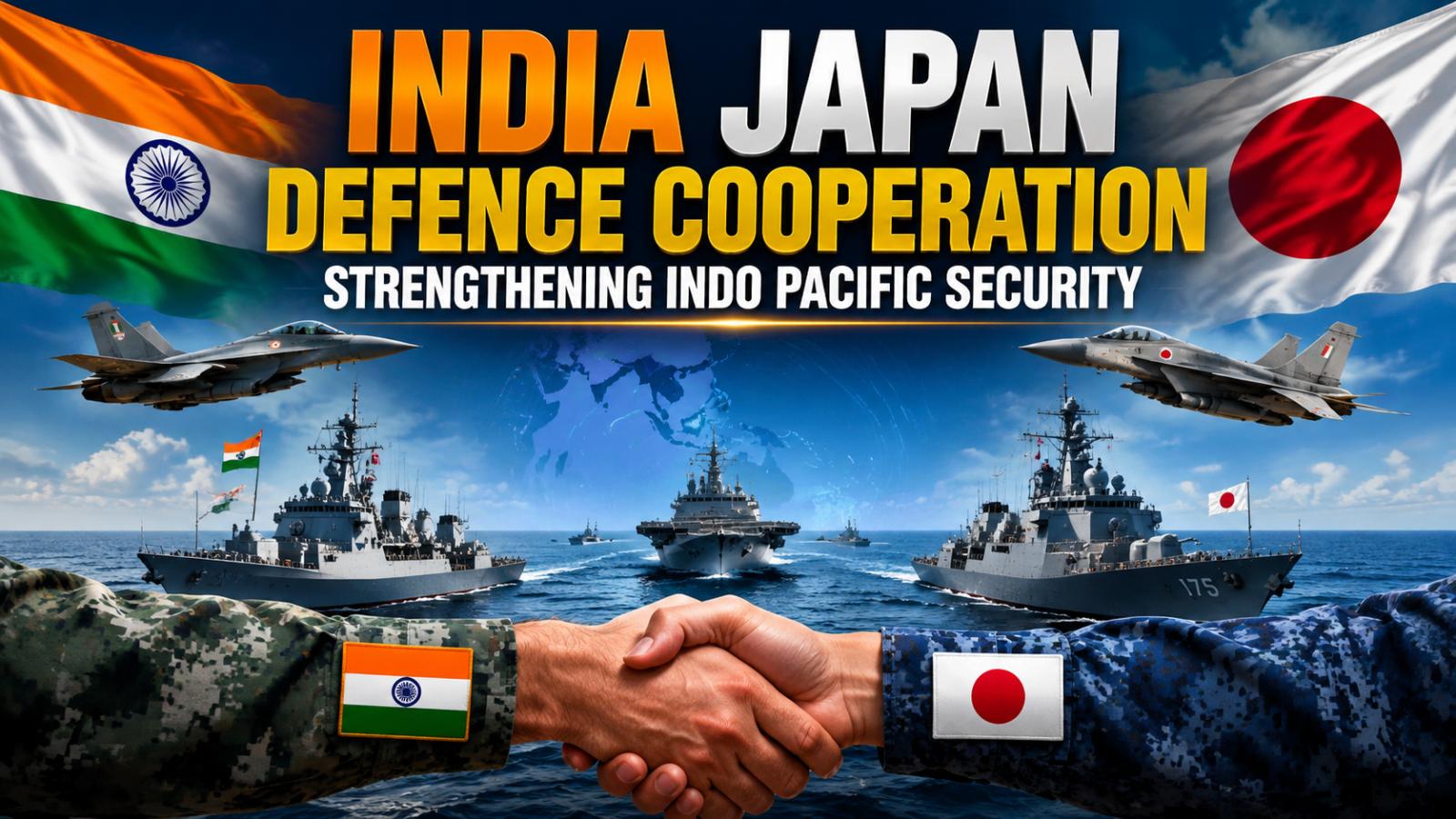
India and Japan are steadily widening their defence partnership with a stronger focus on Indo Pacific stability. The cooperation is no longer limited to symbolic diplomacy and now includes structured military coordination, regular exercises and operational level engagement between the armed forces of both countries. The shared objective is improving readiness and ensuring secure maritime routes across a region that is becoming increasingly contested. Defence dialogue moves into operational coordination High level defence talks between the two countries have evolved into practical coordination mechanisms. Regular 2+2 ministerial meetings have helped align security priorities, especially around regional stability, maritime surveillance and disaster response readiness. This structured engagement has created a foundation for long term interoperability between Indian and Japanese defence forces. Army level training under Dharma Guardian framework The joint Army exercise Dharma Guardian has become a key pillar of land based cooperation. It focuses on counter insurgency operations, jungle warfare and high altitude combat readiness. These drills are designed to improve tactical coordination between the Indian Army and the Japan Ground Self Defence Force, especially in complex terrain scenarios where joint response capability is critical. Naval cooperation through Malabar, JIMEX and MILAN Maritime collaboration remains the strongest pillar of this partnership. Exercises like Malabar, JIMEX and MILAN bring together naval forces to train in anti submarine warfare, sea lane protection and coordinated fleet operations. These drills improve communication and operational compatibility between navies, while also strengthening surveillance across key Indo Pacific shipping routes. Air force integration under Veer Guardian exercises Air cooperation has also expanded through joint training activities such as Veer Guardian. These exercises involve fighter aircraft operations, tactical missions and coordinated aerial drills between the Indian Air Force and the Japan Air Self Defence Force. The focus is on improving mission readiness and developing shared operational understanding in air combat scenarios. Defence technology and industrial cooperation Beyond field exercises, both countries are deepening collaboration in defence technology. Areas such as maritime surveillance systems, sensors and advanced naval equipment are gaining attention. Technology transfer initiatives and joint development discussions are gradually shaping a more integrated defence industrial partnership. Long term Indo Pacific security outlook The India Japan defence partnership is expected to grow further as regional security dynamics continue to evolve. Both countries are increasingly aligned on maintaining freedom of navigation, securing trade routes and responding to emerging maritime threats. This cooperation is positioning them as important contributors to Indo Pacific stability rather than passive regional players.
India Japan expand military drills across land sea air
India and Japan are steadily widening their defence partnership with a stronger focus on Indo Pacific stability. The cooperation is no longer limited to symbolic diplomacy and now includes structured military coordination, regular exercises and operational level engagement between the armed forces of both countries. The shared objective is improving readiness and ensuring secure maritime routes across a region that is becoming increasingly contested. Defence dialogue moves into operational coordination High level defence talks between the two countries have evolved into practical coordination mechanisms. Regular 2+2 ministerial meetings have helped align security priorities, especially around regional stability, maritime surveillance and disaster response readiness. This structured engagement has created a foundation for long term interoperability between Indian and Japanese defence forces. Army level training under Dharma Guardian framework The joint Army exercise Dharma Guardian has become a key pillar of land based cooperation. It focuses on counter insurgency operations, jungle warfare and high altitude combat readiness. These drills are designed to improve tactical coordination between the Indian Army and the Japan Ground Self Defence Force, especially in complex terrain scenarios where joint response capability is critical. Naval cooperation through Malabar, JIMEX and MILAN Maritime collaboration remains the strongest pillar of this partnership. Exercises like Malabar, JIMEX and MILAN bring together naval forces to train in anti submarine warfare, sea lane protection and coordinated fleet operations. These drills improve communication and operational compatibility between navies, while also strengthening surveillance across key Indo Pacific shipping routes. Air force integration under Veer Guardian exercises Air cooperation has also expanded through joint training activities such as Veer Guardian. These exercises involve fighter aircraft operations, tactical missions and coordinated aerial drills between the Indian Air Force and the Japan Air Self Defence Force. The focus is on improving mission readiness and developing shared operational understanding in air combat scenarios. Defence technology and industrial cooperation Beyond field exercises, both countries are deepening collaboration in defence technology. Areas such as maritime surveillance systems, sensors and advanced naval equipment are gaining attention. Technology transfer initiatives and joint development discussions are gradually shaping a more integrated defence industrial partnership. Long term Indo Pacific security outlook The India Japan defence partnership is expected to grow further as regional security dynamics continue to evolve. Both countries are increasingly aligned on maintaining freedom of navigation, securing trade routes and responding to emerging maritime threats. This cooperation is positioning them as important contributors to Indo Pacific stability rather than passive regional players.
India Japan cooperation expands into AI and energy pact
India and Japan have moved to broaden their strategic cooperation with a new framework focused on technology, energy security and resilient supply chains. The latest engagement signals a shift from traditional diplomatic alignment toward deeper economic and innovation-driven collaboration aimed at long-term stability in the Indo-Pacific region. Focus shifts toward AI and digit
India Japan cooperation expands into AI and energy pact
India and Japan have moved to broaden their strategic cooperation with a new framework focused on technology, energy security and resilient supply chains. The latest engagement signals a shift from traditional diplomatic alignment toward deeper economic and innovation-driven collaboration aimed at long-term stability in the Indo-Pacific region. Focus shifts toward AI and digit
India Japan carbon credit deal boosts clean energy projects
India and Japan are using a joint framework to connect climate action with investment flows. Instead of treating emission cuts as isolated national efforts, both countries are aligning projects where funding, technology, and verified reductions move together. This approach is built to support long-term decarbonisation while still allowing industrial growth in emerging markets like India.
India Japan carbon credit deal boosts clean energy projects
India and Japan are using a joint framework to connect climate action with investment flows. Instead of treating emission cuts as isolated national efforts, both countries are aligning projects where funding, technology, and verified reductions move together. This approach is built to support long-term decarbonisation while still allowing industrial growth in emerging markets like India.
India Japan summit 2026 boosts FOIP rare earth strategy
The India Japan Summit 2026 is emerging as more than diplomatic engagement, shifting toward a structured economic alignment under the Free and Open Indo-Pacific (FOIP) framework. Japan is positioning India as a long-term partner in building alternative production networks outside China’s dominant supply ecosystem. The focus is no longer symbolic cooperation but measurable industrial integration across energy, technology, and critical materials. Rare Earth Dependency and Strategic Diversification A major driver of the summit is global concern over rare earth concentration in China. These materials are essential for electric vehicles, defence systems, and semiconductor manufacturing. Japan has been actively seeking diversification, and India is being viewed as a viable partner due to its untapped mineral reserves and growing extraction capability. However, this shift is not immediate. India still faces infrastructure gaps in refining and processing, which limits its ability to fully replace existing supply chains. The partnership therefore focuses on joint development rather than replacement. Northeast India as an Emerging Industrial Bridge Northeast India is increasingly being integrated into strategic planning as a logistics and manufacturing connector between South Asia and Southeast Asia. Its geographical position near the Bay of Bengal makes it relevant for regional trade routes, especially under Japan-backed connectivity initiatives. The long-term expectation is the development of corridors linking manufacturing zones, ports, and resource hubs. But execution remains a challenge due to terrain, infrastructure bottlenecks, and slow industrial scaling. EV Batteries and Semiconductor Collaboration Expands The summit is expected to accelerate cooperation in electric mobility and chip production. Japan’s technology strength in precision manufacturing complements India’s expanding industrial base and domestic demand growth. Instead of simple export-import trade, both countries are moving toward localized production ecosystems. This includes battery supply chains, semiconductor assembly, and joint research in advanced materials. The real shift here is from consumption-driven trade to production-sharing models. Investment Flow and Industrial Integration Japanese investment in India continues to grow steadily, with a strong presence in automobiles, electronics, and infrastructure. The partnership now appears to be entering a deeper phase where investment is tied to strategic supply chain redesign rather than isolated projects. This creates a long-term dependency loop where both economies benefit from shared manufacturing ecosystems, but also become more structurally linked to global market fluctuations. Strategic Outcome: A Competing Supply Chain Bloc The broader outcome of the India Japan Summit 2026 is the gradual formation of an alternative industrial network in Asia. It does not replace existing systems overnight but creates parallel pathways in critical sectors like energy storage, semiconductors, and defence manufacturing. The key question going forward is execution speed. Policy alignment is strong, but infrastructure readiness and capital deployment will decide how quickly this partnership moves from strategy to reality.
India Japan summit 2026 boosts FOIP rare earth strategy
The India Japan Summit 2026 is emerging as more than diplomatic engagement, shifting toward a structured economic alignment under the Free and Open Indo-Pacific (FOIP) framework. Japan is positioning India as a long-term partner in building alternative production networks outside China’s dominant supply ecosystem. The focus is no longer symbolic cooperation but measurable industrial integration across energy, technology, and critical materials. Rare Earth Dependency and Strategic Diversification A major driver of the summit is global concern over rare earth concentration in China. These materials are essential for electric vehicles, defence systems, and semiconductor manufacturing. Japan has been actively seeking diversification, and India is being viewed as a viable partner due to its untapped mineral reserves and growing extraction capability. However, this shift is not immediate. India still faces infrastructure gaps in refining and processing, which limits its ability to fully replace existing supply chains. The partnership therefore focuses on joint development rather than replacement. Northeast India as an Emerging Industrial Bridge Northeast India is increasingly being integrated into strategic planning as a logistics and manufacturing connector between South Asia and Southeast Asia. Its geographical position near the Bay of Bengal makes it relevant for regional trade routes, especially under Japan-backed connectivity initiatives. The long-term expectation is the development of corridors linking manufacturing zones, ports, and resource hubs. But execution remains a challenge due to terrain, infrastructure bottlenecks, and slow industrial scaling. EV Batteries and Semiconductor Collaboration Expands The summit is expected to accelerate cooperation in electric mobility and chip production. Japan’s technology strength in precision manufacturing complements India’s expanding industrial base and domestic demand growth. Instead of simple export-import trade, both countries are moving toward localized production ecosystems. This includes battery supply chains, semiconductor assembly, and joint research in advanced materials. The real shift here is from consumption-driven trade to production-sharing models. Investment Flow and Industrial Integration Japanese investment in India continues to grow steadily, with a strong presence in automobiles, electronics, and infrastructure. The partnership now appears to be entering a deeper phase where investment is tied to strategic supply chain redesign rather than isolated projects. This creates a long-term dependency loop where both economies benefit from shared manufacturing ecosystems, but also become more structurally linked to global market fluctuations. Strategic Outcome: A Competing Supply Chain Bloc The broader outcome of the India Japan Summit 2026 is the gradual formation of an alternative industrial network in Asia. It does not replace existing systems overnight but creates parallel pathways in critical sectors like energy storage, semiconductors, and defence manufacturing. The key question going forward is execution speed. Policy alignment is strong, but infrastructure readiness and capital deployment will decide how quickly this partnership moves from strategy to reality.
Japan PM Sanae Takaichi to visit India for key summit with Modi
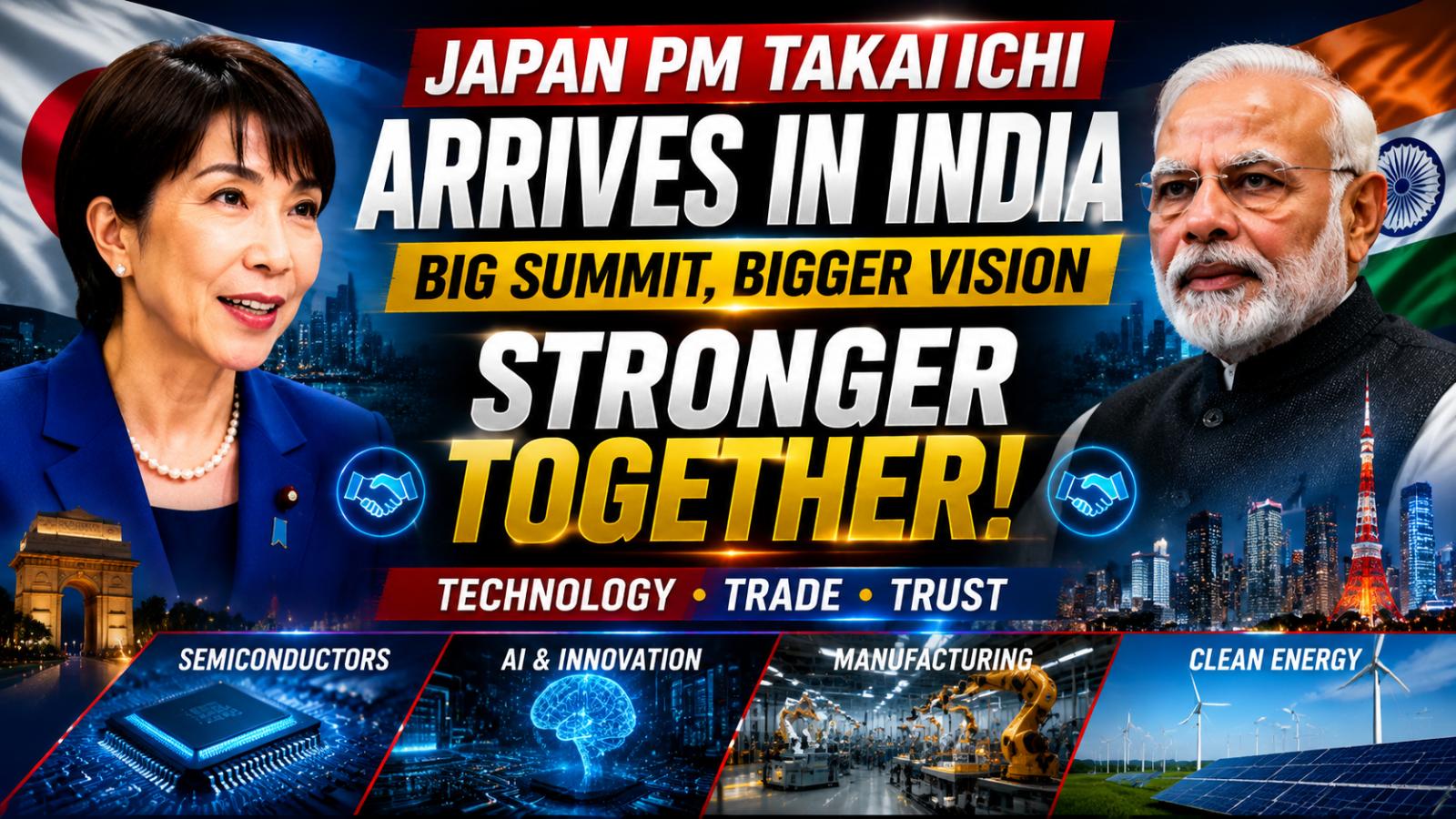
High-level diplomatic engagement in New Delhi Japanese Prime Minister Sanae Takaichi will arrive in India on July 1,2026 for the 16th India-Japan Annual Summit at the invitation of Prime Minister Narendra Modi. The visit marks her first official trip to India since taking office in 2025 and comes at a time when both nations are seeking to strengthen strategic and economic alignment in a rapidly changing global environment.
Japan PM Sanae Takaichi to visit India for key summit with Modi
High-level diplomatic engagement in New Delhi Japanese Prime Minister Sanae Takaichi will arrive in India on July 1,2026 for the 16th India-Japan Annual Summit at the invitation of Prime Minister Narendra Modi. The visit marks her first official trip to India since taking office in 2025 and comes at a time when both nations are seeking to strengthen strategic and economic alignment in a rapidly changing global environment.
Takaichi visit signals deeper Japan India strategic cooperation
The visit of Sanae Takaichi to New Delhi marks a renewed phase in relations between Japan and India. Her meeting with
Takaichi visit signals deeper Japan India strategic cooperation
The visit of Sanae Takaichi to New Delhi marks a renewed phase in relations between Japan and India. Her meeting with
Trump weighs Core-5 global power bloc as potential alternative to the G7
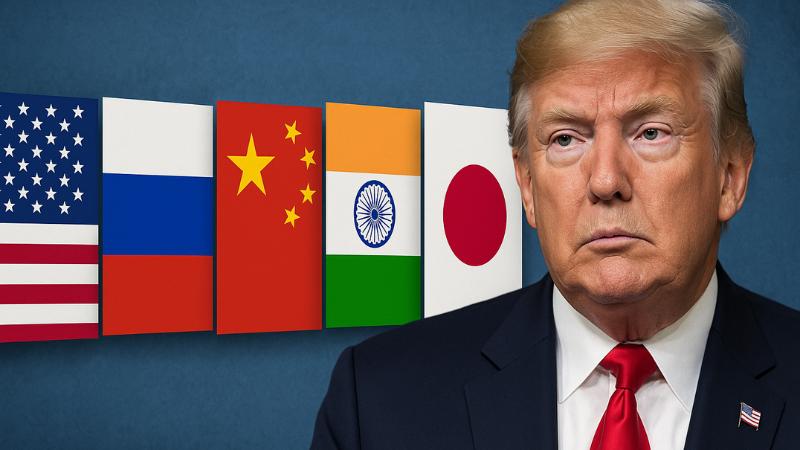
US President Donald Trump is reported to be considering the formation of a new geopolitical grouping known as the “Core-5,” a proposed alliance that would bring together the United States, Russia, China, India, and Japan. The initiative is being explored as a potential alternative to the Group of Seven, signaling a significant shift in Washington’s approach to global leadership and alliance-building. If pursued, the Core-5 could represent one of the most powerful strategic blocs ever as
Trump weighs Core-5 global power bloc as potential alternative to the G7
US President Donald Trump is reported to be considering the formation of a new geopolitical grouping known as the “Core-5,” a proposed alliance that would bring together the United States, Russia, China, India, and Japan. The initiative is being explored as a potential alternative to the Group of Seven, signaling a significant shift in Washington’s approach to global leadership and alliance-building. If pursued, the Core-5 could represent one of the most powerful strategic blocs ever as
Sanae Takaichi becomes Japan’s first woman prime minister, marking historic change
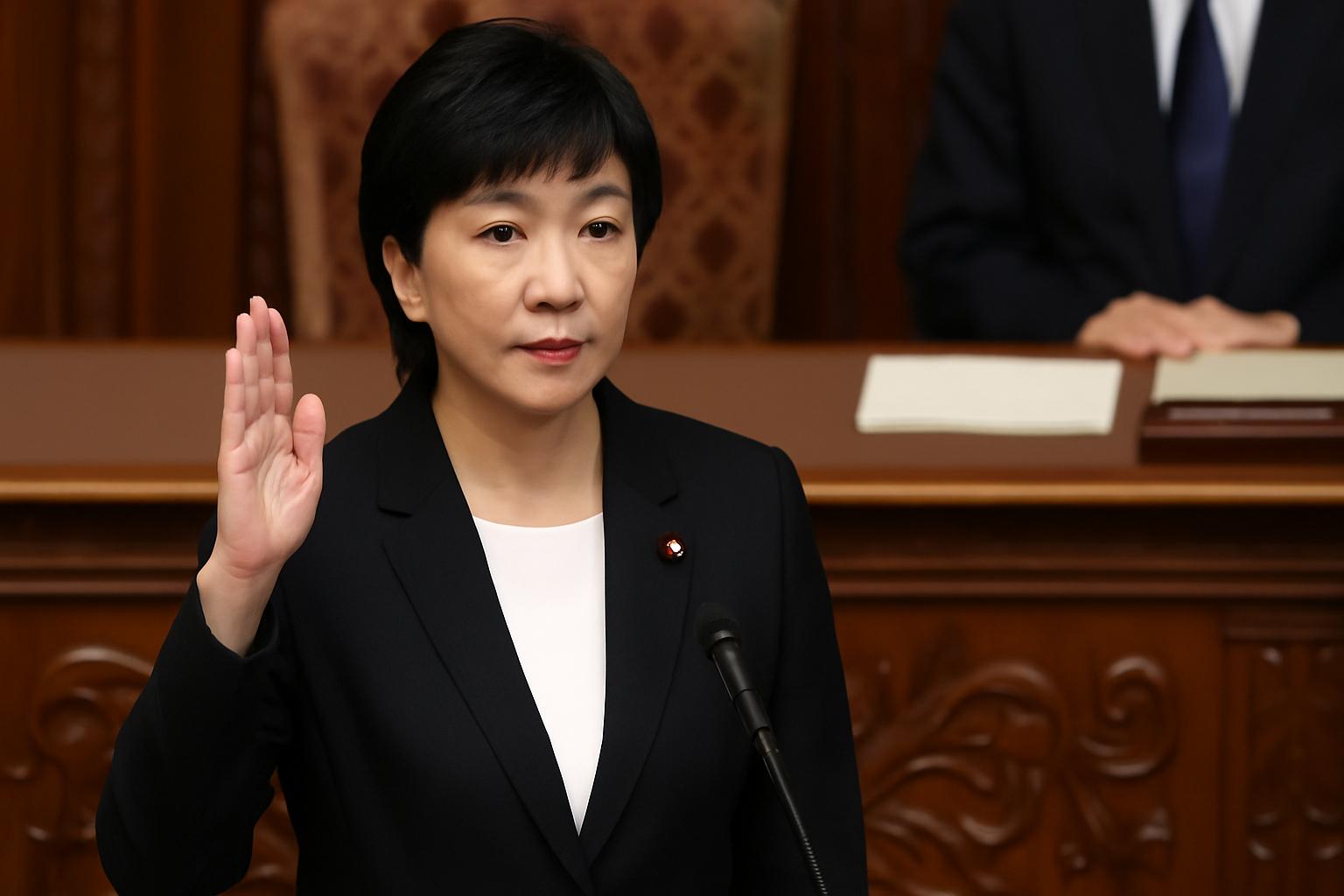
Japan made history on Tuesday as Sanae Takaichi was appointed the country’s first woman prime minister after a decisive vote in the lower house of parliament. Her elevation marks a groundbreaking moment in a nation where political and corporate leadership remains overwhelmingly male. Takaichi, a prominent conservative and known China hawk, secured 237 votes in the 465-member House of Representatives, crossing the majority threshold in the first round itself. She is expected to formally assu
Sanae Takaichi becomes Japan’s first woman prime minister, marking historic change
Japan made history on Tuesday as Sanae Takaichi was appointed the country’s first woman prime minister after a decisive vote in the lower house of parliament. Her elevation marks a groundbreaking moment in a nation where political and corporate leadership remains overwhelmingly male. Takaichi, a prominent conservative and known China hawk, secured 237 votes in the 465-member House of Representatives, crossing the majority threshold in the first round itself. She is expected to formally assu
Tokyo Skytree Shines In Indian Flag Colours To Welcome Pm Modi’s Japan Visit
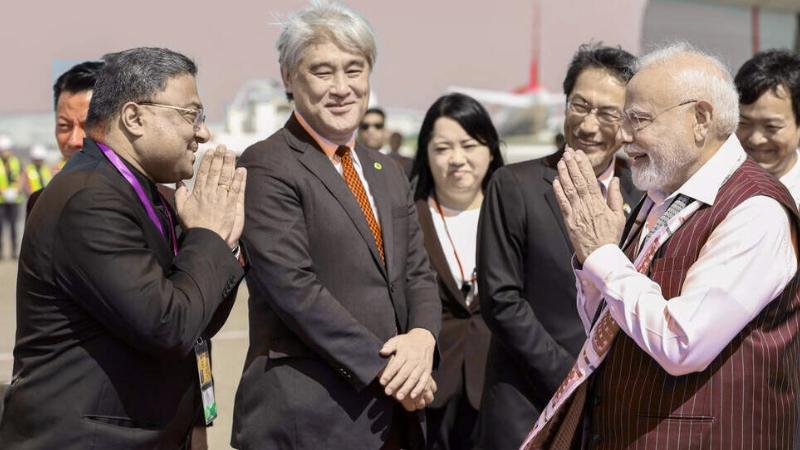
The Tokyo Skytree, the tallest tower in Japan and one of the most iconic landmarks of the country, was illuminated in the colours of the Indian national flag to mark the visit of Prime Minister Narendra Modi to Tokyo on Friday, August 29. The tricolour lighting served as a symbolic gesture reflecting the warmth of the relationship between India and Japan. Modi is in Japan for a two-day visit to participate in the 15th Annual India-Japan Summit, which was hosted
Tokyo Skytree Shines In Indian Flag Colours To Welcome Pm Modi’s Japan Visit
The Tokyo Skytree, the tallest tower in Japan and one of the most iconic landmarks of the country, was illuminated in the colours of the Indian national flag to mark the visit of Prime Minister Narendra Modi to Tokyo on Friday, August 29. The tricolour lighting served as a symbolic gesture reflecting the warmth of the relationship between India and Japan. Modi is in Japan for a two-day visit to participate in the 15th Annual India-Japan Summit, which was hosted
PM Modi In Japan: Quad, Bullet Train, Semiconductors And $68 Billion Investment
Prime Minister Narendra Modi has begun his two-day Japan visit with a packed agenda that includes strengthening economic ties, advancing technology partnerships, and reinforcing India’s role in the Quad grouping. The visit comes at a time of rising trade tensions with the United States following President Donald Trump’s imposition of a 50 per cent tariff on Indian goods. Against this backdrop, Tokyo is positioning itself as a stronger ally for New
PM Modi In Japan: Quad, Bullet Train, Semiconductors And $68 Billion Investment
Prime Minister Narendra Modi has begun his two-day Japan visit with a packed agenda that includes strengthening economic ties, advancing technology partnerships, and reinforcing India’s role in the Quad grouping. The visit comes at a time of rising trade tensions with the United States following President Donald Trump’s imposition of a 50 per cent tariff on Indian goods. Against this backdrop, Tokyo is positioning itself as a stronger ally for New