




Israel Lebanon strikes deepen Iran-US tensions over Hormuz
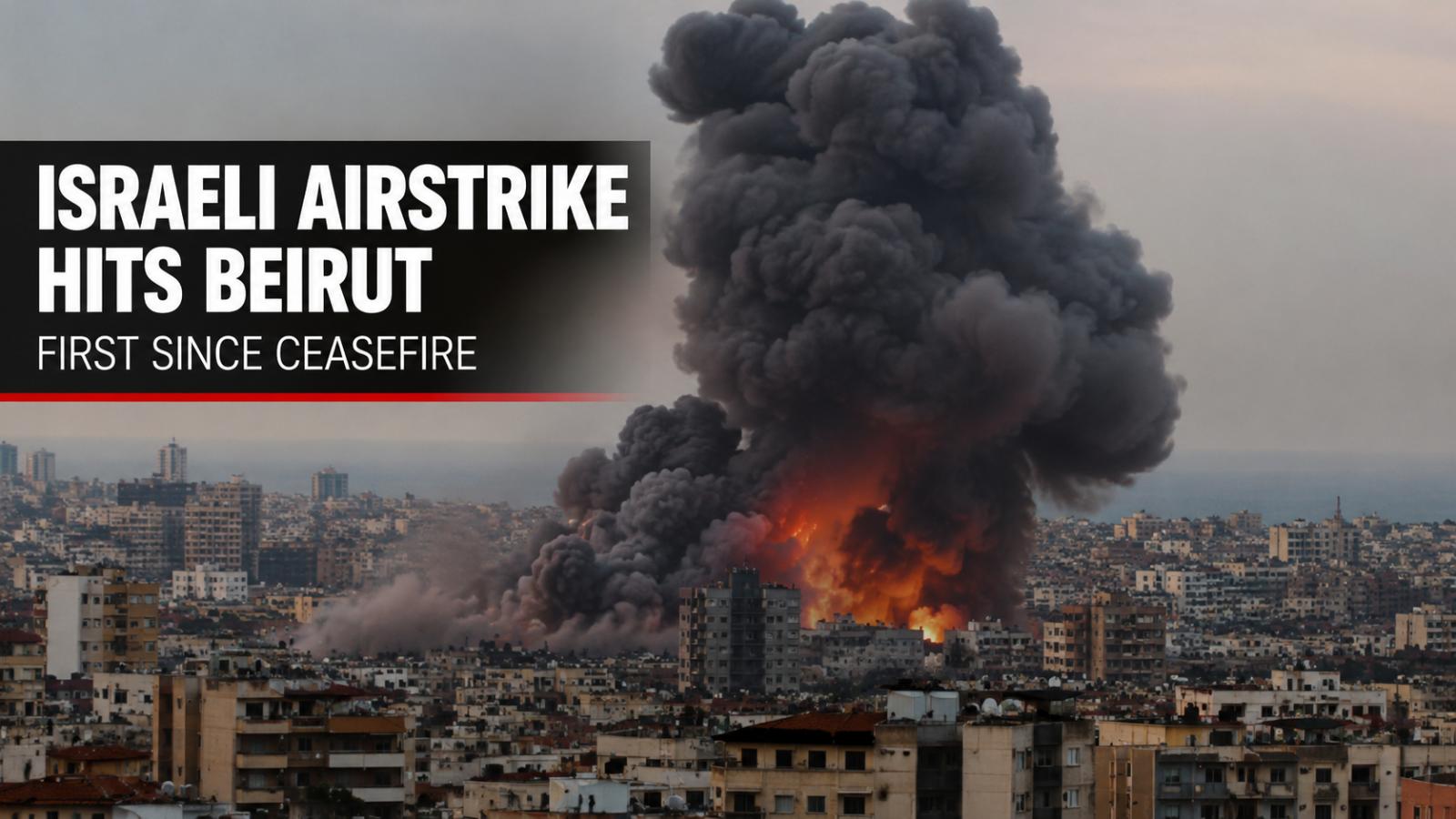
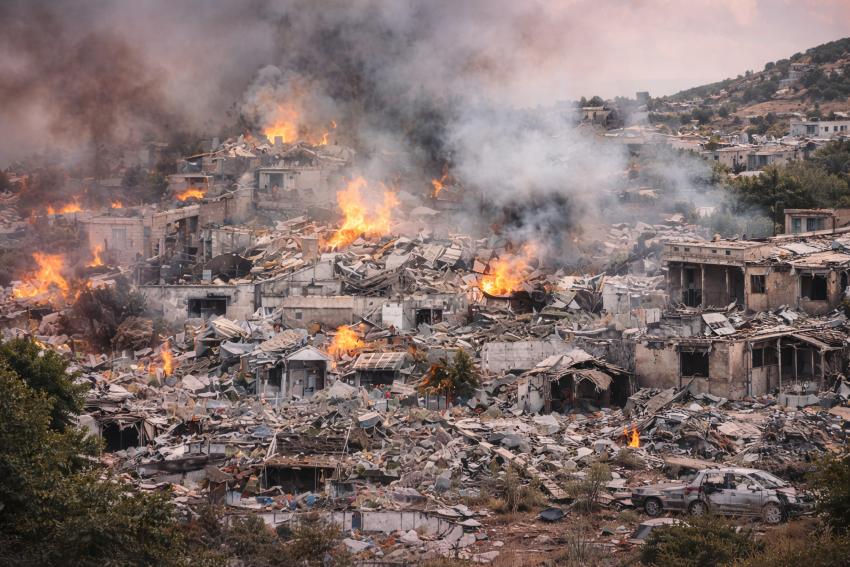
Israel Lebanon strikes have renewed fears of a wider regional conflict just as Iran and Oman move closer to an agreement on shipping through the Strait of Hormuz. The violence in southern Lebanon, threats against Gulf infrastructure and stalled Iran-US diplomacy show how fragile the search for peace remains. Israel Lebanon strikes hit southern villages Israel carried out strikes in southern Leb
Israel Lebanon strikes deepen Iran-US tensions over Hormuz
Israel Lebanon strikes have renewed fears of a wider regional conflict just as Iran and Oman move closer to an agreement on shipping through the Strait of Hormuz. The violence in southern Lebanon, threats against Gulf infrastructure and stalled Iran-US diplomacy show how fragile the search for peace remains. Israel Lebanon strikes hit southern villages Israel carried out strikes in southern Leb
Mojtaba Khamenei peace terms link US deal to Lebanon
Iranian Supreme Leader Mojtaba Khamenei has linked any future agreement with the United States to an end to Israeli military operations in Lebanon. His position places Lebanon, Hezbollah support and Israeli withdrawal at the centre of Tehran’s conditions as regional diplomatic efforts continue. Iran-US peace conditions In a statement posted on X, Khamenei said Iran would require the protectio
Mojtaba Khamenei peace terms link US deal to Lebanon
Iranian Supreme Leader Mojtaba Khamenei has linked any future agreement with the United States to an end to Israeli military operations in Lebanon. His position places Lebanon, Hezbollah support and Israeli withdrawal at the centre of Tehran’s conditions as regional diplomatic efforts continue. Iran-US peace conditions In a statement posted on X, Khamenei said Iran would require the protectio
Netanyahu cites India support after JD Vance criticism
Netanyahu responds to concerns over Israel support Israeli Prime Minister Benjamin Netanyahu pushed back against criticism over declining support for Israel, saying the country’s international backing is not limited to one leader or one nation. Speaking during a televised interview, Netanyahu said Israel has no greater ally than the United States, while also pointing
Netanyahu cites India support after JD Vance criticism
Netanyahu responds to concerns over Israel support Israeli Prime Minister Benjamin Netanyahu pushed back against criticism over declining support for Israel, saying the country’s international backing is not limited to one leader or one nation. Speaking during a televised interview, Netanyahu said Israel has no greater ally than the United States, while also pointing
Israel Hezbollah clashes raise oil and trade risk for India
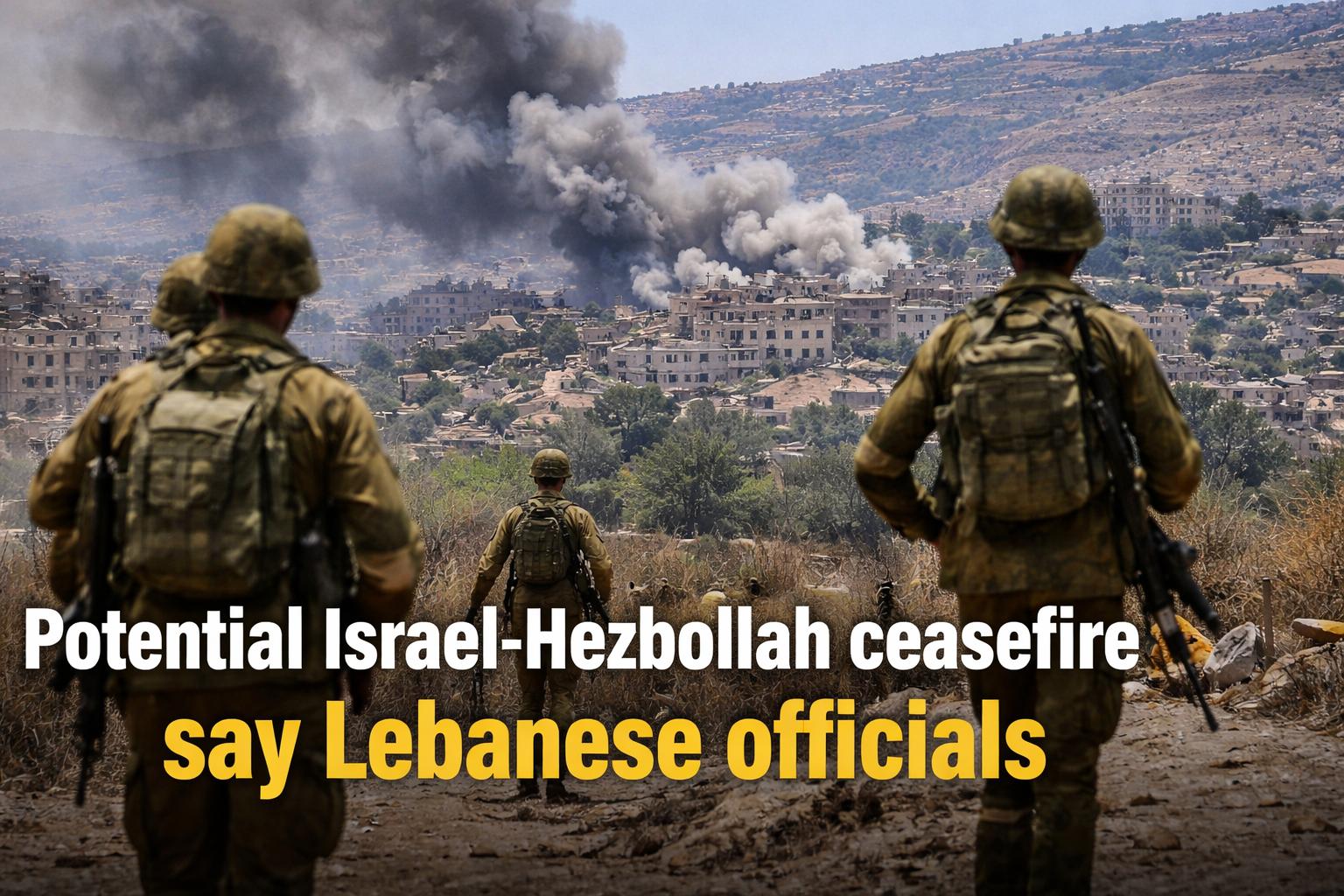
The renewed exchange of fire between Israeli forces and Hezbollah-linked positions in southern Lebanon has again drawn attention to an already fragile regional security environment. While both sides continue to frame their actions as targeted and defensive, the situation is increasingly being viewed through a wider geopolitical lens, especially by energy markets and trade-dependent economies. Even limited escalation in this corridor tends to trigger immediate risk recalibration in global markets, not because of direct supply disruption, but due to fear of spillover into wider West Asian conflict zones. Oil markets react to uncertainty, not only disruption Crude oil prices have remained sensitive to developments in the region, with traders closely tracking any sign of expansion beyond localized strikes. Brent crude has shown intermittent swings, reflecting how quickly sentiment shifts when geopolitical risks rise. For import-heavy economies like India, the concern is not only about supply cuts but also price volatility. Even short-lived spikes increase import bills, widen trade deficits, and add pressure on domestic inflation through fuel and transport costs. India remains heavily dependent on imported crude, leaving it exposed to external shocks that originate far from its own borders but quickly reach its economy through global pricing mechanisms. Maritime chokepoints add another layer of risk Beyond oil production zones, shipping routes remain a critical pressure point. The Strait of Hormuz continues to be one of the most strategically sensitive maritime corridors in the world, handling a large share of global crude movement. Any perception of instability in nearby conflict zones tends to increase insurance premiums for tankers and freight operators. This raises shipping costs even when physical disruption does not occur. For trade-dependent economies, the indirect cost of conflict often arrives faster than any actual supply shortage. India’s broader exposure goes beyond energy India’s stake in West Asian stability is not limited to crude imports. A large Indian workforce in Gulf countries supports billions in annual remittances, which play a steady role in foreign exchange stability. At the same time, India maintains layered relationships across the region—energy partnerships with Gulf producers, strategic cooperation with Israel, and connectivity interests linked to Iran and regional ports. This creates a complex policy environment where instability in one corridor can influence multiple economic and diplomatic channels simultaneously. Long-term infrastructure plans face sensitivity risks Large-scale trade and infrastructure initiatives involving West Asia, including proposed trans-regional connectivity corridors, depend heavily on stable political conditions. Projects linked to ports, energy routes, and logistics networks become vulnerable when security risks rise. Even without direct damage, prolonged uncertainty tends to slow investment decisions, delay contracts, and increase financing costs for regional development projects. Conclusion The current Israel–Hezbollah exchange remains geographically contained, but its economic impact is far wider. Oil markets, shipping costs, remittance flows, and long-term trade planning all react quickly to signals of escalation. For India and other import-dependent economies, the primary challenge is not direct involvement in the conflict but exposure to its ripple effects through energy pricing, logistics costs, and regional stability risks.
Israel Hezbollah clashes raise oil and trade risk for India
The renewed exchange of fire between Israeli forces and Hezbollah-linked positions in southern Lebanon has again drawn attention to an already fragile regional security environment. While both sides continue to frame their actions as targeted and defensive, the situation is increasingly being viewed through a wider geopolitical lens, especially by energy markets and trade-dependent economies. Even limited escalation in this corridor tends to trigger immediate risk recalibration in global markets, not because of direct supply disruption, but due to fear of spillover into wider West Asian conflict zones. Oil markets react to uncertainty, not only disruption Crude oil prices have remained sensitive to developments in the region, with traders closely tracking any sign of expansion beyond localized strikes. Brent crude has shown intermittent swings, reflecting how quickly sentiment shifts when geopolitical risks rise. For import-heavy economies like India, the concern is not only about supply cuts but also price volatility. Even short-lived spikes increase import bills, widen trade deficits, and add pressure on domestic inflation through fuel and transport costs. India remains heavily dependent on imported crude, leaving it exposed to external shocks that originate far from its own borders but quickly reach its economy through global pricing mechanisms. Maritime chokepoints add another layer of risk Beyond oil production zones, shipping routes remain a critical pressure point. The Strait of Hormuz continues to be one of the most strategically sensitive maritime corridors in the world, handling a large share of global crude movement. Any perception of instability in nearby conflict zones tends to increase insurance premiums for tankers and freight operators. This raises shipping costs even when physical disruption does not occur. For trade-dependent economies, the indirect cost of conflict often arrives faster than any actual supply shortage. India’s broader exposure goes beyond energy India’s stake in West Asian stability is not limited to crude imports. A large Indian workforce in Gulf countries supports billions in annual remittances, which play a steady role in foreign exchange stability. At the same time, India maintains layered relationships across the region—energy partnerships with Gulf producers, strategic cooperation with Israel, and connectivity interests linked to Iran and regional ports. This creates a complex policy environment where instability in one corridor can influence multiple economic and diplomatic channels simultaneously. Long-term infrastructure plans face sensitivity risks Large-scale trade and infrastructure initiatives involving West Asia, including proposed trans-regional connectivity corridors, depend heavily on stable political conditions. Projects linked to ports, energy routes, and logistics networks become vulnerable when security risks rise. Even without direct damage, prolonged uncertainty tends to slow investment decisions, delay contracts, and increase financing costs for regional development projects. Conclusion The current Israel–Hezbollah exchange remains geographically contained, but its economic impact is far wider. Oil markets, shipping costs, remittance flows, and long-term trade planning all react quickly to signals of escalation. For India and other import-dependent economies, the primary challenge is not direct involvement in the conflict but exposure to its ripple effects through energy pricing, logistics costs, and regional stability risks.
Iran–US talks stall as Lebanon crisis deepens over Hezbollah role
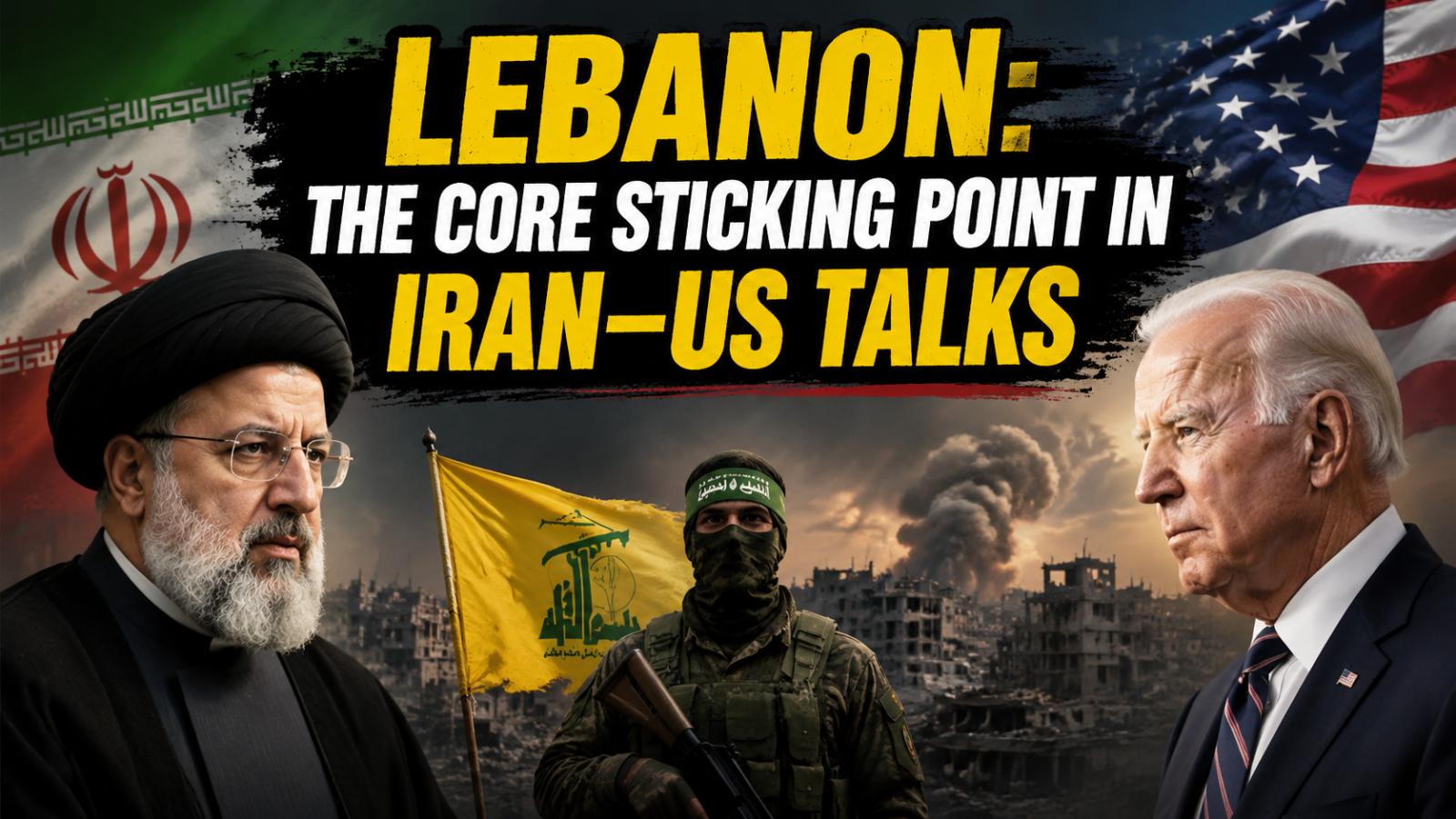
Negotiations between Iran and the United States are increasingly being shaped by events in Lebanon, where Hezbollah’s presence has turned a local conflict into a regional negotiation barrier. What was once a narrow security issue has evolved into a wider political and military deadlock involving multiple state and non-state actors. Hezbollah’s dual structure complicates negotiations Hezbolla
Iran–US talks stall as Lebanon crisis deepens over Hezbollah role
Negotiations between Iran and the United States are increasingly being shaped by events in Lebanon, where Hezbollah’s presence has turned a local conflict into a regional negotiation barrier. What was once a narrow security issue has evolved into a wider political and military deadlock involving multiple state and non-state actors. Hezbollah’s dual structure complicates negotiations Hezbolla
Israel Lebanon border tension grows over Beaufort Castle
Israel has signalled that its forces will remain in parts of southern Lebanon, including the area around Beaufort Castle, as border security remains a major concern despite continuing ceasefire pressure. Israeli officials say the military-held zone is needed to protect communities in Galilee and prevent Hezbollah-linked groups from regaining positions close to northern Israel. Defence Minister Israel Katz said Israel does not intend to wit
Israel Lebanon border tension grows over Beaufort Castle
Israel has signalled that its forces will remain in parts of southern Lebanon, including the area around Beaufort Castle, as border security remains a major concern despite continuing ceasefire pressure. Israeli officials say the military-held zone is needed to protect communities in Galilee and prevent Hezbollah-linked groups from regaining positions close to northern Israel. Defence Minister Israel Katz said Israel does not intend to wit
US Iran talks in Switzerland face fragile diplomatic test
US Iran negotiations in Switzerland have entered a renewed phase, but the environment remains unstable as regional conflicts continue to shape the direction of talks. Diplomatic representatives from both sides are attempting to revive stalled communication lines, with mediation support from regional actors working behind the scenes to prevent another breakdown. The discussions are being positioned as an attempt to rebuild trust after repeated interruptions, though expectations remai
US Iran talks in Switzerland face fragile diplomatic test
US Iran negotiations in Switzerland have entered a renewed phase, but the environment remains unstable as regional conflicts continue to shape the direction of talks. Diplomatic representatives from both sides are attempting to revive stalled communication lines, with mediation support from regional actors working behind the scenes to prevent another breakdown. The discussions are being positioned as an attempt to rebuild trust after repeated interruptions, though expectations remai
US-Iran Talks Postponed as Trump’s Iran Memorandum Faces Lebanon Test
US-Iran talks were postponed on Friday, June 19, 2026, as President Donald Trump’s interim Iran memorandum faced questions over nuclear safeguards, financial incentives and renewed fighting in Lebanon. US-Iran talks postponed in Switzerland Switzerland’s Foreign Ministry said planned talks involving the United States, Iran, Qatar and Pakistan had been postponed. It did not announce a new date. The White House had earlier delayed Vice President JD Van
US-Iran Talks Postponed as Trump’s Iran Memorandum Faces Lebanon Test
US-Iran talks were postponed on Friday, June 19, 2026, as President Donald Trump’s interim Iran memorandum faced questions over nuclear safeguards, financial incentives and renewed fighting in Lebanon. US-Iran talks postponed in Switzerland Switzerland’s Foreign Ministry said planned talks involving the United States, Iran, Qatar and Pakistan had been postponed. It did not announce a new date. The White House had earlier delayed Vice President JD Van
Israel to Keep Troops in Gaza, Lebanon and Syria
Netanyahu Defends Iran Campaign Israeli Prime Minister Benjamin Netanyahu said the joint US-Israeli military campaign against Iran had protected Israel from what he described as the danger of nuclear annihilation. Speaking after Washington and Tehran announced a preliminary agreement to halt the regional war, Netanyahu said Israel and the United States had removed an immediate Iranian nuclear threat and created a credible military deterrent for future negotiations. He said Iran would not be allowed to obtain nuclear weapons “with or without a deal,” while insisting that Israel would retain the ability to act if it judged the threat unresolved. Security Zones To Remain Netanyahu also said Israeli forces would remain in security zones in Gaza, Lebanon and Syria for as long as his government considered necessary. He argued that those buffer areas were created to protect Israel’s borders after years of threats from Iran-backed groups and other armed factions. His position comes as the US-Iran agreement seeks to reduce fighting across the region, including in Lebanon, where Hezbollah and Israeli forces have been involved in continued hostilities. The statement signals that Israel may not automatically withdraw from territory it currently controls even if broader diplomacy moves forward. Iran Deal Raises Tensions The US-Iran agreement has created political pressure inside Israel, with critics warning that the deal may leave major issues unresolved, including Iran’s missile program and support for regional armed groups. Netanyahu has avoided directly rejecting the diplomatic track, but he has stressed that Israel is not bound to accept security risks it considers unacceptable. The gap between Washington’s push for de-escalation and Israel’s insistence on military freedom of action could become a major test for future Middle East diplomacy. Netanyahu Confirms Election Run Netanyahu also confirmed that he plans to run in Israel’s upcoming elections. His announcement comes as he faces criticism from opposition parties over the handling of the war, the fate of hostages, continued military operations and the political cost of the Iran campaign. Despite domestic pressure and a continuing corruption trial, Netanyahu said he intends to seek another term. His remarks show that the Iran campaign, the US-Iran deal and Israel’s security zones are likely to become central issues in the election debate.
Israel to Keep Troops in Gaza, Lebanon and Syria
Netanyahu Defends Iran Campaign Israeli Prime Minister Benjamin Netanyahu said the joint US-Israeli military campaign against Iran had protected Israel from what he described as the danger of nuclear annihilation. Speaking after Washington and Tehran announced a preliminary agreement to halt the regional war, Netanyahu said Israel and the United States had removed an immediate Iranian nuclear threat and created a credible military deterrent for future negotiations. He said Iran would not be allowed to obtain nuclear weapons “with or without a deal,” while insisting that Israel would retain the ability to act if it judged the threat unresolved. Security Zones To Remain Netanyahu also said Israeli forces would remain in security zones in Gaza, Lebanon and Syria for as long as his government considered necessary. He argued that those buffer areas were created to protect Israel’s borders after years of threats from Iran-backed groups and other armed factions. His position comes as the US-Iran agreement seeks to reduce fighting across the region, including in Lebanon, where Hezbollah and Israeli forces have been involved in continued hostilities. The statement signals that Israel may not automatically withdraw from territory it currently controls even if broader diplomacy moves forward. Iran Deal Raises Tensions The US-Iran agreement has created political pressure inside Israel, with critics warning that the deal may leave major issues unresolved, including Iran’s missile program and support for regional armed groups. Netanyahu has avoided directly rejecting the diplomatic track, but he has stressed that Israel is not bound to accept security risks it considers unacceptable. The gap between Washington’s push for de-escalation and Israel’s insistence on military freedom of action could become a major test for future Middle East diplomacy. Netanyahu Confirms Election Run Netanyahu also confirmed that he plans to run in Israel’s upcoming elections. His announcement comes as he faces criticism from opposition parties over the handling of the war, the fate of hostages, continued military operations and the political cost of the Iran campaign. Despite domestic pressure and a continuing corruption trial, Netanyahu said he intends to seek another term. His remarks show that the Iran campaign, the US-Iran deal and Israel’s security zones are likely to become central issues in the election debate.
Israeli Drone Strike in Southern Lebanon Kills One Near Kafr Tibnit
An Israeli drone strike in southern Lebanon hit a vehicle near the Kafr Tibnit roundabout in the Tyre district, killing one person, according to local reports. What Is Known About the Israeli Drone Strike in Southern Lebanon The supplied material said the incident occurred on a Monday but did not include a full calendar date or time. Those details have therefore not been added. A journalist was also injured in the area after a drone reportedly dr
Israeli Drone Strike in Southern Lebanon Kills One Near Kafr Tibnit
An Israeli drone strike in southern Lebanon hit a vehicle near the Kafr Tibnit roundabout in the Tyre district, killing one person, according to local reports. What Is Known About the Israeli Drone Strike in Southern Lebanon The supplied material said the incident occurred on a Monday but did not include a full calendar date or time. Those details have therefore not been added. A journalist was also injured in the area after a drone reportedly dr
Israel Says Troops Will Stay in Gaza, Lebanon and Syria
Israel Reaffirms Security Zone Policy Israeli Defence Minister Israel Katz said Israel will not withdraw from security zones it currently controls in Gaza, Lebanon and Syria, signaling that any future regional agreement involving Iran and the United States may not automatically lead to Israeli troop pullbacks. In a statement posted Friday, June 13,2026 Katz said Israel’s security doctrine remains focused o
Israel Says Troops Will Stay in Gaza, Lebanon and Syria
Israel Reaffirms Security Zone Policy Israeli Defence Minister Israel Katz said Israel will not withdraw from security zones it currently controls in Gaza, Lebanon and Syria, signaling that any future regional agreement involving Iran and the United States may not automatically lead to Israeli troop pullbacks. In a statement posted Friday, June 13,2026 Katz said Israel’s security doctrine remains focused o
Iran launches Operation Nasr targeting Israeli military bases
Iran has taken a decisive step from proxy engagements to direct military action against Israel. Named “Operation Nasr,” meaning “victory,” the mission was launched in response to Israeli attacks on Beirut’s Dahiyeh district in Lebanon. Iranian forces targeted Nevatim Airbase in southern Israel and Tel Nof Airbase near Tel Aviv, employing advanced ballistic missiles including Emad, Qadr-F, and Kheibar Shekan. This move highlights Tehran’s readiness to defend its strategic interests
Iran launches Operation Nasr targeting Israeli military bases
Iran has taken a decisive step from proxy engagements to direct military action against Israel. Named “Operation Nasr,” meaning “victory,” the mission was launched in response to Israeli attacks on Beirut’s Dahiyeh district in Lebanon. Iranian forces targeted Nevatim Airbase in southern Israel and Tel Nof Airbase near Tel Aviv, employing advanced ballistic missiles including Emad, Qadr-F, and Kheibar Shekan. This move highlights Tehran’s readiness to defend its strategic interests
Tensions Escalate as Israeli Strikes Target Southern Lebanon
Israel Intercepts Suspicious Aerial Target On Tuesday, June 9, Israel’s military announced it intercepted a suspicious aerial target launched from Yemen near the southern city of Eilat. The Israel Defence Forces reported no injuries from the incident, which concluded without further escalation. The interception occurs amid heightened tensions in the region, despite recent statements from Israel and Iran si
Tensions Escalate as Israeli Strikes Target Southern Lebanon
Israel Intercepts Suspicious Aerial Target On Tuesday, June 9, Israel’s military announced it intercepted a suspicious aerial target launched from Yemen near the southern city of Eilat. The Israel Defence Forces reported no injuries from the incident, which concluded without further escalation. The interception occurs amid heightened tensions in the region, despite recent statements from Israel and Iran si
Israeli Strikes Kill 14 in Southern Lebanon Amid Tensions
IDF Intercepts Suspicious Target From Yemen Israel's military reported on Tuesday, June 9, that it intercepted a suspicious aerial object launched from Yemen near the southern city of Eilat. No injuries were reported in the incident, which the Israel Defence Forces said concluded without further escalation. The interception occurred amid heightened tensions in the region following ongoing retaliatory strike
Israeli Strikes Kill 14 in Southern Lebanon Amid Tensions
IDF Intercepts Suspicious Target From Yemen Israel's military reported on Tuesday, June 9, that it intercepted a suspicious aerial object launched from Yemen near the southern city of Eilat. No injuries were reported in the incident, which the Israel Defence Forces said concluded without further escalation. The interception occurred amid heightened tensions in the region following ongoing retaliatory strike
Iran Fires Missiles At Israeli Air Base
Iran Targets Ramat David Air Base Iran said it launched a major ballistic missile strike on Israel’s Ramat David air base in northern Israel on Sunday, June 7, describing the attack as a response to an earlier strike in Beirut. Iran’s Islamic Revolutionary Guard Corps said the operation was meant as a warning, signaling that Tehran may continue to respond if it believes its regional interests or allies
Iran Fires Missiles At Israeli Air Base
Iran Targets Ramat David Air Base Iran said it launched a major ballistic missile strike on Israel’s Ramat David air base in northern Israel on Sunday, June 7, describing the attack as a response to an earlier strike in Beirut. Iran’s Islamic Revolutionary Guard Corps said the operation was meant as a warning, signaling that Tehran may continue to respond if it believes its regional interests or allies
Lebanon-Israel Conflict: Civilian Deaths Reported in Airstrikes
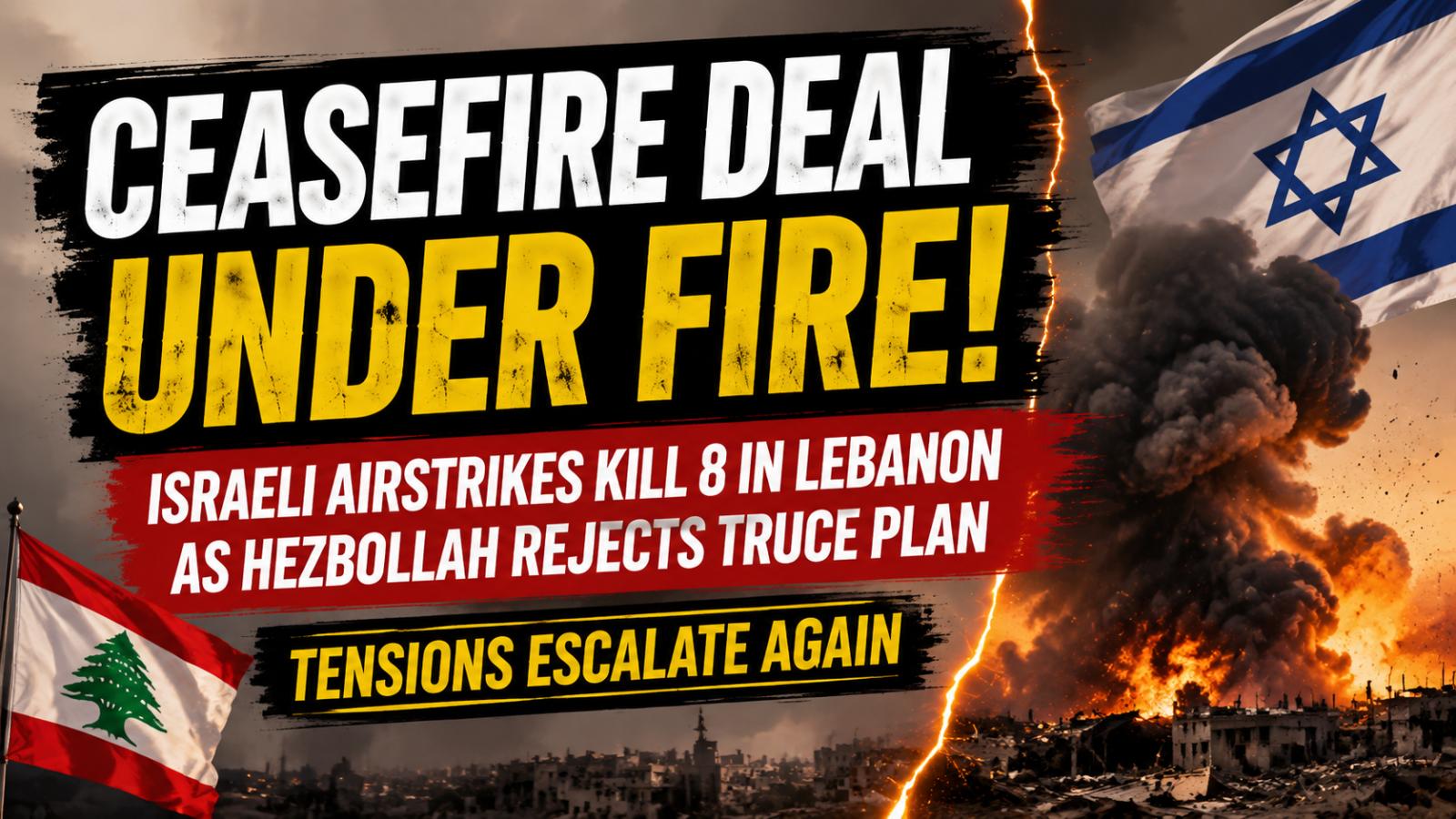
Israeli Airstrikes Kill Eight in Lebanon Amid Ceasefire Talks Israeli airstrikes killed eight people in Lebanon on Thursday, just a day after a conditional ceasefire plan was agreed upon by Lebanese and Israeli representatives in the United States. Five people were killed in eastern Lebanon, while three more lost their lives near Tyre. Eight others were injured, including women and children, as the conflict
Lebanon-Israel Conflict: Civilian Deaths Reported in Airstrikes
Israeli Airstrikes Kill Eight in Lebanon Amid Ceasefire Talks Israeli airstrikes killed eight people in Lebanon on Thursday, just a day after a conditional ceasefire plan was agreed upon by Lebanese and Israeli representatives in the United States. Five people were killed in eastern Lebanon, while three more lost their lives near Tyre. Eight others were injured, including women and children, as the conflict
Trump mediates Israel-Hezbollah ceasefire as Iran talks resume
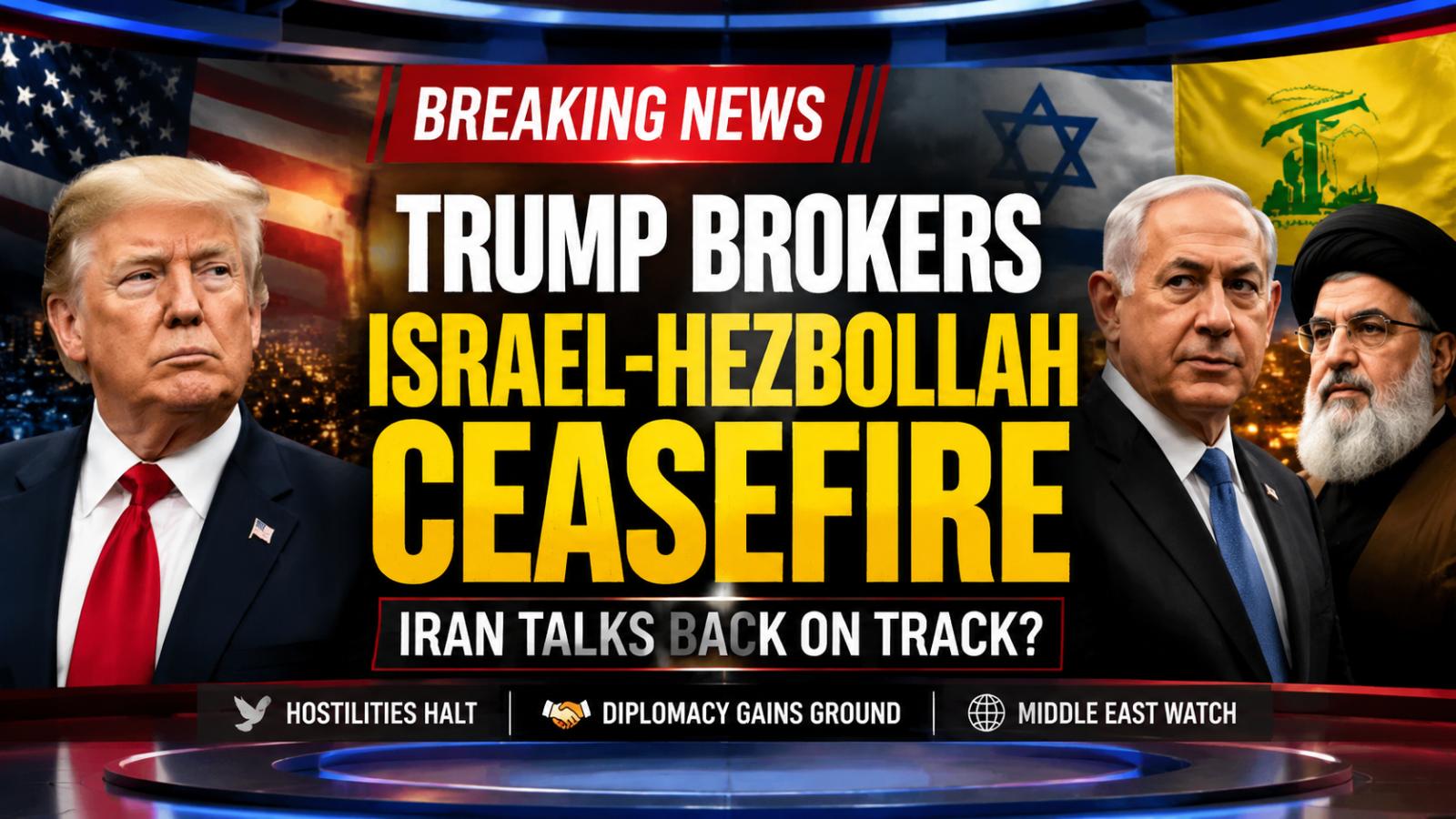
US President Donald Trump confirmed that Israel and Hezbollah have agreed to temporarily halt attacks, creating a window for possible peace talks in Lebanon. The president highlighted his direct involvement, including discussions with Israeli Prime Minister Benjamin Netanyahu and indirect communication with Hezbollah through intermediaries. Trump emphasized the ceasefire on his social media, noting that both sides have agreed to suspend operations against each other, while urging ho
Trump mediates Israel-Hezbollah ceasefire as Iran talks resume
US President Donald Trump confirmed that Israel and Hezbollah have agreed to temporarily halt attacks, creating a window for possible peace talks in Lebanon. The president highlighted his direct involvement, including discussions with Israeli Prime Minister Benjamin Netanyahu and indirect communication with Hezbollah through intermediaries. Trump emphasized the ceasefire on his social media, noting that both sides have agreed to suspend operations against each other, while urging ho
Iran Halts US Talks as Lebanon Conflict Escalates
Iran has decided to pause indirect negotiations with the United States in response to ongoing hostilities in Lebanon. Tehran cited repeated breaches of the ceasefire by Israeli forces as a primary reason for halting diplomatic exchanges. Officials emphasized that the suspension is temporary but signals a serious shift in Iran’s diplomatic approach. Tehran Signals Defensive Measures Iran’s le
Iran Halts US Talks as Lebanon Conflict Escalates
Iran has decided to pause indirect negotiations with the United States in response to ongoing hostilities in Lebanon. Tehran cited repeated breaches of the ceasefire by Israeli forces as a primary reason for halting diplomatic exchanges. Officials emphasized that the suspension is temporary but signals a serious shift in Iran’s diplomatic approach. Tehran Signals Defensive Measures Iran’s le
Israel Intercepts Rockets from Lebanon as Tensions Rise on Northern Border
Israeli defense forces successfully intercepted two rockets launched from Lebanon early Tuesday morning. Air raid sirens sounded across communities in northern Israel, prompting residents to seek immediate shelter. The Israeli Air Force quickly neutralized the threats, while officials reported a suspicious aerial object landing within Israeli territory. No injuries or property damage occurred, but the incident highlights the persistent security challenges along the northern border.
Israel Intercepts Rockets from Lebanon as Tensions Rise on Northern Border
Israeli defense forces successfully intercepted two rockets launched from Lebanon early Tuesday morning. Air raid sirens sounded across communities in northern Israel, prompting residents to seek immediate shelter. The Israeli Air Force quickly neutralized the threats, while officials reported a suspicious aerial object landing within Israeli territory. No injuries or property damage occurred, but the incident highlights the persistent security challenges along the northern border.
Israel Orders Strikes on Beirut’s Dahiyeh After Hezbollah Ceasefire Violations
Israel ordered fresh military strikes on Beirut’s southern Dahiyeh suburb on Monday, June 1, after accusing Hezbollah of repeatedly violating the ceasefire in Lebanon. Prime Minister Benjamin Netanyahu and Defence Minister Israel Katz said the Israeli military had been instructed to target Hezbollah-linked sites in the area. The move has increased concern over the fragile situation between Israel and Hezbollah. Dahiyeh is widely known as a major Hezbollah stronghold, making any st
Israel Orders Strikes on Beirut’s Dahiyeh After Hezbollah Ceasefire Violations
Israel ordered fresh military strikes on Beirut’s southern Dahiyeh suburb on Monday, June 1, after accusing Hezbollah of repeatedly violating the ceasefire in Lebanon. Prime Minister Benjamin Netanyahu and Defence Minister Israel Katz said the Israeli military had been instructed to target Hezbollah-linked sites in the area. The move has increased concern over the fragile situation between Israel and Hezbollah. Dahiyeh is widely known as a major Hezbollah stronghold, making any st