






US maintains Hormuz blockade as Iran warns of military response
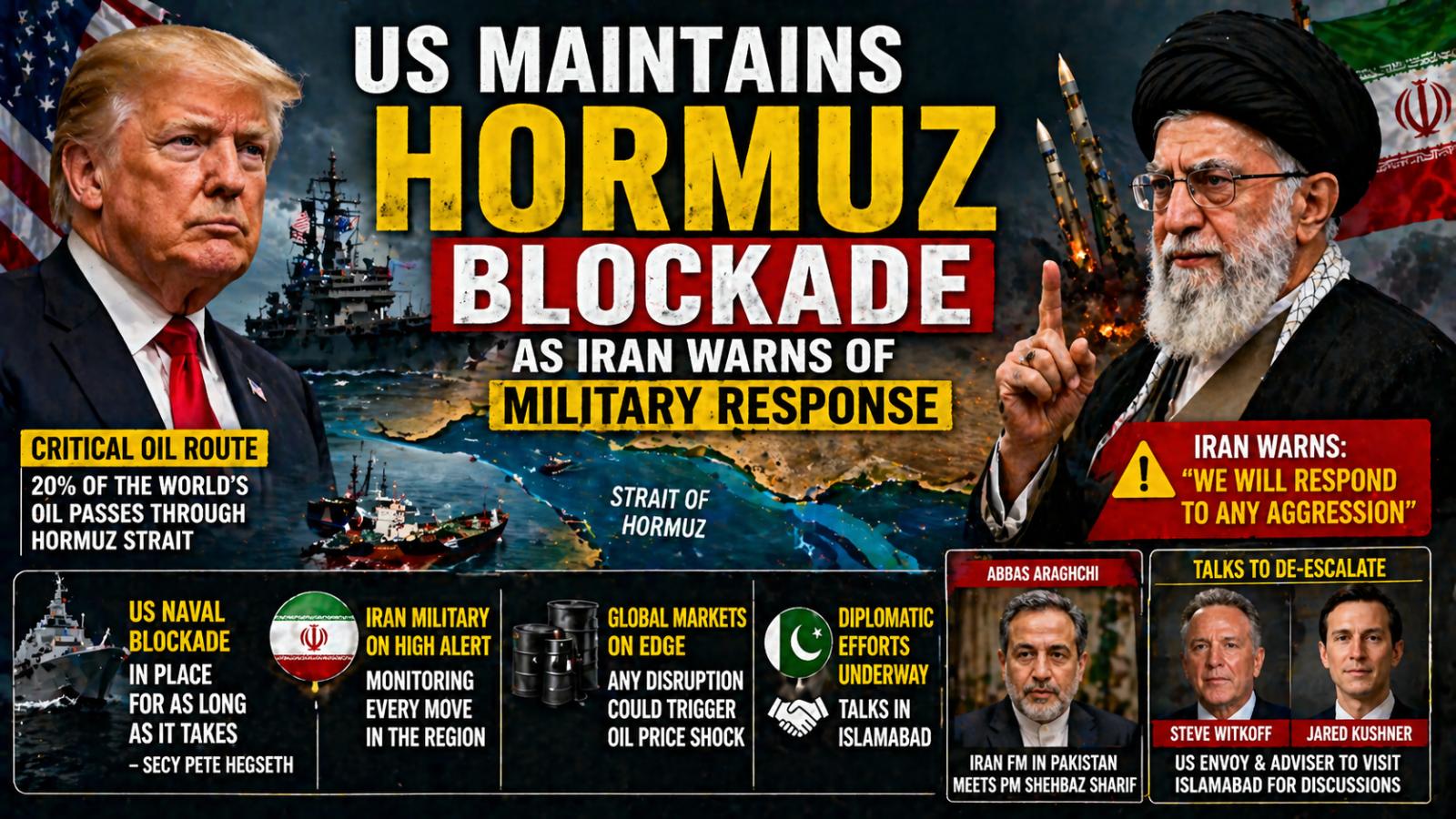
US maintains Hormuz blockade as Iran warns of retaliation, escalating tensions over a key global oil route while both sides pursue parallel diplomatic talks in Pakistan. US maintains Hormuz blockade as Iran warns of military response as tensions escalated on Saturday, April 25, 2026, when Iranian officials warned they would respond if U.S. naval actions targeting Iranian ports continue. The statement, issued through state-run media, described the U.S. presence in t
US maintains Hormuz blockade as Iran warns of military response
US maintains Hormuz blockade as Iran warns of retaliation, escalating tensions over a key global oil route while both sides pursue parallel diplomatic talks in Pakistan. US maintains Hormuz blockade as Iran warns of military response as tensions escalated on Saturday, April 25, 2026, when Iranian officials warned they would respond if U.S. naval actions targeting Iranian ports continue. The statement, issued through state-run media, described the U.S. presence in t

Did Raghav Chadha’s switch expose ideology as strategy in politics? Yes, it raises serious questions
Did Raghav Chadha’s switch expose ideology as strategy in Indian politics? Yes, it raises serious questions as the recent political move by Raghav Chadha has triggered a wider debate about whether ideology in Indian politics is truly stable or simply a matter of strategy. The development, reported on Thursday, April 24, 2026, in India Standard Time, comes as Chadha, once a vocal critic of the Bharatiya Janata Party (BJP), aligned himself with the same political force he had publicly opposed. From vocal opposition to alignment with former rivals For years, Chadha built his political identity within the Aam Aadmi Party (AAP) by criticizing the BJP’s governance style, raising concerns about institutional independence and democratic functioning. His speeches positioned AAP as a clear alternative, emphasizing transparency and accountability. This consistent messaging helped shape public perception and earned him credibility among urban and educated voters. The sudden shift, however, has led to questions about whether those earlier positions were rooted in firm ideological belief or were part of a broader political strategy that evolved over time. BJP’s acceptance raises questions about ideological consistency The BJP, which has maintained political dominance at the national level for over a decade, has consistently emphasized strong ideological foundations and governance continuity. Its decision to accept a leader who had openly challenged its policies now brings attention to the balance between ideological commitment and political expansion. In parliamentary systems, numbers often determine legislative outcomes. Strategic decisions to strengthen representation can override past disagreements, reflecting a pragmatic approach to governance and policy-making. A recurring pattern across political systems This development is not isolated. Political realignments, shifting alliances, and evolving narratives are common across democratic systems worldwide. Leaders frequently transition between parties, and parties themselves adapt to changing political landscapes. Such shifts suggest that while ideology is presented as a guiding principle, strategy often plays a decisive role in shaping political actions. Public trust, consistency, and the shifting foundation of politics For the public, these developments can create uncertainty. Strong statements made in one phase of a political career may not align with actions taken later. This gap between words and actions raises broader concerns about consistency, accountability, and long-term trust in political institutions. What emerges from this pattern is not just a question about one leader or one party, but about the direction of politics itself. When positions can shift so sharply and be accepted just as quickly, it becomes harder to separate belief from convenience. The debate is no longer limited to whether one individual changed sides, but whether such changes are now an accepted norm across the political spectrum. In that context, the latest move involving Raghav Chadha reinforces a broader concern: political systems that emphasize ideology in public messaging may increasingly rely on strategy in practice. In that reality, one conclusion is becoming difficult to ignore. Adapting strategy to suit the moment is no longer just a political tool; it is increasingly becoming the most consistent ideology across political parties.
Did Raghav Chadha’s switch expose ideology as strategy in politics? Yes, it raises serious questions
Did Raghav Chadha’s switch expose ideology as strategy in Indian politics? Yes, it raises serious questions as the recent political move by Raghav Chadha has triggered a wider debate about whether ideology in Indian politics is truly stable or simply a matter of strategy. The development, reported on Thursday, April 24, 2026, in India Standard Time, comes as Chadha, once a vocal critic of the Bharatiya Janata Party (BJP), aligned himself with the same political force he had publicly opposed. From vocal opposition to alignment with former rivals For years, Chadha built his political identity within the Aam Aadmi Party (AAP) by criticizing the BJP’s governance style, raising concerns about institutional independence and democratic functioning. His speeches positioned AAP as a clear alternative, emphasizing transparency and accountability. This consistent messaging helped shape public perception and earned him credibility among urban and educated voters. The sudden shift, however, has led to questions about whether those earlier positions were rooted in firm ideological belief or were part of a broader political strategy that evolved over time. BJP’s acceptance raises questions about ideological consistency The BJP, which has maintained political dominance at the national level for over a decade, has consistently emphasized strong ideological foundations and governance continuity. Its decision to accept a leader who had openly challenged its policies now brings attention to the balance between ideological commitment and political expansion. In parliamentary systems, numbers often determine legislative outcomes. Strategic decisions to strengthen representation can override past disagreements, reflecting a pragmatic approach to governance and policy-making. A recurring pattern across political systems This development is not isolated. Political realignments, shifting alliances, and evolving narratives are common across democratic systems worldwide. Leaders frequently transition between parties, and parties themselves adapt to changing political landscapes. Such shifts suggest that while ideology is presented as a guiding principle, strategy often plays a decisive role in shaping political actions. Public trust, consistency, and the shifting foundation of politics For the public, these developments can create uncertainty. Strong statements made in one phase of a political career may not align with actions taken later. This gap between words and actions raises broader concerns about consistency, accountability, and long-term trust in political institutions. What emerges from this pattern is not just a question about one leader or one party, but about the direction of politics itself. When positions can shift so sharply and be accepted just as quickly, it becomes harder to separate belief from convenience. The debate is no longer limited to whether one individual changed sides, but whether such changes are now an accepted norm across the political spectrum. In that context, the latest move involving Raghav Chadha reinforces a broader concern: political systems that emphasize ideology in public messaging may increasingly rely on strategy in practice. In that reality, one conclusion is becoming difficult to ignore. Adapting strategy to suit the moment is no longer just a political tool; it is increasingly becoming the most consistent ideology across political parties.
Lavrov criticizes US foreign policy over oil and energy dominance
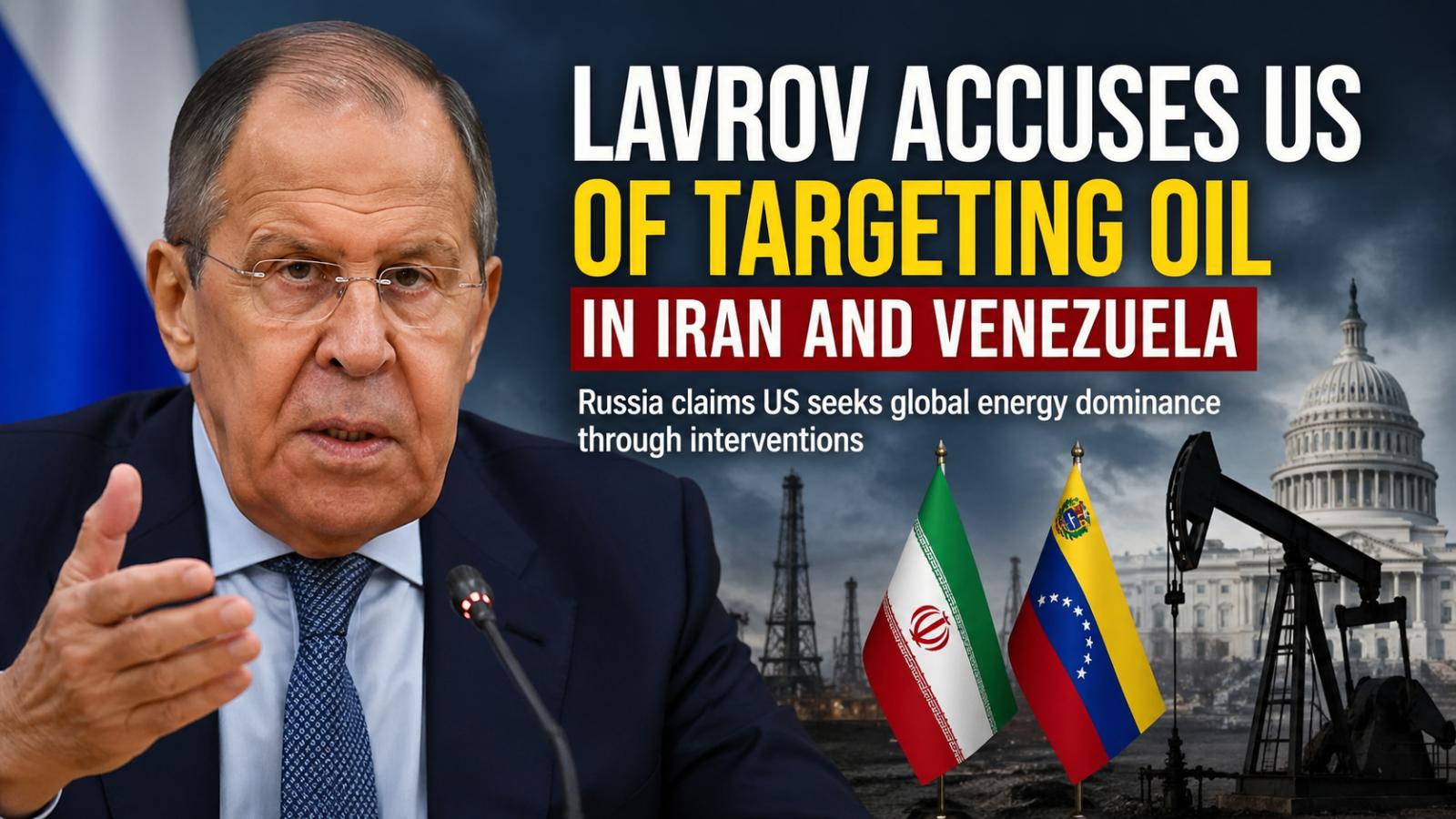
Russian Foreign Minister Sergei Lavrov has accused the United States of pursuing oil-driven policies in Iran and Venezuela, claiming that control over global energy resources is a central goal of Washington’s foreign strategy. Speaking in a televised interview, Lavrov said the US focuses primarily on its own interests and is willing to use extreme methods to secure access to oil and energy assets in resource-rich nations. Lavrov alleged that US actions in countries such as Iran and Venezuela are not hidden, but openly tied to securing influence over energy markets. According to him, Washington’s approach reflects a broader ambition to dominate global energy supply chains. He argued that such policies show a shift away from international legal norms, suggesting that decisions are increasingly shaped by power rather than agreed rules. The Russian minister also criticized the US for what he described as inconsistent diplomacy. He urged Washington to prioritize dialogue, stating that the US has a pattern of withdrawing from agreements instead of maintaining stable international commitments. His remarks come as American envoys prepare for discussions in Pakistan, signaling ongoing diplomatic engagement in the region. The White House has indicated openness to negotiations with Iran, while maintaining that it will not act under pressure. Meanwhile, Iran’s Foreign Minister Abbas Araghchi has begun a regional visit, adding to the ongoing diplomatic activity surrounding the issue. Lavrov further linked US foreign policy to developments in Europe, particularly in the context of the Ukraine conflict. He accused Washington of encouraging European nations to reduce dependence on Russian gas, framing this as part of a broader geopolitical strategy. According to Lavrov, such moves resemble attempts to reshape global energy dynamics in a way that benefits US interests, raising concerns about a return to power-based international relations.
Lavrov criticizes US foreign policy over oil and energy dominance
Russian Foreign Minister Sergei Lavrov has accused the United States of pursuing oil-driven policies in Iran and Venezuela, claiming that control over global energy resources is a central goal of Washington’s foreign strategy. Speaking in a televised interview, Lavrov said the US focuses primarily on its own interests and is willing to use extreme methods to secure access to oil and energy assets in resource-rich nations. Lavrov alleged that US actions in countries such as Iran and Venezuela are not hidden, but openly tied to securing influence over energy markets. According to him, Washington’s approach reflects a broader ambition to dominate global energy supply chains. He argued that such policies show a shift away from international legal norms, suggesting that decisions are increasingly shaped by power rather than agreed rules. The Russian minister also criticized the US for what he described as inconsistent diplomacy. He urged Washington to prioritize dialogue, stating that the US has a pattern of withdrawing from agreements instead of maintaining stable international commitments. His remarks come as American envoys prepare for discussions in Pakistan, signaling ongoing diplomatic engagement in the region. The White House has indicated openness to negotiations with Iran, while maintaining that it will not act under pressure. Meanwhile, Iran’s Foreign Minister Abbas Araghchi has begun a regional visit, adding to the ongoing diplomatic activity surrounding the issue. Lavrov further linked US foreign policy to developments in Europe, particularly in the context of the Ukraine conflict. He accused Washington of encouraging European nations to reduce dependence on Russian gas, framing this as part of a broader geopolitical strategy. According to Lavrov, such moves resemble attempts to reshape global energy dynamics in a way that benefits US interests, raising concerns about a return to power-based international relations.
Iran airspace resumes operations amid ongoing US-Iran conflict tensions
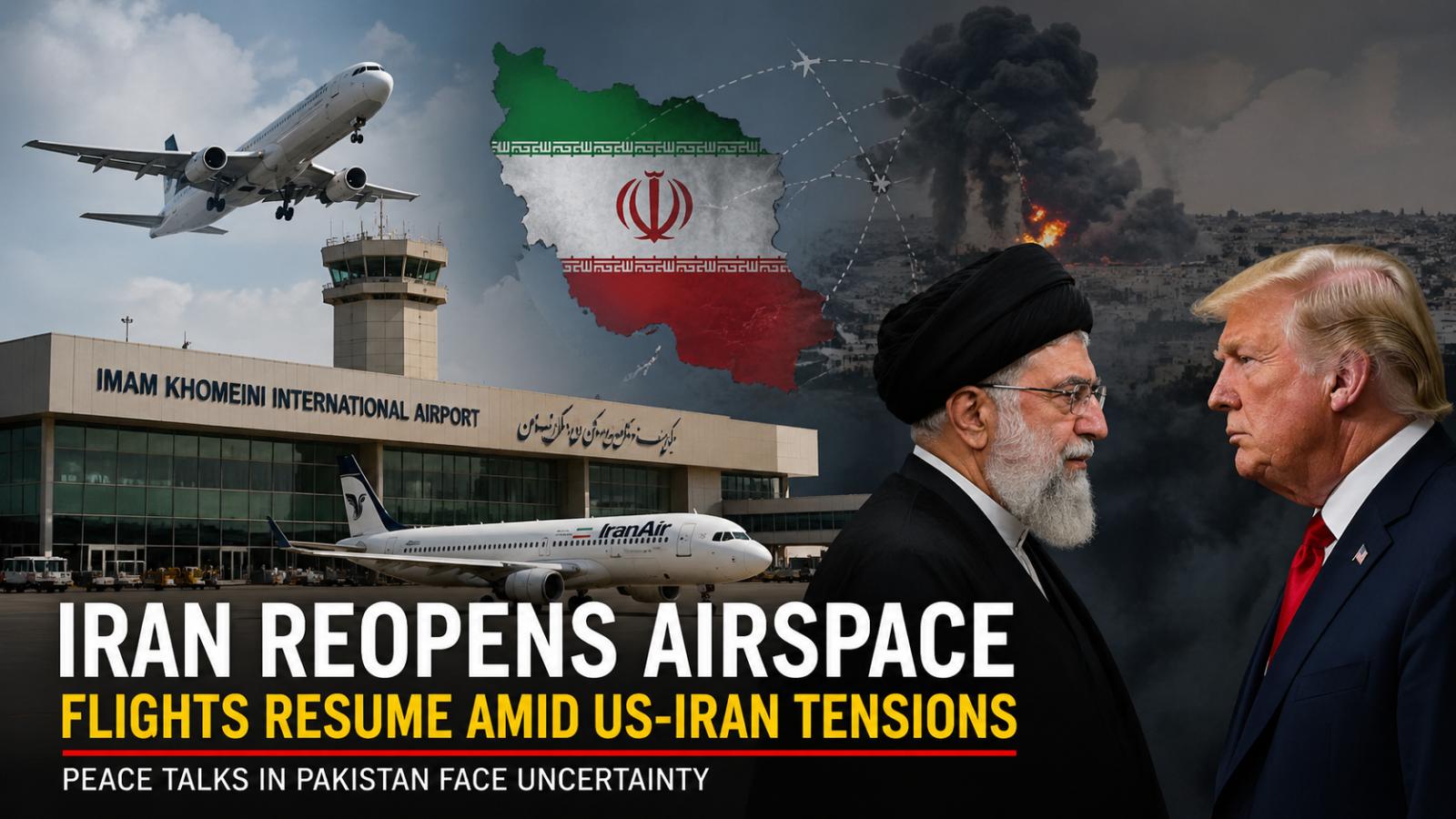
Iran airspace has resumed operations nearly two months after being shut down following joint airstrikes by the United States and Israel, marking a cautious step toward normalcy amid ongoing regional tensions. The reopening of Imam Khomeini International Airport on April 25 signals a gradual recovery in Iran’s aviation sector, even as diplomatic uncertainty continues to cloud the broader US-Iran conflict. The airspace closure was enforced on February 28 after coordinated military action escalated into a wider confrontation, forcing Iran to halt civilian aviation across the country. With security assessments and operational preparations now underway, authorities have begun restoring flight services in phases. Initial departures from Tehran include routes to Medina, Muscat, and Istanbul, reflecting limited but significant progress in reconnecting international travel corridors. Iran’s Civil Aviation Authority has indicated that full restoration of aviation services will depend on continued coordination between military and civilian agencies. Earlier, on April 18, Iran reopened its eastern airspace to international flights, allowing transit operations to resume and easing pressure on regional air traffic routes. Officials emphasize that passenger safety remains the top priority during this phased reopening. At the same time, diplomatic efforts to de-escalate the US-Iran war have encountered fresh complications. A delegation linked to former US President Donald Trump, including envoy Steve Witkoff and adviser Jared Kushner, is currently in Pakistan for a second round of peace talks. However, Iran has clearly denied any direct engagement with US representatives during this visit, raising doubts about the progress of negotiations. Iran’s Foreign Ministry has clarified that its position will be conveyed through Pakistani intermediaries, with Foreign Minister Abbas Araghchi actively involved in discussions aimed at reducing tensions. Tehran continues to describe the conflict as “an externally imposed war of aggression”, stressing the importance of restoring regional stability and easing sanctions pressure. Previous negotiations collapsed after Iran strongly objected to US demands to maintain sanctions and naval restrictions during talks. As both sides remain firm in their positions, the reopening of Iran airspace stands as a significant operational step, even as broader geopolitical challenges remain unresolved.
Iran airspace resumes operations amid ongoing US-Iran conflict tensions
Iran airspace has resumed operations nearly two months after being shut down following joint airstrikes by the United States and Israel, marking a cautious step toward normalcy amid ongoing regional tensions. The reopening of Imam Khomeini International Airport on April 25 signals a gradual recovery in Iran’s aviation sector, even as diplomatic uncertainty continues to cloud the broader US-Iran conflict. The airspace closure was enforced on February 28 after coordinated military action escalated into a wider confrontation, forcing Iran to halt civilian aviation across the country. With security assessments and operational preparations now underway, authorities have begun restoring flight services in phases. Initial departures from Tehran include routes to Medina, Muscat, and Istanbul, reflecting limited but significant progress in reconnecting international travel corridors. Iran’s Civil Aviation Authority has indicated that full restoration of aviation services will depend on continued coordination between military and civilian agencies. Earlier, on April 18, Iran reopened its eastern airspace to international flights, allowing transit operations to resume and easing pressure on regional air traffic routes. Officials emphasize that passenger safety remains the top priority during this phased reopening. At the same time, diplomatic efforts to de-escalate the US-Iran war have encountered fresh complications. A delegation linked to former US President Donald Trump, including envoy Steve Witkoff and adviser Jared Kushner, is currently in Pakistan for a second round of peace talks. However, Iran has clearly denied any direct engagement with US representatives during this visit, raising doubts about the progress of negotiations. Iran’s Foreign Ministry has clarified that its position will be conveyed through Pakistani intermediaries, with Foreign Minister Abbas Araghchi actively involved in discussions aimed at reducing tensions. Tehran continues to describe the conflict as “an externally imposed war of aggression”, stressing the importance of restoring regional stability and easing sanctions pressure. Previous negotiations collapsed after Iran strongly objected to US demands to maintain sanctions and naval restrictions during talks. As both sides remain firm in their positions, the reopening of Iran airspace stands as a significant operational step, even as broader geopolitical challenges remain unresolved.
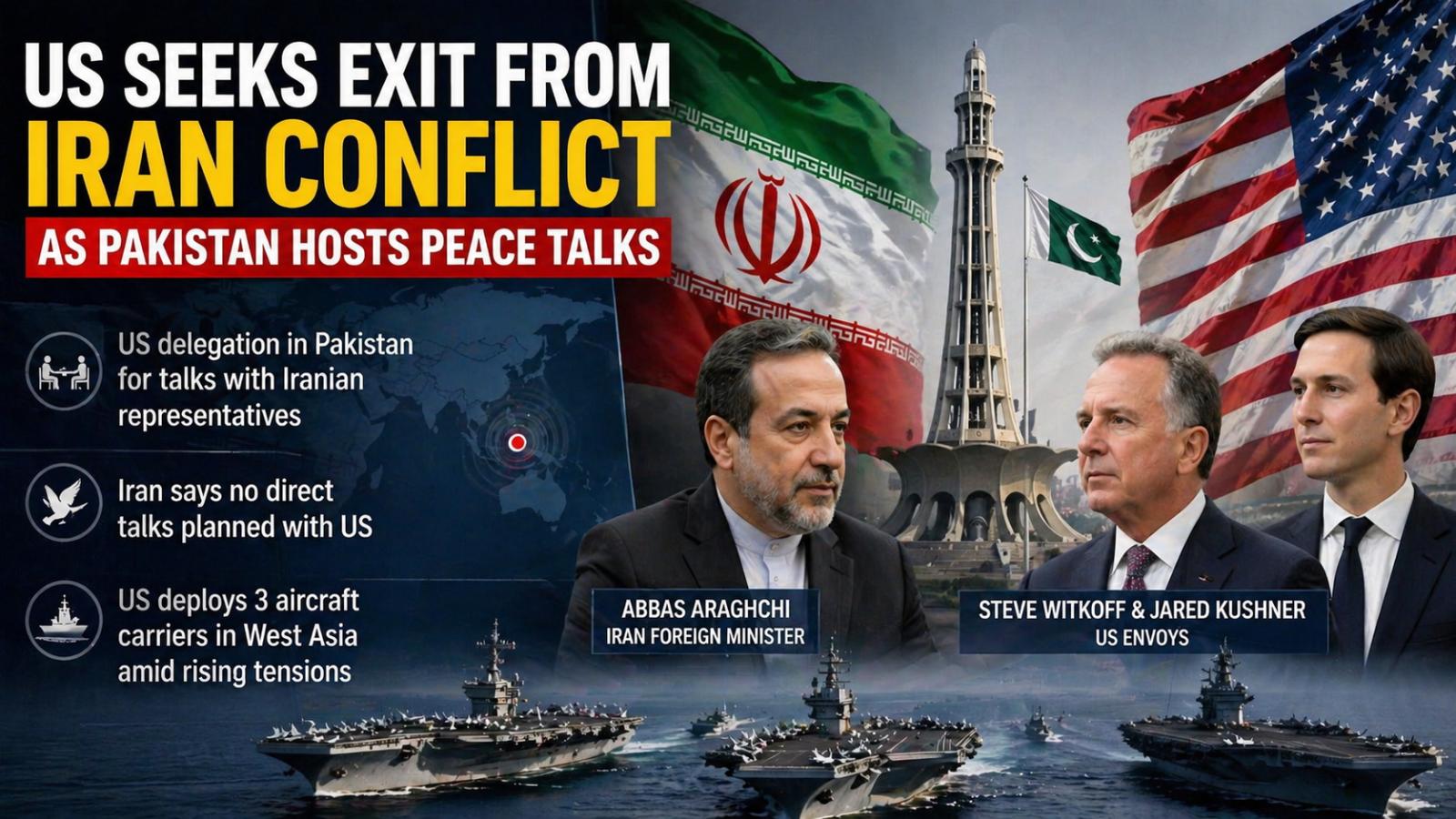
West Asia tensions rise as US envoys head to Pakistan for Iran talks
The US Iran conflict has entered a critical phase as Iran’s Defence Ministry claimed that the United States is seeking a “face-saving” way to exit the war, even as Washington sends a delegation to Pakistan for peace talks. The statement highlights growing diplomatic activity alongside rising military tensions in West Asia, with Pakistan emerging as a key mediator in the crisis. According to Iranian media reports, a defence ministry spokesperson said that Iran’s military strength has become dominant in the region, forcing the United States to look for a way out of what it described as a prolonged and difficult conflict. The remarks come at a time when US envoys Steve Witkoff and Jared Kushner are heading to Pakistan for discussions that the White House said would include talks with Iranian representatives. However, Iran has publicly denied plans for direct negotiations with the United States. Iranian Foreign Minister Abbas Araghchi arrived in Islamabad for an official visit and is scheduled to meet senior Pakistani officials. Iranian Foreign Ministry spokesperson Esmaeil Baqaei clarified that the visit is focused on consultations with Pakistan as part of its mediation efforts and not on direct dialogue with the US. He added that Iran’s position would be communicated through Pakistani channels. The diplomatic developments unfold against a backdrop of intensifying West Asia tensions, particularly around the Strait of Hormuz, a vital global oil route. The United States has significantly increased its military presence in the region, deploying three aircraft carrier strike groups, marking the largest such deployment since the Iraq war in 2003. According to US Central Command, the deployment includes more than 200 aircraft and around 15,000 personnel. As both diplomatic and military activities escalate, uncertainty remains over whether meaningful progress toward de-escalation can be achieved. While Pakistan continues its mediation role, the absence of direct Iran-US talks suggests that a resolution may still be distant, keeping the region on edge.
West Asia tensions rise as US envoys head to Pakistan for Iran talks
The US Iran conflict has entered a critical phase as Iran’s Defence Ministry claimed that the United States is seeking a “face-saving” way to exit the war, even as Washington sends a delegation to Pakistan for peace talks. The statement highlights growing diplomatic activity alongside rising military tensions in West Asia, with Pakistan emerging as a key mediator in the crisis. According to Iranian media reports, a defence ministry spokesperson said that Iran’s military strength has become dominant in the region, forcing the United States to look for a way out of what it described as a prolonged and difficult conflict. The remarks come at a time when US envoys Steve Witkoff and Jared Kushner are heading to Pakistan for discussions that the White House said would include talks with Iranian representatives. However, Iran has publicly denied plans for direct negotiations with the United States. Iranian Foreign Minister Abbas Araghchi arrived in Islamabad for an official visit and is scheduled to meet senior Pakistani officials. Iranian Foreign Ministry spokesperson Esmaeil Baqaei clarified that the visit is focused on consultations with Pakistan as part of its mediation efforts and not on direct dialogue with the US. He added that Iran’s position would be communicated through Pakistani channels. The diplomatic developments unfold against a backdrop of intensifying West Asia tensions, particularly around the Strait of Hormuz, a vital global oil route. The United States has significantly increased its military presence in the region, deploying three aircraft carrier strike groups, marking the largest such deployment since the Iraq war in 2003. According to US Central Command, the deployment includes more than 200 aircraft and around 15,000 personnel. As both diplomatic and military activities escalate, uncertainty remains over whether meaningful progress toward de-escalation can be achieved. While Pakistan continues its mediation role, the absence of direct Iran-US talks suggests that a resolution may still be distant, keeping the region on edge.
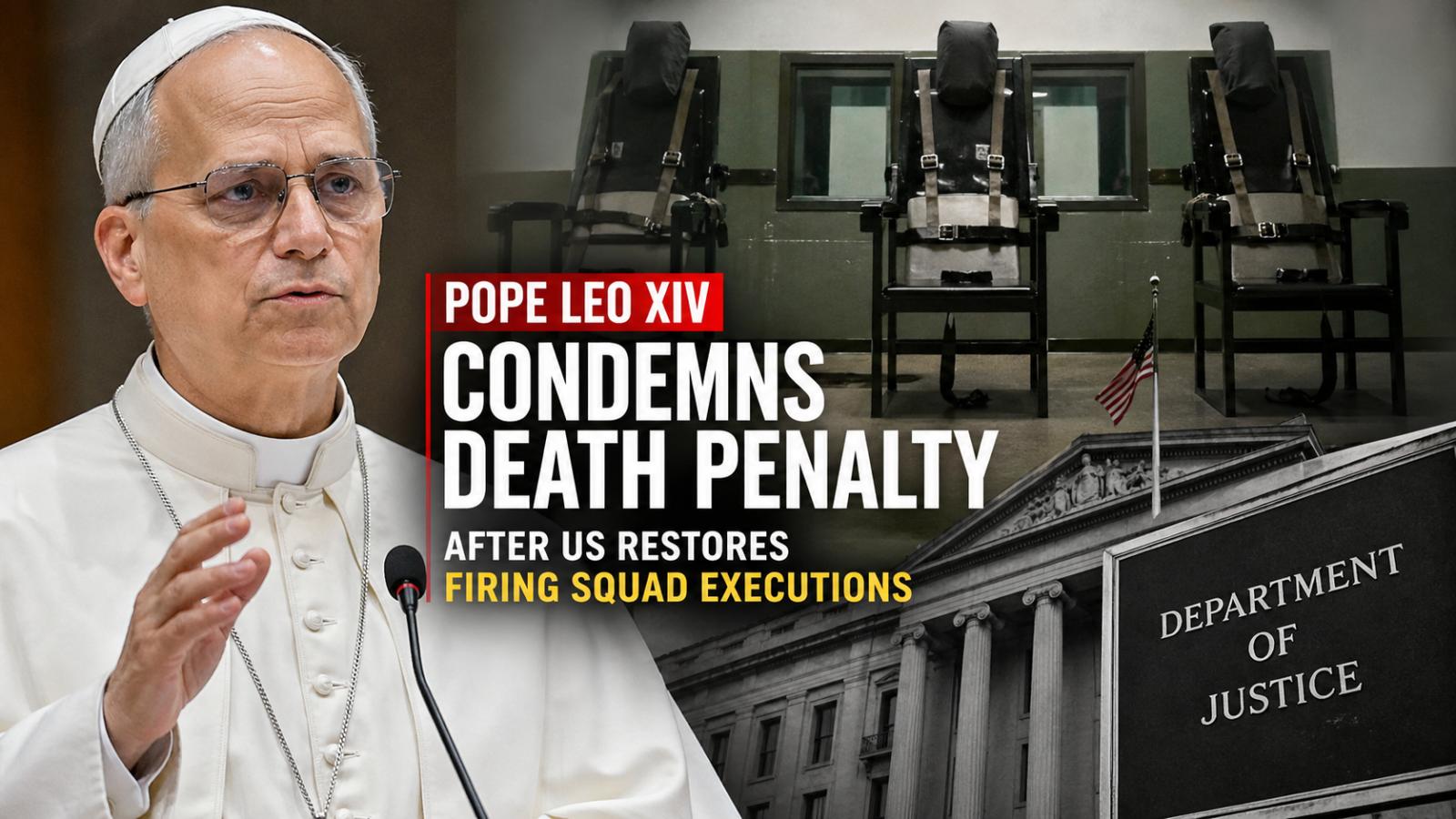
Pope Leo XIV condemns death penalty as US restores firing squad executions
Hours after the US Justice Department announced the lifting of the federal moratorium on capital punishment and the reinstatement of firing squad executions, Pope Leo XIV issued a strongly worded message condemning the death penalty. Delivered through a video address to DePaul University in Chicago, the Pope’s remarks coincided with the 15th anniversary of Illinois abolishing capital punishment, underscoring the significance of the moment. In his message, Pope Leo XIV emphasized t
Pope Leo XIV condemns death penalty as US restores firing squad executions
Hours after the US Justice Department announced the lifting of the federal moratorium on capital punishment and the reinstatement of firing squad executions, Pope Leo XIV issued a strongly worded message condemning the death penalty. Delivered through a video address to DePaul University in Chicago, the Pope’s remarks coincided with the 15th anniversary of Illinois abolishing capital punishment, underscoring the significance of the moment. In his message, Pope Leo XIV emphasized t
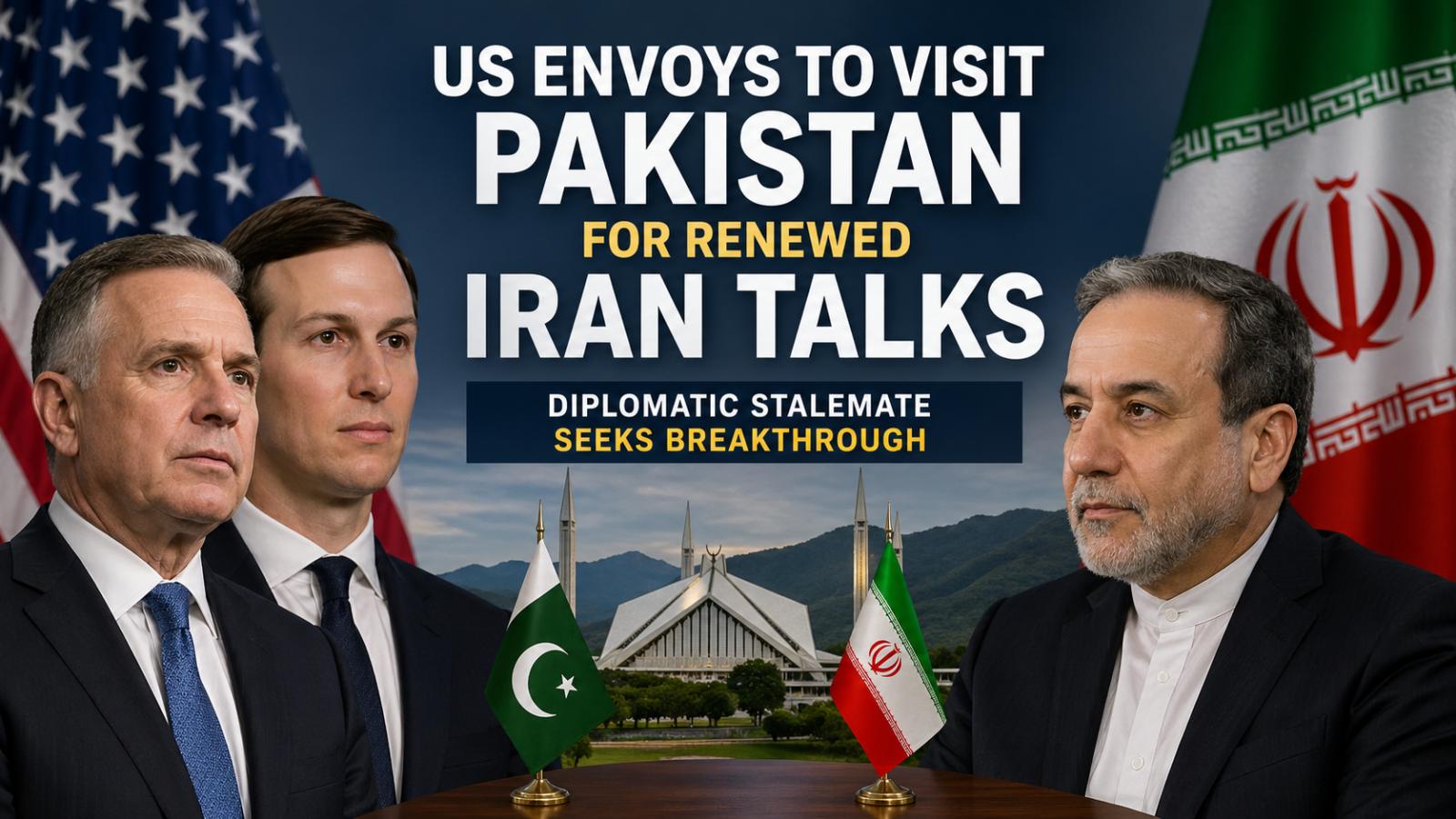
US envoys to visit Pakistan for renewed Iran talks amid ongoing tensions
After several days of diplomatic deadlock, the United States has confirmed that senior envoys Steve Witkoff and Jared Kushner will travel to Pakistan for a fresh round of negotiations with Iran, signaling a renewed effort to address escalating tensions between the two nations. The visit is scheduled for Saturday and follows Iran’s request for direct, in-person discussions. White House Press Secretary Karoline Leavitt stated that the move comes after Iran reached out for dialogue, aligning with earlier calls from US leadership to reopen communication channels. She emphasized that the envoys will assess the situation on the ground and report back to President Donald Trump and Vice President JD Vance, while additional officials remain on standby if required. The upcoming talks mark the second round of discussions in Pakistan, following initial meetings held earlier this month. However, notable figures such as Vice President Vance and Iranian parliamentary leader Mohammad Bagher Ghalibaf, who were involved previously, will not participate in this phase. Their absence highlights a shift in the structure of the negotiations. Iran’s Foreign Minister Abbas Araghchi recently announced a regional diplomatic tour that includes Pakistan, Oman, and Russia. His stated objective is to strengthen coordination with key partners on bilateral and regional issues, underlining Iran’s strategic engagement with neighboring countries during a period of heightened geopolitical tension. What are the main sticking points in the talks? The primary disagreements revolve around Iran’s nuclear program and control over the Strait of Hormuz. Iran has insisted it will not proceed with negotiations unless the United States lifts its blockade in the strategic waterway. In contrast, the US is demanding verifiable guarantees that Iran will halt its nuclear ambitions and ease its own restrictions in the region. At a recent Pentagon briefing, US Defense Secretary Pete Hegseth reiterated that the United States is not under pressure to finalize an agreement quickly. He indicated that Washington is prepared for prolonged negotiations, while also stressing that Iran has an opportunity to secure a favorable and pragmatic deal if it chooses to engage constructively. The renewed diplomatic effort in Pakistan reflects a cautious but significant step toward resolving one of the most critical international disputes, with both sides maintaining firm positions as negotiations resume.
US envoys to visit Pakistan for renewed Iran talks amid ongoing tensions
After several days of diplomatic deadlock, the United States has confirmed that senior envoys Steve Witkoff and Jared Kushner will travel to Pakistan for a fresh round of negotiations with Iran, signaling a renewed effort to address escalating tensions between the two nations. The visit is scheduled for Saturday and follows Iran’s request for direct, in-person discussions. White House Press Secretary Karoline Leavitt stated that the move comes after Iran reached out for dialogue, aligning with earlier calls from US leadership to reopen communication channels. She emphasized that the envoys will assess the situation on the ground and report back to President Donald Trump and Vice President JD Vance, while additional officials remain on standby if required. The upcoming talks mark the second round of discussions in Pakistan, following initial meetings held earlier this month. However, notable figures such as Vice President Vance and Iranian parliamentary leader Mohammad Bagher Ghalibaf, who were involved previously, will not participate in this phase. Their absence highlights a shift in the structure of the negotiations. Iran’s Foreign Minister Abbas Araghchi recently announced a regional diplomatic tour that includes Pakistan, Oman, and Russia. His stated objective is to strengthen coordination with key partners on bilateral and regional issues, underlining Iran’s strategic engagement with neighboring countries during a period of heightened geopolitical tension. What are the main sticking points in the talks? The primary disagreements revolve around Iran’s nuclear program and control over the Strait of Hormuz. Iran has insisted it will not proceed with negotiations unless the United States lifts its blockade in the strategic waterway. In contrast, the US is demanding verifiable guarantees that Iran will halt its nuclear ambitions and ease its own restrictions in the region. At a recent Pentagon briefing, US Defense Secretary Pete Hegseth reiterated that the United States is not under pressure to finalize an agreement quickly. He indicated that Washington is prepared for prolonged negotiations, while also stressing that Iran has an opportunity to secure a favorable and pragmatic deal if it chooses to engage constructively. The renewed diplomatic effort in Pakistan reflects a cautious but significant step toward resolving one of the most critical international disputes, with both sides maintaining firm positions as negotiations resume.
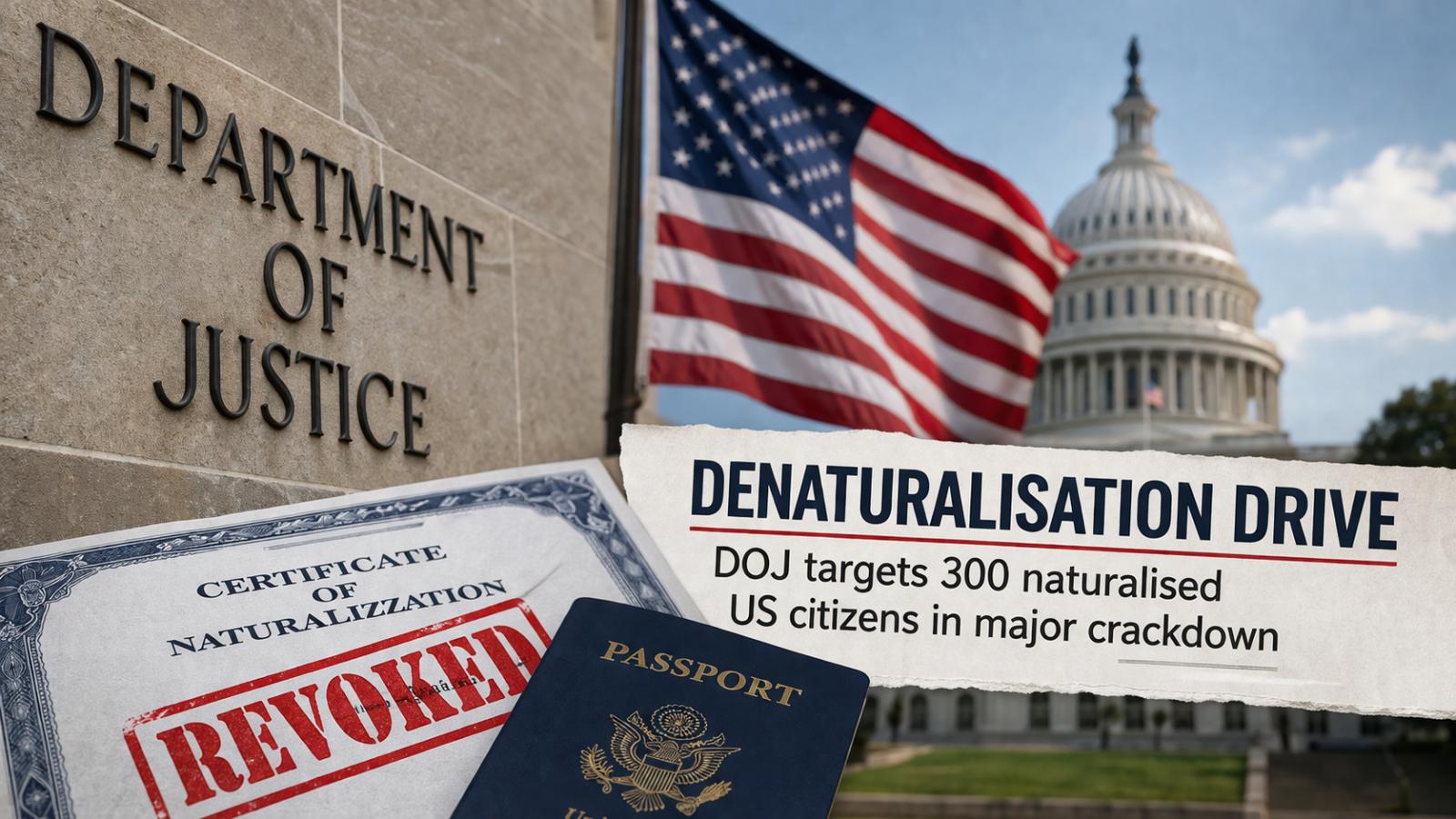
Trump administration accelerates denaturalisation cases across the US
The United States Justice Department is currently pursuing at least 300 foreign-born American citizens as part of an intensified denaturalisation effort, marking what officials describe as the largest such initiative in the country’s history. The legal process, which allows authorities to revoke citizenship obtained through fraud or concealment, has traditionally been used sparingly but is now being applied on an unprecedented scale. A senior offi
Trump administration accelerates denaturalisation cases across the US
The United States Justice Department is currently pursuing at least 300 foreign-born American citizens as part of an intensified denaturalisation effort, marking what officials describe as the largest such initiative in the country’s history. The legal process, which allows authorities to revoke citizenship obtained through fraud or concealment, has traditionally been used sparingly but is now being applied on an unprecedented scale. A senior offi
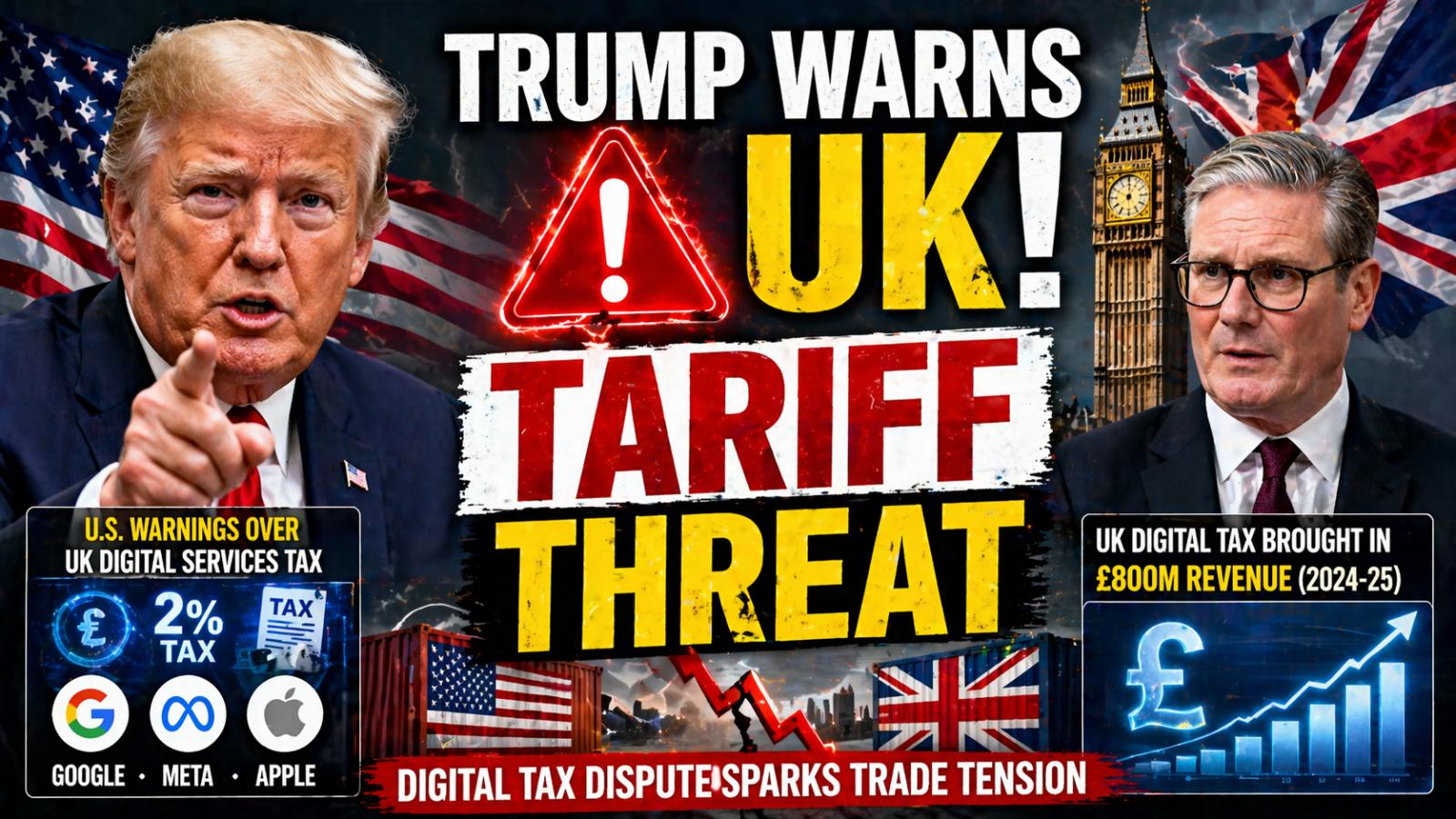
Why did Donald Trump warn the U.K. about tariffs? He cites digital tax concerns
Why did Donald Trump warn the U.K. about tariffs? He cites digital tax concerns — U.S. President Donald Trump issued a strong warning to the United Kingdom, signaling potential tariffs if Britain does not eliminate its digital services tax targeting major American technology firms. Speaking from the Oval Office on Thursday, Trump criticized the policy as an unfair attempt to profit from U.S. companies operating abroad. The digital services tax, introduced by the
Why did Donald Trump warn the U.K. about tariffs? He cites digital tax concerns
Why did Donald Trump warn the U.K. about tariffs? He cites digital tax concerns — U.S. President Donald Trump issued a strong warning to the United Kingdom, signaling potential tariffs if Britain does not eliminate its digital services tax targeting major American technology firms. Speaking from the Oval Office on Thursday, Trump criticized the policy as an unfair attempt to profit from U.S. companies operating abroad. The digital services tax, introduced by the
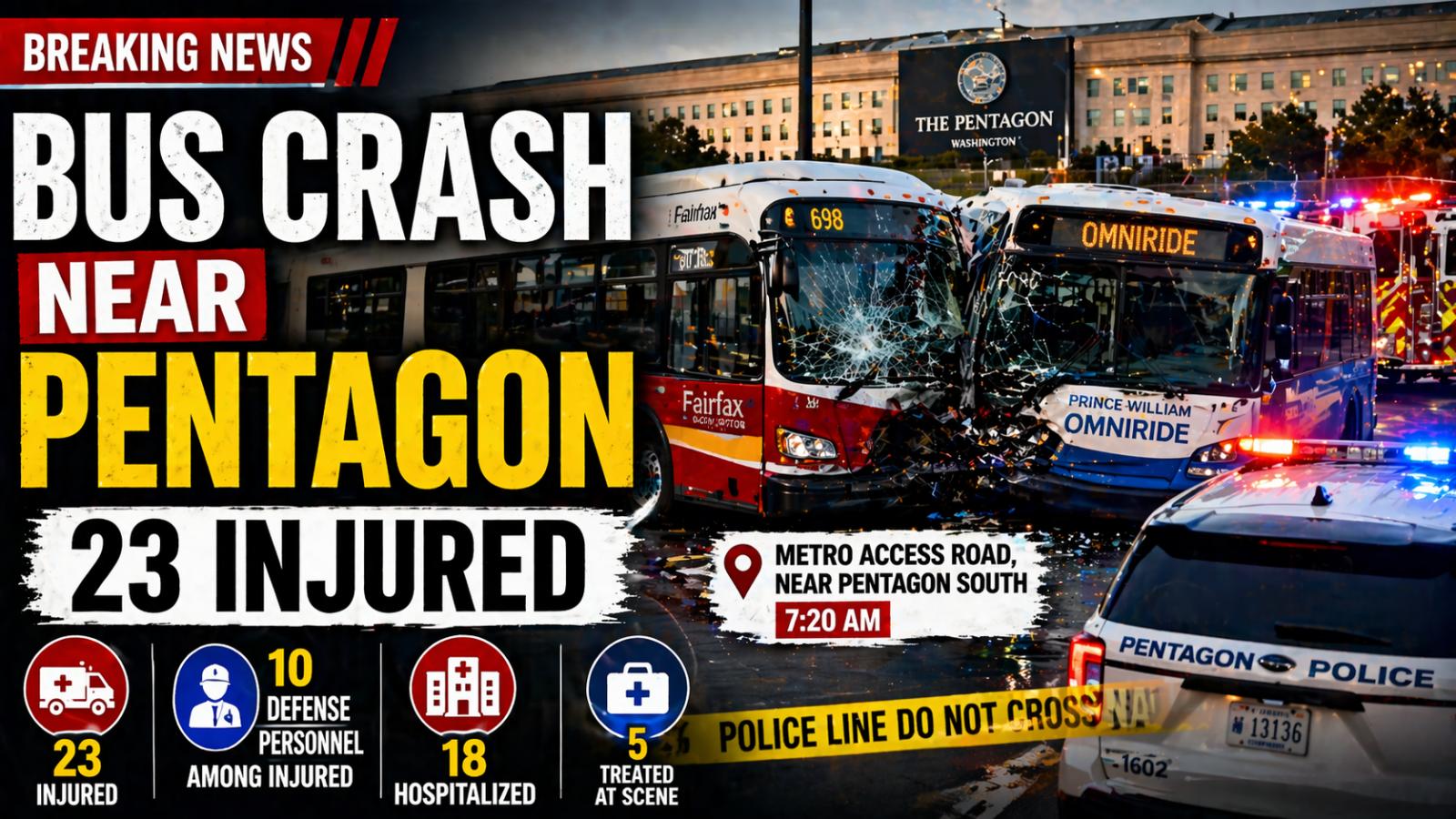
Bus crash near Pentagon leaves 23 injured including defense personnel
Bus collision near Pentagon on April 24, 2026 injures 23 people, including defense personnel, triggering emergency response, hospital treatment, and an ongoing investigation. Bus crash near Pentagon leaves 23 injured, including Department of War personnel after a collision involving two commuter buses during the morning rush hour on Friday. Officials said the incident involved a Fairfax County Connector bus and a Prince William County OmniRide bus that collided near the Pentagon complex shortly before 7:30 a.m. local time. According to authorities, the crash occurred at approximately 7:20 a.m. on the Metro Access Road near the Pentagon South parking area. The collision resulted in 23 passengers being injured, including 10 individuals identified as Department of War personnel. Emergency teams were immediately dispatched to the location following reports of the crash. Officials confirmed that 18 injured passengers were transported to nearby hospitals for further medical evaluation and treatment. Five additional passengers received first aid at the scene and were released after on-site assessment by emergency responders. The extent of injuries has not been fully disclosed, but authorities stated that all injured individuals are receiving appropriate care. Multiple law enforcement and fire department units from surrounding areas assisted in managing the emergency response and supported the initial investigation into the cause of the collision. The crash led to temporary disruptions in transit operations near the Pentagon, with emergency crews working to clear the scene and assess the damage. For a short period after the incident, the Pentagon Metro station and adjacent transit center were closed to allow for investigation and emergency operations. Authorities continue to examine the circumstances surrounding the collision, with further details expected as the investigation moves forward.
Bus crash near Pentagon leaves 23 injured including defense personnel
Bus collision near Pentagon on April 24, 2026 injures 23 people, including defense personnel, triggering emergency response, hospital treatment, and an ongoing investigation. Bus crash near Pentagon leaves 23 injured, including Department of War personnel after a collision involving two commuter buses during the morning rush hour on Friday. Officials said the incident involved a Fairfax County Connector bus and a Prince William County OmniRide bus that collided near the Pentagon complex shortly before 7:30 a.m. local time. According to authorities, the crash occurred at approximately 7:20 a.m. on the Metro Access Road near the Pentagon South parking area. The collision resulted in 23 passengers being injured, including 10 individuals identified as Department of War personnel. Emergency teams were immediately dispatched to the location following reports of the crash. Officials confirmed that 18 injured passengers were transported to nearby hospitals for further medical evaluation and treatment. Five additional passengers received first aid at the scene and were released after on-site assessment by emergency responders. The extent of injuries has not been fully disclosed, but authorities stated that all injured individuals are receiving appropriate care. Multiple law enforcement and fire department units from surrounding areas assisted in managing the emergency response and supported the initial investigation into the cause of the collision. The crash led to temporary disruptions in transit operations near the Pentagon, with emergency crews working to clear the scene and assess the damage. For a short period after the incident, the Pentagon Metro station and adjacent transit center were closed to allow for investigation and emergency operations. Authorities continue to examine the circumstances surrounding the collision, with further details expected as the investigation moves forward.
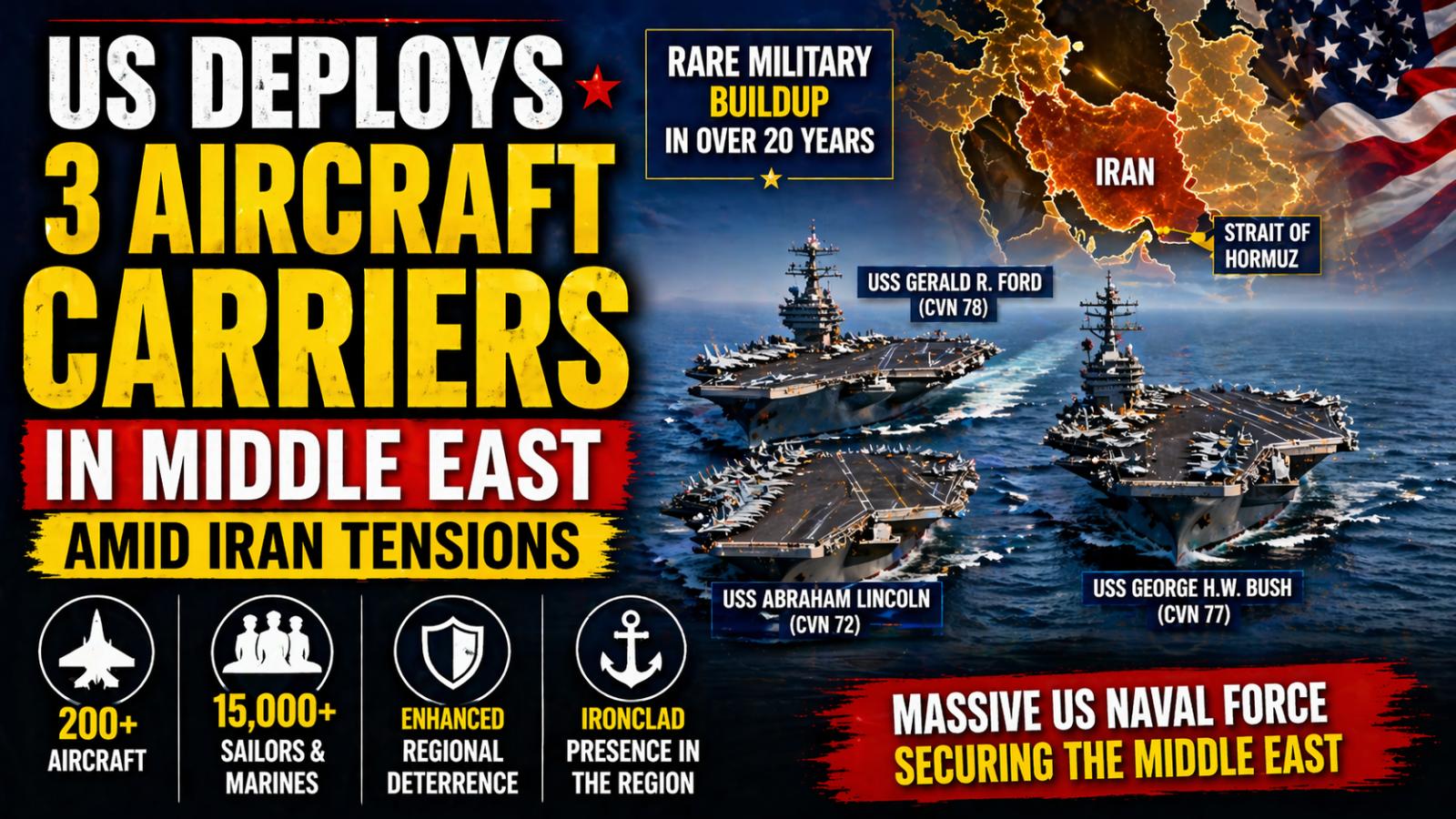
US deploys three aircraft carriers to Middle East amid Iran tensions
US deploys three aircraft carriers to the Middle East amid Iran tensions, expanding naval operations and reinforcing security in key maritime routes including the Strait of Hormuz. US deploys three aircraft carriers to Middle East amid Iran tensions as Washington significantly expands its military footprint across the region, marking one of the largest naval concentrations in more than two decades. Officials confirmed that three carrier strike groups—the USS Abraham Lincoln, USS Gerald R. Ford, and USS George H.W. Bush—are operating simultaneously, supported by more than 200 aircraft and approximately 15,000 sailors and Marines. A statement from US Central Command on Thursday confirmed the rare deployment, describing it as a significant concentration of naval power aimed at maintaining operational readiness amid rising tensions involving Iran. The carrier groups and their air wings are conducting coordinated missions, underscoring the strategic importance of key maritime routes in the Middle East and reinforcing a broader posture of deterrence. The announcement coincided with remarks from Donald Trump on Thursday, who declined to provide a timeline for a potential resolution to the Iran conflict. He indicated that any agreement would depend on conditions favorable to US interests, highlighting ongoing uncertainty surrounding diplomatic efforts. The absence of a clear timeline has aligned with increased military activity and messaging focused on regional stability. Defense officials stated on Friday that the US blockade of Iranian vessels in the Strait of Hormuz remains “ironclad,” with additional naval assets expected to join the operation in the coming days. The expanding mission signals a broader enforcement effort in one of the world’s most critical shipping corridors. The USS George H.W. Bush, commissioned in 2009, is among the newest Nimitz-class carriers involved, measuring nearly 1,000 feet in length and powered by two nuclear reactors, with the capacity to carry more than 80 aircraft and support a crew exceeding 5,500 personnel.
US deploys three aircraft carriers to Middle East amid Iran tensions
US deploys three aircraft carriers to the Middle East amid Iran tensions, expanding naval operations and reinforcing security in key maritime routes including the Strait of Hormuz. US deploys three aircraft carriers to Middle East amid Iran tensions as Washington significantly expands its military footprint across the region, marking one of the largest naval concentrations in more than two decades. Officials confirmed that three carrier strike groups—the USS Abraham Lincoln, USS Gerald R. Ford, and USS George H.W. Bush—are operating simultaneously, supported by more than 200 aircraft and approximately 15,000 sailors and Marines. A statement from US Central Command on Thursday confirmed the rare deployment, describing it as a significant concentration of naval power aimed at maintaining operational readiness amid rising tensions involving Iran. The carrier groups and their air wings are conducting coordinated missions, underscoring the strategic importance of key maritime routes in the Middle East and reinforcing a broader posture of deterrence. The announcement coincided with remarks from Donald Trump on Thursday, who declined to provide a timeline for a potential resolution to the Iran conflict. He indicated that any agreement would depend on conditions favorable to US interests, highlighting ongoing uncertainty surrounding diplomatic efforts. The absence of a clear timeline has aligned with increased military activity and messaging focused on regional stability. Defense officials stated on Friday that the US blockade of Iranian vessels in the Strait of Hormuz remains “ironclad,” with additional naval assets expected to join the operation in the coming days. The expanding mission signals a broader enforcement effort in one of the world’s most critical shipping corridors. The USS George H.W. Bush, commissioned in 2009, is among the newest Nimitz-class carriers involved, measuring nearly 1,000 feet in length and powered by two nuclear reactors, with the capacity to carry more than 80 aircraft and support a crew exceeding 5,500 personnel.
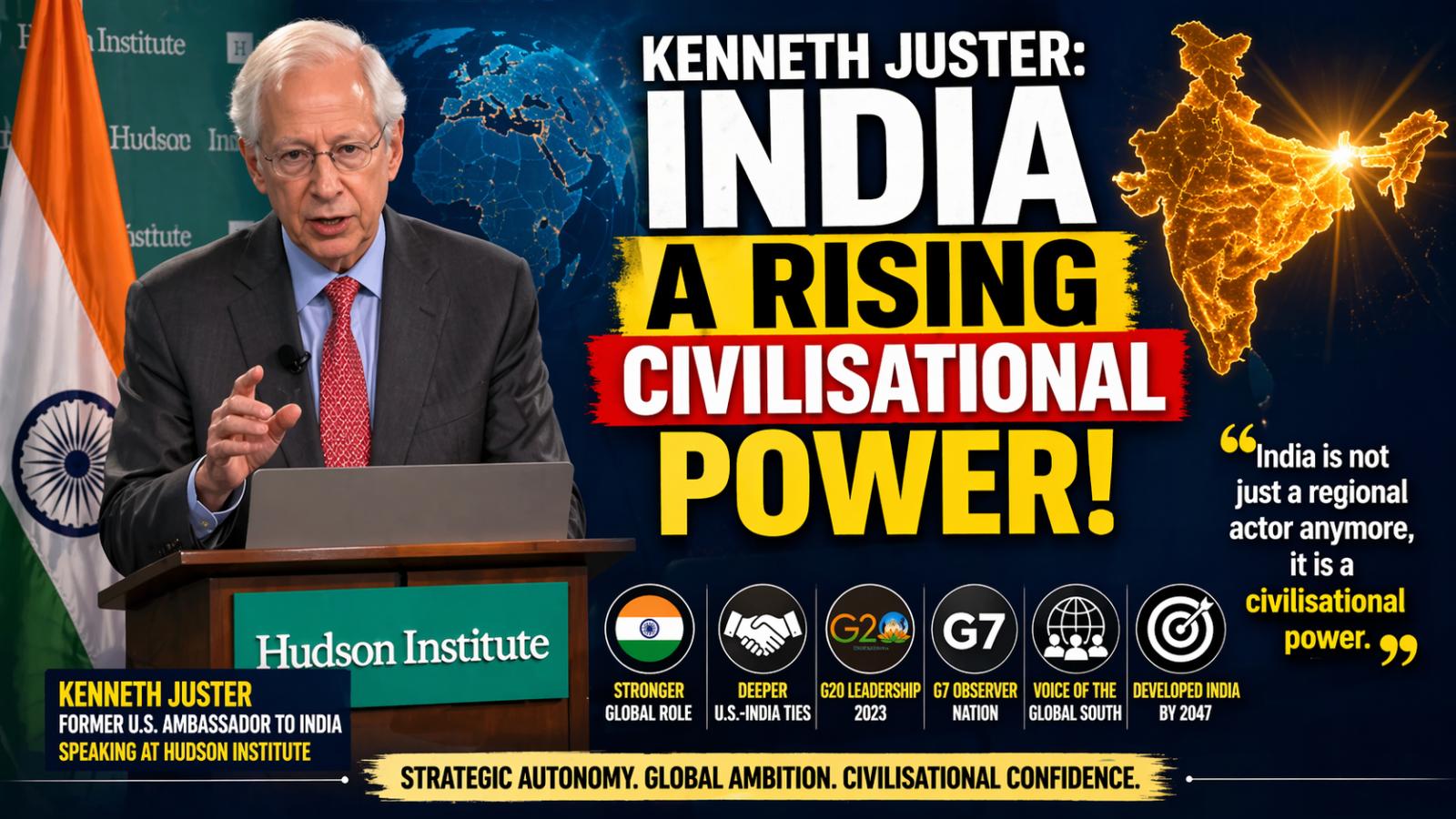
What did Kenneth Juster say about India’s global role? He called it a rising civilisational power
India’s emergence as a civilisational power in global affairs What did Kenneth Juster say about India’s global role? He called it a rising civilisational power, underscoring a major shift in how the country positions itself internationally. Former U.S. Ambassador to India Kenneth Juster said on Thursday, April 23, 2026, that India has evolved into a “civilisational power” under Prime Minister Narendra Modi, reflecting a more assertive and confident global posture. Speaking at an event hosted by the Hudson Institute, Juster identified Modi’s 2014 election as a turning point that accelerated India’s transformation in foreign policy and international engagement. Expanding diplomatic reach and global engagement Juster emphasized that India’s approach to global affairs has shifted significantly over the past decade, with New Delhi demonstrating greater confidence and a willingness to engage broadly with countries across regions. He noted that India no longer views itself as limited to a regional role but instead positions itself as a major global force with a distinct civilizational identity. This evolution has enabled India to expand its diplomatic outreach and pursue strategic ambitions with increased clarity and purpose. Navigating U.S.-China competition with strategic autonomy According to Juster, India’s foreign policy reflects a careful balance between deeper global engagement and maintaining strategic autonomy, particularly in the context of U.S.-China competition. While India shares concerns with other middle powers about preserving independence in decision-making, it has simultaneously strengthened ties with the United States. This dual approach allows India to navigate geopolitical tensions while safeguarding its national interests. Growing influence in global governance platforms Juster also highlighted India’s increasing role in global governance, including its active participation in G7 discussions as a regular observer and its leadership during the G20 presidency in 2023. He pointed to India’s ambition of becoming a developed nation by 2047 as a key driver of its international strategy. Additionally, India has sought to position itself as a leading voice for the Global South, shaping conversations on development, equity, and governance. Washington’s perspective on India’s rising global role Juster’s remarks reflect a broader consensus in Washington that India is emerging as a confident and influential actor on the world stage. By combining strategic independence with proactive diplomacy, India is increasingly seen as a country intent on shaping the global order in the 21st century while advancing its long-term national objectives.
What did Kenneth Juster say about India’s global role? He called it a rising civilisational power
India’s emergence as a civilisational power in global affairs What did Kenneth Juster say about India’s global role? He called it a rising civilisational power, underscoring a major shift in how the country positions itself internationally. Former U.S. Ambassador to India Kenneth Juster said on Thursday, April 23, 2026, that India has evolved into a “civilisational power” under Prime Minister Narendra Modi, reflecting a more assertive and confident global posture. Speaking at an event hosted by the Hudson Institute, Juster identified Modi’s 2014 election as a turning point that accelerated India’s transformation in foreign policy and international engagement. Expanding diplomatic reach and global engagement Juster emphasized that India’s approach to global affairs has shifted significantly over the past decade, with New Delhi demonstrating greater confidence and a willingness to engage broadly with countries across regions. He noted that India no longer views itself as limited to a regional role but instead positions itself as a major global force with a distinct civilizational identity. This evolution has enabled India to expand its diplomatic outreach and pursue strategic ambitions with increased clarity and purpose. Navigating U.S.-China competition with strategic autonomy According to Juster, India’s foreign policy reflects a careful balance between deeper global engagement and maintaining strategic autonomy, particularly in the context of U.S.-China competition. While India shares concerns with other middle powers about preserving independence in decision-making, it has simultaneously strengthened ties with the United States. This dual approach allows India to navigate geopolitical tensions while safeguarding its national interests. Growing influence in global governance platforms Juster also highlighted India’s increasing role in global governance, including its active participation in G7 discussions as a regular observer and its leadership during the G20 presidency in 2023. He pointed to India’s ambition of becoming a developed nation by 2047 as a key driver of its international strategy. Additionally, India has sought to position itself as a leading voice for the Global South, shaping conversations on development, equity, and governance. Washington’s perspective on India’s rising global role Juster’s remarks reflect a broader consensus in Washington that India is emerging as a confident and influential actor on the world stage. By combining strategic independence with proactive diplomacy, India is increasingly seen as a country intent on shaping the global order in the 21st century while advancing its long-term national objectives.
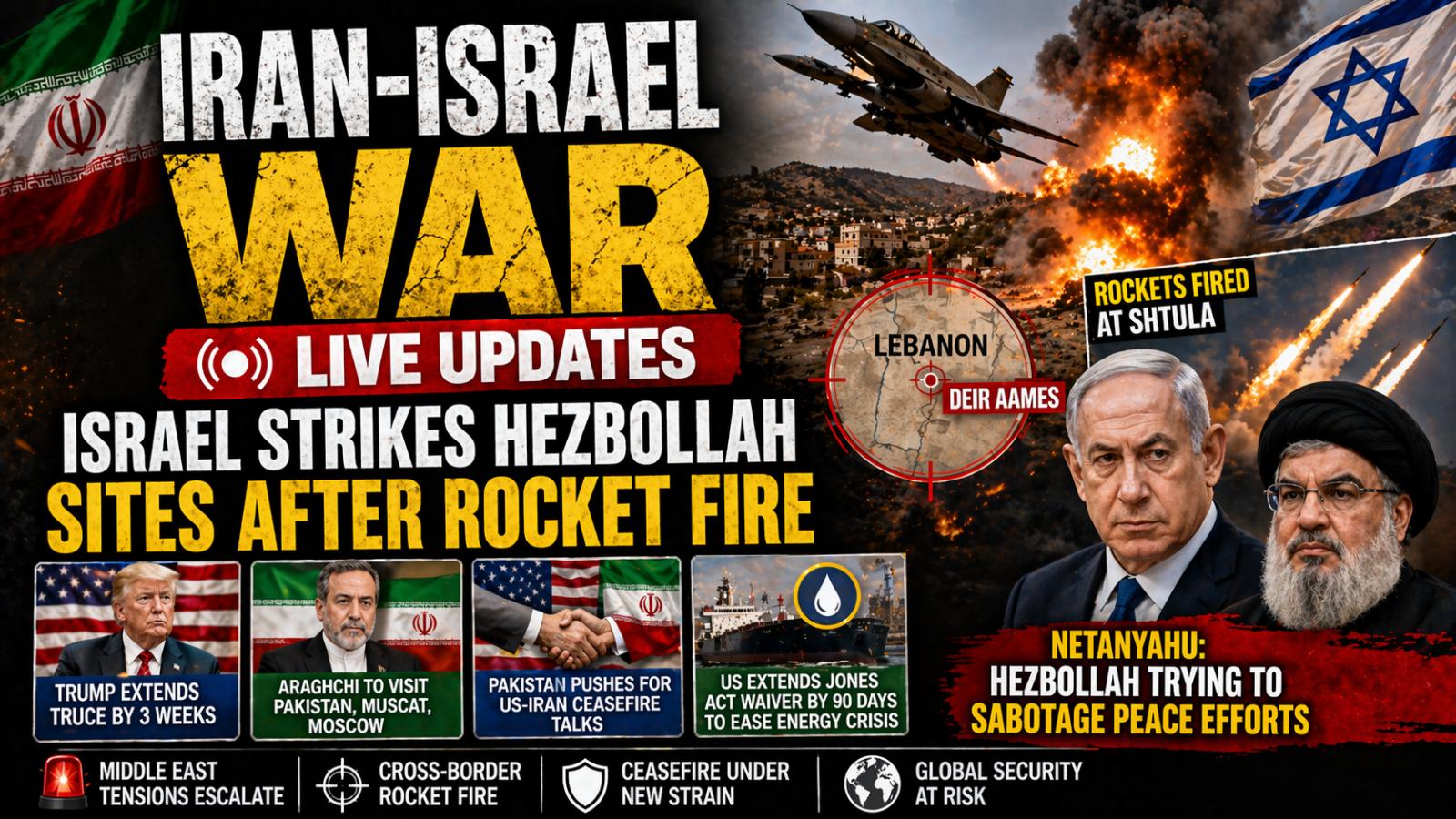
Netanyahu accuses Hezbollah of sabotaging Israel-Lebanon peace efforts
Israel strikes Hezbollah targets after rocket fire from Lebanon as tensions persist despite a truce extension, while diplomatic efforts and US energy measures reflect widening regional impact. Iran-Israel war live updates: Israel strikes Hezbollah sites after rocket fire as regional tensions escalated on Friday, April 24, 2026, with the Israeli military confirming strikes on Hezbollah-linked locations in southern Lebanon following cross-border rocket launches. The Israeli military stated that it targeted sites near the town of Deir Aames after rockets were fired toward the Israeli town of Shtula a day earlier. Deir Aames lies outside the designated border buffer zone that Israeli forces have continued to occupy even after a 10-day ceasefire agreement implemented the previous week. Earlier on Friday, April 24, 2026, the military issued evacuation warnings urging residents to leave the area before the strikes. The renewed hostilities come despite diplomatic efforts to maintain calm. U.S. President Donald Trump announced on Thursday, April 23, 2026, a three-week extension of the Israel-Hezbollah truce. However, both sides have continued intermittent exchanges of fire, raising concerns about the durability of the ceasefire. Israeli Prime Minister Benjamin Netanyahu accused Hezbollah of undermining peace efforts, stating on Friday, April 24, 2026, that the group was attempting to “sabotage” negotiations aimed at reaching a long-term agreement between Israel and Lebanon. His remarks marked his first public comments following the truce extension. Meanwhile, diplomatic activity continued across the region. Iranian Foreign Minister Abbas Araghchi said his upcoming visits to Islamabad, Muscat, and Moscow are intended to coordinate with regional partners and discuss evolving developments. While he did not directly address potential talks with the United States, officials in Pakistan have recently intensified efforts to facilitate renewed ceasefire negotiations between Washington and Tehran. In Washington, the White House announced an extension of a waiver to the Jones Act by 90 days on Friday, April 24, 2026. The measure is designed to ease domestic energy supply pressures amid disruptions linked to the broader West Asia conflict. Officials said the extension would help maintain the flow of oil and natural gas within the United States by allowing greater flexibility in maritime transport. The combination of military actions, diplomatic outreach, and economic measures underscores the widening impact of the conflict, with regional instability continuing to influence global security and energy markets.
Netanyahu accuses Hezbollah of sabotaging Israel-Lebanon peace efforts
Israel strikes Hezbollah targets after rocket fire from Lebanon as tensions persist despite a truce extension, while diplomatic efforts and US energy measures reflect widening regional impact. Iran-Israel war live updates: Israel strikes Hezbollah sites after rocket fire as regional tensions escalated on Friday, April 24, 2026, with the Israeli military confirming strikes on Hezbollah-linked locations in southern Lebanon following cross-border rocket launches. The Israeli military stated that it targeted sites near the town of Deir Aames after rockets were fired toward the Israeli town of Shtula a day earlier. Deir Aames lies outside the designated border buffer zone that Israeli forces have continued to occupy even after a 10-day ceasefire agreement implemented the previous week. Earlier on Friday, April 24, 2026, the military issued evacuation warnings urging residents to leave the area before the strikes. The renewed hostilities come despite diplomatic efforts to maintain calm. U.S. President Donald Trump announced on Thursday, April 23, 2026, a three-week extension of the Israel-Hezbollah truce. However, both sides have continued intermittent exchanges of fire, raising concerns about the durability of the ceasefire. Israeli Prime Minister Benjamin Netanyahu accused Hezbollah of undermining peace efforts, stating on Friday, April 24, 2026, that the group was attempting to “sabotage” negotiations aimed at reaching a long-term agreement between Israel and Lebanon. His remarks marked his first public comments following the truce extension. Meanwhile, diplomatic activity continued across the region. Iranian Foreign Minister Abbas Araghchi said his upcoming visits to Islamabad, Muscat, and Moscow are intended to coordinate with regional partners and discuss evolving developments. While he did not directly address potential talks with the United States, officials in Pakistan have recently intensified efforts to facilitate renewed ceasefire negotiations between Washington and Tehran. In Washington, the White House announced an extension of a waiver to the Jones Act by 90 days on Friday, April 24, 2026. The measure is designed to ease domestic energy supply pressures amid disruptions linked to the broader West Asia conflict. Officials said the extension would help maintain the flow of oil and natural gas within the United States by allowing greater flexibility in maritime transport. The combination of military actions, diplomatic outreach, and economic measures underscores the widening impact of the conflict, with regional instability continuing to influence global security and energy markets.
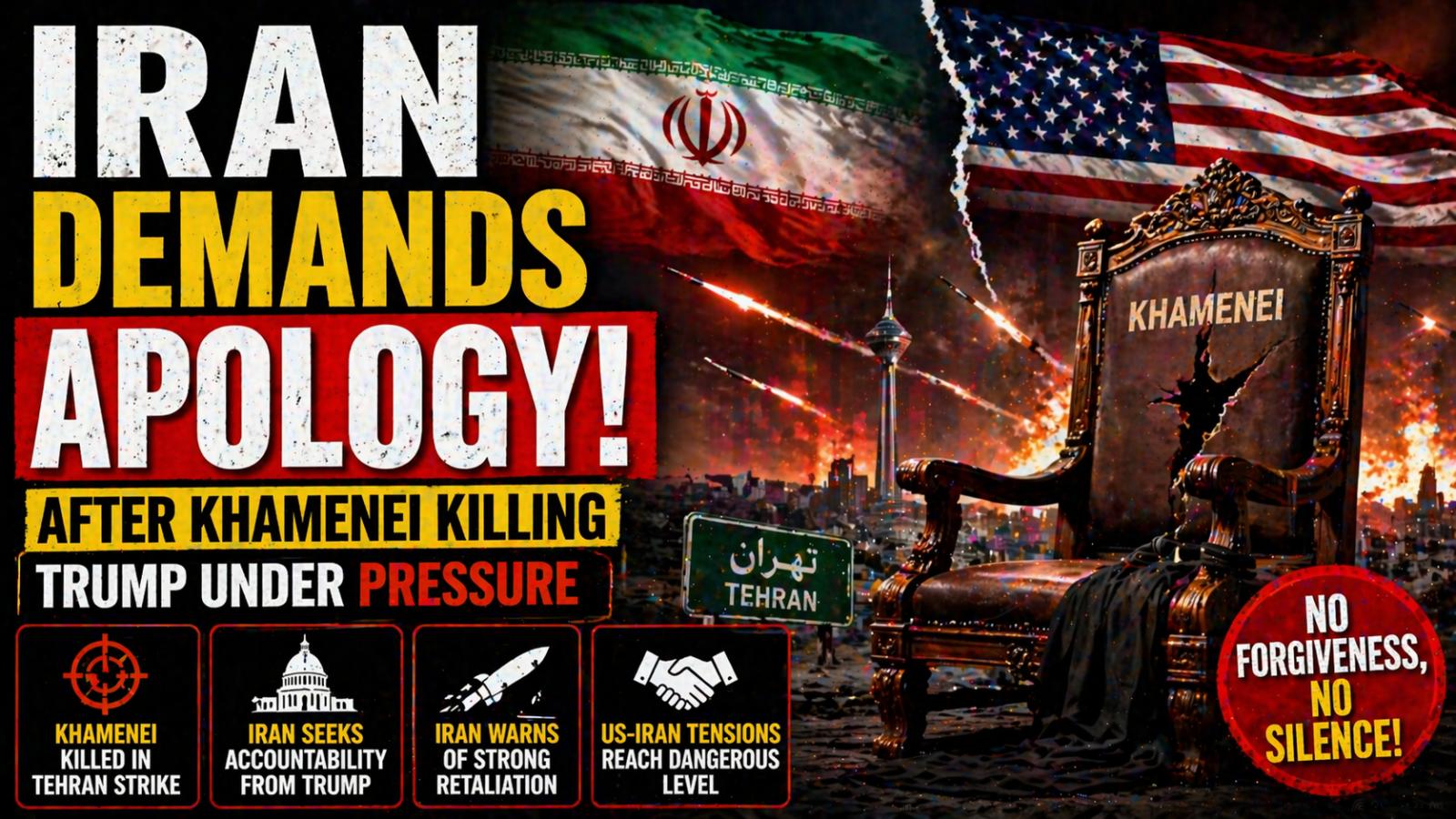
Why did Ali Shirazi demand an apology from Donald Trump? Iran seeks accountability after Khamenei killing
Escalating diplomatic tensions after Tehran strike Why did Ali Shirazi demand an apology from Donald Trump? Iran seeks accountability after Khamenei killing, as senior Iranian cleric Ali Shirazi called on U.S. President Donald Trump to publicly acknowledge wrongdoing following t
Why did Ali Shirazi demand an apology from Donald Trump? Iran seeks accountability after Khamenei killing
Escalating diplomatic tensions after Tehran strike Why did Ali Shirazi demand an apology from Donald Trump? Iran seeks accountability after Khamenei killing, as senior Iranian cleric Ali Shirazi called on U.S. President Donald Trump to publicly acknowledge wrongdoing following t
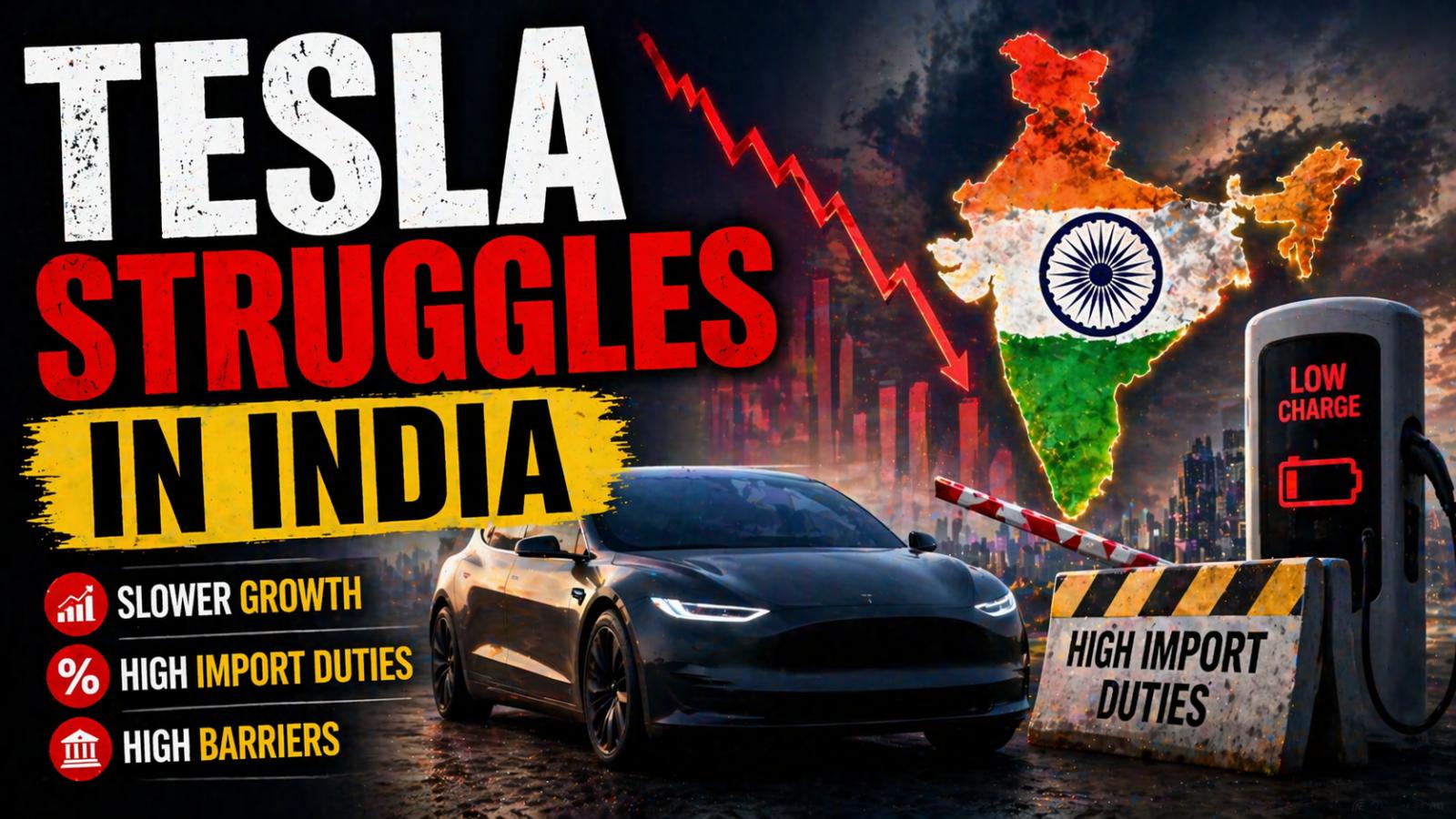
What challenges is Tesla facing in India? Market hurdles limit EV expansion
What challenges is Tesla facing in India? Market hurdles limit EV expansion India has emerged as the weakest new market globally for Tesla Inc, underscoring the structural and policy challenges facing the automaker led by Elon Musk despite rising demand for electric vehicles in
What challenges is Tesla facing in India? Market hurdles limit EV expansion
What challenges is Tesla facing in India? Market hurdles limit EV expansion India has emerged as the weakest new market globally for Tesla Inc, underscoring the structural and policy challenges facing the automaker led by Elon Musk despite rising demand for electric vehicles in
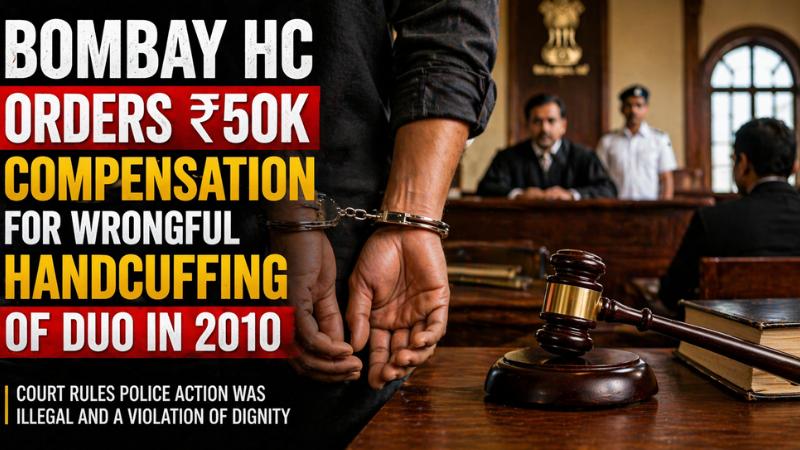
Wrongful Handcuffing Case: Bombay HC Directs State To Pay ₹50K Each
The Bombay High Court has directed the Maharashtra government to pay ₹50,000 each as compensation to advocate Yogeshwar Kawade and former serviceman Avinash Date for wrongful handcuffing by police in a 2010 case. A division bench comprising Justices Urmila Joshi-Phalke and Nivedita Mehta observed that the act amounted to “unwarranted humiliation and in
Wrongful Handcuffing Case: Bombay HC Directs State To Pay ₹50K Each
The Bombay High Court has directed the Maharashtra government to pay ₹50,000 each as compensation to advocate Yogeshwar Kawade and former serviceman Avinash Date for wrongful handcuffing by police in a 2010 case. A division bench comprising Justices Urmila Joshi-Phalke and Nivedita Mehta observed that the act amounted to “unwarranted humiliation and in

US Mall Shooting In Baton Rouge: 1 Dead, 5 Injured After Group Fight
A deadly shooting incident shook the Mall of Louisiana in Baton Rouge city, US, on Thursday, April 24, 2026, around early hours as per official updates at 06:53 IST. At least one person was killed and five others sustained injuries when gunfire broke out inside a busy food court area. The sudden violence created panic among shoppers and staff, forcing authorities to immediately evacuate the premises and initiate emergency response protocols. According to officials, the shooting was
US Mall Shooting In Baton Rouge: 1 Dead, 5 Injured After Group Fight
A deadly shooting incident shook the Mall of Louisiana in Baton Rouge city, US, on Thursday, April 24, 2026, around early hours as per official updates at 06:53 IST. At least one person was killed and five others sustained injuries when gunfire broke out inside a busy food court area. The sudden violence created panic among shoppers and staff, forcing authorities to immediately evacuate the premises and initiate emergency response protocols. According to officials, the shooting was
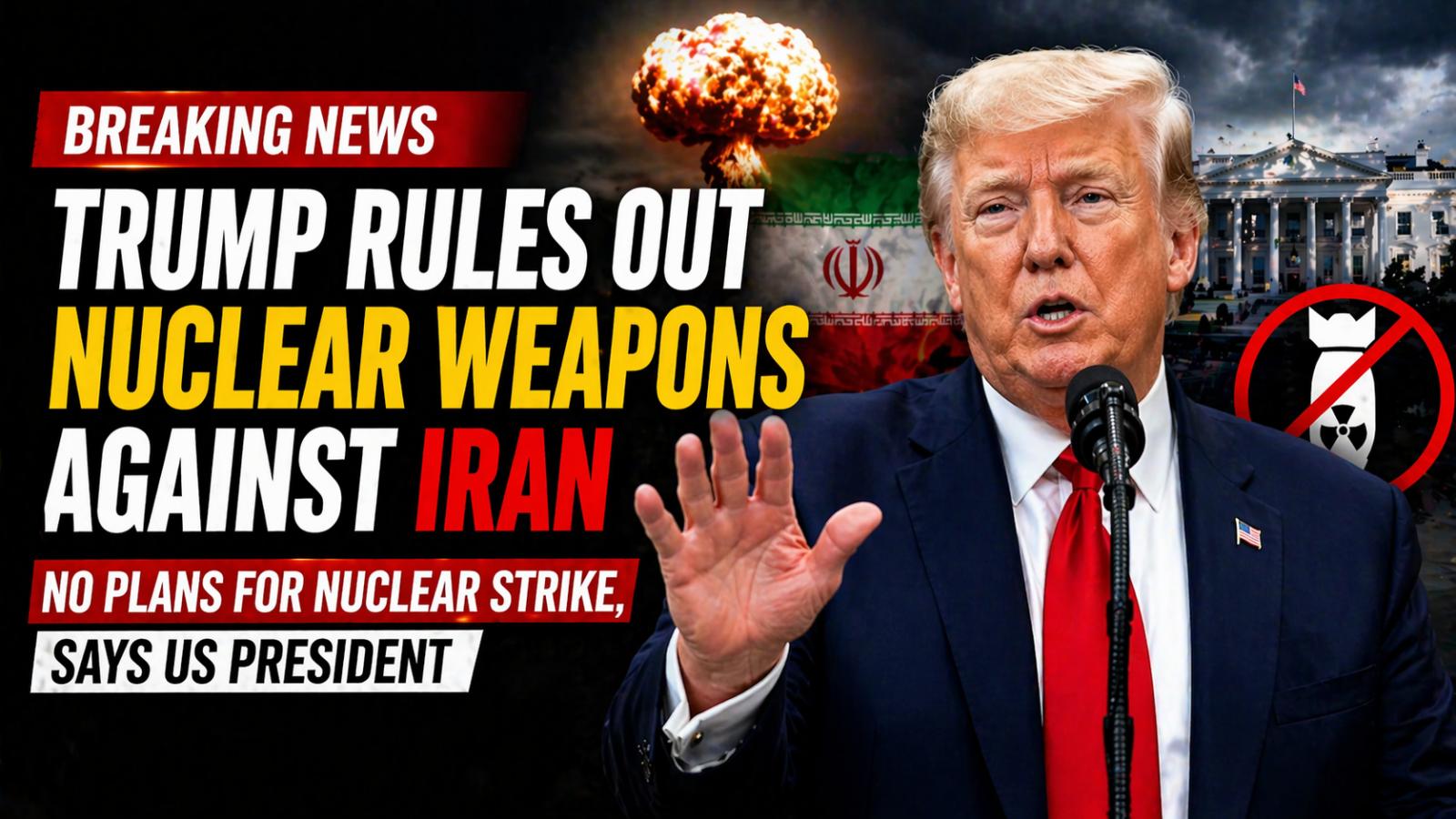
US President Says No Plans for Nuclear Strike on Iran
Donald Trump stated that the United States currently has no intention of using nuclear weapons against Iran, offering clarity on a key concern amid ongoing geopolitical tensions. Speaking to reporters at the White House, Trump emphasized that conventional military actions had already achieved significant results without the need for nuclear escalation. Addressing recent speculation, Trump said there was no justification for deploying nuclear weapons, noting that existing strategies had been effective. His remarks come after earlier statements that had drawn international attention, where strong rhetoric raised concerns about the potential use of extreme measures during the conflict that began earlier this year. The president reiterated that nuclear weapons should not be used by any nation, signaling a shift toward a more restrained public stance. At the same time, he underscored the administration’s objective of preventing Iran from developing nuclear capabilities that could pose a threat to regional and global security. Comments from senior officials have also contributed to the broader discussion. JD Vance had previously indicated that the United States was prepared to escalate its response if necessary, though the White House clarified that such remarks did not imply nuclear action. Trump’s latest statement appears to balance deterrence with reassurance, highlighting a focus on maintaining pressure through conventional means while avoiding the risks associated with nuclear engagement. As tensions persist, the administration continues to stress its commitment to preventing further escalation while safeguarding national interests and stability in the region.
US President Says No Plans for Nuclear Strike on Iran
Donald Trump stated that the United States currently has no intention of using nuclear weapons against Iran, offering clarity on a key concern amid ongoing geopolitical tensions. Speaking to reporters at the White House, Trump emphasized that conventional military actions had already achieved significant results without the need for nuclear escalation. Addressing recent speculation, Trump said there was no justification for deploying nuclear weapons, noting that existing strategies had been effective. His remarks come after earlier statements that had drawn international attention, where strong rhetoric raised concerns about the potential use of extreme measures during the conflict that began earlier this year. The president reiterated that nuclear weapons should not be used by any nation, signaling a shift toward a more restrained public stance. At the same time, he underscored the administration’s objective of preventing Iran from developing nuclear capabilities that could pose a threat to regional and global security. Comments from senior officials have also contributed to the broader discussion. JD Vance had previously indicated that the United States was prepared to escalate its response if necessary, though the White House clarified that such remarks did not imply nuclear action. Trump’s latest statement appears to balance deterrence with reassurance, highlighting a focus on maintaining pressure through conventional means while avoiding the risks associated with nuclear engagement. As tensions persist, the administration continues to stress its commitment to preventing further escalation while safeguarding national interests and stability in the region.

Drug Tariffs May Raise Prescription Costs: What Patients Should Know across U.S
A newly announced policy introducing tariffs on certain imported pharmaceuticals could gradually increase prescription drug costs for patients across the United States. The measure applies primarily to brand-name medications that remain under patent, along with some of their active ingredients, with tariff rates potentially reaching up to 100 percent depending on compliance with pricing or domestic production conditions. While generic medications and biosimilars are currently exclud
Drug Tariffs May Raise Prescription Costs: What Patients Should Know across U.S
A newly announced policy introducing tariffs on certain imported pharmaceuticals could gradually increase prescription drug costs for patients across the United States. The measure applies primarily to brand-name medications that remain under patent, along with some of their active ingredients, with tariff rates potentially reaching up to 100 percent depending on compliance with pricing or domestic production conditions. While generic medications and biosimilars are currently exclud
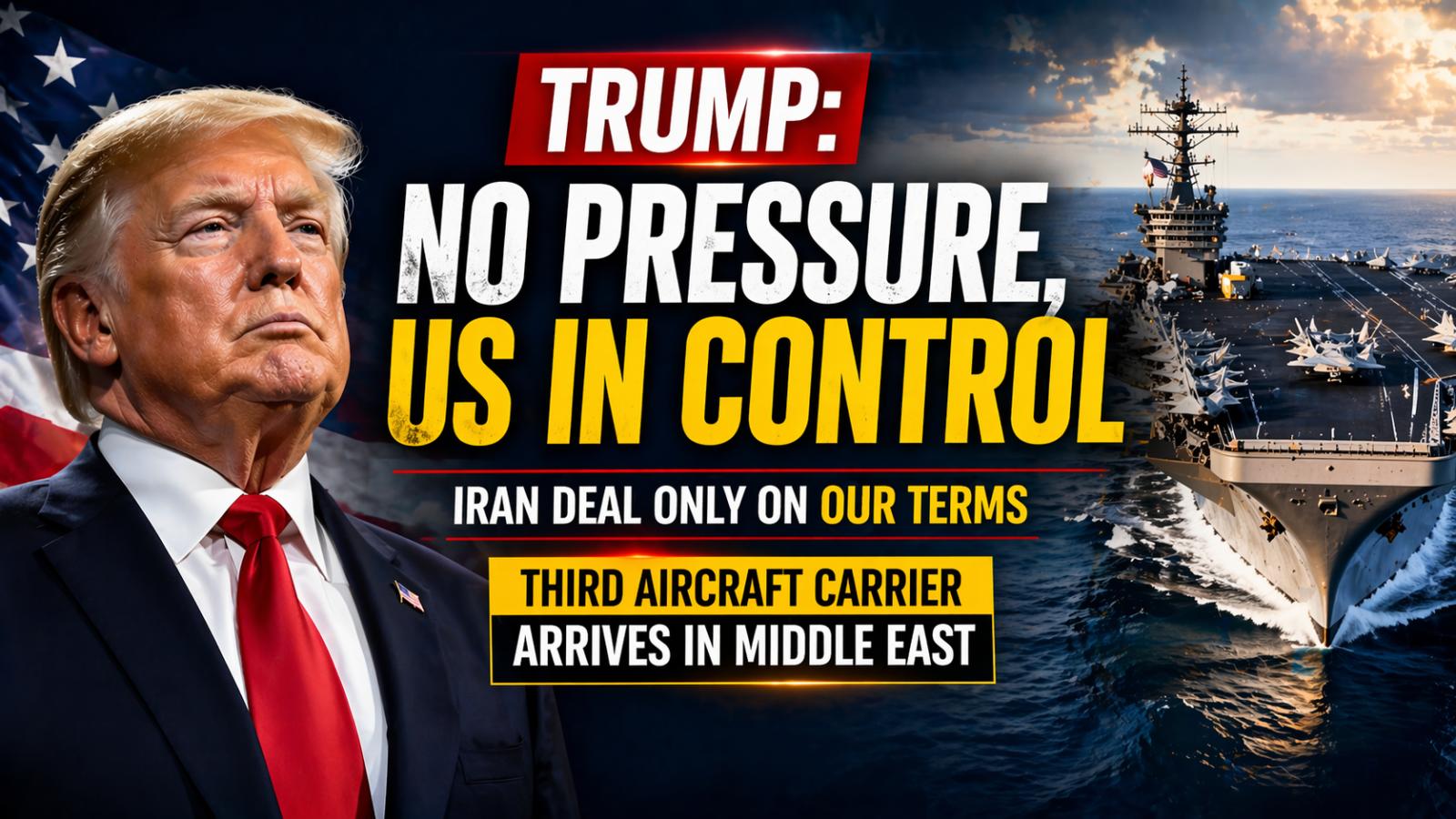
US Deploys Third Aircraft Carrier as Trump Signals No Urgency for Iran Deal
US President Donald Trump has dismissed speculation that Washington is under pressure to secure a deal with Iran, stating that the United States is in no rush to negotiate amid ongoing tensions. In a recent statement, Trump emphasized that while the US has the flexibility to wait, Iran faces increasing urgency as conditions evolve. He asserted that recent developments have significantly weakened Iran’s military capabilities, pointing to setbacks across its naval and air forces as well as the degradation of its defense systems. Trump also highlighted what he described as a tightening blockade, suggesting that the strategic balance currently favors the United States and its allies. He reiterated that any agreement would only move forward if it aligns with American interests and broader global stability, rejecting claims that his administration is eager to conclude talks quickly. At the same time, the US military has reinforced its presence in the region. United States Central Command confirmed the arrival of a third aircraft carrier, the USS George H.W. Bush, into its operational zone. The carrier is currently positioned in the Indian Ocean, joining the USS Abraham Lincoln in the Arabian Sea and the USS Gerald R. Ford in the Red Sea. The deployment marks a notable expansion of US naval strength in the Middle East during a fragile ceasefire period. The USS George H.W. Bush followed an unusual route, traveling around the Horn of Africa before entering the region, underscoring the strategic importance of its positioning. These developments reflect a continued emphasis on military readiness while diplomatic uncertainty persists, with Washington signaling that timing and terms of any agreement will remain firmly under its control.
US Deploys Third Aircraft Carrier as Trump Signals No Urgency for Iran Deal
US President Donald Trump has dismissed speculation that Washington is under pressure to secure a deal with Iran, stating that the United States is in no rush to negotiate amid ongoing tensions. In a recent statement, Trump emphasized that while the US has the flexibility to wait, Iran faces increasing urgency as conditions evolve. He asserted that recent developments have significantly weakened Iran’s military capabilities, pointing to setbacks across its naval and air forces as well as the degradation of its defense systems. Trump also highlighted what he described as a tightening blockade, suggesting that the strategic balance currently favors the United States and its allies. He reiterated that any agreement would only move forward if it aligns with American interests and broader global stability, rejecting claims that his administration is eager to conclude talks quickly. At the same time, the US military has reinforced its presence in the region. United States Central Command confirmed the arrival of a third aircraft carrier, the USS George H.W. Bush, into its operational zone. The carrier is currently positioned in the Indian Ocean, joining the USS Abraham Lincoln in the Arabian Sea and the USS Gerald R. Ford in the Red Sea. The deployment marks a notable expansion of US naval strength in the Middle East during a fragile ceasefire period. The USS George H.W. Bush followed an unusual route, traveling around the Horn of Africa before entering the region, underscoring the strategic importance of its positioning. These developments reflect a continued emphasis on military readiness while diplomatic uncertainty persists, with Washington signaling that timing and terms of any agreement will remain firmly under its control.










