






Pawan Kalyan Surgery Details Out As Chandrababu Visits Him In Hyderabad
May 2, 2026, Pawan Kalyan revealed details of his sinus surgery while N. Chandrababu Naidu visited him in Hyderabad, showing support during his recovery. A significant development in Andhra Pradesh politics and public life has drawn attention as
Pawan Kalyan Surgery Details Out As Chandrababu Visits Him In Hyderabad
May 2, 2026, Pawan Kalyan revealed details of his sinus surgery while N. Chandrababu Naidu visited him in Hyderabad, showing support during his recovery. A significant development in Andhra Pradesh politics and public life has drawn attention as

Maddalena vs Prates stuns UFC Perth crowd in intense main event
Maddalena vs Prates stuns UFC Perth crowd in intense main event as fans inside RAC Arena witnessed a charged atmosphere on Saturday, May 2, 2026, with emotions running high even before the first strike was thrown. The welterweight clash between Jack Della Maddalena and
Maddalena vs Prates stuns UFC Perth crowd in intense main event
Maddalena vs Prates stuns UFC Perth crowd in intense main event as fans inside RAC Arena witnessed a charged atmosphere on Saturday, May 2, 2026, with emotions running high even before the first strike was thrown. The welterweight clash between Jack Della Maddalena and
Thirteen Killed in Israeli Airstrikes on Southern Lebanon, Health Ministry Reports
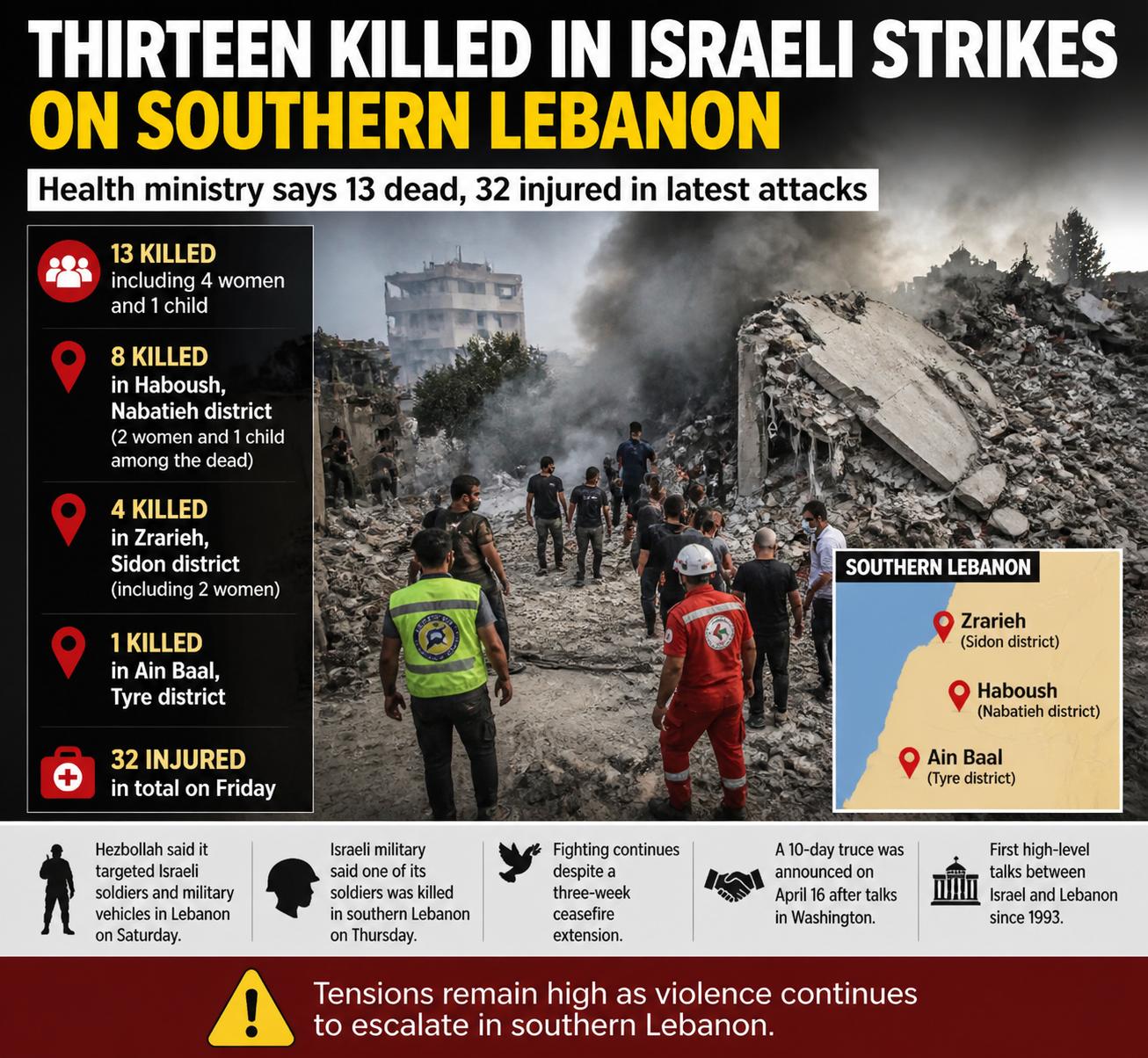
Date: May 2, 2026 | Time: 04:30 PM IST | Place: Southern Lebanon, Lebanon At least 13 people have been killed in Israeli airstrikes on southern Lebanon, according to the Lebanese Health Ministry. The airstrikes targeted multiple areas, with the most significant fatalities reported in Haboush, located in the Nabatieh district, where two women and a child were among the eight killed. The Israel Defense Forces (IDF) had issued an evacuation order for residents in these areas, but th
Thirteen Killed in Israeli Airstrikes on Southern Lebanon, Health Ministry Reports
Date: May 2, 2026 | Time: 04:30 PM IST | Place: Southern Lebanon, Lebanon At least 13 people have been killed in Israeli airstrikes on southern Lebanon, according to the Lebanese Health Ministry. The airstrikes targeted multiple areas, with the most significant fatalities reported in Haboush, located in the Nabatieh district, where two women and a child were among the eight killed. The Israel Defense Forces (IDF) had issued an evacuation order for residents in these areas, but th
US blockade in Gulf of Oman halts $5 billion in Iranian oil revenue
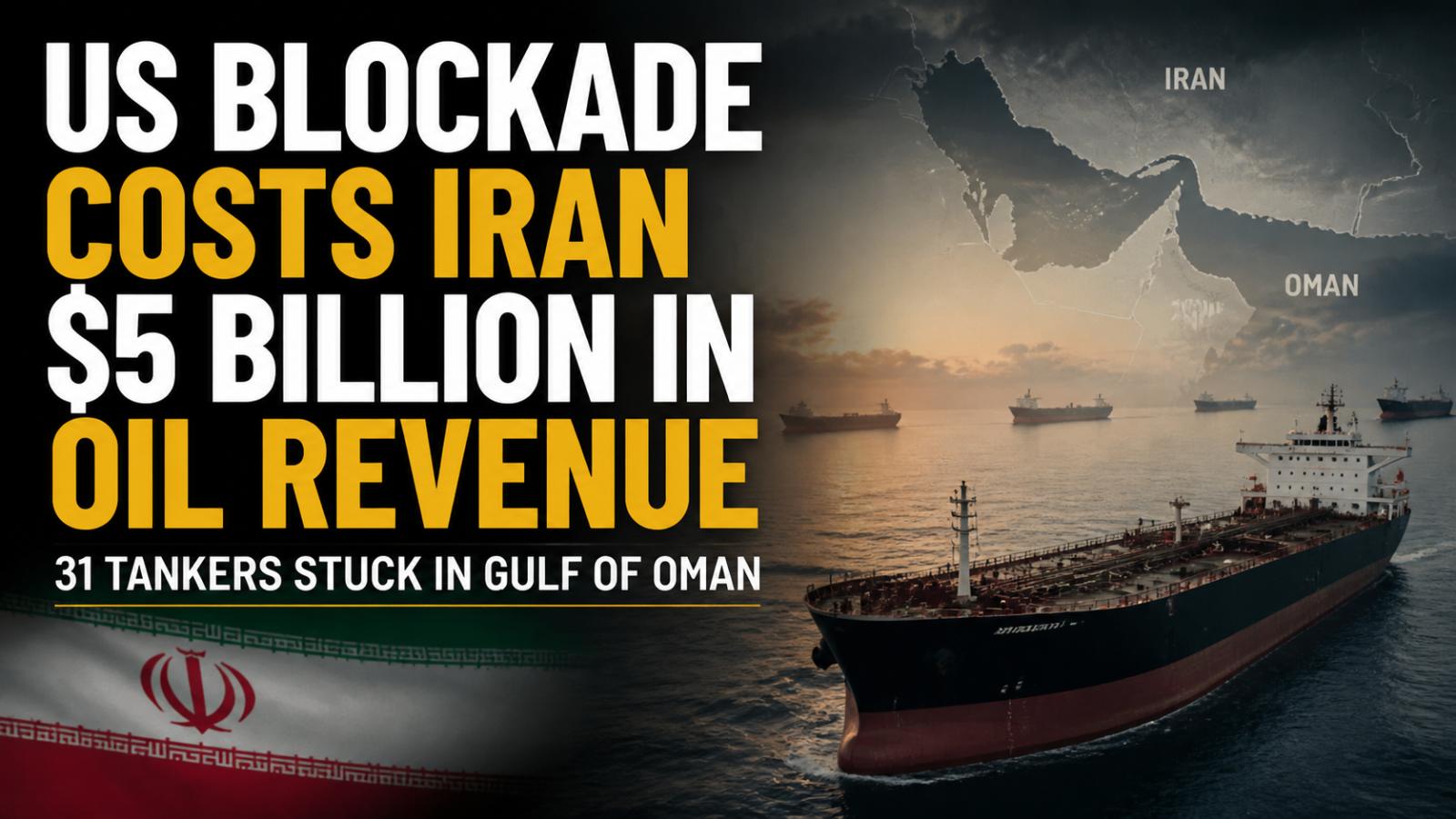
The ongoing US blockade in the Gulf of Oman has forced Iran to face a massive loss, with the US Defense Department estimating that Tehran has lost nearly $5 billion in oil revenue. This economic setback is the result of a blockade imposed by the US military in an effort to increase pressure on Iran’s economy. The blockade, which began on April 13, 2025, has been described as one of President Donald Trump’s most powerful tools to drive Iran into negotiations that aim to resolve the ongoing conflict. However, diplomatic talks have been repeatedly stalling and restarting, leaving both parties in a stalemate. According to Pentagon officials, more than 40 vessels have been redirected since the operation’s start, as they attempted to smuggle oil and other contraband through the region. In total, 31 tankers carrying approximately 53 million barrels of Iranian crude are now stuck in the Gulf of Oman, and these shipments are valued at around $4.8 billion. Of these, two vessels have already been seized by US forces. With storage capacity on land reaching its limits, Iran has resorted to using older tankers as floating storage units, as reported by analysts. These tankers, which are no longer fit for regular commercial routes, have become temporary storage sites for Iran’s oil. Some shipments are being rerouted along longer and more expensive paths, primarily to avoid interception by US forces. To achieve this, Iranian ships have been following coastlines near Pakistan and India and using safer maritime corridors towards the Strait of Malacca, a key transit point for oil bound for China. Tanker tracking analysts such as Samir Madani, co-founder of TankerTrackers.com, have noted a shift in Iranian shipping patterns. He explained how one Iranian tanker, called “HUGE,” cleverly demonstrated how ships are using stealth routes to evade detection. According to Madani, ships are increasingly relying on hidden paths through regional waters to avoid the US military blockade. Madani also predicted that, in the future, Iran might attempt a large-scale breakout of its tankers. "I think the Iranians will wait for an opportunity to launch an overnight 'Great Escape' once they have built up further storage near the border with Pakistan,” Madani told Axios. This situation is part of a broader economic struggle between Iran and the United States, with both countries resorting to maritime pressure tactics. Iran has previously restricted access to the Strait of Hormuz, a critical shipping route, in retaliation. Meanwhile, the US has been tightening its control over the Gulf of Oman, an entry point to key waterways. According to Gregory Brew, an analyst at Eurasia Group, Iran is just weeks away from running out of storage space for its oil, which could collapse its oil production capacity. "They're probably several weeks, or perhaps as much as a month, away from running out of storage," Brew said. The Pentagon’s spokesperson, Joel Valdez, emphasized the severity of the situation, stating that the blockade is fully active and that the US military is delivering a devastating blow to Iran’s ability to fund terrorism and regional destabilization. “Our armed forces in the region will continue to maintain this unrelenting pressure,” Valdez said. This strategy, although harsh, seems designed to wear down Iran’s ability to sustain itself economically, and possibly force a change in its approach to negotiations.
US blockade in Gulf of Oman halts $5 billion in Iranian oil revenue
The ongoing US blockade in the Gulf of Oman has forced Iran to face a massive loss, with the US Defense Department estimating that Tehran has lost nearly $5 billion in oil revenue. This economic setback is the result of a blockade imposed by the US military in an effort to increase pressure on Iran’s economy. The blockade, which began on April 13, 2025, has been described as one of President Donald Trump’s most powerful tools to drive Iran into negotiations that aim to resolve the ongoing conflict. However, diplomatic talks have been repeatedly stalling and restarting, leaving both parties in a stalemate. According to Pentagon officials, more than 40 vessels have been redirected since the operation’s start, as they attempted to smuggle oil and other contraband through the region. In total, 31 tankers carrying approximately 53 million barrels of Iranian crude are now stuck in the Gulf of Oman, and these shipments are valued at around $4.8 billion. Of these, two vessels have already been seized by US forces. With storage capacity on land reaching its limits, Iran has resorted to using older tankers as floating storage units, as reported by analysts. These tankers, which are no longer fit for regular commercial routes, have become temporary storage sites for Iran’s oil. Some shipments are being rerouted along longer and more expensive paths, primarily to avoid interception by US forces. To achieve this, Iranian ships have been following coastlines near Pakistan and India and using safer maritime corridors towards the Strait of Malacca, a key transit point for oil bound for China. Tanker tracking analysts such as Samir Madani, co-founder of TankerTrackers.com, have noted a shift in Iranian shipping patterns. He explained how one Iranian tanker, called “HUGE,” cleverly demonstrated how ships are using stealth routes to evade detection. According to Madani, ships are increasingly relying on hidden paths through regional waters to avoid the US military blockade. Madani also predicted that, in the future, Iran might attempt a large-scale breakout of its tankers. "I think the Iranians will wait for an opportunity to launch an overnight 'Great Escape' once they have built up further storage near the border with Pakistan,” Madani told Axios. This situation is part of a broader economic struggle between Iran and the United States, with both countries resorting to maritime pressure tactics. Iran has previously restricted access to the Strait of Hormuz, a critical shipping route, in retaliation. Meanwhile, the US has been tightening its control over the Gulf of Oman, an entry point to key waterways. According to Gregory Brew, an analyst at Eurasia Group, Iran is just weeks away from running out of storage space for its oil, which could collapse its oil production capacity. "They're probably several weeks, or perhaps as much as a month, away from running out of storage," Brew said. The Pentagon’s spokesperson, Joel Valdez, emphasized the severity of the situation, stating that the blockade is fully active and that the US military is delivering a devastating blow to Iran’s ability to fund terrorism and regional destabilization. “Our armed forces in the region will continue to maintain this unrelenting pressure,” Valdez said. This strategy, although harsh, seems designed to wear down Iran’s ability to sustain itself economically, and possibly force a change in its approach to negotiations.
What is Trump’s new retirement plan? It expands savings access for millions
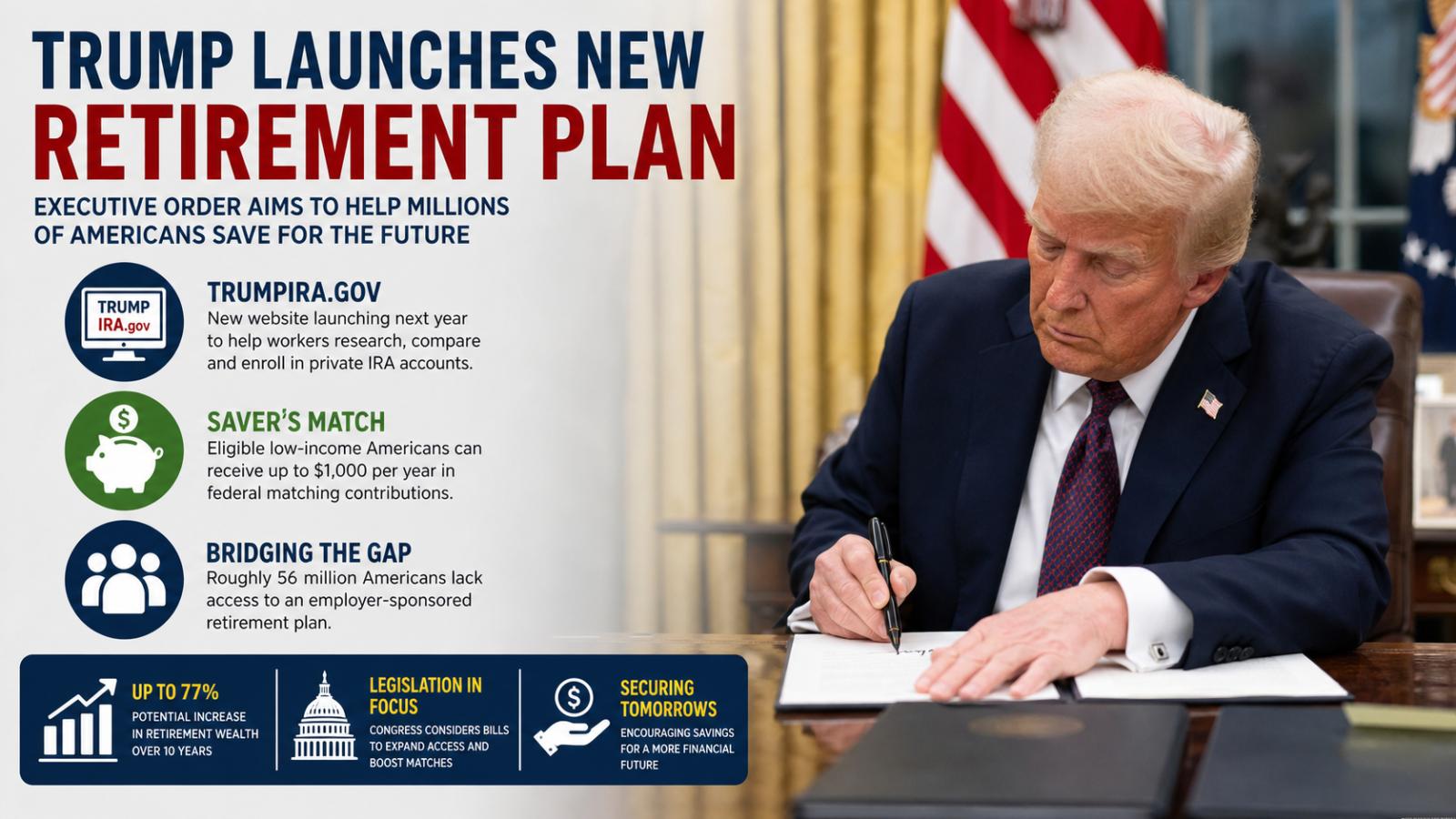
Expanding retirement access for underserved workers What is Trump’s new retirement plan? It expands savings access for millions, as a new executive order introduces a federal initiative aimed at workers without employer-sponsored retirement options. According to details outlined in the policy , tens of millions of Americans currently lack access to plans such as 401(k)s, creating long-term financial vulnerability. The initiative proposes a centralized platform, T
What is Trump’s new retirement plan? It expands savings access for millions
Expanding retirement access for underserved workers What is Trump’s new retirement plan? It expands savings access for millions, as a new executive order introduces a federal initiative aimed at workers without employer-sponsored retirement options. According to details outlined in the policy , tens of millions of Americans currently lack access to plans such as 401(k)s, creating long-term financial vulnerability. The initiative proposes a centralized platform, T
US warns Iran as Strait of Hormuz blockade tightens pressure
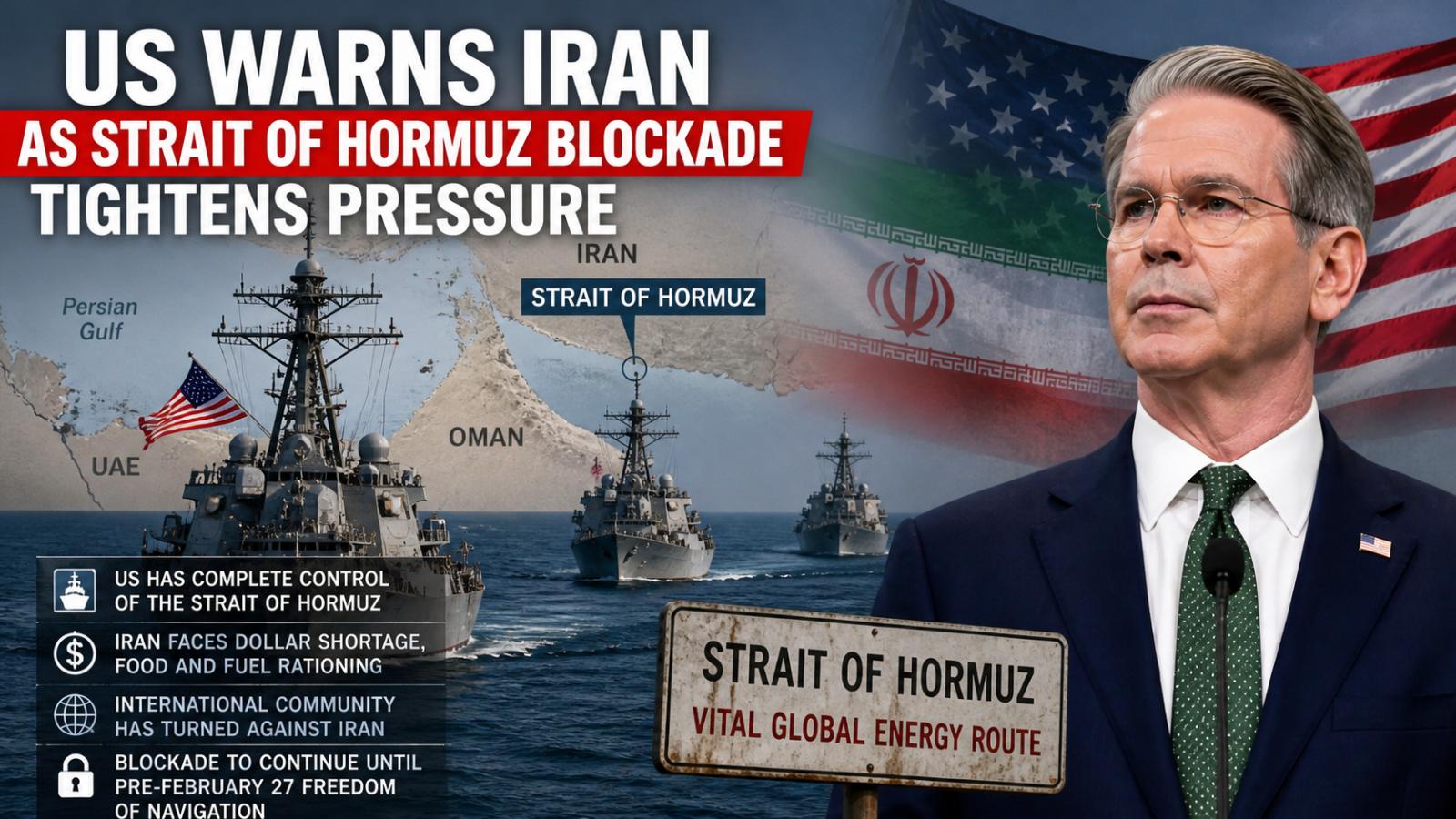
The US tightened pressure on Iran with a Strait of Hormuz blockade, disrupting oil trade and worsening Iran’s economic crisis, while internal political divisions grow and tensions with Washington escalate. US warns Iran as Strait of Hormuz blockade tightens pressure as tensions escalated following a sharply worded statement by U.S. Treasury Secretary Scott Bessent on Friday, in which he criticized Iran’s leadership and outlined the United States’ strategic position in the ongoing standoff. In a public post, Bessent asserted that the United States maintains full control over the Strait of Hormuz, a critical global energy transit route, and emphasized that a naval blockade would remain in effect until freedom of navigation conditions are restored to levels seen before February 27. The remarks come amid heightened geopolitical tensions involving Iran and the United States, with Bessent also pointing to economic strain within Iran, including a shortage of U.S. dollars and the implementation of food and gasoline rationing. He further stated that international sentiment has increasingly turned against Tehran, underscoring Washington’s broader diplomatic stance. The blockade represents a significant shift in pressure tactics. For years, Iran had managed to navigate sanctions by exporting oil through informal channels, particularly to China, using a network of so-called shadow vessels. However, U.S. naval operations have disrupted these routes, preventing tankers from bypassing enforcement measures and, in some cases, pursuing them beyond the Persian Gulf into the Indian Ocean. The situation escalated after Iran targeted commercial vessels and restricted maritime traffic through the Hormuz corridor, a move that disrupted global oil and liquefied natural gas shipments. In response, the United States deployed naval forces to secure the passage, effectively limiting Iran’s ability to continue its covert export operations. Internally, the crisis has exposed divisions within Iran’s leadership. President Masoud Pezeshkian is reportedly aligned with moderate factions seeking negotiations, while hardline figures such as Saeed Jalili advocate a more confrontational approach. The divergence reflects broader concerns about the sustainability of the conflict, particularly as economic conditions deteriorate. President Donald Trump has indicated support for maintaining the blockade, describing it as highly effective and signaling preparedness for a prolonged standoff. According to statements made to reporters, the administration is considering extending the measure until Iran meets specific nuclear-related demands. The economic impact on Iran has been severe. Reports indicate that unemployment has surged, food prices have risen sharply, and widespread internet disruptions have affected digital commerce. The national currency has weakened significantly over the past year, with the exchange rate reaching approximately 1.81 million rials per U.S. dollar, intensifying concerns about potential economic collapse.
US warns Iran as Strait of Hormuz blockade tightens pressure
The US tightened pressure on Iran with a Strait of Hormuz blockade, disrupting oil trade and worsening Iran’s economic crisis, while internal political divisions grow and tensions with Washington escalate. US warns Iran as Strait of Hormuz blockade tightens pressure as tensions escalated following a sharply worded statement by U.S. Treasury Secretary Scott Bessent on Friday, in which he criticized Iran’s leadership and outlined the United States’ strategic position in the ongoing standoff. In a public post, Bessent asserted that the United States maintains full control over the Strait of Hormuz, a critical global energy transit route, and emphasized that a naval blockade would remain in effect until freedom of navigation conditions are restored to levels seen before February 27. The remarks come amid heightened geopolitical tensions involving Iran and the United States, with Bessent also pointing to economic strain within Iran, including a shortage of U.S. dollars and the implementation of food and gasoline rationing. He further stated that international sentiment has increasingly turned against Tehran, underscoring Washington’s broader diplomatic stance. The blockade represents a significant shift in pressure tactics. For years, Iran had managed to navigate sanctions by exporting oil through informal channels, particularly to China, using a network of so-called shadow vessels. However, U.S. naval operations have disrupted these routes, preventing tankers from bypassing enforcement measures and, in some cases, pursuing them beyond the Persian Gulf into the Indian Ocean. The situation escalated after Iran targeted commercial vessels and restricted maritime traffic through the Hormuz corridor, a move that disrupted global oil and liquefied natural gas shipments. In response, the United States deployed naval forces to secure the passage, effectively limiting Iran’s ability to continue its covert export operations. Internally, the crisis has exposed divisions within Iran’s leadership. President Masoud Pezeshkian is reportedly aligned with moderate factions seeking negotiations, while hardline figures such as Saeed Jalili advocate a more confrontational approach. The divergence reflects broader concerns about the sustainability of the conflict, particularly as economic conditions deteriorate. President Donald Trump has indicated support for maintaining the blockade, describing it as highly effective and signaling preparedness for a prolonged standoff. According to statements made to reporters, the administration is considering extending the measure until Iran meets specific nuclear-related demands. The economic impact on Iran has been severe. Reports indicate that unemployment has surged, food prices have risen sharply, and widespread internet disruptions have affected digital commerce. The national currency has weakened significantly over the past year, with the exchange rate reaching approximately 1.81 million rials per U.S. dollar, intensifying concerns about potential economic collapse.

Sachin Tendulkar Net Worth: The Quiet Power Behind Cricket’s Greatest Icon
Few names in world sport carry the weight of Sachin Tendulkar. When people search “Sachin Tendulkar net worth,” they aren’t chasing a number—they’re trying to understand how excellence, discipline, and trust turn into lasting wealth. As of 2026, his net worth is estimated at ₹1,400–₹1,500 crore, a figure built not on hype, but on decades of unmatched credibi
Sachin Tendulkar Net Worth: The Quiet Power Behind Cricket’s Greatest Icon
Few names in world sport carry the weight of Sachin Tendulkar. When people search “Sachin Tendulkar net worth,” they aren’t chasing a number—they’re trying to understand how excellence, discipline, and trust turn into lasting wealth. As of 2026, his net worth is estimated at ₹1,400–₹1,500 crore, a figure built not on hype, but on decades of unmatched credibi

Indian student’s death in Chicago highlights mental health and visa stress
A 26-year-old Indian student from Andhra Pradesh died by suicide in Chicago after struggling to find a job post-graduation. Facing financial pressure and emotional stress, he left messages before his death. A fundraiser is underway to support repatriation and assist his family. Indian student’s death in Chicago highlights mental health and visa stress as Iraganaboyina Chandu, a 26-year-old graduate from Andhra Pradesh, died by suicide at his residence in Chicago
Indian student’s death in Chicago highlights mental health and visa stress
A 26-year-old Indian student from Andhra Pradesh died by suicide in Chicago after struggling to find a job post-graduation. Facing financial pressure and emotional stress, he left messages before his death. A fundraiser is underway to support repatriation and assist his family. Indian student’s death in Chicago highlights mental health and visa stress as Iraganaboyina Chandu, a 26-year-old graduate from Andhra Pradesh, died by suicide at his residence in Chicago

Security footage shows missed dog alerts before White House shooting
DOJ footage shows missed security dog alerts before shooting at WHCD A newly released video from the Justice Department has uncovered crucial details about the attempted shooting at the White House Correspondents' Dinner (WHCD). The footage reveals that a security dog alerted to Cole Tomas Allen’s presence twice, but these warnings went unnoticed, allowing the suspect to fire at a Secret Service officer before being detained. The video, shared by US Attorney Jeanine Pirro on social media platform X, shows Allen walking through the Hilton Hotel the night before the attack. In a chilling moment, the security dog reacts to Allen as he passes, signaling potential danger. However, despite these two distinct alerts, the handler fails to acknowledge the dog's warning, allowing Allen to continue his movement through the hotel. The footage captures the suspect armed with a shotgun, heading toward a security checkpoint where he shoots a Secret Service officer. The video highlights how Allen was moving through the hotel, appearing to “case the area” before the shooting. He can be seen walking through corridors and even passing through a gym in the hours before the more dramatic scene. The footage reveals Allen approaching the magnetometer checkpoint, where he charges past uniformed officers and agents, carrying a long-barrelled firearm. In a slow-motion clip of the video, a Secret Service agent fires three times at Allen, although police have confirmed that Allen was not shot. Instead, Allen was tackled and detained after a brief struggle with security personnel. The officer who was shot survived the attack, thanks to the protection provided by his ballistic vest. Pirro, in her statement, clarified that there is no evidence that friendly fire caused the shooting. She emphasized that the footage had already been provided to the US District Court for further legal action. Allen, a 31-year-old from California, has been charged with attempting to assassinate the president. If convicted, he faces up to life in prison. This latest video offers crucial insight into the incident, showing the missed warnings and the sequence of events that allowed the shooter to carry out the attack.
Security footage shows missed dog alerts before White House shooting
DOJ footage shows missed security dog alerts before shooting at WHCD A newly released video from the Justice Department has uncovered crucial details about the attempted shooting at the White House Correspondents' Dinner (WHCD). The footage reveals that a security dog alerted to Cole Tomas Allen’s presence twice, but these warnings went unnoticed, allowing the suspect to fire at a Secret Service officer before being detained. The video, shared by US Attorney Jeanine Pirro on social media platform X, shows Allen walking through the Hilton Hotel the night before the attack. In a chilling moment, the security dog reacts to Allen as he passes, signaling potential danger. However, despite these two distinct alerts, the handler fails to acknowledge the dog's warning, allowing Allen to continue his movement through the hotel. The footage captures the suspect armed with a shotgun, heading toward a security checkpoint where he shoots a Secret Service officer. The video highlights how Allen was moving through the hotel, appearing to “case the area” before the shooting. He can be seen walking through corridors and even passing through a gym in the hours before the more dramatic scene. The footage reveals Allen approaching the magnetometer checkpoint, where he charges past uniformed officers and agents, carrying a long-barrelled firearm. In a slow-motion clip of the video, a Secret Service agent fires three times at Allen, although police have confirmed that Allen was not shot. Instead, Allen was tackled and detained after a brief struggle with security personnel. The officer who was shot survived the attack, thanks to the protection provided by his ballistic vest. Pirro, in her statement, clarified that there is no evidence that friendly fire caused the shooting. She emphasized that the footage had already been provided to the US District Court for further legal action. Allen, a 31-year-old from California, has been charged with attempting to assassinate the president. If convicted, he faces up to life in prison. This latest video offers crucial insight into the incident, showing the missed warnings and the sequence of events that allowed the shooter to carry out the attack.
May Day 2026 Theme, History and Significance of International Labour Day Explained
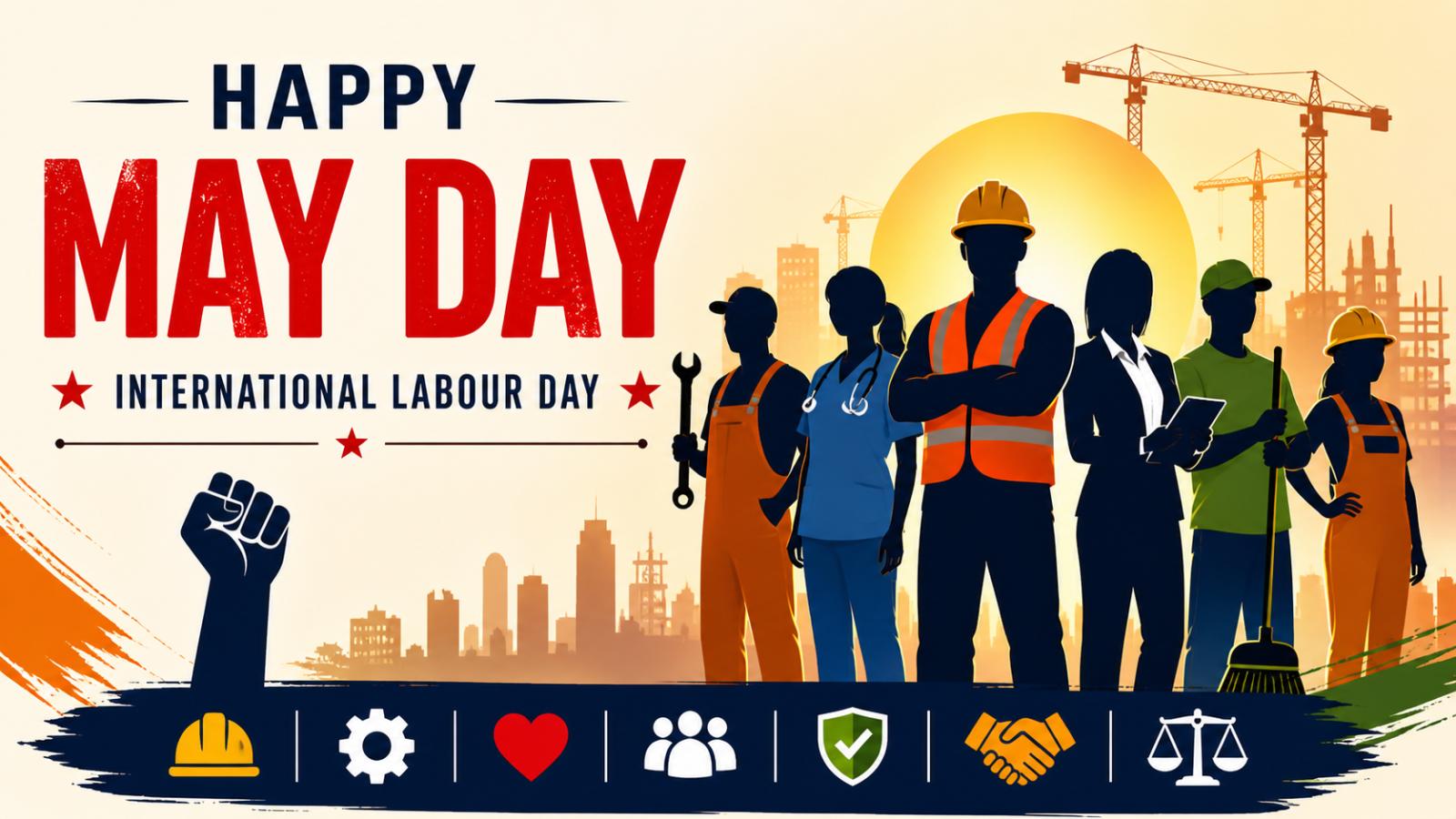
May Day 2026, also known as International Labour Day, is observed globally on May 1 to recognize the contribution of workers in building economies and societies. It is not just a symbolic celebration but a reminder of the struggles, sacrifices, and ongoing demands of the working class. In India, the day is marked by rallies, union meetings, and public discussions focusing on fair wages, safe working conditions, and social justice. While many treat it as a holiday, the deeper purpose lies in evaluating whether workers today are truly benefiting from the progress they helped create. Historical Background and Global Relevance The roots of May Day go back to the Haymarket Affair in Chicago, where workers protested for an eight-hour workday. That movement reshaped labor laws worldwide and laid the foundation for modern worker rights. Over time, May Day evolved into a global platform for workers to demand dignity, equality, and legal protection. Despite these historical gains, many of the original issues—long hours, unsafe conditions, and unfair pay—still persist in different forms across countries, especially in developing economies. May Day 2026 Theme and Its Meaning The International Labour Organization has declared the 2026 theme as “Ensuring a Healthy Psychosocial Working Environment.” This reflects a major shift in focus from physical safety alone to mental well-being in workplaces. Emphasis on reducing stress, burnout, and workplace anxiety Need for policies addressing harassment and discrimination Encouragement of work-life balance and flexible work structures Recognition that productivity should not come at the cost of mental health This theme exposes a critical gap—while companies talk about employee wellness, many still operate in ways that increase pressure and reduce job satisfaction. Importance of May Day in India In India, May Day carries unique significance due to the size of its informal workforce. Millions of workers in sectors like construction, agriculture, and domestic work lack job security and legal protection. Informal workers often do not receive minimum wages or benefits Migrant workers face unstable employment and poor living conditions Social security systems are limited or inaccessible for many Awareness exists, but enforcement of labour laws remains weak This highlights a hard truth: progress in labour rights is uneven, and large sections of the workforce are still left behind. How May Day is Celebrated May Day celebrations in India and across the world are a mix of awareness and activism. Trade unions organize marches and protests Public speeches highlight labour issues and policy gaps Campaigns are run to support worker welfare and rights Governments announce reforms or initiatives, though impact varies These activities create visibility, but without consistent follow-through, they risk becoming routine rather than impactful. Key Challenges Workers Still Face Despite decades of labour reforms, several critical issues remain unresolved: Wage inequality across sectors and regions Lack of mental health support in workplaces Job insecurity due to contract and gig-based employment Poor enforcement of safety regulations Exploitation in unorganized sectors These challenges suggest that while the nature of work has evolved, worker struggles have simply taken new forms. Why May Day Still Matters Today May Day is no longer just about celebrating workers—it is about questioning systems. It forces governments, businesses, and society to examine whether economic growth is inclusive or exploitative. The 2026 theme makes it clear that worker well-being is not limited to physical safety but includes emotional and psychological health. The uncomfortable reality is this: awareness alone does not change conditions. Unless policies are enforced and accountability is maintained, May Day risks becoming symbolic rather than transformative. The real value of this day lies in pushing for measurable change, not just repeating familiar slogans.
May Day 2026 Theme, History and Significance of International Labour Day Explained
May Day 2026, also known as International Labour Day, is observed globally on May 1 to recognize the contribution of workers in building economies and societies. It is not just a symbolic celebration but a reminder of the struggles, sacrifices, and ongoing demands of the working class. In India, the day is marked by rallies, union meetings, and public discussions focusing on fair wages, safe working conditions, and social justice. While many treat it as a holiday, the deeper purpose lies in evaluating whether workers today are truly benefiting from the progress they helped create. Historical Background and Global Relevance The roots of May Day go back to the Haymarket Affair in Chicago, where workers protested for an eight-hour workday. That movement reshaped labor laws worldwide and laid the foundation for modern worker rights. Over time, May Day evolved into a global platform for workers to demand dignity, equality, and legal protection. Despite these historical gains, many of the original issues—long hours, unsafe conditions, and unfair pay—still persist in different forms across countries, especially in developing economies. May Day 2026 Theme and Its Meaning The International Labour Organization has declared the 2026 theme as “Ensuring a Healthy Psychosocial Working Environment.” This reflects a major shift in focus from physical safety alone to mental well-being in workplaces. Emphasis on reducing stress, burnout, and workplace anxiety Need for policies addressing harassment and discrimination Encouragement of work-life balance and flexible work structures Recognition that productivity should not come at the cost of mental health This theme exposes a critical gap—while companies talk about employee wellness, many still operate in ways that increase pressure and reduce job satisfaction. Importance of May Day in India In India, May Day carries unique significance due to the size of its informal workforce. Millions of workers in sectors like construction, agriculture, and domestic work lack job security and legal protection. Informal workers often do not receive minimum wages or benefits Migrant workers face unstable employment and poor living conditions Social security systems are limited or inaccessible for many Awareness exists, but enforcement of labour laws remains weak This highlights a hard truth: progress in labour rights is uneven, and large sections of the workforce are still left behind. How May Day is Celebrated May Day celebrations in India and across the world are a mix of awareness and activism. Trade unions organize marches and protests Public speeches highlight labour issues and policy gaps Campaigns are run to support worker welfare and rights Governments announce reforms or initiatives, though impact varies These activities create visibility, but without consistent follow-through, they risk becoming routine rather than impactful. Key Challenges Workers Still Face Despite decades of labour reforms, several critical issues remain unresolved: Wage inequality across sectors and regions Lack of mental health support in workplaces Job insecurity due to contract and gig-based employment Poor enforcement of safety regulations Exploitation in unorganized sectors These challenges suggest that while the nature of work has evolved, worker struggles have simply taken new forms. Why May Day Still Matters Today May Day is no longer just about celebrating workers—it is about questioning systems. It forces governments, businesses, and society to examine whether economic growth is inclusive or exploitative. The 2026 theme makes it clear that worker well-being is not limited to physical safety but includes emotional and psychological health. The uncomfortable reality is this: awareness alone does not change conditions. Unless policies are enforced and accountability is maintained, May Day risks becoming symbolic rather than transformative. The real value of this day lies in pushing for measurable change, not just repeating familiar slogans.
Is Trump’s Iran blockade complicating China talks? Yes, tensions rise
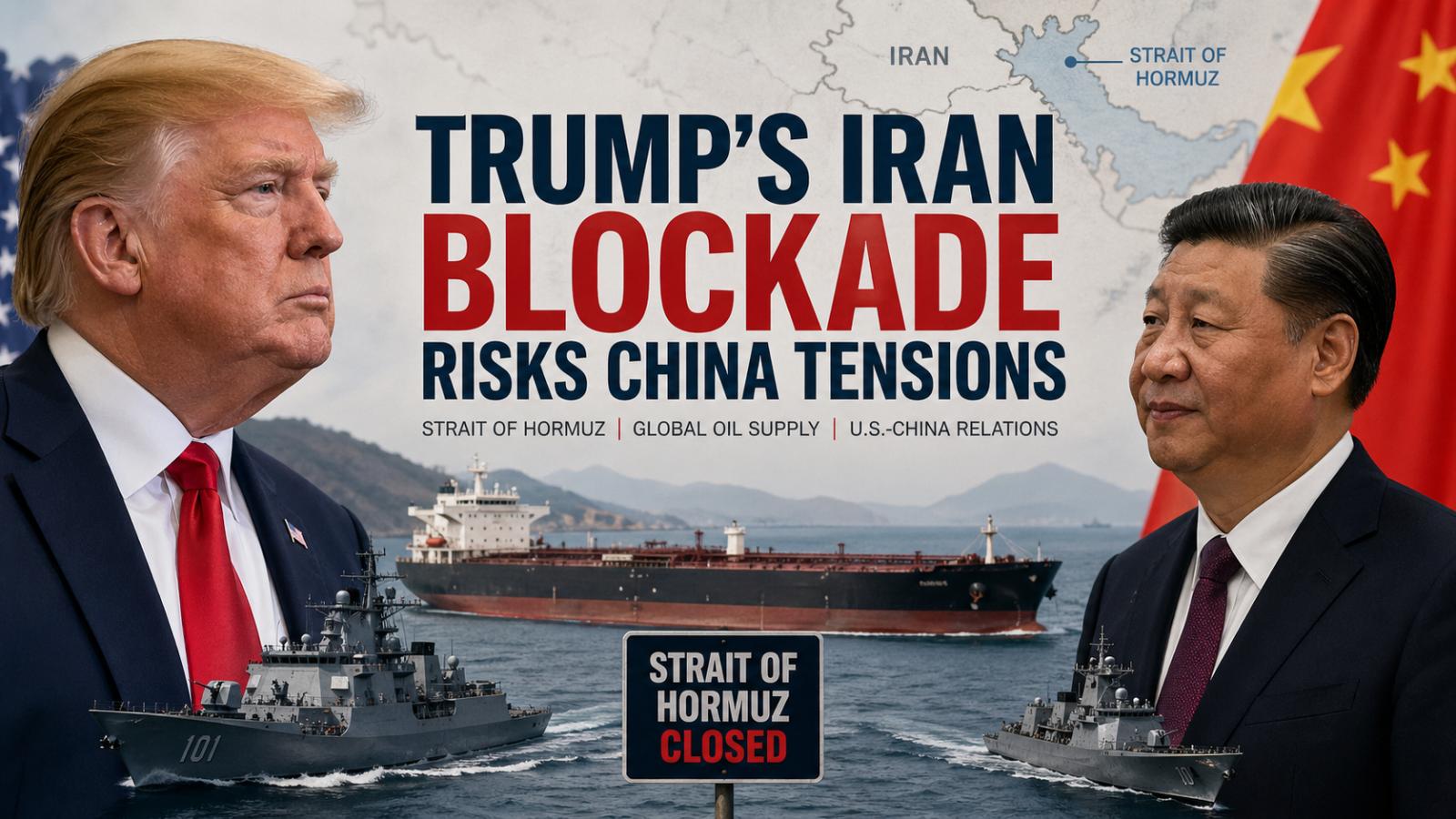
President Donald Trump has signaled his intention to maintain a naval blockade on Iranian shipping until Tehran meets U.S. demands, a move that is expected to keep the Strait of Hormuz effectively closed ahead of his planned visit to China. The decision introduces new complications for upcoming diplomatic
Is Trump’s Iran blockade complicating China talks? Yes, tensions rise
President Donald Trump has signaled his intention to maintain a naval blockade on Iranian shipping until Tehran meets U.S. demands, a move that is expected to keep the Strait of Hormuz effectively closed ahead of his planned visit to China. The decision introduces new complications for upcoming diplomatic
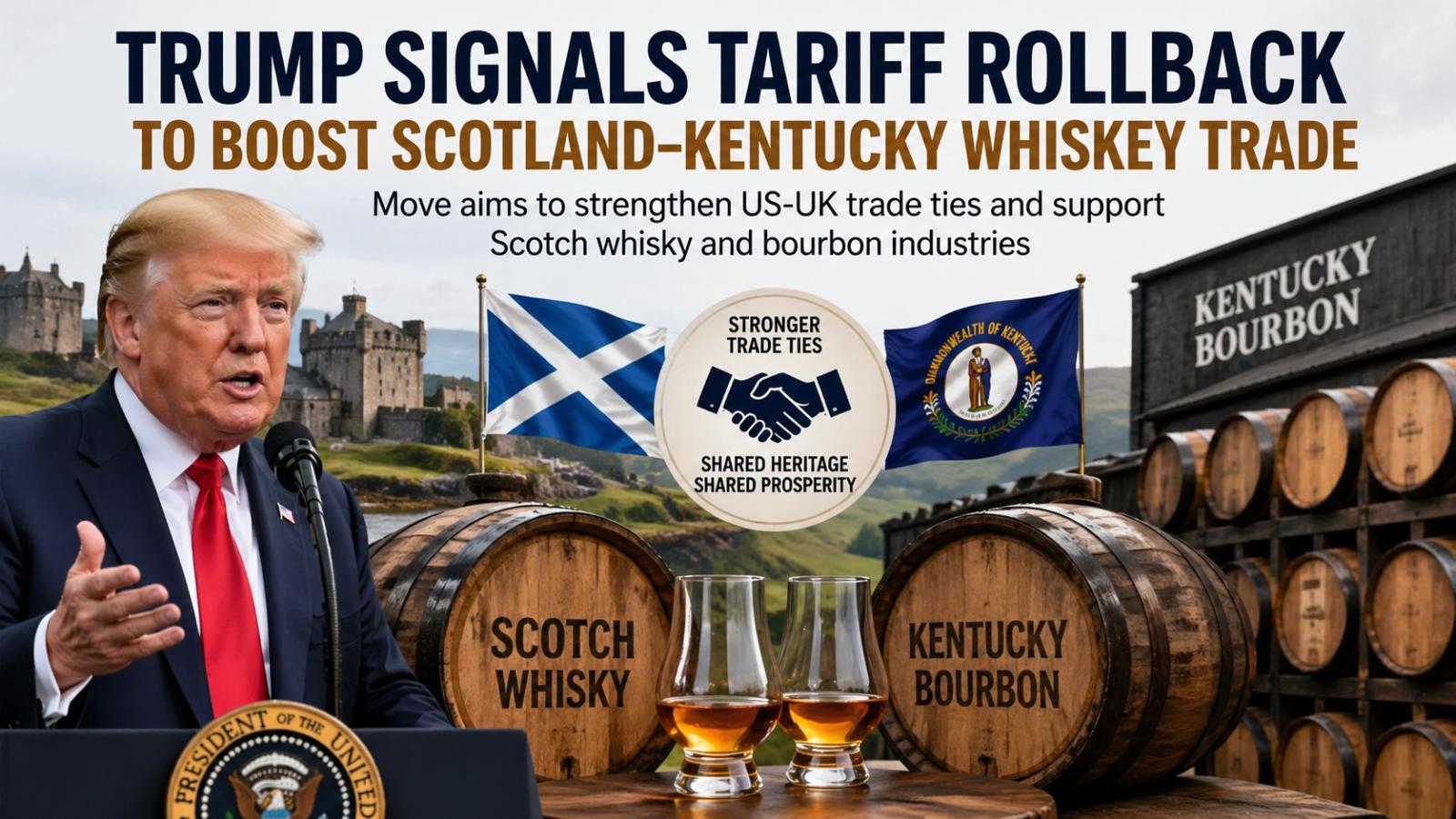
Trump signals tariff rollback to boost Scotland–Kentucky whiskey trade
President Donald Trump announced plans on Thursday, April 30, 2026, to remove tariffs affecting whiskey trade between Scotland and Kentucky, aiming to boost US-UK trade ties and support the Scotch whisky and bourbon industries. Trump signals tariff rollback to boost Scotland–Kentucky whiskey trade — Donald Trump announced on Thursday, April 30, 2026, that he intends t
Trump signals tariff rollback to boost Scotland–Kentucky whiskey trade
President Donald Trump announced plans on Thursday, April 30, 2026, to remove tariffs affecting whiskey trade between Scotland and Kentucky, aiming to boost US-UK trade ties and support the Scotch whisky and bourbon industries. Trump signals tariff rollback to boost Scotland–Kentucky whiskey trade — Donald Trump announced on Thursday, April 30, 2026, that he intends t
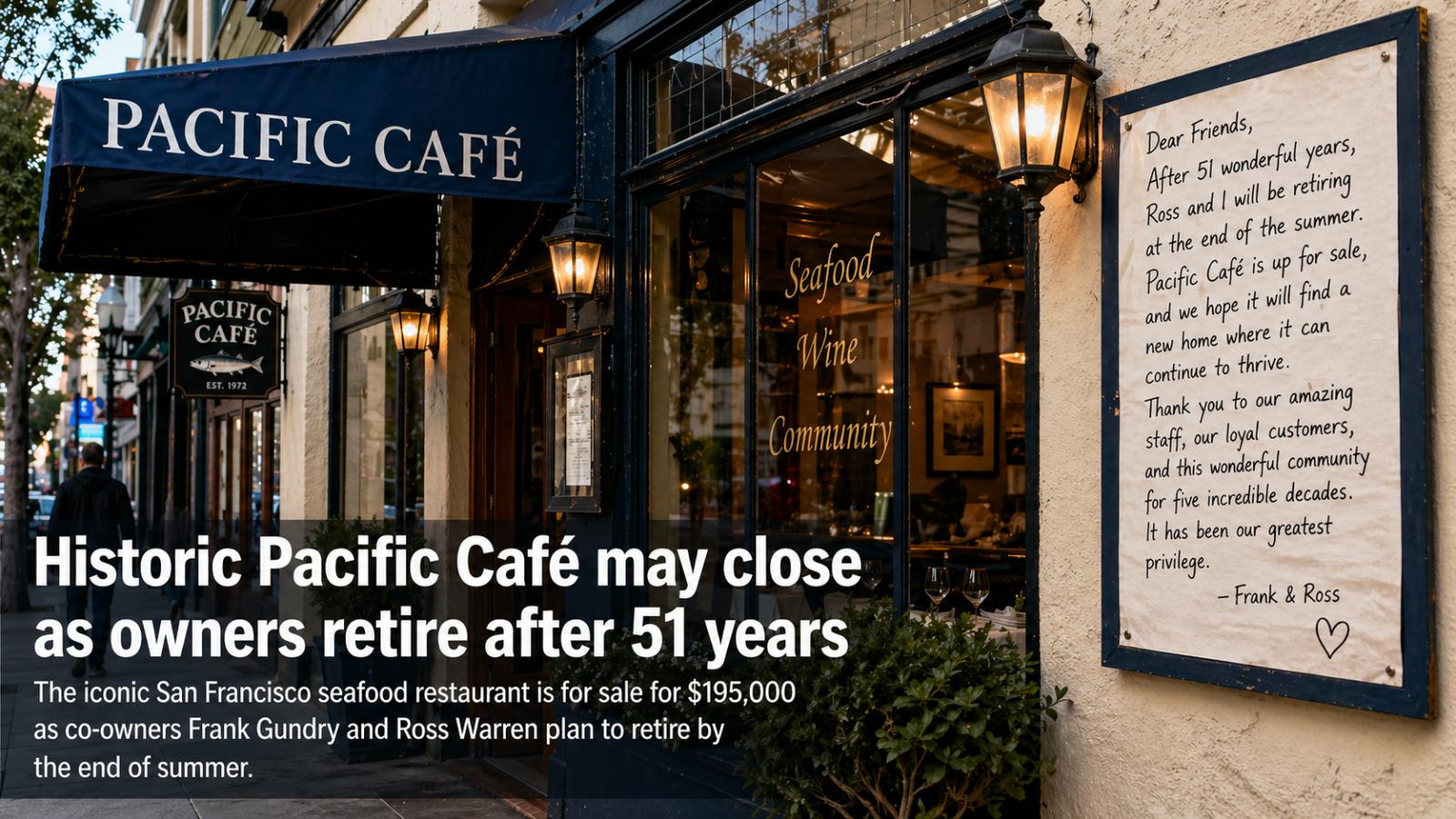
Pacific Café faces possible closure without buyer after decades of service
Historic Pacific Café may close as owners retire after 51 years. A well-known San Francisco seafood restaurant recognized for its classic menu and complimentary wine service may soon shut its doors as its longtime owners prepare to retire. Pacific Café, located on Geary Boulevard, has been listed for sale for $195,000, raising concerns about the future of the decades-old establishment if a buyer is not secured. Co-owners Frank Gundry and Ross Warren, who have operated the restaur
Pacific Café faces possible closure without buyer after decades of service
Historic Pacific Café may close as owners retire after 51 years. A well-known San Francisco seafood restaurant recognized for its classic menu and complimentary wine service may soon shut its doors as its longtime owners prepare to retire. Pacific Café, located on Geary Boulevard, has been listed for sale for $195,000, raising concerns about the future of the decades-old establishment if a buyer is not secured. Co-owners Frank Gundry and Ross Warren, who have operated the restaur
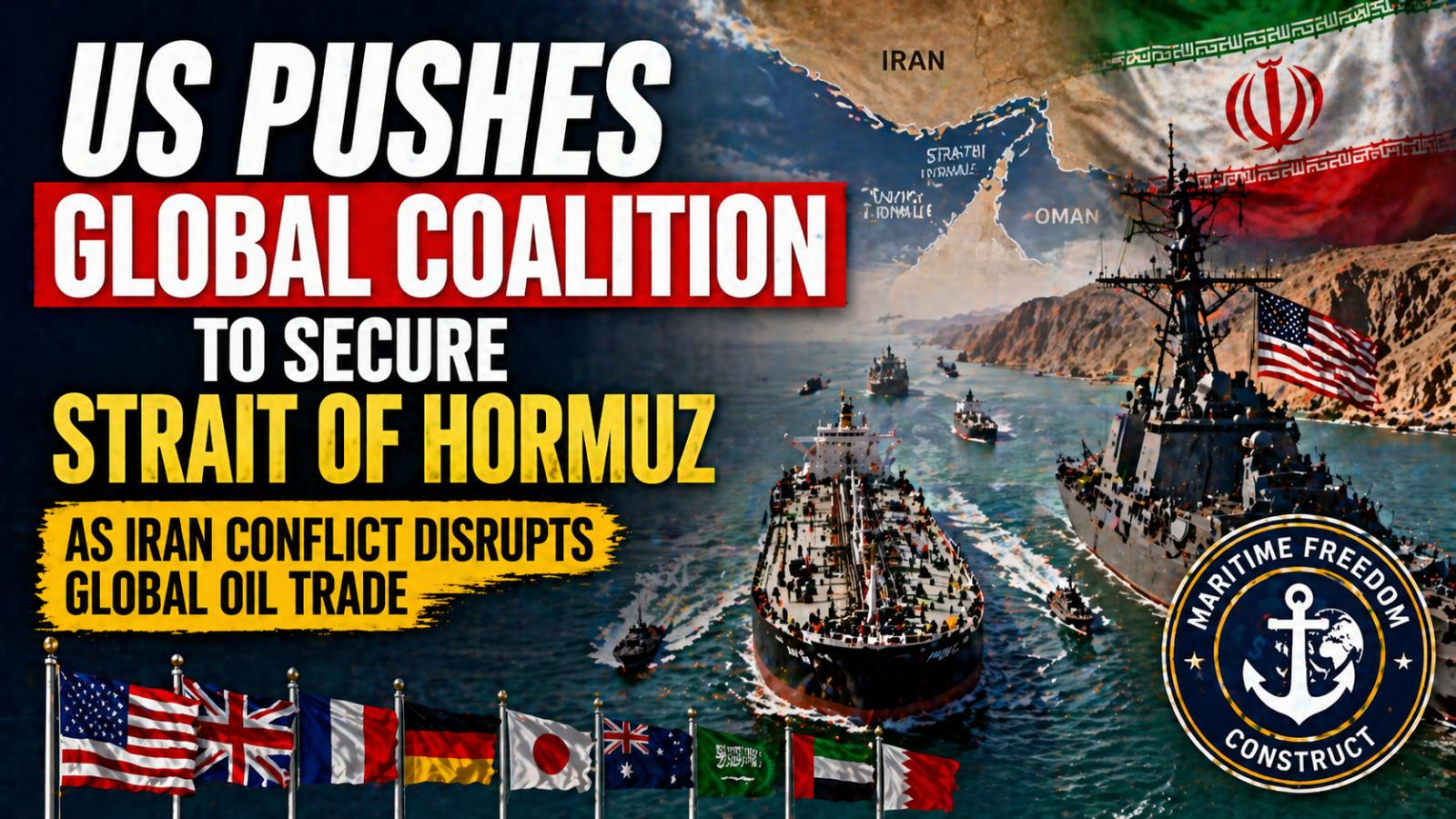
US pushes global coalition for Strait of Hormuz as Iran conflict disrupts oil trade
The United States is accelerating efforts to form a global coalition to secure the Strait of Hormuz, as the ongoing US-Iran conflict continues to disrupt critical shipping routes and drive volatility in global oil trade. The initiative, known as the Maritime Freedom Construct, aims to coordinate international maritime security, sanctions policy, and intelligence sharing to ensure safe navigation through one of the world’s most strategic waterways. The Strait of Hormuz, a narrow pa
US pushes global coalition for Strait of Hormuz as Iran conflict disrupts oil trade
The United States is accelerating efforts to form a global coalition to secure the Strait of Hormuz, as the ongoing US-Iran conflict continues to disrupt critical shipping routes and drive volatility in global oil trade. The initiative, known as the Maritime Freedom Construct, aims to coordinate international maritime security, sanctions policy, and intelligence sharing to ensure safe navigation through one of the world’s most strategic waterways. The Strait of Hormuz, a narrow pa

Orioles vs Astros Doubleheader Set After Rainout in Baltimore
The Baltimore Orioles and Houston Astros will play a scheduled MLB doubleheader on Thursday at Camden Yards after a rainout forced the postponement of Wednesday’s game. The first matchup begins at 12:35 p.m., followed by the second game shortly after, marking Baltimore’s first doubleheader of the 2026 baseball season and adding pressure on both teams’ rotations and bullpen depth. Key Developments The Orioles Astros doublehe
Orioles vs Astros Doubleheader Set After Rainout in Baltimore
The Baltimore Orioles and Houston Astros will play a scheduled MLB doubleheader on Thursday at Camden Yards after a rainout forced the postponement of Wednesday’s game. The first matchup begins at 12:35 p.m., followed by the second game shortly after, marking Baltimore’s first doubleheader of the 2026 baseball season and adding pressure on both teams’ rotations and bullpen depth. Key Developments The Orioles Astros doublehe

What causes Panchang confusion abroad? A USA-focused Vedic tool offers clarity
Why are Hindu calendar timings confusing in the USA? A new online Panchang solves it For many Indians living in the United States, following traditional Hindu practices often presents an unexpected challenge. Festivals, poojas, and important life events require precise timing, yet differences in Tithi, Nakshatra, and muhurthams across sources frequently create confusion. What appears as a simple search can quickly turn into uncertainty, especially when Indian calendar timings do not align with local US conditions. Why traditional Panchang timings do not match US locations The root of this issue lies in geography and time zones. Most Hindu calendars are calculated based on Indian Standard Time, where sunrise, sunset, and lunar positions differ significantly from those in the United States. Because Vedic calculations are location-sensitive, even a few hours’ difference can alter Tithi durations, Nakshatra transitions, and auspicious muhurthams. For NRIs, relying solely on Indian Panchang data can result in performing rituals at incorrect times, creating a growing need for location-specific accuracy. A USA-focused online Panchang addressing the gap To bridge this gap, a dedicated digital solution has emerged in the form of lagna.pravachanam.com, an online Panchang platform designed specifically for US users. Users can directly access the platform by visiting: https://lagna.pravachanam.com, where location-based Vedic timings are available instantly through a simple browser interface. Unlike traditional tools, it provides accurate Panchang details tailored to individual cities across the United States, eliminating confusion caused by time zone differences and generalized data. City-specific Tithi, Vara, and Nakshatra calculations One of the platform’s core strengths is its ability to deliver precise Panchang details based on a user’s exact US location. It calculates Tithi, Vara, and Nakshatra according to local sunrise and sunset timings, ensuring that all information reflects accurate regional conditions rather than relying on Indian Standard Time. Seven-day planning view for upcoming muhurthams The platform includes a forward-looking seven-day calendar that allows users to plan religious and personal events in advance. This feature is particularly useful for identifying suitable muhurthams for occasions such as weddings, housewarmings, and poojas, helping users make informed decisions without last-minute uncertainty. Daily Lagna charts with precise timing windows For users who follow astrology closely, the tool provides detailed Lagna charts with clearly defined start and end times. These insights help identify favorable periods for rituals and important activities, aligning traditional practices with accurate astronomical calculations. Integrated astrology insights and annual predictions Beyond daily Panchang data, the platform offers traditional astrology insights, including Rashi Phalalu, Nava Nayaka Phalalu, and Kandaya Phalalu. These features provide a broader understanding of astrological influences based on the current Hindu year, supporting both personal reflection and spiritual planning. Comprehensive festival guide and auspicious day tracking A built-in festival guide ensures users stay informed about major Hindu festivals and auspicious days throughout the year. By aligning these dates with US-based timings, the platform removes ambiguity and helps users observe traditions correctly. Simple browser-based access with user-friendly design The platform is designed for ease of use, requiring no application downloads or technical expertise. Its clean and intuitive interface allows users to quickly access relevant information, making it suitable for both regular users and those new to Panchang systems. Enabling cultural continuity with accurate Vedic timing By combining traditional Vedic principles with modern digital accessibility, platforms like https://lagna.pravachanam.com address a long-standing challenge faced by the NRI community. Accurate, location-based Hindu calendar data reduces uncertainty and supports the continuation of cultural and spiritual practices for individuals living in the United States.
What causes Panchang confusion abroad? A USA-focused Vedic tool offers clarity
Why are Hindu calendar timings confusing in the USA? A new online Panchang solves it For many Indians living in the United States, following traditional Hindu practices often presents an unexpected challenge. Festivals, poojas, and important life events require precise timing, yet differences in Tithi, Nakshatra, and muhurthams across sources frequently create confusion. What appears as a simple search can quickly turn into uncertainty, especially when Indian calendar timings do not align with local US conditions. Why traditional Panchang timings do not match US locations The root of this issue lies in geography and time zones. Most Hindu calendars are calculated based on Indian Standard Time, where sunrise, sunset, and lunar positions differ significantly from those in the United States. Because Vedic calculations are location-sensitive, even a few hours’ difference can alter Tithi durations, Nakshatra transitions, and auspicious muhurthams. For NRIs, relying solely on Indian Panchang data can result in performing rituals at incorrect times, creating a growing need for location-specific accuracy. A USA-focused online Panchang addressing the gap To bridge this gap, a dedicated digital solution has emerged in the form of lagna.pravachanam.com, an online Panchang platform designed specifically for US users. Users can directly access the platform by visiting: https://lagna.pravachanam.com, where location-based Vedic timings are available instantly through a simple browser interface. Unlike traditional tools, it provides accurate Panchang details tailored to individual cities across the United States, eliminating confusion caused by time zone differences and generalized data. City-specific Tithi, Vara, and Nakshatra calculations One of the platform’s core strengths is its ability to deliver precise Panchang details based on a user’s exact US location. It calculates Tithi, Vara, and Nakshatra according to local sunrise and sunset timings, ensuring that all information reflects accurate regional conditions rather than relying on Indian Standard Time. Seven-day planning view for upcoming muhurthams The platform includes a forward-looking seven-day calendar that allows users to plan religious and personal events in advance. This feature is particularly useful for identifying suitable muhurthams for occasions such as weddings, housewarmings, and poojas, helping users make informed decisions without last-minute uncertainty. Daily Lagna charts with precise timing windows For users who follow astrology closely, the tool provides detailed Lagna charts with clearly defined start and end times. These insights help identify favorable periods for rituals and important activities, aligning traditional practices with accurate astronomical calculations. Integrated astrology insights and annual predictions Beyond daily Panchang data, the platform offers traditional astrology insights, including Rashi Phalalu, Nava Nayaka Phalalu, and Kandaya Phalalu. These features provide a broader understanding of astrological influences based on the current Hindu year, supporting both personal reflection and spiritual planning. Comprehensive festival guide and auspicious day tracking A built-in festival guide ensures users stay informed about major Hindu festivals and auspicious days throughout the year. By aligning these dates with US-based timings, the platform removes ambiguity and helps users observe traditions correctly. Simple browser-based access with user-friendly design The platform is designed for ease of use, requiring no application downloads or technical expertise. Its clean and intuitive interface allows users to quickly access relevant information, making it suitable for both regular users and those new to Panchang systems. Enabling cultural continuity with accurate Vedic timing By combining traditional Vedic principles with modern digital accessibility, platforms like https://lagna.pravachanam.com address a long-standing challenge faced by the NRI community. Accurate, location-based Hindu calendar data reduces uncertainty and supports the continuation of cultural and spiritual practices for individuals living in the United States.
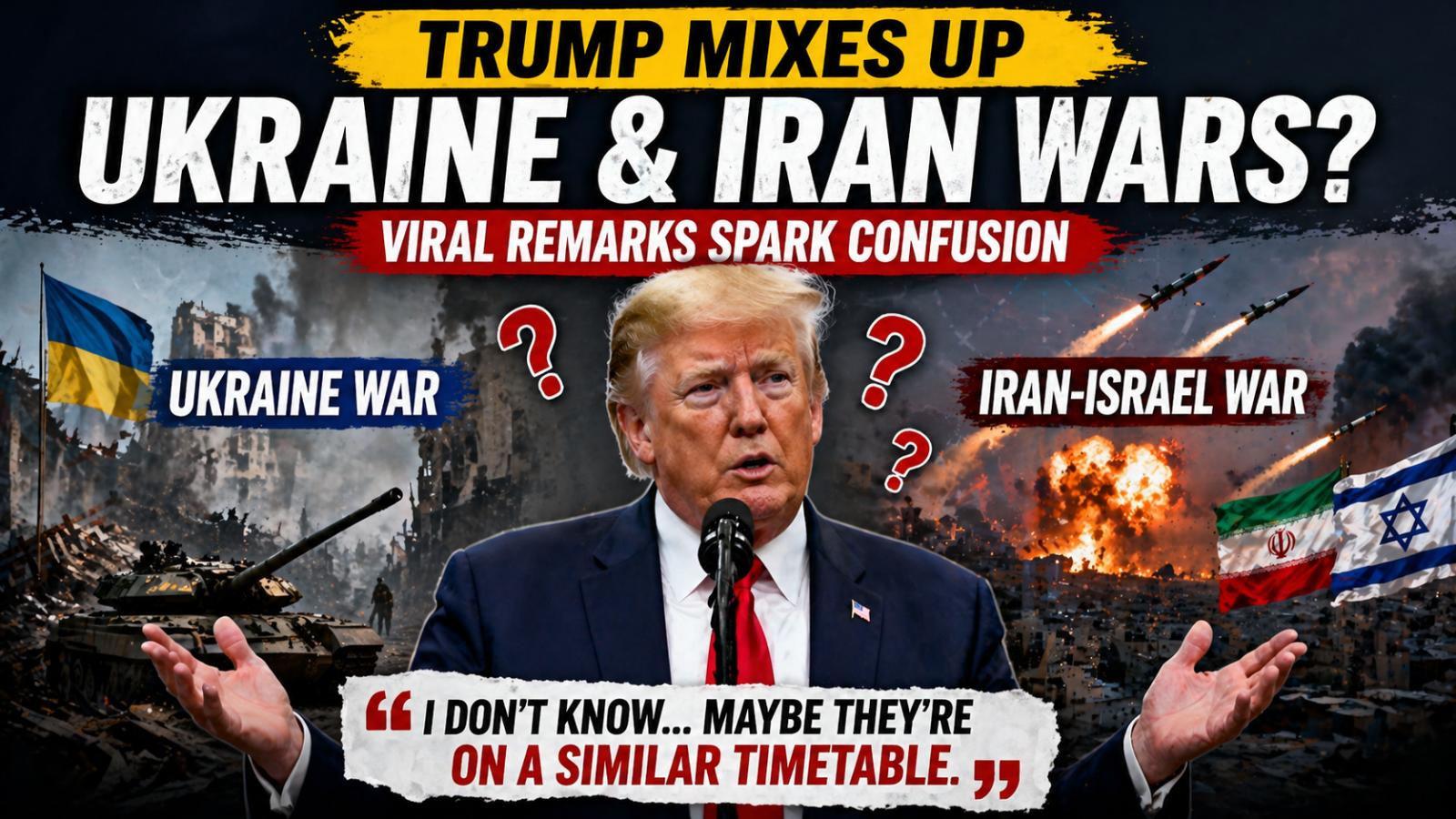
Trump Comments on Ukraine and Iran Wars Spark Confusion
US President Donald Trump drew attention during a recent press interaction after appearing to confuse details while discussing two major international conflicts. The exchange took place as Trump addressed reporters during an event linked to the Artemis II mission crew, where he was asked which conflict might conclude first: the prolonged Russia-Ukraine war or the ongoing tensions involving Iran and Israel. In response, Trump suggested that both situations could follow a similar timeline, stating that he was uncertain which would end sooner. However, his subsequent remarks raised questions as he began describing military conditions that appeared inconsistent or unclear in context. He claimed that Ukraine was militarily defeated, referencing significant naval and air losses, including statements about ships being destroyed and aircraft being eliminated. Trump also cited reductions in missile and drone capabilities, though his comments did not clearly distinguish whether he was referring to Ukraine or Iran at various points. This lack of clarity led to widespread attention, with observers noting the difficulty in separating his analysis of the two conflicts. The Russia-Ukraine war has continued for years with ongoing military engagements, while tensions involving Iran, Israel, and US involvement have added another layer of complexity to global security dynamics. Trump’s remarks came at a time when both conflicts remain active and under close international observation. The moment quickly gained traction due to the ambiguity in the president’s statements, highlighting the challenges of addressing multiple geopolitical crises simultaneously in public forums.
Trump Comments on Ukraine and Iran Wars Spark Confusion
US President Donald Trump drew attention during a recent press interaction after appearing to confuse details while discussing two major international conflicts. The exchange took place as Trump addressed reporters during an event linked to the Artemis II mission crew, where he was asked which conflict might conclude first: the prolonged Russia-Ukraine war or the ongoing tensions involving Iran and Israel. In response, Trump suggested that both situations could follow a similar timeline, stating that he was uncertain which would end sooner. However, his subsequent remarks raised questions as he began describing military conditions that appeared inconsistent or unclear in context. He claimed that Ukraine was militarily defeated, referencing significant naval and air losses, including statements about ships being destroyed and aircraft being eliminated. Trump also cited reductions in missile and drone capabilities, though his comments did not clearly distinguish whether he was referring to Ukraine or Iran at various points. This lack of clarity led to widespread attention, with observers noting the difficulty in separating his analysis of the two conflicts. The Russia-Ukraine war has continued for years with ongoing military engagements, while tensions involving Iran, Israel, and US involvement have added another layer of complexity to global security dynamics. Trump’s remarks came at a time when both conflicts remain active and under close international observation. The moment quickly gained traction due to the ambiguity in the president’s statements, highlighting the challenges of addressing multiple geopolitical crises simultaneously in public forums.
Zohran Mamdani Calls for Kohinoor Diamond Return Ahead of Royal Visit
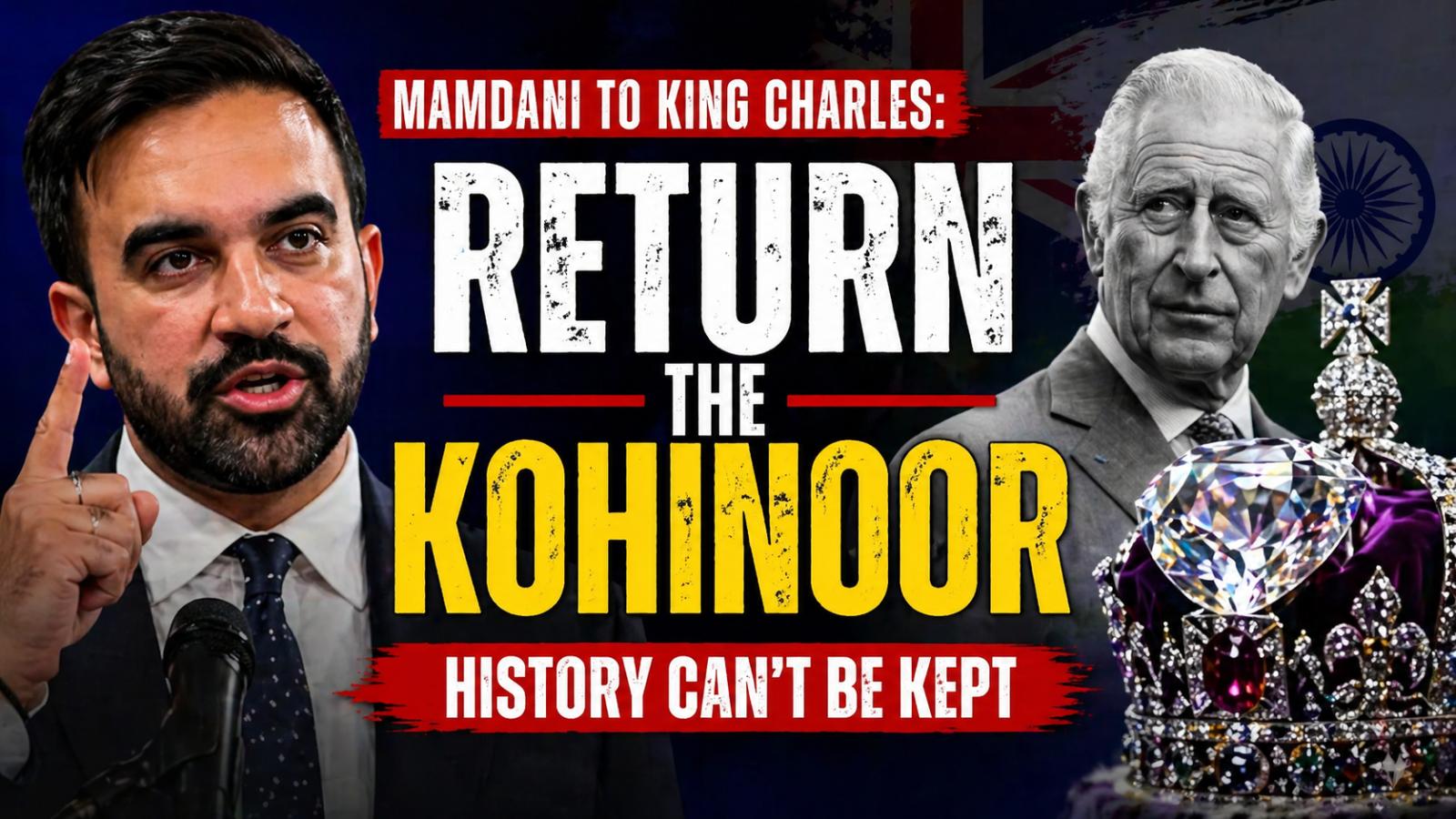
Zohran Mamdani has renewed debate over colonial history by suggesting that any future meeting with King Charles III should include a discussion about the return of the Kohinoor diamond. Speaking at a press conference in New York, Mamdani said he would encourage the British monarch to consider returning the historic gemstone, widely regarded in India as a symbol of colonial-era exploitation. His remarks come ahead of King Charles and Queen Camilla’s planned visit to the One World Trade Center to mark the 25th anniversary of the September 11 attacks, an event Mamdani is expected to attend. The Kohinoor diamond, originally mined in southern India, passed through several South Asian empires before being taken by the British East India Company in 1849 after the Second Anglo-Sikh War. It was formally transferred under the Treaty of Lahore, signed by Maharaja Duleep Singh, and later became part of the British Crown Jewels. Today, the 105.6-carat diamond remains displayed in the Tower of London, continuing to draw attention as a contested artifact. Mamdani’s comments place the issue within a broader international movement seeking the return of cultural heritage objects held in Western institutions. Similar demands have been made by Greece for the Elgin Marbles and by Nigeria for the Benin Bronzes. While British authorities maintain the Kohinoor was acquired legally, critics argue the agreement occurred under coercive conditions. By raising the issue in a diplomatic context, Mamdani has shifted the conversation beyond ceremony, highlighting ongoing questions of historical accountability and the legacy of empire.
Zohran Mamdani Calls for Kohinoor Diamond Return Ahead of Royal Visit
Zohran Mamdani has renewed debate over colonial history by suggesting that any future meeting with King Charles III should include a discussion about the return of the Kohinoor diamond. Speaking at a press conference in New York, Mamdani said he would encourage the British monarch to consider returning the historic gemstone, widely regarded in India as a symbol of colonial-era exploitation. His remarks come ahead of King Charles and Queen Camilla’s planned visit to the One World Trade Center to mark the 25th anniversary of the September 11 attacks, an event Mamdani is expected to attend. The Kohinoor diamond, originally mined in southern India, passed through several South Asian empires before being taken by the British East India Company in 1849 after the Second Anglo-Sikh War. It was formally transferred under the Treaty of Lahore, signed by Maharaja Duleep Singh, and later became part of the British Crown Jewels. Today, the 105.6-carat diamond remains displayed in the Tower of London, continuing to draw attention as a contested artifact. Mamdani’s comments place the issue within a broader international movement seeking the return of cultural heritage objects held in Western institutions. Similar demands have been made by Greece for the Elgin Marbles and by Nigeria for the Benin Bronzes. While British authorities maintain the Kohinoor was acquired legally, critics argue the agreement occurred under coercive conditions. By raising the issue in a diplomatic context, Mamdani has shifted the conversation beyond ceremony, highlighting ongoing questions of historical accountability and the legacy of empire.
India, Iran discuss ceasefire stability and Strait of Hormuz security
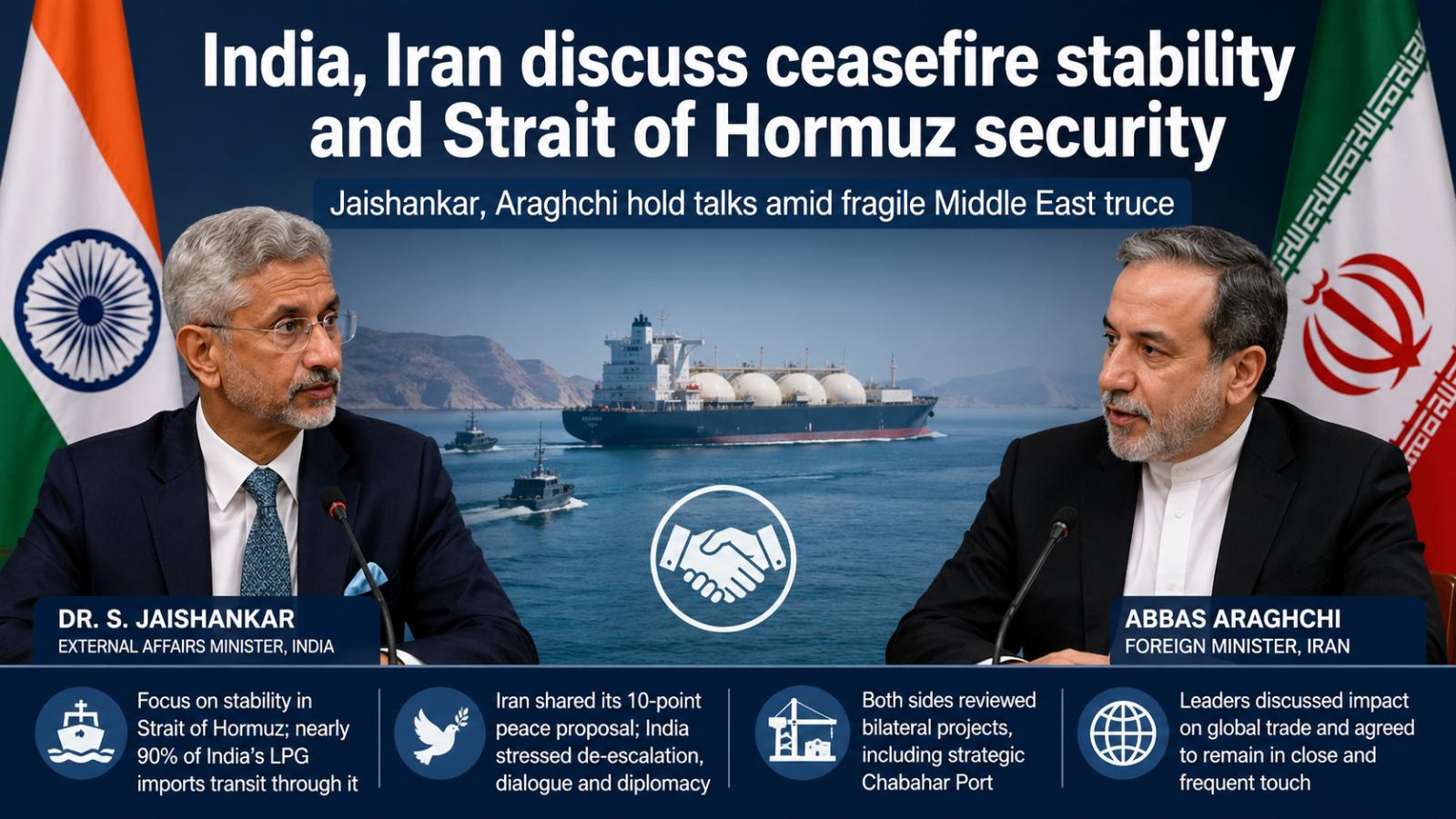
India and Iran held talks on April 29, 2026, on ceasefire stability, Strait of Hormuz security, and trade impact. Both stressed diplomacy and continued coordination as regional tensions remain high despite the fragile truce. India, Iran discuss ceasefire stability and Strait of Hormuz security as External Affairs Minister Dr. S. Jaishankar and Iranian Foreign Minister Abbas Araghchi held talks on Wednesday, April 29, 2026, focusing on the evolving security situation in Tehran and across the region. The discussion comes at a critical moment as the international community monitors a fragile two-week ceasefire involving Iran and a U.S.-Israel coalition, brokered earlier in April. According to an official statement, both leaders exchanged views on recent developments related to the ceasefire while also reviewing bilateral relations and broader regional security concerns. A central issue in the dialogue was the stability of the Strait of Hormuz, a key global shipping route through which nearly 90% of India’s liquefied petroleum gas imports pass, underscoring its economic significance for New Delhi. Officials familiar with the talks indicated that both sides emphasized the need to ensure uninterrupted freedom of navigation in the region. Iran reportedly shared updates on its proposed 10-point peace framework, while India reiterated its longstanding position that de-escalation, sustained dialogue, and diplomatic engagement remain essential to achieving lasting stability in West Asia. Beyond immediate security concerns, the ministers also reviewed ongoing bilateral initiatives, including the development of Chabahar Port. The project remains strategically important for India as it provides access to Central Asian markets, even as regional tensions pose logistical and security challenges. The conversation also addressed the broader impact of the conflict on global trade networks. Jaishankar highlighted concerns over prolonged instability, noting its disruptive effects on supply chains and economic activity. He emphasized that India continues to engage with multiple stakeholders in an effort to prevent escalation and support regional stability. The diplomatic exchange follows a period of heightened pressure from the administration of Donald Trump, which had issued strong warnings to Tehran over maritime disruptions. Although a ceasefire was implemented on Tuesday, April 8, 2026, tensions persist, with continued rhetoric from various factions raising concerns about its durability. As the ceasefire enters a sensitive phase, both ministers agreed to remain in close and frequent contact to monitor developments. For India, maintaining stability in the region is not only a strategic priority but also a critical economic necessity tied to energy security and trade continuity.
India, Iran discuss ceasefire stability and Strait of Hormuz security
India and Iran held talks on April 29, 2026, on ceasefire stability, Strait of Hormuz security, and trade impact. Both stressed diplomacy and continued coordination as regional tensions remain high despite the fragile truce. India, Iran discuss ceasefire stability and Strait of Hormuz security as External Affairs Minister Dr. S. Jaishankar and Iranian Foreign Minister Abbas Araghchi held talks on Wednesday, April 29, 2026, focusing on the evolving security situation in Tehran and across the region. The discussion comes at a critical moment as the international community monitors a fragile two-week ceasefire involving Iran and a U.S.-Israel coalition, brokered earlier in April. According to an official statement, both leaders exchanged views on recent developments related to the ceasefire while also reviewing bilateral relations and broader regional security concerns. A central issue in the dialogue was the stability of the Strait of Hormuz, a key global shipping route through which nearly 90% of India’s liquefied petroleum gas imports pass, underscoring its economic significance for New Delhi. Officials familiar with the talks indicated that both sides emphasized the need to ensure uninterrupted freedom of navigation in the region. Iran reportedly shared updates on its proposed 10-point peace framework, while India reiterated its longstanding position that de-escalation, sustained dialogue, and diplomatic engagement remain essential to achieving lasting stability in West Asia. Beyond immediate security concerns, the ministers also reviewed ongoing bilateral initiatives, including the development of Chabahar Port. The project remains strategically important for India as it provides access to Central Asian markets, even as regional tensions pose logistical and security challenges. The conversation also addressed the broader impact of the conflict on global trade networks. Jaishankar highlighted concerns over prolonged instability, noting its disruptive effects on supply chains and economic activity. He emphasized that India continues to engage with multiple stakeholders in an effort to prevent escalation and support regional stability. The diplomatic exchange follows a period of heightened pressure from the administration of Donald Trump, which had issued strong warnings to Tehran over maritime disruptions. Although a ceasefire was implemented on Tuesday, April 8, 2026, tensions persist, with continued rhetoric from various factions raising concerns about its durability. As the ceasefire enters a sensitive phase, both ministers agreed to remain in close and frequent contact to monitor developments. For India, maintaining stability in the region is not only a strategic priority but also a critical economic necessity tied to energy security and trade continuity.
How has the West Asia war disrupted South Asia? Supply chains strained across region
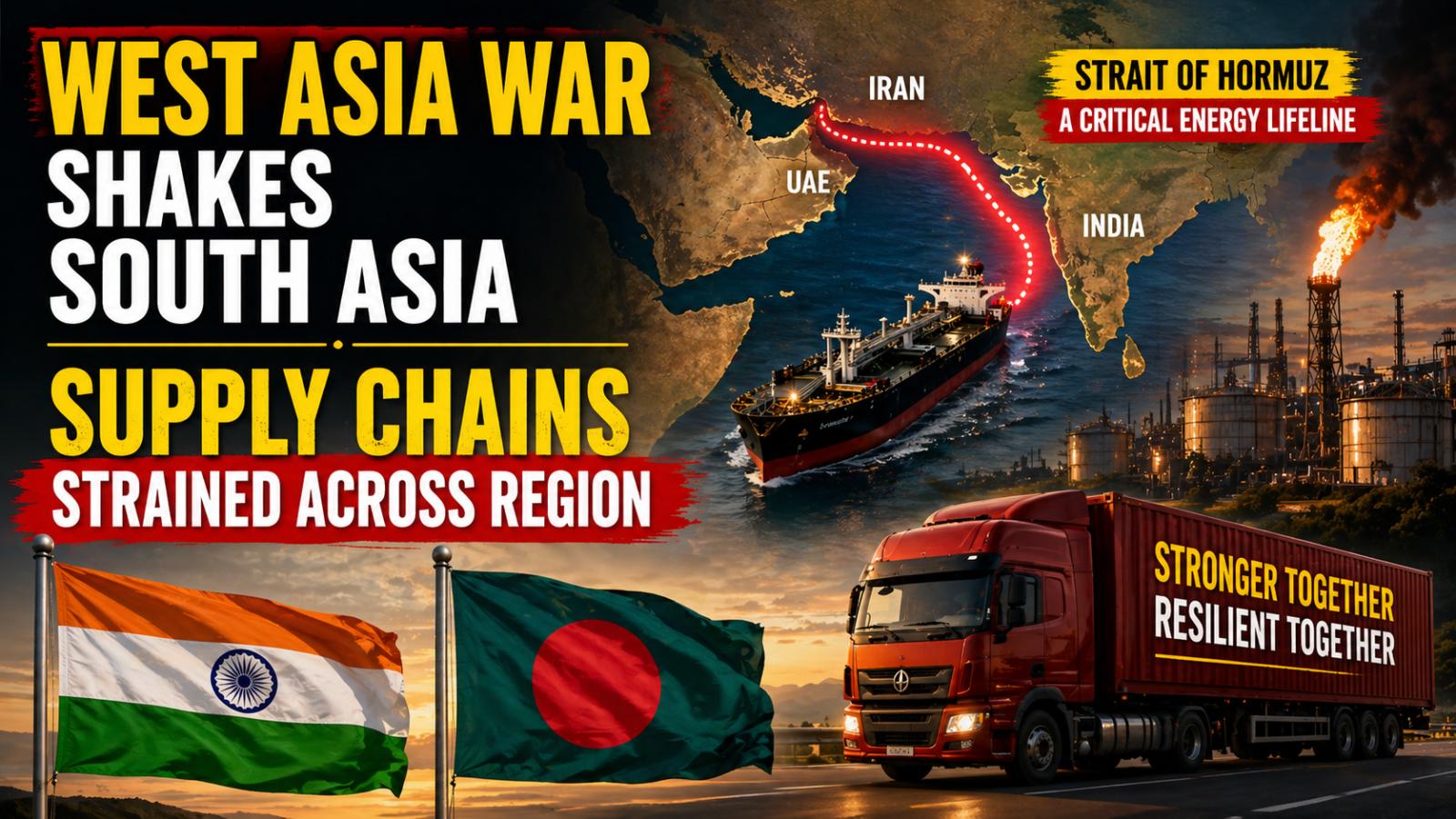
The war in West Asia and disruptions in the Strait of Hormuz have triggered widespread supply chain instability across South Asia, affecting energy security, economic stability, and regional cooperation. Countries across the subcontinent, heavily reliant on hydrocarbon imports from West Asia, are facing rising costs, reduced industrial competitiveness, and increased household expenditures as critical supply routes remain constrained. Fuel shortages and economic strain acros
How has the West Asia war disrupted South Asia? Supply chains strained across region
The war in West Asia and disruptions in the Strait of Hormuz have triggered widespread supply chain instability across South Asia, affecting energy security, economic stability, and regional cooperation. Countries across the subcontinent, heavily reliant on hydrocarbon imports from West Asia, are facing rising costs, reduced industrial competitiveness, and increased household expenditures as critical supply routes remain constrained. Fuel shortages and economic strain acros










