PM Modi Rs 35,000-crore Vadodara projects put the Dedicated Freight Corridor, India manufacturing growth and infrastructure expansion in focus as the Prime Minister also targeted critics with his “Naraz Fufa” remark.
Dedicated Freight Corridor takes centre stage in Vadodara
Prime Minister Narendra Modi unveiled and launched development projects worth around Rs 35,000 crore in Vadodara, G
PM Modi Rs 35,000-crore Vadodara projects put the Dedicated Freight Corridor, India manufacturing growth and infrastructure expansion in focus as the Prime Minister also targeted critics with his “Naraz Fufa” remark.
Dedicated Freight Corridor takes centre stage in Vadodara
Prime Minister Narendra Modi unveiled and launched development projects worth around Rs 35,000 crore in Vadodara, G
Nara Lokesh takes Andhra Pradesh investment pitch to Seoul
Andhra Pradesh Minister Nara Lokesh has taken the state’s investment outreach campaign to South Korea, holding discussions with business leaders and pitching Andhra Pradesh as a destination for new projects in technology, electronics, manufacturing and other major industrial sectors. Lokesh’s six-day official visit to South Korea, scheduled from July 5 to
Nara Lokesh takes Andhra Pradesh investment pitch to Seoul
Andhra Pradesh Minister Nara Lokesh has taken the state’s investment outreach campaign to South Korea, holding discussions with business leaders and pitching Andhra Pradesh as a destination for new projects in technology, electronics, manufacturing and other major industrial sectors. Lokesh’s six-day official visit to South Korea, scheduled from July 5 to
Andhra Pradesh Minister Nara Lokesh has stepped up efforts to attract fresh manufacturing investment to the state, holding talks with South Korea’s Boo Young Group over a proposed footwear and components production facility. Continuing his South Korea visit on its fourth day, Lokesh met Boo Young Group CEO and President Director Ryan Kang and Business Strategy and Planning Manager Millie Richardson. During the discussions, he invited the company to examine investment opportunities in A
Andhra Pradesh Minister Nara Lokesh has stepped up efforts to attract fresh manufacturing investment to the state, holding talks with South Korea’s Boo Young Group over a proposed footwear and components production facility. Continuing his South Korea visit on its fourth day, Lokesh met Boo Young Group CEO and President Director Ryan Kang and Business Strategy and Planning Manager Millie Richardson. During the discussions, he invited the company to examine investment opportunities in A
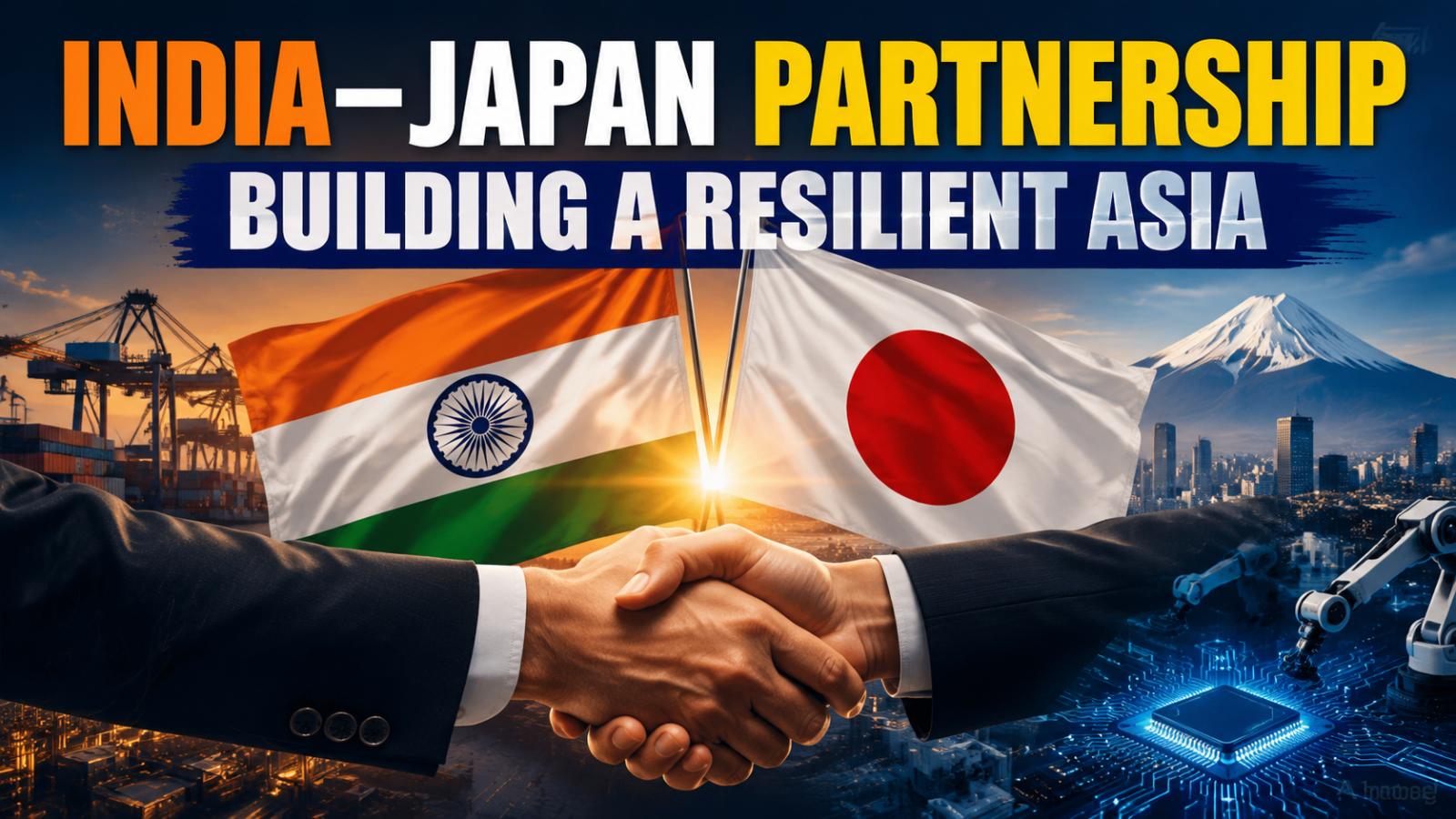
India and Japan are steadily moving their partnership beyond routine trade discussions into a broader realignment shaped by global risk and industrial restructuring. What looks like increased investment flows is actually part of a deeper repositioning of how both countries want to secure long-term economic stability in an uncertain global environment.
Investment growth driven by risk recalibration
Japanese companies are expanding their footprint in India not only for growth but also to reduce exposure to concentrated supply networks in East Asia. Rising geopolitical friction and periodic trade restrictions have forced firms to reconsider how dependent they are on single-country manufacturing systems. India is increasingly viewed as a viable diversification hub due to its scale, labor availability, and expanding industrial base.
Supply chain restructuring becomes the core driver
The most significant shift is happening in supply chains rather than headline investment figures. Japanese manufacturers are gradually redesigning sourcing and production models to reduce vulnerabilities in electronics, automotive components, and precision engineering. India fits into this transition as an alternative production and assembly base, especially for sectors where demand is growing but diversification is still limited.
Technology and industrial cooperation deepen
Cooperation is also expanding into advanced sectors such as semiconductors, digital systems, and artificial intelligence. These areas are no longer treated as purely commercial exchanges but as strategic capabilities. Both countries are aligning on technology resilience, where production continuity and security of supply matter as much as cost efficiency.
Rare earths and critical materials gain importance
Another emerging focus is critical minerals and rare earth supply chains. These materials are essential for electronics, renewable energy systems, and defence manufacturing. Dependence on concentrated suppliers has pushed both India and Japan to explore alternative sourcing strategies and joint development frameworks to reduce long-term risk.
Financial flows signal long-term positioning
Japanese capital inflows into Indian financial institutions and industrial projects suggest more than short-term investment interest. Financial participation typically indicates long-term confidence in policy stability and market expansion. However, the real test will be whether this capital flow expands into deeper manufacturing integration rather than remaining portfolio-based exposure.
Economic security becomes the defining theme
At the core of this evolving relationship is economic security. Trade decisions are increasingly shaped by geopolitical uncertainty rather than pure cost advantage. This marks a shift from efficiency-driven globalization to resilience-driven partnerships, where countries prioritize stability over optimization.
A cautious but strategic realignment
The India–Japan partnership is gradually becoming a case study in how middle and advanced economies adjust to global fragmentation. While the direction is clear—greater cooperation in technology, investment, and supply chains—the pace will depend on regulatory alignment, infrastructure readiness, and how effectively both sides manage external geopolitical pressures.
India and Japan are steadily moving their partnership beyond routine trade discussions into a broader realignment shaped by global risk and industrial restructuring. What looks like increased investment flows is actually part of a deeper repositioning of how both countries want to secure long-term economic stability in an uncertain global environment.
Investment growth driven by risk recalibration
Japanese companies are expanding their footprint in India not only for growth but also to reduce exposure to concentrated supply networks in East Asia. Rising geopolitical friction and periodic trade restrictions have forced firms to reconsider how dependent they are on single-country manufacturing systems. India is increasingly viewed as a viable diversification hub due to its scale, labor availability, and expanding industrial base.
Supply chain restructuring becomes the core driver
The most significant shift is happening in supply chains rather than headline investment figures. Japanese manufacturers are gradually redesigning sourcing and production models to reduce vulnerabilities in electronics, automotive components, and precision engineering. India fits into this transition as an alternative production and assembly base, especially for sectors where demand is growing but diversification is still limited.
Technology and industrial cooperation deepen
Cooperation is also expanding into advanced sectors such as semiconductors, digital systems, and artificial intelligence. These areas are no longer treated as purely commercial exchanges but as strategic capabilities. Both countries are aligning on technology resilience, where production continuity and security of supply matter as much as cost efficiency.
Rare earths and critical materials gain importance
Another emerging focus is critical minerals and rare earth supply chains. These materials are essential for electronics, renewable energy systems, and defence manufacturing. Dependence on concentrated suppliers has pushed both India and Japan to explore alternative sourcing strategies and joint development frameworks to reduce long-term risk.
Financial flows signal long-term positioning
Japanese capital inflows into Indian financial institutions and industrial projects suggest more than short-term investment interest. Financial participation typically indicates long-term confidence in policy stability and market expansion. However, the real test will be whether this capital flow expands into deeper manufacturing integration rather than remaining portfolio-based exposure.
Economic security becomes the defining theme
At the core of this evolving relationship is economic security. Trade decisions are increasingly shaped by geopolitical uncertainty rather than pure cost advantage. This marks a shift from efficiency-driven globalization to resilience-driven partnerships, where countries prioritize stability over optimization.
A cautious but strategic realignment
The India–Japan partnership is gradually becoming a case study in how middle and advanced economies adjust to global fragmentation. While the direction is clear—greater cooperation in technology, investment, and supply chains—the pace will depend on regulatory alignment, infrastructure readiness, and how effectively both sides manage external geopolitical pressures.
High-level diplomatic engagement in New Delhi
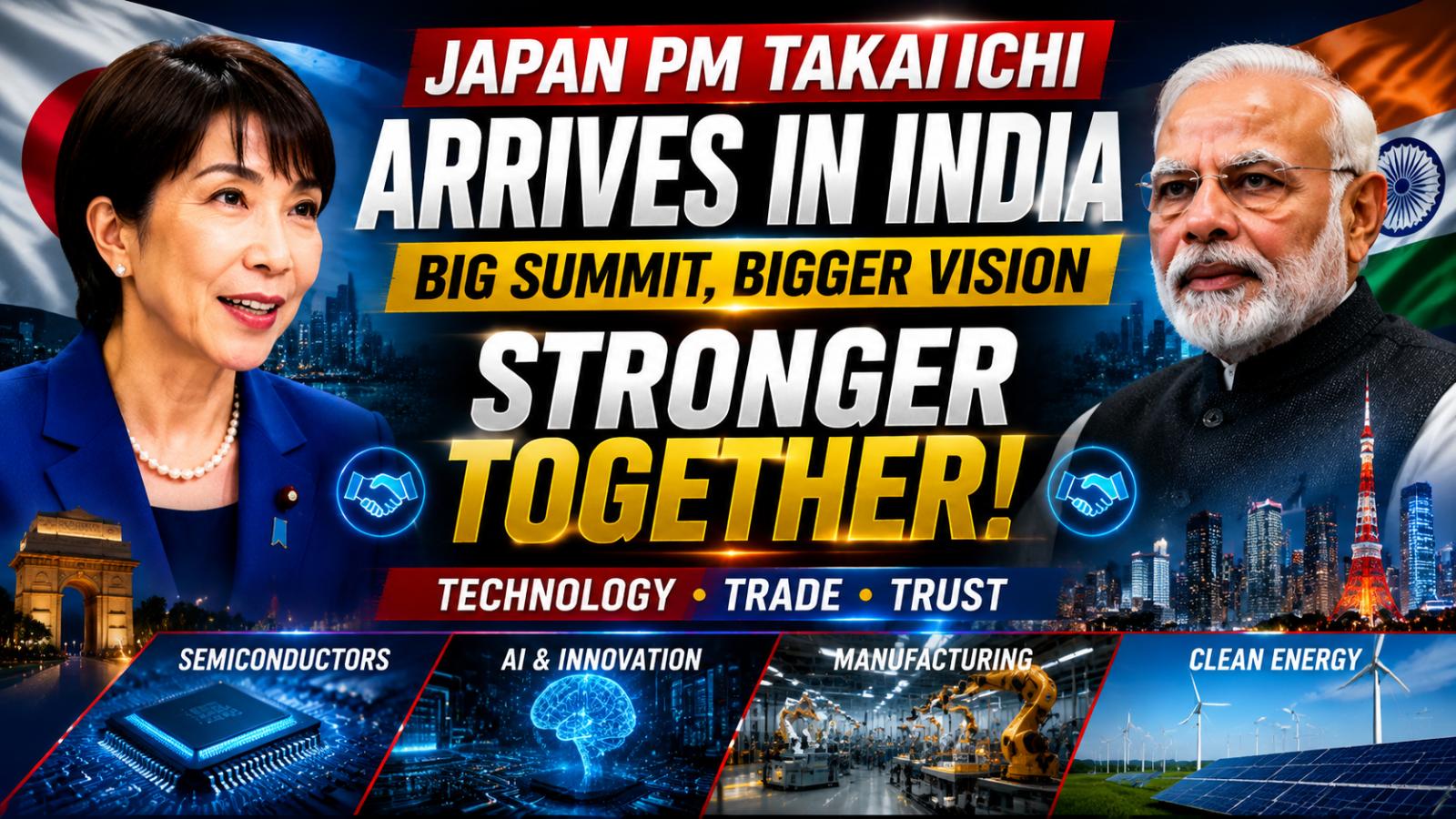
Japanese Prime Minister Sanae Takaichi will arrive in India on July 1,2026 for the 16th India-Japan Annual Summit at the invitation of Prime Minister Narendra Modi. The visit marks her first official trip to India since taking office in 2025 and comes at a time when both nations are seeking to strengthen strategic and economic alignment in a rapidly changing global environment.
High-level diplomatic engagement in New Delhi
Japanese Prime Minister Sanae Takaichi will arrive in India on July 1,2026 for the 16th India-Japan Annual Summit at the invitation of Prime Minister Narendra Modi. The visit marks her first official trip to India since taking office in 2025 and comes at a time when both nations are seeking to strengthen strategic and economic alignment in a rapidly changing global environment.
India and Russia are preparing to host the first INNOPROM International Industrial Technology Exhibition in India, marking a fresh push in their expanding economic and industrial partnership. The event is scheduled to take place from September 9 to 11 at Bharat Mandapam Exhibition and Convention Centre in New Delhi, bringing together manufacturers, investors, technology companies, industrial buyers and government representatives.
The exhib
India and Russia are preparing to host the first INNOPROM International Industrial Technology Exhibition in India, marking a fresh push in their expanding economic and industrial partnership. The event is scheduled to take place from September 9 to 11 at Bharat Mandapam Exhibition and Convention Centre in New Delhi, bringing together manufacturers, investors, technology companies, industrial buyers and government representatives.
The exhib
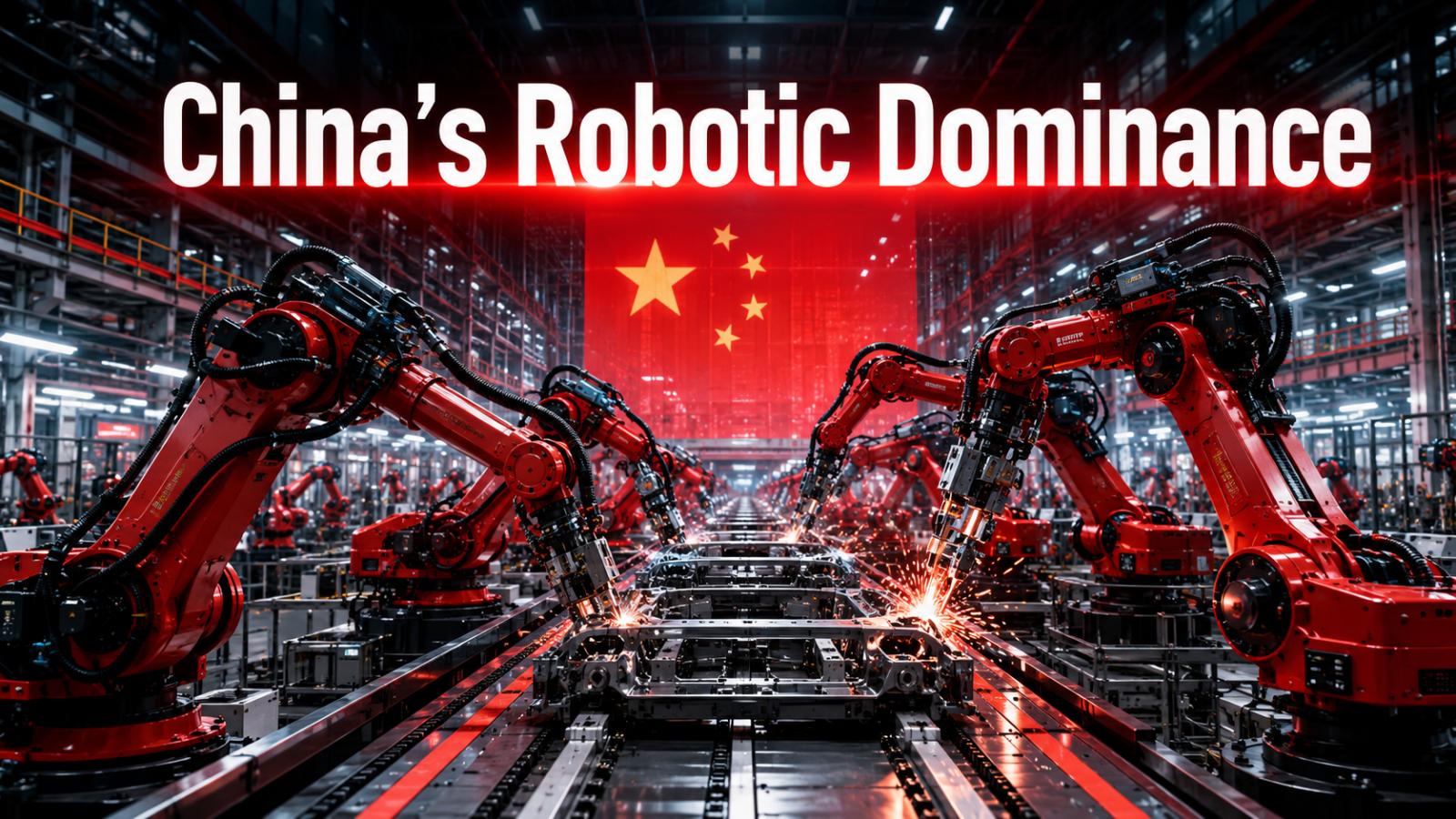
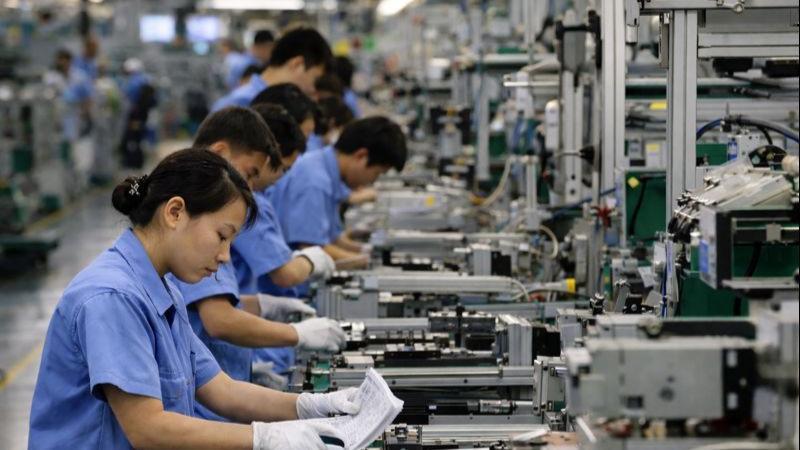
China robotic dominance is becoming one of the most important shifts in global manufacturing. Factories are no longer depending only on human labor, traditional machines, and manual production lines. Industrial robots are now helping companies produce goods faster, reduce errors, improve safety, and stay competitive in a market where speed and precision matter.
According to the International Federation of Robotics, China accounted for 54% of global industrial robot installat
China robotic dominance is becoming one of the most important shifts in global manufacturing. Factories are no longer depending only on human labor, traditional machines, and manual production lines. Industrial robots are now helping companies produce goods faster, reduce errors, improve safety, and stay competitive in a market where speed and precision matter.
According to the International Federation of Robotics, China accounted for 54% of global industrial robot installat
US Pushes Tariffs Into Mexico Trade Talks
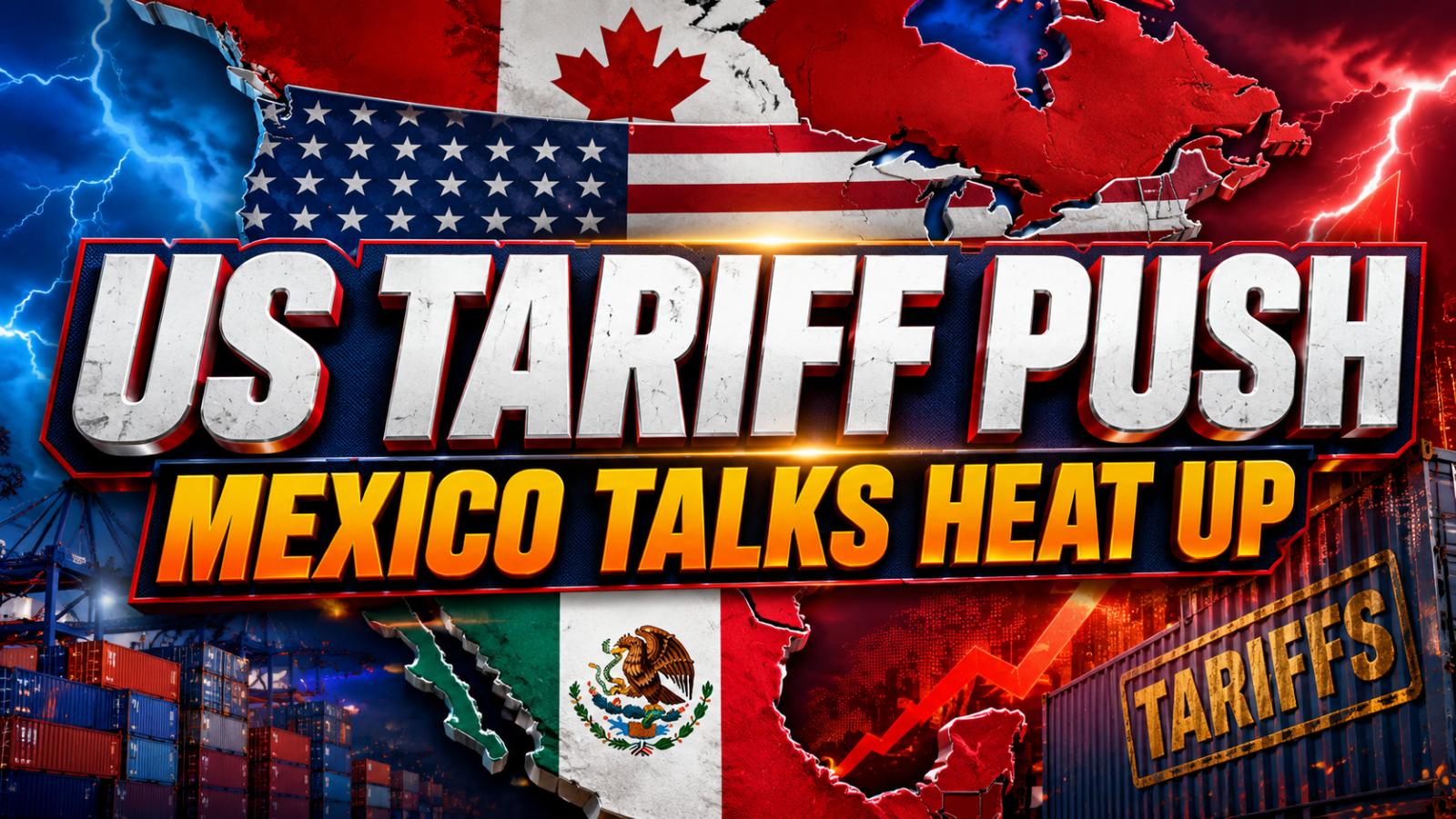
The United States expects tariffs to be part of trade negotiations with Mexico this week as Washington prepares for talks tied to the future of the U.S.-Mexico-Canada Agreement. U.S. Trade Representative Jamieson Greer said President Donald Trump remains concerned about the trade deficit with Mexico and indicated that tariffs are likely to remain a tool in the administration’s broader trade strategy, even with close regional partners.
Rules Of Origin Face Fresh Scrutiny
Greer said officials are expected to discuss changes to USMCA rules of origin, including requirements that could increase the share of American-made content in goods produced across North America. The issue is especially important for manufacturing and supply chains, as the United States seeks to reduce dependence on Asia and bring more production closer to home. Greer said Mexico has benefited from American efforts to diversify away from China, but Washington wants a more balanced distribution of production.
Mexico Talks Seen As Productive
The United States views Mexico as a major part of its regional supply chain strategy because it competes with Asian economies for access to the US market. Greer said the administration wants supply chains sourced from the Western Hemisphere wherever possible, pointing to pandemic-era disruptions that limited access to goods from Asia. The goal, he said, is to strengthen North American manufacturing while reducing the deficit with Mexico.
Canada Negotiations Look More Difficult
Trade talks with Canada appear more complicated. Greer said the United States has significant trade challenges with Canada and noted that Ottawa’s response to tariffs has differed from that of many other partners. Canada has argued that USMCA remains a strong agreement and does not require major renegotiation. The disagreement sets up a difficult review process as Washington seeks tariff-related changes while Canada pushes to preserve the existing framework.
US Pushes Tariffs Into Mexico Trade Talks
The United States expects tariffs to be part of trade negotiations with Mexico this week as Washington prepares for talks tied to the future of the U.S.-Mexico-Canada Agreement. U.S. Trade Representative Jamieson Greer said President Donald Trump remains concerned about the trade deficit with Mexico and indicated that tariffs are likely to remain a tool in the administration’s broader trade strategy, even with close regional partners.
Rules Of Origin Face Fresh Scrutiny
Greer said officials are expected to discuss changes to USMCA rules of origin, including requirements that could increase the share of American-made content in goods produced across North America. The issue is especially important for manufacturing and supply chains, as the United States seeks to reduce dependence on Asia and bring more production closer to home. Greer said Mexico has benefited from American efforts to diversify away from China, but Washington wants a more balanced distribution of production.
Mexico Talks Seen As Productive
The United States views Mexico as a major part of its regional supply chain strategy because it competes with Asian economies for access to the US market. Greer said the administration wants supply chains sourced from the Western Hemisphere wherever possible, pointing to pandemic-era disruptions that limited access to goods from Asia. The goal, he said, is to strengthen North American manufacturing while reducing the deficit with Mexico.
Canada Negotiations Look More Difficult
Trade talks with Canada appear more complicated. Greer said the United States has significant trade challenges with Canada and noted that Ottawa’s response to tariffs has differed from that of many other partners. Canada has argued that USMCA remains a strong agreement and does not require major renegotiation. The disagreement sets up a difficult review process as Washington seeks tariff-related changes while Canada pushes to preserve the existing framework.
Royal Enfield is preparing for its next major growth phase with a proposed Rs 2,500 crore investment in a new greenfield manufacturing facility in Andhra Pradesh. The Chennai-based motorcycle maker has announced plans to acquire land in Tada, near Tirupati, as it looks to expand production capacity and strengthen its manufacturing base in southern India. The investment is subject to approval from the board of Eicher Motors, Royal Enfield’s parent company, and the project is expected to be deve
Royal Enfield is preparing for its next major growth phase with a proposed Rs 2,500 crore investment in a new greenfield manufacturing facility in Andhra Pradesh. The Chennai-based motorcycle maker has announced plans to acquire land in Tada, near Tirupati, as it looks to expand production capacity and strengthen its manufacturing base in southern India. The investment is subject to approval from the board of Eicher Motors, Royal Enfield’s parent company, and the project is expected to be deve
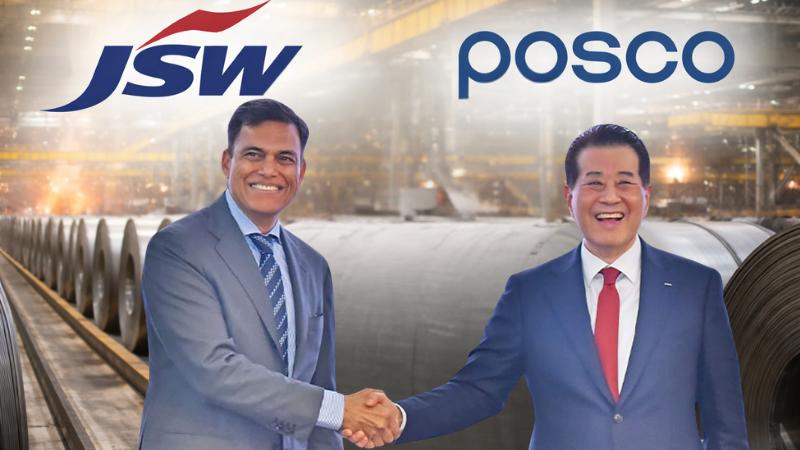
JSW Steel and POSCO have entered into a joint venture agreement to establish a new steel manufacturing plant in Odisha. The development comes at a significant time, coinciding with the official visit of the South K
JSW Steel and POSCO have entered into a joint venture agreement to establish a new steel manufacturing plant in Odisha. The development comes at a significant time, coinciding with the official visit of the South K
China’s manufacturing success was attributed to cheap labour. That perception has now changed completely. Factory wages in China have climbed close to eight dollars per hour, far higher than those in Vietnam, Malaysia, Thailand, and India. By cost logic alone, China should have lost its position as the world’s manufacturing hub. Instead, it continues to dominate global production, contributing nearly 28 percent of worldwide manufacturing output. The reason lies not in wages, but in produc
China’s manufacturing success was attributed to cheap labour. That perception has now changed completely. Factory wages in China have climbed close to eight dollars per hour, far higher than those in Vietnam, Malaysia, Thailand, and India. By cost logic alone, China should have lost its position as the world’s manufacturing hub. Instead, it continues to dominate global production, contributing nearly 28 percent of worldwide manufacturing output. The reason lies not in wages, but in produc
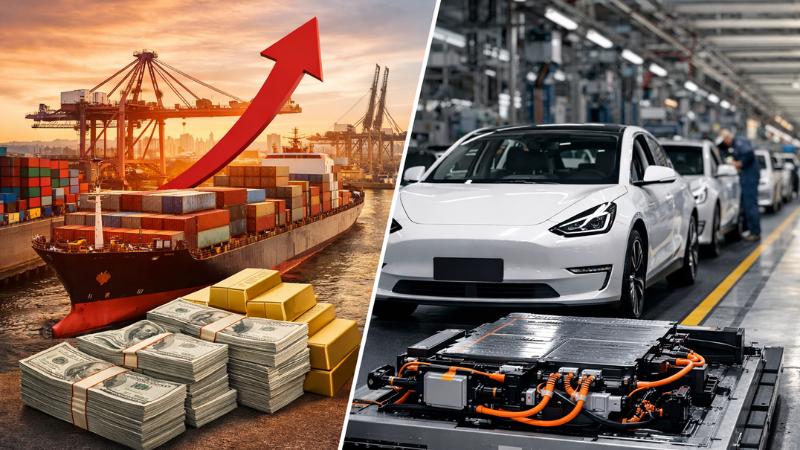
Amid ongoing geopolitical tensions, trade disputes, and armed conflicts across multiple regions, China quietly achieved two major economic milestones in 2025, underscoring its continued influence over global manufacturing and trade. Official data released this month shows that the country recorded the largest annual trade surplus in its history while further consolidating its position as the world’s leading automobile producer and seller. These achievements came despite persistent pressures
Amid ongoing geopolitical tensions, trade disputes, and armed conflicts across multiple regions, China quietly achieved two major economic milestones in 2025, underscoring its continued influence over global manufacturing and trade. Official data released this month shows that the country recorded the largest annual trade surplus in its history while further consolidating its position as the world’s leading automobile producer and seller. These achievements came despite persistent pressures
Nearly 1,000 workers across Illinois are expected to lose their jobs during the first half of the year, according to recent data released through the Illinois Worker Adjustment and Retraining Act. A spreadsheet published by the Illinois Department of Commerce and Economic Opportunity shows that employers across several industries issued layoff notices affecting a total of 985 employees during November alone.
State officials reported that most of the layoffs are scheduled to begin in
Nearly 1,000 workers across Illinois are expected to lose their jobs during the first half of the year, according to recent data released through the Illinois Worker Adjustment and Retraining Act. A spreadsheet published by the Illinois Department of Commerce and Economic Opportunity shows that employers across several industries issued layoff notices affecting a total of 985 employees during November alone.
State officials reported that most of the layoffs are scheduled to begin in
An iconic feature of Newark’s industrial skyline is being dismantled as ownership of the city’s longtime Anheuser-Busch brewery changes hands. Crews arrived at the sprawling factory complex early Friday morning, signaling the start of work to remove the illuminated eagle that has stood above the brewery for decades. The towering sign, visible from surrounding neighborhoods and major roadways, has long been associated with the facility and has become a familiar sight for generations of res
An iconic feature of Newark’s industrial skyline is being dismantled as ownership of the city’s longtime Anheuser-Busch brewery changes hands. Crews arrived at the sprawling factory complex early Friday morning, signaling the start of work to remove the illuminated eagle that has stood above the brewery for decades. The towering sign, visible from surrounding neighborhoods and major roadways, has long been associated with the facility and has become a familiar sight for generations of res
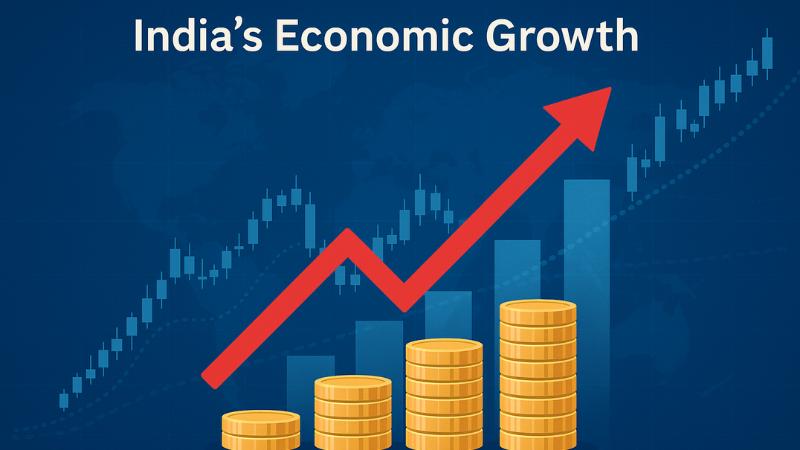
India’s economy recorded a faster pace of expansion in the July–September quarter, with official data showing that gross domestic product rose 8.2% year-on-year. The acceleration reflects a combination of stronger consumer demand, a revival in manufacturing activity, and accelerated production schedules ahead of India’s major festive season. Economists had widely expected the quarter to deliver robust growth, but the latest figure surpassed the projected 7.3% expansion for the period, e
India’s economy recorded a faster pace of expansion in the July–September quarter, with official data showing that gross domestic product rose 8.2% year-on-year. The acceleration reflects a combination of stronger consumer demand, a revival in manufacturing activity, and accelerated production schedules ahead of India’s major festive season. Economists had widely expected the quarter to deliver robust growth, but the latest figure surpassed the projected 7.3% expansion for the period, e
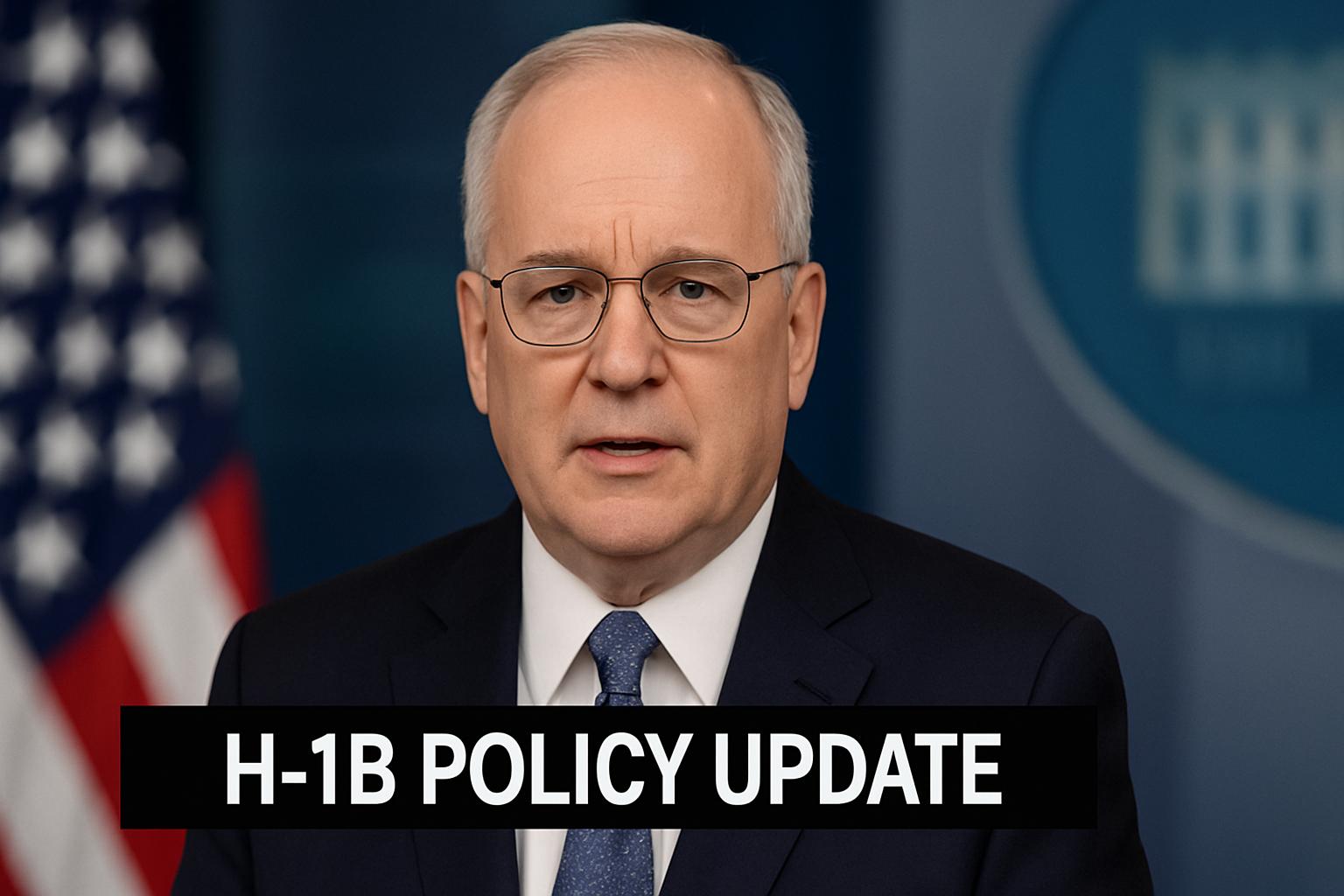
Treasury Secretary Scott Bessent has outlined the administration’s new approach to the H-1B visa programme, describing it as a targeted effort to bring in temporary foreign specialists who will train American workers rather than replace them. His remarks came during a televised interview in which he emphasised that the policy is intended to support the rebuilding of domestic manufacturing, shipbuilding capability, and semiconductor production after years of industrial decline.
Bessent said the redesigned system is centred on the idea of “knowledge transfer,” where overseas experts are invited to the United States for a limited period to help restore technical capacity in critical sectors. According to him, the administration views this model as essential to equipping American workers with advanced skills that have diminished as supply chains and production moved abroad. He explained that the visa structure is meant to ensure that expertise flows into the country long enough for domestic workers to learn the required competencies before the foreign specialists return home.
Addressing recurring concerns that increased reliance on foreign talent could displace American employees, Bessent maintained that the policy does not threaten domestic job opportunities. Instead, he argued that the United States currently lacks specialized talent in areas that have not been active on American soil for many years. He noted that industries such as shipbuilding and semiconductor fabrication require highly technical knowledge, which is more readily available in countries that have continued to develop those sectors. In his view, bringing in experts to train Americans is necessary for rebuilding industrial strength, not a means of outsourcing jobs.
The comments followed President Donald Trump’s recent statements explaining that the country needs temporary foreign experts to accelerate the transfer of technical skills. The president said the United States does not currently have enough workers with the precision training required for advanced manufacturing, adding that it would be unrealistic to expect individuals without experience to instantly take on tasks such as missile production or microchip engineering. Both Trump and Bessent described the policy as a practical step toward reducing long-term dependence on imports by cultivating a stronger domestic workforce.
Bessent also discussed broader elements of the administration’s economic agenda, including ongoing talks about a potential USD 2,000 tariff rebate for families earning less than USD 100,000 annually. He said the proposal is part of an effort to ensure that households directly benefit from trade policies designed to strengthen national competitiveness. The rebate, he added, is one component of the administration’s push to align the interests of Wall Street and Main Street, a vision he referred to as “Parallel Prosperity.”
Looking ahead, the Treasury secretary predicted that 2026 could become a milestone year for the United States economy if the administration’s policy framework succeeds in restoring industrial capacity and stabilizing financial markets. He emphasized the importance of maintaining a deep and liquid Treasury market, suggesting that economic growth will depend on strong foundations that support both investment and employment. Throughout the interview, Bessent portrayed the H-1B reform as a crucial part of that broader plan, arguing that rebuilding the nation’s industrial base requires a temporary infusion of global expertise to ensure Americans can take full ownership of high-skilled jobs in the future.
Treasury Secretary Scott Bessent has outlined the administration’s new approach to the H-1B visa programme, describing it as a targeted effort to bring in temporary foreign specialists who will train American workers rather than replace them. His remarks came during a televised interview in which he emphasised that the policy is intended to support the rebuilding of domestic manufacturing, shipbuilding capability, and semiconductor production after years of industrial decline.
Bessent said the redesigned system is centred on the idea of “knowledge transfer,” where overseas experts are invited to the United States for a limited period to help restore technical capacity in critical sectors. According to him, the administration views this model as essential to equipping American workers with advanced skills that have diminished as supply chains and production moved abroad. He explained that the visa structure is meant to ensure that expertise flows into the country long enough for domestic workers to learn the required competencies before the foreign specialists return home.
Addressing recurring concerns that increased reliance on foreign talent could displace American employees, Bessent maintained that the policy does not threaten domestic job opportunities. Instead, he argued that the United States currently lacks specialized talent in areas that have not been active on American soil for many years. He noted that industries such as shipbuilding and semiconductor fabrication require highly technical knowledge, which is more readily available in countries that have continued to develop those sectors. In his view, bringing in experts to train Americans is necessary for rebuilding industrial strength, not a means of outsourcing jobs.
The comments followed President Donald Trump’s recent statements explaining that the country needs temporary foreign experts to accelerate the transfer of technical skills. The president said the United States does not currently have enough workers with the precision training required for advanced manufacturing, adding that it would be unrealistic to expect individuals without experience to instantly take on tasks such as missile production or microchip engineering. Both Trump and Bessent described the policy as a practical step toward reducing long-term dependence on imports by cultivating a stronger domestic workforce.
Bessent also discussed broader elements of the administration’s economic agenda, including ongoing talks about a potential USD 2,000 tariff rebate for families earning less than USD 100,000 annually. He said the proposal is part of an effort to ensure that households directly benefit from trade policies designed to strengthen national competitiveness. The rebate, he added, is one component of the administration’s push to align the interests of Wall Street and Main Street, a vision he referred to as “Parallel Prosperity.”
Looking ahead, the Treasury secretary predicted that 2026 could become a milestone year for the United States economy if the administration’s policy framework succeeds in restoring industrial capacity and stabilizing financial markets. He emphasized the importance of maintaining a deep and liquid Treasury market, suggesting that economic growth will depend on strong foundations that support both investment and employment. Throughout the interview, Bessent portrayed the H-1B reform as a crucial part of that broader plan, arguing that rebuilding the nation’s industrial base requires a temporary infusion of global expertise to ensure Americans can take full ownership of high-skilled jobs in the future.
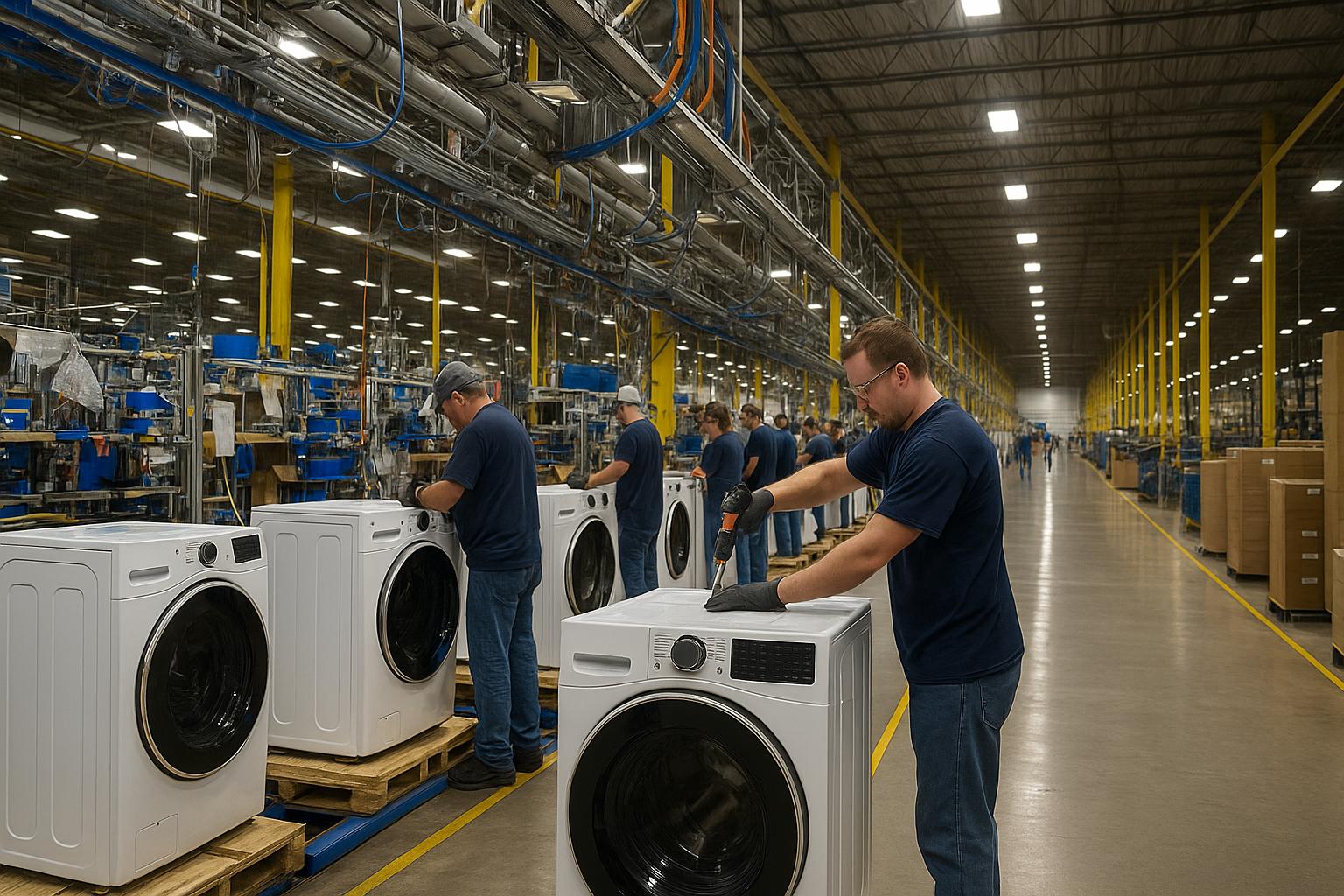
MARION, Ohio — Whirlpool Corporation announced Wednesday a $300 million investment across two of its key Ohio manufacturing facilities, marking one of the company’s largest expansions in recent years. The investment aims to strengthen Whirlpool’s production capacity for its next generation of washers and dryers, while also creating hundreds of new jobs and supporting thousands more indirectly across the state.
According to the Michigan-based appliance manufacturer, the capital
MARION, Ohio — Whirlpool Corporation announced Wednesday a $300 million investment across two of its key Ohio manufacturing facilities, marking one of the company’s largest expansions in recent years. The investment aims to strengthen Whirlpool’s production capacity for its next generation of washers and dryers, while also creating hundreds of new jobs and supporting thousands more indirectly across the state.
According to the Michigan-based appliance manufacturer, the capital
A major coalition representing auto parts suppliers in the United States has issued a stark warning about the looming threat to the automotive supply chain caused by China's recent restrictions on rare earth exports. The group, MEMA – The Vehicle Suppliers Association – called for urgent government intervention, saying the limited access to these critical materials could quickly spiral into a nationwide auto manufacturing disruption.
Rare earth elements, essenti
A major coalition representing auto parts suppliers in the United States has issued a stark warning about the looming threat to the automotive supply chain caused by China's recent restrictions on rare earth exports. The group, MEMA – The Vehicle Suppliers Association – called for urgent government intervention, saying the limited access to these critical materials could quickly spiral into a nationwide auto manufacturing disruption.
Rare earth elements, essenti
The long-awaited trade deal between India and the United States is expected to materialize in the near future, according to U.S. Secretary of Commerce Howard Lutnick. Speaking on June 2, 2025, at the eighth edition of the Leadership Summit hosted by the U.S.-India Strategic Partnership Forum in Washington, Mr. Lutnick shared insights on the progress of the negotiations, highlighting that India stands to gain favorable tariffs on multiple manufacturing sectors, providing it a competitive advan
The long-awaited trade deal between India and the United States is expected to materialize in the near future, according to U.S. Secretary of Commerce Howard Lutnick. Speaking on June 2, 2025, at the eighth edition of the Leadership Summit hosted by the U.S.-India Strategic Partnership Forum in Washington, Mr. Lutnick shared insights on the progress of the negotiations, highlighting that India stands to gain favorable tariffs on multiple manufacturing sectors, providing it a competitive advan
In a recent address from Morristown, New Jersey, U.S. President Donald Trump reaffirmed his administration's commitment to using tariffs as a tool to boost domestic manufacturing, particularly in sectors such as military equipment and advanced technology. Speaking before boarding Air Force One, Trump clarified that his tariff agenda is not intended to revive traditional textile production like sneakers and T-shirts, but rather to prioritize manufacturing of tanks, artificial intelligence
In a recent address from Morristown, New Jersey, U.S. President Donald Trump reaffirmed his administration's commitment to using tariffs as a tool to boost domestic manufacturing, particularly in sectors such as military equipment and advanced technology. Speaking before boarding Air Force One, Trump clarified that his tariff agenda is not intended to revive traditional textile production like sneakers and T-shirts, but rather to prioritize manufacturing of tanks, artificial intelligence