A China Coast Guard baton attack during a Philippine resupply mission at Second Thomas Shoal has further heightened tensions in the South China Sea. Philippine military officials said a sailor suffered a serious head injury during the confrontation, adding to a series of incidents involving disputed waters claimed by both Manila and Beijing.
Second Thomas Shoal confrontation
The Armed Forces of the Philippines (AFP) said the incident occurred near the BRP Sierra Madre, a decommissioned Philippine Navy vessel grounded at Ayungin Shoal since 1999 to maintain the country's presence in the disputed area. According to the AFP, a China Coast Guard rigid-hull inflatable boat carrying several personnel approached the outpost, circled the vessel and recorded photos and videos before the confrontation escalated.
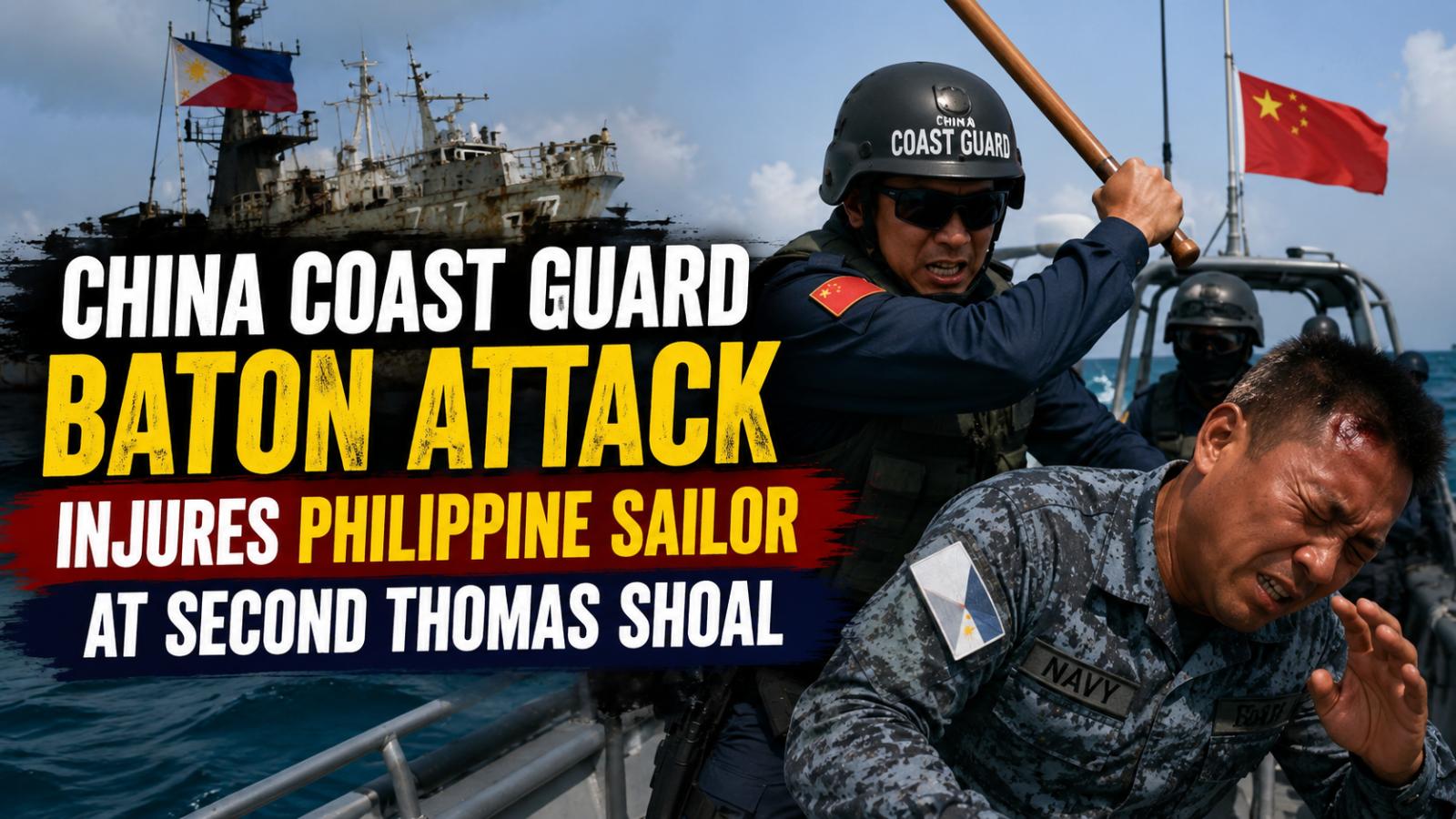
Philippine officials alleged that one China Coast Guard member struck a Philippine Navy sailor on the head with a wooden baton during the encounter. Medical personnel immediately treated the injured sailor before he was evacuated for further medical care. The reported incident took place during a routine presence-maintenance and resupply operation.
China Coast Guard activities
The latest confrontation adds to a growing list of maritime incidents involving Chinese and Philippine vessels in the South China Sea. Philippine authorities have repeatedly accused the China Coast Guard of blocking, ramming, boarding and using water cannons against Philippine boats operating within what Manila considers its Exclusive Economic Zone (EEZ).
China maintains that its coast guard is enforcing Chinese sovereignty against what it describes as unlawful incursions by Philippine vessels. Beijing continues to assert broad claims across most of the South China Sea despite objections from neighbouring countries.
South China Sea dispute
Second Thomas Shoal remains one of the region's most sensitive flashpoints. The Philippines argues that the shoal lies within its EEZ under the United Nations Convention on the Law of the Sea (UNCLOS), while China insists it has historical sovereignty over the surrounding waters.
Throughout this year, both sides have reported multiple stand-offs around Second Thomas Shoal, Scarborough Shoal and Sabina Shoal. Philippine officials have also raised concerns over increased China Coast Guard patrols, maritime militia activity and research vessels operating near disputed features. Earlier this year, Manila accused Chinese fishing vessels of causing environmental damage near the shoal, while Beijing rejected those allegations.
China-Philippines tensions
Security concerns have continued to grow as China carried out military exercises in parts of the South China Sea and the Philippines expanded defence cooperation with the United States, Japan and several ASEAN partners through joint military drills. Diplomatic protests have also increased following disputes over floating structures, fishing access and maritime patrols.
The broader dispute remains unresolved despite the 2016 ruling by the Permanent Court of Arbitration in The Hague, which found that China's expansive claims had no legal basis under UNCLOS. The Philippines continues to cite the ruling as the foundation of its maritime rights, while China rejects the decision and refuses to recognise its legal validity.
The latest reported injury marks another serious escalation in the long-running maritime dispute. Although neither side has indicated an intention to pursue military conflict, analysts continue to warn that repeated close encounters between vessels increase the risk of miscalculation. Philippine authorities said they remain committed to protecting their personnel and maintaining their presence in the disputed waters, while Beijing continues to defend its actions as lawful enforcement of its territorial claims.
A China Coast Guard baton attack during a Philippine resupply mission at Second Thomas Shoal has further heightened tensions in the South China Sea. Philippine military officials said a sailor suffered a serious head injury during the confrontation, adding to a series of incidents involving disputed waters claimed by both Manila and Beijing.
Second Thomas Shoal confrontation
The Armed Forces of the Philippines (AFP) said the incident occurred near the BRP Sierra Madre, a decommissioned Philippine Navy vessel grounded at Ayungin Shoal since 1999 to maintain the country's presence in the disputed area. According to the AFP, a China Coast Guard rigid-hull inflatable boat carrying several personnel approached the outpost, circled the vessel and recorded photos and videos before the confrontation escalated.
Philippine officials alleged that one China Coast Guard member struck a Philippine Navy sailor on the head with a wooden baton during the encounter. Medical personnel immediately treated the injured sailor before he was evacuated for further medical care. The reported incident took place during a routine presence-maintenance and resupply operation.
China Coast Guard activities
The latest confrontation adds to a growing list of maritime incidents involving Chinese and Philippine vessels in the South China Sea. Philippine authorities have repeatedly accused the China Coast Guard of blocking, ramming, boarding and using water cannons against Philippine boats operating within what Manila considers its Exclusive Economic Zone (EEZ).
China maintains that its coast guard is enforcing Chinese sovereignty against what it describes as unlawful incursions by Philippine vessels. Beijing continues to assert broad claims across most of the South China Sea despite objections from neighbouring countries.
South China Sea dispute
Second Thomas Shoal remains one of the region's most sensitive flashpoints. The Philippines argues that the shoal lies within its EEZ under the United Nations Convention on the Law of the Sea (UNCLOS), while China insists it has historical sovereignty over the surrounding waters.
Throughout this year, both sides have reported multiple stand-offs around Second Thomas Shoal, Scarborough Shoal and Sabina Shoal. Philippine officials have also raised concerns over increased China Coast Guard patrols, maritime militia activity and research vessels operating near disputed features. Earlier this year, Manila accused Chinese fishing vessels of causing environmental damage near the shoal, while Beijing rejected those allegations.
China-Philippines tensions
Security concerns have continued to grow as China carried out military exercises in parts of the South China Sea and the Philippines expanded defence cooperation with the United States, Japan and several ASEAN partners through joint military drills. Diplomatic protests have also increased following disputes over floating structures, fishing access and maritime patrols.
The broader dispute remains unresolved despite the 2016 ruling by the Permanent Court of Arbitration in The Hague, which found that China's expansive claims had no legal basis under UNCLOS. The Philippines continues to cite the ruling as the foundation of its maritime rights, while China rejects the decision and refuses to recognise its legal validity.
The latest reported injury marks another serious escalation in the long-running maritime dispute. Although neither side has indicated an intention to pursue military conflict, analysts continue to warn that repeated close encounters between vessels increase the risk of miscalculation. Philippine authorities said they remain committed to protecting their personnel and maintaining their presence in the disputed waters, while Beijing continues to defend its actions as lawful enforcement of its territorial claims.
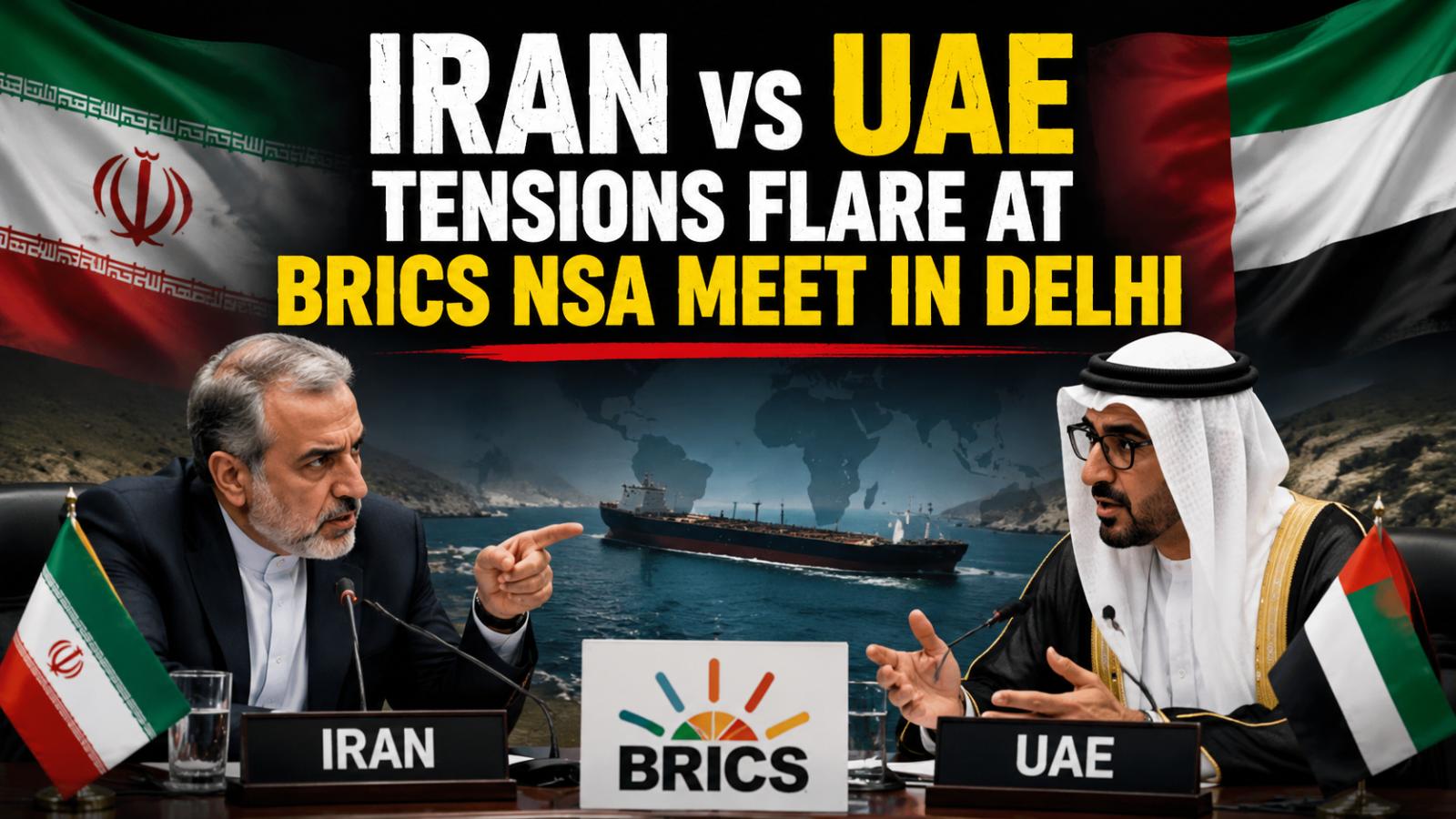
A BRICS National Security Advisers meeting in New Delhi turned tense after Iran and the United Arab Emirates exchanged strong political accusations over regional security concerns. The discussion, chaired by India’s National Security Advisor Ajit Doval, was intended to focus on cooperation in maritime safety and counterterrorism, but quickly exposed deep disagreements within the group on West Asia dynamics.
Iran raises concerns over regional strikes and external involvement
Iran’s delegation raised allegations linking recent regional strikes to external military coordination, suggesting that operations affecting Iranian interests were enabled through logistical and strategic support networks in the Gulf region. Tehran argued that such developments have increased risks for civilians and undermined stability across key transit zones.
Strait of Hormuz remains central pressure point
The Strait of Hormuz once again emerged as the most sensitive flashpoint in the discussion. Iranian representatives warned that continued military escalation near the waterway threatens global energy flows and could destabilize shipping routes that carry a significant share of the world’s oil supply. The issue highlighted how maritime security concerns are increasingly tied to broader geopolitical rivalries in the region.
UAE pushes back and defends its position
The UAE rejected the allegations and reiterated that it does not support or participate in hostile operations against any state. Emirati officials maintained that the country itself remains exposed to regional security threats and emphasized the need for de-escalation rather than blame-based diplomacy. Past BRICS discussions had already seen similar disagreements without consensus outcomes.
BRICS unity tested by West Asia fault lines
The confrontation underscored growing strain within BRICS as it expands its membership and geopolitical scope. While India has pushed for the bloc to act as a platform for dialogue and stability, persistent conflicts between member and partner states are limiting progress on unified security statements. The Iran–UAE exchange reflected how regional rivalries are increasingly shaping multilateral forums meant for cooperation rather than confrontation.
A BRICS National Security Advisers meeting in New Delhi turned tense after Iran and the United Arab Emirates exchanged strong political accusations over regional security concerns. The discussion, chaired by India’s National Security Advisor Ajit Doval, was intended to focus on cooperation in maritime safety and counterterrorism, but quickly exposed deep disagreements within the group on West Asia dynamics.
Iran raises concerns over regional strikes and external involvement
Iran’s delegation raised allegations linking recent regional strikes to external military coordination, suggesting that operations affecting Iranian interests were enabled through logistical and strategic support networks in the Gulf region. Tehran argued that such developments have increased risks for civilians and undermined stability across key transit zones.
Strait of Hormuz remains central pressure point
The Strait of Hormuz once again emerged as the most sensitive flashpoint in the discussion. Iranian representatives warned that continued military escalation near the waterway threatens global energy flows and could destabilize shipping routes that carry a significant share of the world’s oil supply. The issue highlighted how maritime security concerns are increasingly tied to broader geopolitical rivalries in the region.
UAE pushes back and defends its position
The UAE rejected the allegations and reiterated that it does not support or participate in hostile operations against any state. Emirati officials maintained that the country itself remains exposed to regional security threats and emphasized the need for de-escalation rather than blame-based diplomacy. Past BRICS discussions had already seen similar disagreements without consensus outcomes.
BRICS unity tested by West Asia fault lines
The confrontation underscored growing strain within BRICS as it expands its membership and geopolitical scope. While India has pushed for the bloc to act as a platform for dialogue and stability, persistent conflicts between member and partner states are limiting progress on unified security statements. The Iran–UAE exchange reflected how regional rivalries are increasingly shaping multilateral forums meant for cooperation rather than confrontation.