Market reaction to OpenAI growth concerns
Did OpenAI miss growth targets? AI stocks fall as report raises concerns, triggering a broad pullback across companies tied to artificial intelligence infrastructure on Tuesday. Shares of Oracle fell more than 4% amid its major partnership to provide computing power for OpenAI’s operations. Chipmakers including Nvidia, Broadcom, and Advanced Micro Devices declined between roughly 3% and 4%, while Qualcomm dropped 3.5%.
Global impact reflects investor sensitivity
Losses extended beyond the United States, with SoftBank Group, a major OpenAI investor, falling about 10% in Asian markets. The declines followed a report that OpenAI has not met internal projections for user growth and revenue, raising concerns about its ability to sustain the heavy spending required for data center expansion and long-term compute agreements.
OpenAI response and financial outlook debate
OpenAI pushed back against the claims, stating it remains aligned on expanding compute capacity. The company, which launched ChatGPT in 2022 and helped drive the current AI boom, recently secured a $122 billion funding round at an $852 billion valuation. However, internal discussions reportedly highlighted risks if revenue growth does not accelerate as expected.
Competitive pressures reshape AI landscape
At the same time, competition in enterprise AI continues to intensify. Rivals such as Anthropic and Google’s Gemini models are gaining traction, prompting companies to diversify across multiple providers. Some analysts interpret OpenAI’s slower growth as a shift in market share rather than a broader slowdown in AI adoption.
Investors weigh long-term implications
Despite the market reaction, several investors remain cautious about drawing firm conclusions. Industry experts note that forecasting revenue and capital expenditures in the rapidly evolving AI sector remains highly uncertain. While short-term volatility has affected tech stocks, many view the report as part of a broader adjustment rather than a fundamental change in the long-term trajectory of AI infrastructure spending.
Market reaction to OpenAI growth concerns
Did OpenAI miss growth targets? AI stocks fall as report raises concerns, triggering a broad pullback across companies tied to artificial intelligence infrastructure on Tuesday. Shares of Oracle fell more than 4% amid its major partnership to provide computing power for OpenAI’s operations. Chipmakers including Nvidia, Broadcom, and Advanced Micro Devices declined between roughly 3% and 4%, while Qualcomm dropped 3.5%.
Global impact reflects investor sensitivity
Losses extended beyond the United States, with SoftBank Group, a major OpenAI investor, falling about 10% in Asian markets. The declines followed a report that OpenAI has not met internal projections for user growth and revenue, raising concerns about its ability to sustain the heavy spending required for data center expansion and long-term compute agreements.
OpenAI response and financial outlook debate
OpenAI pushed back against the claims, stating it remains aligned on expanding compute capacity. The company, which launched ChatGPT in 2022 and helped drive the current AI boom, recently secured a $122 billion funding round at an $852 billion valuation. However, internal discussions reportedly highlighted risks if revenue growth does not accelerate as expected.
Competitive pressures reshape AI landscape
At the same time, competition in enterprise AI continues to intensify. Rivals such as Anthropic and Google’s Gemini models are gaining traction, prompting companies to diversify across multiple providers. Some analysts interpret OpenAI’s slower growth as a shift in market share rather than a broader slowdown in AI adoption.
Investors weigh long-term implications
Despite the market reaction, several investors remain cautious about drawing firm conclusions. Industry experts note that forecasting revenue and capital expenditures in the rapidly evolving AI sector remains highly uncertain. While short-term volatility has affected tech stocks, many view the report as part of a broader adjustment rather than a fundamental change in the long-term trajectory of AI infrastructure spending.
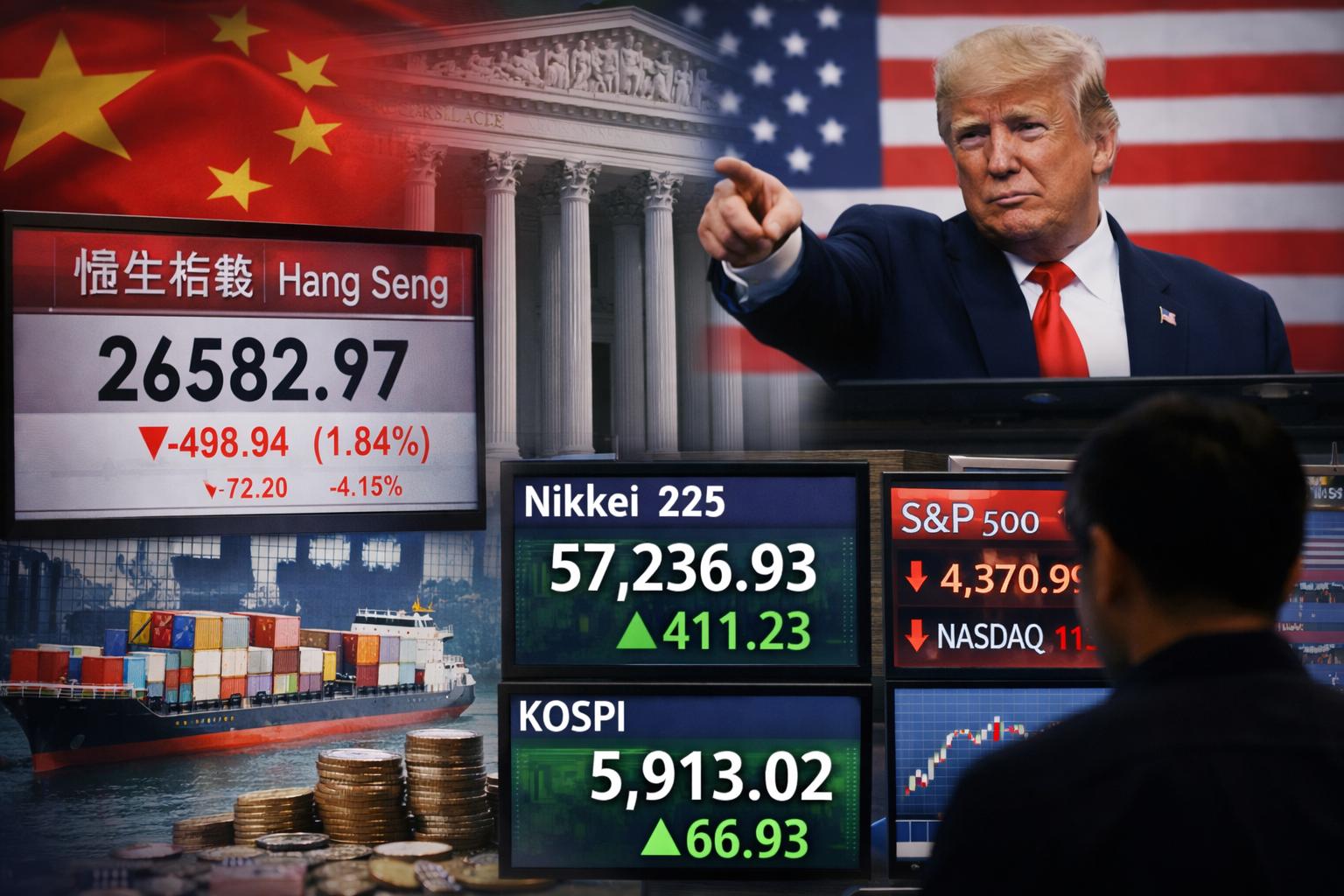
Asia-Pacific markets delivered a mixed performance on Tuesday as investors assessed renewed tariff threats from U.S. President Donald Trump alongside growing concerns about the potential impact of artificial intelligence on the software and cybersecurity sectors. The cautious mood reflected broader uncertainty in global stocks, with market participants closely monitoring trade tensions and technology-driven disruption.
The unease followed comments posted by Trump on Truth Social, wh
Asia-Pacific markets delivered a mixed performance on Tuesday as investors assessed renewed tariff threats from U.S. President Donald Trump alongside growing concerns about the potential impact of artificial intelligence on the software and cybersecurity sectors. The cautious mood reflected broader uncertainty in global stocks, with market participants closely monitoring trade tensions and technology-driven disruption.
The unease followed comments posted by Trump on Truth Social, wh
Gold and silver prices saw a sharp correction on February 17, rattling investors after weeks of strong gains. Gold dropped by Rs 2,561 or 1.65% to Rs 1,52,199, while silver fell by Rs 6,241 or 2.6% to Rs 2,33,650 at the time of writing. The sudden decline comes amid reduced global trading activity and rising volatility in the bullion market.
A major reason behind the decline is low participation from key global markets. Chinese markets remain closed from February 15 to February 23 f
Gold and silver prices saw a sharp correction on February 17, rattling investors after weeks of strong gains. Gold dropped by Rs 2,561 or 1.65% to Rs 1,52,199, while silver fell by Rs 6,241 or 2.6% to Rs 2,33,650 at the time of writing. The sudden decline comes amid reduced global trading activity and rising volatility in the bullion market.
A major reason behind the decline is low participation from key global markets. Chinese markets remain closed from February 15 to February 23 f
Amazon shares fell sharply on Friday, sliding more than 9% after the company outlined an aggressive capital spending plan that unsettled investors already wary about the sustainability of the artificial intelligence boom. The drop added to a broader technology selloff, as market participants questioned whether escalating investments in AI infrastructure could outpace future returns and create excess capacity across the sector.
The e-commerce and cloud computing group disclosed in it
Amazon shares fell sharply on Friday, sliding more than 9% after the company outlined an aggressive capital spending plan that unsettled investors already wary about the sustainability of the artificial intelligence boom. The drop added to a broader technology selloff, as market participants questioned whether escalating investments in AI infrastructure could outpace future returns and create excess capacity across the sector.
The e-commerce and cloud computing group disclosed in it
Bitcoin traded slightly higher on Monday after falling below the $80,000 mark for the first time since April 2025, as a broad risk-off move across global markets weighed heavily on digital assets. The world’s largest cryptocurrency was priced at $77,925.99 as of 8:37 a.m. Eastern Time, reflecting a modest rebound of about 1% following sharp losses over the weekend. Earlier in the session, Bitcoin briefly touched a low of $74,876 before recovering part of its decline.
The recent se
Bitcoin traded slightly higher on Monday after falling below the $80,000 mark for the first time since April 2025, as a broad risk-off move across global markets weighed heavily on digital assets. The world’s largest cryptocurrency was priced at $77,925.99 as of 8:37 a.m. Eastern Time, reflecting a modest rebound of about 1% following sharp losses over the weekend. Earlier in the session, Bitcoin briefly touched a low of $74,876 before recovering part of its decline.
The recent se
Global financial markets moved sharply lower Tuesday as renewed political tensions between the United States and Europe triggered a broad sell America trade, prompting investors to reduce exposure to U.S. assets. The shift came after President Donald Trump escalated rhetoric surrounding Greenland and proposed new tariffs targeting several European countries, reviving fears of a widening trade conflict and long-term economic fallout.
U.S. bond prices fell steeply, pushing Treasury yi
Global financial markets moved sharply lower Tuesday as renewed political tensions between the United States and Europe triggered a broad sell America trade, prompting investors to reduce exposure to U.S. assets. The shift came after President Donald Trump escalated rhetoric surrounding Greenland and proposed new tariffs targeting several European countries, reviving fears of a widening trade conflict and long-term economic fallout.
U.S. bond prices fell steeply, pushing Treasury yi
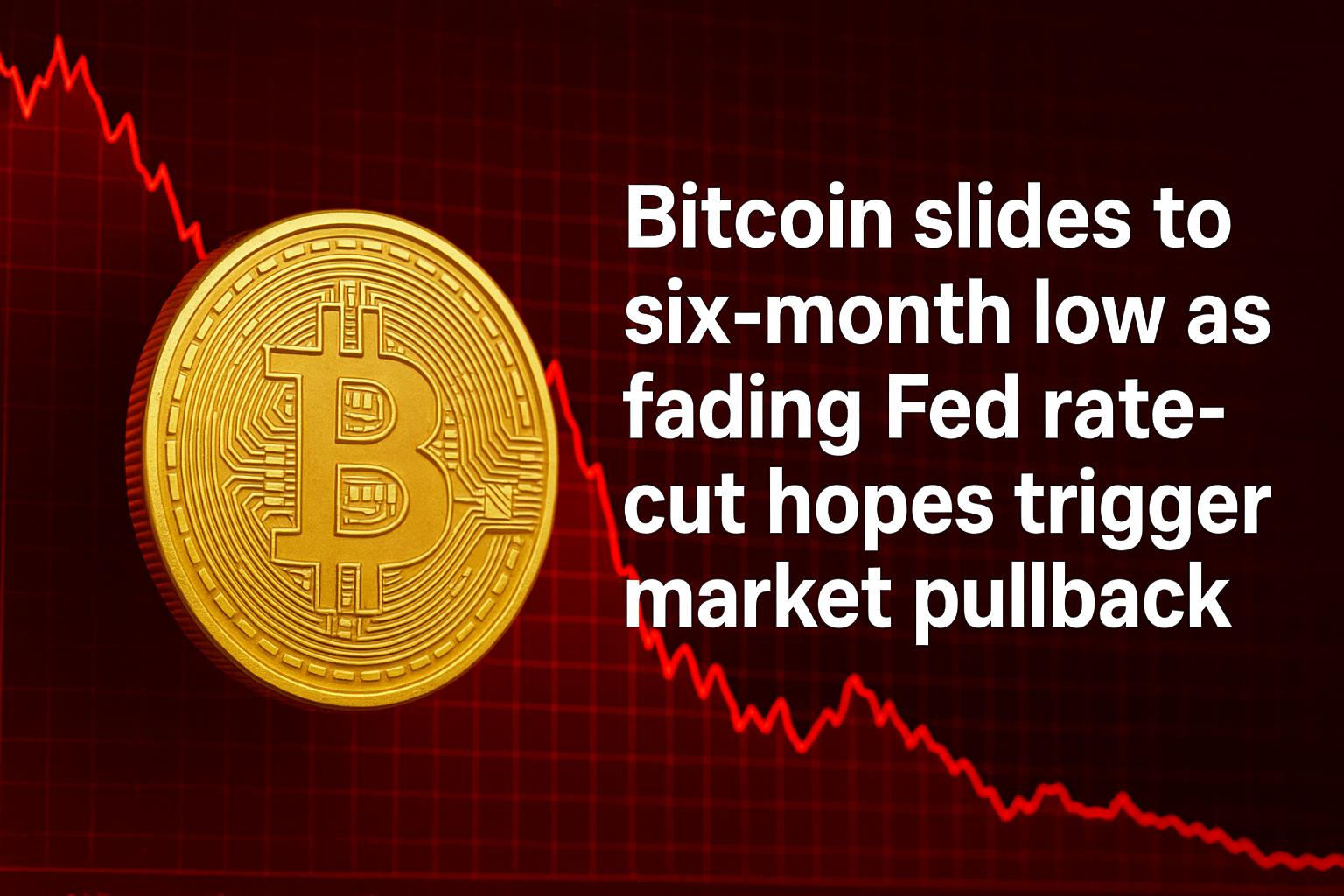
Bitcoin extended its recent downward trajectory on Monday, falling to its lowest level in six months as weakening expectations of a US Federal Reserve interest rate cut weighed on global market sentiment. The world’s largest cryptocurrency was trading near $94,859, a decline of just over 1 percent in the past 24 hours, continuing a broader slide that has erased a substantial portion of this year’s earlier gains.
The latest fall marks Bitcoin’s third consecutive weekly decline and pushes its cumulative losses to more than 10 percent over the past week. After briefly surpassing $126,000 in October, the asset has now entered bearish territory, forfeiting more than 30 percent of the advance recorded earlier in the year. Analysts note that the decline reflects a shift in investor sentiment as traders unwind risk-heavy positions amid renewed uncertainty over global monetary policy.
Other major digital assets were also under pressure. Ethereum fell to approximately $3,182, while Solana and Cardano saw modest declines over the past day. The broader pullback has been accompanied by a sharp rise in market liquidations, exacerbating volatility and prompting investors to seek short-term safety.
Market observers say the shift is tied to rising concerns that the Federal Reserve may delay rate cuts as inflationary pressures persist. This has contributed to a risk-off approach across multiple asset classes, including cryptocurrencies. Edul Patel, chief executive of Mudrex, said Bitcoin briefly dipped below $93,000 before attempting a mild recovery, although market sentiment remains highly sensitive to macroeconomic signals.
According to Patel, large institutional investors have begun accumulating again at lower price levels, suggesting a degree of long-term confidence. He noted that buying activity has increased since mid-week, particularly at price points below $100,000. Technical indicators now show resistance near $99,000 and a developing support region around $92,700, which could provide short-term stability if selling pressure eases.
However, analysts caution that volatility remains elevated. Riya Sehgal, research analyst at Delta Exchange, said the global pullback is closely aligned with the broader decline across equities and other risk assets. She pointed to more than $700 million in liquidations within the crypto market in the past day alone, reinforcing the view that leveraged traders are rapidly reducing exposure.
Sehgal added that chart patterns suggest long-term holders are beginning to lock in profits, a trend frequently observed during the later phases of strong market cycles. She highlighted resistance between $101,500 and $103,200, with key support near $98,500. Should Bitcoin fail to hold that level, prices could slip further toward the mid-$96,000 range.
The combination of high volatility, uncertain monetary policy outlook, and cautious investor behavior suggests crypto markets may remain unstable in the near term. Analysts say that without a clear catalyst, Bitcoin and other major tokens could continue to track broader macroeconomic developments, particularly inflation data and signals from the Federal Reserve. For now, traders appear defensive, and the possibility of a deeper correction cannot be ruled out if global risk sentiment continues to weaken.
Bitcoin extended its recent downward trajectory on Monday, falling to its lowest level in six months as weakening expectations of a US Federal Reserve interest rate cut weighed on global market sentiment. The world’s largest cryptocurrency was trading near $94,859, a decline of just over 1 percent in the past 24 hours, continuing a broader slide that has erased a substantial portion of this year’s earlier gains.
The latest fall marks Bitcoin’s third consecutive weekly decline and pushes its cumulative losses to more than 10 percent over the past week. After briefly surpassing $126,000 in October, the asset has now entered bearish territory, forfeiting more than 30 percent of the advance recorded earlier in the year. Analysts note that the decline reflects a shift in investor sentiment as traders unwind risk-heavy positions amid renewed uncertainty over global monetary policy.
Other major digital assets were also under pressure. Ethereum fell to approximately $3,182, while Solana and Cardano saw modest declines over the past day. The broader pullback has been accompanied by a sharp rise in market liquidations, exacerbating volatility and prompting investors to seek short-term safety.
Market observers say the shift is tied to rising concerns that the Federal Reserve may delay rate cuts as inflationary pressures persist. This has contributed to a risk-off approach across multiple asset classes, including cryptocurrencies. Edul Patel, chief executive of Mudrex, said Bitcoin briefly dipped below $93,000 before attempting a mild recovery, although market sentiment remains highly sensitive to macroeconomic signals.
According to Patel, large institutional investors have begun accumulating again at lower price levels, suggesting a degree of long-term confidence. He noted that buying activity has increased since mid-week, particularly at price points below $100,000. Technical indicators now show resistance near $99,000 and a developing support region around $92,700, which could provide short-term stability if selling pressure eases.
However, analysts caution that volatility remains elevated. Riya Sehgal, research analyst at Delta Exchange, said the global pullback is closely aligned with the broader decline across equities and other risk assets. She pointed to more than $700 million in liquidations within the crypto market in the past day alone, reinforcing the view that leveraged traders are rapidly reducing exposure.
Sehgal added that chart patterns suggest long-term holders are beginning to lock in profits, a trend frequently observed during the later phases of strong market cycles. She highlighted resistance between $101,500 and $103,200, with key support near $98,500. Should Bitcoin fail to hold that level, prices could slip further toward the mid-$96,000 range.
The combination of high volatility, uncertain monetary policy outlook, and cautious investor behavior suggests crypto markets may remain unstable in the near term. Analysts say that without a clear catalyst, Bitcoin and other major tokens could continue to track broader macroeconomic developments, particularly inflation data and signals from the Federal Reserve. For now, traders appear defensive, and the possibility of a deeper correction cannot be ruled out if global risk sentiment continues to weaken.
The cryptocurrency market witnessed another downturn over the past 24 hours, mirroring the broader risk-averse sentiment in global markets. The overall market capitalization fell by 1.06%, led by weakness in major tokens as investors reassessed their exposure amid rising U.S. inflation expectations, ETF outflows, and growing uncertainty in digital asset trading.
Bitcoin, the largest cryptocurrency by market value, dropped 0.64% in the last day and was trading around $121,186 at the
The cryptocurrency market witnessed another downturn over the past 24 hours, mirroring the broader risk-averse sentiment in global markets. The overall market capitalization fell by 1.06%, led by weakness in major tokens as investors reassessed their exposure amid rising U.S. inflation expectations, ETF outflows, and growing uncertainty in digital asset trading.
Bitcoin, the largest cryptocurrency by market value, dropped 0.64% in the last day and was trading around $121,186 at the
Global financial markets came under pressure on Friday as Iran launched hundreds of missiles toward Israel in retaliation for earlier airstrikes on its nuclear and military facilities. The geopolitical escalation sparked fears of a wider Middle East conflict, leading to a steep sell-off on Wall Street and sharp gains in oil and gold. The S&P 500 fell 1.1%, while crude oil futures jumped 7.5%, their largest single-day gain in over two years. The VIX fear g
Global financial markets came under pressure on Friday as Iran launched hundreds of missiles toward Israel in retaliation for earlier airstrikes on its nuclear and military facilities. The geopolitical escalation sparked fears of a wider Middle East conflict, leading to a steep sell-off on Wall Street and sharp gains in oil and gold. The S&P 500 fell 1.1%, while crude oil futures jumped 7.5%, their largest single-day gain in over two years. The VIX fear g