















#mentalhealthcrisis
Why is the US expanding psychedelic research? Focus on mental health crisis
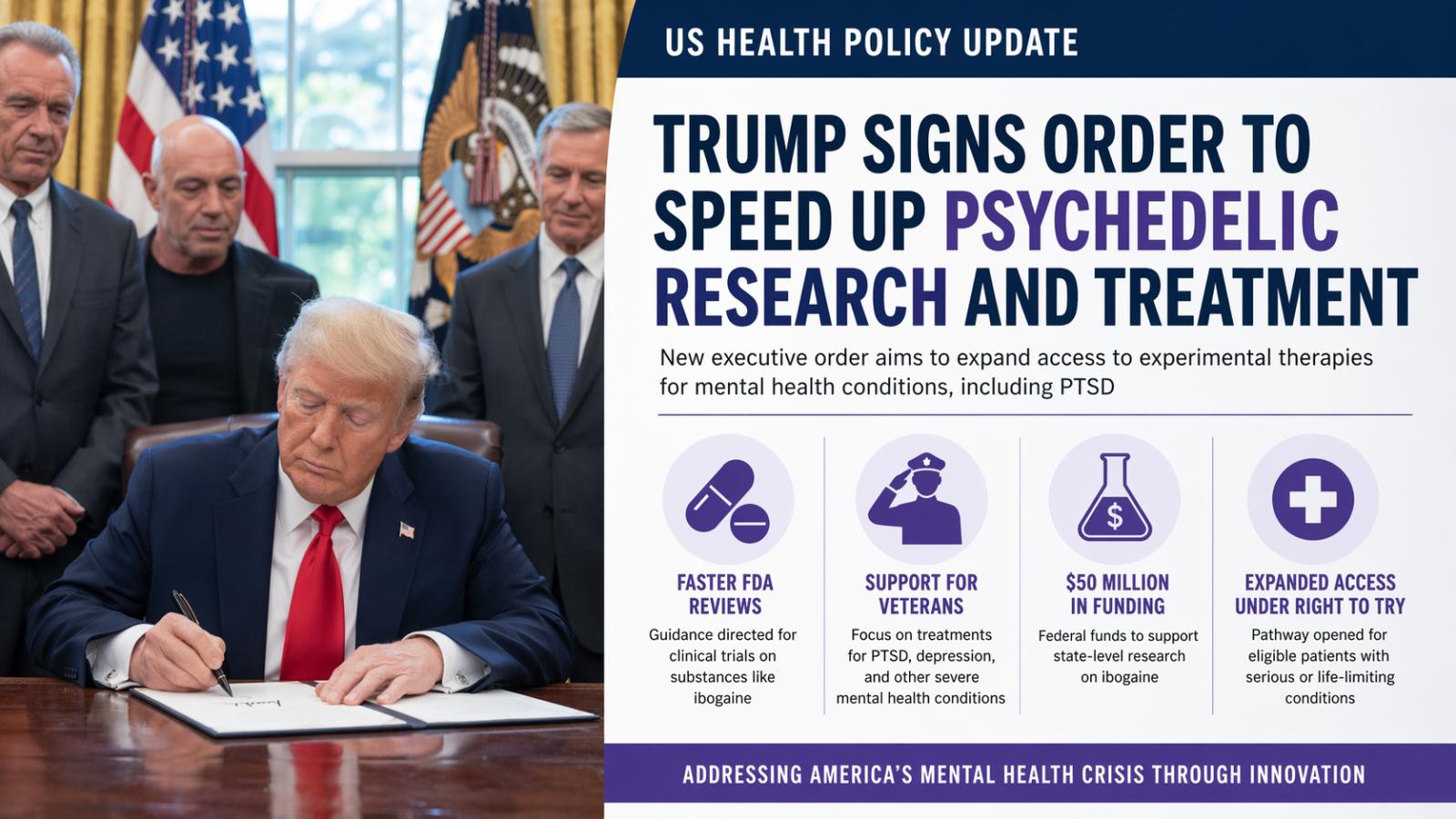
U.S. President Donald Trump announced a sweeping policy shift on Saturday, April 18, aimed at accelerating access to medical research and treatments involving psychedelic drugs. The executive order, signed in the Oval Office, directs the US Food and Drug Administration to expedite the review process for substances such as ibogaine, which some veteran advocacy groups say may help treat post-traumatic stress disorder. The signing event included federal health officials, advocates, and podcaster Joe Rogan, highlighting growing public and institutional interest in alternative mental health therapies. Focus on veterans and severe mental illness treatment Trump said the initiative is designed to “dramatically accelerate access” to experimental therapies that have shown potential in addressing severe mental health conditions. He emphasized that these treatments could be particularly impactful for U.S. military veterans suffering from PTSD and depression. The order instructs federal agencies to reduce administrative barriers, enhance data sharing between the FDA and the Department of Veterans Affairs, and streamline the process for rescheduling psychedelic substances once they receive regulatory approval. Funding and expanded access under Right to Try law As part of the initiative, the federal government will allocate $50 million to support state-level research on ibogaine. The administration is also expanding pathways for patients with critical conditions to access experimental treatments under the Right to Try law enacted during Trump’s first term. Officials said this approach could allow certain patients to receive psychedelic-based therapies before full FDA approval, provided safety protocols are followed. Health officials cite urgency of mental health crisis Health and Human Services Secretary Robert F Kennedy Jr. described the executive order as a decisive step in addressing what he called one of the nation’s most pressing public health challenges. He said the policy would remove legal and regulatory barriers that have historically limited research into psychedelic treatments. Kennedy added that the changes aim to enable scientists, clinicians, and researchers to better study these substances and, where appropriate, develop safe therapeutic protocols for their use in treating mental health conditions.
Why is the US expanding psychedelic research? Focus on mental health crisis
U.S. President Donald Trump announced a sweeping policy shift on Saturday, April 18, aimed at accelerating access to medical research and treatments involving psychedelic drugs. The executive order, signed in the Oval Office, directs the US Food and Drug Administration to expedite the review process for substances such as ibogaine, which some veteran advocacy groups say may help treat post-traumatic stress disorder. The signing event included federal health officials, advocates, and podcaster Joe Rogan, highlighting growing public and institutional interest in alternative mental health therapies. Focus on veterans and severe mental illness treatment Trump said the initiative is designed to “dramatically accelerate access” to experimental therapies that have shown potential in addressing severe mental health conditions. He emphasized that these treatments could be particularly impactful for U.S. military veterans suffering from PTSD and depression. The order instructs federal agencies to reduce administrative barriers, enhance data sharing between the FDA and the Department of Veterans Affairs, and streamline the process for rescheduling psychedelic substances once they receive regulatory approval. Funding and expanded access under Right to Try law As part of the initiative, the federal government will allocate $50 million to support state-level research on ibogaine. The administration is also expanding pathways for patients with critical conditions to access experimental treatments under the Right to Try law enacted during Trump’s first term. Officials said this approach could allow certain patients to receive psychedelic-based therapies before full FDA approval, provided safety protocols are followed. Health officials cite urgency of mental health crisis Health and Human Services Secretary Robert F Kennedy Jr. described the executive order as a decisive step in addressing what he called one of the nation’s most pressing public health challenges. He said the policy would remove legal and regulatory barriers that have historically limited research into psychedelic treatments. Kennedy added that the changes aim to enable scientists, clinicians, and researchers to better study these substances and, where appropriate, develop safe therapeutic protocols for their use in treating mental health conditions.
Newsom supports encampment ban, San Jose ramps up sweeps
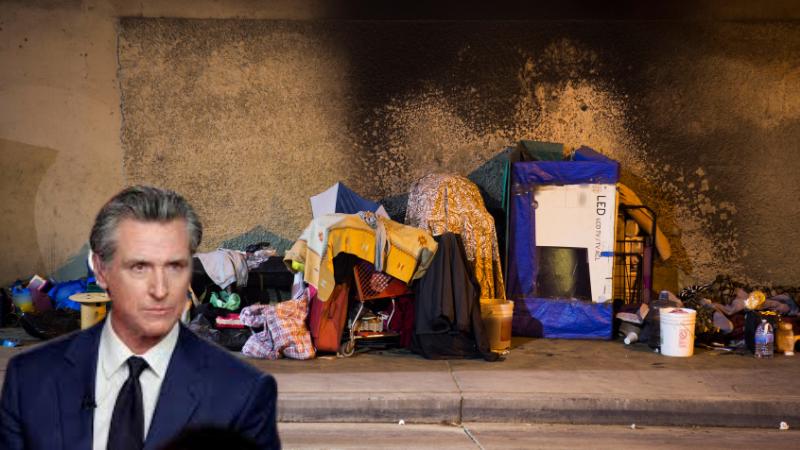
Governor Gavin Newsom has proposed a statewide initiative to ban homeless encampments across California, aligning with San Jose Mayor Matt Mahan’s push to eliminate tents and makeshift shelters from public spaces. The plan would limit public camping to no more than three consecutive nights and prohibit sitting, lying, or sleeping on sidewalks and streets where it impedes movement. It would also make constructing temporary shelters like sheds on public land unlawful. This announcement was t
Newsom supports encampment ban, San Jose ramps up sweeps
Governor Gavin Newsom has proposed a statewide initiative to ban homeless encampments across California, aligning with San Jose Mayor Matt Mahan’s push to eliminate tents and makeshift shelters from public spaces. The plan would limit public camping to no more than three consecutive nights and prohibit sitting, lying, or sleeping on sidewalks and streets where it impedes movement. It would also make constructing temporary shelters like sheds on public land unlawful. This announcement was t


