#militaryaviation
China appears to unveil J-36 stealth fighter in PLA video
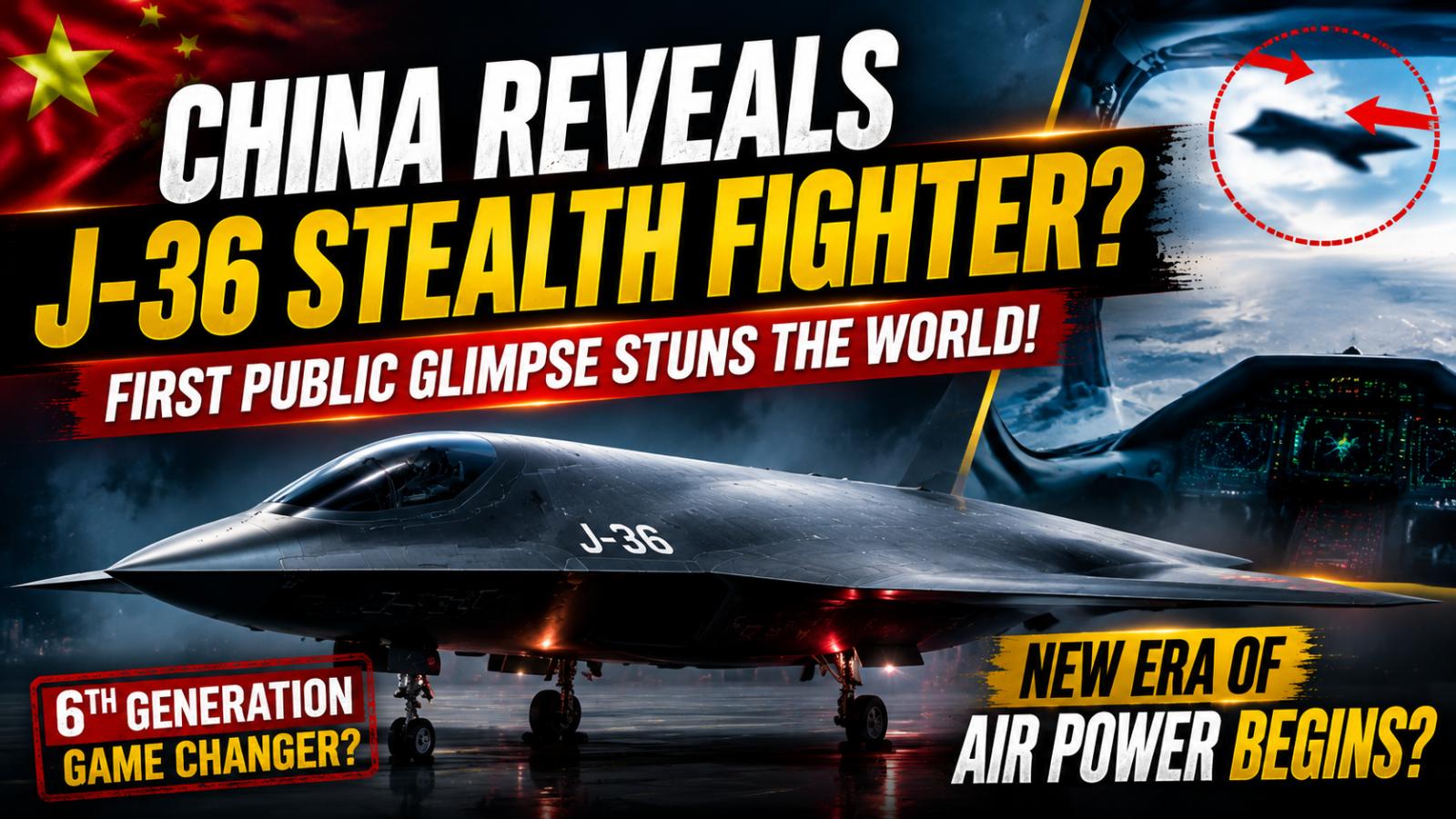
PLA video sparks stealth fighter speculation China has appeared to offer the first public glimpse of its long-rumoured J-36 sixth-generation stealth fighter after the People’s Liberation Army released a promotional video featuring what defence analysts believe is the advanced aircraft. The brief appearance has triggered widespread discussion about the progress of China’s next-generation military aviation programme, although no official co
China appears to unveil J-36 stealth fighter in PLA video
PLA video sparks stealth fighter speculation China has appeared to offer the first public glimpse of its long-rumoured J-36 sixth-generation stealth fighter after the People’s Liberation Army released a promotional video featuring what defence analysts believe is the advanced aircraft. The brief appearance has triggered widespread discussion about the progress of China’s next-generation military aviation programme, although no official co
B-52 drag chute system and landing braking explained
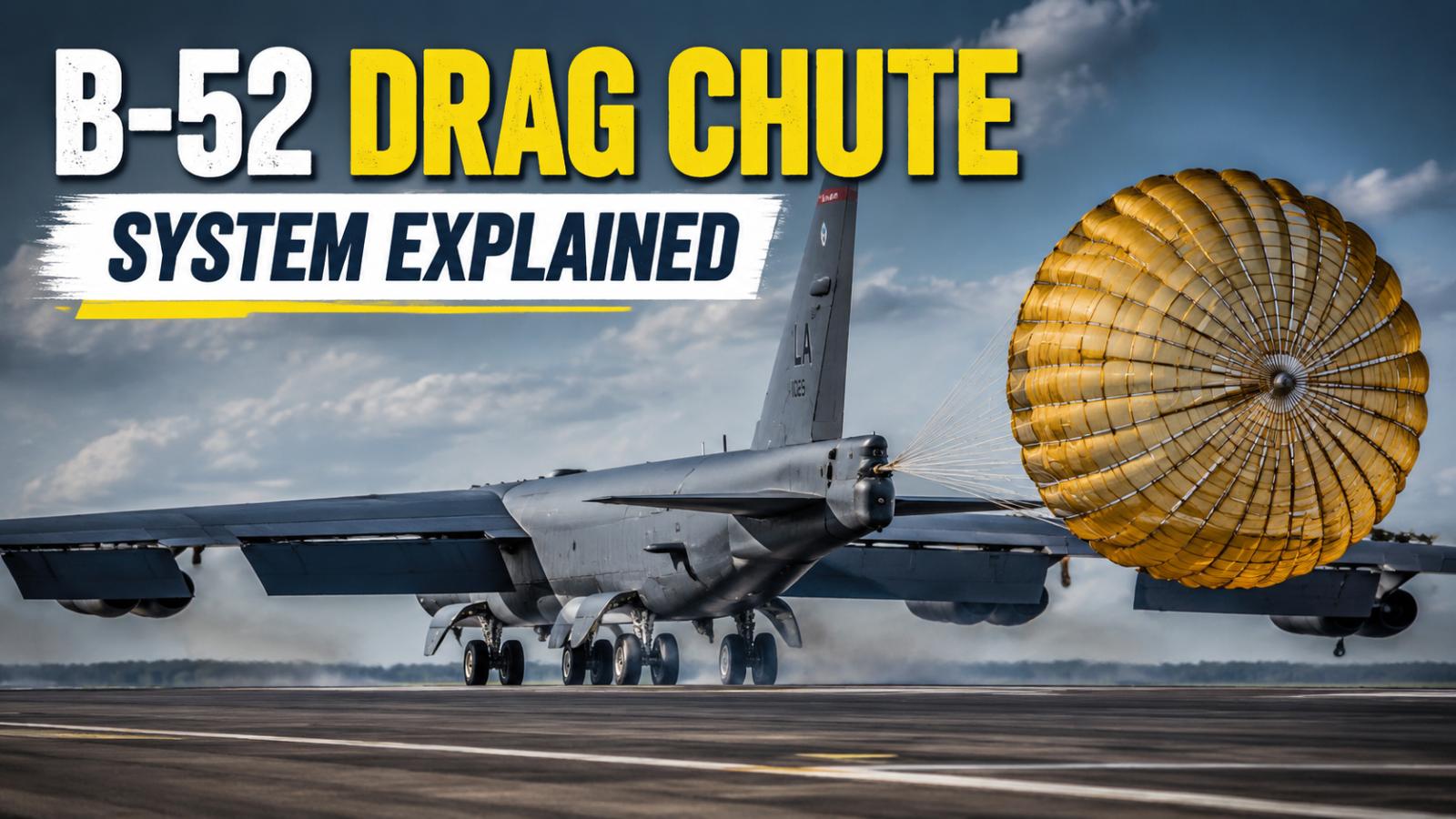
The B-52 Stratofortress relies on a drag chute to help slow the aircraft immediately after touchdown. Instead of depending only on wheel brakes, the system deploys a parachute from the rear of the aircraft that creates strong air resistance. This resistance reduces speed quickly and stabilizes the landing rollout, especially important for such a large and heavy bomber. Why the aircraft needs extra braking support A fully loaded B-52 carries enormous mass and lands at high speeds, which naturally generates extreme heat and stress on its wheel braking system. If only standard brakes were used, stopping distance would increase significantly and brake components could overheat or wear out rapidly. The drag chute reduces this burden by absorbing a portion of the kinetic energy during rollout. How the system is activated during landing Once the aircraft touches down and is stable on the runway, the crew initiates the drag chute deployment. A small pilot chute is released first, which pulls out the main parachute from its housing in the tail section. As it inflates, it creates immediate drag force that slows the aircraft even before full brake pressure is applied on the wheels. Impact on runway distance and safety The chute significantly shortens the distance required to bring the bomber to a safe stop. This becomes especially valuable on wet, icy, or short runways where braking efficiency is reduced. By lowering reliance on friction-based braking alone, the system improves safety margins and allows more flexible landing operations in different environments. Operational use in real conditions In practice, crews often rely on the drag chute as a standard part of landing procedures because it protects the braking system and enhances control. It is particularly important during adverse weather conditions or high-weight landings. Ground teams then recover and repack the chute after use for the next mission. A system built for rapid nuclear response... Why the system is still relevant today Despite being designed decades ago, the drag chute remains an effective and simple solution to a complex problem: stopping a very heavy aircraft safely in limited runway space. Its continued use highlights how practical engineering solutions can stay valuable long after the aircraft itself enters modern service cycles.
B-52 drag chute system and landing braking explained
The B-52 Stratofortress relies on a drag chute to help slow the aircraft immediately after touchdown. Instead of depending only on wheel brakes, the system deploys a parachute from the rear of the aircraft that creates strong air resistance. This resistance reduces speed quickly and stabilizes the landing rollout, especially important for such a large and heavy bomber. Why the aircraft needs extra braking support A fully loaded B-52 carries enormous mass and lands at high speeds, which naturally generates extreme heat and stress on its wheel braking system. If only standard brakes were used, stopping distance would increase significantly and brake components could overheat or wear out rapidly. The drag chute reduces this burden by absorbing a portion of the kinetic energy during rollout. How the system is activated during landing Once the aircraft touches down and is stable on the runway, the crew initiates the drag chute deployment. A small pilot chute is released first, which pulls out the main parachute from its housing in the tail section. As it inflates, it creates immediate drag force that slows the aircraft even before full brake pressure is applied on the wheels. Impact on runway distance and safety The chute significantly shortens the distance required to bring the bomber to a safe stop. This becomes especially valuable on wet, icy, or short runways where braking efficiency is reduced. By lowering reliance on friction-based braking alone, the system improves safety margins and allows more flexible landing operations in different environments. Operational use in real conditions In practice, crews often rely on the drag chute as a standard part of landing procedures because it protects the braking system and enhances control. It is particularly important during adverse weather conditions or high-weight landings. Ground teams then recover and repack the chute after use for the next mission. A system built for rapid nuclear response... Why the system is still relevant today Despite being designed decades ago, the drag chute remains an effective and simple solution to a complex problem: stopping a very heavy aircraft safely in limited runway space. Its continued use highlights how practical engineering solutions can stay valuable long after the aircraft itself enters modern service cycles.
Why Is the B-52 Called the BUFF? Nickname Meaning Explained
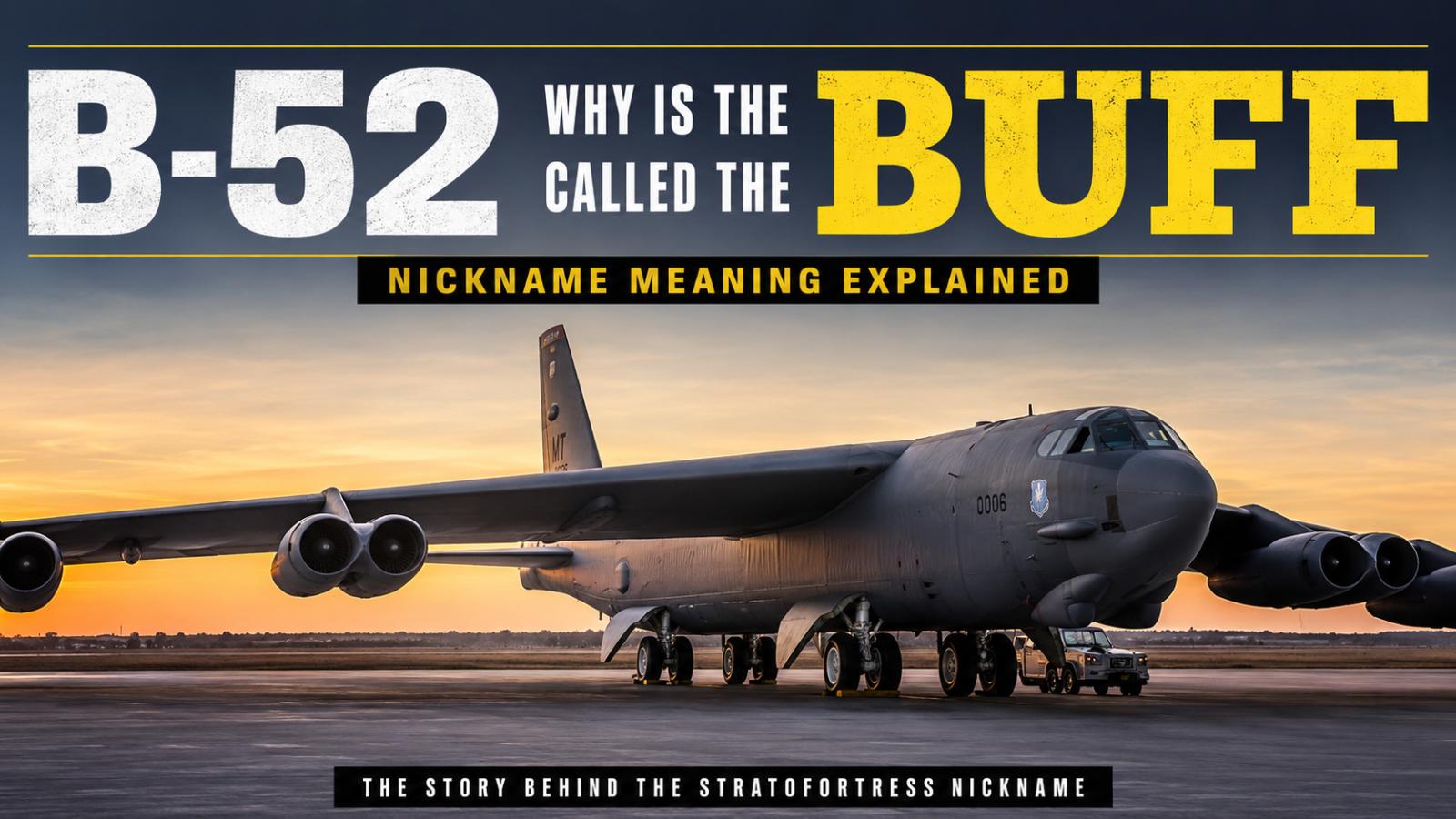
Why is the B-52 called the BUFF? The nickname is an informal Air Force term for the Boeing B-52 Stratofortress, reflecting the bomber’s immense size, unconventional appearance and decades of service. B-52 BUFF Meaning and Origin Boeing gave the long-range bomber the official name Stratofortress, suggesting strength and high-altitude power. Aircrews and maintainers instead embraced BUFF, commonly presented in public as “Big Ugly Fat Fellow.” Inside
Why Is the B-52 Called the BUFF? Nickname Meaning Explained
Why is the B-52 called the BUFF? The nickname is an informal Air Force term for the Boeing B-52 Stratofortress, reflecting the bomber’s immense size, unconventional appearance and decades of service. B-52 BUFF Meaning and Origin Boeing gave the long-range bomber the official name Stratofortress, suggesting strength and high-altitude power. Aircrews and maintainers instead embraced BUFF, commonly presented in public as “Big Ugly Fat Fellow.” Inside
B-52 crash at Edwards Air Force Base under investigation
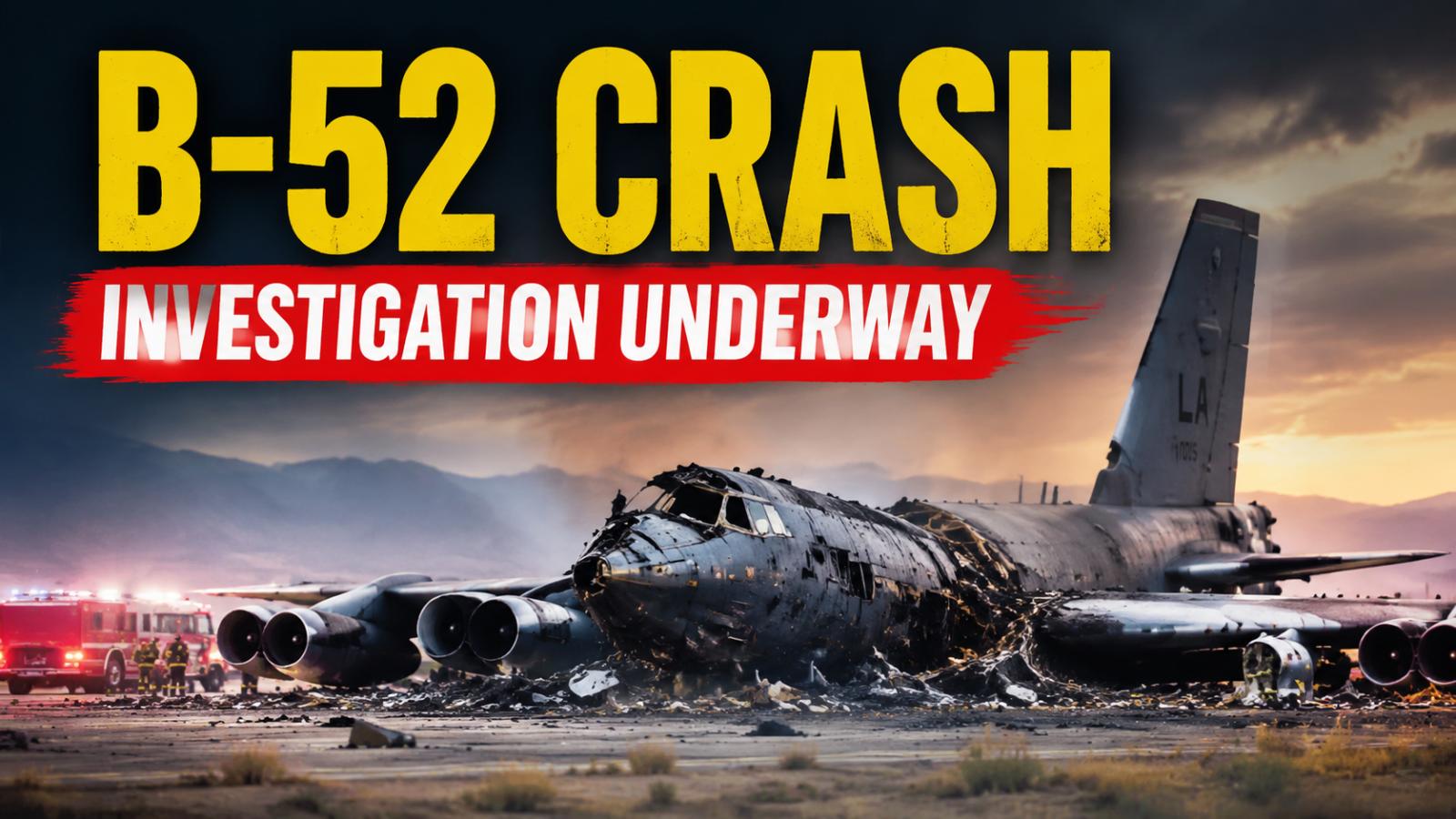
A serious accident involving a B-52 Stratofortress occurred near Edwards Air Force Base shortly after takeoff, resulting in multiple fatalities among the crew. Early reports indicate the aircraft encountered a critical failure during the initial phase of flight, though officials have not confirmed the exact cause. Emergency response teams were immediately deployed to the site, and flight operations in the area were temporarily reviewed following the incident. Investigation Underway by US Air Force The US Air Force has launched a formal investigation to determine what led to the crash. Focus areas include mechanical performance, maintenance history, and possible operational or environmental factors. Authorities are also reviewing flight data and communication records to reconstruct the final moments before the accident. At this stage, no single cause has been identified, and officials are treating the investigation as open and ongoing. Concerns Over Aging Strategic Fleet The incident has renewed attention on the long-service history of the B-52 fleet, which has remained a central part of US strategic air power for decades. While the aircraft has undergone continuous upgrades, concerns persist about aging airframes, maintenance demands, and operational risks associated with extended service life. Defense analysts often highlight the balance between modernization efforts and the limitations of legacy platforms still in active duty. Cold War Design Still in Active Use Originally developed during the Cold War era, the B-52 was designed for long-range strategic missions and nuclear deterrence roles. Over time, its operational role has shifted toward stand-off strike capabilities, including cruise missile deployment from safer distances. Despite its age, it remains a key component of US strategic aviation planning due to its payload capacity and mission flexibility. Operational Role and Ongoing Upgrades The bomber is typically flown by a multi-member crew and is capable of carrying heavy ordnance loads across intercontinental distances. The US Air Force continues to invest in modernization programs aimed at extending its service life into the coming decades, including engine replacements and avionics upgrades designed to improve efficiency, range, and reliability. However, incidents like this highlight the ongoing challenges of maintaining older strategic aircraft in modern operational environments.
B-52 crash at Edwards Air Force Base under investigation
A serious accident involving a B-52 Stratofortress occurred near Edwards Air Force Base shortly after takeoff, resulting in multiple fatalities among the crew. Early reports indicate the aircraft encountered a critical failure during the initial phase of flight, though officials have not confirmed the exact cause. Emergency response teams were immediately deployed to the site, and flight operations in the area were temporarily reviewed following the incident. Investigation Underway by US Air Force The US Air Force has launched a formal investigation to determine what led to the crash. Focus areas include mechanical performance, maintenance history, and possible operational or environmental factors. Authorities are also reviewing flight data and communication records to reconstruct the final moments before the accident. At this stage, no single cause has been identified, and officials are treating the investigation as open and ongoing. Concerns Over Aging Strategic Fleet The incident has renewed attention on the long-service history of the B-52 fleet, which has remained a central part of US strategic air power for decades. While the aircraft has undergone continuous upgrades, concerns persist about aging airframes, maintenance demands, and operational risks associated with extended service life. Defense analysts often highlight the balance between modernization efforts and the limitations of legacy platforms still in active duty. Cold War Design Still in Active Use Originally developed during the Cold War era, the B-52 was designed for long-range strategic missions and nuclear deterrence roles. Over time, its operational role has shifted toward stand-off strike capabilities, including cruise missile deployment from safer distances. Despite its age, it remains a key component of US strategic aviation planning due to its payload capacity and mission flexibility. Operational Role and Ongoing Upgrades The bomber is typically flown by a multi-member crew and is capable of carrying heavy ordnance loads across intercontinental distances. The US Air Force continues to invest in modernization programs aimed at extending its service life into the coming decades, including engine replacements and avionics upgrades designed to improve efficiency, range, and reliability. However, incidents like this highlight the ongoing challenges of maintaining older strategic aircraft in modern operational environments.
Modern Air Combat: F-35 Sensor Fusion Meets F-15IA Payload Strength
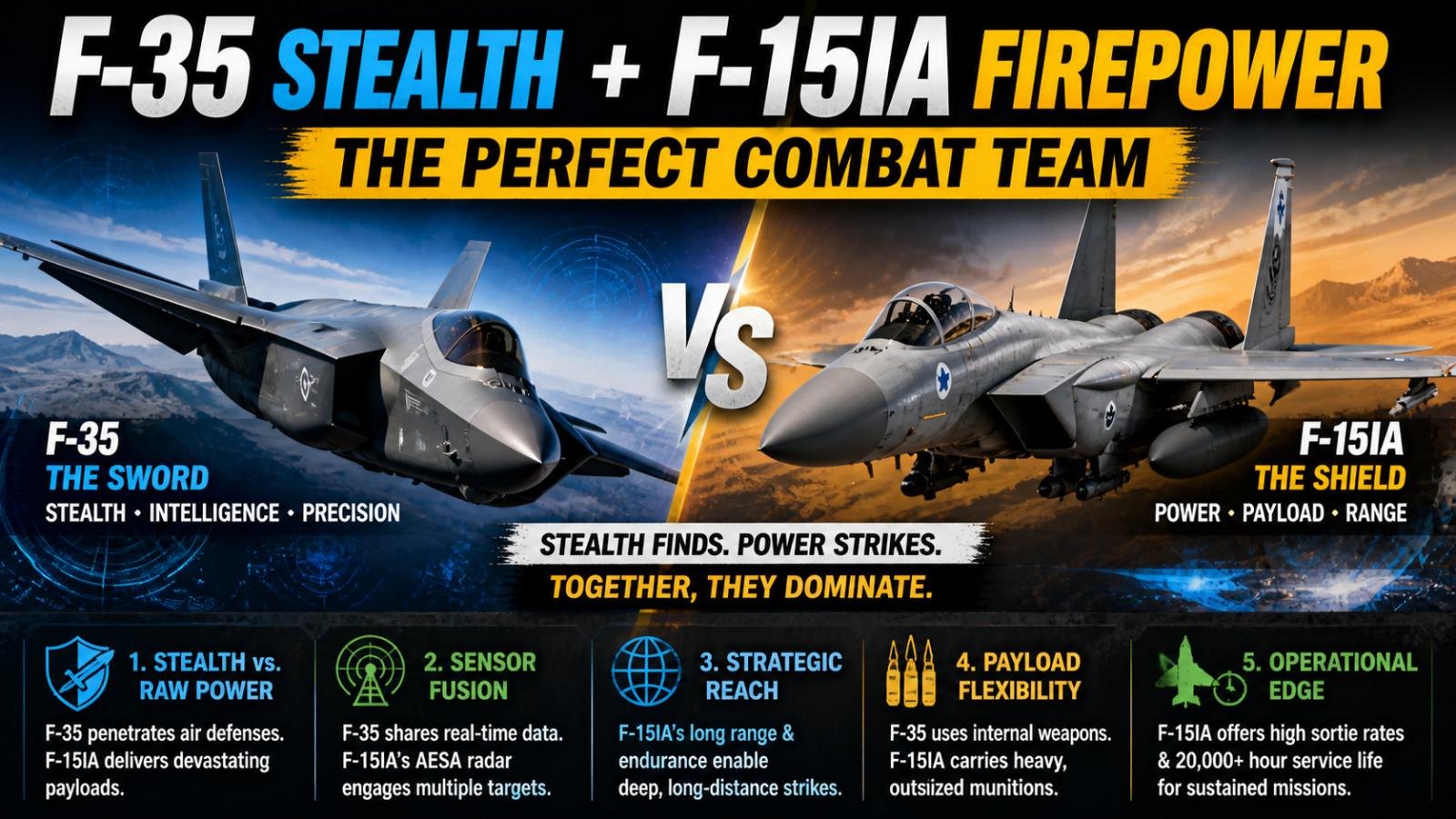
Modern air combat strategy increasingly relies on the complementary strengths of advanced fighter aircraft, particularly the combination of stealth capabilities and high payload capacity. The F-35 and F-15IA represent this dual approach, where each platform fulfills a distinct but interconnected role in complex operations. The F-35 is designed for stealth and precision, enabling it to operate deep within contested airspace while avoiding detection. Its ability to gather and process battlefield data in real time allows it to identify and track threats with high accuracy. This sensor fusion capability creates a comprehensive operational picture, which can be shared seamlessly with other aircraft to improve coordination and targeting efficiency. In contrast, the F-15IA is built for power and endurance. Often described as a high-capacity weapons platform, it can carry a significantly larger payload compared to stealth-focused aircraft. Once air defenses are identified and weakened, the F-15IA can engage multiple targets using a wide range of munitions, including larger weapons that are not compatible with stealth aircraft configurations. Its advanced radar system enhances its ability to detect and engage threats over extended distances. The combination of these aircraft also supports long-range missions. The F-15IA’s extended range and fuel capacity make it well-suited for operations requiring sustained flight over large distances. This allows it to conduct deep strike missions with fewer refueling requirements, complementing the F-35’s forward reconnaissance and targeting role. Operational efficiency is another key factor in this pairing. The F-15IA is designed for durability and rapid turnaround, enabling frequent sorties during extended engagements. Meanwhile, the F-35’s advanced systems provide critical intelligence that enhances the effectiveness of each mission. Together, they form a coordinated system that balances stealth, firepower, and operational flexibility in modern aerial warfare.
Modern Air Combat: F-35 Sensor Fusion Meets F-15IA Payload Strength
Modern air combat strategy increasingly relies on the complementary strengths of advanced fighter aircraft, particularly the combination of stealth capabilities and high payload capacity. The F-35 and F-15IA represent this dual approach, where each platform fulfills a distinct but interconnected role in complex operations. The F-35 is designed for stealth and precision, enabling it to operate deep within contested airspace while avoiding detection. Its ability to gather and process battlefield data in real time allows it to identify and track threats with high accuracy. This sensor fusion capability creates a comprehensive operational picture, which can be shared seamlessly with other aircraft to improve coordination and targeting efficiency. In contrast, the F-15IA is built for power and endurance. Often described as a high-capacity weapons platform, it can carry a significantly larger payload compared to stealth-focused aircraft. Once air defenses are identified and weakened, the F-15IA can engage multiple targets using a wide range of munitions, including larger weapons that are not compatible with stealth aircraft configurations. Its advanced radar system enhances its ability to detect and engage threats over extended distances. The combination of these aircraft also supports long-range missions. The F-15IA’s extended range and fuel capacity make it well-suited for operations requiring sustained flight over large distances. This allows it to conduct deep strike missions with fewer refueling requirements, complementing the F-35’s forward reconnaissance and targeting role. Operational efficiency is another key factor in this pairing. The F-15IA is designed for durability and rapid turnaround, enabling frequent sorties during extended engagements. Meanwhile, the F-35’s advanced systems provide critical intelligence that enhances the effectiveness of each mission. Together, they form a coordinated system that balances stealth, firepower, and operational flexibility in modern aerial warfare.
Defence panel clears key step for 114 Rafale fighter aircraft for Indian Air Force
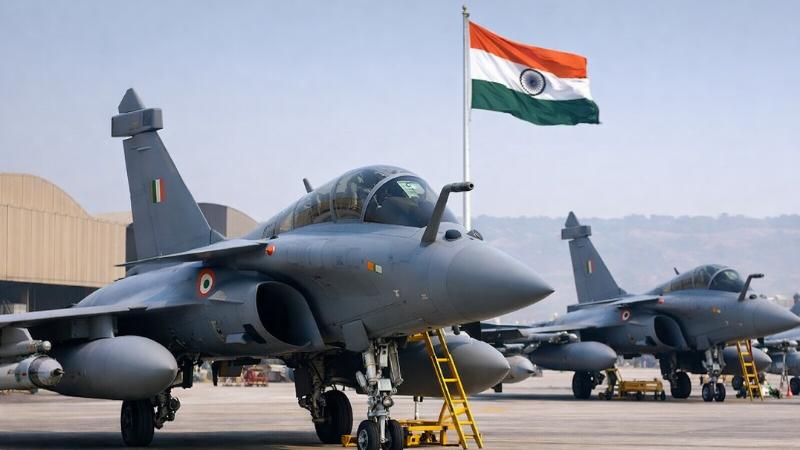
The Defence Procurement Board has cleared a proposal to acquire 114 additional Rafale fighter aircraft, marking a major step forward in India’s effort to strengthen its air combat capabilities. The clearance, granted after an initial examination of the case, advances one of the Indian Air Force’s most significant modernisation plans aimed at addressing long-standing operational gaps and preparing for future security challenges. The proposal is intended to narrow the difference b
Defence panel clears key step for 114 Rafale fighter aircraft for Indian Air Force
The Defence Procurement Board has cleared a proposal to acquire 114 additional Rafale fighter aircraft, marking a major step forward in India’s effort to strengthen its air combat capabilities. The clearance, granted after an initial examination of the case, advances one of the Indian Air Force’s most significant modernisation plans aimed at addressing long-standing operational gaps and preparing for future security challenges. The proposal is intended to narrow the difference b
USAF pilot expresses deep shock as Dubai Airshow continues after fatal Tejas crash
United States Air Force Major Taylor “Fema” Hiester shared a deeply emotional response to the Dubai Airshow 2025’s decision to proceed with flying displays despite the tragic crash of an Indian Air Force Tejas fighter jet that killed Wing Commander Namansh Syal. The commander of the F-16 Viper Demonstration Team said he was stunned to find the airshow atmosphere unchanged just hours after the fatal accident, leading him and a few other teams to withdraw their final performances as a mar
USAF pilot expresses deep shock as Dubai Airshow continues after fatal Tejas crash
United States Air Force Major Taylor “Fema” Hiester shared a deeply emotional response to the Dubai Airshow 2025’s decision to proceed with flying displays despite the tragic crash of an Indian Air Force Tejas fighter jet that killed Wing Commander Namansh Syal. The commander of the F-16 Viper Demonstration Team said he was stunned to find the airshow atmosphere unchanged just hours after the fatal accident, leading him and a few other teams to withdraw their final performances as a mar