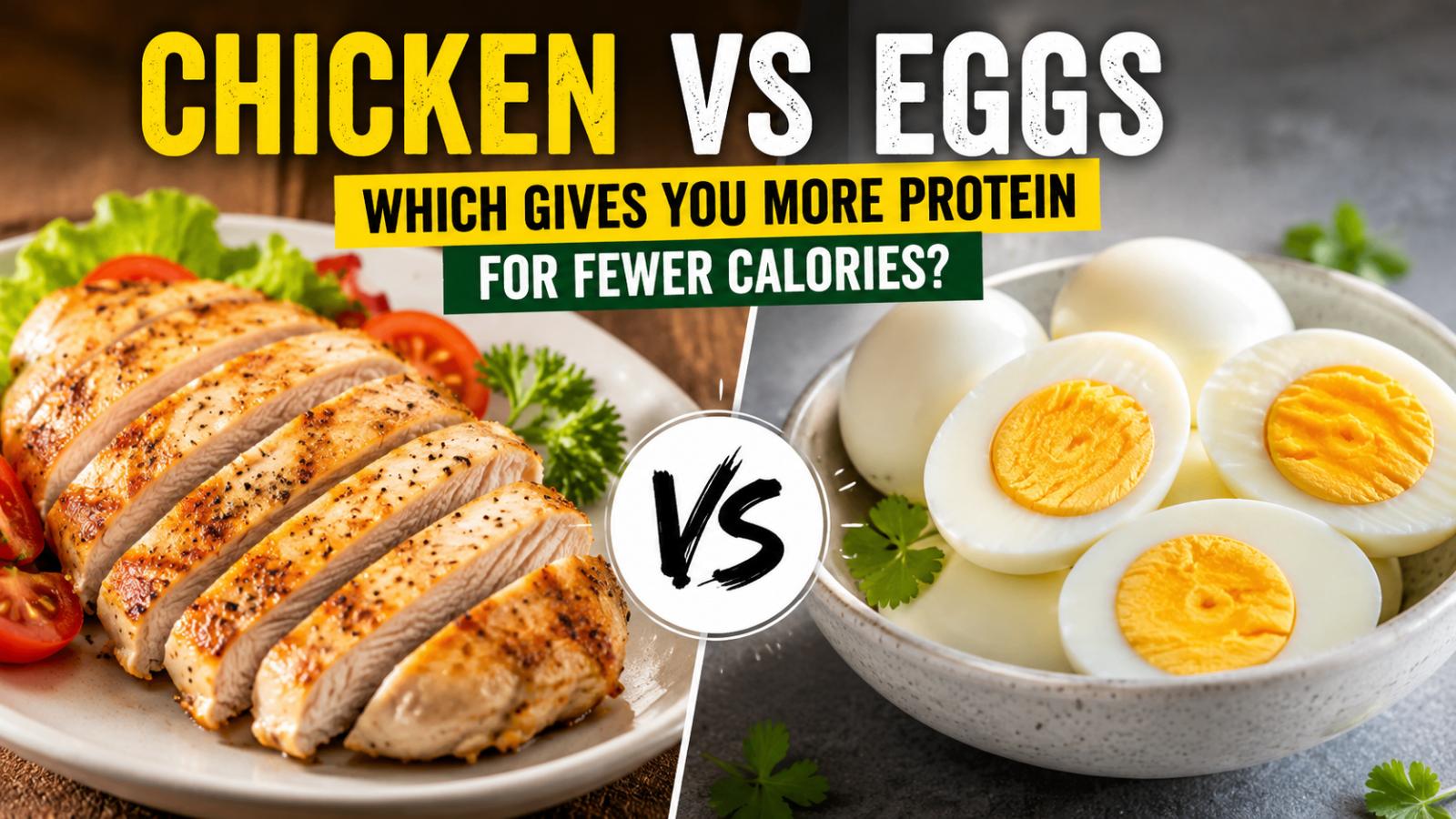
Chicken breast delivers more than twice the protein of hard-boiled eggs for nearly the same number of calories, making it the better lean-protein choice. Eggs provide less protein per calorie but offer valuable nutrients such as choline, vitamin D, vitamin B12, lutein and zeaxanthin.
Chicken vs Eggs: A Detailed Nutrition Comparison
Chicken and eggs are both complete sources of protein, meaning they provide all nine essential amino acids that the body cannot produce independently. However, their protein, calorie and fat content differs considerably.
A 100-gram serving of cooked, skinless chicken breast generally provides around 31 grams of protein, 165 calories and 3.6 grams of fat. In comparison, 100 grams of hard-boiled whole eggs provides approximately 12.6 grams of protein, 155 calories and 10.6 grams of fat. Exact figures may vary according to the size, cooking method and food product. USDA FoodData Central maintains the official nutrient database used for such comparisons.
The difference in calories is small, but chicken breast provides more than twice as much protein and substantially less fat. This gives chicken a clear advantage when protein density is the main priority.
Quick comparison per 100 grams:
• Cooked chicken breast: Around 31 grams of protein
• Hard-boiled whole eggs: Around 12.6 grams of protein
• Chicken breast calories: Around 165 calories
• Hard-boiled egg calories: Around 155 calories
• Chicken breast fat: Around 3.6 grams
• Hard-boiled egg fat: Around 10.6 grams
Chicken Gives More Protein For Fewer Calories
Chicken breast provides approximately 18.8 grams of protein for every 100 calories. Hard-boiled eggs provide about 8.1 grams of protein for the same calorie intake.
This makes skinless chicken breast more suitable for people who need to increase protein consumption without adding excessive calories or fat. Protein supports muscle maintenance and repair, although exercise, sleep and total food intake also influence fitness results.
Higher-protein meals may promote fullness more effectively than meals lower in protein. Research reviews indicate that protein can support satiety and may help reduce subsequent food intake, but weight loss still depends on maintaining an appropriate overall calorie balance.
Chicken may be helpful for people seeking:
• More protein in each serving
• A better protein-to-calorie ratio
• Lower fat intake
• Support for muscle recovery
• A filling option for lunch or dinner
• A lean protein source for calorie-controlled meals
The cooking method can significantly change the final calorie count. Grilled, baked, steamed or boiled chicken generally contains fewer added calories than breaded or deep-fried chicken. Removing the skin and limiting butter, oil, cream and sugary sauces can also keep the meal lighter.
Eggs Provide Nutrients Beyond Protein
Eggs may contain less protein per calorie, but they provide several nutrients that make them valuable in a balanced diet. Whole eggs are an important source of choline, which supports normal cellular function and is involved in brain and nervous-system processes. The National Institutes of Health lists eggs, meat, poultry, fish and dairy among major dietary sources of choline.
Most of an egg’s choline and several other nutrients are concentrated in the yolk. Discarding the yolk reduces calories and fat, but it also removes much of the egg’s nutritional value.
Eggs may be useful for people seeking:
• A convenient and quickly prepared protein source
• Choline and other essential nutrients
• A filling breakfast or snack
• A food that works in multiple recipes
• A vegetarian source of complete protein
• A combination of protein and dietary fat
People seeking more protein with fewer calories can combine one whole egg with additional egg whites. This retains some nutrients from the yolk while increasing the total protein content without adding as much fat as several whole eggs.
Chicken Or Eggs: Which One Should You Choose?
Chicken breast is the better choice when the main goal is obtaining maximum protein for relatively few calories. It delivers more than twice the protein of hard-boiled eggs for only a small increase in calories.
Eggs are the better choice when convenience and nutrient variety are important. They are easy to cook, widely available and suitable for breakfast, snacks or light meals.
Choose chicken when you want:
• Higher protein intake
• Lower fat per serving
• Better protein density
• Support for muscle-building meals
• A lean option for weight-management diets
Choose eggs when you want:
• A quick and convenient meal
• Choline and nutrients found in the yolk
• A versatile breakfast or snack
• A vegetarian complete-protein option
• A balanced combination of protein and fat
Chicken and eggs do not need to compete for a place in the diet. Chicken can serve as the primary lean protein in larger meals, while eggs can provide convenience and nutrient variety at breakfast or between meals. People with kidney disease, egg allergies or medical conditions that affect protein intake should consult a qualified doctor or registered dietitian before making major dietary changes.
Chicken breast delivers more than twice the protein of hard-boiled eggs for nearly the same number of calories, making it the better lean-protein choice. Eggs provide less protein per calorie but offer valuable nutrients such as choline, vitamin D, vitamin B12, lutein and zeaxanthin.
Chicken vs Eggs: A Detailed Nutrition Comparison
Chicken and eggs are both complete sources of protein, meaning they provide all nine essential amino acids that the body cannot produce independently. However, their protein, calorie and fat content differs considerably.
A 100-gram serving of cooked, skinless chicken breast generally provides around 31 grams of protein, 165 calories and 3.6 grams of fat. In comparison, 100 grams of hard-boiled whole eggs provides approximately 12.6 grams of protein, 155 calories and 10.6 grams of fat. Exact figures may vary according to the size, cooking method and food product. USDA FoodData Central maintains the official nutrient database used for such comparisons.
The difference in calories is small, but chicken breast provides more than twice as much protein and substantially less fat. This gives chicken a clear advantage when protein density is the main priority.
Quick comparison per 100 grams:
• Cooked chicken breast: Around 31 grams of protein
• Hard-boiled whole eggs: Around 12.6 grams of protein
• Chicken breast calories: Around 165 calories
• Hard-boiled egg calories: Around 155 calories
• Chicken breast fat: Around 3.6 grams
• Hard-boiled egg fat: Around 10.6 grams
Chicken Gives More Protein For Fewer Calories
Chicken breast provides approximately 18.8 grams of protein for every 100 calories. Hard-boiled eggs provide about 8.1 grams of protein for the same calorie intake.
This makes skinless chicken breast more suitable for people who need to increase protein consumption without adding excessive calories or fat. Protein supports muscle maintenance and repair, although exercise, sleep and total food intake also influence fitness results.
Higher-protein meals may promote fullness more effectively than meals lower in protein. Research reviews indicate that protein can support satiety and may help reduce subsequent food intake, but weight loss still depends on maintaining an appropriate overall calorie balance.
Chicken may be helpful for people seeking:
• More protein in each serving
• A better protein-to-calorie ratio
• Lower fat intake
• Support for muscle recovery
• A filling option for lunch or dinner
• A lean protein source for calorie-controlled meals
The cooking method can significantly change the final calorie count. Grilled, baked, steamed or boiled chicken generally contains fewer added calories than breaded or deep-fried chicken. Removing the skin and limiting butter, oil, cream and sugary sauces can also keep the meal lighter.
Eggs Provide Nutrients Beyond Protein
Eggs may contain less protein per calorie, but they provide several nutrients that make them valuable in a balanced diet. Whole eggs are an important source of choline, which supports normal cellular function and is involved in brain and nervous-system processes. The National Institutes of Health lists eggs, meat, poultry, fish and dairy among major dietary sources of choline.
Most of an egg’s choline and several other nutrients are concentrated in the yolk. Discarding the yolk reduces calories and fat, but it also removes much of the egg’s nutritional value.
Eggs may be useful for people seeking:
• A convenient and quickly prepared protein source
• Choline and other essential nutrients
• A filling breakfast or snack
• A food that works in multiple recipes
• A vegetarian source of complete protein
• A combination of protein and dietary fat
People seeking more protein with fewer calories can combine one whole egg with additional egg whites. This retains some nutrients from the yolk while increasing the total protein content without adding as much fat as several whole eggs.
Chicken Or Eggs: Which One Should You Choose?
Chicken breast is the better choice when the main goal is obtaining maximum protein for relatively few calories. It delivers more than twice the protein of hard-boiled eggs for only a small increase in calories.
Eggs are the better choice when convenience and nutrient variety are important. They are easy to cook, widely available and suitable for breakfast, snacks or light meals.
Choose chicken when you want:
• Higher protein intake
• Lower fat per serving
• Better protein density
• Support for muscle-building meals
• A lean option for weight-management diets
Choose eggs when you want:
• A quick and convenient meal
• Choline and nutrients found in the yolk
• A versatile breakfast or snack
• A vegetarian complete-protein option
• A balanced combination of protein and fat
Chicken and eggs do not need to compete for a place in the diet. Chicken can serve as the primary lean protein in larger meals, while eggs can provide convenience and nutrient variety at breakfast or between meals. People with kidney disease, egg allergies or medical conditions that affect protein intake should consult a qualified doctor or registered dietitian before making major dietary changes.