Apollo Gallery Reopening Marks a New Chapter
The Louvre Museum's Apollo Gallery is set to reopen on July 22, nearly a year after the shocking 2025 jewel heist that stunned the art world. While visitors will once again be able to enter one of the museum's most celebrated galleries, they will notice one major change. The priceless royal jewels that once defined the co
Apollo Gallery Reopening Marks a New Chapter
The Louvre Museum's Apollo Gallery is set to reopen on July 22, nearly a year after the shocking 2025 jewel heist that stunned the art world. While visitors will once again be able to enter one of the museum's most celebrated galleries, they will notice one major change. The priceless royal jewels that once defined the co
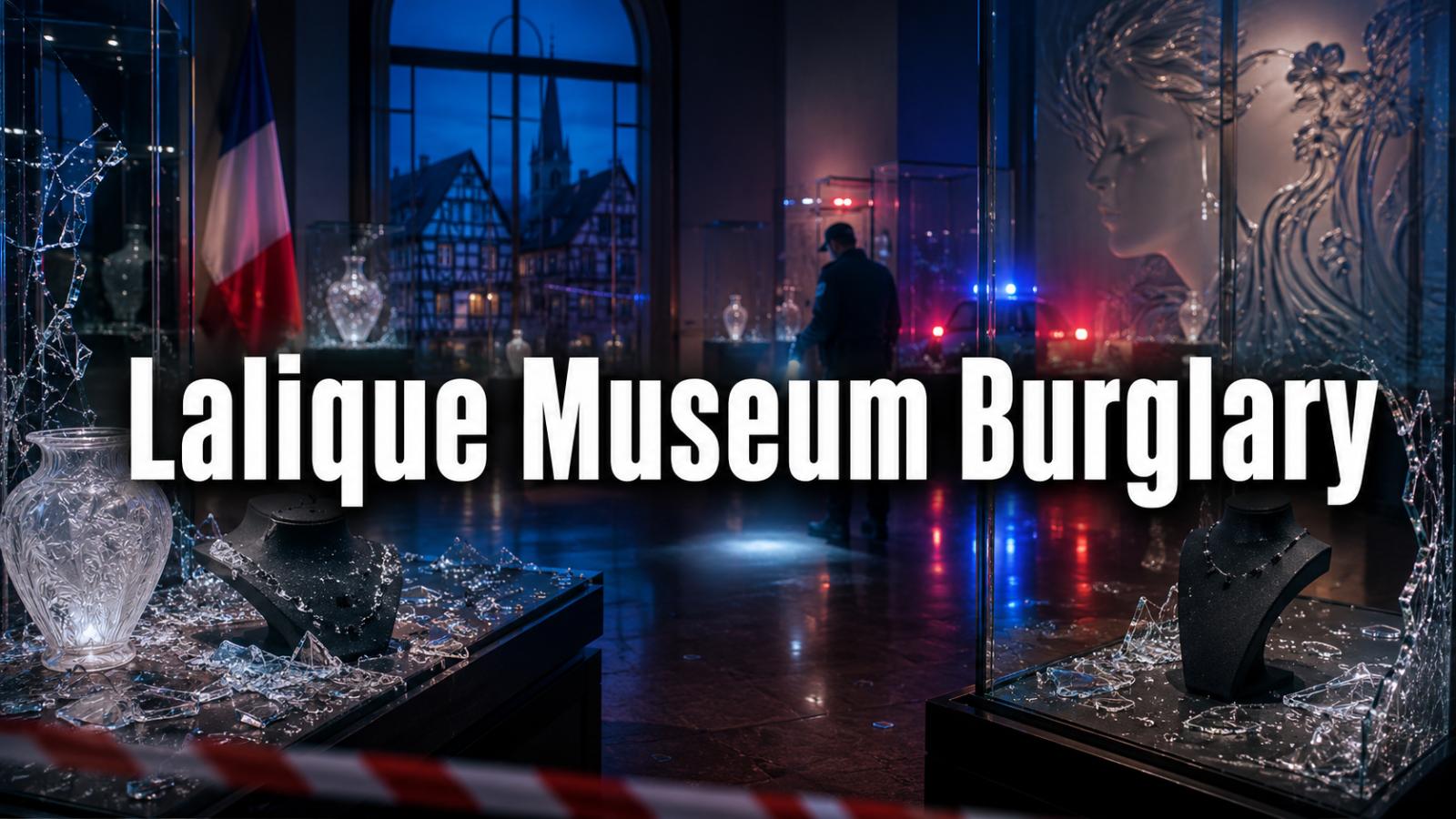
A burglary at the Lalique Museum in Wingen-sur-Moder, France, has drawn fresh attention to the security of cultural sites after masked thieves escaped with valuable crystal jewellery. The break-in reportedly happened early Sunday morning, when the suspects entered the museum, damaged several display cases and fled before police arrived.
Investigators are reviewing CCTV footage and checking the museum’s alarm response to understand how the thieves managed to carry out the burglary so quickly. The stolen items are believed to include nearly twenty Lalique jewellery pieces, with early estimates placing the loss at several million euros.
Valuable crystal jewellery taken from collection
The museum is dedicated to René Lalique, the French artist, jeweller and glassmaker known for his Art Nouveau jewellery, Art Deco glasswork and luxury crystal creations. Because of that legacy, the stolen pieces are not only financially valuable but also culturally important.
Unlike gold or silver jewellery, crystal pieces cannot easily be melted down for resale. However, their rarity, design value and connection to the Lalique name make them attractive to specialist collectors and organised theft networks. Police are expected to examine whether the stolen items were targeted for private buyers or wider illegal art markets.
Alarm response under investigation
The museum’s alarm reportedly activated during the break-in, but questions have emerged over how quickly the response was handled. A cleaning worker is said to have discovered signs of the burglary and alerted police after reaching the site.
Local concern has now shifted toward whether security procedures were strong enough for a museum holding high-value art and jewellery. Officials are expected to review the role of the security company, the timing of the alert and whether police were informed without delay.
Museum closed as police continue probe
The Lalique Museum, opened in 2011 near the brand’s historic production site, displays hundreds of works linked to René Lalique and the development of French glass and crystal design. Its collection includes jewellery, decorative objects, Art Deco pieces and modern crystal works.
Following the burglary, the museum is expected to remain closed while investigators continue their work and staff assess the damage. For Wingen-sur-Moder, a small town near Strasbourg, the theft is a major cultural blow and a warning that even smaller museums can become targets when rare and valuable collections are on display.
France museum theft renews wider debate
The incident has added to a wider debate about museum security in France, especially after other high-profile cultural thefts raised questions about how valuable collections are protected. While major museums often receive more public attention, smaller regional institutions may also hold rare pieces that attract professional thieves.
The Lalique Museum burglary shows that alarms alone may not be enough if response systems are slow or unclear. As police continue the CCTV probe, the case is likely to increase pressure on museums to review security staffing, emergency procedures and protection for valuable display items.
A burglary at the Lalique Museum in Wingen-sur-Moder, France, has drawn fresh attention to the security of cultural sites after masked thieves escaped with valuable crystal jewellery. The break-in reportedly happened early Sunday morning, when the suspects entered the museum, damaged several display cases and fled before police arrived.
Investigators are reviewing CCTV footage and checking the museum’s alarm response to understand how the thieves managed to carry out the burglary so quickly. The stolen items are believed to include nearly twenty Lalique jewellery pieces, with early estimates placing the loss at several million euros.
Valuable crystal jewellery taken from collection
The museum is dedicated to René Lalique, the French artist, jeweller and glassmaker known for his Art Nouveau jewellery, Art Deco glasswork and luxury crystal creations. Because of that legacy, the stolen pieces are not only financially valuable but also culturally important.
Unlike gold or silver jewellery, crystal pieces cannot easily be melted down for resale. However, their rarity, design value and connection to the Lalique name make them attractive to specialist collectors and organised theft networks. Police are expected to examine whether the stolen items were targeted for private buyers or wider illegal art markets.
Alarm response under investigation
The museum’s alarm reportedly activated during the break-in, but questions have emerged over how quickly the response was handled. A cleaning worker is said to have discovered signs of the burglary and alerted police after reaching the site.
Local concern has now shifted toward whether security procedures were strong enough for a museum holding high-value art and jewellery. Officials are expected to review the role of the security company, the timing of the alert and whether police were informed without delay.
Museum closed as police continue probe
The Lalique Museum, opened in 2011 near the brand’s historic production site, displays hundreds of works linked to René Lalique and the development of French glass and crystal design. Its collection includes jewellery, decorative objects, Art Deco pieces and modern crystal works.
Following the burglary, the museum is expected to remain closed while investigators continue their work and staff assess the damage. For Wingen-sur-Moder, a small town near Strasbourg, the theft is a major cultural blow and a warning that even smaller museums can become targets when rare and valuable collections are on display.
France museum theft renews wider debate
The incident has added to a wider debate about museum security in France, especially after other high-profile cultural thefts raised questions about how valuable collections are protected. While major museums often receive more public attention, smaller regional institutions may also hold rare pieces that attract professional thieves.
The Lalique Museum burglary shows that alarms alone may not be enough if response systems are slow or unclear. As police continue the CCTV probe, the case is likely to increase pressure on museums to review security staffing, emergency procedures and protection for valuable display items.